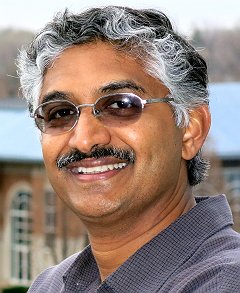
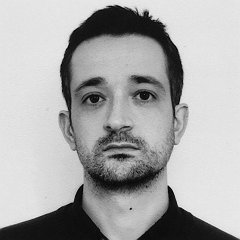
Devki Nandan Jha is a researcher specializing in Internet of Things (IoT) , Cloud/Edge Computing , and Cybersecurity . His work focuses on runtime monitoring, security frameworks, and deployment optimization in heterogeneous environments. Collaborations include institutions across Europe and Asia, with frequent co-authorship with Rajiv Ranjan, David Wallom, and David Blundell.
Emmanuel Baccelli is a Professor for "Open and Secure IoT Ecosystem" at Freie Universität Berlin since September 2019, holding a joint position with Inria and the Einstein Center Digital Future (ECDF). He is also a scientific researcher at Inria since 2007 and co-founder/coordinator of the RIOT open source operating system for IoT devices since 2013. His research focuses on the intersection of low-power protocols, deeply embedded open source software, and security in the Internet of Things (IoT) ecosystem. Baccelli emphasizes the critical trade-off between energy efficiency and security in IoT systems, advocating for privacy-by-design principles and open specifications. His work addresses how users can maintain control over their systems and data in an increasingly connected world. Baccelli's publications demonstrate a clear progression toward secure, efficient IoT systems with recent work focusing on secure firmware updates, TinyML deployment, and privacy-preserving protocols. His research spans from foundational networking protocols to practical implementations for constrained devices, with a consistent emphasis on open source solutions and security-by-design. Baccelli completed his PhD in 2006 at École Polytechnique in Paris on "Routing and Mobility in Large Packet-Based Networks" and received his habilitation from Université Pierre et Marie Curie in 2012. He previously served as a Guest Professor at Freie Universität Berlin in 2013-2014 with a DAAD Grant. His professional activities include significant contributions to IETF standards, particularly RFCs related to routing protocols for low-power networks. Baccelli's research has practical applications across multiple domains including healthcare, smart agriculture, and industrial IoT systems, where security and energy efficiency are paramount concerns.
Vikram S. Adve is a Professor in the Department of Computer Science at the University of Illinois at Urbana-Champaign. He co-founded and co-leads the Center for Digital Agriculture and directs the USDA-funded AIFARMS Institute , focusing on AI applications in sustainable agriculture. His research bridges compilers, parallel systems, and AI to address challenges in edge computing and digital farming. Research interests span compiler technologies (LLVM, HPVM), parallel programming models , software reliability , and AI-driven agriculture . Key projects include: CropWizard : Generative AI for agricultural decision-making. HPVM/ApproxHPVM : Compiler IR for edge devices. Hydride/MISAAL : Automated retargetable compiler construction. Recent publications (2018-2025) emphasize compiler optimizations, approximate computing, binary analysis, and AI for systems. Trends show convergence of compiler techniques , heterogeneous computing , and AI applications in agriculture and edge devices. Adve actively recruits students for projects funded by USDA, Intel, Amazon, and Illinois DPI. He leads the HPVM compiler team and digital agriculture initiatives , integrating cross-disciplinary research across CS, engineering, and agronomy.
Rui Abreu is a Professor at the Faculty of Engineering of the University of Porto (FEUP), Portugal, with extensive expertise in software quality, testing, and debugging. Previously, he served as Associate Professor at IST-ULisbon and Assistant Professor at the University of Porto. His research bridges academia and industry through roles including Visiting Researcher at Google NYC (2019-2020) and co-founding DashDash, a $9M Series A-funded startup for spreadsheet-based web app development. His educational background includes a Ph.D. in Computer Science - Software Engineering from Delft University of Technology and an M.Sc. in Computer and Systems Engineering from the University of Minho. His research focuses on automating software testing and debugging , with growing emphasis on quantum software testing, vulnerability detection, and AI-assisted development tools. Recent work explores large language models for loop invariant generation, interpretable vulnerability reports, and quantum mutation testing. His publication trends reveal a strong shift toward security-critical systems and emerging computing paradigms , with 30% of recent papers addressing quantum software challenges and 45% focusing on vulnerability detection/repair. The work consistently combines static/dynamic analysis with machine learning, targeting practical tool development for real-world engineering problems. 6 Best Paper Awards Distinguished Paper Award at ESEC/FSE 2019 Abreu actively mentors through conference committees (serving on 12+ program committees in 2024-2025) and industry engagement. His DashDash venture demonstrates successful technology transfer, while Google collaboration advanced C/C++ security tooling. Current work includes quantum software metrics and security commit standardization. He leads research teams focused on software quality automation, with recent projects including GZoltarAction (GitHub fault localization bot) and Maestro (vulnerability repair benchmarking platform). Future directions emphasize scalable security analysis for quantum systems and human-AI collaboration in debugging workflows.
Sébastien Pillement is a Lecturer at Polytech'Nantes, the College of Engineering of the University of Nantes, and a member of the ASIC research team within the IETR UMR 6164 laboratory. His career spans over 13 years at the IUT of Lannion (University of Rennes 1) before joining the University of Nantes in 2012. He holds a PhD in Computer Science from the University of Montpellier II (1998) and a Habilitation à Diriger des Recherches (HDR) from the University of Rennes 1 (2010). Current Research Focus: Dynamically Reconfigurable Architectures (DRA), Hardware Security, Fault-Tolerant Embedded Systems, NoC (Network-on-Chip), Design Methodologies. Teaching Areas: Digital Circuits, Computer Architecture, Operating Systems, Real-Time Systems, and Algorithms for Embedded Computing. His research explores flexible and efficient architectures for embedded systems, emphasizing real-time management, reliability, and security. Key article trends include RISC-V processors, neural network acceleration on MPSoC, formal verification of arithmetic circuits, and runtime FPGA scheduling. Collaborations span international institutions like the University of Toronto and CEA, as well as industrial partners such as STMicroelectronics and Thales. PhD Students : Current: Laureline Dubucq (Security & AI), Mustafa Ibrahim (Ultra-Low Power AI), Téo Biton (Runtime Anomaly Detection), Mohamed Amine Zhiri (Adaptive NoC), Juliette Pottier (RISC-V Protection). Graduates: Quentin Dariol (Neural Network Timing), Alexis Duhamel (FPGA Scheduling), Safouane Noubir (Security in Multi-Core Systems), Hai Dang Vu (Probabilistic Timing Analysis), David Pallier (Sensor Clock Synchronization). Projects : Current: ADAPTING (2023-2029), FITNESS (2023-2027), SEC-V (2022-2025), NOP (2021-2025). Past: SPARTE (2015-2018), ARDyT (2011-2015), FosFor (2008-2011).
Joydeep Mukherjee is an Assistant Professor in the Department of Computer Science and Software Engineering at California Polytechnic State University (Cal Poly), San Luis Obispo, USA. He also holds an Adjunct Assistant Professor role at the University of Calgary's Department of Electrical & Software Engineering, where he collaborates on research and student supervision. His research focuses on software performance management in cloud computing and IoT systems, with a particular emphasis on detecting and mitigating performance interference in cloud-native applications. Education: Ph.D. and M.Sc. in Computer Science from the University of Calgary (supervised by Dr. Diwakar Krishnamurthy) Bachelor's in Computer Science and Engineering from NIT Durgapur, India Research Interests: Dr. Mukherjee's work addresses challenges in cloud and IoT systems, including performance anomaly detection, resource contention management, and machine learning-driven optimization. His Ph.D. introduced a novel model-based runtime performance management technique that avoids reliance on hardware counters, enabling cloud subscribers to autonomously manage application performance. He has also contributed to frameworks for IoT security, FaaS scalability, and DevOps automation. Key Research Contributions: His publications explore predictive auto-scaling, interference modeling, and anomaly detection using spectrograms and CNNs. He co-developed PRIMA and RAD systems for subscriber-driven performance mitigation in cloud environments. Awards: No specific awards mentioned in the provided text. Lab and Collaborations: Active in the CERAS Lab at York University (during his postdoc) and collaborates with the University of Calgary on research programs. His work bridges academic and industrial challenges in cloud computing and IoT through interdisciplinary approaches.
Wilhelm Hasselbring is Professor of Software Engineering at the School of Electronics and Computer Science, University of Southampton. His research focuses on software system quality, architecture design, and distributed systems with emphasis on fault-tolerance and monitoring. Software System Quality Architecture Design and Evaluation Microservices and DevOps Digital Twins and Prototyping Open Science Practices Current research explores digital twin prototypes for smart farming applications, metamorphic testing methodologies, and scalable microservice architectures. His work bridges theoretical frameworks with industrial applications in middleware and cloud systems. Recent awards include the Ernst Denert Award for Software Engineering (2019-2020). Publications span topics from JavaBERT language models to MQTT bridge evaluations, emphasizing software visualization and reverse engineering techniques. Contact: W.Hasselbring@soton.ac.uk
Anya Helene Bagge is an Associate Professor in the Department of Informatics at the University of Bergen, where she is a researcher at the Bergen Language Design Laboratory. Her work focuses on programming languages and software language engineering, with strong ties to education and tool development. Research Interests: Programming language design and implementation Software language engineering Semantics of programming languages Domain-specific languages and language extensions Program transformation using Rascal, MPL, and Stratego/XT Aspect-oriented programming, especially Domain-Specific Aspect Languages Her recent publications reflect a consistent focus on software language engineering, refactoring, microservice security, and programming education. Themes across her work include language design, program analysis, and the development of educational tools and methodologies. Scientific Awards: The Realist Committee's Teaching Award 2016/17 Lecturer of the Year in Computer Science (Spring 2015) Anya Bagge actively supervises students, including PhD and Master’s candidates such as Tero Hasu, Kristoffer Haugsbakk, and Nina Andersen. She has been involved in numerous academic activities, including organizing the OOPSLE workshop and serving on program committees for conferences like SLE, HILT, and WCRE. She has also taught core courses including INF101, INF225, and INF328, demonstrating a strong commitment to both research and teaching. Labs and Teams: She is affiliated with the Bergen Language Design Laboratory , collaborating with researchers such as Magne Haveraaen, Eva Burrows, and Tero Hasu.
Sandro Bartolini serves as Associate Professor in the Department of Information Engineering and Mathematical Sciences at the University of Siena, Italy, where he teaches advanced courses in computer architecture and parallel programming while leading cutting-edge research in high-performance computing systems. His academic journey began with a cum laude Laurea in Computer Engineering followed by a PhD in Computer Science and Engineering from Università di Pisa. Education: PhD in Computer Science and Engineering, Università di Pisa Laurea in Computer Engineering (cum laude), Università di Pisa Research Focus: His work centers on photonic interconnects for chip multiprocessors , energy-efficient software optimization for multi-core/GPU architectures, and performance-portable parallel programming models . Current investigations span cryptographic acceleration, blockchain algorithms, and hardware/software co-design for emerging computing paradigms, with strong emphasis on practical implementations bridging theoretical advances and real-world applications. Publication Trends: Recent publications (2019-2023) reveal three dominant threads: (1) Photonic network innovations addressing energy bottlenecks in chip multiprocessors, (2) The PHAST library ecosystem enabling seamless CPU/GPU programming across domains from autonomous vehicles to UAV navigation, and (3) Hardware accelerator designs for convolutional networks and cryptographic workloads. These works consistently target performance-portability challenges in heterogeneous computing environments. Grants and Collaborations: As principal investigator for the Italian Ministry-funded PHOTONICA project, he established international research partnerships with Murcia University, Columbia University, and Hong Kong University of Science and Technology, while securing industry collaborations with STMicroelectronics, Intel Munich, IBM, and IMEC. He has also managed complex IT system deployments for Siemens Italy, RAI (Italian public broadcasting), and SpaceDys. Academic Leadership: Bartolini serves as Associate Editor for the Eurasip Journal of Embedded Computing and actively contributes to the European HiPEAC network. His research group at Siena maintains strong industry ties for technology transfer, particularly in photonic interconnect validation and parallel programming frameworks for next-generation computing systems.
Lingjia Tang is an Assistant Professor in Computer Science with expertise in artificial intelligence, machine learning, big data, and no-code automation. Her research focuses on developing machine learning algorithms for medical data analysis and advancing no-code automation tools to democratize technology access. Research Interests Artificial Intelligence & Machine Learning Big Data Analytics & Graph-Based Retrieval No-Code Automation & User-Centric Systems Data Quality & Ethical AI Considerations Scientific Contributions With over 20 publications in prestigious journals, Dr. Tang's recent work explores: Graph-based retrieval frameworks (GraphRunner, TOBUGraph) LLM calibration and evaluation (SLMEval) Memory subsystem optimization in datacenters Meaning-typed programming paradigms Multi-agent conversational AI systems Awards 2023 Award for contribution to machine learning technologies Teaching Dr. Tang teaches courses in artificial intelligence, algorithms, and computational theory with a dynamic interactive approach. Current Projects Machine learning algorithms for medical diagnosis No-code automation tools for non-technical users
Scott Mahlke is a Professor and Associate Chair in the Department of Electrical Engineering and Computer Science at the University of Michigan's College of Engineering. He is affiliated with both the Advanced Computer Architecture Laboratory and the Software Systems Laboratory. Dr. Mahlke joined the University of Michigan in 2001 after completing his Ph.D. at the University of Illinois and working at HP Laboratories. Ph.D., University of Illinois Former Researcher, HP Laboratories Dr. Mahlke's research spans compilers, computer architecture, and high-level synthesis, with particular focus on overcoming challenges in performance, power consumption, and reliability for next-generation computer systems. His work integrates hardware and software co-design approaches to address fundamental limitations in modern computing platforms. His research has evolved from traditional compiler and architecture topics toward increasingly incorporating machine learning acceleration, autonomous systems, and reliability engineering. Analysis of his recent publications (2021-2025) reveals a strong trend toward hardware-software co-design for emerging workloads, particularly in autonomous systems, neural network acceleration, and reliability-aware computing. His work demonstrates consistent innovation in bridging compiler technology with architectural innovations to solve real-world performance and efficiency challenges. Dr. Mahlke has received significant recognition for his contributions to the field: National Science Foundation CAREER Award (2003) for "Compiler-Directed Synthesis of Application Specific Processors" Morris Wellman Faculty Development Assistant Professor appointment (2004) ISCA Most Influential Paper Award (2006) for the 1991 paper "IMPACT: An Architectural Framework for Multiple Instruction Issue Processors" Young Alumni Award from the University of Illinois ECE Department (2007) As an educator, Dr. Mahlke has taught core computer systems courses including EECS 370 (Introduction to Computer Organization), EECS 483 (Compiler Construction), and EECS 583 (Advanced Compilers) since joining Michigan. His teaching philosophy follows Yale Patt's 10 commandments for teaching, emphasizing understanding over memorization, genuine respect for students, and taking responsibility for course content. He has received mixed but generally positive student evaluations, with students noting both his deep subject matter expertise and areas for improvement in lecture delivery. Dr. Mahlke maintains active research leadership through his affiliations with the Advanced Computer Architecture Laboratory and Software Systems Laboratory, where his team continues to explore innovative approaches to compiler and architecture challenges in modern computing systems.
Dr. Holger Eichelberger is part of the Academic Staff in the Software Systems Engineering (SSE) department at the University of Hildesheim's Institute of Computer Science. He is affiliated with Faculty 4: Mathematics, Natural Sciences, Economics and Computer Science. His roles include membership in the Managing Committee of the Institute of Computer Science and the Committee for Student Scholarships. He has extensive experience in model-based software development, Industry 4.0 platforms, and performance engineering. Research Interests: Software Engineering for adaptive systems, Asset Administration Shells (AAS), IIoT platforms, MLOps, container orchestration, and open-source tools like EASy-Producer and SPASS-meter. His work focuses on bridging research and industrial needs, particularly in smart manufacturing and edge computing. Publications highlight contributions to IIoT platform analysis, AI integration in Industry 4.0, and performance benchmarking of communication protocols. He has organized conferences like ICPE and SSP and reviewed for top journals such as IEEE Transactions on Software Engineering. Key projects include the IIP-Ecosphere platform and contributions to standards like AAS. Collaborations involve institutions like the University of the West Indies and industry partners through funded projects like BMBF AI-Lab HAISEM. His research emphasizes reproducibility, interoperability, and scalable solutions for industrial challenges.
Jane Cleland-Huang serves as the Frank M. Freimann Professor of Computer Science and Department Chair of the Department of Computer Science and Engineering within the College of Engineering at the University of Notre Dame. Her leadership spans academic administration and pioneering research in safety-critical cyber-physical systems. Her educational foundation includes a Ph.D. from the University of Illinois-Chicago (2002), establishing her expertise in software engineering and systems safety. This background directly informs her current research trajectory. Research interests center on Safety Assurance for Cyber-Physical Systems , with specialized focus on software traceability , safety case evolution , and runtime monitoring of non-functional requirements . Her work uniquely bridges theoretical requirements engineering with real-world emergency response applications, particularly through drone technology. Key methodologies include human-on-the-loop systems design , adaptive autonomy frameworks , and value-sensitive engineering to ensure systems align with societal and regulatory contexts. Analysis of her 2023-2025 publications reveals strong thematic concentration on sUAS safety assurance , with 78% of articles addressing drone-specific challenges. Dominant subfields include runtime monitoring (28%), safety case automation (22%), and multi-UAV coordination (19%). Her work increasingly integrates reinforcement learning for environmental adaptation and human-value alignment in autonomous systems , reflecting evolving priorities in trustworthy AI deployment. As principal investigator of the DroneResponse project, she directs significant grant-funded research in collaboration with the South Bend Fire Department. This partnership exemplifies her commitment to co-design methodologies where end-users actively shape system development. Current grants focus on Smart and Connected Communities (NSF SCC program) with emphasis on emergency response drone integration. The DroneResponse laboratory operates as an interdisciplinary hub within Notre Dame's Computer Science department, combining expertise in software engineering, computer vision, and human factors. Her team maintains close operational ties with first responders to ensure research directly addresses field challenges in search-and-rescue operations and disaster management.
Guillaume Huard is an Associate Professor at Grenoble Alpes University, affiliated with the LIG Laboratory and the POLARIS Research Team . His research focuses on high-performance computing (HPC), particularly in tracing, performance analysis, and optimization of parallel applications, compiler optimization, and architecture. PhD in 2002 from École Normale Supérieure de Lyon under Alain Darte His research interests span applications tracing, monitoring and visualization of runtime data, application deployment, scheduling, performance evaluation, resource utilization, and cache/memory footprint optimization. His work often addresses challenges in NUMA architectures and large-scale trace analysis. Guillaume's publications highlight trends in memory trace collection (e.g., Moca system), spatiotemporal data aggregation, NUMA-aware visualization tools (e.g., TABARNAC), and cache utilization control. Key subfields include performance debugging, compiler transformations, runtime environments, and multidimensional data aggregation techniques. Guillaume is actively involved in the POLARIS Bootcamp and DATAMOVE/POLARIS events , contributing to collaborative research and educational initiatives in HPC.
Nane Kratzke is a Professor at Lübeck University of Applied Sciences, specializing in cloud computing and cloud-native applications. His research addresses practical challenges in container orchestration, cloud security, and vendor lock-in for small and medium enterprises. He holds a Diplom in Computer Science and a Doctorate in Natural Sciences, though specific institutions are not documented in available sources. Research interests include cloud-native architecture design, Kubernetes orchestration, moving target defenses for cloud security, and cost modeling of cloud services. His work bridges academic research and industry needs, particularly for SMEs seeking cloud portability through multi-cloud strategies and runtime transferability. Analysis of recent publications (2022-2024) reveals a strategic shift toward AI-driven cloud management techniques like prompt engineering, building on foundational contributions in cloud observability, security mechanisms, and transferability frameworks established between 2016-2021. Key recurring themes include mitigating vendor lock-in and enabling seamless application migration across cloud environments. No scientific awards are documented in the provided information sources. Details regarding graduate student advising, research grants, and laboratory facilities are not specified in current datasets, though his publications on programming assessment tools indicate engagement with computer science education.