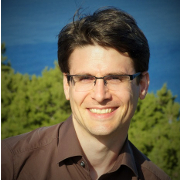
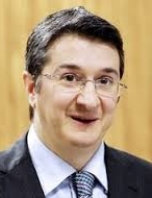
Prof. Dr. Alexander Stroh-Steckelberg is Professor of Political Science with a focus on African Politics & Development Policy at the University of Bayreuth since 2022. He serves as Deputy Head of the Bayreuth International Graduate School of African Studies (BIGSAS) until 2025 and has held prior roles as Junior Professor and Senior Fellow at BIGSAS (2015–2021). His academic career includes research associate positions at the GIGA German Institute of Global and Area Studies (2006–2015) and teaching roles at the Universities of Abomey-Calavi, Heidelberg, and Lüneburg. Stroh-Steckelberg’s research spans comparative democracy studies , judicial politics , electoral systems , political party dynamics , and development policy in Africa, with regional expertise in Francophone West Africa and Rwanda . His work emphasizes institutional diffusion, informal networks in courts, and the interplay between formal and informal governance structures. Recent publications reveal a focus on judicial appointment policies , electoral manipulation , and local governance challenges across Africa. He contributes to methodological advancements in comparative area studies and network analysis , particularly in non-Western democracies. Stroh-Steckelberg is actively involved in academic communities including the American Political Science Association , German Political Science Association , and Association for African Studies in Germany .
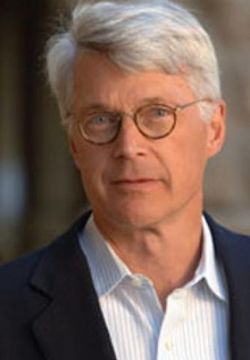
Scott D. Sagan is the Caroline S.G. Munro Professor of Political Science at Stanford University and a Senior Fellow at the Freeman Spogli Institute for International Studies. He serves as Co-Director of the Center for International Security and Cooperation (CISAC) and holds the position of Bass University Fellow in Undergraduate Education. Sagan also co-chairs the American Academy of Arts and Sciences' Committee on International Security Studies, demonstrating his significant influence in the field of international security. Sagan received his Ph.D. in Political Science from Harvard University in 1983 and his B.A. in Government from Oberlin College in 1977. Prior to joining Stanford, he taught at Harvard University and served as special assistant to the director of the Organization of the Joint Chiefs of Staff in the Pentagon, providing him with valuable practical experience in defense policy. Professor Sagan's research primarily focuses on nuclear weapons policy, international security, arms control, and nonproliferation. His work examines the organizational, political, and ethical dimensions of nuclear strategy, with particular attention to the risks of nuclear accidents, the effectiveness of nonproliferation policies, and public attitudes toward nuclear weapons use. He has pioneered important theoretical frameworks regarding the organizational causes of nuclear accidents and the normative constraints on nuclear weapons use. Sagan's publications reveal a consistent focus on nuclear deterrence theory, the organizational aspects of nuclear command and control, and the ethical dimensions of nuclear weapons policy. His work bridges theoretical analysis with practical policy implications, often challenging conventional wisdom about nuclear strategy and proliferation. Recent publications show increasing attention to public opinion on nuclear weapons use, the evolving nature of nuclear deterrence in the contemporary security environment, and the relationship between international law and nuclear strategy. Thérèse Delpech Memorial Award (2022) Susan Strange Award, International Studies Association (2017) William and Katherine Estes Award, National Academy of Sciences (2015) International Security Studies Section Distinguished Scholar Award (2013) Stanford's Dean's Award for Distinguished Teaching (1998-99) Stanford's Hoagland Prize for Undergraduate Teaching (1996) International Studies Association's Innovative Teaching Award (2008) Monterey Institute for International Studies' Nonproliferation Education Award (2009) Sagan has been instrumental in shaping the research agenda at CISAC, mentoring numerous students and junior scholars in the field of international security. His work has been supported by various research grants from foundations and government agencies focused on nuclear security issues. At Stanford, he has led numerous research initiatives examining nuclear weapons policy, arms control, and nonproliferation challenges. As Co-Director of CISAC, Sagan oversees one of the world's leading research centers on international security, nuclear policy, and arms control. The center brings together scholars, practitioners, and students to address pressing security challenges through interdisciplinary research, policy-relevant analysis, and educational programs. Under his leadership, CISAC has maintained its position as a premier institution for security studies research and policy engagement.
Ryan Stones is a Lecturer at the City Law School , City, University of London, specializing in competition law, behavioral economics, and the intersection of legal philosophy with antitrust enforcement. His work critically examines the application of the formal rule of law to EU competition policy and analyzes historical schools of antitrust thought like the Chicago School and Ordoliberalism.
Marina Agranov is Professor of Economics at the California Institute of Technology (Caltech), affiliated with the Division of Humanities and Social Sciences. She directs research through the Ronald and Maxine Linde Institute of Economic and Management Sciences, Center for Social Information Sciences (CSIS), and Center for Theoretical and Experimental Social Sciences (CTESS), and serves as Research Associate at the National Bureau of Economic Research (NBER). Her academic credentials include a B.A. from St. Petersburg State Technical University (1999), M.A. from Tel Aviv University (2004), and Ph.D. from New York University (2010). She joined Caltech as Assistant Professor in 2010 and was promoted to full Professor in 2017. Agranov's research pioneers experimental and behavioral economics, focusing on strategic decision-making in bargaining games, social learning environments, network interactions, and information dynamics. Her work examines how individuals form beliefs and navigate tensions between personal goals and collective outcomes, often using controlled laboratory experiments to test theoretical predictions about human behavior under uncertainty. Her recent publications reveal a consistent methodological approach: blending game-theoretic models with experimental validation to investigate communication effects, randomization preferences, and institutional design. Key trends include analyzing how uncertainty impacts committee negotiations, how complexity influences egalitarian outcomes in legislative bargaining, and how information structures shape social learning on networks. Her scientific recognition includes: Associated Students of Caltech (ASCIT) Teaching Award (2017-18) Professor Agranov's research has secured significant institutional support through Caltech centers and NBER affiliation, with findings featured in major economics journals and Caltech news coverage including "Decision by Committee: How Uncertainty Shapes Negotiations" (December 2024) and "Experimental Economics in Theory and Practice" (July 2023). Her work on committee decision-making under uncertainty has direct implications for institutional design in political and corporate governance. She actively contributes to Caltech's research ecosystem through CSIS and CTESS, which facilitate interdisciplinary collaborations in social sciences and experimental methodology development.
Dr. Julian Limberg is a Senior Lecturer in Public Policy at the Department of Political Economy, King’s College London. He previously held a post-doctoral position at Ludwig Maximilian University of Munich and earned his PhD in Political and Social Sciences from the European University Institute. His research focuses on public policy and political economy, particularly inequality dynamics, tax policy, and environmental governance. Education: PhD in Political and Social Sciences (European University Institute), Post-doctoral Research (Ludwig Maximilian University). Affiliations: Public Policy and Regulation Research Group, Quantitative Political Economy Research Group, Global South Research Group. His work examines the causes and consequences of progressive taxation, climate policy effectiveness, and public perceptions of fiscal fairness. Recent studies include the impact of dedicated climate ministries on emissions reduction and the link between financial sector growth and tax policies. Limberg is also engaged in projects analyzing how technological changes influence tax preferences and the societal consequences of major tax cuts for the wealthy. Key articles highlight his contributions to understanding taxation trends, climate policy implementation, and the interplay between economic shifts and fiscal strategies. He collaborates across disciplines, bridging political science and economics to address contemporary governance challenges.
Chen Lian is an Assistant Professor in the Department of Economics at UC Berkeley. Holding a PhD from MIT, their research bridges macroeconomics, behavioral economics, and finance, with a focus on bounded rationality, monetary theory, and macro-finance interactions. Education: PhD in Economics, MIT Chen’s work explores how incomplete information and behavioral biases shape macroeconomic outcomes. Key themes include inflation effects on households, fiscal-monetary policy interactions, and financial stress dynamics. They employ heterogeneous-agent models and analyze how micro-level shocks propagate through the economy. Their publications and working papers address topics like credit cycles, demand shock propagation, and the psychological underpinnings of economic decisions. Papers such as Low Interest Rates and Risk Taking (2019) and Confidence and the Propagation of Demand Shocks (2022) highlight their interdisciplinary approach.
You-il (Chris) Park is an Associate Professor of Accounting at the University of Hawaii at Manoa’s Shidler College of Business, serving as Co-Chair of the Hawaii Accounting Research Conference (HARC) and Hawaii Accounting Research Doctoral Institute (HARDI). He holds the Accuity LLP Accounting Faculty Fellowship and coordinates the Accounting Ph.D. program. His research focuses on archival, economics-based studies examining how accounting standards, regulations, and corporate governance influence financial reporting, capital markets, and managerial decisions. Professor Park holds a Ph.D. in Business Administration (Accounting) from Duke University’s Fuqua School of Business, an M.A. in Economics from Duke University, and a B.S. in Management with Highest Honor and an Accounting Certificate from Georgia Institute of Technology’s Scheller College of Business. Prior to academia, he worked as an internal auditor at Georgia Power & Southern Company and as a computer programmer in the Republic of Korea Air Force. His research interests span topics such as IFRS impact on macroeconomics, credit rating affirmations, audit quality, and data analytics in operational efficiency. His work appears in top journals like The Accounting Review and Contemporary Accounting Research. Professor Park has received numerous accolades for teaching excellence, including the Presidential Citation for Meritorious Teaching (2025), Shidler College Professor of the Semester awards (2022–2025), and multiple nominations for the Board of Regents Medal for Teaching. His professional service includes roles as a doctoral consortium fellow and reviewer for prestigious journals. He actively contributes to academic communities through HARC and HARDI, fostering research collaboration and mentoring doctoral students. His curriculum development includes courses such as Accounting Capstone and Ph.D. seminars, emphasizing practical and theoretical mastery.
Professor Andrew Chadwick is a leading scholar in political communication and digital media studies at Loughborough University, where he directs the Online Civic Culture Centre (O3C). He holds a BSocSc from Birmingham, MSc and PhD from the London School of Economics. His research focuses on hybrid media systems, disinformation dynamics, and digital politics. Key contributions include conceptualizing hybrid media events and analyzing misinformation in personal messaging platforms. His work has been recognized with prestigious awards, including the APSA Best Book Award. He supervises numerous PhD students exploring topics like social media influence, public opinion, and digital disinformation. Current projects include the Leverhulme-funded Everyday Misinformation Project examining numerical disinformation on messaging apps. His media engagements span BBC Radio 4 to The Washington Post. Research highlights include studies on misinformation warnings' ineffectiveness, vaccine hesitancy, and the role of celebrities in political representation. O3C serves as a hub for interdisciplinary research on digital civic culture. Chadwick’s academic leadership includes roles in editorial boards for top journals and international conference keynotes.
Prof. Dr. Pinar Yolum Birbil is a leading researcher in Responsible AI at the Faculty of Science , Utrecht University . Her work bridges Artificial Intelligence , Privacy and Data Protection , and Software Agents , focusing on Human-Centered AI and Trustworthy Systems . She is part of the AI & Data Science and Responsible AI research groups. PhD in Computer Science, North Carolina State University (2003) MS in Computer Science, North Carolina State University (2000) BSc in Computer Engineering, Marmara University (1998) Her research explores Privacy Preservation in collaborative systems, Computational Theory of Mind for human-agent coordination, and Norm-Based AI Systems . Recent projects include the Hybrid Intelligence Center and tools like PANOLA for privacy support. She investigates how AI can balance user autonomy , ethical norms , and societal values in applications ranging from urban planning to healthcare. Her scientific publications (2023-2025) span topics like Explainable Privacy , Trust in Hybrid Teams , and AI for Diabetes Management , appearing in venues such as JAIR , AAMAS , and ACM TOIT . She emphasizes collaborative AI , with contributions to multiagent simulations and privacy-preserving mechanisms . Scientific Awards : NC State University Alumni Hall of Fame (2017) Woman Entrepreneur of the Year (Microsoft Turkey & KAGIDER, 2017) Bogazici University Academic Encouragement Award (multiple years) Best Paper Award at ESAW 2009 She supervises a dynamic research group with PhD students working on Hybrid Intelligence , Computational Ethics , and Privacy Modeling . Her projects often involve interdisciplinary collaboration with institutions like TNO and the Transforming Cities Hub .
Noah Nathan is an Associate Professor of Political Science at Massachusetts Institute of Technology , with faculty affiliation at MIT’s Global Diversity Lab . He previously taught at the University of Michigan and earned his PhD in Government from Harvard University (2016) . Research Interests: Political economy of development Comparative political behavior Urban politics State-building Distributive politics and clientelism Political parties African political systems Article Trends: His recent work integrates urban built environments into political behavior analysis, with empirical studies across African cities. Key themes include state-building legacies in inequality, clientelist electoral systems, and architectural impacts on political engagement. Earlier work (2013-2020) focused on ethnic politics, leadership dynamics, and institutional design. Scientific Awards: 2024 William Riker Award for Best Book in Political Economy 2024 African Politics Conference Group Best Book Award 2023 Foreign Affairs Best Books recognition 2015 Heinz I. Eulau Award (APSR) 2024 Political Ties Best Paper Award (APSA) Advising & Grants: He has advised multiple published studies in top journals and secured research funding for field experiments in Ghana. Current work explores vernacular architecture’s political impact and state capture mechanisms. Labs & Teams: Affiliated with MIT’s Global Diversity Lab and collaborative networks across African politics research institutions.
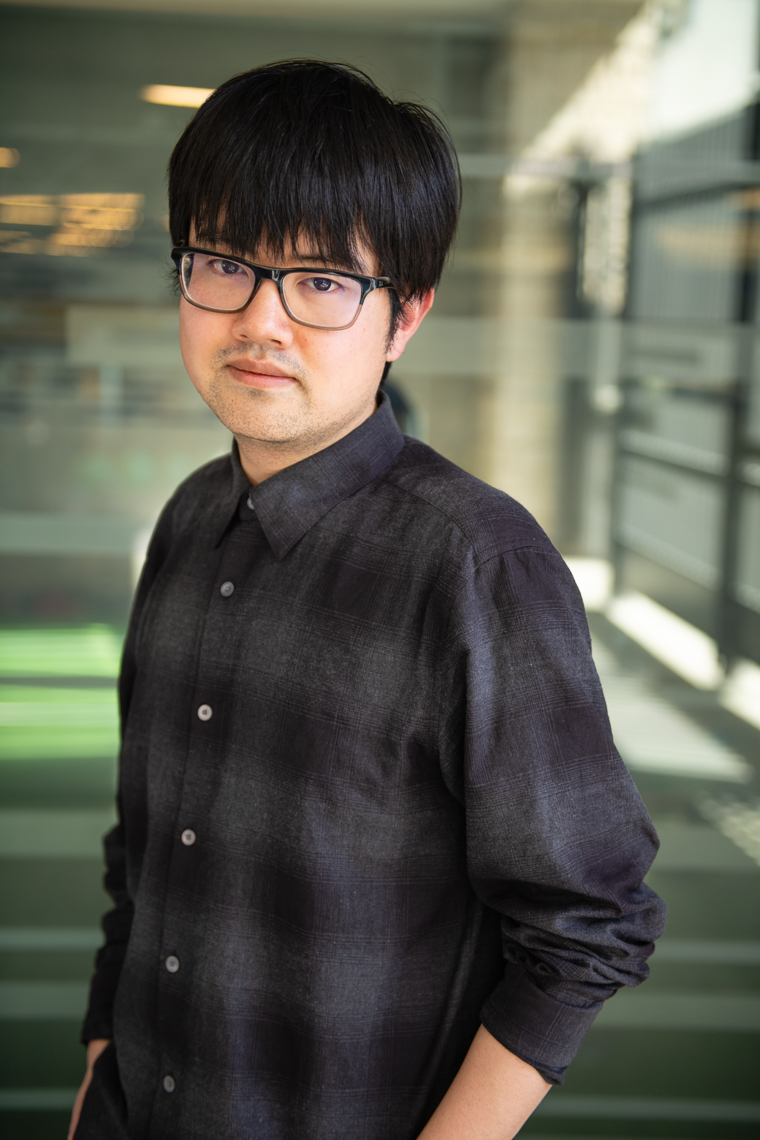
Song Kim is an Associate Professor of Political Science at the Massachusetts Institute of Technology (MIT) and a Faculty Affiliate at the Institute for Data, Systems, and Society (IDSS). He holds a Ph.D. in Politics from Princeton University, where he was awarded the Harold W. Dodds Fellowship (2012-2013). His research focuses on International Political Economy, Formal and Quantitative Methodology, and Big Data analysis of international trade. He is particularly known for his work on firm-level political incentives in trade liberalization, which earned him the 2015 Mancur Olson Award and the 2018 Michael Wallerstein Award for best published article in political economy. Kim develops computational methods for analyzing trade data, including dimension reduction and visualization techniques. He maintains two key databases: LobbyView (tracking firm lobbying efforts) and TradeLab (for trade policy analysis). His research has been published in top journals such as the American Political Science Review, American Journal of Political Science, and International Organization. Educations : Ph.D. in Politics (Princeton University), B.A. not explicitly stated. His research interests include the dynamical evolution of lobbying networks, strategic links between political donations and lobbying, and the political origins of trade regulations. He also contributes methodological innovations, such as two-way fixed effects models and matching methods for causal inference with panel data. Awards : Mancur Olson Award (2015) Michael Wallerstein Award (2018) Harold W. Dodds Fellowship (2012-2013) Advising & Grants : No listed advisees. His work is supported by MIT’s IDSS and institutional funding. He collaborates on software tools like the 'wfe' and 'concordance' R packages, advancing computational social science. Labs/Teams : Associated with MIT’s Political Science Department and IDSS, focusing on interdisciplinary projects in trade, lobbying, and quantitative methods.
Bram Duivenvoorde is an Associate Professor at the Molengraaff Institute for Private Law , Utrecht University , specializing in advertising law , consumer law , and e-commerce . He holds a PhD from the University of Amsterdam (2014) and combines academic research with practical legal experience, including roles as an attorney-at-law at Hoogenraad & Haak (2014-2020) and interim legal counsel at Heineken International (2018). His work focuses on digital society , personalized marketing , and AI regulation in consumer contexts. Education : PhD (UvA, 2014), LLM (Utrecht, 2009), LLB (Utrecht, 2007) Key Research Areas : Advertising Law, Consumer Law, Digital Regulation, EU Law, Personalized Marketing Recent publications analyze generative AI , deepfakes , and DSA compliance , emphasizing consumer protection in evolving digital landscapes. He supervises PhD candidates Thijs Kelder and Jorn Torenbosch and leads the LLM Honours Programme . Duivenvoorde contributes to European consumer law through RENFORCE initiatives and serves as Editor for journals like Intellectuele Eigendom en Reclamerecht .
Giuseppe Fontana is an Associate Professor of Political Economy (SECS-P/01) at the University of Sannio (UNISANNIO) in the Department of Law, Economics, Management and Quantitative Methods (DEMM). He has maintained an active research profile for over two decades, establishing himself as a significant contributor to Post-Keynesian economics and monetary theory. His research interests include: Post-Keynesian Economics Monetary Theory and Endogenous Money Macroeconomic Policy and Financial Stability Financialization and Socioeconomic Impacts Economic Methodology and History of Economic Thought International Trade and Exchange Rate Theory Stock-Flow Consistent Modeling Fontana's scholarly trajectory demonstrates a consistent focus on heterodox economic approaches, particularly Post-Keynesian theory. His work evolved from theoretical contributions in the early 2000s to increasingly policy-relevant analyses of contemporary economic challenges. His recent publications show special attention to the Eurozone crisis, the impact of the COVID-19 pandemic on European economies, and the theoretical foundations of monetary production. He frequently employs stock-flow consistent modeling to provide comprehensive analyses of macroeconomic phenomena, challenging mainstream economic frameworks with alternative theoretical perspectives. Fontana has established important collaborations with scholars like Emiliano Brancaccio, Riccardo Realfonzo, and Marc Lavoie, demonstrating his integration within international networks of heterodox economists. His work has been published in leading heterodox economics journals including the Cambridge Journal of Economics, Journal of Post Keynesian Economics, and Review of Political Economy, as well as in edited volumes with major academic publishers like Palgrave Macmillan and Edward Elgar.
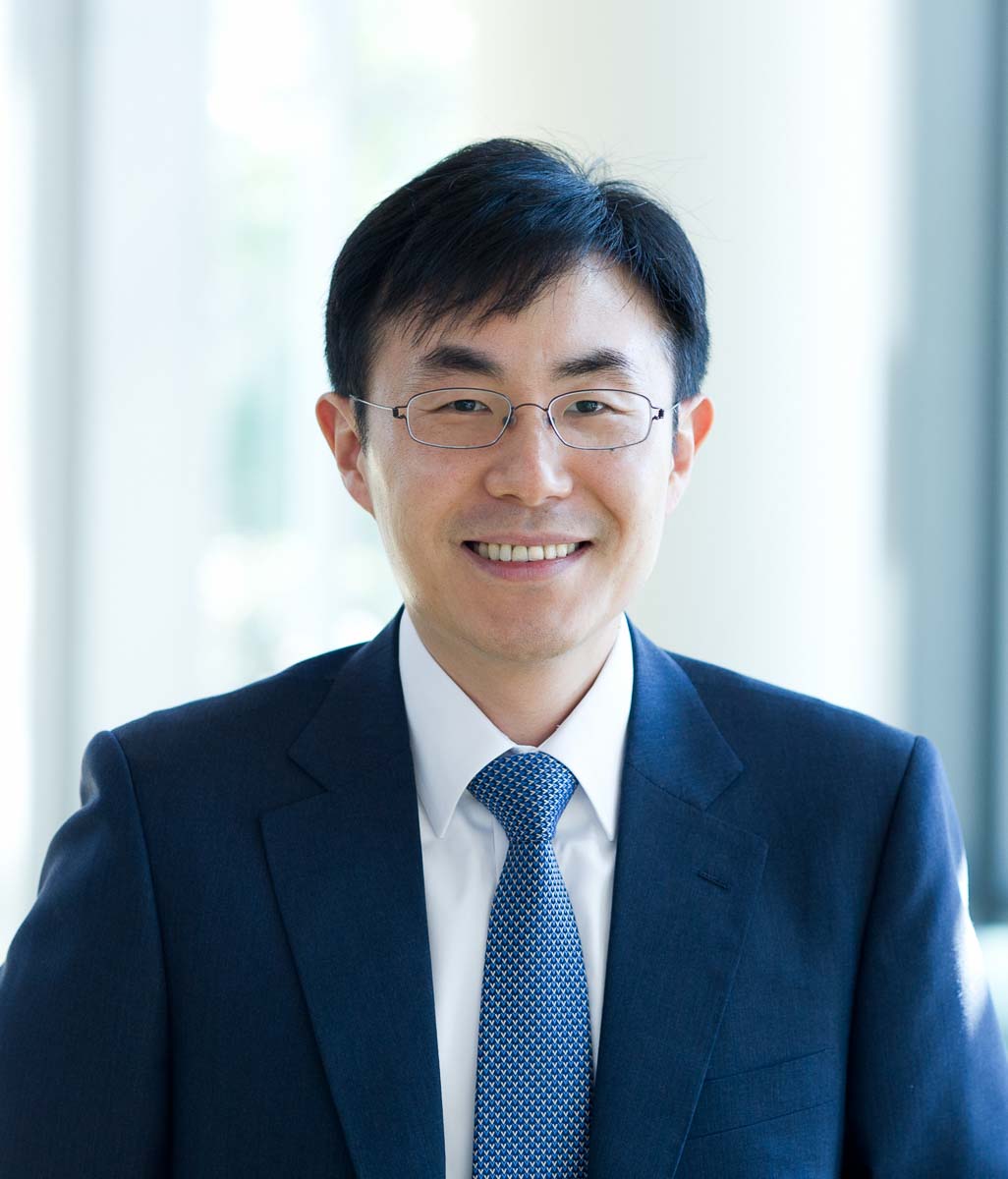
Tasos Kalandrakis is a Professor of Political Science at the University of Rochester, affiliated with the School of Arts & Sciences. He holds a PhD from UCLA (2000). His research focuses on political economy, game theory, legislative policy-making, and bargaining models. He has held academic roles including Associate Professor (Political Science and Economics) since 2010 and Assistant Professor roles at the University of Rochester and Yale University. His work bridges political science and economics, addressing topics like parliamentary systems, electoral competition, and institutional design. Education: PhD in Political Science (UCLA, 2000), MA in Political Science (UCLA, 1998), BA in Economics (AUEB, 1995). Research interests include dynamic legislative processes, strategic voting, and computational methods in political analysis. His recent articles explore equilibrium computation in bargaining models, minority government dynamics, and policy-making under uncertainty. He has advised multiple PhD students and contributed to conferences and journals globally. His teaching spans game theory, political institutions, and computational modeling. Service roles include organizing Wallis conferences, graduate admissions, and serving on search committees. He has held visiting fellowships and presented at institutions worldwide, including Caltech, Princeton, and the London School of Economics.
Peter J. Boettke is a Distinguished University Professor of Economics at George Mason University, holding the BB&T Professorship for the Study of Capitalism. He directs the F.A. Hayek Program at the Mercatus Center. His academic roles include editorships of the Review of Austrian Economics and Journal of Economic Behavior & Organization . Boettke earned his Ph.D., M.A., and B.A. in Economics from George Mason University and Grove City College. Research interests span Austrian economics, institutional economics, comparative political economy, and the history of economic thought. He emphasizes market process theory, emphasizing how institutions and entrepreneurship shape social outcomes. His work critiques socialist systems and advocates classical liberal principles, informed by Hayek’s insights on knowledge and spontaneous order. Awarded for teaching excellence and academic contributions, Boettke has supervised over 30 doctoral students. His publications include authored books like The Struggle for a Better World (2021), Money and the Rule of Law (2021), and edited volumes on Hayek, Buchanan, and Tocqueville. His recent articles address monetary policy, socialism, and pandemic governance. Boettke’s work bridges theory and policy, advocating for rule-of-law frameworks in economics and institutions that foster decentralized decision-making. His intellectual contributions span academic entrepreneurship, policy analysis, and interdisciplinary collaboration across economics, philosophy, and political science.