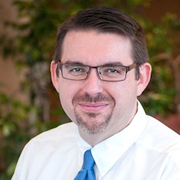
William W. Kennerly is a Teaching Professor of Chemistry at Skidmore College, where he has been since 2011. His research focuses on computational quantum chemistry, particularly the photochemistry of tryptophan and its quantum structural responses to environmental changes. Education: B.S. from Worcester Polytechnic Institute, Ph.D. from Cornell University His research group employs software like Gaussian and XSEDE computing resources to model quantum properties of molecules, emphasizing the interplay between theoretical predictions and experimental feasibility. Students from chemistry, physics, biochemistry, and computer science disciplines contribute to his projects. Professor Kennerly teaches CH 125: Principles of Chemistry CH 330/332: Physical Chemistry I & II CH 351C: Computational Chemistry MA 111: Calculus I He also serves as Education Chair for the Eastern New York section of the American Chemical Society and collaborates with the ACS Exams Institute on standardized exams.
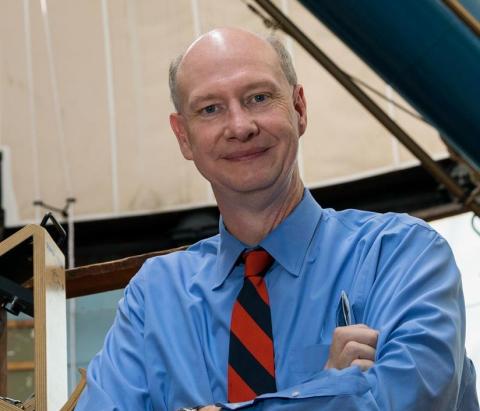
Ani Aprahamian is the Frank M. Freimann Professor of Physics and Concurrent Professor of Chemistry and Biochemistry at the University of Notre Dame, affiliated with the Nuclear Science Laboratory and the Joint Institute for Nuclear Astrophysics (JINA-CEE). Her research bridges nuclear physics and astrophysics, focusing on how nuclear structure effects influence stellar nucleosynthesis and explosive element formation. Education : Ph.D. in Nuclear Chemistry (Clark University, 1986), B.A. (Clark University, 1980) Her work investigates nuclear deformation , collective motion , and decay lifetimes to understand heavy element synthesis in supernovae and neutron star mergers. Recent studies include beta-delayed neutron emission , isobaric analog states , and low-energy nuclear recoils with applications to dark matter detection. Key publications highlight experimental studies at facilities like CARIBU, NSCL, and TRIUMF, with notable contributions to Physical Review C and Journal of Instrumentation . Her research has been pivotal in the NSF Physics Frontier Center JINA-CEE. Scientific Awards : Fellow of AAAS and APS Chair of APS Division of Nuclear Physics Member of Nuclear Science Advisory Committee Active leadership in international collaborations (EMMI, GSI, GANIL) Professor Aprahamian has delivered over 235 invited talks and published 200+ refereed works. She advises graduate students and collaborates with postdoctoral researchers globally.
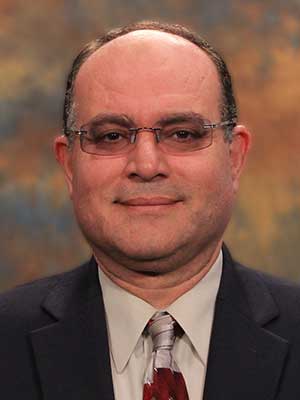
Bodo Leonhard Ziegler is a full Professor and Director of the Department of Astrophysics at the University of Vienna. He leads research in galaxy formation and evolution, with particular focus on extragalactic astrophysics and cosmology. His work involves extensive observational programs using major telescopes including the Very Large Telescope and Hubble Space Telescope, with significant contributions to large surveys like CALIFA, CLASH, and the FORS Deep Field. Professor Ziegler's research interests center on understanding how galaxies form and evolve across cosmic time. His work examines mass assembly, star formation processes, and galaxy interactions in different environments from the field to dense clusters. He investigates how environmental factors like merging, tidal harassment, and hydrodynamic interactions with cluster media affect galaxy evolution. His research employs quantitative spectroscopic observations to measure internal kinematics, stellar populations, and chemical properties of galaxies at various cosmic epochs. Analysis of his recent publications reveals a strong focus on integral field spectroscopy surveys, particularly the CALIFA project, which has enabled detailed 3D mapping of nearby galaxies. His work spans multiple aspects of galaxy evolution including kinematics across the Hubble sequence, stellar population analysis, metallicity gradients, galaxy scaling relations, and environmental effects on galaxy properties. The research demonstrates increasing sophistication in combining multi-wavelength observations with advanced modeling techniques. Professor Ziegler has secured significant research funding, including a 1 million EUR grant from the Austrian ministry for his project 'Observational Astrophysics in the E-ELT era II'. He serves on important committees including as head of the appointment committee for Theoretical Extragalactic Astrophysics at the University of Vienna and as a delegate to the Board of Directors of the Astronomy & Astrophysics Journal by the Austrian Academy of Sciences. He leads an active research group focused on galaxy evolution, with particular expertise in observational techniques and data analysis. His group maintains strong international collaborations through major projects like CALIFA, CLASH, and DAFT/FADA, contributing to our understanding of galaxy formation across cosmic time.
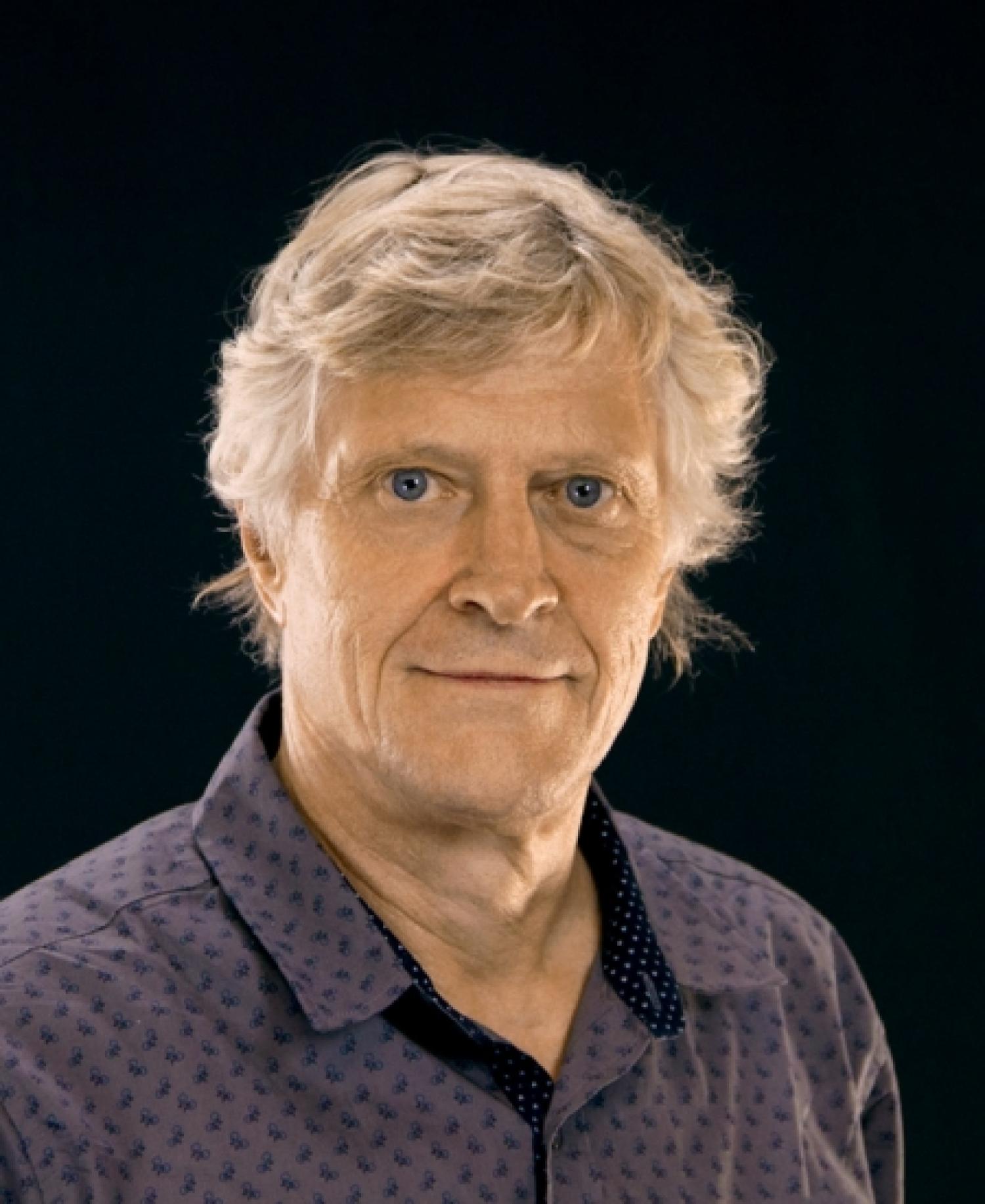
Professor Simon Cornish is a leading physicist at the Department of Physics, Durham University , specializing in ultracold atomic and molecular systems. His research bridges quantum simulation, precision measurement, and quantum coherence, with a focus on Bose-Einstein condensation, Feshbach resonances, and optical tweezer-based quantum control. He has pioneered techniques for manipulating ultracold molecules using magnetic fields, microwave pulses, and laser systems. His academic journey began with a D.Phil. in laser spectroscopy at Oxford, followed by a Lindemann Fellowship at JILA, Boulder. He returned to Oxford as a postdoctoral researcher and secured a Royal Society University Research Fellowship before joining Durham University in 2004. His recent work emphasizes quantum computing with ultracold molecules and long-range entanglement. His research explores the quantum dynamics of ultracold systems, including Rydberg molecules, optical lattice interactions, and rotational coherence in polar molecules. Key publications in Nature Physics and Physical Review Letters highlight advancements in quantum state transfer and precision measurements. His group develops Python tools like Diatomic-py for molecular structure analysis. Scientific awards include the Lindemann Fellowship and Royal Society University Research Fellowship . He supervises postdoctoral researchers such as Adarsh Raghuram , Bethan Humphreys , and Jeff Bai . His lab at Durham focuses on quantum technologies, atomic cooling, and molecular assembly using optical tweezers and Zeeman slowers.
Ifan Hughes is a Professor at the Department of Physics, Durham University , and serves as Head of the Quantum, Light & Matter group. His research focuses on experimental atomic physics, particularly ultracold atom dynamics and atom-light interactions in thermal ensembles. Hughes has been involved in advanced laboratory instrumentation , including the development of magneto-optical filters, atomic vapor cells, and automated laser alignment systems. He coordinates Level 2 Laboratory Skills , teaches Level 4 Atoms, Photons and Qubits (APQ) , and supervises postgraduate researchers. His recent publications explore hot atomic vapor spectroscopy , magneto-optical rotation , and nanoscale atom-surface interactions . Key methodologies include laser locking systems, Faraday effect characterization, and computational modeling of atomic coherence.
Dr. Ian Terry is an Associate Professor in the Department of Physics at Durham University, where he serves as a member of the undergraduate admissions team. His academic profile demonstrates a strong commitment to both teaching and research within the field of condensed matter physics. Dr. Terry's research focuses on experimental condensed matter physics, particularly the magnetic properties of materials including transition metal oxides, organic magnets, and magnetic nanoparticles. His work employs a variety of sophisticated instrumentation such as QD MPMS magnetometers, dc SQUID-based magnetometers, 9GHz ESR spectrometers, and electrical transport systems capable of operating across extreme temperature ranges from 2K to 1300K. He also utilizes international facilities including ISIS, Paul Scherrer Institut, and Institut Laue-Langevin for specialized magnetic measurements. The 15 most recent publications reveal a consistent research trajectory in low-temperature magnetism, with particular emphasis on molecular spin systems, metal-organic magnets, and dielectric-magnetic coupling phenomena. His work frequently explores quantum magnetic behavior in low-dimensional systems, magnetic phase transitions, and the interplay between structural and magnetic properties in novel materials. Member of the ISIS muon facility access panel (2000) Dr. Terry actively supervises students, with Yihan Zhai listed among his current supervisees. His teaching responsibilities include lecturing on condensed matter physics at both undergraduate and postgraduate levels, supervising nuclear physics laboratories, and overseeing level 4 projects. His research program appears well-integrated with international collaborations and utilizes advanced experimental techniques to probe fundamental magnetic phenomena in diverse material systems.
Prof. Dr. Stefan Jordan is an Außerplanmäßiger Professor (Apl.-Prof.) at the Astronomisches Rechen-Institut, Zentrum für Astronomie, University of Heidelberg. His research focuses on stellar astrophysics with specialized expertise in white dwarfs, magnetic stellar objects, and spectroscopic analysis. Research Interests: Primary research areas include magnetic white dwarfs, stellar convection modeling, symbiotic star systems, and Gaia mission-related studies. His work extensively utilizes space-based observatories like ROSAT, EUVE, HST, and ORFEUS for ultraviolet and X-ray spectroscopy of compact objects. Publication Trends: Analysis of 15 recent publications reveals consistent focus on magnetic white dwarf characterization, stellar atmosphere modeling, and spectroscopic surveys. Key methodologies include phase-resolved spectroscopy, Zeeman effect analysis, and numerical simulations of stellar convection. Research frequently involves international collaborations and survey data from Hamburg/ESO and Hamburg Quasar surveys. Scientific Awards: No awards mentioned in available sources. Professional Activities: Engaged in multiple space telescope observation programs (ROSAT, EUVE, HST) and contributes to the Gaia mission through the Astronomisches Rechen-Institut. No specific information about student advising or research grants is available in provided materials.
Edward Murphy is a Professor in the Department of Astronomy at the University of Virginia . His research focuses on galactic structure, interstellar medium dynamics, and spectroscopic analysis of distant astronomical objects. Research Interests: Galactic dynamics, HI clouds, O VI absorption/emission, galaxy clusters, and space telescope instrumentation (notably FUSE and Hubble). Key Contributions: Studies on high-velocity clouds, cooling flows in galaxy clusters, and elemental abundances in the local interstellar medium. Contact: Email: emm8x@virginia.edu , Phone: 434-924-4890. Recent Publications (1999–2008) emphasize ultraviolet spectroscopy, galactic halo gas, and galaxy evolution. No scientific awards or students are explicitly listed in the provided data.
Dr. Beatrix Haggard is an Associate Professor and Extension Specialist in the Department of Plant and Soil Sciences at Oklahoma State University (OSU). She holds a B.S. in Agronomy and Range Management from Tarleton State University (2008) and a Ph.D. in Agronomy from Louisiana State University (2012). Her research focuses on agronomic practices, soil health, and sustainable crop management, with a particular emphasis on residue management, cover crops, and soil microbial dynamics. Dr. Haggard also leads educator training initiatives for 4-H and FFA programs through OSU Extension. She teaches undergraduate courses such as Introduction to Plant and Soil Systems , Applied Plant Science , and Seed and Plant Identification . Her teaching emphasizes career development and hands-on skills in plant and soil systems. Dr. Haggard has secured significant funding for projects like the Training Undergraduates in Plant Research and Extension Principles (2022–2026) and Increasing Water Productivity in Semi-Arid Regions (2019–2025). Her research areas include crop production systems, soil fertility, and the integration of technology in soil analysis. She collaborates on studies involving remote sensing for soil temperature prediction, portable XRF for horizon differentiation, and cover crop impacts on soil health. Dr. Haggard’s work aligns with UN Sustainable Development Goals 2 (Zero Hunger) and 15 (Life on Land).
Dr. Yasser Salem is a Professor of Physical Therapy at the University of North Texas Health Science Center's School of Health Professions. He holds ABPTS board certifications in Pediatric (PCS) and Neurology (NCS). With over 20 years of academic experience, he focuses on neurological rehabilitation, pediatric physical therapy, and interprofessional education. His research spans neurological disorders, aquatic therapy, and neuroimaging applications. Education: PhD from the University of Central Arkansas, MS/BS from Cairo University. Leadership roles include service on the American Physical Therapy Association (APTA), Commission on Accreditation in Physical Therapy Education (CAPTE), and the World Confederation of Physical Therapy (WCPT). He is a journal co-editor and frequent grant recipient. Research interests emphasize rehabilitation for children and adults with neurological conditions, including cerebral palsy, Parkinson's disease, and stroke. He has published over 40 peer-reviewed articles and 300 conference presentations, often as first author. Key areas include gait analysis, aquatic exercise efficacy, and Tai Chi interventions. Awards include the 2018 APTA Academy of Physical Therapy Education Award, 2016 Texas Outstanding Researcher Award, and 2019 UNTHSC Faculty Achievement Award. Teaching focuses on neuroscience, motor control, and pediatric care. He is a pioneer in interprofessional education faculty development programs. His clinical expertise spans pediatric and neurological rehabilitation, with a focus on evidence-based practice. He leads initiatives in diabetic foot care, exercise for inflammatory myopathies, and virtual reality interventions. Current projects include 3D gait analysis guidelines for cerebral palsy and aquatic therapy during pandemics.
Johnson Thomas is a Professor in the Department of Computer Science at Oklahoma State University, with affiliations in both the Stillwater and Tulsa campuses. His research focuses on Quantum Computing, Machine Learning, and Computational Neuroscience, with notable work on quantum circuit optimization and spiking neural networks. He holds degrees from the University of Reading (PhD, 1995), University of Edinburgh (MSc, 1983), and University of Wales (BSc, 1982). His teaching spans advanced topics in databases, quantum computing, and programming languages. Recent courses include *Quantum Computing*, *Advanced Topics in Information Systems*, and *Discrete Mathematics for Computer Science*. He has also advised doctoral students and led research in distributed systems and security. Research interests include quantum algorithms, neurocomputational models, and causal inference. His work bridges theoretical foundations with practical applications, such as ROS security frameworks and NIRS-based forage quality prediction. Over 20 funded projects highlight his expertise in big data, autonomous systems, and sensor networks. Publications emphasize quantum circuit design, medical ML interpretation, and computational neuroscience. Collaborations include interdisciplinary projects with healthcare and agricultural sectors. His contributions advance both theoretical computer science and applied technologies.
Andrew Hamilton is a Professor of Astrophysical and Planetary Sciences at the University of Colorado Boulder, affiliated with JILA (a joint institute with NIST). His research focuses on theoretical studies of black holes, cosmology, and supernovae. Key interests include general relativistic visualization of black holes, cosmological data analysis (e.g., galaxy surveys), and supernova dynamics. Current projects involve exploring black hole interiors, relativistic jet simulations, and intergalactic filament formation. He leads the Hamilton Group at JILA, collaborating with institutions like the University of Virginia and NASA. Research highlights include visualizing supermassive black hole environments, analyzing supernova remnants (SN 1885/S And), and developing methods for extracting cosmological parameters from observational data. Notable work includes the 'Black Hole Flight Simulator' for relativistic rendering and studies of mass inflation in rotating black holes. His lab is located at JILA A706, with extensive collaborations in astrophysical modeling and numerical relativity. Publications emphasize black hole physics, cosmological simulations, and supernova ejecta analysis. His work bridges theoretical astrophysics with computational modeling, contributing to both foundational understanding and public science outreach through documentaries like Monster of the Milky Way (NOVA) and museum exhibits.
Prof. Mikhail Ivanov is a Professor at the Max Born Institute for Nonlinear Optics and Short Pulse Spectroscopy , leading the Attosecond Theory Group . His research focuses on ultrafast phenomena, nonlinear optics, and strong-field physics, with contributions to high harmonic spectroscopy, light-matter interactions, and quantum dynamics in attosecond regimes. His work bridges theoretical modeling with experimental advancements in ultrafast laser science. Research interests include: Ultrafast electronic and nuclear dynamics Attosecond science and strong-field ionization Nonlinear optical processes in quantum materials Chiral photonics and valleytronics in 2D materials Publications from 2021 highlight advancements in time-resolved spectroscopy , high-harmonic generation , and topological photonics . His collaborative work spans international teams in laser physics and condensed matter systems. No academic awards are explicitly listed in the text. Advising/grants: No formal advisee名单 or grant details provided. His research is likely supported through institutional and collaborative grants. Labs/Teams: Primary affiliation with the Attosecond Theory Group, contributing to the institute's experimental and theoretical efforts in ultrafast science.
Dr. Ruediger Grunwald is a Senior Scientist and Group Leader at the Max Born Institute for Nonlinear Optics and Short Pulse Spectroscopy, specializing in ultrafast optics and nanophotonics. His research focuses on spatio-temporal shaping of ultrashort wavepackets, ultrafast nondiffracting optics, and nonlinear spectroscopy of nanomaterials using sub-3-cycle pulse excitation. Honors include SPIE Fellow membership (2019), Outstanding Reviewer recognition (2020), and the Heinrich Gustav Magnus Award (1982). He leads the DFG project MAXWELL-III developing adaptive optical systems for few-cycle pulse control. Pioneered spectral Gouy rotation control in ultrashort vortex pulses Developed low-dispersion mirrors for few-cycle laser applications Investigated plasmonic-thermal mechanisms in femtosecond nanostructuring
Andres Felipe Ordonez Lasso is a researcher previously affiliated with the Max Born Institute for Nonlinear Optics and Short Pulse Spectroscopy. His work focuses on attosecond physics, quantum information science, and chiral dynamics in molecules under strong laser fields. Key contributions include studies on photoelectron circular dichroism, geometric magnetism in chiral molecules, and ultrafast optical phenomena. Research highlights include disentangling enantiosensitivity in bichromatic fields, decoding molecular structure via photoionization, and exploring high-photon-number coherent states in strong fields. Collaborations involve international teams addressing fundamental questions in molecular dynamics and chiral measurements.