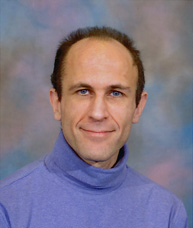
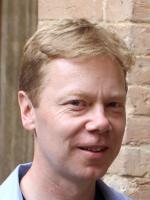
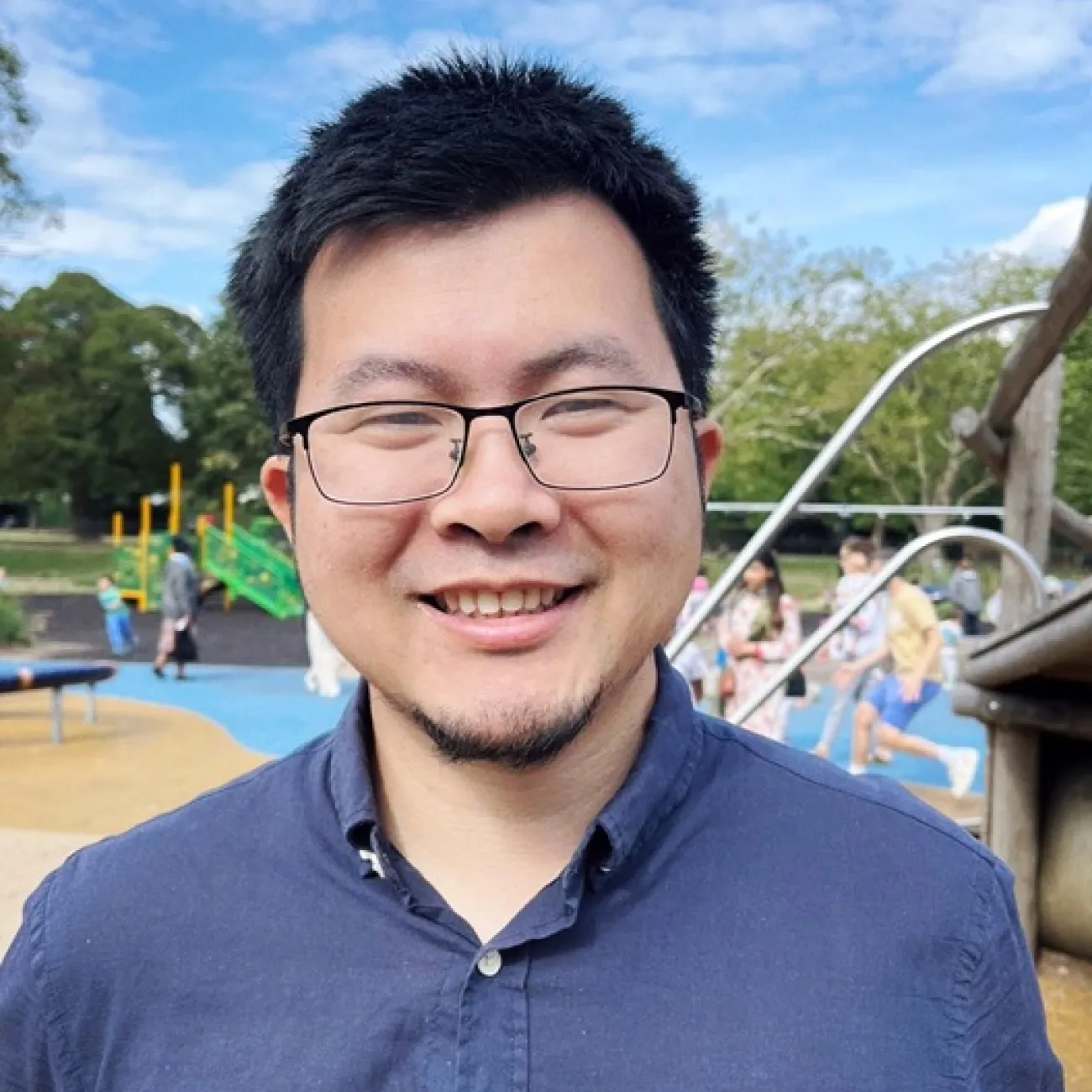
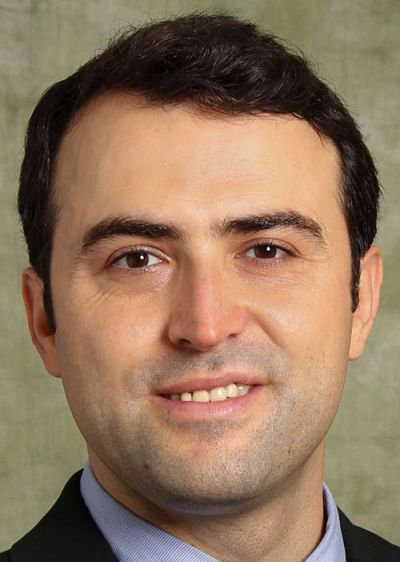
Professor Tony Shardlow is affiliated with the Department of Mathematical Sciences at the University of Bath , UK. His research spans Stochastic Differential Equations , Bayesian Inverse Problems , Statistical Shape Modelling , and Numerical Analysis , with applications in data science, medical imaging, and computational physics. Labs/Teams : IMI (Institute for Mathematical Innovation), Prob-L@b (Probability Laboratory at Bath), SAMBa (EPSRC Centre for Doctoral Training in Statistical Applied Mathematics). Recent Research Trends : Focus on geometric shape analysis using flow fields, stochastic PDEs for particle dynamics, and Bayesian inference techniques in industrial and medical contexts. Collaborative work bridges computational mathematics with applications in hip dysplasia assessment and pesticide delivery systems. Advising : Supervised Fengpei Wang's PhD thesis on dimension reduction and Sinkhorn algorithms. Collaborates with researchers like N. D. F. Campbell and C. Poon. Teaching : Offers MA30170 - Numerical Solution of Elliptic PDEs.
Fausto Cattaneo is a Professor and Deputy Chair for Academic Affairs at the Department of Astronomy and Astrophysics, University of Chicago. He is affiliated with the FLASH Center for Computational Science and conducts research in computational astrophysics and solar physics. Dr. Cattaneo received his PhD from the University of Cambridge in 1984 and completed his undergraduate studies at Bristol University in 1979. His research focuses on computational modeling of fundamental astrophysical processes, particularly the generation of magnetic fields, transport of angular momentum in accretion discs, and energy transport by turbulent convection. His work primarily investigates magnetohydrodynamic phenomena in astrophysical contexts, with particular emphasis on dynamo theory, turbulence, and the magnetorotational instability that drives accretion in disks. His research combines theoretical analysis with advanced computational techniques to model complex plasma behaviors in space environments, addressing questions about magnetic field generation and transport mechanisms across various cosmic scales. Dr. Cattaneo's publication record demonstrates consistent focus on plasma astrophysics, magnetic helicities, dynamo action, and turbulence. His most recent work (2022) addresses research opportunities in plasma astrophysics, while his longstanding expertise in magnetorotational instability and MHD turbulence is evident throughout his publication history spanning several decades. As Deputy Chair for Academic Affairs, Dr. Cattaneo plays an important administrative role in his department while maintaining an active research program that continues to advance our understanding of astrophysical plasma processes. His work bridges theoretical astrophysics and computational methods, contributing significantly to our knowledge of fundamental processes governing cosmic magnetic fields and fluid dynamics.
Nima Fallahjoybari serves as a Senior Lecturer at Mid Sweden University's Department of Engineering, Mathematics and Science Education (IMD) in Sundsvall, holding both professional and academic titles in this capacity. His research focuses on industrial fluid dynamics with direct applications in engineering processes, particularly within the pulp and paper sector. His core research interests include: Fluid dynamics in pulp flow systems through rotating/non-rotating grooves Heat transfer enhancement mechanisms using porous media Renewable energy applications in wind turbine efficiency Computational modeling of non-Newtonian fluids and porous media flow Post-Darcy flow regimes in thin porous structures Turbulent flow simulation in industrial channels Analysis of his 2020-2023 publications reveals consistent methodological rigor using Large Eddy Simulation (LES) and experimental validation across diverse applications. His work bridges theoretical fluid mechanics with practical industrial challenges in pulp processing, thermal management systems, and renewable energy conversion, primarily published in mechanical engineering and thermal science journals like the Journal of the Brazilian Society of Mechanical Sciences and Engineering.
David Aulicino is an Associate Professor at Brooklyn College and The Graduate Center (CUNY). His research focuses on the intersection of Geometry and Dynamical Systems , particularly translation surfaces, k-differentials, meromorphic differentials, and SL 2 (R) orbit closures. He has organized the Complex Analysis and Dynamics Seminar at the Graduate Center. Education: Ph.D. in Mathematics (2012), University of Maryland - College Park M.A. in Mathematics (2009), University of Maryland - College Park B.A. in Mathematics (2005), Yale University His recent work includes classifying trajectories on Platonic solids, studying affine invariant submanifolds with degenerate Lyapunov exponents, and exploring Siegel-Veech constants for cyclic covers. Articles span 2013-2024, with keywords like Teichmüller dynamics, moduli spaces, and flat geometry. Scientific Awards: NSF Postdoctoral Research Fellowship (2012-2016) Simons Foundation Collaboration Grant 853471 (2021-2026) Multiple PSC-CUNY grants (2017-2025) He has collaborated with researchers including Jayadev S. Athreya, Carlos Matheus, Chaya Norton, and Alex Wright. His publications address translation surfaces, Lyapunov exponents, and geometric classification problems in moduli spaces.
Eric G. Blackman is a Professor of Physics and Astronomy at the University of Rochester and a Senior Scientist at the Laboratory for Laser Energetics. His research focuses on theoretical astrophysics and plasma physics, with interdisciplinary interests in planetary and geophysical systems. He holds a BS from MIT, a Part III Tripos from Cambridge, and a PhD from Harvard. Blackman has pioneered studies on accretion disks, jets, magnetic fields, and common envelope evolution. He collaborates extensively with experimentalists at the Laboratory for Laser Energetics to bridge astrophysical and laboratory plasmas. His awards include a DOE Faculty Development Award (2000–2003) and APS Fellow (2005). Blackman has mentored numerous students and postdocs across astrophysics and related fields. Education: MIT (BS Physics/Math, 1990), Cambridge (M.A.S., 1991), Harvard (PhD Theoretical Astrophysics, 1995) Research Themes: Plasma astrophysics, stellar dynamics, planetary magnetization, and laboratory astrophysics. Labs & Collaborations: Laboratory for Laser Energetics (Inertial Confinement Fusion), interdisciplinary projects on brain injury physics.
Joseph L. Demer is a Professor of Ophthalmology and Neurology at the University of California Los Angeles (UCLA), where he leads the Demer Ocular Motility Laboratory. With dual appointments across departments, Dr. Demer has established himself as a leading researcher in ocular biomechanics and strabismus, with particular expertise in the relationship between eye movements, optic nerve function, and glaucoma pathogenesis. Dr. Demer's educational background spans multiple disciplines, reflecting his interdisciplinary approach to ophthalmology research: B.S. in Electrical Engineering from University of Arizona (1977) MD and PhD in Biomedical Engineering from Johns Hopkins University (1977) Medicine Internship at Baylor College of Medicine (1984) Ophthalmology Residency at Baylor College of Medicine (1987) Pediatric Ophthalmology Fellowship at Texas Children's Hospital (1988) Dr. Demer's research focuses on the biomechanical aspects of eye movement disorders, with particular emphasis on the relationship between ocular motility, strabismus, and glaucoma pathogenesis. His work has revolutionized understanding of extraocular muscle pulley systems and their role in various strabismus conditions, including sagging eye syndrome in elderly patients. His laboratory employs advanced techniques including magnetic resonance imaging, finite element modeling, and biomechanical testing to investigate how eye movements affect the optic nerve head and peripapillary region, with implications for understanding normal-tension glaucoma. Analysis of Dr. Demer's recent publications (2023-2025) reveals several key research trends. His work continues to explore the biomechanical relationship between eye movements and optic nerve health, with increasing emphasis on how adduction affects the optic nerve sheath and peripapillary tissues in glaucoma. Recent studies employ advanced imaging techniques like scanning laser ophthalmoscopy and finite element modeling to quantify tissue deformations during eye movements. His research also addresses practical clinical questions in strabismus surgery, particularly for elderly patients with age-related conditions like sagging eye syndrome, and has expanded into newer therapeutic areas including teprotumumab for thyroid eye disease-related strabismus. Dr. Demer's significant contributions to the field have been recognized with prestigious awards: Lifetime Achievement Award, American Association for Pediatric Ophthalmology and Strabismus (2018) Senior Achievement Award, American Academy of Ophthalmology (2017) Gold Level Fellow, Association for Research in Vision and Ophthalmology (2009) Friedenwald Award, Association for Research in Vision and Ophthalmology (2003) Throughout his career, Dr. Demer has mentored numerous students and colleagues in the field of ophthalmology and strabismus research. His laboratory at UCLA has been continuously funded through various research grants, enabling the development of innovative techniques for studying ocular biomechanics. His work on extraocular muscle pulleys and orbital connective tissues has fundamentally changed the understanding of strabismus mechanisms and surgical approaches. Dr. Demer directs the Demer Ocular Motility Laboratory at UCLA, where his team employs a multidisciplinary approach combining clinical observation, advanced imaging, and biomechanical modeling. The laboratory has made significant contributions to understanding the functional anatomy of extraocular muscles, the biomechanics of the optic nerve in eye movements, and the pathogenesis of various strabismus conditions. Current research focuses on the relationship between eye movements and glaucoma, age-related changes in orbital tissues, and improving surgical approaches for complex strabismus cases.
Professor Gordon Ogilvie is a Professor of Mathematical Astrophysics at the Department of Applied Mathematics and Theoretical Physics (DAMTP), University of Cambridge, and a Fellow of Clare College. His research focuses on the dynamics of astrophysical discs, including planetary rings, protoplanetary discs, and accretion discs around compact objects. Key interests include hydrodynamic/magnetohydrodynamic instabilities, warped/eccentric disc dynamics, and tidal interactions in planetary systems. He holds a long-standing academic career at Cambridge, including roles as Royal Society University Research Fellow (2000–2005) and Reader in Mathematical Astrophysics (2009–2013). His work bridges fluid dynamics and astrophysics, with applications to exoplanet dynamics and stellar tidal interactions. Research highlights include studies on nonlinear wave behavior in rotating fluids, global disc instabilities, and gravitational interactions in protoplanetary systems. Recent publications address tidal dissipation mechanisms, eccentric disc evolution, and magnetic field dynamics in accretion environments. Professor Ogilvie's affiliations include DAMTP and Clare College, with active contributions to graduate supervision and interdisciplinary collaborations in astrophysical fluid dynamics. His lab focuses on theoretical and computational astrophysics, addressing fundamental questions in disc dynamics and celestial mechanics.
Dr. Jie Yuan is an Assistant Professor (Lecturer) at the University of Southampton, specializing in aerospace structures and nonlinear dynamics. He holds a PhD from the University of Bristol (2016) and has industry experience at Airbus UK and research roles at Imperial College London. He is affiliated with the Computational Engineering and Design Group and Dynamics Group. Education: PhD in Aerospace Structures, University of Bristol (2016) Research Focus: Dr. Yuan develops computational methods for nonlinear aerospace systems, friction dynamics, vibration control, and uncertainty quantification. His work bridges experimental validation (3D SLDV) with theoretical frameworks like Bayesian inference and Koopman operators to solve complex aeroelastic challenges. Publication Trends: Recent articles (2024-2025) emphasize data-driven approaches for aeroelastic stability, friction damping in turbomachinery, and energy harvesting. Earlier work (2015-2016) focused on probabilistic methods for mistuned bladed discs and aircraft design optimization. Awards & Honors: Research Fellowship, Royal Academy of Engineering/Leverhulme Trust (2023) Fellow, Higher Education Academy (2022) Chartered Engineer, RAeS (2021) Best Paper Award (2021) Fellowship, Royal Aeronautic Society (2025 forthcoming) Professional Activities: Editor for the Journal of Risk and Uncertainty in Engineering Systems (2023-2024) and frequent speaker at international conferences on friction dynamics and aerospace structures.
Dr Janis Priede is an Associate Professor at Coventry University’s Research Centre for Fluid and Complex Systems. His work focuses on theoretical and numerical analysis of liquid-metal magnetohydrodynamics (MHD), electromagnetic stability, and fluid dynamics phenomena. He holds a PhD from the Institute of Physics (Latvia) and has held roles at the Research Centre Dresden-Rossendorf (Germany) and the University of Latvia. His research explores magnetorotational instability in astrophysical contexts, contactless flow meters, and stability of liquid metal flows in strong magnetic fields. Education: PhD in Physics from the Institute of Physics (Latvia, 1993); earlier roles include Senior Researcher at the University of Latvia (1998–2006) and Research Fellow at FZD, Germany (1993–1998). Research Interests: Magnetohydrodynamics applications in industrial and astrophysical contexts Electromagnetic levitation and instabilities in materials processing Computational methods for fluid dynamics and electromagnetic field analysis Magnetorotational instability mechanisms in accretion discs His recent publications address hydraulic jumps, dynamo theory, and internal bore dynamics. Collaborations include interdisciplinary work with institutions in Germany and Latvia.
David Kinahan is an Associate Professor at Dublin City University's School of Mechanical and Manufacturing Engineering, specializing in microfluidics, biomedical diagnostics, and advanced manufacturing technologies. His research focuses on developing lab-on-a-disc platforms for medical diagnostics, laser-based surface engineering, and industrial applications. He completed a BEng in Aeronautical Engineering and a PhD in high-throughput droplet microfluidics at the University of Limerick. Prior to academia, he held engineering leadership roles at Stokes Bio Ltd and the Biomedical Diagnostics Institute. His research interests span microfluidic device innovation, surface texturing for antifouling/corrosion resistance, and additive manufacturing of smart materials. Recent projects include laser processing of NiTi alloys, centrifugal microfluidics for pathogen detection, and nanoscale surface engineering. Kinahan's publications demonstrate consistent focus on translating engineering solutions into practical applications, particularly in healthcare and industrial contexts. His collaborations with Fraunhofer Project Center highlight his commitment to industry-relevant research. He maintains an active Google Scholar profile documenting his contributions to microfluidics and advanced manufacturing research.
Cosan Joe-Sean Daskiran serves as an Assistant Professor in the Department of Mechanical Engineering at Binghamton University, leading cutting-edge research in fluid dynamics with applications spanning renewable energy, environmental protection, and water treatment technologies. His work bridges computational simulations and experimental validation to address critical challenges in multiphase flows, transport phenomena, and energy-efficient systems. Education: BS in Mechanical Engineering from Istanbul Technical University MS and PhD in Mechanical Engineering from Lehigh University Daskiran's research program focuses on computational fluid dynamics (CFD) simulations and experimental characterization of complex fluid phenomena, including multiphase flows, turbulent flows, free-surface dynamics, and jet flows. His laboratory investigations target renewable energy harvesting systems, desalination technologies through centrifugal reverse osmosis, and oil spill response mechanisms, with particular attention to droplet formation, dispersion, and environmental interactions under wave conditions. Analysis of his 15 most recent publications (2022-2025) reveals a dominant research trajectory centered on two interconnected themes: energy-efficient water desalination using centrifugal reverse osmosis systems integrated with tidal energy harvesting, and comprehensive oil spill dynamics modeling covering underwater jet behavior, droplet size distribution under wave action, and innovative in-situ burning techniques. These publications demonstrate rigorous methodology combining large eddy simulations, experimental fluid dynamics, and practical engineering applications. Daskiran directs the Multiscale Fluid Physics Laboratory (MFPL) at Binghamton University, which maintains specialized experimental facilities for fluid dynamics research including wave tanks, high-speed imaging systems, and computational resources for multiphase flow simulations. The laboratory serves as an interdisciplinary hub for advancing fundamental fluid mechanics principles while developing solutions for environmental and energy challenges.
Lanka Weerasiri is a Researcher at the University of Hertfordshire, affiliated with the Wolfson Centre for Biodetection and Instrumentation Research and the School of Physics, Engineering & Computer Science. His work focuses on bioaerosol detection, fluid dynamics, and numerical modeling. Education: Doctor of Philosophy (Engineering) – Deakin University (2023) Master by Research (Engineering) – Deakin University (2017) Bachelor of Engineering (Mechanical) – Deakin University (2013) Research interests include dielectrophoretic particle collection, thermal sciences, and low-pressure fluidization. He collaborates on projects like the Compact Integrated Biological Detection (CIBD) and Air DNA Sampling initiatives. Key projects (2023–2026) involve developing compact detection systems and improving airborne DNA sampling techniques. Labs/Teams: Wolfson Centre for Biodetection and Instrumentation Research, collaborating with experts in biomedical engineering and environmental science.
Filippo Fraternali is a Full Professor of Gas Dynamics and Evolution of Galaxies at the Kapteyn Astronomical Institute, University of Groningen. His work focuses on galaxy formation, gas dynamics, and dark matter interactions. He holds affiliations with the International Astronomical Union and the European Astronomical Society, and chairs the Astronomy Master's admissions board. Education: PhD in Astronomy, University of Bologna (2002) – Thesis: Hot and cold gas in the disk and halo of NGC 2403 MSc in Astronomy, University of Bologna (1998) Research Interests: Gas accretion and feedback mechanisms in galaxies Circumgalactic medium dynamics Dark matter halo properties High-redshift galaxy kinematics Key Achievements: ERC Advanced Grant (2019) for studying galactic gas flows George Darwin Lectureship (2021) by the Royal Astronomical Society Recipient of the Friedrich Wilhelm Bessel Research Prize (2020) Over 150 peer-reviewed publications and a textbook on galaxy formation His research integrates observational data (e.g., JWST, ALMA) with cosmological simulations, addressing fundamental questions about baryon cycles and galaxy evolution. He actively supervises PhD students and mentors early-career researchers through grants and collaborative projects.
Professor Gary Lock holds a Chair in Aerospace Engineering at the University of Bath's Department of Mechanical Engineering, leading the Turbomachinery Research Centre. He has served as Head of Department (2015) and previously held roles at Oriel College, University of Oxford (1991-1995). His research focuses on gas turbine technology, fluid dynamics, and heat transfer, emphasizing practical engineering applications. He is a recipient of the National Teaching Fellowship (2011) and multiple American Society of Mechanical Engineers awards (2023-2025). Education: PhD in Aerospace Studies, University of Toronto Institute for Aerospace Studies (1991) Fellow of Oriel College, University of Oxford (1991-1995) Research Interests: Gary's work centers on land-based gas turbines and aero-engines, with emphasis on turbine rim seals, hot gas ingestion, and compressor cavity dynamics. His approach combines experimental measurements, computational fluid dynamics, and thermal imaging to enhance turbine efficiency and durability. Projects & Awards: Recipient of prestigious awards for contributions to turbine research and teaching excellence. Lead on EPSRC-funded projects like the Turbine Efficiency Improvement and Compressor Cavity Modeling initiatives. Advisory & Grants: Supervises doctoral students in fluid dynamics, thermodynamics, and gas turbine technology. Collaborates with industry leaders like Siemens and Rolls-Royce on advanced turbine design and heat transfer solutions. Labs & Teams: Directs the Turbomachinery Research Centre, focusing on experimental and computational studies of turbine and compressor systems.
Prof Carl Sangan is a Professor of Sustainable Propulsion and Power at the University of Bath’s Department of Mechanical Engineering, serving as Director of Research and Deputy-Director of the IAAPS Research Institute. He specializes in gas turbine engineering, focusing on experimental and theoretical modeling of flow and heat transfer in rotating disc systems. His work bridges academic research with industry applications, particularly with Siemens and Safran Aircraft Engines. Education: MEng (Hons) in Aerospace Engineering, PhD in Turbomachinery, followed by postdoctoral research and a University Prize Fellowship in Gas Turbine Engineering (2012). Academic roles include Lecturer (2014), Senior Lecturer (2017), Reader (2020), and Professor (2022). Research interests span gas turbine efficiency, optical methods for cooling system analysis, and innovations in shaft sealing. Key areas include hot-gas ingestion modeling, compressor cavity heat transfer, and film cooling of turbine blades. His projects are primarily EPSRC-funded but closely integrated with industry. 2021 ASME Turbomachinery Best Paper Award 2020 ASME Fellow Teaching Excellence: 2016 and 2022 University Awards Advising: Open to doctoral students in gas turbine technologies, fluid dynamics, rotating systems, and thermal imaging. Active in 15 research projects, including leadership roles in EPSRC and Innovate UK initiatives like HyFIVE and KTP collaborations with industry. Labs/Teams: Core member of IAAPS, leading turbine cooling and hydrogen storage projects. Collaborates internationally on additive manufacturing and CO₂ cooling systems.