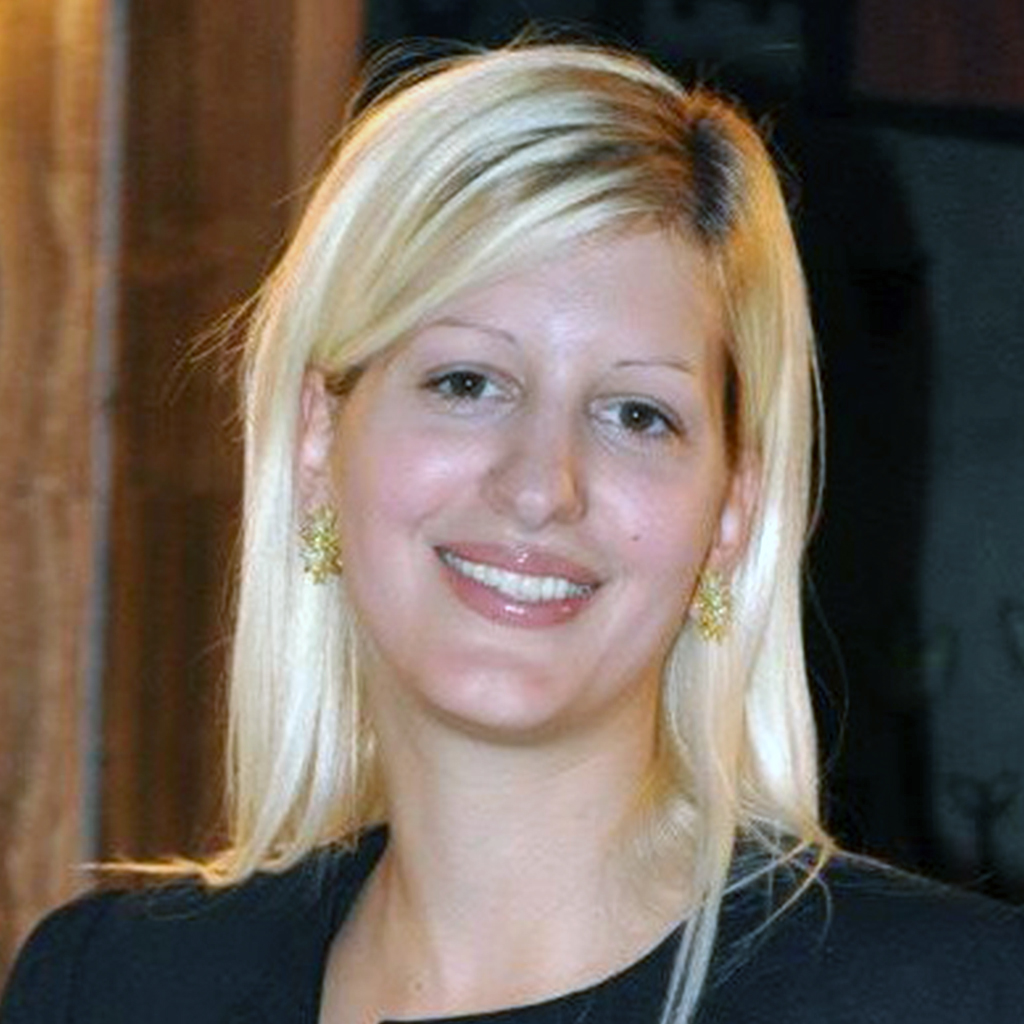
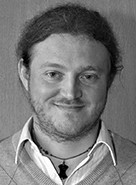
Jelena Gledić is a Senior Lecturer at the University of Belgrade’s Faculty of Philology, specializing in Chinese language and culture. With cross-appointments at Osaka University and visiting positions at University of Virginia and University of Zurich, her work bridges intercultural communication, digital education, and critical thinking. Education: BA and MA in Chinese studies from University of Belgrade; PhD in Cultural Studies (ABD) Expertise: Classical Chinese translation, pedagogical innovation, and Belt and Road Initiative analysis Her research focuses on cross-disciplinary cultural phenomena, particularly Chinese diasporas and societal challenges rooted in perceptions of difference. She integrates digital tools into teaching, emphasizing student engagement and reflective learning. Key projects include: Erasmus+ Programme (2020–present): Curriculum innovation Sinophone Borderlands (2019–present): China regional studies COST Action China In Europe Research Network (2019–present) Scientific honors include Open Society Foundations grants and European Association of Chinese Studies recognitions. Her publications analyze cinematic representations of China, cultural identity, and educational methodologies.
Andreas Hund is a Privatdozent (equivalent to Associate Professor) at ETH Zürich, working within the Department of Environmental Systems Science and specifically the Institute of Agricultural Sciences. He is based at the Crop Science Professorship (Professur für Kulturpflanzenwissenschaften) at Eschikon 33 in Lindau, Switzerland. His research focuses on the adaptation of crop varieties to low nitrogen input conditions and abiotic stress, with a particular emphasis on wheat development under field conditions. Hund's research trajectory shows he began with genome mapping of root development in maize before shifting focus to field-based crop development research. He leads work utilizing the Field Phenotyping Platform (FIP) and Phenofly infrastructure for continuous wheat phenotyping throughout its development cycle. His research integrates advanced phenotyping techniques, drone technology, and statistical modeling to address challenges in crop adaptation to changing environmental conditions. His publication record demonstrates a clear focus on high-throughput field phenotyping, particularly using drone-based technologies for wheat monitoring. His recent work addresses challenges in thermal imaging of crops, development of comprehensive phenotyping datasets, disease resistance monitoring, and analysis of crop responses to environmental stresses. The research shows an increasing integration of digital technologies with traditional plant breeding approaches, with applications for climate-adaptive agriculture. Hund is an active member of the European Association for Research on Plant Breeding and the Swiss Society of Agronomy (SSA). His ORCID identifier is 0000-0002-2309-1625, indicating his active participation in the scholarly community. He teaches courses including 'Current Challenges in Plant Breeding' and 'Experimental Design and Applied Statistics in Agroecosystem Science,' contributing to the education of the next generation of agricultural scientists. His work on the FIP platform and related phenotyping technologies represents a significant contribution to the field of precision agriculture and crop improvement.
Jaya Krishnakumar is an Honorary Professor at the University of Geneva’s Institute of Economics and Econometrics. Her expertise spans panel data econometrics, time series models, and applications of econometric methods to human development, poverty, and inequality analysis. She holds a Ph.D. from the University of Geneva and has held full professorship roles there. Her work bridges theoretical econometrics with policy-relevant applications, particularly in operationalizing Amartya Sen’s capability approach through structural equation models. Education : Ph.D., University of Geneva Her research focuses on multidimensional well-being measurement, including capability deprivation analysis for vulnerable populations (e.g., disabled individuals, elderly with Alzheimer’s). Notable contributions include developing CapMod (a simulated society model) for evaluating capability measurement techniques and analyzing labor force participation in India. She has published extensively in top journals like Social Indicators Research , Journal of Human Development and Capabilities , and World Development . Her articles address topics such as nonlinear econometric models, pandemic response challenges in India, and socio-economic factors enabling low-energy human needs satisfaction. Recent work emphasizes policy implications of multidimensional indices, including trade-offs in human development metrics. Awards : Fellow of the Human Development and Capability Association She advises global initiatives like the UNDP’s Human Development Reports and the World Bank’s Women, Business, and the Law Index. Her advisory roles include the SDG Platform (B-Lab/UN Global Compact) and the COSA International Scientific Committee. Her grants and collaborations span international projects, including evaluations of Bolivia’s well-being policies and India’s vaccine distribution during the pandemic. She frequently presents at conferences like the Human Development and Capability Association meetings and organizes workshops on econometric methods for development analysis.
Dr. Armin Senn-Rist is a PostDoc researcher at the Institute of Geography (University of Bern), specializing in Paleo-Geoecology . His work focuses on permafrost dynamics, alpine geomorphology, natural hazard management, and sustainable resource use. He holds a Ph.D. (2008) and a Diplomarbeit (2002) from TU Munich and WSL SLF Davos, respectively, awarding him the Prix Georges Erhard for his early work on cool scree landforms. His research bridges field studies, laboratory simulations, and applied risk management solutions. Notable contributions include thermal gradient analyses in Valais and root reinforcement studies for slope stability. He collaborates with institutions like Astra and EPFL on environmental projects. Education: Ph.D. in Geography (2008), University of Zurich Diplomarbeit (2002), TU Munich & WSL SLF Davos Research Focus: Combines geophysical measurements, climatic modeling, and environmental policy to address permafrost thaw risks, alpine terrain stability, and sustainable hazard mitigation strategies. His work emphasizes translating scientific insights into actionable policies for vulnerable mountain regions. Key Article Trends: Recent publications (2015-2020) highlight advancements in thermal monitoring techniques, geotechnical applications of vegetation, and climate-driven permafrost dynamics. Earlier work (2005-2008) established foundational research on hydrothermal processes in periglacial environments.
Dr. Mauro Donegà is a Lecturer at the Department of Physics, ETH Zurich, and affiliated with the Institute for Particle Physics and Astrophysics. He holds a dual presence at CERN (Office 32-4-C16) and ETH Zurich (HPK E 30). His research focuses on experimental particle physics, Higgs boson studies, and advanced data analysis techniques. He teaches courses such as Statistical Methods and Analysis Techniques , Higgs Physics , and Experimental Foundations of Particle Physics , and has developed a Jupyter-based textbook on HEP data analysis. He supervises master’s and semester projects, mentoring students in topics like effective field theory, machine learning applications in particle physics, and CMS detector analysis. His work emphasizes bridging theoretical concepts with experimental validation, as highlighted by his teaching philosophy rooted in Freeman Dyson’s quote: 'New directions in science are launched by new tools.' Notable recognitions include the 'Best teacher prize' at the 2016 ITEP School in Russia. Donegà collaborates closely with researchers like Dr. A. Calandri and Dr. D. Valsecchi, advancing methodologies in statistical inference and multivariate analysis. His contributions span both education and cutting-edge experimental particle physics, reflecting his dual role as an educator and researcher.
Prof. Dr. Olivier Voinnet is a Full Professor at the Department of Biology and Head of the Institute of Molecular Plant Biology at ETH Zürich. His research focuses on RNA silencing mechanisms in plants, particularly their roles in antiviral defense, developmental regulation, and epigenetic processes. Key areas include small RNA biogenesis, mobility, and functional interactions with viral pathogens. His work explores how plants utilize small RNAs (siRNAs, miRNAs) to combat viral infections, regulate gene expression, and maintain genome integrity. Notable contributions include studies on the suppression of RNA silencing by viral proteins and the systemic spread of small RNAs via phloem and plasmodesmata. Voinnet’s research integrates molecular genetics, biochemistry, and computational approaches to dissect RNA silencing pathways. His findings bridge basic biology with applications in agriculture and biotechnology, such as enhancing crop resistance to pathogens. Leading the Institute of Molecular Plant Biology, fostering interdisciplinary plant science research. Teaching courses in Plant Biology and Molecular Genetics at ETH Zürich. Publications highlight breakthroughs in understanding small RNA dynamics, including their roles in meristem activity, transposon silencing, and cross-kingdom RNA communication. His work underscores the importance of RNA-based regulatory networks in plant immunity and development.
Prof. Christoph Ringli is a Professor at the Department of Plant and Microbial Biology, University of Zurich. His research focuses on molecular mechanisms underlying plant cell wall integrity sensing, particularly involving LRX proteins, RALF peptides, and FERONIA signaling. He investigates how these components regulate cell growth, cell wall formation, and stress responses. His work also explores the role of flavonols in cell shape determination and auxin transport regulation. Key research areas include: cell wall dynamics, plant hormone signaling (e.g., RALF peptides), genetic regulation of cell morphology, and epigenetic mechanisms influencing developmental processes. His lab has identified suppressor mutants (rol and sune) that shed light on interactions between cell wall signaling and TOR pathway components. His research is supported by grants from the Swiss National Science Foundation, SystemsX/MechanX programs, and a Syngenta Fellowship. He teaches courses in plant biology at the University of Zurich and supervises research internships in plant biology. Notable achievements include discovering LRX proteins' role in cell wall compaction, elucidating flavonol glycosylation effects on cell shape, and identifying novel components of the LRX/RALF/FER signaling network.
Dr. Ruth Esther Häusler Hermann serves as Team Leader for Human Factors at the Zurich University of Applied Sciences (ZHAW) School of Engineering, where she directs research on human-automation interaction in safety-critical systems. Her work integrates engineering and psychological methodologies to enhance performance in aviation, nuclear safety, and industrial automation contexts through empirical field studies and experimental design. Her academic foundation includes a PhD and Master's in Psychology from the University of Bern (2000-2006), supplemented by higher education didactics certification at ZHAW in 2011. Professional roles span the Swiss Federal Office of Energy (2014-present), Federal Office of Civil Aviation (2004-2010), and co-founding Human Factors Solutions GmbH (2005-present). Häusler Hermann's research program emphasizes: Objective measurement of cognitive states using eye-tracking and psychophysiological parameters Evidence-based training systems with real-time performance feedback Human factors in automation design for aviation and nuclear safety Root cause analysis methodologies for incident investigation Human-robot collaboration frameworks for industrial applications Analysis of her recent publications reveals a strategic focus on artificial situational awareness systems, with increasing integration of AI in air traffic control and cockpit interfaces. Her work consistently bridges laboratory experimentation with real-world implementation, prioritizing human-centered design in high-stakes environments where automation failures could have catastrophic consequences. She leads the Horizon 2020 AISA Consortium project on human-machine distributed situation awareness and serves on EASA's Human Factors Advisory Group. Current research includes field studies on AI-based conflict detection for air traffic controllers and novel augmented reality assistance systems validated through controlled cockpit experiments. As head of ZHAW's Human Factors research group, she maintains active collaborations with the European Association for Aviation Psychology (EAAP) and Switzerland's Nuclear Safety Commission. Her team operates at the intersection of cognitive psychology, systems engineering, and data science, developing measurement protocols that translate lab findings into practical safety interventions for aviation authorities and industrial clients.
Carlen Fernando is an Associate Professor at HES-SO Valais-Wallis within the Santé (Health) school, specializing in Nursing. His research focuses on caregiving dynamics, palliative care, family support systems, and healthcare policy challenges. He leads projects addressing the needs of caregiving families in oncology and palliative care contexts, emphasizing intergenerational support and systemic gaps in professional assistance. Key projects include optimizing support for caregivers of cancer patients (supported by HES-SO Valais and local organizations) and analyzing transnational family care during the pandemic. His work highlights caregiver burnout, bureaucratic obstacles, and the integration of intuitive nursing practices rooted in phenomenological theory. Recent publications explore sibling experiences in crisis, dual-caregiver work-life challenges, and embodied care ethics. He collaborates across institutions in Switzerland and Germany, advocating for family-centered approaches in healthcare education and policy. Education: Doctoral thesis on caregiving families (Middlesex University, 2021) Grants: Supported by HES-SO Valais, cancer leagues, and donor associations Lab/Team: Active in the HES-SO Health Sector's nursing research initiatives
Grégory Mermoud is an Associate Professor at HES-SO Valais-Wallis, School of Engineering, specializing in Machine Learning, Artificial Intelligence, and large-scale distributed systems. He teaches computer networks, machine learning, and distributed computing. His research focuses on the intersection of ML, simulation, software systems, and data science. Affiliations: HES-SO Valais-Wallis (current), Cisco Systems (former Distinguished Engineer) Gregory holds a BSC in Computer Science and Communication Systems from HES-SO Valais-Wallis. With over a decade of industry experience at Cisco, he led teams developing flagship enterprise products and holds over 200 U.S. patents. His work spans network optimization, predictive modeling, and application-driven routing. Research Interests: Machine Learning applications in networking, Quality of Experience (QoE) prediction, network path optimization, and adaptive systems. His contributions include groundbreaking work on AI-driven network monitoring, QoE prediction models, and SD-WAN optimization. Advising & Grants: Oversaw recruitment of over 50 engineers at Cisco, many from HES-SO. His research has been supported by industry collaborations and academic grants. Labs/Teams: Engaged in collaborative projects with Cisco’s R&D teams and academic institutions, focusing on network intelligence and distributed systems innovation.
Christopher F. Baum is a prominent economist affiliated with the Department of Economics at Boston College (85% appointment) and the Centre of Excellence for Science and Innovation Studies at Kungliga Tekniska Högskolan (KTH) in Stockholm, Sweden (15% appointment). He received his terminal degree in Economics from the University of Michigan in 1977 and has maintained an active research career spanning over five decades. His professional presence includes Twitter ( @cfbaum ) and Bluesky ( @Kitbaum.bsky.social ). Dr. Baum's research spans several key areas in economics and econometrics, with particular emphasis on time series analysis, macroeconomic uncertainty, international finance, and Stata programming methodology. His early work focused on exchange rate volatility, trade flows, and monetary policy transmission, while more recent research addresses labor economics (particularly refugee integration), pandemic modeling (COVID-19 impact analysis), and environmental economics. He has made significant contributions to econometric methodology, especially in developing and implementing advanced techniques in the Stata statistical software package. His publication record shows a clear evolution from theoretical econometrics to applied policy-relevant research. Recent work demonstrates increasing focus on contemporary issues including refugee economics, pandemic impacts, and environmental health outcomes. His methodological contributions remain central to his work, with numerous publications on Stata implementation of advanced econometric techniques. Dr. Baum maintains an extensive collaborative network, with frequent co-authorship relationships with researchers including Hans Lööf, Andreas Stephan, Mustafa Caglayan, Jesús Otero, and Dorothea Schäfer. His work appears in both specialized econometrics journals and broader economics publications, reflecting the interdisciplinary nature of his research contributions.
Alexander Tagantsev is a Researcher at the School of Engineering within École polytechnique fédérale de Lausanne (EPFL) , affiliated with the LC (Ceramics Laboratory) . His work spans ferroelectrics, optomechanics, and phase transitions , with a focus on domain engineering, quantum cavity systems, and material instability analysis. Research Interests : Ferroelectric domain dynamics, quantum optomechanical coupling, strain effects in thin films, antiferroelectric control, and symmetry-breaking phenomena. Email : alexander.tagantsev@epfl.ch Recent publications highlight his contributions to polydomain pattern formation in ferroelectrics, squeezed Fock state generation , and high-cooperativity optomechanical systems . His work integrates analytical modeling, phase field simulations, and experimental validation. Grants & Collaborations : Involves European Union Horizon 2020 and national research programs, focusing on quantum technologies and advanced material characterization.
Dr. Giovanna Targia is a postdoctoral research associate at the Art History Institute of the University of Zurich, working under Prof. Tristan Weddigen on the SNSF research project "Heinrich Wölfflin Collected Works" since February 2017. She has held significant research positions at prestigious institutions including the Kunsthistorisches Institut in Florenz (Max Planck Institute), IMT School for Advanced Studies Lucca, Ludwig Maximilian University of Munich, and the Bibliotheca Hertziana (Max Planck Institute for Art History) in Rome. Her academic background includes: PhD (Diploma di Perfezionamento) in Art History from the Scuola Normale Superiore (2009), with a dissertation on Aby Warburg's lecture series "Introduction to the Culture of the Early Italian Renaissance" (1909) Philosophy studies at the Scuola Normale Superiore and the Università di Pisa Dr. Targia's research focuses on aesthetics and art historiography of the 19th and 20th centuries, with particular emphasis on the linguistic and discursive dimensions of writing about art. She specializes in image theory and the methods and history of art history, especially as developed by members of the Warburg Circle regarding artistic creation in cultural history. Her work also encompasses the theory of form and Goethe's scientific writings (morphology), as well as the theory and practice of translation in art historical contexts. She has made significant contributions through critical editions of works by Heinrich Wölfflin and Aby Warburg, and has co-organized major exhibitions including "Camere con vista. Aby Warburg, Firenze e il laboratorio delle immagini" at the Uffizi Gallery in Florence (2023). Analysis of her recent publications reveals a consistent focus on Warburg studies, iconology, and the relationship between images and language. Her work demonstrates deep engagement with the intellectual traditions of German art history, particularly the Warburg Circle, while also exploring connections to broader philosophical and scientific traditions. She has made important contributions to understanding the methodologies of key figures like Edgar Wind, Erwin Panofsky, and Heinrich Wölfflin, and has examined how concepts from biology and morphology inform art historical thinking. Her scientific awards include: 2014 Alexander von Humboldt Foundation Research Fellowship for Postdoctoral Researchers 2013 Ladislao Mittner Prize of the DAAD for Art History 2013 Postdoc Fellowship at the Bibliotheca Hertziana - Max Planck Institute for Art History 2011 Progetto Giovani Ricercatori (Project funding for young researchers), Scuola Normale Superiore, Pisa Dr. Targia has been actively involved in organizing academic events and exhibitions, demonstrating leadership in her field. She has co-organized numerous workshops, conferences, and exhibitions, including the 2023 exhibition "Camere con vista" at the Uffizi Gallery, and various transdisciplinary workshops exploring the intersections of art history with other fields. Her collaborative work spans multiple institutions across Europe, reflecting the international nature of her research network.
Giuliano Fleri is a Postdoctoral Researcher at the Center of Digital Humanities & Multilateralism, Graduate Institute of International and Development Studies, conducting research on Geneva's international archives. He earned his PhD in International History from the same institution in 2023, with a dissertation focused on 20th-century migration patterns between Tunisia and Italy. Education PhD in International History, Graduate Institute of International and Development Studies, 2023 Research Interests His work specializes in Mediterranean migration history, particularly Tunisian-Italian dynamics from 1900-1970s. Using digital humanities methodologies, he analyzes archival materials to uncover transnational allegiances, labor migration patterns, and the historical construction of migration emergencies. His research bridges historical scholarship with contemporary policy debates on migration governance. Publication Trends His recent publications reveal consistent focus on Sicily-Tunisia migration trajectories, examining how post-war labor movements and colonial legacies shaped modern Mediterranean migration systems. He uniquely combines micro-historical case studies with macro-level analysis of archival records, demonstrating how historical patterns inform current refugee crises and policy frameworks. Scientific Awards SNF Visiting Fellowship (2021) at Institut für Europäische Ethnologie, Berlin Professional Engagement Between 2018-2024, Fleri served as consultant for the United Nations High Commissioner for Refugees Records and Archives Section, contributing to projects that contextualize contemporary migration through historical archives. His current monograph project extends this applied scholarship. Research Environment As part of the Center of Digital Humanities & Multilateralism, he collaborates on initiatives digitizing international organization archives, developing computational tools for historical migration analysis, and facilitating cross-institutional research on multilateral governance systems.
Dr. Maximiliano Costa is a Lecturer at the Department of Environmental Systems Science, ETH Zurich. His research focuses on forest ecosystems' response to climate change, windthrow impacts, and protective functions of forests against natural hazards such as landslides and rockfall. He specializes in modeling forest dynamics under climate change, assessing wind vulnerability in alpine regions, and evaluating mitigation strategies for sustainable forest management. Research Interests: Dr. Costa investigates the interactions between climate change, natural disturbances (e.g., windstorms), and forest resilience. His work integrates ecological, mechanical, and geospatial approaches to address challenges in forest management and protection. Key topics include wind resistance in tree species (e.g., Norway spruce), protective effects of forests in mitigating landslides/rockfall, and the development of climate-resilient forestry practices. Publications highlight interdisciplinary methods such as wind risk modeling, remote sensing for forest assessment, and analysis of biological legacies post-disturbance. His research contributes to policy-relevant strategies for adapting forests to extreme weather events and safeguarding ecosystem services in mountainous regions.