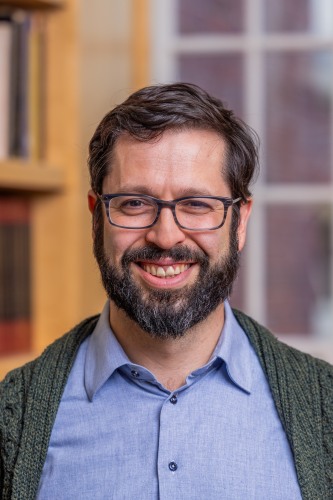
Steven Kelts is a Lecturer at Princeton University, affiliated with the School of Public and International Affairs (SPIA) and the Department of Computer Science . He leads the Integrated Ethics in CS program and has served as Director of the non-profit All Tech Is Human. Research Focus: Kelts examines ethical frameworks in technology innovation, historical political economies, and the intersection of democratic theory with corporate responsibility. His work spans Measuring ethics education in computing Evolving corporate structures for ethical action Locke's economic justice theories Machiavelli's republican ideals Madison's institutional designs Publications reveal trends in: Utilitarian logic in Agile teams Roman censorship models 17th-century English economic debates Mill's social value legislation Scientific Recognition: Recipient of Princeton's Council on Science and Technology grants for Agile Ethics program Google seed grant for corporate ethics frameworks University-wide award for GradFutures AI ethics leadership Advisory Roles: Includes ethics advisor to the Responsible A.I. Institute and institutional design mentor for political theory projects.
Wolfgang R. Mann is a Professor of Philosophy and Director of Undergraduate Studies at Columbia University. He joined the Philosophy Department in 1992 and holds degrees from Princeton University (A.B., 1978; Ph.D., 1987). His research spans Ancient Philosophy, German Idealism, and Metaphysics, with a focus on theories of argumentation (logic/rhetoric), metaphysical contrasts in antiquity, and ethical concepts of freedom. He also explores English/German Romanticism (Wordsworth, Hölderlin) and the reception of classical antiquity in 19th-century thought. His work frequently bridges philosophical analysis with historical and literary methodologies. Professor Mann’s publications include The Discovery of Things: Aristotle’s Categories and Their Context (2000) and co-edited volumes like Oxford Studies in Ancient Philosophy (2011). His articles address topics such as Stoic paradoxes, Seneca’s ethical writings, and the intersection of ancient philosophy with political figures like Helvidius Priscus. His research emphasizes interdisciplinary approaches, blending metaphysics, ethics, and classical textual analysis. Though no specific awards are listed, his contributions to ancient philosophy and historiography reflect sustained scholarly engagement. His advising and grants focus on mentoring students in these areas, though specific grant details are not provided. His work contributes to both academic philosophy and the broader humanities through its rigorous historical contextualization.
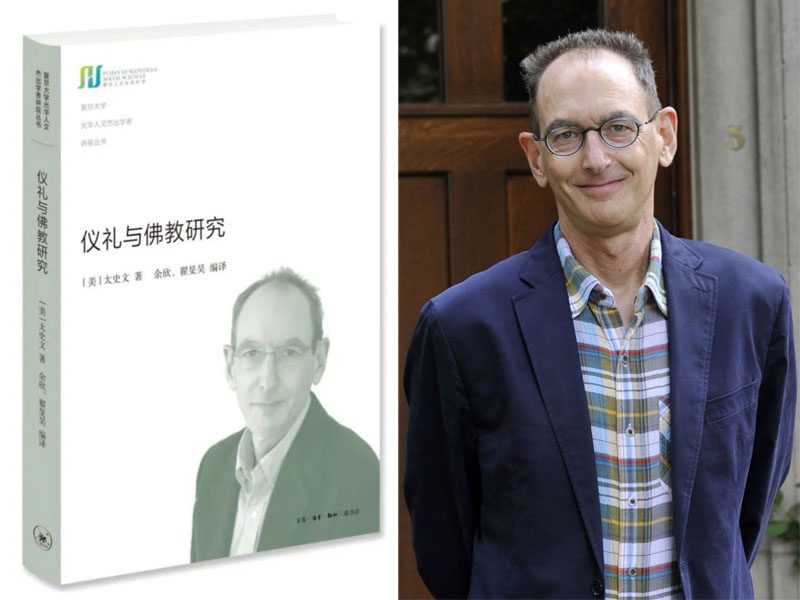
Stephen F. Teiser is the D.T. Suzuki Professor in Buddhist Studies and Professor of Religion at Princeton University. He holds the Old Dominion Research Professor title in the Humanities Council (2022-2023). His work focuses on Buddhist rituals, Chinese religious history, and the intersection of Indian and Chinese religious traditions. Teiser delivered lectures at Fudan University, shaping his research into broader scholarly discourse. His book Ritual and the Study of Buddhism (2022) explores Buddhist rituals in Chinese contexts, emphasizing cross-cultural and methodological insights. His research bridges medieval Chinese religious practices with modern academic frameworks, addressing topics like funerary rituals, lay communities, and textual interpretation. His academic contributions span Buddhist historiography, ritual studies, and East Asian religious history. Notable works include analyses of the Ghost Festival, Dunhuang liturgies, and comparative religious texts. Teiser’s interdisciplinary approach highlights the adaptation of Buddhism in Chinese culture and its global scholarly relevance. Awards: Old Dominion Research Professor (2022-2023) Teiser’s research also engages with collaborative international projects, such as co-editing volumes on divination and East Asian manuscripts. His work emphasizes the importance of language and cultural context in interpreting religious practices, making his scholarship foundational for understanding Buddhism’s evolution in China.
Ian Ewart is an Associate Professor at the University of Reading's School of the Built Environment, serving as Head of Construction and Engineering Management and Research Group Lead for Organisation, People and Technology. He chairs the Research Ethics Committee since 2016 and supervises undergraduate/postgraduate dissertations. His academic journey spans engineering and anthropology: DPhil Social and Cultural Anthropology, University of Oxford, St Hugh's College (2007-2012) MSc Material Anthropology and Museum Ethnography, University of Oxford, St Hugh's College (2006-2007) BA (Hons) Archaeology and Anthropology, University of Oxford, Harris Manchester College (2003-2006) Diploma in Management Studies, University of the West of England (1990-1994) BEng (Hons) Mechanical Engineering, Staffordshire University (1983-1987) Ewart's research integrates ethnographic methods with digital technology studies, examining human-technology interactions in construction and domestic settings. His work bridges engineering practice and social anthropology, focusing on skill transmission, sustainable design, and multisensory experiences in virtual environments. Publications from 2025-2013 reveal a dominant trajectory in digital twins for socio-ecological sustainability, VR-based occupant behavior prediction, and HBIM for heritage conservation. The corpus demonstrates consistent cross-disciplinary innovation, merging archaeological reconstructions with healthcare applications while maintaining anthropological rigor. Key recognition: ESRC Future Research Leader fellowship (2013) for Designing Healthy Homes project He supervises PhD candidates like Afolabi Dania (Nigerian sustainable construction) and Joanna Hull (Heritage BIM), leveraging ESRC funding for ethnography-VR health studies. His grants emphasize participatory design and real-world impact assessment in built environments. Leaders the Organisation, People and Technology research group, developing multisensory Roman town reconstructions with sound/smell integration to advance archaeological and architectural experience modeling.
Diliana Angelova serves as Associate Professor at the University of California, Berkeley, with scholarly specialization in Byzantine and Roman historical studies emphasizing gender dynamics, religious frameworks, and artistic expression. Education: BA, American University in Bulgaria, 1995 MA, Southern Methodist University, 1998 MA, Harvard University, 2002 PhD, Harvard University, 2005 Her research program critically investigates female agency within imperial systems through interdisciplinary analysis of textual sources, architectural patronage, and material artifacts. Core methodologies integrate gender theory with art historical analysis to reconstruct women's roles in religious and political spheres across late antiquity and early Byzantium, particularly examining how empresses leveraged sacred discourse for authority. Publication trends reveal sustained engagement with imperial ideology through physical manifestations—buildings, ivories, and urban landscapes—demonstrating how female rulers like Pulcheria and Ariadne engineered religious and architectural programs to project power. Thematic continuity connects her monograph on founding narratives with earlier articles exploring material culture as political language. Scientific Awards: Van Courtlandt Elliott Prize, Medieval Academy of America (2006) for outstanding first article in medieval studies Information regarding graduate student supervision and external research funding remains unspecified in available documentation, though her scholarly output indicates active contribution to Byzantine gender studies through major publications and academic reviews.
Jacob M. Baum serves as the Buena Vista Foundation Associate Professor in the Department of History at Texas Tech University, specializing in later medieval and early modern European history with particular focus on the German-speaking world from 1400-1800. His research explores the intersections of ideas, culture, and daily life through the lens of the human body, spanning sensory studies, disability studies, and medical history. Dr. Baum challenges traditional narratives by examining how bodily experiences shaped historical developments during pivotal periods including the Protestant Reformation and early European colonial expansion, emphasizing how sensory knowledge emerged from practical problems confronted in daily life rather than purely intellectual frameworks. Dr. Baum's scholarly contributions include significant publications such as Reformation of the Senses (2019) and the co-edited volume Embodiment, Expertise and Ethics in Early Modern Europe: Entangling the Senses (2020), with his work increasingly focusing on disability history, particularly deafness in sixteenth-century Germany. His research demonstrates consistent methodological innovation, moving from sensory history to disability studies while maintaining focus on how bodily differences influenced social, cultural, and religious transformations. Hans Rosenberg Article Prize (2015) for 'From Incense to Idolatry: The Reformation of Olfaction in Late Medieval German Ritual' His research has received substantial support from prestigious organizations including the National Endowment for the Humanities, the National Humanities Center, the Mellon Foundation, and the Leibniz Institute for European History. At Texas Tech, Dr. Baum teaches undergraduate courses in European history, medical history, and disability history, as well as graduate courses in research methodology and historiography, actively mentoring students interested in his specialized chronological and thematic areas.
Norman Doe is Professor of Law at Cardiff University's School of Law and Politics, where he serves as Director of the Centre for Law and Religion and course director of the LLM in Canon Law. He has held significant leadership roles including Director of Research at the Law School (2011-2014) and has been instrumental in establishing key academic programs such as the LLM in Canon Law (1991) and the LLB module Law and Religion (2002). His international academic presence includes being a visiting professor at the University of Paris since 1999, KU Leuven (2013-16), and Pontifical University of St Thomas in Rome (2009). Doe earned his law degree at University College Cardiff, completed his doctorate at Magdalene College, Cambridge, and studied theology at St Michael's Theological College, Llandaff and Mansfield College Oxford University. His academic credentials include LLD (Cambridge), LLM (Wales), MTh (Oxford), PhD (Cambridge), DCL (Lambeth), and he is a Barrister (Middle Temple). Professor Doe's research focuses on Anglican canon law, comparative church law, law and religion, and the history of ecclesiastical law. His scholarly work has established foundational frameworks for understanding Christian legal systems across denominations. His book Canon Law in the Anglican Communion (1998) formed the basis for The Principles of Canon Law Common to the Churches of the Anglican Communion (2008), while his Christian Law: Contemporary Principles (2013) contributed to the Statement of Principles of Christian Law (2016) that was launched at the World Council of Churches in 2022. His recent publications demonstrate a sustained focus on historical Anglican priest-jurists, ecclesiastical legal history, and the development of Christian legal principles across traditions. His scholarly impact is reflected in his election as a Fellow of the British Academy (2024), appointment as honorary King's Counsel (2024), and previous recognition as one of the 'top ten' law and religion scholars worldwide (2018). He has received numerous honors including election to the Council of the Selden Society (2023), becoming an Academic Bencher of the Inner Temple (2021), and being listed among the 50 most influential Anglicans in the world by The Telegraph (2008). Professor Doe serves as Chancellor of the Diocese of Bangor (since 2012), functioning as president of the Diocesan Consistory Court. He has been deeply involved in global Anglican structures, serving on the Lambeth Commission (2003-2004), contributing to the Windsor Report, and working with the Anglican Communion Network of Legal Advisers. He co-founded the Interfaith Legal Advisers Network (2007) and the Law and Religion Scholars Network (2008), demonstrating his commitment to practical applications of his scholarship. His current research focuses on the history of English ecclesiastical law since the Reformation and a series of articles on clergy jurists published in the Ecclesiastical Law Journal . He is also active in multiple networks of the Cardiff Centre for Law and Religion, including the Colloquium of Anglican and Roman Catholic Canon Lawyers and the Church Law History Network. His 2023 canon law play Thrice to Rome about Gerald of Wales has been performed at St Davids Cathedral and the Temple Church London, with upcoming performances planned for Canterbury and Rome.
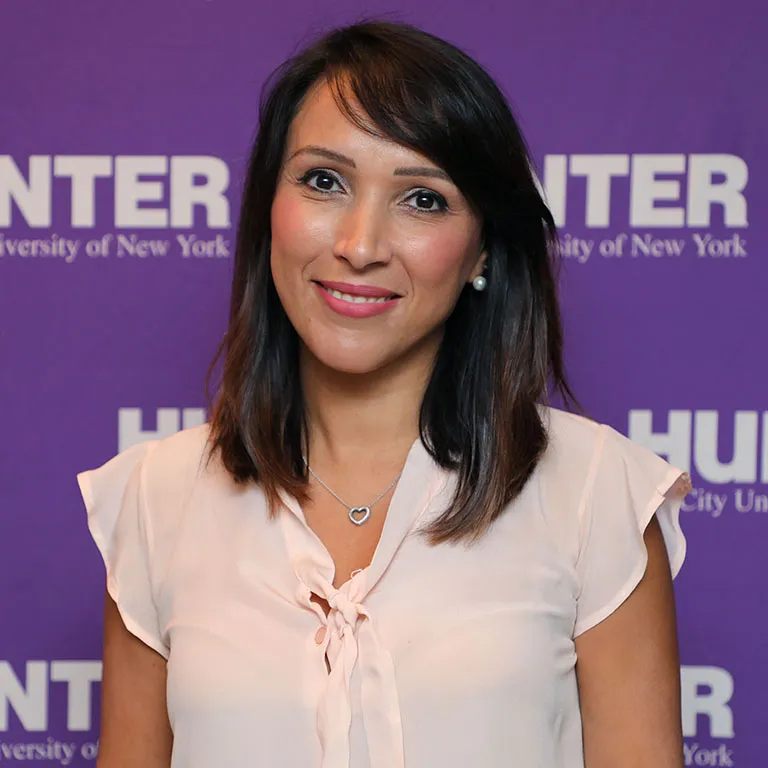
Maria Silvia Sarais serves as a Lecturer within the Department of Classical and Oriental Studies at Hunter College, City University of New York (CUNY), where she contributes to both undergraduate and graduate programs in Classical Studies. Her academic profile centers on advanced instruction and research in ancient Mediterranean civilizations, with particular emphasis on literary analysis and cultural interpretation. Her research portfolio encompasses a sophisticated interdisciplinary range of classical scholarship: Latin Poetry, examining stylistic innovations and socio-political contexts in Roman verse Greek and Roman Drama, analyzing theatrical conventions and performance traditions Seneca studies, focusing on philosophical contributions and literary techniques Ancient Literary Criticism, investigating early theoretical frameworks for textual analysis Poetic Theory and Metapoetics, exploring self-referential elements in classical composition Classical Mythology and Contemporary Reception, tracing evolutionary adaptations of mythic narratives Gender and Ethnicity in Classical Literature, interrogating identity construction and representation in antiquity No scientific awards or honors were documented in the provided materials. While the available information does not specify doctoral or master's students under her supervision, nor detail external research funding sources, her role as Doctoral Lecturer indicates active engagement in advanced academic mentorship within Hunter College's graduate program structure. There is no reference to dedicated research laboratories, collaborative teams, or specialized research centers associated with her current academic position.
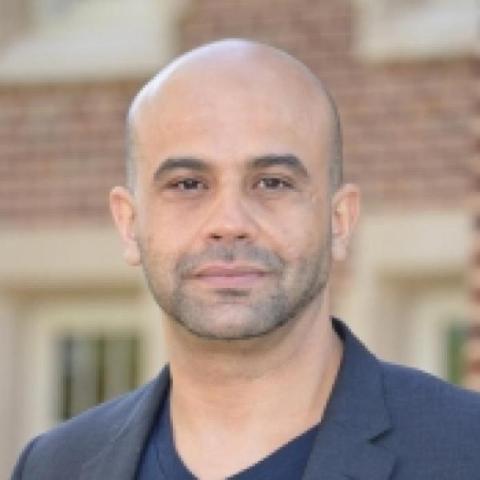
Nizar F. Hermes serves as Associate Professor and Department Chair in the Department of Middle Eastern and South Asian Studies at the University of Virginia, concurrently holding the position of Director of Graduate Studies. His office is located in 141 New Cabell Hall, with Spring 2025 office hours held Tuesdays from 12:00-3:00 PM. He maintains dual professional email contacts through the university system. His academic foundation includes: PhD in Comparative Literature, University of Toronto Dr. Hermes' research program centers on North African and Mediterranean literary traditions, with deep specialization in premodern Arabic-Islamic cultural production. His work investigates poetic representations of urban spaces, cross-cultural encounters between the Islamic world and Europe, and the transmission of literary heritage across the Mediterranean. Particular attention is given to Maghribī poetic imagination, elegiac traditions, and the intersection of literature with food history and refugee experiences. His methodological approach combines close textual analysis with historical contextualization to reveal continuities in Arab literary consciousness. Analysis of his recent publications (2014-2025) reveals three dominant scholarly trajectories: 1) The literary reconstruction of North African cities through poetic elegies, 2) Cross-cultural encounters documented in Arabic travel literature and folk poetry, and 3) The representation of European 'others' in medieval Arabic texts. His 2024 monograph 'Of Lost Cities' synthesizes these threads while his edited volume 'The City in Arabic Literature' (2018) establishes foundational frameworks for urban studies in Arabic literary criticism. No scientific awards or fellowships were documented in the source materials. While his role as Director of Graduate Studies indicates active mentorship responsibilities, specific student advisees and grant funding details were not provided in the available documentation. His scholarly output demonstrates sustained engagement with graduate education through publications on teaching methodologies for Arabic humanistic literature. No dedicated research laboratories or formal collaborative teams were referenced, though his co-edited volumes and multi-author publications suggest active participation in scholarly communities focused on Mediterranean studies and comparative literature.
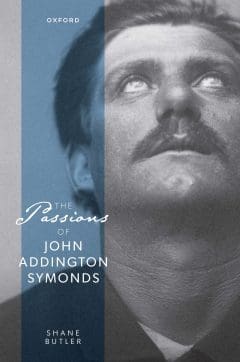
Shane Butler is the Nancy H. and Robert E. Hall Professor in the Humanities and Professor of Classics at Johns Hopkins University, where he also directs the Classics Research Lab and serves as Director of Graduate Studies. He holds a PhD from Columbia University (2000) and has taught at the University of Bristol, UCLA, and the University of Pennsylvania. His research spans Latin literature, classical reception, sensation studies, aesthetics, queer theory, and media history, focusing on the interplay between embodiment and art. Education: PhD in Classics from Columbia University (2000). Prior to Hopkins, he held faculty positions at the University of Bristol, UCLA, and UPenn. He has been a residential fellow at the American Academy in Rome, Villa I Tatti, the Getty Villa, and the MPIWG Berlin. Research focuses on Latin literature from antiquity to early modernity, classical reception theory, and the sensory dimensions of ancient aesthetics. Notable works include The Passions of John Addington Symonds (2022), The Ancient Phonograph (2015), and Sound and the Ancient Senses (2019). He co-edits the Classical Philology special issue on 'Philology Transfigured' and directs the John Addington Symonds Project. Awards include fellowships at leading institutions and editorial roles, including Associate Editor of the I Tatti Renaissance Library. His recent work explores queer philology and the intersection of sound studies with ancient literature.
Roman Feiman is the Thomas J. and Alice M. Tisch Assistant Professor of Cognitive, Linguistic, and Psychological Sciences and an Assistant Professor of Linguistics at Brown University. He directs the Brown Language and Thought Lab, focusing on how humans combine words into meaningful sentences and develop logical reasoning abilities. His research integrates methods from cognitive developmental psychology, psycholinguistics, and formal semantics. Feiman holds a PhD in Psychology from Harvard University (2015), followed by postdoctoral training at Harvard and UC San Diego. His work explores the cognitive systems underlying language and thought, including negation comprehension, quantifier scope, and the development of exact equality concepts. He teaches courses such as Language Processing in Humans and Machines and Logic in Language and Thought . His research interests span cognitive development, linguistic pragmatics, and the language of thought hypothesis. Notable findings include studies on children’s understanding of negation and how logical principles shape early language acquisition. Feiman has been recognized with the 2023 Henry Merritt Wriston Fellowship. His lab investigates topics like word referencing, semantic development, and the interplay between language and nonverbal reasoning. Recent work examines how neural networks might model human cognitive processes, bridging AI and psychological theory.
Aglaia McClintock is an Associate Professor of Roman and Ancient Law (IUS/18) in the Department of Law, Economics, Management and Quantitative Methods at the University of Sannio. Her research examines Roman legal institutions through interdisciplinary lenses including anthropology, gender studies, and symbolic analysis. Research Focus: She specializes in archaic Roman criminal law, gender dynamics in legal systems, the evolution of punitive practices, and cross-cultural juridical symbolism. Her work frequently intersects with: Anthropological interpretations of legal concepts Historical analysis of women's rights and social weapons Ritual aspects of justice administration Comparative Indo-European legal traditions Publication Trends: Her recent articles (2016-2024) demonstrate concentrated scholarship on: 1) deconstruction of archaic penal systems and social control mechanisms, 2) gender-focused reexamination of Roman legal anthropology, and 3) symbolic analysis of justice iconography in classical civilizations. Methodologically, she employs textual analysis, linguistic etymology, and socio-legal contextualization. Awards & Recognition: No scientific awards or fellowships are documented in available sources. Academic Service: She has contributed to international conferences on Roman law and authored commemorative works for legal scholars like Francesco Salerno. No information regarding student advising, grants, or laboratory leadership is present.
Benjamin Alpers is an Associate Professor and Reach for Excellence Professor of Honors at the University of Oklahoma's Department of History. He holds a Ph.D. and M.A. in History from Princeton University and an A.B. in Social Studies from Harvard University. His research examines 20th-century American thought and culture, with ongoing work on post-1960s societal changes. Research Focus: Alpers specializes in U.S. intellectual/cultural history, film history, political thought, collective memory, and classical history. Current projects include a book analyzing 1970s interpretations of 1960s social transformations. Teaching: Courses include HON 2973 American Social Thought; HON 3993 Film Noir; HON3993 History, Memory, Conflict: World War II Since 1945; HON 3993 America in the Sixties; and HON 3993 America in the Seventies. He serves as editor of the Society for U.S. Intellectual History's blog.
Steffen Patzold is a Professor for Medieval History and Auxiliary Sciences at the Department of History, Faculty of Philosophy, University of Tübingen, since 2008. He previously held research and teaching positions at the University of Hamburg (1999–2006), Max Planck Institute for European Legal History (2007), and University of Kassel (2007–2008). His research focuses include the Carolingian period, political and ecclesiastical history, monasticism, perception patterns in the Middle Ages, and interdisciplinary projects like the DFG-funded 'Migration and Mobility in Late Antiquity' and Collaborative Research Center SFB 923 'Threatened Orders.' Education: University of Hamburg (History, Art History, Journalism, 1996–1999; PhD, 2000) Affiliations: Heidelberg Academy of Sciences, SFB 923 subprojects E02/F02, DFG Centre for Advanced Study in Humanities His recent publications analyze Carolingian political structures, feudal systems, historical semantics, and interdisciplinary topics like archaeogenetics. Key projects examine local societies in Carolingian Europe, bishop networks, and crisis management in early medieval orders. He collaborates extensively in edited volumes and international journals, particularly on comparative medieval studies.
Geraldine Heng is the Mildred Hajek Vacek and John Roman Vacek Chair in English at the University of Texas at Austin, where she is cross-appointed to Middle Eastern Studies, Women's Studies, Jewish Studies, and the Rapoport Center for Human Rights and Social Justice. Elected to the American Academy of Arts and Sciences in 2023 and a Fellow of the Medieval Academy of America, she founded and directs the Global Middle Ages Project (G-MAP), a major interdisciplinary initiative promoting global perspectives on premodernity. With a Ph.D. from Cornell University, Heng has pioneered the field of premodern critical race studies, fundamentally challenging the assumption that race is a modern construct. Her research focuses on literary, cultural, and social encounters between worlds, particularly through the lenses of race, gender, sexuality, class, and religion, with special attention to medieval Europe's interactions with Asia and Africa. Heng's scholarly work reveals how medieval global connections shaped cultural production and identity formation long before the so-called 'Age of Exploration.' Her approach synthesizes literary analysis, historical research, and critical theory to uncover the deep roots of globalization and its implications for understanding contemporary identity politics and cultural exchange. Her publications demonstrate a consistent trajectory toward increasingly global frameworks, moving from studies of medieval romance to comprehensive examinations of early global interconnectedness. This evolution reflects her commitment to dismantling Eurocentric narratives of the medieval world and revealing the complex networks of exchange that characterized premodern societies across Afro-Eurasia. 2019 PROSE prize in Global History 2019 Academy of American Literature prize in Historical Studies 2019 Robert W. Hamilton Grand Prize 2020 Otto Gründler prize Fellow of the American Academy of Arts and Sciences (2023) Fellow of the Medieval Academy of America Heng has secured approximately $750,000 in grants for digital projects and held eight major fellowships at research centers. She co-edits the Cambridge University Press Elements series in the Global Middle Ages and the University of Pennsylvania Press series RaceB4Race: Critical Studies of the Premodern. Her teaching encompasses courses on early global literatures, premodern race, Crusades literature, Arthurian traditions, and feminist theory. As founder and director of the Global Middle Ages Project (G-MAP), Heng has built an international scholarly network that challenges traditional disciplinary boundaries and promotes collaborative approaches to studying premodern global connections. The project has fostered numerous digital initiatives, publications, and conferences that have significantly reshaped how scholars understand medieval intercultural exchange.