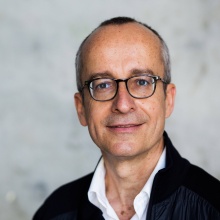
Giuseppe Pezzini is an Associate Professor of Latin Language and Literature at the University of Oxford and Fellow and Tutor at Corpus Christi College. He holds an MA and DPhil from Oxford and degrees from the Scuola Normale Superiore in Pisa. His research focuses on Early Latin (3rd–1st c. BC), with special attention to Roman theatre, ancient metre, and textual criticism. He has edited Terence's Heautontimorumenos and is completing a commentary on Lucretius' De Rerum Natura Book IV. His interdisciplinary work bridges classical philology with modern literature, including a monograph on Tolkien's imagination (CUP 2025). Academic Background: Postdoctoral fellowships at Magdalen College Oxford (2013–2015) and the Institute for Advanced Study, Princeton (2016) Teaching: Leads undergraduate Latin literature courses and supervises graduate work on Roman Republican identity and late antique fiction theories His research integrates digital humanities approaches with traditional philology. Recent collaborative projects include the Oxford Tolkien Network and the Journal of Inklings Studies. He serves as editor for Giornale Italiano di filologia and has published widely on ancient language evolution and classical reception in modern works.
Dr. Jenny Arendholz is a Senior Lecturer at the Chair of English Linguistics, Ludwig-Maximilians-Universität München (LMU). She holds a PhD in English Philology (summa cum laude, University of Augsburg) and an M.A. in English Philology, Romance Philology, and Communication Science. Her research focuses on syntax, pragmatics, multimodality, computer-mediated communication (CMC), and discourse analysis. She coordinates ERASMUS+ student exchange programs, advising on UK visa requirements and funding. Professional activities include reviewing for journals like Pragmatics and presenting at international conferences such as the International Pragmatics Conference. Her teaching spans introductory linguistics courses to specialized seminars on syntax, phonetics, conversation analysis, and digital communication. She actively engages in linguistic fieldwork and intercultural training for study abroad programs. Recent publications explore mitigation strategies in online discourse, quotation pragmatics, and narrative structures in message boards. Key responsibilities include managing student exchange logistics, advising on language certification requirements for UK universities post-Brexit, and maintaining partnerships with institutions like the University of Leicester and King’s College London. She also oversees LMU’s ERASMUS International Option funding and promotes summer schools via partnerships with universities in the UK and Ireland.
Professor Laura Dominguez holds a Professorship in Linguistics at the University of Southampton's Department of Modern Languages and Linguistics. She serves as Head of Department (2021-2025), REF Champion for Impact, and has held roles including Deputy Head of Department and Head of Research. Her research focuses on formal second language acquisition, bilingualism, native language attrition, and syntactic theory within a generative framework. Key projects include the ESRC-funded SPLLOC corpus initiative and an AHRC project on grammatical attrition. Her research investigates prosodic/syntactic constraints in Spanish word order, L2 acquisition of tense-aspect morphology, and L1 attrition mechanisms in bilinguals. She leads editorial boards for journals like Second Language Research and Spanish Heritage Journal , and holds roles in professional bodies including the ESRC Peer Review College and EuroSLA Executive Committee. Current research emphasizes syntax-theory integration with acquisition studies, leveraging experimental and corpus-based methods. She supervises multiple PhD students in Applied Linguistics and Modern Languages, and accepts new PhD applications. Her work bridges theoretical linguistics with empirical studies of multilingual development.
Oreste Floquet is an Associate Professor in the Department of European, American and Intercultural Studies at Sapienza University of Rome. His academic work focuses on French linguistics with special expertise in African Francophonies, particularly in Niger and West Africa. Professor Floquet's research spans multiple linguistic subfields including sociolinguistics, historical linguistics, phonology, syntax, and language acquisition. His work consistently examines language variation in postcolonial contexts, with particular attention to metalinguistic awareness - how speakers perceive and reflect on their own language use. His publications demonstrate expertise in analyzing French language phenomena across diverse contexts including metropolitan France, West Africa, and Italy. Analysis of Professor Floquet's recent publications reveals a strong emphasis on African Francophonies, with numerous studies examining French language variation in Niger, Ivory Coast, and Benin. His research explores the intersection of linguistic theory and sociolinguistic reality, particularly focusing on phonological phenomena like liaison, syntactic structures including negation and pronominal verbs, and orthographic awareness in multilingual contexts. A recurring theme throughout his work is the relationship between language structure and speaker perception. Professor Floquet teaches French language and linguistics across multiple degree programs at Sapienza University, including courses for Sustainable Tourism Sciences, Modern Philology, History/Anthropology/Religions, Linguistics, Intercultural Mediation, and Fashion Sciences. He works with teaching assistants Marta Tomassetti and Martina Bocci to support students with exam preparation and materials. His office hours are available by appointment in room 336 (third floor, Marco Polo building) or via Zoom.
Simona ANASTASIO is an Associate Professor in the Department of Language Sciences at the University of Toulouse – Jean Jaurès, where she conducts research at the NeuroPsychoLinguistics Laboratory (LNPL, UR 4156). She is also affiliated with two CNRS research units: UMR 7023 SFL and UMR 8163 STL. Her teaching spans multiple programs, including Units and Diversities of Languages, FLE methodologies, child language development, and second language learning at both undergraduate and graduate levels. University: University of Toulouse – Jean Jaurès Department: Department of Language Sciences Research Lab: NeuroPsychoLinguistics Laboratory (LNPL, UR 4156) Additional Affiliations: UMR 7023 SFL CNRS, UMR 8163 STL CNRS Her research centers on second language acquisition, linguistic typology, and the interface between language and cognition, particularly in the expression of spatial and temporal relations. She employs qualitative and quantitative methods based on oral and written corpus analysis. Her work investigates crosslinguistic influence, inter- and intra-typological variations, and the didactic implications of acquisition research. She has led and participated in several major research projects, including WRIMOTEF, ADMIT, and CAUSEMOTYP, focusing on motion events, migrant integration, and linguistic relativism. The recent publications and conference presentations reflect a strong thematic concentration on motion event construal in L2 French and Italian, with growing attention to pedagogical applications and cognitive underpinnings. Her work frequently compares learners with different L1 backgrounds (e.g., French, English) and analyzes both oral and written productions across proficiency levels. Scientific Affiliations: Member, Second Language Acquisition Network (ReAL2) Member, Romance Linguistics Society (SLR) Member, French Association of Cognitive Linguistics (AFLICO) Member, Italian Association of Applied Linguistics (AItLA) Member, International Society for Applied Psycholinguistics (ISAPL) She actively contributes to the academic community through editorial reviews for journals such as International Review of Applied Linguistics , Discours , and Language and Cognition , and serves on scientific committees for international conferences. She has organized workshops and conferences on linguistic relativism, motion and cognition, and discourse in multilingual contexts. Her current projects involve corpus-based research with practical applications in language teaching and migrant education. Laboratories and Research Teams: NeuroPsychoLinguistics Laboratory (LNPL) UMR 7023 SFL CNRS UMR 8163 STL CNRS Participation in DOC (Didactique, Oral, Corpus) project
Victoria Mateu is an Associate Professor of Hispanic Linguistics at the University of California, Los Angeles (UCLA), Department of Spanish and Portuguese, where she joined in 2019 after completing her Ph.D. in Linguistics at UCLA and serving as Lecturer in Linguistics and Lab Manager of the UCLA Language Lab. Her educational background includes: Ph.D. in Linguistics, University of California Los Angeles (2016) M.A. in Linguistics, University of California Los Angeles (2013) B.A. in English Philology, Universidad de Granada, Spain (2011) Dr. Mateu's research employs experimental methodologies to investigate language representation across populations, with core focus on Spanish acquisition in children and adults. Her work examines morphosyntactic constraints, crosslinguistic differences between Spanish/English, language processing mechanisms, and word segmentation in monolingual/bilingual infants. She explores how developmental paths reveal underlying grammatical structures through both naturalistic and experimental paradigms. Recent publications demonstrate strong trends in intervention effects across syntactic domains (passives, sluicing, wh-questions) with expanding cross-linguistic scope (Mandarin, Italian) and methodological innovation through large-scale collaborations. Her work bridges theoretical syntax with developmental psycholinguistics, emphasizing experimental rigor in child language research. Her scientific recognition includes: UCLA Social Impact Collaborative Seed Grant ($50,000) for ‘A community-centered approach to supporting dual language learning’ Dr. Mateu actively mentors graduate students as evidenced by co-authored publications with emerging scholars. Her current grant-funded project with Megha Sundara and Laurel Perkins develops community-centered approaches to dual language support, reflecting commitment to applied linguistic research. She serves as course instructor for advanced syntax and language acquisition seminars. As former Lab Manager of the UCLA Language Lab and current contributor to the international ManyBabies Consortium, she participates in large-scale initiatives addressing methodological challenges in infant research through multi-lab collaborations.
Dr. Keith Atkinson serves as an Honorary Associate Professor in the School of Languages and Cultures at the University of Queensland, where he maintains an active scholarly presence despite his honorary status. His career spans over five decades with continuous contributions to medieval studies, specializing in the transmission and interpretation of Boethius's philosophical works through vernacular lenses. His research centers on Medieval French Literature and Romance Philology, with deep expertise in Boethius's Consolatio Philosophiae and its medieval French translations. He examines linguistic structures of Old French, manuscript traditions, and cultural adaptations of classical texts, particularly focusing on how medieval translators navigated philosophical concepts through regional vernaculars like Walloon. His work bridges philological precision with literary analysis to reconstruct intellectual history. Analysis of his 15 most recent publications (2002-2017) reveals persistent engagement with Boethian scholarship, demonstrating evolving methodologies from textual criticism to linguistic analysis. His research trajectory shows increasing attention to regional variations (especially Walloon translations), manuscript materiality, and the interplay between Latin philosophical frameworks and vernacular poetic expression in medieval France.
Lars Fant is a Professor at the Department of Romance Studies and Classics, Stockholm University, focusing on Pragmatics , Interactional Linguistics , Second Language Acquisition , and Intercultural Communication . He has supervised over 20 PhD and MA theses in Spanish, Portuguese, and Italian, and co-authored key language education materials like Bonnier's Spanish Grammar (2004, revised 2015) and a Course in Mediation (2007). Research Groups : Co-founder of RomSLA (Romance Languages and Second Language Acquisition) and RomLing (Romance Linguistics). Projects : Led programs like 'High-level Proficiency in Second Language Use' (funded by Riksbankens Jubileumsfond) and 'Interaction, Identity, and Language Structure' (funded by SU Humanities grant). Research Trends from his 200+ publications include cross-linguistic analysis of pragmatic markers , discourse strategies in advanced L2 users, and prosodic transfer from L1 to L2. His work bridges theoretical linguistics (e.g., syntactic periphery, modalisation) and applied pedagogy, emphasizing contrastive approaches in language teaching. Teaching spans BA/MA/PhD levels, covering Spanish phonetics, second language acquisition, scientific methodology, and historical linguistics. His supervision includes topics like metadiscursive markers , causative motion expressions , and discourse strategies in heritage speakers .
Prof. Dr. Elwys De Stefani holds the Chair of French and Italian Linguistics at the University of Heidelberg since 2021. He obtained his licentiate from the University of Basel in 1999 and his PhD in 2001. He has held academic positions across Europe (Basel, Neuchâtel, Freiburg, Lyon, Bern, Leuven) and served as a Visiting Professor at Regensburg, Freiburg, and Unisinos (Brazil). His research focuses on syntax of spoken languages, sociolinguistics, multimodal interaction, and onomastics. Current projects include studies on language choice in public spaces and collaborative grammar in Italian talk-in-interaction. He supervises PhD projects on multilingual encounters, deontic moments in speech, and interaction in medical waiting areas. De Stefani co-edits Research on Language and Social Interaction and Vox Romanica , and chairs the Tenure Board at Heidelberg. Over 150 peer-reviewed publications span monographs, edited volumes, and journal articles exploring topics like interactional onomastics, mobility in discourse, and pandemic language politics. His work bridges theoretical linguistics with applied research in commercial interactions, guided tours, and service encounters. Education: Licentiate in Romance Philology, University of Basel (1999) PhD in Linguistics, University of Basel (2001) Venia Docendi in Romance Philology, University of Bern (2008) Research Interests: Syntax of spoken languages, language contact, sociolinguistics, multimodal analysis, transcription theory, onomastics, and conversation analysis. Current projects investigate multilingual interactions in urban contexts and the role of embodied conduct in dialogue. Key Publications: Includes monographs like «Ah petta ecco, io prendo questi che mi piacciono» (2011) and edited volumes such as Hundert Jahre ‘Italienische Umgangssprache’ (2023). Recent articles address pandemic language politics, spatial interaction in guided tours, and café encounter dynamics.
Achim Stein holds the position of Professor of Romance Linguistics at the Division of Romance Linguistics within the Institute of Linguistics at the University of Stuttgart, Germany, a role he has maintained since 2000. His academic focus centers on French and Italian linguistics through computational and corpus-based methodologies. His educational foundation includes studies in French, English, and Italian at the University of Erlangen/Nürnberg, followed by doctoral research at the University of Stuttgart and habilitation at the University of Cologne. This trajectory established his expertise in Romance language structures and historical development. Stein's research specializes in lexical semantics and language contact phenomena across synchronic and diachronic frameworks. He has pioneered computational resources for Medieval/Modern French, Italian, and Medieval Sardinian, with current work in the SILPAC Research Unit advancing "psycho-historical" linguistics—examining intersections between language change, acquisition, and cognitive processing. His methodology integrates corpus analysis with computational modeling to decode historical language evolution. Analysis of his recent publications reveals concentrated exploration of Old French-Middle English contact scenarios, particularly verb argument structure transformations and syntactic borrowing mechanisms. Key patterns include recipient passive development, cleft sentence pragmatics, and dynamic modeling of bilingual medieval contexts using diachronic corpora. Stein actively contributes to collaborative research infrastructure through the SILPAC unit and development of critical linguistic resources like the Syntactic Reference Corpus of Medieval French (SRCMF). His work bridges historical linguistics with digital humanities, creating annotation frameworks that enable cross-temporal syntactic analysis.
Prof. Dr. Benjamin Lucas Meisnitzer holds the Chair of Romance Linguistics with a Focus on Hispanic and Lusitanian Studies at the University of Leipzig since 2018. He previously held academic positions at Johannes Gutenberg University Mainz (Assistant Professor, 2014-2018) and Ludwig Maximilian University Munich (Lecturer, 2010-2014). As Vice Dean for Studies (since 2023) and President of the German Lusitanists Association (since 2021) , he bridges institutional leadership with research excellence. Education : LMU Munich (Magister Artium in Romance Philology/German Linguistics, 2006) and Universidade Nova Lisbon (2001-2006). Research Interests span multiple dimensions of Romance languages, including: Language Change & Grammaticalization (e.g., temporal semantics, modality, diachronic morphosyntax) Language Contact & Variation (e.g., Spanish/Portuguese in Latin America/Africa, Catalan/Galician/Basque) Applied Linguistics (e.g., L3 acquisition, phraseology in teaching, digital media) Pluricentricity (e.g., standardization processes, non-dominant varieties) Theoretical Syntax & Pragmatics (e.g., modal particles, clitics, tense-aspect-modality interactions) Article Trends reflect his expertise in: Comparative analysis of Ibero-Romance varieties in diachrony and contact scenarios Grammaticalization of modality and evidentiality markers Standardization challenges in African Portuguese and Lusophone contexts Digital media’s impact on language acquisition and variation Creole languages and typological hybridity Academic Leadership : Co-Director of the DFG-AHRC CrossMoGram project (with University of Central Lancashire) Chairman of the Doctoral Committee for Linguistics at Leipzig Visiting professorships in Brazil (UFRN, USP, UFFS) and Mozambique (Universidade Rovuma) Teaching emphasizes: Contrastive grammar (Spanish-Portuguese-German) Sociolinguistics and language policy Multilingualism in educational contexts Historical development of Romance languages
Dr. Simone De Cia is a Lecturer in Linguistics in the Department of Linguistics and English Language at The University of Manchester. Her research specializes in the syntax-pragmatics interface, focusing on information structure and morpho-syntactic variation across North Eastern Italian Dialects (NEIDs). Her work examines linguistic phenomena including contrast realization, residual V2 word order, expletive subjects, wh-in-situ structures, and object-past participle agreement patterns. Current research investigates the influence of information structure on Romance agreement systems and the morpho-syntactic properties of auxiliaries across NEIDs. Dr. De Cia also conducts sociolinguistic research on language vitality and endangerment, particularly focusing on Friulian and Bergamasco dialects. Her work on COVID-19's impact on language endangerment provides important insights into pandemic-era sociolinguistic challenges. She employs diverse methodologies including formal syntactic analysis, dialect comparison, and sociolinguistic fieldwork. Recent publications demonstrate her expertise in microparametric variation within northern Italian dialects and theoretical approaches to information structure. She maintains active research collaborations and has presented her work at international linguistics conferences including the Cambridge Italian Dialects Syntax and Morphology Meeting.
Giuseppina Silvestri is a Lecturer in the Department of Linguistics at the University of California, Los Angeles (UCLA). Her academic affiliation is within the College of Letters and Science. She holds a Ph.D. from the University of Pisa (2013). Her primary research focuses on comparative and historical Indo-European linguistics, particularly in the domains of Italo-Romance and Greek varieties in southern Italy. Key areas include morphosyntactic variation, theoretical syntax (parametric approach), glotto-genetics, and interfaces between phonology-syntax and syntax-semantics. Her work explores language contact phenomena, such as the structural convergence between Greek and Romance dialects in regions like Calabria and Salento. She investigates topics like complementizer systems, aspectual morphology, infinitival vs. finite constructions, and grammaticalization processes. Notable studies address the role of contact in shaping morphosyntactic features such as perfective aspect, negative imperatives, and possessive constructions in endangered Italo-Greek varieties. Silvestri’s research also delves into phonology-syntax interactions, such as propagation phenomena and word-final schwa licensing in southern Italian dialects. Her contributions highlight syntactic microvariation and parameter hierarchies in Italo-Romance, with a focus on features like differential object marking, participle agreement, and adverb agreement. Her work bridges empirical dialectology with formal syntactic theory, offering insights into syntactic phylogeny and the historical reality of biolinguistic diversity.
Valentina Piunno is an Associate Professor in the Department of Foreign Languages, Literatures and Cultures at the University of Bergamo, Italy. She specializes in Glottology and Linguistics (sector GLOT-01/A, equivalent to L-LIN/01), with a strong focus on phraseology, lexicography, lexical semantics, and Italian linguistic structures. She teaches courses such as Digital Linguistics, Descriptive and Historical Linguistics, and Text Linguistics at both undergraduate and graduate levels. Her research interests include evaluative phraseological constructions, intensifying structures, color terminology, fixed syntactic schemas, and partially lexically specified constructions in Italian, often with comparative perspectives involving Spanish and French. She also investigates dialectal varieties of Italian from theoretical and lexicographic viewpoints. The most recent publications highlight a consistent focus on meaning patterns at the syntax-lexicon interface, lexicographic practices, and the formal analysis of Italian phraseology. Her work combines qualitative and quantitative methodologies, contributing significantly to the understanding of Italian linguistic structures and their representation in reference works. Expression of patient and caregiver uncertainty in online health communities (2025) Analysis of evaluative phraseologisms in Italian vs. Spanish and French (2025) Color terms and intensifiers in Italian (2024) Fixed-schema constructions in Italian dialects (2024) Lexicographic and lexicological meaning patterns (2024) Schematic phraseologisms and analytical methods (2024) Dr. Piunno has authored numerous book chapters and articles, including editorial contributions, and has published with academic presses such as Walter de Gruyter, Aracne, and Frank & Timme. While no scientific awards or student advisement details are listed, her publication record indicates active scholarly engagement. She is involved in current teaching activities for the 2025–2026 academic year and maintains an office for student reception by appointment.
John Ford is a Lecturer at the Institut national universitaire Champollion, affiliated with the Center for Anglophone Studies (CAS), where he teaches medieval English literature, American literature, and English philology. His academic work bridges the medieval and modern, with a focus on textual analysis, oral-formulaic traditions, and cultural memory. Education: Doctorate (2001), University of Glasgow: 'From Poetry to Poetry: Remaniement and Medieval Techniques of French-to-English Translation of Verse Romance', supervised by Prof. Jeremy J. Smith. Research Interests: Dr. Ford’s research spans medieval English literature, particularly 14th-century verse romances, oral traditions, and formulaicity. He also explores American literature, especially Harper Lee’s works, and the use of medieval allusions in contemporary political discourse like Brexit. His interdisciplinary approach integrates philology, cognitive theory, and cultural studies. Publication Trends: His recent work shows a strong focus on textual criticism, manuscript studies, and the intersection of orality and literacy in medieval texts. He frequently analyzes themes of chivalry, national identity, and historical mythmaking, linking medieval narratives to modern interpretations. Scientific Awards: No awards are mentioned in the provided text. Advising and Grants: There is no explicit information about students or grant funding in the provided materials. However, his editorial and collaborative work, such as co-editing special journal issues, suggests active academic mentorship and research leadership. Labs and Teams: He is a core member of the Center for Anglophone Studies (CAS), participating in seminars and research axes such as 'Destabilization and resistance' and 'Crises and reconfigurations'. He collaborates with scholars internationally, including Sarali Gintsburg and Asier Barandiaran Amarika, on projects exploring transitional texts and oral traditions.