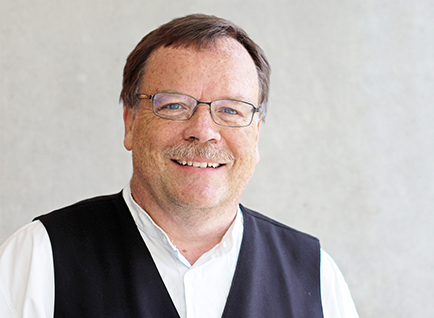
Kai Brodersen is a Professor of Ancient Culture at the University of Erfurt (since 2008) and a Full Professor of Ancient History at the University of Mannheim (since 1996/97). He previously served as Vice-Rector at the University of Mannheim and President of the University of Erfurt (2008–2014). Brodersen has held visiting professorships at Newcastle upon Tyne, St. Andrews, Royal Holloway, Oxford, and UWA Perth, and has been an honorary lecturer at the University of Sibiu since 2014. He was a Senior Fellow at the Wissenschaftskolleg Greifswald (2019/20). Born in 1988, with four children and four grandchildren ORCID: 0000-0003-1202-7625 His research spans ancient history, historiography, geography, rhetoric, mythography, paradoxography, Septuagint studies, ancient jokes, inscriptions, curse tablets, early Greek and Hellenistic history, Roman provinces, gender dynamics in antiquity, and the history of science and reception (including Asterix). He has contributed to children's literature and has a particular focus on applied sciences in antiquity.
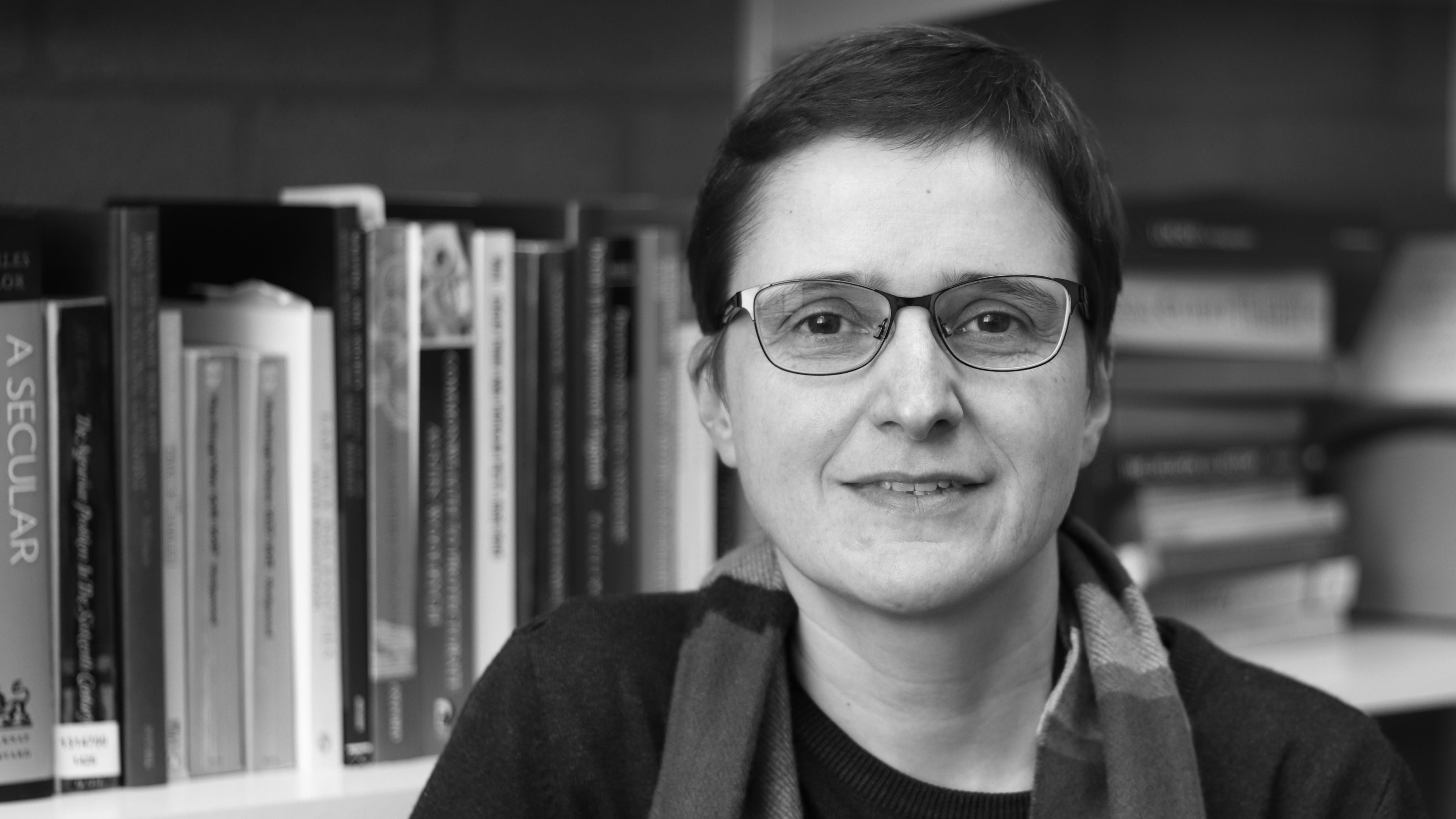
Professor Alberto Rigolio is a leading scholar of Classics and Ancient History at Durham University, specializing in the cultural and intellectual history of the Eastern Mediterranean during the Roman and late antique periods. He holds a D.Phil. from Oxford University and has held prestigious fellowships at Harvard Dumbarton Oaks, Princeton Society of Fellows, and All Souls College Oxford. His research focuses on Syriac literature, Greco-Syro-Arabic translation movements, and religious debates in late antiquity. Rigolio has published extensively, including his award-winning monograph Christians in Conversation (2019), and currently leads projects supported by the British Academy and the Institute for Advanced Study. He supervises PhD students across multiple institutions and mentors postdoctoral researchers like Dr. Karl Heiner Dahm and Dr. Mara Nicosia. His work bridges classical antiquity with early Christian and Islamic intellectual traditions, emphasizing literary and educational exchanges in late antique societies. Educations: D.Phil., University of Oxford (2014) MPhil/BA, University of Milan and Oxford Research Interests: Syriac literary emergence, Greek-Syriac-Arabic translation networks, late antique dialogues, early Christian theology, and the cultural history of the Roman Near East. Rigolio's current projects investigate how Syriac became a major literary language and its role in transmitting Graeco-Roman thought to early medieval cultures. Grants & Awards: British Academy Mid-Career Fellowship (2024) All Souls College Visiting Fellowship (2024) Princeton IAS Membership (2023) Advising & Mentoring: Supervised 9 PhD students, including Cédrik Michel (Lancaster University Lecturer) and Lila Knight (awarded 2024). Mentors postdoctoral scholars in areas like Syriac rhetoric and late antique religious conflict. Labs/Teams: Leads interdisciplinary research groups at Durham and collaborates with institutions like the Institute for Advanced Study, focusing on textual analysis and cultural history.
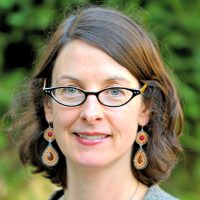
Kimberly Stratton is an Associate Professor in the Department of Religion at Carleton University within the College of the Humanities. She holds a Ph.D. in the History of Religions in Late Antiquity from Columbia University (2002), following degrees from Barnard College and Harvard University. Her research focuses on religion, violence, and social identity in antiquity, ancient magic, and gender studies. She has authored Naming the Witch: Magic, Ideology, and Stereotype in the Ancient World (2007), which won the F. W. Beare Book Award, and co-edited volumes such as Daughters of Hecate: Women and Magic in Antiquity (2014). Her work examines intersections between religion, power, and identity in Greco-Roman, early Christian, and Rabbinic Jewish contexts. Recent projects include exploring violence and Exodus narratives in early religious identity formation, as seen in her 2017 article in History of Religions . She has presented widely on topics like Roman imperialism and apocalyptic literature at venues such as the Society of Biblical Literature. Her research highlights how ancient societies used religious discourse to construct social boundaries and authority. Awards include recognition from students and scholarly societies for her impactful contributions. Education: B.A. Barnard College (1991), M.T.S. Harvard (1995), Ph.D. Columbia (2002) Affiliations: Canadian Society of Biblical Studies, American Academy of Religion Office: 2A47 Paterson Hall | Email: kim.stratton@carleton.ca
Dr Rachel Foxley is an Associate Professor in the Department of History at the University of Reading, serving as Director of Postgraduate Studies in History. Her research focuses on early modern British political thought, particularly the English Revolution, Leveller movement, and classical influences on modern politics. She has authored books like The Levellers: Radical Political Thought in the English Revolution (2016) and co-edited Brill's Companion to the Legacy of Greek Political Thought (2024). Her work explores themes such as republicanism, citizenship, and the intersection of classical antiquity with early modern political developments. Her research has addressed figures like John Milton, James Harrington, and John Lilburne, analyzing their contributions to democratic and republican ideals. Notable projects include the Astor100 initiative, celebrating Nancy Astor’s legacy in women’s politics. She frequently publishes in journals such as Classical Receptions Journal and History of Political Thought , contributing to debates on sovereignty, rhetoric in revolutionary pamphlets, and the historical context of Magna Carta. Dr. Foxley’s scholarship bridges intellectual history with political theory, emphasizing how classical models (e.g., Sparta, Rome) shaped English republican thought. Her work highlights the innovative yet rooted nature of 17th-century political ideas, challenging traditional narratives of revolutionary thought.
C. Michael Sampson is an Associate Professor in the Department of Classics at the Faculty of Arts , University of Manitoba . Holding a PhD in Classical Studies (2009) from the University of Michigan, an MA in Classics (2003) from Dalhousie University, and a BA (First Class Honours) in Classics and Early Modern Studies (2001) from the University of King's College, Sampson is a broadly trained philologist specializing in Greek and Latin literature with a focus on poetry, and a papyrologist working on fragmentary texts from Egypt. Research interests: Greek/Latin literature, papyrology, reception studies, Hellenistic literature Current project: The Books of Karanis (interdisciplinary study of Greek literary culture in Egypt) Awards: SSHRC Insight Grant (2021-2025), SSHRC Connections Grant (2020-2022), Community Engagement Award (2018) Editorial roles: Digital Corpus of Literary Papyri, Pylon: Editions and Studies of Ancient Texts Teaching: Courses on Ancient Greek culture, Roman comedy, Euripides, and Archaic poetry
Mario Telò is a Professor of Ancient Greek & Roman Studies, Comparative Literature, and Rhetoric at the University of California, Berkeley, with an affiliation in the Program for Critical Theory. He serves as Chief Editor of the journal Classical Antiquity and sits on the editorial board of Representations . His work bridges antiquity and modernity through interdisciplinary lenses, focusing on psychoanalysis, queer theory, and political theory. Telò has authored monographs such as Archive Feelings: A Theory of Greek Tragedy (2020) and Resistant Form: Aristophanes and the Comedy of Crisis (2023), exploring themes like tragic aesthetics, crisis, and canonical reimagining. Recent projects include co-editing Reading Greek Tragedy with Judith Butler (2024) and organizing conferences on Jean-Luc Nancy and Classics. His research emphasizes textual form’s emancipatory potential, engaging with art, film, and architecture to deconstruct normative narratives. Education : His academic background is not detailed here, but his prolific publications reflect advanced expertise in Classics and interdisciplinary humanities. Research Interests : Telò’s work critically examines Greek tragedy and comedy through modern theoretical frameworks. He investigates the interplay between aesthetic form and political/social issues, leveraging psychoanalysis (Freud, Lacan) and queer theory (Judith Butler, Lee Edelman) to analyze ancient texts. His focus on 'resistant form' highlights how classical works challenge equilibrium and normativity, offering tools for contemporary critical discourse. Grants & Collaborations : He co-organizes international conferences (e.g., on Jean-Luc Nancy) and collaborates on interdisciplinary projects like a forthcoming book on artist William Kentridge. His editorial work spans special journal issues on topics like elemental objects and queer philology. Labs/Teams : He leads editorial initiatives and hosts academic events such as the Townsend Center book chats and Syndicate symposia, fostering dialogue between classicists and modern theorists.
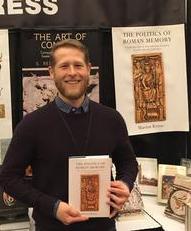
Marion Kruse is an Assistant Professor of Classics at the University of Cincinnati, specializing in Roman historiography and late antiquity. She also holds an adjunct position at The Ohio State University. Her research bridges ancient history, Byzantine studies, and economic thought in antiquity. Ph.D. in Classics from The Ohio State University (2015) B.A. in History from the University of Richmond (2008) Dr. Kruse explores narratives of Roman identity post-476 AD, focusing on Justinianic historiography, Cassius Dio's textual tradition, and the Roman military high command. Her work interrogates intersections between law, literature, and economic ideology in late antiquity. Recent publications analyze Procopius' agonistic authorship techniques, Roman economic discourse in the Secret History , and the evolution of the Notitia Dignitatum system. These works span subfields including military history, rhetorical analysis, and late antique historiographical methods. Her academic career includes peer-reviewed articles in Classical Quarterly , Studies in Late Antiquity , and Greek, Roman, and Byzantine Studies . She has also authored two seminal books: The Politics of Roman Memory (2019) and The Field Armies of the East Roman Empire (2023, co-authored with Anthony Kaldellis). Dr. Kruse remains active in revising Byzantine-era historiographical approaches and continues to publish on the role of Roman governmental structures in shaping Christian institutions.
Caroline Vout is Professor of Classics at the University of Cambridge, holding a Fellowship at Christ's College where she serves as Director of Studies for Prelims and Part 1A in Classics. She directs the Museum of Classical Archaeology (MOCA) and co-directs Cambridge Visual Culture. From 2019-2024, she held the Byvanck Chair of Classical Archaeology/Art History at Leiden University. Born in Durham, Vout completed her undergraduate studies at Newnham College, Cambridge, followed by an MA at the Courtauld Institute of Art in London, then returned to Newnham for her PhD. Before joining Cambridge in 2006, she taught at London, Bristol, and Nottingham Universities. Vout is a cultural historian and art historian specializing in the Roman imperial period and its reception. Her research explores power dynamics in classical art, erotic representation, and how antiquity has been reinterpreted through history. She examines how classical visual culture functions as both historical evidence and living cultural force, with particular expertise in body representation and political dimensions of reception. Her publication history reveals deep engagement with classical material across centuries - from detailed artifact studies (Peplos Kore, Discobolus) to broad cultural analyses. Recent work connects antiquity with modern contexts including the Olympic Games and Victorian reinterpretations, showing consistent interest in how classical art remains dynamically relevant. As Director of Studies at Christ's College, Vout mentors undergraduate Classics students while her MOCA leadership bridges academic research and public engagement. Her curatorial work, including the upcoming 'Paris 1924: the Art of the Olympics' exhibition with Chris Young, demonstrates commitment to making classical art accessible through innovative programming and digital initiatives like MOCA's video series. Vout's interdisciplinary approach through Cambridge Visual Culture and her editorial roles (Omnibus, Sculpture Journal advisory board) reflect her position at the intersection of traditional classical scholarship and contemporary visual studies, connecting ancient artifacts with modern cultural discourse.
Nephele Papakonstantinou, Ph.D. (Sorbonne), is an Assistant Professor of Latin Philology at National and Kapodistrias University of Athens (Department of Philology) and a Research Fellow at Julius-Maximilians-University Würzburg's Institute of Classical Philology. She holds dual affiliations in classical philology and legal medicine interdisciplinary research. Ph.D., Sorbonne University Evaluated by Conseil National des Universités de France (2023) for Maître de Conférences qualification Her research focuses on intersections between Roman legal rhetoric (particularly Quintilian and declamation traditions), Roman jurisprudence, Greco-Roman medical thought, and their Renaissance reception. Current work examines historical development of medical jurisprudence in classical Rome and late Renaissance Italy through the lens of case histories and consilia literature. Key publication trends include analysis of Pseudo-Quintilian's legal frameworks, trauma representation in classical texts, and Renaissance humanist adaptations of ancient medical-legal concepts. Her 2025 monograph on crimen raptus in Roman law and upcoming work on Paolo Zacchia's poisoning consilia demonstrate this interdisciplinary approach. Recipient of Alexander von Humboldt Post-doctoral Research Fellowship Co-editor of Narratio in Medicine and the Law (forthcoming, Palgrave Macmillan) Active in collaborative research projects, she directs initiatives connecting classical philology with legal medicine traditions across antiquity and the Renaissance, supported by ongoing institutional funding and international academic partnerships.
Janet H. Johnson is the Morton D. Hull Distinguished Service Professor of Egyptology at the University of Chicago, affiliated with the Oriental Institute. She has been teaching and researching at UChicago since 1971. Her expertise spans Egyptian language, particularly Demotic, and the history of Egypt's Late Period (1st millennium B.C.). Education: Ph.D. in Egyptology, University of Chicago, 1972 Research Interests: Johnson focuses on Demotic grammar, legal texts, gender studies in ancient Egyptian society, and economic practices. She directs the Chicago Demotic Dictionary Project , a foundational resource for studying this ancient language. Her work bridges linguistic analysis with social history, particularly examining women’s roles, property rights, and legal frameworks in Late Period Egypt. Teaching & Contributions: She teaches courses on Middle Egyptian hieroglyphs, ancient Near Eastern history, and gender in Egyptology. Her publications include Thus Wrote 'Onchsheshonqy (a Demotic grammar) and analyses of Demotic verbal systems. She frequently collaborates on projects involving Demotic papyri and museum artifacts. Labs/Teams: Lead director of the Chicago Demotic Dictionary Project , an interdisciplinary effort to document and analyze Demotic language materials.
Elise Kleivane is an Associate Professor in Written Culture at the Department of Norse and Celtic Philology, Faculty of Humanities, University of Oslo. She has served as Head of Teaching at ILN (Institute of Language and Literature) from 2021 to 2024 and maintains an active research and teaching profile in Norse philology and related fields. Dr. Kleivane earned her PhD in Norse Philology from the University of Oslo in autumn 2011, following a Master of Arts in Norse Philology completed in spring 2003. Her academic journey has positioned her as a leading scholar in medieval Scandinavian writing culture. Her research focuses on epigraphy, runology, and medieval literacy, with particular emphasis on the intersection of written and material culture in medieval Norway. Kleivane examines how writing functioned in both public and private spheres, analyzing inscriptions in runes and Roman script as evidence of medieval communication practices. Her work bridges philology, archaeology, and cultural history to reconstruct literacy patterns in pre-modern Scandinavia. Recent projects have explored religious texts, biblical translations, and the role of writing in ecclesiastical contexts. Analysis of her publication record reveals a consistent trajectory through medieval epigraphy and literacy studies. Her work demonstrates increasing sophistication in connecting material evidence with textual analysis, moving from specific inscription studies to broader questions about writing culture. The pattern shows strong engagement with interdisciplinary approaches, combining philological expertise with archaeological and historical methodologies. Her research increasingly addresses questions of religious practice, vernacular literacy, and the transmission of knowledge in medieval Scandinavia. Among her significant appointments, she has been appointed to the Language Council's expert council for standardization and language observation (2023-2026) and to the Sources Commission (2023-2026), serving on the editorial board for the National Archives' scientific publication channels. Dr. Kleivane has secured substantial research funding, most notably leading the Norwegian Research Council-funded project 'Letters between runes and manuscripts' (2017-2021) and participating in the NORDCORP-funded 'Retracing the Reformation' project (2013-2017). She currently contributes to the Riksbanken Jubileumsfond-funded research program 'Modes of Modification' (2018-2025) as a member of its steering committee, where her research focuses on 'Texts in the Open and Out of Sight: Public and Private Communication in Epigraphy.' She teaches across multiple institutions including the University of Oslo and Stockholm University, covering subjects ranging from Norse literature and mythology to runology and medieval manuscript culture. Her teaching reflects her research interests in written culture across the medieval Scandinavian world.
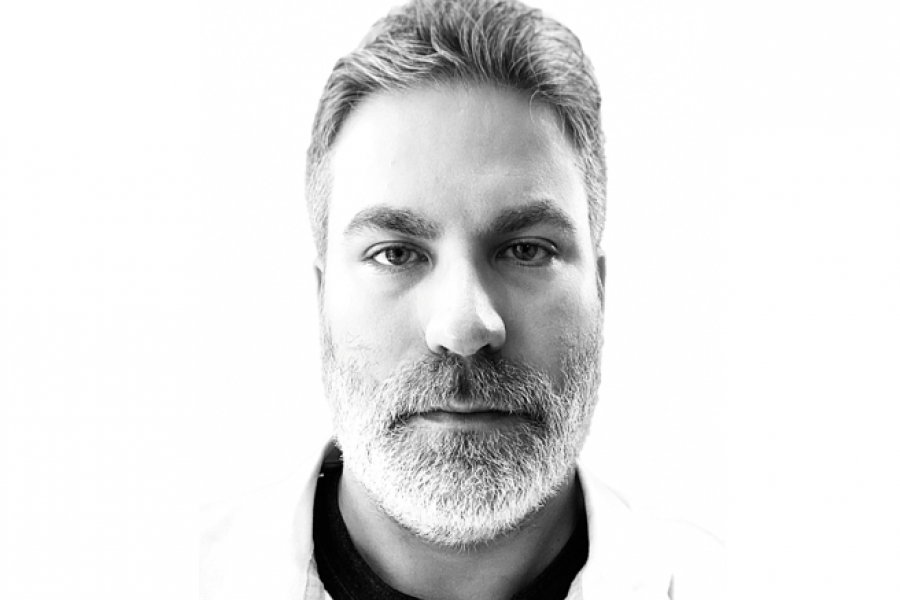
Carsten Hjort Lange is a Professor in the Department of Politics and Society at Aalborg University, Denmark. He specializes in Roman history, focusing on civil war, political/military history, and ancient historiography. His work extends to comparative studies of the American Civil War and contemporary US politics. He co-edits Brill's Historiography of Rome and Its Empire and De Gruyter's Studies in Ancient Civil War . Lange has authored three monographs, including From Hannibal to Sulla: The Birth of Civil War in Republican Rome (2024). He holds editorial roles for multiple journals and participates in international research networks like PortCityFutures. His awards include the 2017 Choice Outstanding Academic Title Award and Teacher of the Year accolades in 2021 and 2022. Education: Ph.d. in Classics/History. Research Interests: Late Roman Republic, civil war dynamics, Cassius Dio's historiography, naval history, and conceptual history. Key areas include stasis theory, Augustan propaganda, and the intersection of ancient and modern political conflict. Publications & Projects: Over 100 peer-reviewed outputs, including monographs, edited volumes, and journal articles. Active in projects such as Responses to Imperialism in Roman Historical Writing and International/European Network on Roman Republican History . Awards: Recognized for academic contributions and teaching excellence, including the prestigious Choice Award and two consecutive Teacher of the Year prizes. Media Engagement: Regular contributor to Danish media, analyzing parallels between ancient and modern political crises (e.g., Trump's presidency compared to Augustus).
Averil Cameron is a distinguished Professor of Late Antique and Byzantine History at the University of Oxford, previously serving at King's College London from 1978–1994. Her research focuses on the intersection of political, religious, and cultural dynamics in late antiquity and Byzantium. She has held prominent roles such as President of the Council for British Archaeology in the Levant and has been honored with prestigious awards including the British Academy Kenyon Medal (2020) and DBE (2006). Her academic contributions include foundational texts on Procopius, Eusebius, and the Mediterranean world. Notable works like Byzantine Matters (2014) and Dialogues and Debates from Late Antiquity (2017) explore intellectual and religious discourses. She has edited volumes in the Cambridge Ancient History series, shaping scholarly narratives on Roman and Byzantine empires. Cameron’s publications consistently bridge micro-historical analysis with macro-historical trends, emphasizing how cultural and political shifts in late antiquity laid foundations for medieval Europe and the Islamic world. Her work integrates textual criticism, archaeological insights, and interdisciplinary approaches to reconstruct complex historical phenomena. Awards: Kenyon Medal, DBE, CBE, Fellow of British Academy Editorial Roles: Cambridge Ancient History series, British Archaeology Council Key Themes: Imperial governance, religious transitions, cultural continuity, and late antique socio-political structures
Frank Thielman is Professor of Divinity and holds the Presbyterian Chair of Divinity at Beeson Divinity School, Samford University, where he has taught New Testament and Greek since 1989. He specializes in New Testament studies with a particular focus on Pauline theology and the cultural context of early Christianity. Dr. Thielman's educational background includes a PhD from Duke University, BA and MA degrees from the University of Cambridge, and a BA from Wheaton College. He also completed additional studies at Gordon-Conwell Theological Seminary. His research interests center on Paul and his letters, biblical theology, and the material and cultural setting of first century Christianity. Thielman's scholarly work provides deep insights into New Testament theology, particularly the Pauline corpus, with emphasis on how early Christian thought developed within its historical and cultural context. His approach combines careful exegesis with theological synthesis, examining how the New Testament writings form a coherent theological whole while addressing specific historical situations. Thielman's recent publications demonstrate consistent expertise in Pauline studies, with particular attention to Romans and the theology of grace. His scholarship bridges historical-critical analysis with constructive theological reflection, making significant contributions to understanding Paul's relationship with the Jewish law and the broader theological implications of New Testament writings. Dr. Thielman is an active member of several scholarly organizations including the Studiorum Novi Testamenti Societas (Society for New Testament Studies), Society of Biblical Literature, Institute for Biblical Research, Evangelical Theological Society, and Catholic Biblical Association. As an ordained Presbyterian (PCA) minister, Dr. Thielman brings practical ministry experience to his academic work. His teaching and writing reflect a commitment to connecting rigorous scholarship with pastoral application. He has authored numerous books and articles that serve both academic and church communities, including his well-received commentaries and his recent 2025 publication Paul, Apostle of Grace , which has been praised as a definitive biography of Paul for a new generation.
Prof. Dr. Michael Schramm serves as an Extraordinary Professor of Classical Philology at the University of Göttingen's Faculty of Humanities. His academic journey spans prestigious institutions including Heidelberg, Jena, Leipzig, and Bielefeld, with doctoral and habilitation degrees establishing his expertise in ancient philosophical traditions. Research interests center on Neoplatonism, Greek tragedy reception, and Late Antique political-religious dynamics, particularly focusing on Julian the Apostate's theological works and Euripides' influence in imperial philosophy. His publications demonstrate rigorous engagement with textual criticism, philosophical exegesis, and intercultural dialogue between pagan and early Christian thought. Current research includes DFG-funded projects on Julian's religious philosophy (2015-2019) and Euripidean tragedy's relationship to providence (2020-2021), alongside a Gerda Henkel Foundation research fellowship (2020-2021). His editorial leadership in volumes like Euripides-Rezeption in Kaiserzeit und Spätantike (2020) shapes contemporary scholarship in classical reception studies. Advisory roles include postdoctoral mentoring through DFG research groups, with institutional service comprising temporary professorships at Bamberg, Bonn, Tübingen, and Jena since 2012. His methodological approach integrates philological precision with philosophical analysis across monographs, critical editions, and interdisciplinary handbooks.