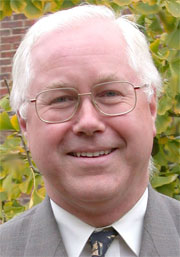
Luca De Benedictis is a Professor of International Economics and Network Analysis at the University of Macerata's Department of Economics and Law. His research focuses on international trade empirics, including trade specialization measurement, network analysis, and causal models. He has authored numerous articles on topics like gravity models, migration impacts, and historical trade networks. His work spans journals such as the Journal of the Royal Statistical Society and Network Science . He teaches courses in International Economics and Network Analysis. His research interests include economic geography, policy evaluation, and applied econometrics. Notable projects include analyzing the Erasmus Program's inclusivity, Roman road networks' legacy, and immigration's effect on trade. De Benedictis has secured funding from EU initiatives like COSTNET and GeComplexity, focusing on network data science and economic systems. He serves on editorial boards of journals like Italian Economic Journal and Journal of Historical Network Research . His work bridges theoretical models with empirical applications in trade, migration, and policy.
Prof. Zeljko Miletic serves as a full professor at the Department of Archaeology, Faculty of Philosophy, University of Zadar, where he has been employed since 1986. He teaches core courses across all archaeology study levels including Institutions of the Roman World, Roman Army in Illyricum, Romanization of Ancient Illyricum, Economy of Roman Dalmatia and Histria, and Ancient Religion in the Adriatic-Danubian Region. His educational credentials include: Graduate Archaeologist and Art Historian, Faculty of Philosophy in Zadar (1986) Master of Science (Topography of the Salonitan necropolises), Faculty of Philosophy in Zagreb (1989) Doctor of Science (Mithraism in the Roman province of Dalmatia), Faculty of Philosophy in Zadar (1997) Miletic specializes in religious practices and military history within Roman provincial contexts, with particular focus on the Eastern Adriatic region. His research integrates field archaeology with socio-economic analysis of Romanization processes, examining how religious syncretism and military infrastructure shaped cultural transitions in Dalmatia and Pannonia. This interdisciplinary approach bridges classical archaeology, anthropology, and historical geography to reconstruct lived experiences in Roman frontier provinces. No scientific awards are documented in the source material. As academic leader, Miletic coordinated the Archaeology of the Eastern Adriatic postgraduate program and served as doctoral mentor/head until 2015. He secured principal investigator roles for the MZOS-funded projects Religious Life on the Eastern Adriatic in Roman Times and Cult and Religion on the Eastern Adriatic Coast in Roman Times, while collaborating on international initiatives including Corpus Monumentorum Mithriacorum with Heidelberg University. His grant portfolio demonstrates sustained focus on Roman provincial religious networks. Miletic directs field operations at Krka National Park's Burnum archaeological site and established antiquities collections at Humac Museum in Bosnia and Herzegovina. His excavation teams operate across key Adriatic-Danubian sites including Salona, Nin, Galovac, and Asseria, with continuous fieldwork spanning over three decades to document Roman provincial infrastructure.
Ian Ewart is an Associate Professor at the University of Reading's School of the Built Environment, serving as Head of Construction and Engineering Management and Research Group Lead for Organisation, People and Technology. He chairs the Research Ethics Committee since 2016 and supervises undergraduate/postgraduate dissertations. His academic journey spans engineering and anthropology: DPhil Social and Cultural Anthropology, University of Oxford, St Hugh's College (2007-2012) MSc Material Anthropology and Museum Ethnography, University of Oxford, St Hugh's College (2006-2007) BA (Hons) Archaeology and Anthropology, University of Oxford, Harris Manchester College (2003-2006) Diploma in Management Studies, University of the West of England (1990-1994) BEng (Hons) Mechanical Engineering, Staffordshire University (1983-1987) Ewart's research integrates ethnographic methods with digital technology studies, examining human-technology interactions in construction and domestic settings. His work bridges engineering practice and social anthropology, focusing on skill transmission, sustainable design, and multisensory experiences in virtual environments. Publications from 2025-2013 reveal a dominant trajectory in digital twins for socio-ecological sustainability, VR-based occupant behavior prediction, and HBIM for heritage conservation. The corpus demonstrates consistent cross-disciplinary innovation, merging archaeological reconstructions with healthcare applications while maintaining anthropological rigor. Key recognition: ESRC Future Research Leader fellowship (2013) for Designing Healthy Homes project He supervises PhD candidates like Afolabi Dania (Nigerian sustainable construction) and Joanna Hull (Heritage BIM), leveraging ESRC funding for ethnography-VR health studies. His grants emphasize participatory design and real-world impact assessment in built environments. Leaders the Organisation, People and Technology research group, developing multisensory Roman town reconstructions with sound/smell integration to advance archaeological and architectural experience modeling.
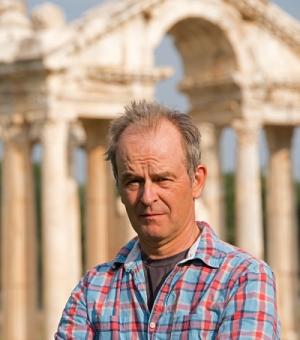
Professor Bert Smith is a distinguished academic at the University of Oxford, serving as a Fellow of Lincoln College. He holds the position of Professor in the Faculty of Classics, with a specialization in Greek Archaeology and Roman Art/Archaeology. His academic journey includes MA, MPhil, and DPhil degrees from Oxford University. Prior to his current role, he was a Harkness Fellow at Princeton University (1983-85) and taught Hellenistic and Roman art at New York University’s Institute of Fine Arts (1986-1995). His research focuses on the art and visual cultures of the ancient Mediterranean, particularly the relationship between visual representation and social/political contexts. As director of the Aphrodisias excavation project since 1991, he has contributed significantly to understanding the archaeology of Greek cities in the Eastern Roman Empire. Key achievements include a British Academy/Philip Leverhulme Fellowship (2007-2008) and leadership in the AHRC-funded 'Last Statues of Antiquity' project (2009-2012), resulting in a collaborative book (2016). Teaching responsibilities include lectures and seminars on Greek and Roman art and archaeology. His publications span over four decades, with notable works on sarcophagi iconography, Aphrodisias excavations, and Hellenistic art. He actively collaborates with institutions like the Oxford Centre for Greek and Roman Antiquity (OCGRA). Current research continues to explore late antiquity art and archaeology through fieldwork and interdisciplinary projects.
Philippe Hamman is a Professor of Sociology and Director of the Institute of Urban Planning and Regional Development (IUAR) at the Faculty of Social Sciences, University of Strasbourg. He leads the Master’s program in City and Environment and holds significant leadership roles, including Scientific Assessor and President of the Faculty Scientific Commission since 2016. He is the holder of the Jean Monnet Chair 'GoInUSE' and the Chaire MAKErS on agricultural methanization in Europe, reflecting his central role in sustainability research. His research focuses on urban and regional sustainability, energy transitions, cross-border cooperation in the Upper Rhine region, environmental governance, and socio-ecological issues. He leads major projects funded by Interreg, CNRS, and ADEME, often in trinational collaborations with Germany and Switzerland. His work bridges sociology, environmental studies, and policy analysis. His recent publications explore citizen energy cooperatives as commons, urban sustainability governance, agricultural methanization, and the social dimensions of environmental issues such as tick-borne diseases and pandemic-era urban planning. The articles reflect a consistent focus on sustainability transitions, territorial governance, and citizen participation, with a strong comparative and interdisciplinary approach, particularly between France and Germany. Scientific Assessor, Faculty of Social Sciences, University of Strasbourg (since 2016) President, Faculty Scientific Commission (since 2016) Member, Council of the Faculty of Social Sciences (2016–2026) President, Committee of Experts, Faculty of Social Sciences (2019–2024), then IUAR (2025–2028) Expert for ANR, ANRT, HCERES, INRAE, and multiple European research funds Member of editorial boards for Espaces et sociétés , Revue de l’Allemagne et des Pays de langue allemande , and others He supervises doctoral students Aude Dziebowski and Romane Joly and teaches courses in urban sociology, sustainable development, and the sociology of urban projects. He is deeply embedded in academic service, peer review, and the editorial direction of research journals and book series. His laboratory, SAGE (UMR 7363), is a key hub for interdisciplinary research on societies, actors, and governance in Europe, where he co-leads research axis 3 on urban and environmental issues.
Professor Jonathan Adams holds a Chair in Archaeology at the University of Southampton's Department of Archaeology. He leads the Centre for Maritime Archaeology (CMA), established in 1997, and teaches at both undergraduate and postgraduate levels. His career spans over 30 years, including pivotal roles in the Mary Rose excavation and foundational work in deepwater maritime archaeology. Adams specializes in the Black Sea region, focusing on environmental change impacts on prehistoric populations, maritime connectivity, and naval technology's role in state-building. Affiliations: Centre for Maritime Archaeology, Southampton Marine and Maritime Institute Key Projects: Black Sea Maritime Archaeology Project (since 2015), Ships of State (with Södertörn University) Education: BA in Archaeology & Ancient History (Durham University), DPhil in Maritime Archaeology (Stockholm University). His research integrates ship science, oceanography, and historical analysis. He currently supervises seven PhD students and has mentored over 500 graduates through the MA/MSc in Maritime Archaeology program launched in 1995. Research Interests: Chronology of environmental change in the Black Sea Maritime connectivity across historical periods Role of naval architecture in early modern state development
Darian Marie Totten is an Assistant Professor & Director of Classical Studies at McGill University's Department of History and Classical Studies. Her research focuses on Roman archaeology, environmental history, and the intersection of ancient and modern placemaking. She holds a PhD from Stanford University and specializes in Mediterranean regions from 2000 BCE to 600 CE. Education: PhD in Classics/Archaeology from Stanford University (thesis not specified). Research interests include Roman infrastructure, comparative imperial systems (e.g., Han China), urban resilience strategies, and the material culture of labor and exchange. She directs fieldwork at Salapia-Salpi in Apulia, Italy, exploring late antique urbanism and environmental adaptation. Her scholarship bridges archaeological material analysis with historical interpretation, emphasizing interdisciplinary approaches to ancient economies, landscapes, and cultural transitions. Recent work highlights cross-cultural comparisons between Rome and Han China, as well as the long-term dynamics of Mediterranean coastal settlements. Her publications consistently engage with methodological innovation in field archaeology, particularly in paleoenvironmental reconstruction and ceramic sourcing. She also critiques modern uses of Roman heritage in national identity formation, reflecting a commitment to critical archaeology. Current projects include ongoing excavations at Salapia, analysis of Apulian salt production networks, and investigations into late antique glass trade routes. She teaches courses on classical archaeology (CLAS 240) and specialized topics (CLAS 349).
Tom Brughmans serves as Associate Professor in Classical Archaeology at Aarhus University's School of Culture and Society, where he pioneers the application of network science and computational modeling to archaeological questions. His work bridges theoretical archaeology with complexity science, focusing on long-term economic dynamics in the Roman Empire through quantitative analysis of material culture distribution. His research centers on developing methodological frameworks for archaeological network analysis, with specific expertise in Roman economic integration, amphorae trade networks, and agent-based simulation of ancient economies. Brughmans advocates for computational reproducibility and open-science practices, creating accessible tools that transform complex archaeological data into analyzable network structures while challenging traditional interpretations of Roman market systems. Brughmans' publication trajectory reveals three dominant trends: advancing theoretical foundations of archaeological network science through handbooks and methodological guides; empirical investigations into Roman economic complexity using big-data approaches to amphorae distributions; and development of public-facing simulation platforms that translate academic research into interactive experiences. His work consistently integrates computational techniques with archaeological evidence to model socio-economic processes across centuries. His scientific recognition includes prestigious competitive fellowships: Leverhulme Early Career Fellowship (2017-2019) for the MERCURY project Marie-Curie Individual Fellowship (2019-2020) for SIMREC Brughmans directs multiple major research initiatives including the Past Social Networks Project (an open repository for ancient network data), NEFLARA (a Marie-Curie project developing landscape archaeology frameworks), and MINERVA (focused on Roman economic functioning). He has secured substantial funding from the Leverhulme Trust, Marie-Curie Actions, and ERASMUS+ for projects advancing computational archaeology, while actively promoting collaborative research through platforms like FORVM that make economic modeling accessible to broader audiences. As a core member of Aarhus University's Centre for Urban Network Evolutions (UrbNet), he contributes to interdisciplinary investigations of ancient urban connectivity. His leadership extends to developing international research networks through the Oxford Handbook of Archaeological Network Research and creating open educational resources that democratize access to network analysis methodologies in archaeology.
Prof. Ryan Keith Shosted is a full-time tenured Professor at the University of Illinois at Urbana-Champaign , affiliated with the Department of Linguistics , Spanish and Portuguese , American Indian Studies Program , Beckman Institute , Lemann Center for Brazilian Studies , Center for Latin American and Caribbean Studies , and Center for African Studies . He serves as Director of the Program in Translation and Interpreting Studies and leads the Chin-Woo Kim Phonetics Laboratory . Education: Ph.D. , Linguistics, University of California, Berkeley (2006) M.A. , Linguistics, University of California, Berkeley (2003) B.A. , Linguistics, Brigham Young University (2000) Shosted's research focuses on the intersection of phonetics , phonology , and historical linguistics . He pioneered the application of ultrafast dynamic MRI to study the vocal tract's physiological-acoustic mapping in diverse languages, including Hittite cuneiform , Deseret Alphabet , and endangered languages like Q'anjob'al. His work spans speech production modeling , nasalization mechanisms , and cross-linguistic articulatory analysis . The 15 most recent publications demonstrate his leadership in dynamic speech imaging , phonetic-aerodynamic modeling , and historical sound change analysis . Key trends include advanced MRI techniques for speech study, phonetic universals , and historical writing systems as tools for linguistic reconstruction. Scientific Awards: Campus Award for Excellence in Undergraduate Teaching (2021) Dean's Award for Excellence in Undergraduate Teaching (2021) Arnold O. Beckman Award (2009, 2010) Jacob K. Javits Fellowship (2001-2005) Shosted's grant portfolio includes NSF funding for nasalization research (BCS-1651197, BCS-1121780) and NIH collaboration (1R01DE027989-01A1) on cleft palate speech. He has directed 12 graduate students and taught courses ranging from Hittite language to quantitative phonetic methods . The Chin-Woo Kim Phonetics Laboratory , under his directorship since 2007, expanded in 2010 to include articulatory phonetics facilities with EPG, ultrasound, and MRI analysis capabilities. He continues to lead Beckman Institute collaborations in speech imaging technology.
Maria Fabricius Hansen is Professor of Art History at the Department of Arts and Cultural Studies, Faculty of Humanities, University of Copenhagen, where she has served since 2014 (promoted to Professor in 2022). Previously, she was Associate Professor at Aarhus University (2002-2014) following Assistant Professorship there (1998-2002), with earlier part-time appointment at the University of Copenhagen (1996-1997). Educational background: Born April 29, 1964 in Copenhagen, Denmark Mag.art. in Art History, University of Copenhagen (1992) Ph.D. in Art History, University of Copenhagen (1997) dr.phil. in Art History, Aarhus University (2005) Her research centers on art and architecture from late antiquity to c. 1600 with Italian and Danish focus, contemporary art, museology, and cultural heritage. Current projects examine art-nature-technology intersections through material culture studies, extending her expertise in spolia and architectural history. She teaches across these domains while supervising students at all academic levels. Recent publications reveal sustained engagement with Renaissance studies (particularly grotesque frescoes) and methodological innovation in cultural history. Her 2025 works demonstrate consistent focus on early modern court culture, architectural analysis, and contemporary collaborative practices, reflecting both historical depth and contemporary relevance. Scientific recognition includes: Rigmor and Carl Holst-Knudsen's Research Award (2006) HM Queen Margrethe II's Roman Award (2019) Ole Haslunds Kunstlegat (2019) She actively supervises PhD and master's students while maintaining extensive institutional service. Her 203 academic activities include editorial roles for Periskop journal and the Monsters and Marvels book series, plus consultancy for Børsen's reconstruction. Grant involvement spans the Novo Nordisk Foundation's art historical committee and multiple jury appointments. Professor Hansen's collaborative networks include the Danish Institute in Rome (2010-2018), New Carlsberg Foundation (2007-2014), and current board memberships at Lillian og Dan Finks fond (2025-2035) and Kunstforeningen Gl. Strand (2015-), demonstrating sustained leadership in Denmark's cultural infrastructure.
Professor Michael Fulford CBE FBA is a leading archaeologist at the University of Reading's Department of Archaeology. He specializes in Roman and Iron Age archaeology, particularly through his long-term leadership (1997-present) of the Silchester Roman Town Project, investigating the urban development of Calleva Atrebatum. His work spans fieldwork, digital publication, and interdisciplinary research, including the Silchester Environs Project and collaborations with institutions like the Archaeology Data Service and Cotswold Archaeology. Key projects include the Silchester Insula IX excavation series (1997-2014), yielding five monographs on the site's evolution from an Iron Age oppidum to a Roman city. He has also directed the Nero and Silchester Project (2016-19) and pioneered experimental methods like gamma-ray spectroscopy for urban analysis. His research integrates economic, environmental, and social dimensions of Roman Britain, with a focus on rural settlement patterns, pottery industries, and imperial infrastructure. Fulford's awards include the CBE (2005) for services to archaeology and Fellowship of the British Academy. He collaborates across departments, engaging with History, Classics, and Geography, and advocates for open-access publication through projects like The Rural Settlement of Roman Britain online resource. His work bridges academia and public engagement, shaping understanding of Roman urbanism and its legacy in Britain.
Steven Hijmans is a Professor in the Department of History, Classics, & Religion at the University of Alberta's Faculty of Arts. His research focuses on Roman art and religion, with a particular emphasis on solar symbolism, Mithraic studies, and the intersection of art and religious practices. He holds a PhD and has authored numerous scholarly works analyzing ancient iconography, imperial imagery, and religious syncretism. His work often bridges archaeological evidence with textual analysis to explore cultural, political, and religious dynamics in antiquity. Key research areas include the role of art in religious expression, the evolution of imperial portraiture, and the material culture of Roman cults. His recent publications (2010–2024) address topics ranging from solar deities in Greco-Roman contexts to the reinterpretation of ancient urban spaces. Hijmans is also engaged in interdisciplinary projects examining the reception of classical antiquity in modern scholarship. His academic contributions are marked by meticulous attention to iconographic detail and contextual analysis. He has participated in archaeological fieldwork in Greece and Turkey, contributing to site documentation and interpretation. Hijmans' work is frequently cited in studies of late antique religion, Hellenistic art, and the socio-political dimensions of Roman religious practices.
Professor Leif Isaksen is a leading scholar in Digital Humanities and Ancient History at the University of Exeter, holding a chair in the Department of Classics, Ancient History, Religion and Theology. He also serves as Theme Lead for Humanities, Heritage and the Creative Industries at the Institute for Data Science and Artificial Intelligence (IDSAI). With a background in archaeology and a focus on Spatial-temporal representation in humanities Intelligent systems for historical data Digital skills development in arts and humanities , his work bridges classical scholarship and computational innovation. His research includes Pelagios Network projects like Recogito and Peripleo , which revolutionized semantic annotation and geospatial analysis of ancient texts. He directed the Cluny Hill Dig and co-founded initiatives like Hot Source! and DISKAH to democratize digital humanities skills. Key professional roles include: Executive Board Chair of ADHO (2019-2021) Co-Director of Web Science CDT at Southampton Active leadership in CAA, EADH, and ISHMap Scientific honors include fellowships at the Society of Antiquaries of Scotland and former affiliations with the Alan Turing Institute and Society of Antiquaries of London . His work aligns with UN Sustainable Development Goals 9: Industry, Innovation and Infrastructure and 4: Quality Education .
Manolis Manoledakis is Professor of Classical Archaeology at the International Hellenic University (IHU) and Dean of the School of Humanities, Social Sciences and Economics since 2020. He directs IHU’s archaeological excavation at Neo Rysio and co-edits the journal Ancient West and East . His academic career spans multiple institutions including Aristotle University of Thessaloniki, University of Ioannina, and Democritus University of Thrace. Education: Ph.D. in Classical Archaeology, Aristotle University of Thessaloniki (2003) Master of Arts in Classical Archaeology, Aristotle University of Thessaloniki (1999) Bachelor’s degree in History and Archaeology, Aristotle University of Thessaloniki (1997) His research focuses on the archaeology, historical geography, and ancient history of the Black Sea region and Macedonia, with specialization in ancient topography, cults, mythology, and Greek vase painting. He has developed unique interdisciplinary methodologies combining cartographic analysis with archaeological fieldwork. The 15 most recent publications reveal trends in Pontic studies, Greek colonialism, Roman hydraulic engineering, and ethnographic analysis of indigenous communities. His work bridges textual analysis with material evidence, particularly through GIS applications and remote sensing technologies. Scientific Awards: Scholarship of excellence (Aristotle University of Thessaloniki, 2001) State Scholarships Foundation fellowship (2006-2007) Manoledakis has directed the MA in Black Sea and Eastern Mediterranean Studies and MA in Classical Archaeology and Ancient History of Macedonia. He organized international workshops and summer schools, and led excavation teams at Neo Rysio and Vergina, while contributing to environmental history projects like Mines, Olives and Monasteries . His editorial work includes proceedings of Black Sea Antiquities workshops and co-edited volumes in the Colloquia Antiqua supplement series. He has applied digital methods to Ptolemy’s Geographia and WW2 aerial photography for ancient landscape reconstruction.
Justin Leidwanger is an Associate Professor of Classics at Stanford University with a courtesy appointment in Oceans at the Doerr School of Sustainability, specializing in Mediterranean maritime archaeology through fieldwork in southeast Sicily and southwest Turkey. His educational background includes: Ph.D. in Art and Archaeology of the Mediterranean World from the University of Pennsylvania (2011) M.A. in Nautical Archaeology and Anthropology from Texas A&M University B.A. in History & Classical Studies from Loyola University Chicago Leidwanger's research centers on Mediterranean mobilities, maritime communities, and exchange systems from the Roman period through late antiquity, using shipwrecks and port sites to analyze socioeconomic dynamics. His work integrates ceramic analysis, port network studies, and digital heritage methods to explore ancient technologies of distribution and long-term maritime interactions. Recent publications reveal consistent focus on Roman/late antique maritime economies with growing emphasis on digital documentation (3D modeling, GIS) and contemporary relevance through migration studies. Key trends include transport amphorae standardization, underwater survey methodologies, and the intersection of ancient maritime heritage with modern migration patterns in the central Mediterranean. Leidwanger actively advises students in classical archaeology while leading major field projects including the Marzamemi 'church wreck' investigation (2013-2019) and ongoing 'U Mari research in Sicily. His work combines underwater survey, community-based archaeology, and heritage activism addressing both ancient tuna fishing traditions (mattanza) and contemporary migration routes. He directs the Maritime Archaeology and Digital Heritage Lab (MEDLab) at Stanford's Archaeology Center, which supports advanced digital modeling (photogrammetry, laser scanning, network analysis) and ceramic analysis (petrography, pXRF, computational morphometrics) for field research and museum collaborations.