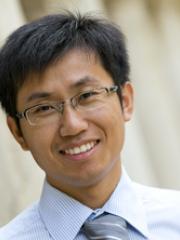
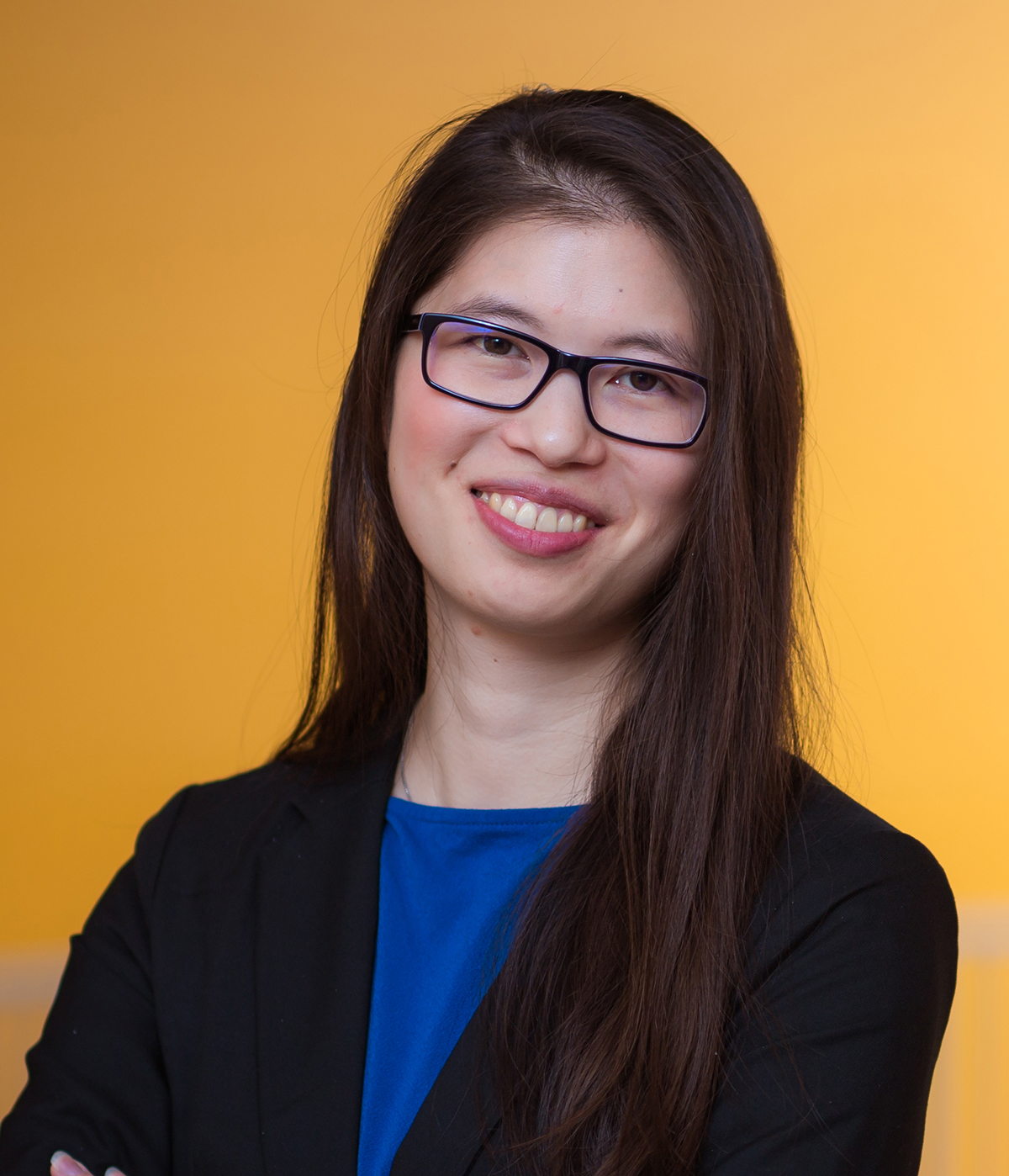
Associate Professor Wenhua Zhao is a globally recognized expert in offshore hydrodynamics and renewable energy technologies at The University of Queensland , School of Civil Engineering. With over 110 publications and 30 million AUD in secured research funding, his work bridges theoretical and practical advancements in marine engineering. Research focuses on Clean Energy , Artificial Intelligence , and Climate Change , specifically floating wind energy, floating solar, offshore aquaculture, and green hydrogen production. His 15 most recent articles (2024-2025) emphasize wave-structure interactions, gap resonance dynamics, and AI-driven wave prediction, published in top journals like Journal of Fluid Mechanics and Ocean Engineering . Scientific awards include the prestigious ARC Future Fellowship (2024-2028) and DECRA Fellowship (2019-2022) , recognizing his contributions to academia and industry. He teaches the 'Design of Offshore Energy Systems' course , training hundreds of students in coastal and ocean engineering, and serves as Deputy Editor for Ocean Engineering and Associate Editor for ASME's Journal of OMAE . Available for research supervision, Zhao actively collaborates with editorial boards of Applied Ocean Research and other Q1 journals.
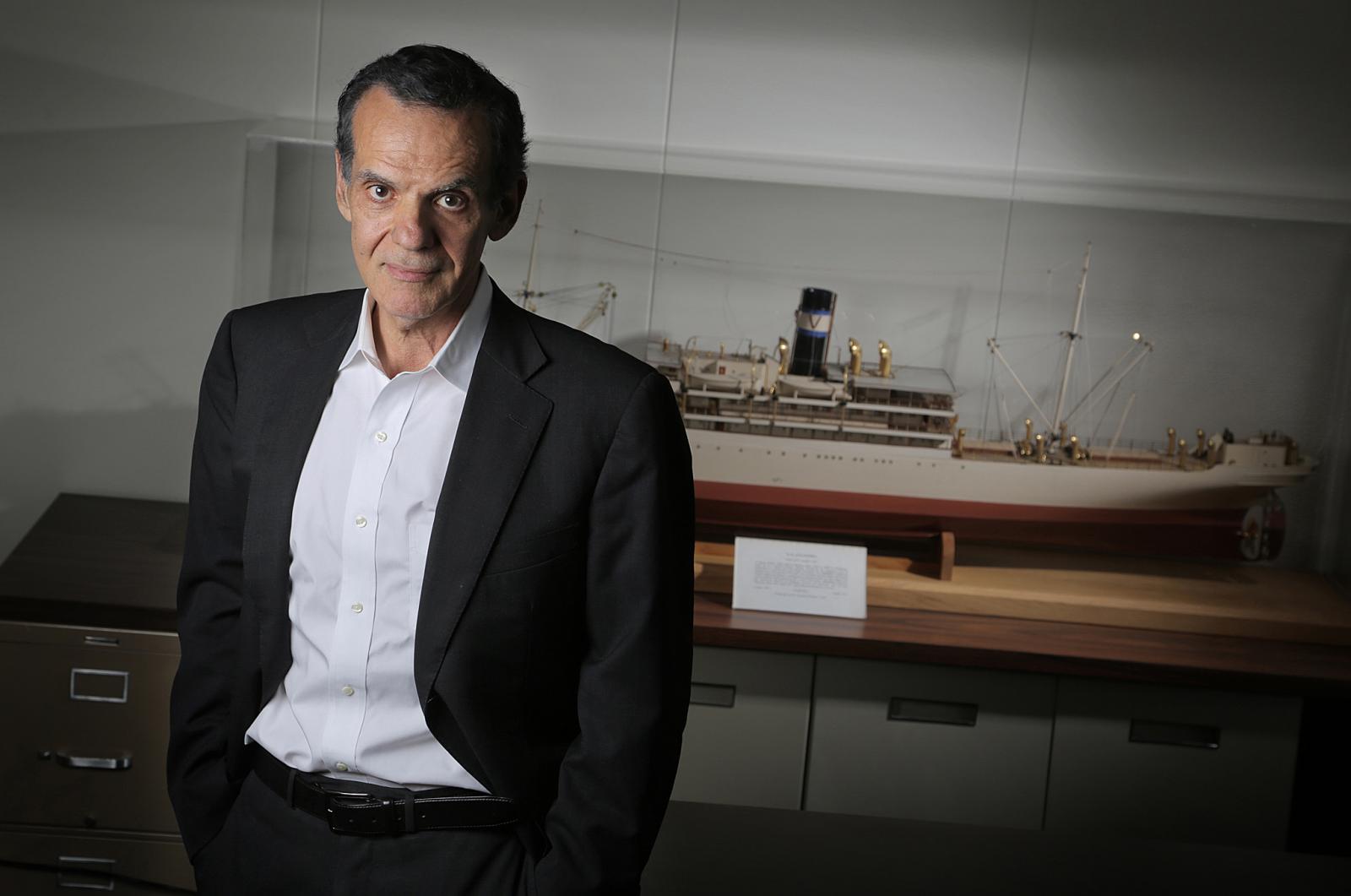
Professor Paul D. Sclavounos is a faculty member in the Department of Mechanical Engineering at the Massachusetts Institute of Technology (MIT). He earned his B.Sc. from the National Technical University of Athens in 1977 and Ph.D. from MIT in 1981. Research Interests : Marine hydrodynamics, stochastic control, offshore wind/wave/tidal/solar energy, machine learning applications, magnetohydrodynamic propulsion systems. Notable Contributions : Development of computational tools like SWAN and SML software suites; analysis of nonlinear wave dynamics; integration of AI/ML in marine hydrodynamics. Scientific Recognition : First Prize in National Mathematics Competition (1972), Georg Weinblum Memorial Lecturer (2010-2011), Best Paper Award at OMAE 2019, AEOLOS Scientific Award (2024). Leadership : Director of the Laboratory for Ship and Platform Flows since 1985; advisory roles for US Navy, US Department of Energy, and Det Norske Veritas (DNV). Teaching : Courses in Hydrodynamics (2.016), Advanced Fluid Mechanics (2.25), and Naval Architecture (2.701).
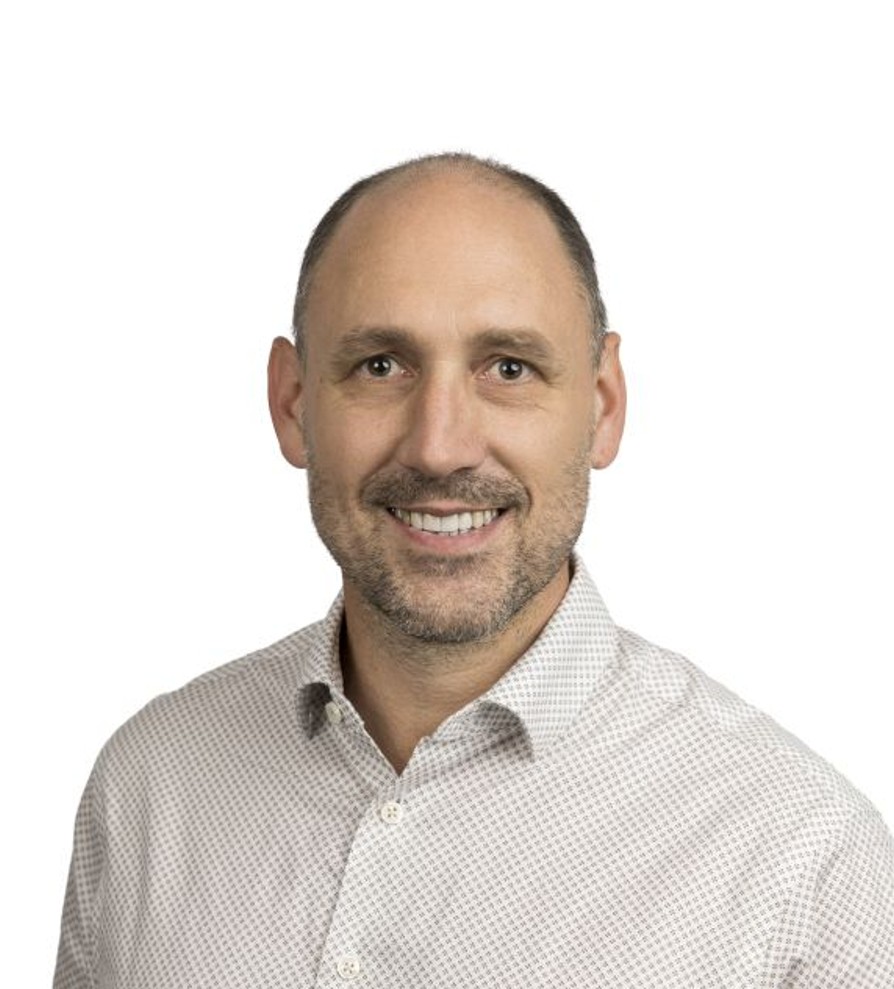
Professor Tongming Zhou is a faculty member in the Department of Civil, Environmental and Mining Engineering at the School of Engineering, The University of Western Australia (UWA) . He serves as Director of the UWA Boundary Layer Wind Tunnel Laboratory and Program Chair for Civil Engineering , contributing to both academic leadership and industrial applications. His work bridges fundamental fluid mechanics with practical engineering challenges. Education : PhD in Fluid Mechanics from The University of Newcastle (1999) Teaching : Coordinates core units like CIVL2551, CIVL5551, and CIVL4402/CIVL3402 Hydraulics, emphasizing real-world application and industry collaboration Research Interests focus on: Suppression of vortex shedding and vortex-induced vibrations (VIV) in cylindrical structures Enhancement of VIV and galloping for renewable energy harvesting Wave resonance in floating LNG facilities Sloshing dynamics in tanks with Newtonian/non-Newtonian fluids Wind tunnel testing for industrial wind load analysis Recent Research Trends show interdisciplinary work combining experimental and numerical fluid dynamics, with applications to offshore engineering, maritime safety, and energy systems. His projects explore VIV in flexible risers, gas leakage effects on pipelines, and triboelectric nanogenerators for wind energy. Grants : ARC Grant (2019-2021): Development of novel inerter-based dampers ARC Grant (2013-2015): Local Scour below Offshore Pipelines ARC Grant (2011-2015): Vortex & Force Characteristics of Inclined Cylinders UWA Grant (2008): Control of Vortex Shedding with Helical Strakes Facilities Leadership : Upgraded UWA’s Boundary Layer Wind Tunnel , Hydraulic Laboratory Water Flume , and 6DOF Hexapod motion platform , acquiring advanced equipment like PIV systems and high-precision load cells.
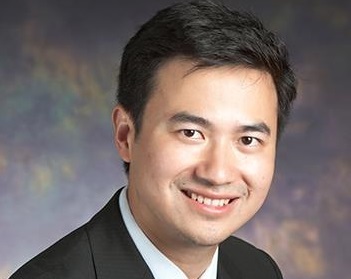
Dr Dongbin Wei is an Associate Professor at the School of Mechanical and Mechatronic Engineering , University of Technology Sydney (UTS), with a career spanning academia and industry. He holds a PhD in Materials Processing Engineering from the University of Science and Technology Beijing (2001) and academic appointments from 2005–2012 at the University of Wollongong (Research Fellow to Lecturer) and 2013–2017 at UTS (Senior Lecturer) before his promotion to Associate Professor in 2018. His research lies at the intersection of Mechanical Engineering , Manufacturing Engineering , and Materials Processing , focusing on: Ultrasonic Additive Manufacturing (UAM) Micro Metal Forming and Size Effects Tribology and Lubrication Numerical Simulations of Material Processing Composite Material Fabrication Key contributions include: Development of the Springback Path–Displacement Adjustment (SP-DA) method for stamping accuracy Advancements in femtosecond laser texturing for silicon wettability control Studies on nanolubrication in hot rolling Optimization of micro-deep drawing parameters He has secured competitive grants from the Australian Research Council (ARC) and industry partners like Weir Minerals Australia Ltd , including projects on: Revolutionizing mineral separation via additive manufacturing Super high-speed grinding technologies Mechanics of micro composite drill fabrication As a lead supervisor, he guided the 2022 thesis 'Creation and Validation of 3D Printable Mineral Separation Spiral' . His work bridges theoretical analysis, computational modeling (FEM/FEA), and practical validation in advanced manufacturing systems.
Dr. Wade Smith is a Senior Lecturer within the School of Mechanical and Manufacturing Engineering at the University of New South Wales. He is an active member of the WAVES research group (Wear, Aeroacoustics and Vibration in Engineering Systems) and conducts his research in the Tribology and Machine Condition Monitoring laboratory. His primary research interests include vibration-based diagnostics of rotating machinery, prognostics of rotating machinery, gear wear monitoring and prediction, simulation and modeling of rotating machines for diagnostic applications, and signal processing of machine vibration signatures using cyclostationarity. His work has significant applications in industrial machinery health monitoring and predictive maintenance systems. Dr. Smith's recent publications demonstrate a consistent focus on advanced diagnostic techniques for rotating machinery, with particular emphasis on gear systems and bearings. His research integrates traditional mechanical engineering principles with modern signal processing and machine learning approaches to develop more effective condition monitoring solutions. He actively supervises PhD and Masters students on projects related to gear diagnostics, wear monitoring, and vibration analysis. His current research projects include gear diagnostics in planetary gearboxes using internal sensors, gear wear monitoring and prediction, sliding contact-induced vibration studies, and transmission-error-based gear diagnostics. Dr. Smith's laboratory is equipped with specialized facilities including gearbox test rigs (both planetary and parallel configurations), a rolling element bearing test rig, an engine test rig, friction rig, tribometer, high-quality microscope, and extensive instrumentation for vibration analysis. His research has attracted collaborations with institutions including Queensland University of Technology, SpectraQuest (USA), Weir Minerals, University of Technology Sydney, RWTH Aachen University (Germany), and Safran.
Hans Bihs is a Professor in the Department of Civil and Environmental Engineering, Faculty of Engineering. His research focuses on computational fluid dynamics (CFD), wave hydrodynamics, and wave-structure interaction using the open-source framework REEF3D. Key Research Areas: CFD simulations, wave modeling, floating body dynamics, ocean wave energy, aquaculture hydrodynamics, sediment transport, and high-performance computing. Projects: ERC Consolidator Grant PARTRES (2023-2028), EEA Grants Portugal SurfWave (2023), NFR KPN IPIRIS (2021-2025), EEA Baltic SolidShore (2021-2024), NTNU's MAPLE (2022-2025), and DigiCoast (2021-2024). Email: hans.bihs@ntnu.no His recent publications (2025-2020) analyze fluid-structure interaction, ship-induced waves, floating offshore wind turbines, submerged vegetation, and coastal structures using advanced CFD techniques. Topics include wave hydrodynamics, turbulence, and numerical modeling for marine and aquaculture systems.
Professor Alec Wilson holds the position of Professor in Computational Aeroacoustics at the University of Southampton, where he serves as Director of the Rolls-Royce University Technology Centre (UTC) in Propulsion Systems Noise within the Faculty of Engineering and Physical Sciences. His career spans academic research and industrial collaboration, focusing on aeroengine noise sources, sound propagation modeling, and computational fluid dynamics (CFD) applications for aerospace systems. University of Southampton (2016–present): Professor in Computational Aeroacoustics Rolls-Royce (prior to 2016): Technical specialist in aeroengine noise and CFD Research Interests: Alec’s work centers on advancing eigen analysis techniques for acoustic propagation in complex duct geometries and mean flows. His research addresses challenges in next-generation aircraft noise modeling, including boundary layer effects, transonic fan optimization, and multi-disciplinary design approaches. Key contributions include developing fast, computationally efficient methods for noise prediction and sensitivity analysis in propulsion systems. Recent Research Trends: His 2024 publications focus on tone noise propagation and buzz-saw noise under flow distortion, while earlier works (2019–2022) explore non-uniform duct modeling, adjoint optimization for blade design, and error quantification in eigen analysis. Scientific Awards: Rolls-Royce Engineering Fellowship (Associate Fellow in Aerodynamics, Hydrodynamics, and Computational Fluid Dynamics) Teaching & Supervision: Alec supervises PhD students and teaches in acoustics, aerodynamics, and mechanical engineering. He currently advises Joseph Stephen Paul Binns, focusing on aeroacoustic modeling and optimization. External Roles: Vice-chair of CEAS/ASC (Council of European Aerospace Societies, Aeroacoustics Subcommittee).
Songbin Gong is an Associate Professor in the Department of Electrical and Computer Engineering at the University of Illinois at Urbana Champaign, where he has been a faculty member since August 2013. He was promoted from Assistant Professor to Associate Professor in August 2019 and holds the Intel Alumni Fellowship. His research is centered at the Micro and Nanotechnology Lab, where he leads the Integrated RF Microsystems research group. Professor Gong's research focuses on RF and microwave photonics, microwave acoustics, and Micro-Electro-Mechanical Systems, with particular expertise in lithium niobate-based devices. His work spans the development of acoustic resonators, filters, and transducers operating from VHF to Sub-THz frequencies. Recent publications demonstrate significant advances in high-frequency acoustic devices, including GHz resonators with high electromechanical coupling and low loss characteristics. His research has direct applications in 5G communications, wireless sensing, and imaging systems. Gong has established himself as a leader in the field of RF MEMS and acoustic devices, with numerous high-impact publications in top journals including IEEE Transactions on Microwave Theory and Techniques, Journal of Microelectromechanical Systems, and Optics Express. His work shows a clear progression toward higher frequency operation, improved device performance, and novel integration approaches for next-generation communication systems. Among his notable achievements is the development of thin-film lithium niobate devices that overcome traditional frequency limitations of MEMS resonators, enabling operation beyond 10 GHz. This work addresses critical challenges in 5G and future wireless technologies where conventional approaches face scaling limitations. IEEE Ultrasonics Early Career Investigator Award DARPA Young Faculty Award 2014 NASA Early Career Faculty Award 2017 Intel Alumni Fellow 2017-present Multiple Best Paper Awards at major conferences including International Ultrasonic Symposium and International Microwave Symposium Professor Gong actively mentors graduate and undergraduate students, with several of his PhD students achieving notable success, including Ruochen Lu who joined UT Austin as a tenure-track assistant professor. His research group has secured significant funding from agencies including DARPA and NASA, supporting cutting-edge work in RF microsystems. The group maintains strong industry connections, particularly with Intel, reflecting the practical relevance of their research to commercial communication technologies. The Gong Research Group leverages micro/nano electro mechanical systems (N/MEMS), integrated photonic, and compound semiconductor technologies to develop chip-scale hybrid microsystems for RF communication, sensing, and imaging applications. Their current work focuses on pushing the boundaries of acoustic device performance while maintaining compatibility with standard semiconductor manufacturing processes.
Cathy Wu is the Class of 1954 Career Development Associate Professor in Civil and Environmental Engineering at MIT, affiliated with the Institute for Data, Systems, and Society (IDSS). Her research bridges machine learning, optimization, and urban systems, with a focus on mixed autonomy systems in mobility. She holds degrees from MIT (B.S., M.Eng in EECS) and a Ph.D. from UC Berkeley (EECS). Education: B.S. and M.Eng in Electrical Engineering and Computer Science, MIT (2012-2013) Ph.D. in Electrical Engineering and Computer Science, UC Berkeley (2018) Research Interests: Reinforcement Learning and Machine Learning Large-scale Optimization and Control Theory Mobility Systems and Urban Infrastructure Implications of AI and Automation Her work emphasizes interdisciplinary collaboration, involving transportation, computer science, and public policy. She founded the Interdisciplinary Research Initiative within the ACM Future of Computing Academy to advance cross-disciplinary computing research. Key Projects: Includes Flow (open-source RL framework for traffic control), eco-driving incentive mechanisms, and mixed autonomy traffic optimization. Her articles address congestion mitigation, autonomous vehicle integration, and scalable supervision strategies. Awards: Recipient of fellowships, best paper awards, and teaching honors (specific names unlisted). Engagement: Collaborations with institutions like Microsoft Research, OpenAI, and Caltrans. Active in policy-oriented initiatives and education through IDSS programs.
Amirreza Aghakhani is a Assistant Professor and Director of the Institute for Biomaterials and Biomolecular Systems at the University of Stuttgart . His work focuses on Microrobotics and Biomedical Engineering , particularly in targeted drug delivery, microsurgery, detoxification, and diagnostics using micro- and nanofabrication and ultrasound technologies . Research Interests: Microrobotics, biomedical applications, wireless actuation, acoustic manipulation, lab-on-a-chip systems, and smart materials. Recent publications highlight advancements in piezoelectric energy harvesting , magnetic microrollers for therapy, and acoustic trapping of particles. His team explores adaptive microrobotic agents and biologically-inspired designs to bridge biomedical research with clinical applications.
Jens Honore Walther is a Professor in the Department of Civil and Mechanical Engineering at the Technical University of Denmark (DTU). His research focuses on fluid mechanics, coastal and maritime engineering, and computational fluid dynamics (CFD). He leads projects on wave energy converters, multiphase flow systems, and thermal energy applications. His work contributes to sustainable development goals related to clean energy and climate action. External Roles: Research associate at ETH Zurich (2003–present) Postdoctoral fellow at ETH Zurich (2000–2003) Project manager at Danish Maritime Institute (1996–1997) Research scientist at Danish Meteorological Institute (1994–1996) Research Interests: Walther’s expertise spans CFD modeling, granular flow dynamics, and nanofluidics. His recent projects include optimizing wave energy converters, analyzing gap resonances in marine structures, and developing multiphase ejector geometries for heat pumps. His work integrates high-performance computing and experimental validation to address challenges in marine engineering and energy systems. Advising & Projects: He supervises PhD students in areas such as elite sport aerodynamics, gas lubrication, and alternative fuel combustion. Notable projects include: Elite sport aerodynamics (2024–2026) Alternative fuel injection in marine engines (2023–2026) Multi-physical gas bearing modeling (2024–2027) Labs & Collaborations: Walther collaborates with institutions like ETH Zurich and engages in experimental facilities at DTU. His group focuses on advanced CFD simulations and fluid-structure interaction studies.
Prof. G. Scott Watson is a Professor in the Department of Physics at Syracuse University, affiliated with the College of Arts & Sciences. His research focuses on the interplay between fundamental particle physics and cosmology, particularly early universe cosmology, inflationary models, dark matter/energy, and string theory applications. He holds a Ph.D. in Physics from Brown University (2005) and B.S. degrees in Mathematics and Physics from the University of North Carolina at Wilmington (2000). Key research interests include string phenomenology as a quantum gravity framework, probing inflationary scenarios through cosmic microwave background (CMB) studies, and exploring dark matter origins. He leads major projects like CMB-S4 and contributes to the CMBPol mission concept. Watson has received the American Physical Society Outstanding Referee Award (2021) and serves on high-profile collaborations such as the Inflation Probe Study Analysis Group (IPSAG). Teaching responsibilities include advanced courses like Quantum Field Theory, Relativity and Cosmology, and Quantum Mechanics II. He actively mentors students through independent studies and advises on graduate admissions. Watson has secured significant grants, including a Department of Energy-funded project on theoretical particle physics and cosmology (2013–2025) and NSF support for cosmic acceleration research (2018–2023).
Ricardo Martinez-Botas is a Professor of Turbomachinery and Associate Dean for Industry Partnerships at the Department of Mechanical Engineering, Imperial College London. He holds affiliations with the Electrochemical Science and Engineering, Energy Materials, Grantham Institute, Mechanics of Materials, and Network of Excellence in Air Quality. His academic career includes a DPhil from the Rolls Royce University Technology Center at the University of Oxford (1993) and an MEng in Aeronautical Engineering from Imperial College London. He also serves as a Visiting Professor at University Teknologi Malaysia. His research focuses on unsteady flow aerodynamics in turbochargers, supercritical CO2 systems, and thermal-fluids engineering. Notable contributions include advancements in turbine aerodynamics, pulsating flow control, and generative AI-driven design methodologies. He leads the Thermofluids Division and the Hybrid and Electric Vehicles Theme at the Energy Futures Lab. His work integrates computational fluid dynamics (CFD), experimental methods, and one-dimensional modeling for turbomachinery optimization. Key Awards: Dugald Clerk Prize (2011), ASME Turbomachinery Best Paper Awards (2010, 2009). Editorial Roles: Associate Editor of the Journal of Turbomachinery (ASME) and Journal of Mechanical Engineering Science (IMechE). Facility Leadership: Developed the TURBODYNA dynamic simulator for radial turbomachinery and commissioned a blowdown facility for dense gas vapor research. His research portfolio spans interdisciplinary topics like battery technology, organic Rankine cycle turbines, and sustainable automotive emissions control. He actively collaborates with industry partners to translate academic innovations into real-world applications, emphasizing energy efficiency, waste heat recovery, and low-carbon transportation solutions.
Professor Geraint Jewell is affiliated with the University of Sheffield , serving as Director of the Rolls-Royce University Technology Centre in Advanced Electrical Machines (since 2006) and Director of the EPSRC Future Electrical Machines Manufacturing Hub (since 2019). He is a graduate of the university (BEng 1988, PhD 1992) and has held academic roles since 1994. EPSRC Advanced Research Fellowship (2000-2005) Royal Society Industry Fellowship at Rolls-Royce (2006-2008) Former Faculty Director of Research and Innovation (2008-2011) Former Head of Department (2013-2019) His research focuses on power-dense electrical machines for aerospace applications , including permanent magnet machines , switched reluctance machines , and linear actuators . He has supervised ~20 PhD students and led collaborations with Rolls-Royce on high-temperature devices (up to 800°C) and aero-engine starter-generators. Recent publications analyze stator insulation thermal degradation , eddy current control in additively manufactured materials , and magnetic loss prediction in silicon steel. His work spans electromagnetic modeling , core loss calculation , and advanced manufacturing techniques for electrical machines. EPSRC Advanced Research Fellowship (2000-2005) Royal Society Industry Fellowship (2006-2008) He has advised PhD students across topics like consequent-pole PM machines , doubly salient SynRMs , and core loss characterization . His Electrical Machines and Drives Research Group explores modular motor design and magnetic material optimization for aerospace and electric vehicles.
David Lowe is a Professor of Physics at Brown University, where he has been a faculty member since 1997. His academic journey includes a B.A. and M.A. from Cambridge University and a Ph.D. in theoretical physics from Princeton University (1993), followed by postdoctoral research at UC Santa Barbara and Caltech. His research focuses on string theory applications to gravitational physics , particularly black hole thermodynamics, quantum gravity, and cosmological implications of holographic principles. Key contributions include foundational work on AdS/CFT correspondence, black hole information paradox resolution, and de Sitter space holography. His publications span high-impact journals including Journal of High Energy Physics and Physical Review D , with recent emphasis on quantum information aspects of black holes. Richard B. Salomon Faculty Research Award BSF Research Grant NSF Travel Award Lowe has maintained extensive international collaborations, holding visiting positions at U. Tokyo, Max Planck Institute, CINVESTAV, KITP, and Aspen Center for Physics. His teaching portfolio includes graduate courses in general relativity, quantum field theory, and advanced electrodynamics, reflecting his expertise in theoretical physics.