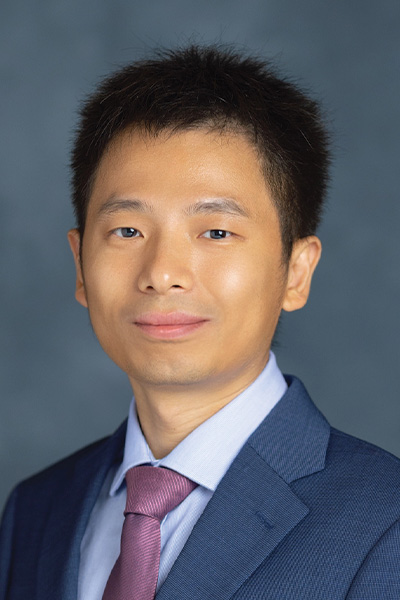
George Runger is a Professor at the School of Computing and Augmented Intelligence, Arizona State University. His work focuses on analytical methods for knowledge generation and data-driven organizational improvements, particularly in machine learning for large-scale data, real-time analysis, and applications to surveillance, decision support, and population health. Previously, he was a senior engineer and technical leader at IBM. Education: Ph.D. in Statistics, University of Minnesota (1982) Runger's research bridges machine learning, data mining, and statistical process control (SPC) to address challenges in manufacturing, healthcare, and semiconductor systems. His work includes developing artificial contrasts for signal detection, ensemble feature selection, and self-learning decision rules for adaptive SPC. His funded projects span NSF, DOD-NAVY-ONR, and Semiconductor Research Corporation grants, emphasizing supply chain analysis, dimensional metrology, and energy efficiency diagnostics. He has co-authored foundational texts like Applied Statistics and Probability for Engineers and Engineering Statistics . Scientific Awards: Inaugural Department Editor for Healthcare Informatics, INFORMS Transactions on Healthcare Systems Engineering Runger actively contributes to academia as a reviewer for journals like Management Science and IEEE Transactions on Knowledge and Data Engineering , and as a panel member for NSF and INFORMS workshops. He co-directs ASU's Quality and Reliability Engineering Laboratory and the Modeling and Analysis of Semiconductor Manufacturing team.
Professor Tomasz Kapitaniak is a distinguished academic in the field of nonlinear dynamics and theoretical mechanics. He serves as a Professor of Theoretical and Applied Mechanics and Head of the Division of Dynamics at the Faculty of Mechanical Engineering, Technical University of Lodz, Poland. His career spans over three decades at the university, where he has made significant contributions to the understanding of nonlinear systems, chaos theory, and mechanical oscillations. Professor Kapitaniak holds advanced degrees in both mechanics and applied mathematics from the Technical University of Lodz and the University of Lodz. His educational background includes: M.Sc. in mechanics, Faculty of Mechanical Engineering, Technical University of Lodz (1982) M.Sc. in applied mathematics, Faculty of Mathematics, Physics and Chemistry, University of Lodz (1985) Ph.D. in mechanics, Faculty of Mechanical Engineering, Technical University of Lodz (1985) D.Sc. in mechanics, Faculty of Mechanical Engineering, Technical University of Lodz (1988) Professor of technical science, title given by the President of Poland (1995) His research focuses on nonlinear dynamics, with particular emphasis on mechanical oscillations, stability, bifurcations and chaos, stochastic dynamics, and applications of nonlinear dynamics in mechanical engineering. Professor Kapitaniak is renowned for his work on the development of methods for controlling chaos without feedback, identification of new types of bifurcations, synchronization mechanisms in coupled mechanical oscillators, and explaining the origin of randomness in mechanical systems. His research has evolved from fundamental theoretical work to increasingly applied studies involving complex networks, biological systems, and engineering applications. Professor Kapitaniak has published over 300 scientific papers in renowned journals, cited over 8,000 times. His work exhibits a consistent focus on understanding complex nonlinear phenomena across various physical systems. The trend in his recent publications shows continued exploration of synchronization phenomena, extreme events in dynamical systems, and applications of nonlinear dynamics to biological, mechanical, and physical systems. His most recent work demonstrates a growing interest in multistability, chimera states, and the prediction of tipping phenomena in complex systems. Among his notable scientific achievements and distinctions are: Election as a member of the Polish Academy of Sciences (corresponding member in 2013, ordinary member in 2019) Election to Academia Europaea in 2021 Honorary doctorates from Saratov State University (Russia, 2001) and Lublin University of Technology (Poland, 2014) Multiple prestigious fellowships including the British Council Fellowship (1989), King Abdul Aziz Award Fellowship (1990), and Fulbright Fellowship (1997) Editorial roles including Associate editor of Chaos, Solitons and Fractals since 1990 and member of editorial boards of several other prestigious journals Throughout his career, Professor Kapitaniak has been actively involved in mentoring the next generation of researchers, having supervised numerous PhD students including Jerzy Wojewoda, Anton van Wyk, Barbara Błażejczyk-Okolewska, Andrzej Stefański, Andrzej Kozłowski, and Przemysław Szumiński. He has secured significant research funding from various national and international sources including the Ministry of Science and Higher Education (Poland), Deutscher Akademischer Austauschdienst, The Royal Society of London, and others. His research team has maintained strong international collaborations with institutions worldwide, including universities in the United States, United Kingdom, Germany, Brazil, Russia, and Ukraine. He leads the Division of Dynamics at the Technical University of Lodz, which serves as a hub for research in nonlinear dynamics, mechanical oscillations, and related fields. The division maintains strong international collaborations with institutions worldwide and continues to produce cutting-edge research in the field of nonlinear dynamics and its applications.
Miloš Racković serves as a full Professor in the Department of Mathematics and Informatics at the University of Novi Sad, Serbia. He maintains active academic engagement through the Laboratory for the development of information systems, with his office located in the Information technologies and systems office (DMI&DF) on the second floor, room 49. Contact is available via telephone (485)-2868 or email rackovic@dmi.uns.ac.rs, and his personal website (http://www.is.pmf.uns.ac.rs/rackovicm/) provides additional resources. His research spans foundational and applied computer science, with seminal contributions in fuzzy database systems including PFSQL query language development and prioritized fuzzy logic for relational databases and XML. He has pioneered deep learning methodologies through innovative classification techniques using negative and missing features in convolutional neural networks. Additional expertise includes high-performance computing implementations of Lattice Boltzmann methods using OpenCL, robotics (symbolic modeling and trajectory planning), and blockchain applications for Industry 4.0 production processes. His sports analytics work applies neural networks to basketball player and referee movement analysis. Analysis of his 2012-2025 publications reveals a strategic evolution toward interdisciplinary applications, particularly in industrial transformation (blockchain-enabled traceability) and sports analytics. His work consistently bridges theoretical computer science with practical implementations, demonstrating increasing focus on real-world problem solving while maintaining strong foundations in database theory and computational methods. Professor Racković leads the Laboratory for the development of information systems, which focuses on advancing information system methodologies through formal modeling extensions (including Petri net innovations) and practical implementations for uncertainty management. The laboratory's work spans from foundational research in fuzzy logic systems to applied projects in high-performance computing and blockchain integration, fostering innovation in information technology development.
Prof. Dr. Alexander Meyer-Gohde is a Professor of Financial Markets and Macroeconomics at Goethe University Frankfurt’s Faculty of Economics and Business, and a key figure at the Institute for Monetary and Financial Stability (IMFS). His research spans macroeconomic theory, macro-finance, numerical methods, and econometrics, focusing on DSGE models, nonlinear dynamics, and the impact of risk and uncertainty on monetary policy. Education : PhD in Economics (Technische Universität Berlin), MA in Economics and Management (Humboldt-Universität zu Berlin), BA in Language, Literature & Culture (Colorado State University). Research Interests : Macroeconomics, macro-finance, numerical methods, recursive preferences, stochastic volatility, and model uncertainty. Grants : DFG Individual Research Grant (2021-2024) and MatlabMakro DigiTeLL Grant (2022-2023). Publications : Focus on DSGE model solution methods, numerical stability, term premia, and nonlinear dynamics in macroeconomics. Students : Supervises job market candidates Johanna Saecker and Mary Tzaawa-Krenzler. Leadership : Chair of Financial Markets and Macroeconomics at Goethe University (2018–present) and coimplementation of the IMFS “Project Monetary and Financial Stability”.
Dr. Liyang Sun is a Lecturer in Economics and Deputy Graduate Tutor at the University of College London's Department of Economics, and an Untenured Associate Professor (on leave) at CEMFI in Madrid. She holds a PhD in Economics and Statistics from MIT (2021) and a BA in Economics and Mathematics from Wellesley College (2014). Her research focuses on causal inference methodologies under treatment effect heterogeneity and weak identification with many instruments. Prior to her current roles, she was a Postdoctoral Research Fellow at UC Berkeley. Her academic positions include: Lecturer in Economics, University College London (current) Untenured Associate Professor, CEMFI, Madrid (on leave) Postdoctoral Research Fellow, UC Berkeley (previous) Research interests span econometric method development, applied economics, and policy analysis. Her work emphasizes improving causal inference techniques in realistic economic settings. Recent publications explore synthetic control methods, instrumental variables with many weak instruments, and machine learning applications in structural reforms analysis. Her scholarly contributions address core econometric challenges such as: Policy learning and confidence estimation Temporal aggregation in synthetic control frameworks Adaptive methods for model misspecification No specific grants or advising activities are documented here. She contributes to the department's teaching and graduate training programs as Deputy Graduate Tutor.
Professor Domitilla Del Vecchio is the Grover M. Hermann Professor in Health Sciences and Technology at the Massachusetts Institute of Technology (MIT), affiliated with the Department of Mechanical Engineering and the Synthetic Biology Center. She conducts pioneering research at the intersection of engineering, mathematics, and biology, focusing on designing robust synthetic genetic circuits for cellular control and regenerative medicine. Ph.D. in Control and Dynamical Systems, California Institute of Technology (2005) Laurea in Electrical Engineering, University of Rome Tor Vergata (1999) Her work addresses the unpredictability of biological circuits by developing context-aware design frameworks and feedback control mechanisms to ensure modular and scalable synthetic biology applications. Current projects include bio-sensing in bacteria, chromatin state control, and analog memory engineering in mammalian cells. She has received numerous accolades, including: IEEE and IFAC Fellowships NSF CAREER and Understanding the Rules of Life Awards Bose Research Award Donald P. Eckman Award Del Vecchio teaches courses such as 2.004 (Dynamics and Control), 2.151 (Advanced Dynamical System Analysis), and 2.18/6.057 (Design of Synthetic Biological Systems). Her collaborations span multiple disciplines, including aerospace, electrical engineering, and industry partnerships.
Steven R. Hall is a Professor of Aeronautics and Astronautics at the Massachusetts Institute of Technology (MIT), School of Engineering. His research focuses on aerospace control applications and optimal control theory, with significant contributions to helicopter vibration reduction and actuator design. Education: S.B., 1980; S.M., 1982; Sc.D., 1985, all from MIT Dr. Hall's work bridges aerospace systems and electrochemical actuation, exploring innovative methods for vibration control and structural dynamics in rotorcraft. His career spans both technical and administrative roles, including Chair of the MIT Faculty (2013–2015). His recent publications highlight expertise in aerospace controls , rotor dynamics , electrochemical actuators , and engineering education . Notably, his 2024 article on dental prosthetics’ entrepreneurial aspects deviates from his core aerospace themes. Scientific Awards: Tau Beta Pi Member (1983–1985), Hertz Fellow (1998), Raymond L. Bisplinghoff Fellow Dr. Hall has served in leadership positions at MIT, including Assistant Department Head (1997–1998), and is affiliated with the Aerospace Controls Lab . His career demonstrates a commitment to advancing aerospace technology and education.
David Del Rey Fernández is Assistant Professor and Pratt & Whitney Canada Chair in Industrial Artificial Intelligence in the Department of Applied Mathematics at University of Waterloo. His research develops efficient numerical algorithms for solving partial differential equations on high-performance systems. He holds a PhD from University of Toronto and previously worked at NASA Langley Research Center. Research focuses on robust numerical methods, mesh adaptation, and machine learning acceleration. His work includes entropy-stable schemes, summation-by-parts methods, and discretizations for compressible flows. Recent publications address Lyapunov-consistent discretizations and scalable reduced-order modeling.
Jianxi Gao is an Associate Professor in the Department of Computer Science at Rensselaer Polytechnic Institute (RPI). His research focuses on network science, particularly network resilience, robustness, and control, integrating network theory, control theory, statistical physics, and operations research. He also explores the intersection of network science and AI, including applications of AI to network analysis and vice versa. His work aims to understand, predict, and control the resilience of complex systems against cascading failures. Key research areas include network resilience in transportation systems, quantum networks, and biological systems, with applications to pandemic response and infrastructure optimization. Gao's contributions span theoretical frameworks and computational tools, such as the NuRsE MATLAB package for network resilience analysis. His GitHub repositories (e.g., NuRsE and NON) showcase his open-source contributions to network science and computational methods. His recent publications address topics like AI-driven network analysis, quantum network percolation, and pandemic-induced healthcare system stress. He actively collaborates on interdisciplinary projects, emphasizing real-world applications of network science principles.
Fei Liu is an Assistant Professor in the Min H. Kao Department of Electrical Engineering and Computer Science at the University of Tennessee, Knoxville. His research focuses on surgical robotics, medical robotics, and control systems. He holds a PhD in Robotics from the University of Lyon (INSA de Lyon), France, an MSc in Control Systems and Automation Engineering from INSA de Lyon, and a BSc in Control Systems and Automation Engineering from Northwestern Polytechnical University, China. Fei's research interests include autonomous robotic systems, deformable object manipulation, and perception frameworks for surgical applications. His work emphasizes bridging real-world and simulation environments through advanced modeling and control techniques. Recent projects involve optimizing robotic actions using multi-modal demonstrations, improving tool-tissue interaction tracking, and developing frameworks for boundary parameter estimation in surgical settings. His articles highlight contributions to surgical robotics, including real-to-sim matching of deformable tissues, autonomous suturing, and trajectory optimization for wound care. He has also explored applications in haptic training systems and medical telerobotics. Fei's work often combines machine learning, physics-based simulation, and real-time control to address challenges in robotic surgery. Fei is affiliated with the Tickle College of Engineering and maintains an active research profile with collaborations in robotics and medical engineering domains. His lab focuses on advancing robotic autonomy in healthcare environments through interdisciplinary approaches.
Dr. En Cheng is an Associate Professor in the Department of Computer Science at The University of Akron, affiliated with the College of Engineering and Polymer Science. She joined the university in 2012 and specializes in research areas such as Data Integration, Big Data Management, Database Systems, Mobile Applications, Business Intelligence, and Bioinformatics. Her work bridges theoretical computer science with practical applications, including educational mobile games and business productivity tools. Dr. Cheng’s education includes a Ph.D. from Case Western Reserve University and advanced degrees from Huazhong University of Science and Technology, China. Her research emphasizes innovative solutions in database systems and interdisciplinary applications like bioinformatics. Notable publications include studies on mobile game integration, web content extraction libraries, and business intelligence optimization. Her recent work explores supramolecular assembly, material science, and nanostructure engineering, reflecting a shift toward interdisciplinary collaboration. Over 30 publications since 2014 highlight her contributions to both computer science and materials research. Dr. Cheng teaches courses such as Data Integration, Database Management, and NoSQL systems. She maintains an active research lab and collaborates on projects funded by institutional grants. Her office is located in CAS 229, and she can be reached via echeng@uakron.edu or her website.
Miguel F. Anjos is Professor and Chair of Operational Research at the School of Mathematics, University of Edinburgh , and holds the NSERC-Hydro-Québec-Schneider Electric Industrial Research Chair on Optimization for Smart Grids at Polytechnique Montréal. He received his B.Sc. (1992), M.S. (1994), and Ph.D. (2001) from McGill, Stanford, and Waterloo respectively. Research Theme Head of Data and Decisions at Edinburgh Founding Director of Trottier Institute for Energy Editor-in-Chief of Optimization and Engineering Research Interests: His work bridges mathematical optimization with smart grid applications , focusing on conic optimization, optimal power flow, demand response, and facility layout. He applies these techniques to energy storage, electric transportation, and industrial systems. Scientific Awards: Méritas Teaching Award (2012) Humboldt Research Fellowship (2009) Queen Elizabeth II Diamond Jubilee Medal (2013) Elected Fellow of EUROPT and Canadian Academy of Engineering Academic Service: Served on Mathematical Optimization Society Council, SIAM Activity Group on Optimization, INFORMS Optimization Society Vice-Chair, and Mitacs Research Review Committee. Hosts benchmark datasets: QAPLIB, FLPLIB, Jones Benchmark.
Jingxian Wang is an NUS Presidential Young Professor and Assistant Professor in the Department of Computer Science at the National University of Singapore's Faculty of Computing. His research builds next-generation wireless systems and satellite networks, with primary focus on integrating AI with wirelessly networked devices from WiFi to satellites. He earned his PhD from Carnegie Mellon University and previously served as a research scientist at Microsoft Research in Redmond, where he led the Smart Surface for 6G and Space initiative. His educational journey includes: PhD, Carnegie Mellon University Wang's research spans Wireless Systems , Satellite Networks , Artificial Intelligence , and Internet of Things , emphasizing AI-augmented wireless systems. His interdisciplinary work bridges robotics , materials science , and AI to develop sustainable sensing methods, robust communication networks, and multimodal AI techniques. Key projects include Multimodal AI for IoT (funded by Microsoft's Accelerate Foundation Models Program) and Satellite IoT Networks. His publication trends reveal accelerating integration of AI into wireless systems, with recent focus on satellite networking, soft robotics actuation, and generative models for IoT. The research consistently targets real-world deployment challenges in battery-free systems and space networks. His scientific contributions have earned prestigious recognition: ACM SIGMOBILE Doctoral Dissertation Award 2023 Communications of the ACM Research Highlights (2021, 2022) ACM SIGMOBILE Research Highlights 2021 Best Paper Awards at IPSN 2021 and UbiComp 2020 Microsoft Research Fellowship 2020 Emerging Rockstar in IEEE Pervasive Computing 2024 Wang actively mentors doctoral students and postdoctoral researchers through his AIoT Group. His grant portfolio includes Microsoft's Accelerate Foundation Models Research Program funding for multimodal AI projects, with ongoing work targeting satellite IoT infrastructure and wireless-powered soft robotics. Future directions emphasize foundation models for space networks and battery-free IoT systems. He leads the AIoT Group, fostering cross-disciplinary collaboration between computer scientists, roboticists, and materials engineers to pioneer wireless sensing and actuation technologies.
Virginia Young is the Cecil J. and Ethel M. Nesbitt Professor of Actuarial Mathematics at the University of Michigan's Department of Mathematics, within the College of Literature, Science, and the Arts. She holds a Ph.D. from the University of Virginia (1984). Her research focuses on actuarial and financial mathematics, particularly decision-making processes for individuals and insurance companies in financial and insurance contexts. This includes topics like optimal reporting strategies, reinsurance mechanisms, and risk management under uncertainty. Her work addresses modern challenges such as defined contribution pension plans and strategic insurance product design. Key research areas include stochastic control theory, game-theoretic models in insurance markets, and optimization under model ambiguity. She explores how insurers and individuals make decisions under risk, with applications to annuities, reinsurance chains, and lifetime financial planning. Recent studies investigate Stackelberg games in reinsurance, optimal deductible insurance, and minimizing lifetime ruin probabilities through strategic annuitization. Virginia Young has no listed scientific awards in the provided texts. She advises no formally documented students, though her role likely involves mentoring within the Mathematics Department. Her work contributes to both theoretical advancements and practical applications in actuarial science and financial risk management.
Will Fithian is an Associate Professor in the Department of Statistics at the University of California, Berkeley. He holds a position in the College of Letters & Science, specializing in theoretical and applied statistics. His research focuses on post-selection inference, scalable algorithms for big data, high-dimensional data analysis, and ecological statistics. Fithian has taught courses such as Theoretical Statistics (Stat 210A), Forecasting, and industry-relevant statistical methods. His work bridges statistical theory with applications in fields like genomics, ecology, and machine learning. Education and Career: While specific educational details are not explicitly provided, his academic rank and research focus suggest advanced training in statistics. He previously taught at Stanford University and has held roles such as Assistant Professor before his current position at Berkeley. Research Interests: His interests include developing robust statistical methods for handling modern data challenges, including false discovery rate control, selective inference, and computational efficiency in high-dimensional settings. He collaborates across disciplines, applying statistical tools to ecological and biomedical problems. Awards: Fithian received the Teaching Award from the Berkeley Statistics Department in 2012 and the Centennial Teaching Award (University-wide) in 2015, reflecting his dedication to pedagogy. His research contributions have been recognized through publications in top journals and conferences. Teaching and Service: He leads advanced courses like Stat 210A, a core PhD-level theoretical statistics course. His teaching emphasizes foundational concepts while addressing contemporary challenges. He also contributes to Berkeley’s Industry Alliance Program, fostering academic-industry partnerships.