Michael Jong Kim is an Associate Professor at the Sauder School of Business, University of British Columbia, specializing in the Division of Operations and Logistics. His research focuses on dynamic programming, statistical learning, robust optimization, and the exploration vs exploitation trade-offs in sequential decision-making processes. BASc, M.Math, and PhD from the University of Toronto His work spans topics in stochastic optimization, supply chain dynamics, and information dissemination in uncertain environments. Publications highlight contributions to Bayesian inventory control, semi-Markovian system control, and variance regularization in optimization models. Dr. Kim teaches advanced business analytics courses, including Descriptive and Predictive Business Analytics and Advanced Predictive Business Analytics (MBAN) during the 2024-2025 academic year. He can be reached at mike.kim@sauder.ubc.ca or by phone at +1 604.822.8682.
Dr. Arno Solin is a tenured Associate Professor in Machine Learning at Aalto University's Department of Computer Science and an Academy of Finland Research Fellow . He leads the Aalto machine learning research group and serves as Director of the Finnish Doctoral Program Network in AI (AI-DOC) . His work bridges probabilistic modeling with practical applications in sensor fusion and real-time inference. ELLIS Scholar (European Laboratory for Learning and Intelligent Systems) Adjunct Professor at Tampere University Member of Young Academy Finland (2021–2025) Research Interests focus on data-efficient machine learning with probabilistic methods for real-time inference and sensor fusion. Key areas include Gaussian processes, diffusion models, stochastic differential equations, and uncertainty quantification in deep learning. His group develops methods that combine structural constraints with adaptive learning for deployment on resource-limited hardware. Publication Trends show consistent output in top venues (NeurIPS, ICML, ICLR, AISTATS) with emphasis on diffusion models , 3D scene reconstruction , and real-time probabilistic modeling . Recent works explore physics-informed learning, heterophily-aware graph models, and compressed representations for world models in reinforcement learning. Scientific Recognition : Awarded AI Researcher of the Year 2024 by AI Finland Teacher of the Year 2023 at Aalto CS ISIF Jean-Pierre Le Cadre Best Paper Award (2018) MLSP Schizophrenia Classification Challenge Winner (2014) NeurIPS/ICML Reviewer Awards Research Leadership includes coordinating Finland's AI Center of Excellence program and directing the Finnish Doctoral Program Network in AI (AI-DOC). He supervises 15+ doctoral/postdoctoral researchers and has spun off Spectacular AI , a company commercializing sensor fusion technology.
Gauri Joshi is an Associate Professor in the Electrical and Computer Engineering (ECE) department at Carnegie Mellon University, with affiliate appointments in the Machine Learning Department and Robotics Institute. Her work focuses on system-aware algorithms for distributed machine learning, combining optimization, probability, and coding theory to address communication and computational constraints in edge networks. MIT Ph.D. in EECS (2016) IIT Bombay B.Tech/M.Tech in Electrical Engineering (2010) Research themes include federated learning with communication efficiency, erasure coding for non-linear computations, and reinforcement learning for heterogeneous queueing systems. She leads the Optimization, Probability and Learning (OPAL) lab , affiliated with the Parallel Data Lab (PDL), CyLab, and FLAME Center. Recent publications highlight advances in: federated fine-tuning with low-rank adaptation, robust PCA for model aggregation, privacy-preserving prediction mechanisms, and adaptive reinforcement learning for job dispatching systems. Her group has received 15+ paper awards across SIGMETRICS, MobiHoc, and NeurIPS workshops. Scientific recognition includes: IEEE Goldsmith Lecturer (2025), MIT Technology Review '35 Innovators Under 35' (2022), ONR Young Investigator Award (2023), NSF CAREER (2021), and ACM SIGMETRICS Best Paper (2020). She has advised 20+ graduate students, many now at tech giants like Google, Apple, and Meta. Service contributions span program co-chair roles (MLSys 2025), associate editorships (IEEE/ACM Transactions on Networking), and workshop organization (ICML, NeurIPS). Her NSF AI-EDGE Institute leadership (2021-present) drives next-generation intelligent edge networks for robotics and aerospace applications.
Cyrill Stachniss is a Full Professor at the University of Bonn , where he heads the Lab for Photogrammetry and Robotics and is affiliated with the Lamarr Institute for Machine Learning and Artificial Intelligence . He was previously a Visiting Professor in Engineering at the University of Oxford until 2025. His academic journey includes positions at the University of Freiburg, University of Zaragoza, and the Swiss Federal Institute of Technology. University: University of Bonn School: Faculty of Engineering Department: Department of Photogrammetry Academic Rank: Professor His research spans robotics, photogrammetry, SLAM, autonomous navigation, perception systems, agricultural robotics, and unmanned aerial vehicles . He emphasizes probabilistic techniques for mobile robots and has made significant contributions to visual and LiDAR-based localization, scene understanding, and 3D reconstruction. The recent publications highlight a strong trend toward neural implicit representations, agricultural phenotyping, radar-based perception, and active learning . His team develops robust systems for real-world deployment in dynamic and unstructured environments, particularly in precision farming and autonomous vehicles. Scientific Awards: IEEE RAS Early Career Award (2013) Microsoft Research Faculty Fellow (2010) 7th EURON Georges Giralt Award (2008) Multiple Best Paper Awards at ICRA, IROS, RSS, and RAL Faculty Teaching Award, University of Freiburg He has advised numerous students and leads the DFG Cluster of Excellence PhenoRob and Research Unit FOR 1505 Mapping on Demand . His lab has co-founded three startups, reflecting strong industry and societal impact. He also runs the educational video series 5 Minutes with Cyrill , explaining key robotics concepts.
Prof. Raffaello D'Andrea is a Full Professor at ETH Zürich's Department of Mechanical and Process Engineering, affiliated with the Institute for Dynamic Systems and Control. His research focuses on bridging digital and physical worlds through robotics, control systems, and autonomous systems. He has pioneered work in aerial robotics, swarm systems, tactile sensing, and soft robotics. His philosophy emphasizes solving 'easy' problems with scalable, robust solutions, prioritizing simplicity and replicability. Key research areas include UAV navigation, distributed control, tactile sensor design, and fault-tolerant systems. He has founded multiple organizations and led roles as CTO/CEO, emphasizing cross-disciplinary innovation. His work has commercial applications in logistics, healthcare, and automation, driven by a belief in technology's role in improving human life. Notable projects include the Cubli robotic cube, aerial vehicle swarms, and optical tactile sensors for robotics. His lab emphasizes collaboration and team leadership, aiming to translate theoretical insights into practical, scalable technologies. Scientific awards: None explicitly listed in the provided texts. Advising and grants: No students listed in the provided texts; grants information not detailed. Labs/Teams: Leads research at ETH Zurich's Institute for Dynamic Systems and Control, collaborating with industry and academic partners globally.
Dr Henry Moss is a Researcher at the Department of Applied Mathematics and Theoretical Physics within the School of Physical Sciences at the University of Cambridge. His work focuses on machine learning applications in climate modeling, Bayesian optimization, and Gaussian processes, bridging computational mathematics with environmental science and chemistry. His research interests include: Bayesian optimization for environmental and chemical systems Reinforcement learning in climate modeling Gaussian processes for molecular property prediction High-throughput machine learning in scientific domains Interpretable AI for coastal flooding prediction Hybrid ML-physics modeling Dr Moss's publications highlight his contributions to federated learning for climate models, sparse Gaussian process techniques, and multi-objective optimization frameworks. These works span applications in weather prediction, chemical engineering, and oceanography. Email: hwm26@cam.ac.uk
Andreas Geiger is a Professor and Head of the Department of Computer Science at the University of Tübingen, Germany. He leads the Autonomous Vision Group (AVG) within CyberValley and is a core faculty member of the Tübingen AI Center. His roles also include PI in the ML in Science Excellence Cluster and the CRC Robust Vision, as well as ELLIS Fellow and coordinator of the ELLIS PhD program. He specializes in machine learning models for computer vision, robotics, and autonomous systems, with applications in self-driving cars, VR/AR, and scientific document analysis. Educational background: While not explicitly detailed, his positions imply a Ph.D. in Computer Science or related field. His work spans interdisciplinary collaborations with institutions like ETH Zürich, Microsoft, and the University of Bonn. Research focuses on 3D scene understanding, Gaussian splatting, generative models, and reliable autonomous systems. Notable contributions include the KITTI dataset and foundational work in neural radiance fields. Awards include the Sage 10-Year Impact Award (2024), ERC Starting Grant (2019), and IEEE PAMI Young Researcher Award (2018). Key projects include the Scholar Inbox paper recommender platform, ReSim (reliable world simulation), and advancements in 3D scene generation (e.g., UrbanCAD, PrITTI). His lab maintains a strong focus on open-source tools and datasets, such as the CARLA Route Generator. Grants and funding include support from Vector Stiftung (MINT innovation program) and EU initiatives like the ML in Science Cluster. His team collaborates internationally, with recent work presented at CVPR, SIGGRAPH, and NeurIPS.
Michele Zorzi is a Professor of Telecommunications at the School of Engineering, University of Padova, Italy, where he has held a faculty position since 2003. He leads the SIGNET (Signal processing and Networking) Research Group, focusing on cutting-edge wireless networking challenges including mmWave communications and underwater networks. His extensive publication record exceeds 600 papers in top-tier journals and conferences, reflecting significant contributions to the field through both theoretical and experimental work. He received his Laurea Degree (1990) and Ph.D. (1994) in Electrical Engineering from the University of Padova. Prior academic appointments include Politecnico di Milano (1993-1996), University of California San Diego (1995-1998), and University of Ferrara (1998-2003), where he progressed from Associate Professor to full Professor. His educational trajectory demonstrates deep roots in Italian academia with international exposure. Professor Zorzi's research spans wireless communications and networking, with current emphases on mmWave networking for vehicular systems, underwater acoustic/optical communications, non-terrestrial networks, and AI-driven networking solutions. His group conducts experimental validations including at-sea trials for underwater systems and testbeds for vehicular networks. Key projects include PRATA for predictive QoS in autonomous driving and IoT-based environmental monitoring of the Venice Lagoon, demonstrating practical applications of theoretical work. Analysis of his 2022-2025 publications reveals strong trends in applying artificial intelligence to networking challenges across diverse environments. There is significant emphasis on vehicular networks (predictive QoS, teleoperated driving), underwater systems (acoustic/optical communications, AUV swarms), and satellite networks (Starlink integration, NTN security). Experimental validation in real-world scenarios like the Venice Lagoon monitoring project and underwater sea trials characterizes his applied research approach. His scientific accolades include: IEEE Fellow (2007) IEEE Communications Society Best Tutorial Paper Award (2008, 2019) Stephen O. Rice Best Paper Award (2018) Multiple best paper awards at IEEE conferences (2005-2020) As principal investigator for numerous European and US research projects plus 20+ industry-funded initiatives, Professor Zorzi has mentored over 35 PhD students and post-docs. Graduates now hold prominent positions at institutions including Stanford, UCSD, CTTC, and Huawei. His SIGNET group maintains active international collaborations and contributes to open-source networking tools via GitHub, demonstrating commitment to community engagement. The SIGNET Research Group, housed within the Department of Information Engineering, operates specialized experimental facilities for mmWave and underwater communications. Current initiatives include AI-based predictive QoS frameworks for vehicular networks, underwater optical communication systems using ultraviolet light, and large-scale IoT deployments for environmental monitoring. The group's GitHub presence indicates strong open-science practices, while recent sea trials confirm hands-on experimental capabilities beyond theoretical work.
Stephen Redmond is an Associate Professor at the School of Electrical and Electronic Engineering at University College Dublin (UCD), where he leads the Biomedical Sensors and Signals Research Group. He completed his Bachelor of Electronic Engineering at UCD in 2002, followed by a PhD in biosignal processing in 2006 on at-home sleep staging. After spending 10 years at the University of New South Wales in Sydney, he returned to UCD in 2018. His educational background includes: BE Electronic Engineering, University College Dublin (2002) PhD Biosignal Processing, University College Dublin (2006) Redmond's research focuses on the intersection of signal processing, pattern recognition, and novel sensing hardware to enable longitudinal health monitoring in home environments. His group has developed expertise in wearable sensor systems for human movement analysis, robust physiological signal measurement in unsupervised settings, tactile physiology and sensing, and the application of deep neural networks for medical image segmentation and robotic manipulation. His work bridges biomedical engineering with practical applications in healthcare and robotics. His recent publications demonstrate a strong trend toward integrating tactile sensing with machine learning for robotic applications, particularly in slip detection and dexterous manipulation. His research spans multiple disciplines including biomedical engineering, robotics, computer vision, and artificial intelligence, with a particular emphasis on practical applications that bridge the gap between laboratory research and real-world implementation. His notable recognition includes: Science Foundation Ireland President of Ireland Future Research Leaders Award for his project on tactile sensing As a research leader, Redmond mentors multiple doctoral students and postdoctoral researchers, securing significant research funding to support his team's work in tactile sensing and robotic manipulation. His research group has established strong industry connections, notably through the co-founding of Contactile, a tactile sensor company. The group maintains active collaborations with both academic and industry partners to translate research into practical applications. The Biomedical Sensors and Signals Research Group operates a well-equipped laboratory featuring advanced robotics platforms including a UR5e six-axis arm, Physik Instrumente Hexapods, ATI force/torque sensors, multiple 3D printers, and specialized tactile sensing equipment including Contactile Dev Kits and Meta Digit tactile sensors. This infrastructure supports their research in tactile physiology, sensor development, and intelligent robotic manipulation.
Jakob Foerster is an Associate Professor at the University of Oxford's Department of Engineering Science and a Supernumerary Fellow at St Anne's College. He leads the FLAIR lab, focusing on multi-agent reinforcement learning (MARL), human-AI coordination, and AI foundational research. Previously, he was a Research Scientist at Facebook AI Research (FAIR) and holds a DPhil from Oxford. His work has been cited over 5,000 times and includes seminal contributions like QMIX and the Hanabi Challenge. Research interests span compute-efficient scaling of AI, MARL applications in finance and bio, and ethical AI. He actively collaborates across academia and industry, co-organizing workshops like NeurIPS' Emergent Communication. His lab emphasizes open-ended RL, environment design, and scalable algorithms. Notable awards include the CIFAR AI Chair (2019) and NeurIPS Best Paper Runner-Up (2018). Current efforts include FLAIR's research on zero-shot coordination and the JaxMARL framework. He advises students in Oxford's Engineering DPhil and AIMS CDT programs.
Tengyu Ma is an Assistant Professor of Computer Science at Stanford University. His research focuses on machine learning, deep learning, optimization, and theoretical computer science. He is particularly known for work on neural networks, reinforcement learning, and algorithmic guarantees in AI systems. His email is tengyuma@stanford.edu . Ma's research interests span foundational aspects of machine learning, including generalization theory, optimization algorithms, and the theoretical underpinnings of deep learning. He has contributed to areas such as self-play theorem provers, learning rate schedules, and robustness in low-light vision tasks. His work often bridges theoretical insights with practical algorithm design. His recent publications emphasize advancements in large language models (LLMs), theorem proving via self-play, and understanding training dynamics in deep networks. Despite prolific output, no specific scientific awards are explicitly mentioned in the provided texts. Ongoing work includes exploring in-context learning mechanisms, formal verification of AI systems, and efficient pretraining techniques. His research has implications for both theoretical understanding and real-world applications of AI.
Prof. Dr. Otmar Hilliges is a Full Professor at the Department of Computer Science at ETH Zurich. He leads the AIT lab and serves as the head of the Institute of Intelligent Interactive Systems. His research focuses on spatio-temporal understanding of human movement and interaction, leveraging algorithms and representations from videos, images, and sensor data for applications in Augmented Reality (AR), Virtual Reality (VR), and Human-Robot Interaction. Education: Diplom (MSc) in Computer Science, Technical University of Munich (TUM), Germany PhD in Computer Science, Ludwig Maximilian University of Munich (LMU), Germany (2009) Research Interests: Hilliges' work spans computer vision, robotics, and human-computer interaction. He develops methods for 3D human pose estimation, generative models for realistic avatar creation, and physically plausible simulation of human-object interactions. His research emphasizes practical applications in AR/VR and assistive robotics, aiming to bridge the gap between perception and action. Grants & Contributions: ERC Consolidator Grant (2022-2027): 'AI-Perceive: Robust Human-Centric Computer Vision for Advanced AI-Agents' Google Research Agreement (2020-2025): 'Generative Modelling of Humans' Microsoft Research Grants: Focus on human-centric robotics and interactive technologies Labs & Teams: Leads the AIT Lab at ETH Zurich, which pioneers research in intelligent interactive systems, emphasizing human-centric AI and robotics. The lab collaborates on projects ranging from drone cinematography to haptic feedback systems.
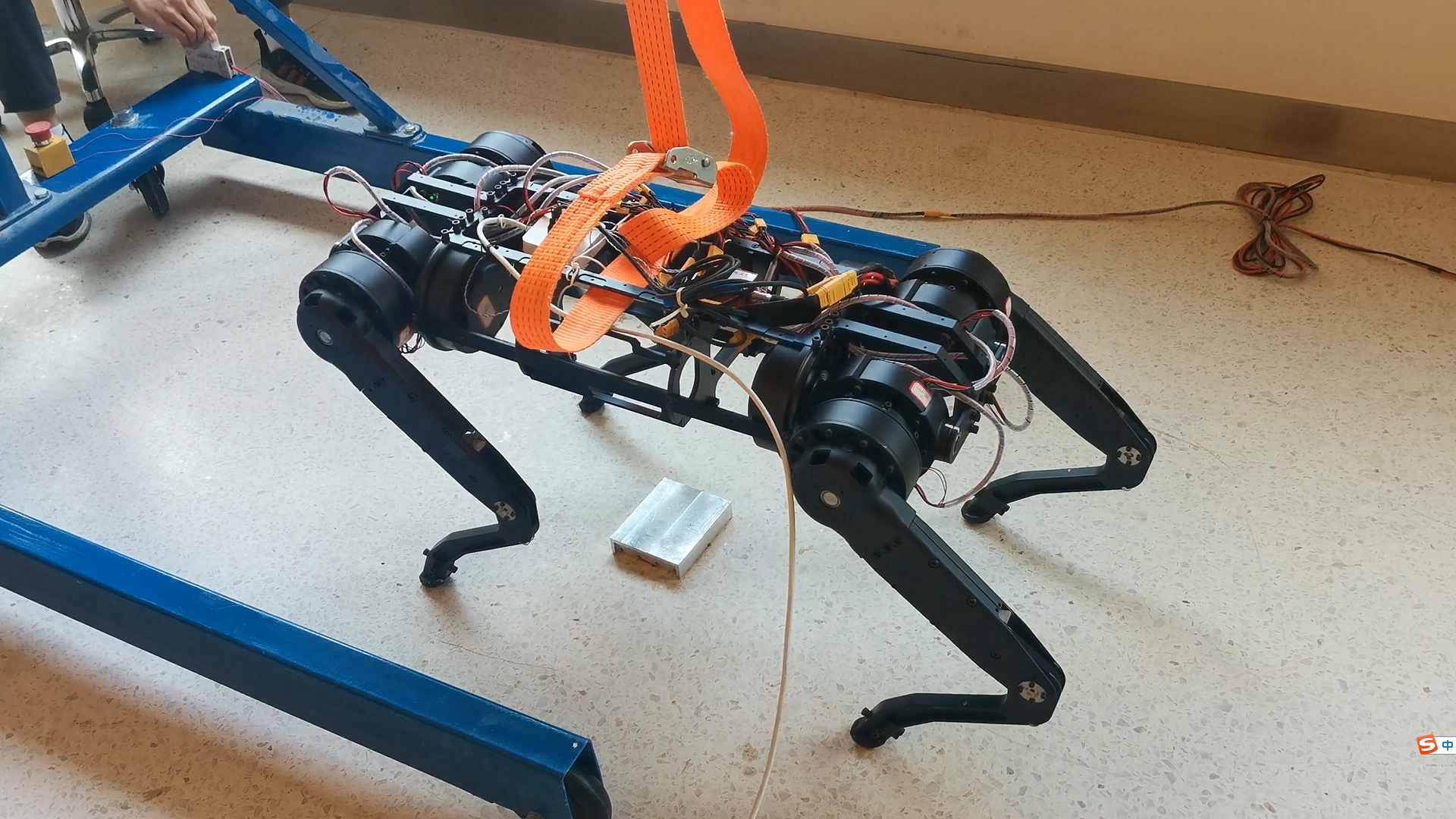
Wei Zhang is a tenured Professor at the Southern University of Science and Technology (SUSTech) , Shenzhen, China, and a Senior Member of IEEE. He serves as Associate Editor for IEEE Transactions on Control System Technology and leads the CLEAR Lab (Control & Learning for Robotics and Autonomy) within the School of Automation and Intelligent Manufacturing (AiM). His career spans institutions including the University of California, Berkeley (postdoc), and The Ohio State University (Assistant/Associate Professor). Education: PhD in Electrical Engineering from Purdue University (2009), MS in Electrical and Computer Engineering from University of Kentucky (2005), BS in Automation from University of Science and Technology of China (2003) Research Interests focus on integrating control theory, optimization, and machine learning to develop intelligent systems. Key areas include: Legged Robots: Dynamic locomotion control, bio-inspired gait design, and push recovery mechanisms Autonomous Systems: Real-time motion planning, obstacle avoidance, and safe navigation in adversarial environments Smart Grids: Distributed control for energy systems and transactive energy optimization Machine Learning: Reinforcement learning for robotics, Q-learning convergence analysis, and hybrid control-learning frameworks Publication Trends highlight interdisciplinary work at the intersection of robotics and control systems. His recent 2024 papers address: Whole-body control for wheeled-quadrupedal robots Geometric object pose refinement in computer vision Task-space Riccati feedback for underactuated systems Teacher-student reinforcement learning architectures Scientific Awards include: 2016 : NSF CAREER Award 2015 : Lumley Research Award (Ohio State University) 2013 : AFOSR Summer Faculty Fellowship 2018 : National Distinguished Expert (Young, China) 2019 : International Underwater Robot Competition 2nd Prize (team advisor) Academic Leadership involves editorial roles at IEEE Transactions on Control System Technology and IEEE Transactions on Power Systems. His lab provides state-of-the-art robotics platforms including quadruped robots, Kuka manipulators, and UAVs for algorithm validation. Research collaborators span The Ohio State University , UC Berkeley , CMU , and The University of Hong Kong .
Dr. Akhilesh Jaiswal serves as Assistant Professor of Electrical and Computer Engineering at the University of Wisconsin-Madison, where his research pioneers device-circuit co-design for next-generation computing systems. His work focuses on enabling extreme-edge intelligence through processing-in-pixel technology, in-memory computing architectures, and bio-inspired neuromorphic systems. His academic credentials include: PhD in Nano-electronics from Purdue University (2019) MS from the University of Minnesota (2014) Bachelor of Technology from Shri Guru Gobind Singhji Institute of Engineering and Technology (2011) Dr. Jaiswal's research program centers on revolutionizing edge computing through hardware innovations that integrate sensing and processing. His device-circuit co-design approach leverages alternate state variables to create energy-efficient systems for real-time applications, with particular emphasis on retina-inspired sensors and photonic memory architectures. This work bridges semiconductor physics with AI acceleration needs, targeting applications from autonomous systems to biomedical devices. Analysis of his 2023-2025 publications reveals dominant themes in photonic SRAM-based in-memory computing (40% of output), retina-inspired motion processing (30%), and secure hardware architectures (20%). His team consistently develops novel bitcell designs that enable XOR logic execution within memory arrays while maintaining compatibility with CMOS fabrication processes. Recent work shows increasing focus on biomedical applications of processing-in-pixel technology. His distinguished recognition includes: Three consecutive ISI Exploratory Research Awards (2020-2023) IEEE Brain Community Best Paper Award (2022) 27 issued US patents with multiple pending applications Nomination for USC Moore Inventor Fellowship (2022) Dr. Jaiswal actively mentors graduate researchers through ECE 790/890/990 courses while securing exploratory funding through ISI and Keston Foundation awards. His patent portfolio demonstrates exceptional translational impact, with industry game-changer classifications from USPTO. The 2022 VLSI-SoC nomination and multiple research highlights in major outlets validate his contributions to hardware security and neuromorphic vision sensors. His laboratory develops integrated hardware platforms combining magnetic tunnel junctions, photonic memory, and CMOS image sensors to create unified processing-in-sensor systems. Current projects include retina-inspired motion segmentation for event cameras and electro-optic frequency transducers for quantum computing interfaces, with strong industry collaboration through patent licensing.
Theo Damoulas is a Professor of Machine Learning at the University of Warwick with a joint appointment in the Department of Computer Science and Statistics. He is a Turing AI Fellow (2021-2026) through UK Research and Innovation, an ELLIS member, and a Visiting Professor at New York University's Center for Urban Science and Progress (CUSP). He founded and leads the Warwick Machine Learning Group and has directed major projects at The Alan Turing Institute including Project Odysseus and the London Air Quality project. Education includes: PhD in Probabilistic Multiple Kernel Learning (University of Glasgow, 2009) MSc in Informatics (Distinction, University of Edinburgh, 2004) MEng in Mechanical Engineering (1st Class, University of Manchester, 2003) His research focuses on probabilistic machine learning and Bayesian statistics, emphasizing the integration of structural priors, spatiotemporal dependencies, physical laws, and causal relationships. Key applications include Digital Twins, urban science, and computational sustainability. His work advances robust and scalable inference methodologies for complex real-world systems. Publications demonstrate strong emphasis on Bayesian methods, spatiotemporal modeling, and uncertainty quantification, with applications spanning battery modeling, urban mobility, federated learning, and causal inference. Recent work shows increased focus on physics-informed models, federated learning frameworks, and causal abstraction techniques. Major scientific awards: Turing AI Acceleration Fellowship (2021-2026) Best Paper Awards (Wilkes 2024, AISTATS 2022, IEEE ICMLA 2010) ACM SIGMOD Most Reproducible Paper (2017) Dissertation Award (Classification Society 2012) Teaching Excellence nominations (Warwick 2015-2017) He actively advises PhD students and secured significant grants including the £multi-million Turing AI Fellowship. Current doctoral researchers investigate federated learning, causal inference, and spatiotemporal modeling. He leads the Warwick Machine Learning Group, a cross-departmental team developing foundational ML methods for scientific and societal challenges.