Trine Krogh Boomsma is a Professor in the Department of Insurance and Economics at the University of Copenhagen's Department of Mathematical Sciences. Her research focuses on optimization under uncertainty with significant applications in energy systems, particularly electricity markets, renewable energy investments, and power system planning. PhD in Mathematics-Economics, Aarhus University (2003-2007) Visiting PhD at University of Duisburg-Essen (2004) Academic career includes positions at Risø National Laboratory for Renewable Energy and Imperial College London Her work spans stochastic programming, real options analysis, and dynamic programming to address energy sector challenges. Key areas include support schemes for renewables, market risk modeling, and operational optimization of hybrid conventional-renewable systems. Recent research explores policy impacts on investment decisions and advanced scenario generation techniques. Major publications (2012-2020) cover renewable energy policy frameworks, power plant valuation models, and sequential market bidding strategies. These works emphasize electricity market dynamics, investment risk quantification, and robust planning under uncertainty. She teaches linear programming, integer programming, and stochastic programming applications in operational analysis, contributing to energy economics education at the department.
Aberham Hailu Feyissa is an Associate Professor at the National Food Institute of the Technical University of Denmark , specializing in process modeling and sustainable food engineering. His research bridges complex transport phenomena with practical food manufacturing challenges. Ph.D. in Food Process Engineering, Technical University of Denmark MSc in Food Science, K.U.Leuven and Universiteit Gent BSc in Chemical Engineering, Bahir Dar University His work focuses on coupled mass and heat transfer during solid food processing, aiming to develop robust first-principles models for predictive process optimization. Key applications include Ohmic heating , digital twin technology , and bioactive ingredient extraction . Recent publications highlight his contributions to sustainable food processes , including insect-based feed modeling , seaweed bread kinetics , and clean-label cheese formulation . His methodological innovations span FTIR spectroscopy , computational fluid dynamics , and kinetic modeling . Supervisor for PhD students S. S. Turgut , M. E. Jabali , and Dahal S. Principal Investigator for projects like Modelling and Digitalisation of Food Processes and Sustainable Extraction of Bioactive Insect Fractions Active in conference presentations and peer review , he drives advancements in food process understanding through mechanistic modeling and mathematical simulation .
Jan Madsen is a Professor at DTU Compute, Technical University of Denmark, and Head of the Embedded Systems Engineering section. His research focuses on system-level modeling and design of embedded computing systems, particularly cyber-physical systems, microfluidic biochips, and synthetic biology applications. Develops design automation tools and methodologies for embedded systems Supervises numerous PhD students and leads major research projects Research Interests Key areas include: Embedded systems-on-a-chip Cyber-Physical Systems (Internet-of-Things) Microfluidic Lab-on-Chip devices Synthetic biology with molecular computing Design, modeling, and optimization of complex systems Scientific Awards DATE Fellow (2019) IEEE CEDA Outstanding Recognition (2019) DTU Scientific Advise Award (2013) Best Paper Awards at MECO (2013) and CASES (2009) Jorck’s Foundation Research Award (1995) Publications His 14+ journal papers and 115+ conference papers demonstrate expertise in: SystemC-based modeling frameworks Energy-aware sensor networks Self-healing eDNA architectures Microfluidic biochip synthesis RTOS modeling and MPSoC exploration
Olga Saukh is an Associate Professor at the Institute of Technical Informatics, Graz University of Technology (TU Graz), and a Faculty member at the Complexity Science Hub Vienna (CSH). She leads the Embedded Learning and Sensing Systems research group, which operates across both institutions, focusing on the design and deployment of efficient AI-based systems on edge and mobile platforms. Her work bridges deep learning and embedded systems, with applications in environmental monitoring, precision agriculture, and digital health. Ph.D. in Computer Science, University of Bonn (2009) Habilitation in Embedded Systems, TU Graz (2020) Postdoctoral Training, ETH Zurich (2010–2016) B.Sc. in Applied Mathematics, Taras Shevchenko National University of Kyiv (2002) M.Sc. in Applied Computer Science, University of Freiburg (2004) Her research centers on efficient machine learning, particularly model optimization, neural network pruning, and contrastive learning for resource-constrained devices. She is deeply engaged in solving real-world challenges in IoT, sensor networks, and cyber-physical systems. Her work emphasizes data privacy, sustainability, and practical deployment of AI at the edge. The 15 most recent publications highlight a strong trend in efficient deep learning, including model compression, pruning, and transfer learning, applied to diverse domains such as environmental sensing (air quality, pollution tracking), digital agriculture (cattle farming), and embedded AI (sensor calibration, on-demand sensing). Her work frequently appears in top-tier venues like NeurIPS, ICLR, and IEEE/ACM IPSN, reflecting her leadership at the intersection of machine learning and embedded systems. Scientific awards include: CONET Ph.D. Academic Award (2010) Multiple Best Paper Awards at IEEE PerCom, ACM/IEEE IPSN, IEEE ICPADS, IEEE SECON, and UrbCom Spotlight and Oral presentations at ICML and CoLLAs workshops Ph.D. scholarship from IPVS, University of Stuttgart (2004–2005) Prizes in Ukrainian national mathematics competitions (1996–1998) Olga Saukh actively serves on program committees of leading international conferences in machine learning and embedded systems. She has advised multiple students and leads a collaborative research group spanning TU Graz and CSH Vienna. Her group develops practical AI systems for real-world deployment, with a focus on sustainability and privacy. She co-organizes the public EfficientML reading group and has secured recognition through numerous grants and awards. Her future work continues to explore the theoretical and practical challenges of deploying efficient, trustworthy AI in mobile and embedded environments. Her research group, Embedded Learning and Sensing Systems, operates jointly between TU Graz and CSH Vienna, fostering interdisciplinary collaboration across institutions. The team develops AI solutions for edge computing, sensor networks, and cyber-physical systems, with a strong emphasis on environmental sustainability and data privacy. Members work on joint challenges using advanced collaboration tools, reflecting the distributed nature of modern academic research.
Frede Blaabjerg is a Professor at Aalborg University (AAU Energy) , affiliated with the Faculty of Engineering and Science . Since 1998, he has pioneered power electronics research in applications such as wind turbines , photovoltaic (PV) systems , reliability engineering , and Power-2-X technologies. Education : PhD in Electrical Engineering (1995, Aalborg University) Honorary Degrees : Honoris Causa at University Politehnica Timisoara (2017) and Tallinn Technical University (2018) His research focuses on power electronics control , system optimization , and reliability for renewable energy and electric mobility . Recent work includes grid-forming converters , virtual synchronous generators , and smart EV charging systems. Key publication trends span 15+ years , with over 3,733 peer-reviewed articles and 900+ journal papers in power electronics , renewables , and energy storage . Notable book series: Control of Power Electronic Converters and Systems (4 volumes, Elsevier). Scientific Awards : 46 IEEE Prize Paper Awards 2020 IEEE Edison Medal 2019 Global Energy Prize 2014 IEEE William E. Newell Power Electronics Award Leadership Roles : Editor-in-Chief, IEEE Transactions on Power Electronics (2006–2012) Chairman, Danish Council for Research and Innovation Policy (2020–) President, IEEE Power Electronics Society (2019–2020)
Jesper Rindom Jensen is an Associate Professor in the Department of Electronic Systems at Aalborg University, Denmark, under the Technical Faculty of IT and Design. He is the Head of the Audio Analysis Lab, a leading research group in audio signal processing, since 2023. His work bridges theoretical signal processing and practical applications in artificial intelligence and audio systems. Full Name: Jesper Rindom Jensen Institution: Aalborg University School: The Technical Faculty of IT and Design Department: Department of Electronic Systems Research Lab: Audio Analysis Lab Email: jrj@es.aau.dk Office: Fredrik Bajers Vej 7B, B5-206, 9220 Aalborg Øst, Denmark Education: M.Sc. in Electronic Systems, Aalborg University (cum laude, 2009) Ph.D. in Signal Processing, Aalborg University (2012) Research Interests: Jesper Rindom Jensen's research centers on audio signal processing, with a strong emphasis on artificial intelligence, speech enhancement, noise reduction, beamforming, and multichannel systems. His work applies to diverse domains including robot and drone audition, spatial audio, and active noise control. He develops novel filtering techniques, including variable span linear filters and harmonic beamformers, to improve speech quality and intelligibility in noisy and reverberant environments. Publication Trends: His recent publications (2023–2025) show a strong trend toward integrating deep learning with classical signal processing, particularly in direction-of-arrival estimation, underwater acoustics, and robust multichannel systems. There is a clear focus on real-world applications, including sound zone control, active noise control, and limited-data scenarios using knowledge distillation. His work consistently emphasizes robustness, efficiency, and practical deployment. Scientific Awards and Recognition: AAU Talent for emerging research leaders Recipient of a competitive postdoc grant from the Danish Independent Research Council Advising and Grants: Jesper has supervised multiple PhD and master’s students, including Nørholm, Karimian-Azari, Zhang, and Wang. He has led significant research projects such as 'Sound Processing for Robots and Drones' (2018–2020) and participated in others related to joint audio-visual tracking and speech enhancement. His research has been supported by national funding bodies, reflecting its innovation and impact. Labs and Teams: He is a founding and core member of the Audio Analysis Lab at Aalborg University, which focuses on cutting-edge audio signal processing and AI-driven solutions. The lab fosters interdisciplinary collaboration and has produced numerous publications, datasets, and real-world applications. Jensen’s leadership since 2023 underscores his pivotal role in shaping the lab’s research direction.
Kunihiko Kaneko is a Professor at the Niels Bohr Institute, University of Copenhagen, with a distinguished career in theoretical biophysics and complex systems. He received his PhD and MSc in Physics from the University of Tokyo, and has held leadership roles at the Universal Biology Institute and Center for Complex Systems Biology. PhD Physics, 1984 - University of Tokyo MSc Physics, 1981 - University of Tokyo His research spans five primary areas: Universal Biology, Evolutionary Constraints, Ecosystem Dynamics, Neural Cognition, and Universal Anthropology. He has published extensively on multi-level consistency principles, dimensional reduction in biological systems, and reciprocity between robustness and plasticity across scales. Recent publications show strong focus on microbial ecosystems (2025), evolutionary game theory (2025), neural modular architectures (2024), and dimensional reduction in cellular systems (2024). His work bridges physics and biology through dynamical systems theory applied to diverse phenomena from protocells to human societies.
Yevgeny Seldin is a Professor in the Department of Computer Science at the University of Copenhagen, specializing in Machine Learning Theory . He leads the Machine Learning Section and is a member of the DeLTA Lab . Education : PhD in Computer Science at The Hebrew University of Jerusalem under supervision of Prof. Naftali Tishby His research focuses on Machine Learning , particularly Online Learning and PAC-Bayesian Analysis , with applications to Bandit Algorithms , Reinforcement Learning , and Information Theory . Recent work includes optimal algorithms for delayed feedback, stochastic-adversarial trade-offs, and feedback graphs. Positions Available : PhD and Postdoc positions in Theoretical Machine Learning or energy sector applications Labs & Collaborations : Head of Machine Learning Section Member of DeLTA Lab
Christian Igel is a Professor at the Department of Computer Science, University of Copenhagen, and serves as director of the SCIENCE AI Centre . He is also a co-lead of the Pioneer Centre for Artificial Intelligence in Denmark. His academic journey includes a Doctoral degree from Bielefeld University (2002) and a Habilitation degree from Ruhr-University Bochum (2010). Igel is a Juniorprofessor (2002–2010) and has held editorial roles at journals like KI - Künstliche Intelligenz and Artificial Intelligence Journal . Doctoral degree: Faculty of Technology, Bielefeld University, Germany (2002) Habilitation degree: Department of Electrical Engineering and Information Sciences, Ruhr-University Bochum, Germany (2010) His research spans Machine Learning , focusing on Support Vector Machines , Evolution Strategies , Reinforcement Learning , Deep Neural Networks , and PAC-Bayesian Analysis . He applies these methods to Environmental Monitoring , Medical Diagnostics , and Climate Research . Recent publications highlight work on adversarial machine learning , environmentally sustainable AI , and tree resource mapping using deep learning. His scientific awards include being a ELLIS Fellow . Igel’s software tools like Shark , woody , and Multi-Planar UNet are widely used in research and industry. Notable grants and collaborations involve projects with European Lab for Learning and Intelligent Systems (ELLIS) , SCIENCE AI Centre , and international teams in Denmark , Germany , and France . His lab leadership emphasizes open-source frameworks and reproducible research. Editorial Roles: German Journal on Artificial Intelligence , Evolutionary Computation Journal , Artificial Intelligence Journal Software Projects: Shark , woody , Multi-Planar UNet , U-Time Collaborations: SCIENCE AI Centre , Pioneer Centre for Artificial Intelligence , European Lab for Learning and Intelligent Systems
Niels Richard Hansen is a Professor at the Department of Mathematical Sciences , University of Copenhagen, leading research at the intersection of Artificial Intelligence and Statistics . He co-founded the Copenhagen Causality Lab and focuses on automating causal explanation discovery from data using Bayesian networks, stochastic processes, predictive models, and machine learning. His work emphasizes creating interpretable and robust AI systems capable of generalizing across domains. His research has produced over 56 publications spanning causal inference , graphical modeling , stochastic processes , and machine learning . Recent work includes: Predictive and causal learning (2018 keynote) High-dimensional regression solutions (2016 lecture) Interdisciplinary applications in actuarial science , environmental statistics , and neuroscience He actively contributes to scientific communication through media appearances and public explanations of statistical concepts, including analyses of: Gaussian correlation inequality proofs Daylight saving time and blood clots Mathematical approaches to lotteries Climate change vs lunar effects
Sebastian Risi is a Professor at the IT University of Copenhagen , where he directs the Creative AI Lab and co-directs the Robotics, Evolution and Art Lab (REAL) . His work bridges computational evolution, deep learning, and collective intelligence for applications in robotics, art, and video game design. His research focuses on self-organizing AI systems that grow or assemble through local interactions, inspired by biological development. Key areas include neuroevolution , neural cellular automata , and generative modeling , with applications in adaptive robotics, game content creation, and damage-resilient AI. Recent publications highlight trends in self-assembling neural architectures (NDPs) and 3D functional machine generation (Minecraft experiments). Awards include ERC Consolidator Grant (2022), Best Paper at FDG’21 , and Google Faculty Award (2019). Scientific Awards : ERC Consolidator Grant (GROW-AI), Best Paper FDG’21, Runner-Up IEEE Games’20, GECCO 2017 Competition Winner, Sapere Aude Grant, Amazon/Google Faculty Awards He advises on projects like GROW-AI (EU-funded), AI-TESTER (game testing), and C2SIM (military systems). Media coverage includes Science , Wired , and Popular Science .
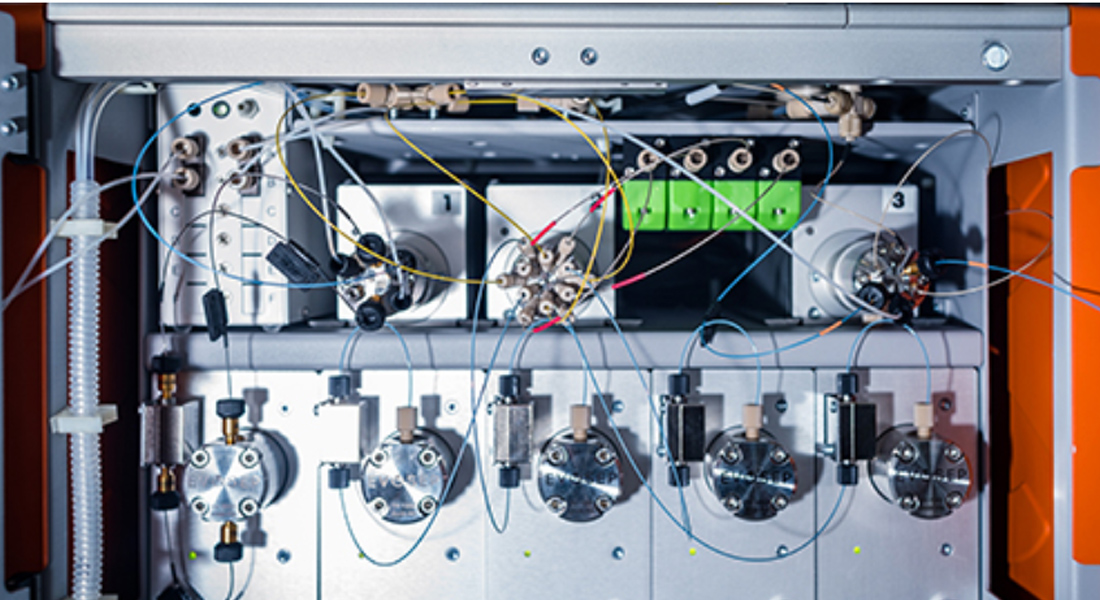
Jesper Velgaard Olsen is a Professor and Deputy Center Director at the University of Copenhagen's Novo Nordisk Foundation Center for Protein Research (CPR) and leads the Olsen Group. His research focuses on quantitative, high-resolution mass spectrometry-based proteomics, particularly in characterizing signaling networks regulated by phosphorylation and other post-translational modifications. The group develops advanced offline peptide fractionation and enrichment methods combined with high-resolution Orbitrap tandem mass spectrometry to improve robustness and reproducibility in proteomic analysis. The Olsen Group investigates functional selectivity in cell signaling, where different growth factors binding to the same receptor activate distinct pathways. They identified tyrosine phosphorylated residues as molecular switches determining cell fate and optimized workflows enabling deep human proteome analysis comparable to RNA-seq. Their work spans technology development and biological applications in diseases like acute myeloid leukemia. Key group members include PhD Fellows, PhD Students, and Researchers such as Agnete Witness Præst Jensen, Charlotte Hjort, and Kristina Bennet Emdal. For collaboration or inquiries, contact Olsen via email jesper.olsen@cpr.ku.dk .
Vito Latora is a Professor of Applied Mathematics and Chair of Complex Systems at the School of Mathematical Sciences, Queen Mary University of London, and also holds the position of Professor of Theoretical Physics at the University of Catania. He leads the Complex Systems and Networks Group, driving cutting-edge research at the intersection of physics, mathematics, and interdisciplinary sciences. His research focuses on complex systems, particularly the structure and dynamics of networks, including multiplex, temporal, and higher-order networks such as simplicial complexes and hypergraphs. He explores applications in social, biological, financial, and cognitive systems, with recent work on creativity, innovation, and success through network analysis. The 15 most recent publications reveal a strong trend in advancing network theory beyond pairwise interactions, with a focus on higher-order structures, memory effects, synchronization, and epidemic spreading. His work combines rigorous mathematical modeling with real-world applications, often published in high-impact journals like Nature Communications , Physical Review Letters , and Science Advances . Dual communities in spatial and biological networks Modeling epidemics with limited detection resources Synchronization via higher-order and directed interactions AI-driven financial risk management Evolutionary games on hypergraphs Interdisciplinary success and funding dynamics Vito Latora has mentored several researchers who appear as co-authors, including Iacopini, Williams, Di Bona, and Lacasa. While specific grants are not listed, his collaborative projects with neuroscientists and anthropologists, along with frequent publications, suggest active funding. He is involved in major scientific events such as NetSci 2023, indicating leadership in the network science community. He leads the Complex Systems and Networks Group at Queen Mary, fostering a collaborative environment for studying complex systems through theoretical, computational, and data-driven approaches.
Navid Bayati is an Associate Professor at the University of Southern Denmark, affiliated with the Institute of Mechanical and Electrical Engineering and the Centre for Industrial Electronics. He leads the Control and Protection of Smart Grids (CAP-SG) group and focuses on renewable/hybrid power systems, microgrid protection, and grid code compliance. Education: Ph.D. in Power Systems & Microgrid Protection (2020, Aalborg University); M.Sc. in Power Systems (2017, Amirkabir University of Technology) His research spans renewable energy integration , transient analysis , grid interconnection , and digital twin applications . Recent work includes machine learning for carbon emission prediction, fault localization in DC microgrids, and supercapacitor resilience in hybrid systems. Collaborations include projects like IEA Wind Task 50 and RePoSys , addressing grid renovation, life cycle assessment, and digital twin resilience. His teaching portfolio covers power electronics , energy management , and microgrid control .
Bissan Ghaddar is a Professor in the Department of Technology, Management and Economics at Technical University of Denmark (DTU). Her work focuses on robust optimization, edge computing, and sustainable energy systems, contributing to UN Sustainable Development Goals related to affordable and clean energy. She supervises PhD projects on sector coupling in energy models and quantum computations for power systems. Her research interests include optimizing energy consumption in electric vehicle routing and application placement in edge computing under uncertainty. She has published influential papers in journals like Transportation Research Part C and Omega , addressing latency and efficiency challenges in dynamic systems. Current projects include modeling large-scale sectoral energy systems using smart-linking approaches (2024–2027) and secure power system operation leveraging quantum computations (2021–ongoing). She collaborates internationally with experts in operations research and telecommunications.