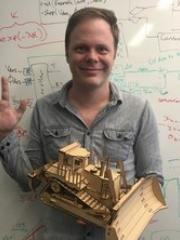
Professor Yahya Fathi specializes in optimization and operations research at North Carolina State University. His research includes mathematical programming, production systems, and quality engineering, with applications in manufacturing and data analytics. Awarded multiple teaching excellence honors.
Aritra Mitra is an Assistant Professor in the Department of Electrical and Computer Engineering at North Carolina State University. He holds a Ph.D. from Purdue University (2020), an M.Tech. from IIT Kanpur (2015), and a B.E. from Jadavpur University (2013). Before joining NC State, he was a postdoctoral researcher at the University of Pennsylvania. His research focuses on enabling reliable, efficient learning and decision-making in large-scale distributed systems, addressing challenges like computation, communication constraints, and adversarial robustness. Key areas include control theory, machine learning, signal processing, and network science. Education: Ph.D., Electrical and Computer Engineering, Purdue University (2020) M.Tech., Electrical Engineering, Indian Institute of Technology Kanpur (2015) B.E., Electrical Engineering, Jadavpur University (2013) Research Interests: Dr. Mitra’s work bridges theoretical foundations with practical applications in distributed systems. He designs algorithms for federated learning, reinforcement learning, and adversarial robustness, with applications in control systems and networked environments. Recent efforts emphasize finite-time analysis of TD learning, heterogeneous federated systems, and resilient control under communication constraints. His contributions often integrate tools from stochastic approximation, optimization, and signal processing. Publications: His articles explore cutting-edge topics like federated TD learning, robust system identification under heavy-tailed noise, and distributed multi-agent optimization. Recent trends highlight advancements in asynchronous algorithms, delay-adaptive systems, and model-free control under communication bottlenecks. Grants & Labs: While specific grants are not detailed, his research aligns with themes in distributed computing and control, suggesting potential involvement in NSF or industry-funded projects. No lab-specific details are provided in the text.
Eduardo Gildin is a Professor of Petroleum Engineering and Associate Department Head for Graduate Studies at Texas A&M University's College of Engineering. He holds the L.F. Peterson '36 Professorship and directs the university's graduate studies in petroleum engineering. His research focuses on reservoir modeling, control optimization, model reduction techniques, and CO2 sequestration. Gildin has pioneered data-driven approaches for reservoir simulation, integrating machine learning and physics-based models to enhance efficiency and accuracy. Education: Ph.D. in Aerospace Engineering, University of Texas at Austin (2006) M.S. in Mechanical Engineering, University of São Paulo, Brazil (1998) B.S. in Mechanical Engineering, Faculdade de Engenharia Industrial, Brazil (1995) Research Interests: Model reduction of large-scale dynamical systems Control and optimization of reservoir operations CO2 storage and geological carbon sequestration Machine learning applications in reservoir engineering and drilling automation Geomechanics and compaction damage evaluation Key Awards: 2020: William O. and Montine P. Head Memorial Research Award 2017-2018: Dean of Engineering Excellence Award 2013-2019: Energi Simulation Chair in Robust Reduced Complexity Modeling 2021: Distinguished Membership in Society of Petroleum Engineers Grants and Advising: Gildin has secured major funding for projects on reservoir simulation, drilling automation, and CO2 storage. He advises graduate students on topics such as surrogate modeling and reinforcement learning applications in petroleum systems. His lab collaborates with industry partners to translate research into practical tools for reservoir management and subsurface operations. Labs and Teams: He leads the Reservoir Simulation and Control Lab, focusing on advanced computational methods for reservoir optimization. His team develops open-source drilling models and collaborates globally on projects like the DREAMS (Drilling and Extraction Automated System) initiative.
Dr. Chao Tian is an Associate Professor in the Department of Electrical and Computer Engineering at Texas A&M University, part of the College of Engineering. He holds a Ph.D. from Cornell University (2005) and a B.E. from Tsinghua University (2000). His research focuses on information theory, distributed storage systems, coding theory, and machine learning applications, including large language models (LLMs) and privacy-preserving techniques like steganography and private information retrieval (PIR). He has received notable awards, including the 2017 IEEE Jack Wolf ISIT Best Student Paper Award and the 2014 IEEE ComSoc DSTC Best Paper Award. Dr. Tian’s work bridges theoretical foundations and practical applications, such as optimizing storage codes for distributed systems, developing secure PIR protocols, and exploring LLMs in energy and steganographic contexts. His group has pioneered methods for variable-order Markov chain modeling with transformers and designed quantization techniques for perceptual quality. Recent activities include a faculty development leave at MIT/Harvard and delivering distinguished lectures globally on AI and information theory. He advises students on cutting-edge topics like LLM-based steganography and diffusion models. His publications span journals like IEEE Transactions on Information Theory and conferences such as NeurIPS and ISIT, with a focus on coding theory, privacy, and machine learning. He has also contributed to open-source tools like the CAI toolbox for investigating information-theoretic limits. Current projects include optimizing cryptocurrency mining in energy markets and advancing federated learning with adversarial robustness.
Peter J. Kohler is an Assistant Professor in the Department of Biology within the Faculty of Science at York University, Toronto. He is eligible to supervise graduate students in the Biology Graduate Program and leads the Kohler Visual Neuroscience Lab, which is part of the Centre for Vision Research at York University. His research lies at the intersection of cognitive neuroscience and visual perception, focusing on mid-level visual processing. This involves understanding how the brain, within the first few hundred milliseconds of visual input, constructs representations of shape, motion, location, and perceptual organization—including figure-ground segregation, grouping, and constancy. His work integrates functional MRI (fMRI) , electroencephalography (EEG) , and visual psychophysics to probe the neural mechanisms underlying these processes in humans. Recent publications reveal a strong focus on symmetry processing, perceptual grouping, numerical estimation, and multisensory integration. His work often involves advanced neuroimaging techniques and collaborative international research, particularly with teams in Belgium and Luxembourg. The articles span high-impact journals such as PNAS , Nature Communications , Current Biology , and Journal of Vision , indicating a robust and influential research program in visual neuroscience. Scientific Awards and Funding: NSERC Discovery Grant (awarded April 2020) VISTA Research Grant (funded June 2023) Prof. Kohler actively mentors students, including graduate students such as Rachel Moreau, Sara Chaparian, Yara Iskandar, Shaya Samet, and Shenoa Ragavaloo, as well as undergraduate researchers. His lab has presented at major conferences including the Vision Sciences Society (VSS) and the Lake Ontario Visionary Establishment (LOVE), where he joined the organizing committee in 2024. The Kohler Visual Neuroscience Lab also develops experimental tools, as evidenced by GitHub repositories for stimulus generation and behavioral testing using jsPsych.
Anna Beer is a researcher in the Faculty of Computer Science, specializing in data mining and machine learning with a focus on density-based clustering, spectral clustering, and interactive clustering frameworks. She holds a BSc and MSc in computer science and maintains an ORCID profile (https://orcid.org/0000-0002-6890-997X) for her research contributions. Research Themes: Development of clustering algorithms (e.g., DISCO, Scar, LUCKe), fairness in density-based clustering (FairDen), and applications to molecular dynamics and climate research (DROPP). Collaborations: Works with colleagues like Ira Assent, Christian Plant, and Lars Krieger, with recent contributions to conferences like ICLR 2025. Activities: Presented research on density-connectivity distance at a 2023 oral contribution. Publications: 9 publications since 2019, including 3 in 2025 and 6 in 2024, covering topics from cluster evaluation to deep active learning strategies.
Dietmar Maringer is Professor of Computational Economics and Finance at the University of Basel's Faculty of Business and Economics (WWZ), where he leads research at the intersection of finance, computational methods, and artificial intelligence. His work focuses on risk management, portfolio optimization, algorithmic trading, and financial simulations. His research interests span computational finance, artificial intelligence in finance, data analysis, risk management, portfolio optimization, algorithmic and high-frequency trading, financial networks, complex adaptive systems, and market simulations. He applies advanced computational and heuristic optimization techniques to solve real-world financial problems, contributing significantly to quantitative finance and financial engineering. His recent publications demonstrate a consistent focus on applying evolutionary algorithms, reinforcement learning, and numerical optimization to portfolio management, market impact modeling, and financial forecasting. The research integrates econometrics, machine learning, and financial theory, emphasizing practical implementation and robust risk-aware decision-making. Several best-paper awards Maringer has served as Chair of the Portfolio Optimization Section of the IEEE Computational Economics and Finance Technical Committee from 2008 to 2018 and is frequently involved in organizing and program committees of international conferences. He has advised or collaborated with numerous researchers, though specific student names are not listed. His research has been supported through academic affiliations and likely institutional or conference-based grants, though explicit funding sources are not detailed. He is affiliated with several research groups, including IEEE Computational Economics and Finance TC, COMISEF, ERCIM, Centre for Innovative Finance, and the European Financial Management Association, reflecting a broad collaborative network in computational finance and economics.
Ariadne Justi Bertolin is a Lecturer in the Department of Mechanical Engineering at the University of Bath, affiliated with the Centre for Sustainable Energy Systems (SES) and The Foundry: Centre for Digital, Manufacturing & Design. She is actively involved in research and is currently accepting doctoral students. Her research focuses on control theory, particularly in the areas of nonlinear systems, robust control, and stability analysis. Key topics include Lur'e systems, output feedback, Zames-Falb multipliers, and LMI-based design methods. She applies these theories to autonomous systems, energy systems, transportation, and industrial automation. The recent publications show a strong trend in developing LMI-based algorithms for stability and control synthesis of both continuous-time and discrete-time nonlinear systems. Her work emphasizes robustness, performance guarantees (e.g., ℒ2-gain), and practical implementation using finite impulse response and noncausal multipliers. She has been the Principal Investigator on a project titled 'Improving stability and control synthesis conditions for nonlinear systems,' indicating leadership in her research domain. While no formal awards are listed, her publications in IEEE and IFAC journals reflect high-quality contributions to control engineering. Dr. Bertolin advises doctoral students and is engaged in collaborative research, particularly with scholars like G. Valmorbida, R. C. L. F. Oliveira, and P. L. D. Peres. Her work is supported by ongoing research projects and contributes to the theoretical foundations of modern control systems. She is affiliated with key research centers at Bath, including the Centre for Sustainable Energy Systems and The Foundry, which focus on digital manufacturing, sustainable energy, and design innovation.
Michael Trick is the Senior Associate Dean for Faculty and Research and Higgins Professor of Operations Research at the Tepper School of Business, Carnegie Mellon University. His research focuses on combinatorial optimization, sports scheduling, constraint programming, and operations research applications. He has contributed to seminal work on sports timetabling (e.g., scheduling college basketball conferences) and the traveling tournament problem. Trick's work bridges theoretical advancements with practical applications, including integer programming, branch-and-price methods, and stochastic dynamic programming. He has led initiatives in operations research education and served as President of INFORMS, emphasizing the field's societal impact. His research also spans voting systems, optimization for newspaper zoning, and algorithmic design for complex scheduling problems. Trick's expertise spans academic leadership, research methodology, and cross-disciplinary applications. His articles address topics like auction design for spectrum allocation, bike-sharing logistics, and robust scheduling strategies. He collaborates across academia and industry, contributing to both theoretical advancements and real-world operational challenges. His work often highlights the practical utility of mathematical programming techniques in diverse domains.
Dr. Leila Moslemi Naeni is a Senior Lecturer at the University of Technology Sydney (UTS), School of Built Environment, with a dual appointment in the Faculty of Design, Architecture and Building. She previously served as a Lecturer at UTS (2016-2018) and Sessional Lecturer at Curtin University (2015-2016). PhD in Computer Science (University of Newcastle, 2017) MSc in Industrial Engineering (Sharif University of Technology, 2007) BSc in Industrial Engineering (Iran University of Science and Technology, 2004) Her research focuses on project management under uncertainty, integrating fuzzy systems and mathematical modeling with applications in construction, ESG reporting, and disruptive technologies. She developed innovative methods for statistical control charts in project monitoring and leads research on leveraging blockchain and digital tools for sustainable infrastructure. Recent publications highlight her work on resource-constrained scheduling algorithms, ESG integration in megaprojects, and gamification in project management education. She serves as Review Editor for Frontiers in Environmental Science and on the Editorial Board of Smart and Sustainable Built Environment . 2016 PMI NSW Research Award 2022 Walt Lipke Award 2013 FEBE Postgraduate Research Prize As an active research mentor, she supervises PhD students in machine learning applications, disaster management technologies, and social infrastructure investments. Her teaching emphasizes simulation-based learning, collaborating with Oulo University (Finland) to quantify educational value.
Shachar Lovett is a researcher at the University of California, San Diego (UCSD), specializing in computational complexity, combinatorics, and theoretical computer science. His work spans advanced topics in communication complexity, pseudorandomness, and coding theory, often intersecting with problems in additive combinatorics and Boolean function analysis. Education : Not explicitly detailed in the provided text. Research Interests : Lovett's research focuses on computational complexity, particularly in communication and circuit complexity, combinatorial structures like sunflowers and high-dimensional expanders, and the analysis of Boolean functions through Fourier and Gowers norms. His work explores the limits of deterministic vs. randomized computation, the structure of codes over finite fields, and the interplay between additive combinatorics and theoretical computer science. Article Trends : His recent publications address exact vs. approximate representations of Boolean functions, quasipolynomial bounds in combinatorics, hypercontractivity in high-dimensional expanders, and advancements in the log-rank conjecture. These works emphasize connections between computational complexity, discrete mathematics, and pseudorandomness, often yielding improved bounds or novel frameworks for understanding Boolean function behavior. Scientific Awards : No specific awards or honors were mentioned in the provided text. Advising and Collaborations : Lovett collaborates extensively with researchers like Hamed Hatami, Kaave Hosseini, and Jiapeng Zhang, contributing to fields such as non-malleable codes, matrix multiplication algorithms, and communication complexity. No formal student advising details were provided.
Jilles Vreeken is a Professor of Computer Science at Saarland University and tenured faculty at the CISPA Helmholtz Center for Information Security, where he leads the Exploratory Data Analysis research group. He is also an ELLIS Fellow and Faculty of the Saarbrücken Unit on AI and ML. His work bridges theoretical foundations with practical applications in causal inference, unsupervised learning, and exploratory data analysis. Dr. Vreeken's research focuses on developing theory and algorithms for answering fundamentally exploratory questions about data: "what is going on in my data?", "what causes what and how?", and "what can we learn from this model?" without making unnecessary or unjustified assumptions. He takes a principled approach based on information theory to identify what is worth knowing, then develops efficient algorithms for extracting useful interpretable results. His work spans causal inference under realistic conditions (including hidden confounding, selection bias, and non-i.i.d. data), summarizing complex data and models in understandable terms, and combining these threads to create more robust and useful models across diverse data types. His recent publications demonstrate a strong trend toward causal discovery in increasingly realistic settings, including non-stationary time series, event sequences, and scenarios with hidden confounders. He has made significant contributions to federated learning, interpretable machine learning, and pattern mining. His work consistently applies information-theoretic principles to develop methods that are both theoretically sound and practically useful for extracting insights from complex data. Dr. Vreeken has received numerous prestigious awards including: IEEE ICDM'18 Tao Li Award for Excellence in Research IEEE ICDM'18 Best Paper Award UdS-CS'15 Busy Beaver Teaching Award ACM SIGKDD'11 Best Student Paper Award ACM SIGKDD'10 Doctoral Dissertation Runner-Up Award ECML PKDD'09 Best Student Paper Award As an advisor, Dr. Vreeken has mentored numerous doctoral researchers to completion, including Dr. Osman Ali Mian, Dr. David Kaltenpoth, Dr. Boris Wiegand, Dr. Sebastian Dalleiger, Dr. Janis Kalofolias, Dr. Jonas Fischer, Dr. Alexander Marx, Dr. Panagiotis Mandros, Dr. Kailash Budhathoki, Dr. Roel Bertens, Dr. Koen Smets, and Dr. Michael Mampaey. He has secured significant research funding as PI for multiple projects including "AI for Prediction and Therapy Guidance in Acute Stroke" (HAICU, 2025-2028), "Neuro-Explicit Models of Language, Vision and Action" (RTG, DFG, 2023-2028), and "Crushing Antimicrobial Resistance using Explainable AI" (HAICU, 2021-2024). Dr. Vreeken leads the Exploratory Data Analysis (EDA) research group at CISPA, which focuses on developing theory and algorithms for discovering novel insights from data, learning inherently interpretable models, and drawing reliable causal conclusions. The group has produced numerous influential algorithms and frameworks in causal inference, pattern mining, and exploratory data analysis, with applications spanning healthcare, materials science, and cybersecurity.
Erik Quaeghebeur is an Assistant Professor at Eindhoven University of Technology's School of Mathematics and Computer Science, focusing on uncertainty modeling in artificial intelligence. His work spans probabilistic circuits, imprecise probability theory, and wind energy applications. PhD in Applied Mathematics (Ghent University, 2002-2009) Master's in Applied Mathematics (Université catholique de Louvain, 2001-2002) Master's in Physics Engineering (Ghent University, 1998-2001) Research interests include probabilistic modeling under uncertainty, with applications in AI and wind energy systems. His recent work explores tensor factorizations, equivariant graph neural networks, and scalable probabilistic circuits. Scientific contributions include 60 research outputs and 2 datasets . Awards encompass the ERCIM Alain Bensoussan Fellowship (2013), BOF Postdoc (2010), and B.A.E.F. Francqui Fellowship (2009). He serves on committees for the Society for Imprecise Probability and acts as editorial board member for related conferences. Foundations of Artificial Intelligence course (since 2020) Uncertainty Representations and Reasoning course (since 2021)
Dr. Tyson Phillips serves as Senior Lecturer and Director of Teaching and Learning at The University of Queensland's School of Mechanical and Mining Engineering within the Faculty of Engineering, Architecture and Information Technology. He is an active Affiliate of the Future Autonomous Systems and Technologies research group, focusing on translating robotics innovations into practical mining applications. His academic leadership includes curriculum development for engineering programs and direct industry engagement with major mining equipment manufacturers. He earned his Doctor of Philosophy (PhD) from The University of Queensland in 2016, with thesis research centered on LiDAR-based perception systems for autonomous excavators. His doctoral work established foundational methods for object pose verification in mining contexts. Phillips' research specializes in robotics perception for extreme mining environments, developing LiDAR-centric solutions for autonomous equipment operation amid dust, fog, and unstructured terrain. Key contributions include evidential reasoning frameworks for uncertainty management, real-time pose estimation algorithms, and sensor fusion techniques for excavators and bulldozers. His work bridges theoretical computer vision with industrial deployment, targeting operational safety and efficiency in mineral extraction. Publication analysis reveals consistent focus on mining robotics since 2012, with recent works (2021-2024) emphasizing minimal-sensor configurations, probabilistic terrain mapping, and vibration-assisted gripper technology. His 14 scholarly outputs demonstrate evolution from sensor evaluation (2012-2015) toward integrated autonomy systems (2018-2024), predominantly in Journal of Field Robotics and Sensors . He actively supervises graduate researchers as Principal Advisor for a PhD on multimodal perception mapping and Associate Advisor for two PhD projects involving spreader systems and physics-informed neural networks. Completed supervision includes a 2024 PhD on bulldozer terrain mapping and a 2021 Master's on shovel/hopper interaction strategies. Research funding spans 14 projects from 2012-2026, including current Australian Coal Association Research Program support (2025-2026) and major Caterpillar Inc. collaborations for ERS self-protection and articulated truck automation. Phillips operates within The University of Queensland's Future Autonomous Systems and Technologies group, which develops field-deployable autonomy solutions for mining partners. This team conducts real-world testing of perception systems using Caterpillar and FMG operational sites as validation environments.
Yikun Ban is a tenure-track Associate Professor in the School of Computer Science and Engineering at Beihang University, where he is a member of the State Key Laboratory of Software Development Environment. He earned his PhD in Computer Science from the University of Illinois Urbana-Champaign (2023), MS in Computer Science from Peking University (2019), and BS in Software Engineering from Wuhan University (2016). PhD: University of Illinois Urbana-Champaign (2023) MS: Peking University (2019) BS: Wuhan University (2016) His research focuses on principled algorithms for reinforcement learning with human feedback, neural contextual bandits, and exploration-exploitation problems. He develops frameworks combining deep learning with bandit theory for applications in recommendation systems, disinformation detection, and dynamic graph learning. Recent publications address: Robust neural contextual bandits (NeurIPS 2024) Graph neural bandits (KDD 2023) Meta-learning for bandit scheduling (NeurIPS 2023) Clustering in contextual bandits (WWW 2021, AAAI 2021) Honors include the NeurIPS Scholar Award and recognition as ICML Outstanding Reviewer . His open-source LOCB repository provides Python implementations for contextual multi-armed bandit algorithms with local clustering, supporting applications in recommendation systems and online learning.