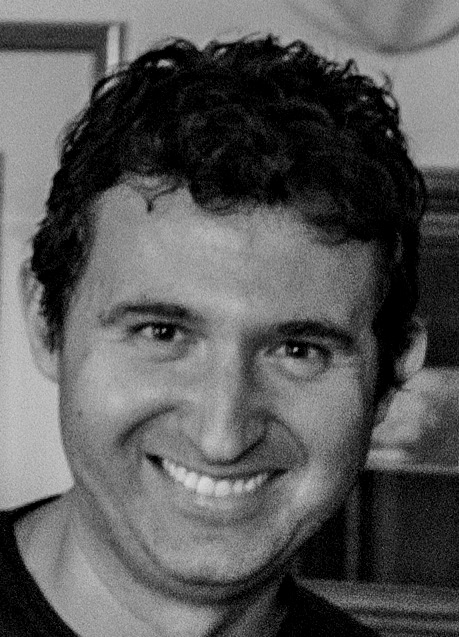
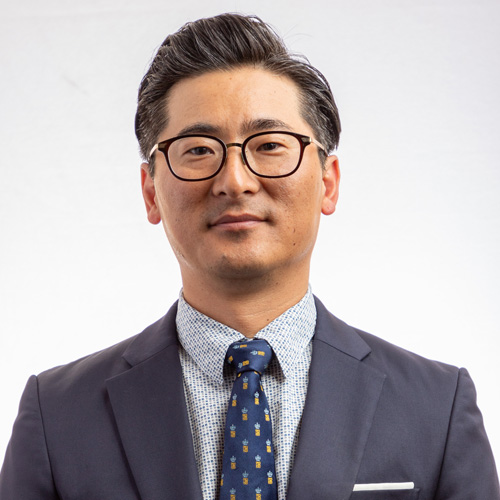
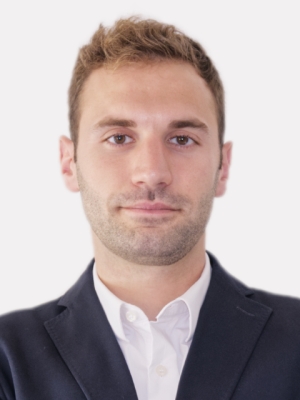
Ehsan Modiri is a researcher at the Department of Hydrosystem Modelling , Helmholtz Centre for Environmental Research (UFZ), Germany. His work focuses on climate change impacts on hydrological systems, drought monitoring, and environmental modeling using advanced computational frameworks. Affiliation: UFZ - Helmholtz Centre for Environmental Research Department: Hydrosystem Modelling Research Themes: Climate Change, Droughts, Hydrological Forecasting, Water Resource Management Research Interests: Modiri specializes in understanding hydrological responses to climate change, particularly in drought dynamics and soil moisture variability. His work bridges observational data with sophisticated modeling frameworks to improve predictability of water balance components under warming scenarios. Scientific Contributions: Recent publications highlight his role in developing high-resolution drought simulations, evaluating hydrological model performance, and analyzing groundwater responses to global warming. He participates in large-scale European hydrological projects and collaborates on climate-hydrology integration initiatives.
Dr. Clark N. Taylor is an Associate Professor of Computer Engineering and Director of the ANT Center at the Air Force Institute of Technology (AFIT), located at Wright-Patterson Air Force Base, Ohio. He is actively engaged in research and education within the Graduate School of Engineering and Management, focusing on advanced navigation and sensor fusion technologies for autonomous systems. Ph.D., Electrical and Computer Engineering (Computer Engineering), University of California, San Diego, 2004 M.S., Electrical and Computer Engineering, Brigham Young University, 1999 B.S., Electrical and Computer Engineering, Brigham Young University, 1995 Dr. Taylor's research spans computer engineering, navigation systems, and autonomous robotics, with a strong emphasis on sensor fusion, state estimation, and robust uncertainty modeling. His work integrates vision, inertial, magnetic, and pressure sensors for navigation in GPS-denied environments, particularly for unmanned aerial vehicles (UAVs). He is a leading expert in factor graph-based estimation, visual-inertial odometry, cooperative localization, and magnetic navigation. His publications demonstrate a consistent trend toward robust, uncertainty-aware estimation frameworks. Over the past decade, his research has evolved from early work on visual stabilization and pose estimation to advanced topics such as conservative covariance estimation, invariant filtering, and machine learning for spacecraft pose estimation. His recent articles focus on factor graphs, multi-agent fusion, and deep learning, indicating a trajectory toward intelligent, resilient navigation systems for defense and aerospace applications. Scientific awards include a Best Presentation in Session award at the ION GNSS+ conference in 2021. His research is supported by the U.S. Air Force and related defense agencies, with applications in surveillance, autonomous refueling, and on-orbit inspection. Dr. Taylor has advised numerous MS and PhD students, particularly in the areas of UAV navigation, sensor fusion, and cooperative localization. His lab, the ANT Center, focuses on advanced navigation and tracking, bringing together students and researchers to develop cutting-edge solutions for real-world operational challenges. The team conducts both simulation and experimental work, often integrating novel sensor modalities and estimation algorithms for improved system performance.
Farshad Arvin is a Professor of Robotics in the Department of Computer Science at Durham University. Prior to this, he held academic positions at The University of Manchester (2018-2022) and worked as a Research Assistant at the University of Lincoln (2012-2015). He holds a BSc in Computer Engineering (2004), an MSc in Computer Systems Engineering (2010), and a PhD in Computer Science (2015). His research focuses on Swarm Robotics , Bio-inspired Swarms , and Autonomous Multi-agent Systems . He pioneered the Swarm & Computation Intelligence Laboratory (SwaCIL) at Durham, leading projects like H2020-FET RoboRoyale (€3.27M), Horizon Europe Sensorbees (€3.2M), and BioDiMoBot (€8M), with total funding exceeding £4M. Recent publications highlight advancements in swarm trajectory optimization (T-STAR), collision-free multi-robot coordination, and bio-hybrid environmental monitoring. His work integrates bio-inspired algorithms with practical applications in autonomous vehicles, aerial drones, and hazardous environments. Scientific Awards: Marie Skłodowska-Curie fellowship Notable Projects: EU H2020-FET RoboRoyale (2021-2026) Horizon Europe Sensorbees (2024-2029) Horizon Europe BioDiMoBot (2025-2030) H2020-FET Robocoenosis (2020-2025) Supervision: Mentors 8 postgraduate students at Durham, including Hanadi Alhamdan, Hang Wang, and Honghao Pan.
Luca Sterpone is a Full Professor at the Department of Control and Computer Science (DAUIN), Politecnico di Torino. He serves as Head of the Control and Computer Engineering Department (2023-2027), coordinates the Aerospace and Safety Computing Lab, and is a member of the Academic Senate and Power Electronics Innovation Center (PEIC). His research spans reconfigurable computing, fault tolerance, and radiation effects analysis in electronic systems. Professor since 2021 Department Head (DAUIN) since 2023 Coordinates international collaborations with ESA, AMD Xilinx, NVIDIA, and Thales Alenia Space Develops radiation-hardened FPGA tools (SETA, VERI-Place, PyXEL) 2007 EDAA Outstanding Dissertation Award and 2005 IEEE Best Paper Award Research Focus : Designing radiation-tolerant systems for aerospace, including fault-tolerant AI accelerators, FPGA reliability, and software-based error mitigation. He investigates soft error propagation in nanoscale circuits and develops tools for radiation sensitivity analysis in VLSI. His work integrates hardware-software co-design for mission-critical applications. Awards : EDAA Outstanding Dissertation Award (2007) IEEE European Test Symposium Best Paper (2005) SMACD Best EDA Tool Award (2018) ARC Best Paper candidate (2018) Teaching : He leads courses in Reconfigurable Computing (PhD level), GPU Programming , and Operating Systems . He has formal responsibility for teaching roles across 9 bachelor's and 7 master's years, and mentors multiple PhD students. Collaborations : Coordinates with the European Space Agency (ESA), University of Bielefeld, Universidad de Sevilla, and industrial partners like AMD Xilinx, NVIDIA, and General Motors. He leads projects such as RESCHIP4EU, VEGAS, and TERRAC for radiation-hardened computing solutions.
Enrico Macii is a Full Professor at the Politecnico di Torino, affiliated with the Interuniversity Department of Regional and Urban Studies and Planning (DIST) and the Department of Control and Computer Engineering (DAUIN). He leads the Electronic Design Automation (EDA) research group and holds key roles as Scientific Advisor for the Politecnico-STMicroelectronics partnership and Scientific Contact for the European Chips Joint Undertaking. Research Interests: His work spans digital circuits and systems, energy efficiency, smart cities, Industry 4.0, and smart manufacturing. He focuses on embedded and cyber-physical systems, low-power design, neuromorphic computing, AIoT, and sustainable urban development. Recent Publications: His recent research demonstrates strong trends in edge AI, neuromorphic computing, and smart energy systems. Articles highlight innovations in low-power hardware acceleration, federated learning, physics-informed AI, and digital twin applications for urban and industrial systems. There is a clear emphasis on deploying AI efficiently on constrained devices and integrating physical models with machine learning. J. William Fullbright Fellowship (1993) Best paper award IEEE European Design Automation Conference (1996) Best paper award ACM/IEEE Great Lakes Symposium on VLSI (2008) DAC Service Award (2014) IEEE Fellow (2006) DATE Fellow (2014) Advising and Grants: He has supervised over 25 PhD students in computer engineering, AI, and urban systems. His research is funded by major EU programs (Horizon 2020, PNRR, KDT JU), national (PRIN, FAR), and regional grants, as well as industrial contracts with STMicroelectronics, Michelin, and Cefriel. He leads numerous high-impact projects in smart manufacturing, energy efficiency, and digital twins. Labs and Teams: He is a core member of the EDA Group, an interdepartmental research team at Politecnico di Torino focusing on VLSI-CAD, bioinformatics, smart cities, and Industry 4.0. He also contributes to IAM@PoliTo (Integrated Additive Manufacturing) and leads multiple EU and national research consortia.
Kai Gehring is a Professor for Political Economy and Sustainable Development at the Department of Economics, University of Bern, and a member of the interdisciplinary Wyss Academy for Nature in Bern. He is also a research professor associated with the ifo Institute in Munich. His academic affiliations include CESifo, the European Development Network (EUDN), the Development Economics Committee of the German Economic Association, and the Globalization and Development (GlaD) group. His educational background includes a Ph.D. in Economics from the University of Göttingen (with co-supervision from Heidelberg University), where his supervisors were Axel Dreher and Stephan Klasen, and he graduated summa cum laude . He earned his Diplom (equivalent to M.Sc.) in Business Administration with electives in Economics from the University of Mannheim, and previously studied at the University of Canterbury in New Zealand. Kai Gehring’s research focuses on political economy, development, and public economics. He develops theoretical frameworks grounded in economics and related disciplines and tests them using modern econometric methods, often leveraging novel administrative, geographical, and historical data. His work emphasizes the role of culture, norms, and history in shaping institutional outcomes in both developed and developing countries. Key research themes include development cooperation and aid effectiveness, the political economy of international organizations (such as the IMF, World Bank, and EU), and the origins and consequences of group identities and horizontal inequalities in conflict and power distribution. His current research projects explore narratives on nature, climate change, and migration using natural language processing and media data; analyze resource extraction and pollution through satellite imagery and machine learning; and investigate propaganda and conflict. Although no recent publications are listed in the provided text, his methodological approach combines theory, rigorous empirical analysis, and innovative data sources across political economy and development. Ambizione Grant from the Swiss National Science Foundation Kai Gehring has supervised various research initiatives, including the "Minister Project," a citizen-science effort to compile comprehensive data on African government members’ regional and linguistic origins to study governance and development. He has received research funding through the Ambizione Grant and leads interdisciplinary collaborations with institutions such as the Wyss Academy and ifo Institute. His teaching experience spans the University of Mannheim, Heidelberg University, University of Applied Sciences Kaiserslautern, and the University of Zurich. He leads the "Minister Project," which engages global contributors to collect data on African ministers’ birth regions and native languages. This initiative aims to build a robust dataset to analyze how ethnic and linguistic diversity affects government formation and policy outcomes. The project promotes open, collaborative research and acknowledges contributors on its website, offering incentives such as Amazon vouchers and an iPad.
Laurence S. Magder, PhD, serves as Professor in the Department of Epidemiology and Public Health at the University of Maryland School of Medicine, where he has held continuous faculty positions since 1994 after progressing from Assistant to Associate to full Professor. With over 30 years of biostatistical expertise, he has contributed to nearly 200 biomedical publications through collaborative research across diverse health domains. Educational background includes: PhD in Biostatistics, Johns Hopkins University (1994) Master of Public Health, University of Michigan (1983) His research program centers on developing accessible statistical methodologies for real-world biomedical challenges. Key specialties include longitudinal data analysis, handling misclassified/missing data, transmission probability modeling, and systemic lupus erythematosus applications. Magder actively promotes a paradigm shift in statistical practice—advocating for evidence quantification over rigid hypothesis testing frameworks, which he argues renders traditional concerns like one-sided tests and multiple comparisons adjustments largely obsolete in scientific decision-making. Publication analysis reveals consistent methodological innovation across infectious disease modeling, diagnostic test evaluation, and missing data solutions. His work prioritizes practical applicability, translating complex statistical theory into tools usable by non-statisticians while maintaining rigorous evidence standards. Recurring themes include simplification of analytical approaches and contextual interpretation of statistical evidence within broader scientific judgment. As a collaborative biostatistician, Magder has supported numerous biomedical research projects throughout his career, though specific advising relationships and grant details remain undocumented in available sources. His role exemplifies the critical contribution of statistical expertise to advancing medical and public health research through both methodological development and direct project consultation.
Jes Frellsen is an Associate Professor at the Department of Applied Mathematics and Computer Science (DTU) since 2016. Previously, he held academic positions at the IT University of Copenhagen (2016-2019), postdoctoral roles at University of Cambridge (2013-2016) and University of Copenhagen (2011-2013). Education: PhD in Bioinformatics (2011), University of Copenhagen MSc in Bioinformatics (2007), University of Copenhagen BSc in Mathematics and Computer Science (2005), University of Copenhagen EAP Exchange at University of California, Santa Cruz (2004-2005) Research Focus Jes Frellsen specializes in statistical machine learning , particularly generative AI and deep generative models with applications in bioinformatics . His work integrates Bayesian inference , directional statistics , and Markov chain Monte Carlo methods to address challenges in macromolecular structure prediction and missing data imputation . Recent efforts explore uncertainty quantification in image segmentation and generative modeling for materials science. Advising & Collaborations He actively supervises PhD students and postdoctoral researchers in projects spanning news recommendation systems , medical imaging , and 3D structure generation . Collaborations include work with Zoubin Ghahramani (Cambridge) and Thomas Hamelryck (Copenhagen), with contributions to protein structure prediction and statistical methods in structural bioinformatics .
Sebastian Trimpe is a Full Professor and Head of the Institute for Data Science in Mechanical Engineering at RWTH Aachen University, concurrently serving as Co-Executive Director of the RWTH Center for Artificial Intelligence since 2023. Previously, he led a Max Planck Research Group at the Max Planck Institute for Intelligent Systems from 2018 to 2022. His educational background includes: Ph.D. in Dynamic Systems and Control from ETH Zurich (2013) Dipl.-Ing. (M.Sc.) in Electrical Engineering from TU Hamburg (2007) MBA in Technology Management from TU Hamburg (2007) B.Sc. in General Engineering from TU Hamburg (2005) Professor Trimpe's research integrates machine learning with control theory to address safety and efficiency challenges in autonomous systems. His work spans theoretical frameworks for robust decision-making under uncertainty and practical implementations in robotics, with particular emphasis on event-triggered control, distributed systems, and data-efficient learning methodologies. Key contributions include novel approaches to safe reinforcement learning and model predictive control with guaranteed stability. Analysis of his recent publications reveals a pronounced focus on bridging machine learning with control engineering, especially in safety-critical robotics applications. Common themes include distribution-aware learning for medical diagnostics, diffusion-based control approximation, and hardware-in-the-loop validation of theoretical frameworks, demonstrating strong alignment between algorithmic innovation and real-world deployment. His scientific achievements have been recognized with prestigious honors: IFAC World Congress Interactive Paper Prize (2011) Klaus Tschira Award for public understanding of science (2014) Best Paper Award at International Conference on Cyber-Physical Systems (2019) Future Prize by Ewald Marquardt Stiftung (2020) As institutional leader, he directs the Institute for Data Science in Mechanical Engineering and co-leads the RWTH AI Center, overseeing strategic research initiatives and industry collaborations. His academic service includes editorial roles for IEEE Control Systems Society conferences and participation in the Cluster of Excellence 'Internet of Production'. The Institute for Data Science in Mechanical Engineering operates as a multidisciplinary hub where fundamental research in learning-based control meets industrial applications. Current projects focus on drone swarm coordination, deformable object manipulation, and medical diagnostics systems, leveraging both simulation environments and physical testbeds like the Mini Wheelbot platform.
Matthias Bannert is a Lecturer at the Department of Management, Technology, and Economics at ETH Zürich, where he works at the KOF Swiss Economic Institute (Konjunkturforschungsstelle). His work focuses on the intersection of economics, software development, and data management, with particular expertise in time series analysis and official statistics. Bannert designs solutions for state-of-the-art data processing, management, and publishing of economic data and research. Bannert completed his doctoral thesis titled "Survey Based Research in Economics - Essays on Methodology, Economic Applications and Long Term Processing of Economic Survey Data" at ETH Zürich in 2016. His academic journey began when he joined KOF in late 2008, initially working as a researcher for the Business Tendency Survey group before transitioning to the institute's IT department. Dr. Bannert's research interests span several interconnected domains at the nexus of economics and data science. He specializes in developing software environments for official statistics, with particular focus on processing and managing economic time series data through open-source driven data pipelines. His technical expertise includes R programming and PostgreSQL database systems, which he applies to create robust solutions for economic data analysis. Bannert is particularly interested in survey methodology, nowcasting techniques, and the development of reproducible research workflows. His work bridges the gap between theoretical economics and practical software implementation, ensuring that economic research can leverage state-of-the-art data processing techniques. Analysis of Bannert's publication record reveals a consistent focus on the application of data science techniques to economic research problems, particularly in the domain of official statistics and survey-based economics. His work demonstrates a progression from theoretical survey methodology to practical software implementation, with increasing emphasis on real-time economic forecasting and data management systems. A distinctive feature of his research is the development of open-source R packages that make advanced economic data analysis more accessible to researchers and practitioners. As an active contributor to the R language for Statistical computing and the open source community, Bannert has developed several notable software packages including timeseriesdb, tstools, and kofdata, which are available on CRAN. These tools reflect his commitment to creating reproducible, transparent, and efficient workflows for economic data analysis. Bannert serves as a data science supervisor for multiple KOF research projects and is a co-Principal Investigator in an SNF-funded Digital Lives project in collaboration with KOF's labor market expert group. His teaching activities include "Hacking for Sciences - An Applied Guide to Programming with Data" and involvement in the Nowcasting Lab, which provides live out-of-sample forecasting and model testing capabilities for economic researchers. Dr. Bannert is affiliated with the KOF Swiss Economic Institute, where he contributes to several research groups including the KOF Macroeconomic Forecasting group and the KOF Data Science and Macroeconomic Methods group. His work at KOF bridges the institute's traditional economic research with modern data science approaches, helping to position the institute at the forefront of data-driven economic analysis.
Deliang Fan is an Associate Professor at the School of Electrical, Computer and Energy Engineering, Arizona State University, Tempe, AZ. His research focuses on AI hardware, in-memory computing, and neuromorphic systems. He received his MS and PhD from Purdue University under Prof. Kaushik Roy. Education: PhD, Purdue University (2015) Research Interests: AI Hardware, In-Memory Computing, Adversarial AI, Neuromorphic Computing His work spans cross-layer co-design for AI applications, including deep learning, bioinformatics, and graph processing. He has authored 170+ peer-reviewed papers and developed hardware solutions for spintronic and memristor-based systems. Recent publications emphasize efficient architectures for transformers, federated learning, and robust neural networks. Awards include the NSF Career Award and multiple best paper recognitions. He serves in editorial and organizational roles for leading conferences like DAC, ISQED, and GLSVLSI.
Morteza Ghobakhloo is a Senior Lecturer and Researcher at Uppsala University , affiliated with the Department of Civil Engineering and Industrial Engineering (Industrial Engineering) and the Institute for Research on Conflicts of Goals in Sustainable Social Transition . His email is morteza.ghobakhloo@angstrom.uu.se . He focuses on digital transformation, sustainability, and human-centric technologies. Research Interests: Morteza’s work bridges Industry 4.0/5.0 , Sustainable Manufacturing , and Generative AI applications. His studies explore blockchain, big data analytics, and smart technologies in supply chain resilience, energy efficiency, and organizational innovation. Article Trends: Recent publications highlight Industry 5.0’s role in sustainable supply chains, AI-driven healthcare optimization, and blockchain for socioenvironmental solutions. He employs hybrid methodologies like PLS-fsQCA, ANN, and simulation modeling across sectors including energy, healthcare, and tourism.
Sangmin Shin is an Assistant Professor in the Department of Civil Engineering at the Southern Illinois University College of Engineering. His research focuses on integrated water resources management, critical interdependent infrastructure modeling, water cyber-physical-social systems, artificial intelligence applications, urban water sustainability and resilience, socio-environmental hydrology, multi-objective optimization, and systems analysis. PhD: Civil and Environmental Engineering, University of Utah (2016-2020) MS: Civil and Environmental Engineering, Korea Advanced Institute of Science and Technology (KAIST) (2008) BS: Civil Engineering, Pusan National University (2006) Shin leads the SciWater Lab, which investigates smart and connected infrastructure for water systems under uncertainty. Key strategies include: increasing infrastructure variety, building cyber-physical-social networks, and integrating feedback interactions between critical systems. The lab aims to transform water infrastructure through interdisciplinary approaches involving communities, engineers, and policymakers. His research portfolio demonstrates trends in: climate change adaptation (14% of publications), infrastructure resilience (22%), AI applications (18%), socio-hydrology (12%), and systems thinking (16%). Notable methodologies include system dynamics modeling, modern portfolio theory, and cyber-physical attack simulations. Postdoc Travel Assistance Award (University of Utah, 2019) Best Paper Presentation Award (Korean Society of Disaster & Security, 2015) Contact: Engineering B, Room 34, 1230 Lincoln Drive, Carbondale, IL 62918, USA | Phone: 618-453-3325 | Email: sangmin.shin@siu.edu
Mattia Bianchi is a Lecturer at the Department of Information Technology and Electrical Engineering, ETH Zurich, Switzerland. He is affiliated with the Automatic Control Laboratory under Prof. Florian Dörfler, with office location at ETL I 34, Physikstrasse 3, Zurich. His research focuses on developing distributed, efficient, and robust methods for decision and control problems in complex network systems, including power grids and cognitive radio networks. Bachelor’s degree in Information and Communication Engineering (2016), University of L’Aquila, Italy Master’s degree in Systems Engineering (2018), University of L’Aquila, Italy PhD in Systems and Control (2018–2023), TU Delft, The Netherlands Postdoctoral researcher (2023–present), ETH Zurich, Switzerland His methodological approach integrates operator theory, learning algorithms, game theory, and data-driven control. Key research themes include uncovering common structures in optimization and control algorithms, with applications in distributed feedback optimization, Nash equilibrium seeking, and stabilization of constrained systems. Current work explores partial-decision information frameworks and linear convergence guarantees. For detailed information on his publications, visit his Google Scholar profile . Mattia actively supervises Master’s theses and semester projects, inviting candidates to contact him with their academic credentials.
Jia Di serves as Professor and Department Head of the Department of Electrical Engineering and Computer Science at the University of Arkansas, holding the Rodger S. Kline Endowed Leadership Chair. He has been with the institution since 2004, progressing from Assistant Professor to his current leadership position within the College of Engineering. Education: B.S. in Automatic Control, Tsinghua University (1997) M.S. in Automatic Control, Tsinghua University (2000) Ph.D. in Electrical and Computer Engineering, University of Central Florida (2004) Research Focus: Dr. Di's work centers on asynchronous integrated circuit design and hardware security , with emphasis on Multi-threshold Null Convention Logic (MTNCL) for ultra-low-power secure systems. His research spans hardware Trojan detection, polymorphic logic gates, extreme environment electronics, and security solutions for IoT infrastructure. His Trustable Logic Circuit Design Lab has pioneered techniques for side-channel attack mitigation and cold boot attack prevention through self-destructive memory mechanisms. Publication Trends: Recent publications reveal a strategic shift toward hardware security applications for renewable energy systems and IoT edge devices, while maintaining core expertise in asynchronous circuit design. His work increasingly integrates machine learning (e.g., graph neural networks for hardware Trojan detection) and cross-platform verification frameworks, demonstrating evolution from pure circuit design to holistic cybersecurity solutions for critical infrastructure. Scientific Recognition: Senior Member of IEEE Eminent Member of Tau Beta Pi Elected Member of the National Academy of Inventors Research Leadership: Dr. Di has secured over $23 million in research funding for his Trustable Logic Circuit Design Lab, supporting development of 6 U.S. patents and two authoritative books. His lab collaborates with federal agencies and industry partners on hardware security challenges, with recent grants focusing on photovoltaic system protection and extreme-environment electronics. While specific student names aren't documented here, his extensive publication record indicates significant graduate mentorship in hardware security and asynchronous design. Lab Infrastructure: The Trustable Logic Circuit Design Lab maintains specialized capabilities for testing circuits in extreme environments (high temperature/radiation) and developing polymorphic security mechanisms. Current projects include RF aperture security, hardware-based IoT verification systems, and digital twin implementations for power electronics with integrated trust verification.