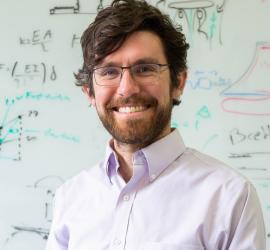
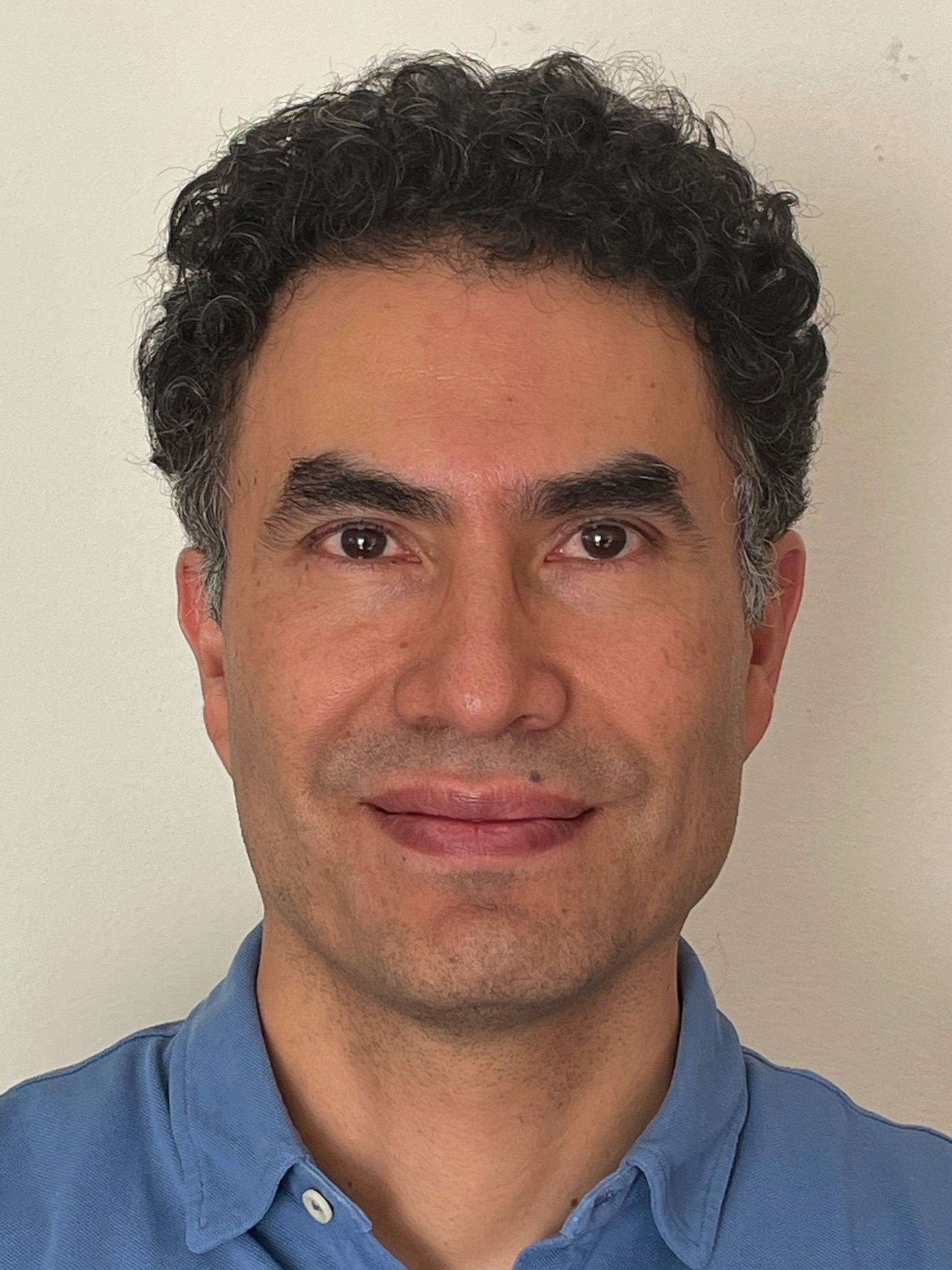
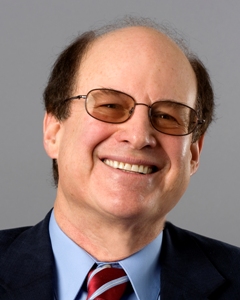
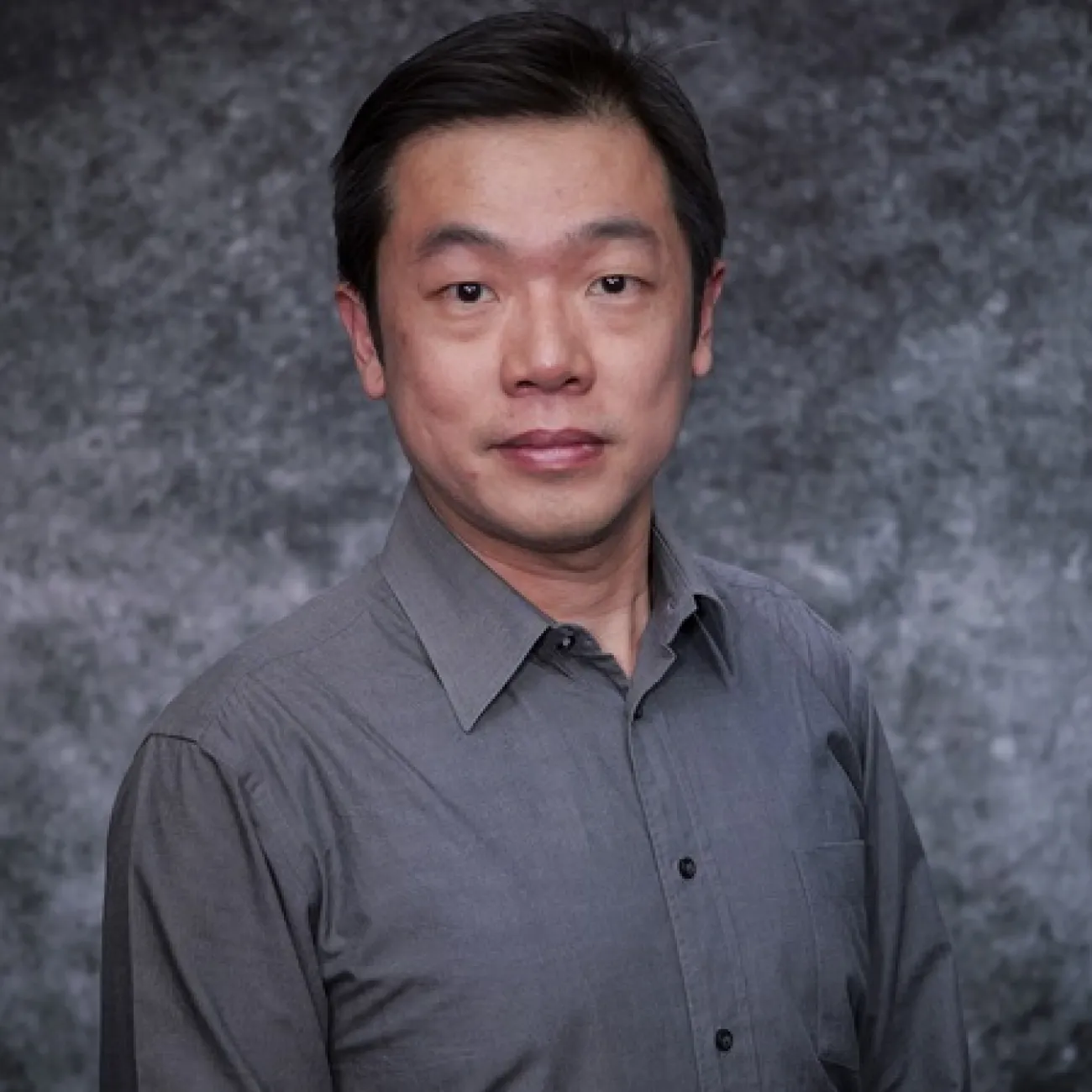
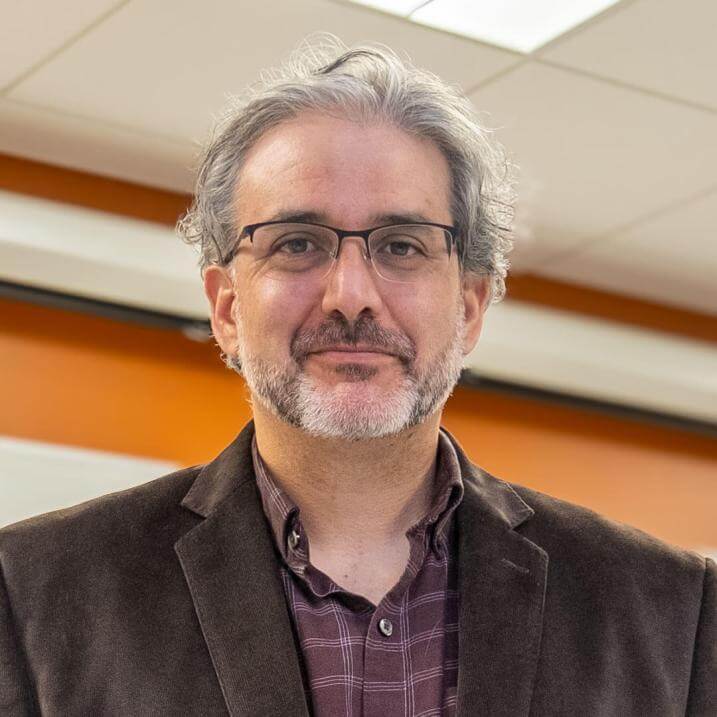
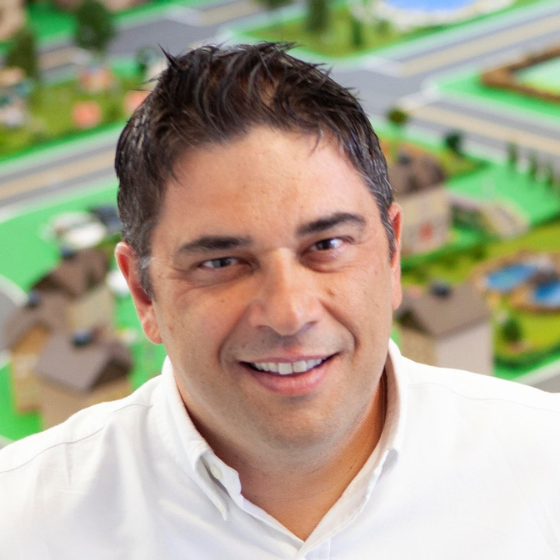
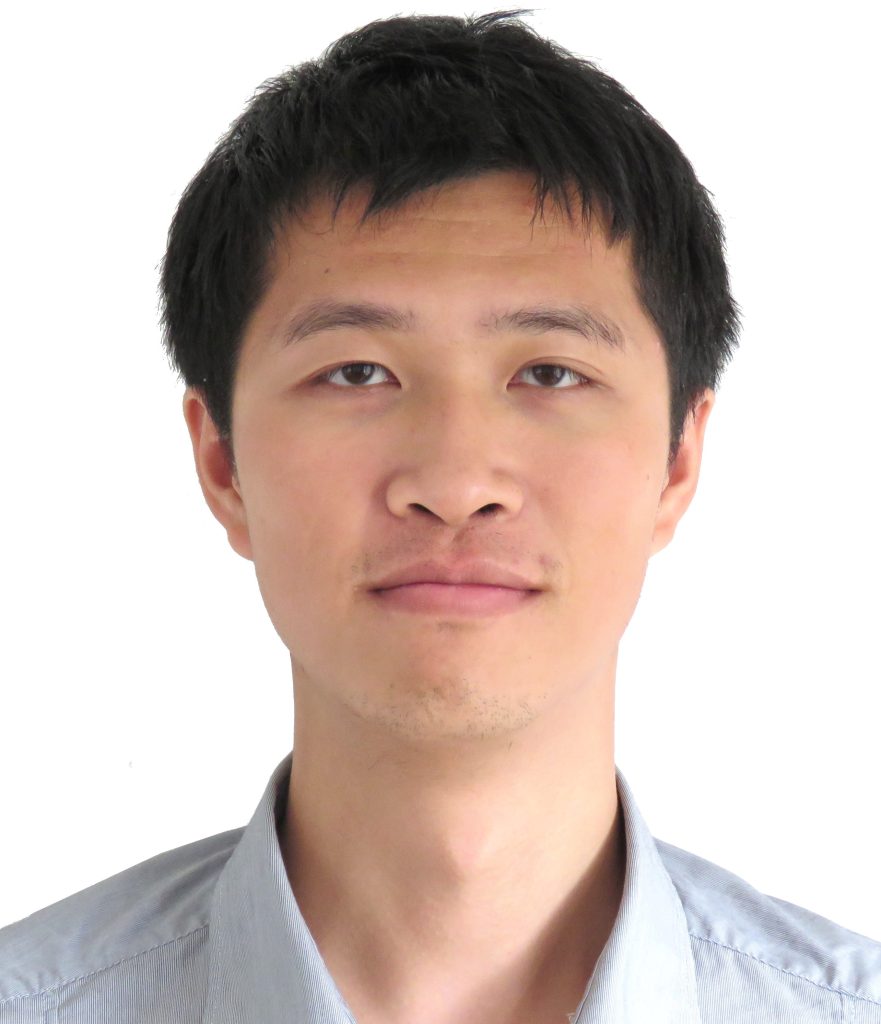
Natalia Díaz Rodríguez is an Assistant Professor of Artificial Intelligence at ENSTA ParisTech, where she works in the Computer Science and Systems Engineering department within the Autonomous Systems and Robotics Lab (U2IS). She is also affiliated with the INRIA Flowers team, focusing on developmental robotics. Her research spans deep learning, reinforcement learning, continual learning, and symbolic AI, with applications in explainable AI, computer vision, and robotics for social good. Her academic background includes a double PhD in Artificial Intelligence from Abo Akademi University and the University of Granada, alongside MSc degrees in Soft Computing and Computer Engineering from the University of Granada. She contributes to interdisciplinary AI, particularly in robotics, ethics, and healthcare applications, and co-organizes workshops on continual learning. Double PhD in Artificial Intelligence (2015), Abo Akademi University and University of Granada Doctoral diploma on Innovation and Entrepreneurship (2017), EIT Digital MSc in Soft Computing and Intelligent Systems (2012), University of Granada MSc in Computer Engineering (2010), University of Granada Her recent publications focus on trustworthy AI, including bias identification, counterfactual explanations, and continual learning strategies, reflecting her commitment to ethical and robust AI systems. She also explores AI applications in structural engineering, climate visualization, and financial risk assessment, emphasizing practical deployment and interpretability.
Karen M Feigh is a Professor and Associate Chair for Research in the Daniel Guggenheim School of Aerospace Engineering at the Georgia Institute of Technology, holding the prestigious David S. Lewis Professorship. Her interdisciplinary work integrates aerospace engineering with cognitive sciences to address human-machine interaction challenges in complex aviation and autonomy systems. Education B.S. in Aerospace Engineering, Georgia Institute of Technology MPhil in Aeronautics, Cranfield University, UK Ph.D. in Industrial and Systems Engineering, Georgia Institute of Technology Dr. Feigh's research centers on cognitive engineering applications for flight operations and air traffic management. Through ethnographic studies, human-in-the-loop experiments, and expert system design, she develops solutions that align technology with human cognitive processes to enhance safety and efficiency in NextGen air traffic concepts, vertical lift systems, and autonomous vehicle operations. Scientific Awards David S. Lewis Professorship in the School of Aerospace Engineering (2025) AIAA Wilbur and Orville Wright Graduate Award (2006) Zonta International Amelia Earhart Fellowship (2005) National Science Foundation Graduate Research Fellowship (2001-2006) Marshall Scholarship (2001-2003) As director of the Cognitive Engineering Center (CEC), Dr. Feigh mentors graduate researchers and leads interdisciplinary collaborations across Georgia Tech's research ecosystem. The CEC, embedded within the Vertical Lift Research Center of Excellence and Institute for Robotics and Intelligent Machines, secures funding from agencies including NSF and AIAA to advance adaptive intelligence for industrial robotics and air traffic control systems. Laboratories and Collaborations The Cognitive Engineering Center under Dr. Feigh's leadership conducts field work, human-subjects studies, and mathematical modeling to solve human-machine interaction challenges. The lab maintains active partnerships with NASA, FAA, and industry stakeholders to implement research findings in real-world aerospace operations, with current focus on adaptive interfaces for autonomous systems and crew decision support tools.
Elliot Hawkes is an Associate Professor in the Department of Mechanical Engineering at the University of California, Santa Barbara (UCSB). His research bridges design, mechanics, and non-traditional materials to develop robust, adaptable, human-safe robots for uncertain environments. He leads the Hawkes Lab, focusing on bio-inspired microstructured adhesives, nonlinear compliant mechanisms, soft actuators, exoskeletons, and growing robots. PhD from Stanford University, 2015 Postdoctoral Scholar at Stanford's CHARM Lab, 2015-2016 Assistant Professor at UCSB since 2016 Current projects include: Material-like robotic collectives with spatiotemporal control Variable friction shoe for locomotor therapy High-force soft actuators for industrial applications Vine-inspired robots for search and rescue Growing robots for biomedical and environmental use Recent publications in Science and Nature highlight breakthroughs in soft robotics and human-safe actuation. His team has received multiple NSF GRFP awards and a UCSB Regents Fellowship. The lab holds patents in adhesive gripping, soft actuation, and reconfigurable robotics.
Professor Lyudmila Mihaylova is a distinguished academic at the University of Sheffield's School of Electrical and Electronic Engineering, where she holds the position of Professor of Signal Processing and Control. She has established herself as a leading researcher in the fields of signal processing, Bayesian methods, and autonomous systems, with significant contributions to particle filtering techniques for intelligent transportation systems. Her work bridges theoretical developments with practical applications across multiple domains including transportation, healthcare, and industrial automation. Prof. Mihaylova's research interests center on nonlinear filtering, sequential Monte Carlo methods, statistical signal processing, and sensor data fusion. Her work spans both theoretical advancements and practical implementations, with particular focus on high-dimensional problems including vehicular traffic flow estimation, image processing, and localization in sensor networks. She has extensive experience with various image modalities such as optical, thermal, LIDAR, SAR, and hyperspectral imaging. Her group actively develops novel methods for autonomous intelligent systems focusing on sensing, tracking, decision making, and machine learning applications. Analysis of Prof. Mihaylova's recent publications reveals a strong trend toward uncertainty quantification in machine learning models, particularly for safety-critical applications. Her work increasingly integrates traditional signal processing techniques with modern deep learning approaches, with applications spanning sewer inspection robotics, medical diagnostics (particularly sleep apnea detection), UAV swarm tracking, industrial manufacturing, and autonomous vehicle systems. A significant portion of her recent research focuses on developing robust methods that can handle incomplete or outlier-corrupted data while providing reliable uncertainty estimates. Among her notable professional achievements: President of the International Society of Information Fusion (ISIF) Senior member of the IEEE Signal Processing Society Associate Editor for IEEE Transactions on Aerospace and Electronic Systems Associate Editor for Elsevier Signal Processing Journal Prof. Mihaylova has successfully mentored numerous PhD students and postdoctoral researchers, many of whom have gone on to prominent academic and industry positions. Her research has been supported by major funding bodies including EPSRC, EU, MOD/DSTL, and industry partners, with recent projects including 'Protecting Environments with UAV Swarms' (InnovateUK, 2022-2024), 'ShiRAS: Towards Safe and Reliable Autonomy in Sensor Driven Systems' (NSF-EPSRC, 2019-2023), and 'Confident safety integration for Cobots' (Lloyd's Register Foundation, 2019-2020). Her research group follows a collaborative approach with the philosophy 'We share knowledge, we grow.' Prof. Mihaylova maintains active research collaborations with institutions worldwide and has held previous academic positions at Lancaster University (2006-2013) and University of Bristol (2004-2006), along with research visiting positions at the University of Ghent, Katholic University of Leuven, and the Bulgarian Academy of Sciences.
Marco Morales Aguirre is a Teaching Associate Professor in the Department of Computer Science at the University of Illinois Urbana-Champaign and an Associate Professor at Instituto Tecnológico Autónomo de México (ITAM). He directs research at the Parasol Laboratory and has held significant leadership roles including founding member and former president of the Mexican Federation of Robotics (FMR). His academic journey spans both US and Mexican institutions, reflecting his international impact in the robotics community. Dr. Morales received his educational foundation from prestigious institutions: a Ph.D. in Computer Science from Texas A&M University, an M.S. in Electrical Engineering, and a B.S. in Computer Engineering from Universidad Nacional Autónoma de México (UNAM). His academic path has included positions as Visiting Professor at Texas A&M University and Lecturer at UNAM and the System of Technological Universities in México. His research focuses on motion planning algorithms for robotics, with particular expertise in multi-robot systems where he's pioneered frameworks like Adaptive Robot Coordination (ARC). His work bridges theoretical algorithm development with practical applications in industrial settings, computational biology, and extended reality interfaces. He has made significant contributions to topological guidance methods that improve planning efficiency in complex environments with narrow passages. Analysis of his recent publications reveals a strong trajectory toward more complex multi-robot coordination problems, with increasing emphasis on integrating task and motion planning. His research group has developed innovative approaches that scale to larger robot teams while maintaining computational efficiency, particularly in congested environments where traditional methods struggle. Member of the National System of Researchers of Mexico (level II) Founding member and former president of the Mexican Federation of Robotics (FMR) Member of the Mexican Academy of Computing Editor of multiple Algorithmic Foundations of Robotics (WAFR) proceedings Dr. Morales actively mentors a diverse group of graduate students who frequently appear as co-authors on his publications. His Parasol Laboratory conducts research funded through various academic and industrial collaborations, including significant projects with manufacturing partners exploring collaborative assembly systems. The laboratory has developed several notable frameworks including ARC, K-ARC, and HAS-RRT that have advanced the state of the art in multi-robot motion planning.
John F. Reid is a prominent Research Professor at the University of Illinois at Urbana-Champaign in the College of Engineering , with dual appointments in Computer Science and Agricultural and Biological Engineering . He serves as Executive Director of the Center for Digital Agriculture . With over 35 years of experience in academic and industrial R&D, his career spans faculty roles at UIUC (1986-2000), leadership at Deere & Company (2000-2020), and Vice President positions at Brunswick Corporation (2020-2022). Education : Ph.D. in Agricultural Engineering (Texas A&M, 1987), M.S. and B.S. in Agricultural Engineering (Virginia Tech, 1982 & 1980) Dr. Reid's research focuses on agricultural automation , machine vision , and innovation management . He has pioneered agricultural robotics , precision technologies , and embodied AI applications in food, construction, and marine systems. His work has resulted in over 30 patents in automated guidance , sensor systems , and agricultural informatics . His scientific contributions center on stereo vision navigation , 3D field mapping , and adaptive control systems for mobile equipment. These innovations underpin modern precision agriculture and agricultural robotics frameworks. Major awards include: NAE Election (2019) ASABE Fellow (2004) University Scholar (1995) Academy of Engineering Excellence (2020) He holds leadership roles in international organizations including the CIGR Working Group on Circular Bioeconomy Systems (Chair 2024-present) and Fraunhofer USA (2013-2022).
Shimon Y. Nof is a Professor of Industrial Engineering at Purdue University's PRISM Center , where he directs NSF-industry supported research on collaborative robotics, cyber-physical systems, and industrial automation. He has held visiting positions at MIT and universities across six countries. Education: B.Sc./M.Sc. in Industrial Engineering & Management (Technion, Israel), Ph.D. in Industrial & Operations Engineering (University of Michigan) Key Achievements: Pioneered computer-aided facility design and Collaborative Control Theory (CCT), with applications spanning factories of the future, agricultural robotics, and transportation security systems His research focuses on cyber-supported integration of distributed e-Work systems and robotics, including precision agriculture with sensor networks. The PRISM Center under his leadership has developed groundbreaking protocols like Best Matching Protocol (BMP) and HUB-CI telerobotics, with real-world implementations across 400+ labs globally. Scientific honors include: Engelberger Medal (2002) Induction into Purdue's Book of Great Teachers (1999) Leadership roles in IFPR and IFAC Multiple book awards from Association of American Publishers The PRISM Global Research Network (est. 2001) now extends his work through 18 books and 6 patents, including the FTTP-TIF communication protocol and Facility Sensor Network (FSN) technology currently applied in greenhouse robotic operations.
Istvan David is an Assistant Professor in the Department of Computing and Software at McMaster University , with research expertise spanning Digital Twins , Model-Driven Engineering , and Sustainability . His work bridges theoretical and applied domains, focusing on smart ecosystems , collaborative modeling , and AI-driven simulation . Key contributions include frameworks for digital twin evolution and interoperability in sustainable systems. Education : BSc, MSc, and PhD in Computer Engineering and Computer Science from Budapest University of Technology and Economics, and University of Antwerp. Research Areas : Digital Twins, Model-Driven Engineering, Reinforcement Learning, Smart Ecosystems, Sustainability, Collaborative Modeling, Cyber-Biophysical Systems, and Software Architecture. Recent Article Trends emphasize AI integration with digital twins, collaborative modeling in industrial contexts, and sustainable systems engineering . His work often combines machine learning with formal modeling to address challenges in technical sustainability and smart agriculture .
Dr. Arnold Japutra is an Associate Professor of Marketing at Southampton Business School, University of Southampton. His research focuses on brand management, consumer behaviour, relationship marketing, and the adoption of emerging technologies such as AI, AR/VR, and robotics. Recognized among the Top 2% of Global Scientists, he has published in leading journals including the Journal of Business Research, European Journal of Marketing, International Marketing Review, Journal of International Management, Journal of Travel Research and Tourism Management. Dr. Japutra has held academic roles at the University of Western Australia and Universitas Indonesia, and has extensive experience in teaching, corporate training, and consulting for global organizations. His research interests include: Consumer-brand relationships Consumer negative behaviours Dark-side of brands Human-Robot interactions Adoption of new technologies (e.g., AI, AR, VR) Brand management (e.g., brand attachment, brand loyalty, brand equity) Technology adoption and consumer behaviour (e.g., impulsive and compulsive buying) Dr. Japutra's research sits at the intersection of branding, consumer psychology, and emerging technologies. His work examines how consumer–brand relationship factors drive both positive behaviors and negative ones such as impulsive buying, compulsive consumption, and trash-talking. He investigates how psychological traits shape consumer decision-making and has recently been exploring human-technology interactions with a focus on AI, robotics, AR, and VR. His publication pattern shows a clear evolution from traditional brand management topics toward increasingly technology-focused research, particularly examining the psychological impacts of AI and digital interfaces on consumer behavior. Dr. Japutra has received numerous prestigious awards, including: Stanford 2% Global Scientist Citation Rankings (2023, 2024) Business School Mid-Career Research Award, University of Western Australia (2023) Best Researcher Award, Faculty of Economics and Business, Universitas Indonesia (2023, 2022) Best paper at Journal of Hospitality and Tourism Management (2019) Best Researcher Award and Top Publication Award, Tarumanagara University (2016) Dr. Japutra is actively accepting PhD students and has extensive experience mentoring graduate researchers. His research has been supported by various grants though specific funding sources aren't detailed in the provided materials. He has also delivered corporate training and consulting services for numerous global organizations, bridging academic research with practical business applications.
Prof. Dr.-Ing. Stefan Kopp is a faculty member at Bielefeld University's Faculty of Engineering and serves as Research Group Leader of the Cognitive Systems and Social Interaction Group . He also holds administrative roles as Vice Dean and Deputy CITEC Coordinator . His work focuses on Artificial Intelligence , Cognitive Systems , and Socio-Technical World research areas. Research Group Leader: Cognitive Systems and Social Interaction Group Vice Dean: Faculty of Engineering Deputy Coordinator: Center for Cognitive Interaction Technology (CITEC) Project Manager: TRR 318 "Constructing Explainability" subprojects His research explores human-agent interaction , multimodal conversational agents , and social AI through projects like 39-Inf-11 Human-Machine Interaction and 39-M-Inf-VKI Virtual Humans and Conversational Agents . Publications address topics including adaptive explanation generation , gesture synthesis , and social cognition in dynamic environments. Current research topics span cooperative AI , explainable decision-making , and sensorimotor grounding in artificial systems.
Summary Luis A. Duffaut Espinosa is an Assistant Professor in the Department of Electrical and Biomedical Engineering at the University of Vermont (UVM), affiliated with the College of Engineering and Mathematical Sciences. His research focuses on control theory, estimation, robotics, and nonlinear systems with applications in autonomy, quantum control, and environmental monitoring. He holds a Ph.D. in Electrical and Computer Engineering from Old Dominion University (2009) and has held academic positions at George Mason University and postdoctoral roles at Johns Hopkins University and the University of New South Wales. Education: Ph.D. in Electrical and Computer Engineering (2009), Old Dominion University M.S. in Mathematics (2005), Pontificia Universidad Católica del Perú B.S. in Physics (2003), Universidad Nacional de Ingeniería, Peru Research Interests: His work emphasizes data-driven control and estimation methodologies, including model-free approaches for power systems, environmental monitoring, and quantum control. Current projects include real-time data assimilation in harsh environments, resilient robotics in GPS-denied conditions, and SAR with small satellites. He co-directs the Autonomous and Intelligent Systems Research Laboratory (AIRLab) and is part of the CREATE center. Recognition: 2024 NSF CAREER Award for work on safety-aware data-driven control frameworks Teaching & Advising: He teaches courses in estimation theory, control systems, and signal processing. Advises a team of graduate and undergraduate students focusing on autonomy, robotics, and control systems. Notable students include Danial Waleed (Ph.D. 2024), Jacob Friz-Trillo (M.S. 2025), and Farnaz Boudaghi (Ph.D. candidate). Labs & Collaborations: AIRLab: Focuses on data-driven control for autonomy in robotics and engineered systems CREATE: Research on resilient energy and autonomous technologies
Ken Wong is an Associate Professor in the Department of Computing Science at the University of Alberta's Faculty of Science. He also serves as Associate Chair within the same department. Holding a PhD in Computer Science from the University of Victoria (1999), his research focuses on software engineering challenges such as reverse engineering, program understanding, and software visualization. He emphasizes improving software evolution through tools like architecture recovery and root cause analysis, with applications in web/mobile platforms and diverse system understanding. Teaching highlights include developing Massive Open Online Courses (MOOCs) via Coursera, including the 'Software Product Management Specialization' and courses on Agile practices, client needs analysis, and software metrics. His recent publications (2023–2025) span AI-driven healthcare innovations (e.g., medical imaging, photoacoustic tomography) and advanced computer vision techniques (e.g., diffusion models, video inpainting). Notable collaborations include EVAREST studies on heart failure management and lung transplantation outcomes. His work bridges software engineering theory and practical applications in healthcare technology, with contributions to federated learning frameworks (e.g., FedLPPA) and AI-augmented clinical decision support systems. Research also extends to autonomous driving (DriveGPT4-V2) and 3D human avatar generation (DreamAvatar), showcasing interdisciplinary impact.
Andreas Malikopoulos is a Professor at Cornell University's School of Civil & Environmental Engineering and Director of the Information and Decision Science Lab (IDS Lab). Previously, he held roles as the Terri Connor Kelly and John Kelly Career Development Professor at the University of Delaware (UD) and founding Director of UD's Sociotechnical Systems Center. He also served as the Alvin M. Weinberg Fellow at Oak Ridge National Laboratory (ORNL), Deputy Director of ORNL's Urban Dynamics Institute, and Senior Researcher at General Motors R&D. His research focuses on cyber-physical systems (CPS), stochastic control, and learning-driven approaches for optimizing energy efficiency and sustainable mobility in smart cities and transportation systems. Education: PhD (Mechanical Engineering, University of Michigan, 2008), M.S. (Mechanical Engineering, University of Michigan, 2004), Diploma (National Technical University of Athens, 2000). Research Interests: Analysis and control of CPS, stochastic scheduling, game theory, and mechanism design applied to emerging mobility systems (e.g., autonomous vehicles, electric vehicles). He emphasizes integrating learning and control for socially optimal solutions in transportation networks. Awards: IEEE ITS Young Researcher Award (2019), UD’s Outstanding Junior Faculty Award (2020), Alvin M. Weinberg Fellowship (2010), and recognition as a NAS Kavli Frontiers of Science Scholar (2012). He is an IEEE Senior Member, ASME Fellow, and serves on editorial boards of leading journals. Teaching: Focuses on optimal decision-making, control theory, and emerging mobility systems. Courses include stochastic optimal control and game theory at Cornell. Labs: Leads the IDS Lab, which develops scalable frameworks for CPS and smart city applications. Current projects include coordinated routing for mixed-traffic systems and AI-driven recommendations for autonomous vehicles.
Kaidi Yang is an Assistant Professor at the National University of Singapore (NUS) in the Department of Civil and Environmental Engineering, specializing in Intelligent Transportation Systems and related fields. He holds a PhD from ETH Zurich (2019), an M.Sc. in Control Science and Engineering from Tsinghua University (2014), and dual bachelor’s degrees in Automation and Mathematics from Tsinghua University (2011). His research focuses on advancing traffic control, connected/automated vehicles, shared mobility systems, and data privacy in transportation. He has contributed to developing algorithms for efficient traffic signal control, platooning coordination, and privacy-preserving data sharing in transportation networks. Education: Ph.D., Civil and Environmental Engineering (Transportation), ETH Zurich, 2019 M.Sc., Control Science and Engineering, Tsinghua University, 2014 B.Sc./B.Eng., Dual Degrees in Pure/Applied Mathematics and Automation, Tsinghua University, 2011 Yang has received prestigious awards including the Swiss National Science Foundation’s Postdoc Mobility Fellowship (2021–2022) and the IEEE ITS Conference Best Student Paper Award (2020). He serves as an Associate Editor for the IEEE Conference on Intelligent Transportation Systems (2024). His work bridges theoretical advancements in operations research, robotics, and machine learning with practical applications in urban mobility systems. Recent efforts emphasize integrating privacy-preserving techniques into traffic management and optimizing mixed-autonomy platoon control.
Marcelo M. Wanderley is a Professor and Director of the Centre for Interdisciplinary Research in Music Media and Technology (CIRMMT) at McGill University's Schulich School of Music. His academic roles include Area Coordinator for Music Technology and membership on the Executive Committee. He holds a PhD in acoustics, signal processing, and computer science from Université Pierre et Marie Curie (Paris VI). Wanderley's research focuses on novel interfaces for music performance, digital musical instruments (DMIs), and human-computer interaction. He has authored influential works such as New Digital Musical Instruments: Control and Interaction Beyond the Keyboard (2006) and pioneered research in gestural control of music. His work integrates engineering, computer science, and musicology to create innovative performance tools, including the T-Stick and Karlax instruments. He has held visiting professorships at Université de Bretagne Sud, Universidade Federal de Minas Gerais (Brazil), and the University of Mons (Belgium), where he was awarded prestigious chairs. Wanderley's awards include the Inria International Chair (2016–2020) and the Distinguished Visitor Award from the University of Auckland. His research has been widely cited in the International Conference on New Interfaces for Musical Expression (NIME), and he actively contributes to editorial boards (e.g., Computer Music Journal ) and academic leadership roles. Wanderley's lab, the Input Devices and Music Interaction Lab (IDMIL), develops open-source frameworks like Puara and Probatio for DMI design and mapping. Key research areas include haptic feedback systems, motion capture of musical performances, and accessibility in music technology. He emphasizes interdisciplinary collaboration, bridging engineering, art, and cognitive science to advance musical expression and performance practices.