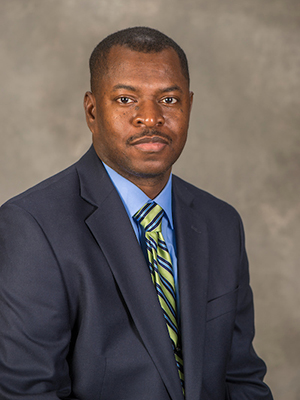
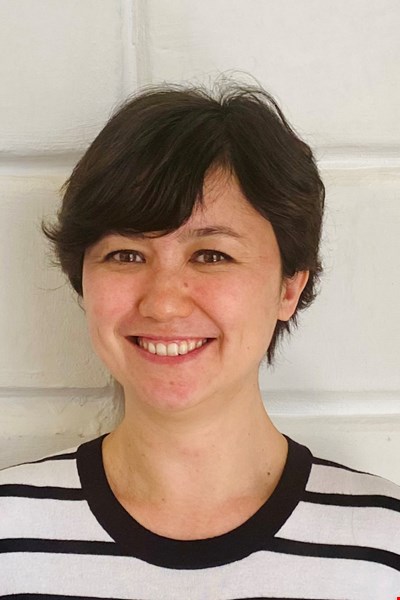
Garth V. Crosby is an Associate Professor at Texas A&M University's Department of Engineering Technology and Industrial Distribution within the College of Engineering. He is also affiliated with the Multidisciplinary Engineering program. His research focuses on IoT and IIoT security, cyber-physical systems, and STEM education innovation. Crosby holds a Ph.D. in Electrical Engineering from Florida International University (2007), an M.S. in Computer Engineering, and a B.S. in Electronics (Applied Physics) from the University of the West Indies. His work spans cybersecurity frameworks for emerging technologies, including blockchain-based federated learning, post-quantum cryptography, and IoT threat mitigation. He has contributed to educational advancements through online lab design and faculty efficacy studies in hybrid learning environments. Crosby's recent publications emphasize securing robotic IoT systems, supply chain blockchain applications, and ransomware evasion techniques using generative AI. His research portfolio includes over 40 peer-reviewed articles in journals like IEEE Transactions and conferences such as ASEE and FiCloud. Key themes include volunteer cloud reliability models (ProTrust), edge computing security, and educational technology evaluation. Crosby's interdisciplinary approach bridges engineering systems with pedagogical innovation, addressing both technical and human factors in modern technological challenges.
Dr. Glenn Matthews is a Senior Lecturer in the School of Engineering at RMIT University, specialising in Electrical and Computer Engineering. He holds positions in both academic and research capacities, including Principal Investigator roles at CSIRO and Smart Services CRC. His teaching responsibilities include coordinating undergraduate courses such as Introduction to Engineering Computing and Engineering Design modules. Dr. Matthews' research focuses on high-performance computing, acoustic wave device modeling using Finite Element Method (FEM), and embedded system design. Notable projects include developing FEM software for SAW device analysis and investigating asynchronous computing architectures for high-throughput systems. He has supervised numerous research projects spanning machine learning applications in clinical analysis, gas sensing technologies, and neuromorphic learning. His work integrates hardware-software co-design principles, with contributions to radar SLAM systems, mercury vapor sensors, and neural network frameworks like SwiftSpike. Dr. Matthews collaborates with industry partners through ARC Linkage Grants and maintains affiliations with IEEE and DSP/Embedded Systems groups. His research outputs include over 20 peer-reviewed articles, with impactful contributions to sensor technology, circuit design, and biomedical applications.
Emma Lejeune is an Assistant Professor of Mechanical Engineering at Boston University, affiliated with the Synthetic Biology and Tissue Engineering & Mechanobiology research groups. Her office is located at 730 Commonwealth Ave., EMA 209, and she can be reached at elejeune@bu.edu . She leads the Lejeune Lab , focusing on computational mechanics applied to biological systems. Education: Ph.D., Stanford University Research interests center on leveraging computational mechanics to study multiscale phenomena in biological systems, particularly integrating data-driven and physics-based models. Key areas include heterogeneous soft tissue mechanics, biomechanics, and machine learning applications in mechanics. Her work emphasizes open science, with contributions to benchmark datasets like the Mechanical MNIST collections and open-source software tools such as SarcGraph and MicroBundleCompute . Notable awards include the American Heart Association Career Development Award and the David R. Dalton Career Development Professorship . Her research is supported by grants from the NSF, Office of Naval Research, and Boston University’s Dean’s Catalyst Award. Lab activities include hosting Closer Look Journal Club and contributing to open-access datasets. Current projects explore mechanics of cardiac microtissues, fracture simulations, and machine learning in material science.
Nicola Kolb is a research associate at the Chair of Software and Systems Engineering at Technical University of Munich (Prof. Pretschner). His research focuses on testing criteria and case generation for automated and autonomous driving systems, emphasizing scenario-based testing approaches. He holds a Master's degree in Robotics, Cognition, Intelligence from TU Munich and a bachelor's in Automotive Computer Science via BMW Group's Speed-Up program. Education: Master of Science in Robotics, Cognition, Intelligence (TU Munich) Bachelor of Science in Automotive Computer Science (TU Munich, BMW Group collaboration) Research Interests: Scenario-based testing, autonomous systems safety, automotive software validation, and cyber-physical systems. He explores test case generation, automated driving system evaluation, and data-driven methodologies for testing. Teaching: Involved in courses like 'Advanced Topics of Software Testing' and 'Automotive Software Development' since 2021, collaborating with fortiss on system engineering projects. Presentations: Delivered talks at IEEE ITSC (2021-2023), AutoTest 2022, and BMW Summer School 2024, focusing on scenario-based testing methodologies and autonomous vehicle validation.
Jordan Knapp-Wilson is a Researcher affiliated with the Institute of Plant Breeding, Genetics and Genomics (IPBGG) within the College of Agricultural & Environmental Sciences. Their work focuses on advancing 3D phenotyping techniques for fruit tree architecture using terrestrial laser scanning (TLS) and computational modeling. Specializes in peach tree morphology and crown architecture analysis Develops novel quantitative indices for plant phenotyping Applies TLS technology for high-resolution agricultural monitoring Recent research emphasizes computational modeling of tree architecture to improve genetic trait mapping and precision agriculture strategies. Their work bridges plant biology with advanced imaging technologies to enhance crop breeding programs. Focus areas: Genotype-phenotype correlations, precision phenotyping, agricultural robotics integration
UnivProf.Dr. Delphine Reinhardt is a Professor of Computer Science at the University of Göttingen, serving as Head of the Computer Security and Privacy group and Head of the Dean's Office of the Faculty of Mathematics and Computer Science. She is a core member of the Institute of Computer Science and the Campus Institute Data Science (CIDAS). Her work focuses on privacy engineering in emerging technologies like smart devices, extended reality (XR), and human-robot interaction. Research interests include privacy-preserving computation, IoT security, and ethical AI applications. Her recent work explores privacy challenges in smart speakers, telepresence robots for hospitalized children, and cross-platform XR privacy solutions. She leads multiple courses on security and privacy, including advanced seminars and lab internships. Her publications analyze user privacy perceptions across cultures and technologies, with a focus on quantifying privacy risks in smart environments. She actively contributes to standards through leadership roles, balancing academic research with institutional governance responsibilities. Lab affiliations include the Computer Security and Privacy research group, which develops tools like PrivXR and SensitivAlert. She collaborates on EU-funded projects addressing privacy in smart workplaces and autonomous systems.
Dr. Anthony Bartel is an Adjunct Industry Fellow at the School of Social Sciences, Media, Film and Education, Swinburne University of Technology. He teaches Physics, Electronic Instrumentation, and Multimedia Technology to undergraduate and postgraduate students across science, engineering, games, and multimedia disciplines. He has coordinated multiple subjects and courses in these areas. His educational background includes an undergraduate major in Physics, a Master's involving instrumentation for balloon-borne x-ray astronomy, and a PhD in neutron physics instrumentation development. Undergraduate: Physics Master's: Instrumentation for Balloon-Borne Astronomical X-Ray Observatory PhD: Instrument Development for Neutron Physics Experiments Dr. Bartel's research spans Artificial Intelligence, Curriculum and Pedagogy, Control Engineering, Mechatronics, Robotics, and Music Education Technology. His work emphasizes the use of AI and serious games to enhance deliberate music practice and self-regulated learning. He explores feedback models, incentive systems, and progression design in mobile music games to improve educational outcomes. His recent publications (2010–2021) demonstrate a strong trend toward integrating AI with music education, particularly in generating adaptive sight-reading exercises and analyzing percussive sounds. The research bridges computer science, education, and acoustics, focusing on intelligent tools for music practice and systematic sound description. He is available to supervise PhD students and has previously supervised doctoral research in intelligent music tools and percussive audio lexicons. Intelligent Tools for Deliberate Music Practice: Evolving Targeted Sight Reading Exercises (2015–2019) The Percussive Audio Lexicon (2014–2015) Dr. Bartel has not received any publicly listed scientific awards. His teaching and research are supported through institutional roles and collaborative projects in educational technology and instrumentation. He is involved in interdisciplinary teams working on serious games for music education and AI-driven learning systems, contributing expertise in instrumentation, signal processing, and pedagogical design.
Prof. Dr.-Ing. André Borrmann is an academic leader at the Technical University of Munich (TUM) , where he has headed the Chair of Computing in Civil and Building Engineering since 2011 (formerly Computational Modeling and Simulation). He serves as Director of the TUM Georg Nemetschek Institute - AI for the Built World since 2025 and Spokesperson for the Leonhard Obermeyer Center since 2013. Research Interests Artificial Intelligence in Civil Engineering Digital Twinning Building Information Modeling (BIM) Pedestrian Dynamics Knowledge Representation Construction Simulation His work focuses on AI application across the built environment lifecycle - from generative design to maintenance prediction - with significant contributions to BIM standardization and buildingSMART International IFC extensions. He co-authored the German Ministry of Transport BIM Roadmap and led the BIM4INFRA2020 project. Awards include the 2024 Konrad Zuse Medal and multiple best paper awards at international conferences.
Maurizio Leotta is an Assistant Professor in Computer Science at the University of Genova, Italy, where he has been employed since 2018. He is a member of the Department of Computer Science, Bioengineering, Robotics, and Systems Engineering (DIBRIS) within the School of Mathematical, Physical and Natural Sciences. Additionally, he serves on the School Council and the Department Board of DIBRIS. Dr. Leotta received his PhD in Computer Science from the University of Genova in 2015, with a thesis on Automated Web Testing under the supervision of Prof. Filippo Ricca. His doctoral work was revised by Prof. Massimiliano di Penta (Università del Sannio, Italy) and Prof. Ali Mesbah (University of British Columbia, Canada). Before his academic career, he worked as an IT Technician in various companies and participated in research and industrial projects funded by organizations such as Finmeccanica S.p.A. and the Italian Space Agency. Dr. Leotta's primary research focuses on Software Engineering, with particular emphasis on Test Automation, which is his main research topic. He collaborates with Prof. Paolo Tonella from USI, Switzerland on this area. His other significant research interests include Empirical Software Engineering, Requirements Engineering, Business Process Modelling, and Model-Driven Software Engineering. His work often addresses practical challenges in web and mobile application testing, with a growing interest in applying AI and gamification techniques to improve software testing processes. His recent publications demonstrate a strong trend toward integrating artificial intelligence with traditional software testing methodologies, particularly in end-to-end web testing. He has made significant contributions to improving test robustness, addressing flakiness in test execution, and developing tools for better test maintenance. His work also shows increasing interest in gamification approaches to engage developers and students in software testing activities, as well as applications of large language models to enhance test automation. Dr. Leotta has received multiple prestigious awards for his research, including: Best Paper Award at ICST 2025 (Short Papers, Vision and Emerging Results) Distinguished Paper Award at ICST 2023 (Industry Papers) Best Paper Award at QUATIC 2022 (Full Papers) Best Paper Award at ICST 2022 (Demo and Testing Tool Papers) Best Paper Award at QUATIC 2020 (Full Papers) Best Student Paper Award at ICWE 2016 (Full Papers) Dr. Leotta has advised numerous graduate students, including three PhD candidates who have completed their degrees (Andrea Fasciglione in 2024, Dario Olianas in 2023, and Diego Clerissi in 2020). He currently supervises multiple Master's students working on topics related to software testing, web accessibility, and AI applications in software engineering. He has also served as a postdoctoral advisor for researchers including Diego Clerissi and Dario Olianas. Beyond advising, Dr. Leotta has secured research funding through collaborations with industry partners and has been involved in multiple research projects focused on software testing and verification. He co-directs the Software Engineering for Healthcare (SEH) Laboratory, which has been partially supported by Janssen Italia (previously by Actelion Pharmaceuticals Italia). The lab focuses on applying software engineering techniques to healthcare applications, particularly in the areas of wearable technology for patient monitoring and medical data analysis. Dr. Leotta is also active in the Gamify research community, organizing workshops on gamification in software development, verification, and validation.
Dan Steinberg is a senior research scientist and team leader of the Decisions & Statistical Learning team at CSIRO Data61 in Canberra, Australia. His expertise lies in probabilistic machine learning, variational inference, Bayesian deep learning, causal inference, and their application to domains spanning synthetic biology, geospatial analytics, and algorithmic fairness. Education PhD in Computer Vision / Machine Learning (2013) – University of Sydney, Australian Centre for Field Robotics Bachelor of Engineering (Mechatronics, First-Class Honours) – University of Sydney (2008) Bachelor of Commerce (Finance) – University of Sydney (2008) Research Interests Steinberg’s core research agenda revolves around building scalable probabilistic models that can learn efficiently from limited or noisy data and provide principled uncertainty estimates. Key themes include: Variational Inference & Bayesian Deep Learning: developing lightweight yet powerful algorithms for approximate posterior inference in complex models (e.g., Aboleth, Revrand). Active Learning & Experimental Design: creating methods that decide which experiments or measurements will maximise information gain, with recent focus on in-silico protein engineering via Variational Search Distributions (VSD). Causal Inference: leveraging machine-learning tools to perform robust observational causal studies for evidence-based policy, including work on youth well-being and academic outcomes. Algorithmic Fairness: translating normative notions of equity into quantifiable objectives for regression-based decision systems. Large-scale Spatial Analytics: Landshark—an open-source TensorFlow toolkit for supervised learning on massive geospatial raster datasets. Notable Software & Tools Aboleth: A minimal-overhead TensorFlow framework for Bayesian deep learning. Landshark: Command-line tools for large-scale spatial inference. Revrand: Scalable Bayesian generalised linear models with non-conjugate likelihoods. libcluster: Extensible C++ library for hierarchical Bayesian clustering. Scientific Awards Oral Presentation Award – ICML 2025 Workshop on Scaling up Intervention Models (SIMS) Oral Presentation Award – NeurIPS 2024 Workshop on Bayesian Decision-making and Uncertainty (BDU) Oral Presentation Award – NeurIPS 2023 Workshop on Adaptive Experimental Design and Active Learning Spotlight Paper Award – NeurIPS 2014 (Extended and Unscented Gaussian Processes) Research Team & Collaborations As Team Leader – Decisions & Statistical Learning at CSIRO Data61, Steinberg directs a multi-disciplinary group that partners with government agencies (e.g., Jobs and Skills Australia, Australian Institute of Health and Welfare) and industry to deploy machine-learning solutions at scale. He has previously held roles as Principal Researcher at Gradient Institute (2019-2023), Senior Research Engineer at CSIRO Data61 (2016-2019), Researcher at NICTA (2013-2016), and Research Associate at the University of Sydney (2012-2013).
Patrik Voštinár is an Assistant Professor at the Department of Computer Science , Faculty of Natural Sciences , Matej Bel University . Holding a PhD in Applied Computer Science from the same university (2014-2017), he teaches courses in Programming , Discrete Mathematics , Web Technologies , and Android Programming . As department head and study advisor, he actively shapes academic programs and student experiences. Matej Bel University (2017-present) Department of Computer Science Faculty of Natural Sciences His research focuses on computer science education and educational technology , with particular emphasis on: VR/AR applications in teaching Game-based learning environments Microcontroller programming pedagogy Mobile application development education Physical computing tools for K-12 Adaptive learning interfaces His work with MakeCode , micro:bit , and EEG-controlled games demonstrates innovative approaches to programming education. He has received multiple eLearning competition awards for educational courseware development. Heart on the palm (Project of the year 2019) 2nd price in eLearning competition (2023) for Discrete Mathematics course Price of České společnosti pro systémovou integraci (2023) for Web Technologies 1st price in eLearning competition (2023) for Geometry Didactics Voštinár actively contributes to academic communities through: Membership in DIDINFO conference program (since 2017) Editorial Board member of Elementary Mathematics Education Journal Organizing workshops for primary/secondary students Popularizing informatics through extracurricular programs
Alauzen Marie is a CNRS Research Fellow at LAMSADE, a research laboratory affiliated with Paris Dauphine University. Her work bridges the fields of sociology, law, and technology studies, with a particular focus on the social implications of digital systems and algorithms. Her research interests include: Sociology of science and technology Sociology of state and law Anthropology of writing and reading Dr. Marie's scholarly work examines the intersection of technology, governance, and social practices. Her recent publications explore how digital systems shape citizenship, public policy, and professional practices in various domains including housing benefits administration, surgical environments, and algorithmic governance. Her research demonstrates a consistent focus on making visible the often-hidden social dimensions of technological systems. Her notable publications include studies on IT citizenship through public source code examination, the politics of programming choices in social welfare systems, the transformation of surgical practices through robotic technologies, and the challenges of achieving algorithmic transparency and explainability. Dr. Marie's work is characterized by interdisciplinary collaboration, as evidenced by her co-authorship with researchers from diverse fields including computer science, law, and medicine. Her research has practical implications for policymakers, technologists, and social scientists seeking to understand and shape the relationship between technology and society.
Gulsen Tore Yargin serves as Senior Lecturer in Design and Innovation Strategy at Brunel Design School within Brunel University London's College of Engineering, Design and Physical Sciences. Previously, she held Assistant Professor of Industrial Design position at Middle East Technical University where she directed the METU/BILTIR-UTEST Product Usability Unit. Her academic journey includes postdoctoral research at University of Cambridge Engineering Design Centre following a PhD focused on user research communication methodologies. PhD: Effective Communication of User Research Findings (University of Cambridge postdoctoral work) Postdoc: Engineering Design Centre, University of Cambridge Assistant Professor: Middle East Technical University (Industrial Design) Dr. Tore Yargin's research spans human-centered design in emerging technologies with emphasis on UX research methods, conversational agents, sensor-based innovations, and wellbeing design. Her work bridges academic theory with industry applications across white goods, home electronics, automotive, and defense sectors. Recent publications demonstrate methodological innovation in remote research during crises, animal-computer interaction, and voice interface design for diverse populations. Analysis of her 15 most recent publications reveals strong interdisciplinary trends connecting design theory with psychology, animal behavior, and public health. Key thematic clusters include pandemic-adapted research methodologies (2020-2023), animal laterality studies (2023-2024), and conversational agent design for elderly populations (2023). Her work consistently applies human-centered principles to novel contexts while developing new measurement frameworks. No scientific awards are currently documented in available sources. Dr. Tore Yargin has secured multiple research grants including TÜBİTAK-funded projects on remote UX research during COVID-19 and canine stress behavior analysis, plus industry collaborations with Arcelik-Beko on voice interfaces. Her co-author network spans veterinary science, psychology, and design fields including Dr. Dominik Havsteen-Franklin and Dr. Cristina Asenjo Palma. Current projects focus on technology-mediated human-canine interactions and remote research methodologies. Her research operates through interdisciplinary collaborations rather than dedicated physical labs, with emphasis on field-based studies in domestic and public settings. Current work explores canine wellbeing through non-invasive measurement techniques and voice interface adoption in emerging markets.
Chris Hartley, M.D. is a Physician Scientist at Mayo Clinic's Department of Laboratory Medicine and Pathology, specializing in gastrointestinal and liver pathology, cytopathology, and pancreatobiliary cytology. He completed his MD at Wake Forest University School of Medicine (2012) and fellowships at Washington University School of Medicine (2018) and University of Wisconsin Hospital (2017). 2018 Fellow - Liver and Gastrointestinal Pathology 2017 Fellow - Cytopathology 2016 Resident - Anatomic & Clinical Pathology Hartley's research integrates artificial intelligence with cytopathology and histopathology , focusing on improving diagnostic accuracy for pancreatic ductal adenocarcinoma, colonic graft-versus-host disease, and hepatocellular carcinoma. His work explores AI-driven tools for bile duct brushing evaluation and spatially resolved iron quantification in liver samples. Recent publications highlight his leadership in digital pathology and AI applications across gastrointestinal, hepatic, and pulmonary diseases. Key trends include: AI for histologic differentiation in cancers Cytomorphologic studies of rare neoplasms Molecular marker analysis in transplant-related pathologies Scientific recognitions include: 2019 'Good Catch' Patient Safety Award 2017 Young Investigator Award - Cancer Cytopathology 2015 USCAP Abstract Award Runner-up As a member of the Rodger C. Haggitt Gastrointestinal Pathology Society and American Society for Clinical Pathology, Hartley contributes to precision medicine initiatives and multidisciplinary cancer care teams.
Javid Jooshesh serves as a Lecturer and Researcher at Amsterdam University of Applied Sciences, affiliated with the Digital Product Research Group and Robot Lab - Digital Production Research Group. His work bridges academic research with industrial applications in sustainable manufacturing. Research focuses on Circular Design, Robotic Fabrication, and Waste Wood Utilization through Industry 4.0 technologies. Key interests include Digital Twins for material optimization, robotic 3D printing protocols, and circular workflows for residual wood in interior design. His fingerprint analysis shows strong specialization in Quality Material Engineering and Robotic Fabrication. Publications (2022-2025) demonstrate consistent innovation in circular wood systems, particularly through API development for design-to-production workflows and robotic stool fabrication using waste wood. Research increasingly integrates Digital Twins with physical production systems. No scientific awards were documented in source materials. Jooshesh contributes to education through the Minor Robotic Production & Circular Materials program and co-organizes industry workshops like the Circular Wood Digital Design Workshop. He actively participates in the Circular Wood 4.0 Consortium, facilitating knowledge transfer between academia and wood industry stakeholders. As core member of HvA's Robot Lab, he develops infrastructure for digital production research. Current initiatives focus on scaling circular wood solutions through the Consortium's industry partnerships and advancing Digital Twin applications in material testing.