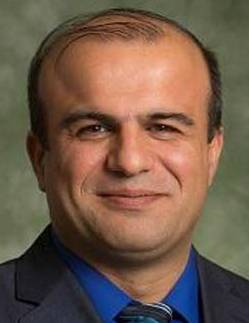
Spyros Reveliotis is a Professor at the Stewart School of Industrial & Systems Engineering within the College of Engineering at Georgia Institute of Technology. His work bridges theoretical advancements with practical applications in automation and control systems. Education : PhD in Industrial Engineering (University of Illinois at Urbana-Champaign), B.Sc. in Electrical Engineering (National Technical University of Athens), M.Sc. in Computer Systems Engineering (Northeastern University) Reveliotis focuses on discrete event systems theory , emphasizing control of flexible automation and traffic management for multi-agent systems. His research integrates machine learning and Markov decision processes to optimize scheduling and coordination in complex environments like robotics and manufacturing systems. Recent trends in his publications address deadlock avoidance , min-time coverage in constrained spaces, and liveness enforcement for transport systems. These works often leverage combinatorial optimization and graph theory for scalable solutions. Scientific Awards : IEEE Fellow As a core faculty member of the Institute for Robotics and Intelligent Machines (IRI) , Reveliotis contributes to interdisciplinary robotics research. His affiliations with professional societies like INFORMS reflect his impact on operations research and automation fields.
Dr Thamo Sutharssan is a Senior Lecturer at the University of East London within the Department of Engineering & Construction, School of Architecture Computing and Engineering. A Chartered Engineer and Chartered Manager, he leads both the BEng Aeronautical Engineering and BSc Railway Engineering programs, leveraging extensive prior experience at the University of Portsmouth, Havering College, Derby College, and Rolls-Royce Aerospace Academy. His academic qualifications include a BSc in Electrical & Electronic Engineering, an MSc in Aeronautical Engineering, and a PhD in Computing and Mathematics. Dr Sutharssan's research spans Aeronautics, Embedded systems, System integration, Machine learning, and Prognostics and Health Management (PHM). His work addresses critical reliability challenges in engineering systems, with significant contributions to fuel cell monitoring (2017 review cited 261 times) and data-driven PHM approaches (2015 review cited 145 times). Recent publications demonstrate expansion into AI-driven medical imaging and autonomous robotics. His publication trajectory reveals consistent expertise in prognostics evolving toward cutting-edge AI applications, with highly influential reviews establishing foundational methodologies now widely adopted in energy systems and electronics reliability engineering. Scientific recognition includes: Fellow of the Higher Education Academy Research leadership encompasses a £177,500 Knowledge Transfer Partnership project on fuel cell Balance of Plant systems, alongside academic service as Review Manager for the Prognostics and Health Management Society conferences since 2014. His industry collaborations include Scottish and Southern Energy and Sustainable Energy Technologies. Current academic partnerships involve Heriot-Watt University and New Mansoura University (Egypt), focusing on energy systems integration and engineering education development.
Michael M. Zavlanos is the Yoh Family Professor in the Thomas Lord Department of Mechanical Engineering and Materials Science at Duke University's Pratt School of Engineering. He also holds secondary appointments in the Department of Computer Science and the Department of Electrical and Computer Engineering. Currently serving as the Director of the Healthcare Systems Optimization program with Duke AI Health and as an Amazon Scholar with Amazon Robotics, his academic career spans control theory, optimization, and artificial intelligence with applications across multiple domains. Dr. Zavlanos received his educational foundation from prestigious institutions: Diploma in Mechanical Engineering from the National Technical University of Athens (NTUA), Greece (2002) M.S.E. in Electrical and Systems Engineering from the University of Pennsylvania (2005) Ph.D. in Electrical and Systems Engineering from the University of Pennsylvania (2008) His research program spans multiple interconnected domains, with a strong foundation in control theory, optimization, and learning methodologies . This theoretical work directly enables applications in robotics and autonomous systems , where his team develops algorithms for multi-robot coordination, motion planning under complex constraints, and network connectivity maintenance. A significant portion of his work addresses networked and distributed control systems , focusing on how multiple agents can coordinate effectively with limited communication. More recently, he has expanded his research into cyber-physical systems with healthcare applications, leveraging his expertise to optimize healthcare delivery systems through the Duke AI Health initiative. Dr. Zavlanos' work demonstrates a consistent trajectory from theoretical foundations to real-world applications. His early work established fundamental principles for maintaining connectivity in mobile robot networks, which evolved into more sophisticated approaches for temporal task planning and risk-averse decision making in uncertain environments. The most recent phase of his research integrates machine learning with traditional control theory to address complex healthcare system optimization problems. His significant contributions to the field have been recognized through prestigious awards: Office of Naval Research Young Investigator Program (YIP) Award (2014) National Science Foundation Faculty Early Career Development (CAREER) Award (2012) National Science Foundation Faculty Early Career Development (CAREER) Award (2011) Duke University Distinguished Faculty Rank (2019) Duke University Distinguished Professor designation (2018) As an educator, Dr. Zavlanos has taught courses including ME 627: Linear System Theory, ME 592: Research Independent Study, ECE 391/291: Projects in Electrical and Computer Engineering, and CEE 627: Linear System Theory. His research program has been supported by multiple grants from the National Science Foundation and the Office of Naval Research, enabling him to mentor numerous graduate students and postdoctoral researchers in the development of cutting-edge control and optimization algorithms. Dr. Zavlanos leads research efforts at the intersection of control theory, optimization, and artificial intelligence, with particular focus on translating theoretical advances into practical applications. His recent work with Duke AI Health represents a strategic expansion of his research portfolio into healthcare systems optimization, where he applies his expertise in algorithmic decision making to improve patient scheduling, resource allocation, and operational efficiency in medical settings. Through his Amazon Scholar role, he also contributes to advancing robotics technologies for real-world applications.
Lise Justesen is an Associate Professor at the Department of Organization, Copenhagen Business School . She holds a PhD from CBS and a Master's in Philosophy from the University of Copenhagen. Her research focuses on digitalization , invisible work , and the interplay between accounting and organizing , grounded in Actor-Network Theory and qualitative methods . Co-author of Digitalization and Invisible Work (2025), a critical examination of unforeseen consequences of AI implementation in public sector organizations Supervisor for PhD candidates across CBS departments and the Vienna University of Economics Collaborator with Ursula Plesner on Visibility Management and Digitalization in Public Sector projects Their work reveals recurring themes: digitalization's hidden labor demands , algorithmic accountability challenges , and managerial adaptation to AI systems . They analyze these through ethnographic studies of public sector transformations and critical assessments of predictive algorithms in governance. Justesen's scientific contributions examine how digital systems create new accountability frameworks and redefine professional roles . Their research demonstrates that digitalization produces unanticipated labor patterns , reconfigures human-machine relationships , and generates complex valuation practices in organizational contexts.
Nick Bassiliades is a Professor at the School of Informatics , Aristotle University of Thessaloniki , Greece. His academic roles include serving as President of the Digital Governance Committee and the Digital Transformation of Greek Universities Committee, as well as Director of the Web, Data, and Knowledge Engineering Sector. Education: B.Sc. in Physics, Aristotle University of Thessaloniki (1991) M.Sc. in Applied Artificial Intelligence, University of Aberdeen (1992) Ph.D. in Parallel Knowledge Base Systems, Aristotle University of Thessaloniki (1998) His research focuses on Semantic Web , Ontologies , Knowledge Graphs , and applications in Artificial Intelligence , eGovernment , and Intelligent Agents . Recent publications emphasize ontological frameworks for requirements engineering, explainable AI, and electric vehicle knowledge graphs. He actively contributes to scientific communities as a Senior Member of IEEE and ACM , and serves as Co-Editor-in-Chief for the International Journal of Artificial Intelligence in Business and Management . His work involves collaborations with the Intelligent Systems laboratory and projects like XR4DRAMA for disaster management.
Caroline Margaux Gevaert serves as Associate Professor in the Department of Geo-information Processing at the University of Twente's Faculty of Geo-Information Science and Earth Observation (ITC), while also holding an appointment at the Digital Society Institute. Her academic career spans geospatial information systems, remote sensing, and the ethical applications of AI in geographical contexts. Dr. Gevaert earned her PhD in Informal Settlement Mapping with Unmanned Aerial Vehicles from the Faculty of Geo-Information Science and Earth Observation (ITC) in 2018, following Master's degrees in Geospatial Information Systems from Lund University (2014) and Remote Sensing from Universitat de Valencia (2013), and a Bachelor's in International Land and Water Management from Wageningen University & Research (2011). Her research focuses on the intersection of artificial intelligence and geospatial science, with particular emphasis on ethical dimensions of AI, algorithmic fairness in geo-intelligence workflows, and applications of machine learning for environmental monitoring. She has developed expertise in UAV applications for informal settlement mapping and flood vulnerability assessment, bridging technical innovation with societal impact. Analysis of her recent publications reveals a strong trend toward addressing ethical challenges in geospatial AI, with increasing focus on algorithmic fairness, explainable AI systems, and accountability frameworks. Her work demonstrates a consistent evolution from technical remote sensing applications toward socio-technical systems that consider both technological capabilities and societal implications. PhD Cum Laude (2018) Professor J.M. Tienstra Onderzoeksprijs 2020 Student Paper Competition Finalist (2017) Dr. Gevaert serves as Chair of De Jonge Akademie (2022-2027) and the International Society for Digital Earth (ISDE), while participating in the Frontier Technology Livestreaming Programme. Her external engagement includes consultancy for the World Bank and presentations on accountability in digital humanitarianism, demonstrating her commitment to applying geospatial intelligence for global development challenges. Her research activities center around geo-intelligence workflows, with particular focus on developing accountable and fair AI systems for spatial analysis. Current projects investigate causality frameworks for bias detection in flood vulnerability assessments and explainable workflows for ecological monitoring, positioning her at the forefront of ethical geospatial AI research.
Thomas Potthast is a full Professor for Ethics, History and Theory of Biosciences at the Faculty of Science, Department of Biology at the University of Tübingen. He serves as the Speaker of the International Center for Ethics in Sciences (IZEW) and has held this position since 2014. Since 2016, he has also been the Speaker of the Thematic Area on Sustainability, Protection and Management of Natural Resources within the Excellence Strategy's Platform 3 on Environmental Systems. His academic journey includes a habilitation at the University of Tübingen in 2010, where he received teaching authorization for Ethics, Theory and History of Sciences. Prior to this, he was a Feodor-Lynen Fellow of the Humboldt Foundation at the University of Wisconsin-Madison (2002-2001) and a Post-Doc Research Scholar at the Max Planck Institute for the History of Science in Berlin (1998). Potthast's research focuses on environmental ethics, bioethics, and the philosophical foundations of sustainability science. His work critically examines the relationship between scientific knowledge and ethical decision-making, particularly in the context of nature conservation, biodiversity, and technological interventions in ecological systems. He has made significant contributions to understanding epistemic-moral hybrids in environmental decision-making and the ethical dimensions of sustainability transformations. His recent publications reveal a strong emphasis on the ethical challenges of emerging technologies (including gene drives and affective computing) in relation to environmental sustainability, the role of universities in sustainability transformations, and transdisciplinary approaches to real-world sustainability challenges. His work consistently bridges theoretical ethics with practical applications in conservation and sustainability contexts. As an educator and mentor, Potthast has supervised numerous doctoral and master's students working on diverse topics spanning sustainable development education, animal ethics, nature conservation, and the ethical dimensions of technological interventions in natural systems. He leads the Competence Center for Sustainable Development, which is part of the Excellence Strategy since 2018, and has been instrumental in developing the whole-institution approach to sustainability at the University of Tübingen. His work connects academic research with practical implementation of sustainability principles across the university's operations, teaching, and research activities.
Thorsten Gruber is a Professor of Marketing and Service Management at Loughborough University, where he also serves as Director of the Centre for Service Management. Prior to this role, he was a Senior Lecturer at Manchester Business School. He holds a PhD and MBA from the University of Birmingham. His research focuses on service failure and recovery, frontline employee well-being, customer feedback dynamics, and service robotics. He has also held prestigious visiting positions, including the Anne-Marie and Gustaf Ander Foundation Visiting Professorship at Karlstad University (2015–2017). Gruber’s research interests span transformative service research, complaint management across cultures, and the impact of positive customer feedback on employee well-being. He has presented globally at leading conferences and published in journals like Journal of Service Research and Journal of Marketing Management. His work has been recognized with awards such as the Emerald Literati Network Awards and the Journal of Service Management Robert Johnston Award. His academic contributions also extend to pedagogy, including winning nominations for Teacher of the Year and Researcher of the Year. Gruber co-founded the Centre for Service Management in 2013, fostering interdisciplinary research in service excellence. His recent studies explore AI-driven service accountability, health-seeking behaviors in rural settings, and the ethical integration of service robots. Education : PhD and MBA from University of Birmingham Awards : Multiple Emerald Awards, methods@manchester Competition Winner (2009), Academy of Marketing Research Initiative Award (2008) Key Research Themes : Service Recovery, Customer Feedback Analysis, Employee Well-being, Transformative Service Robotics
Mario Harper is an Assistant Professor in the Department of Computer Science at Utah State University. His research emphasizes Machine Learning, Data Science, Robotics, and their intersections with Finance and Artificial Intelligence. He specializes in autonomous systems, energy-efficient robotics, and AI-driven solutions for transportation and urban sustainability. His work includes developing tools like simulators for electric vehicle systems and stealth-centric navigation algorithms inspired by biological systems. Key research areas include multi-robot coordination, reinforcement learning applications in robotics, and algorithmic approaches to environmental and economic challenges. He has contributed to projects like POSEIDON-SAT for satellite-based fishing vessel detection and electrified transportation equity analysis in urban settings. His publications span topics from trajectory planning in legged robots to AI modeling for economic systems. Beyond research, he designs interactive visualization tools to support policy decisions on sustainable transportation infrastructure. No scientific awards are explicitly listed in the provided information. Mario Harper’s advising and grants focus on robotics, energy systems, and AI applications, though specific student advisees or grant details are not detailed here. He collaborates on projects involving lab tools such as the Unknown Building Exploration Simulator (UBES) and Stealth Centric Autonomous Robot Simulator (SCARS), advancing robotic autonomy in unstructured environments.
Professor Wendy Moyle is a leading academic in dementia care and assistive technologies, affiliated with Griffith University in the School of Nursing and Midwifery . With a PhD from Queensland University of Technology and over 27 completed PhD supervisions, she has received numerous accolades including the 2023 VC Research Excellence Award in Research Supervision and recognition as one of the World's 50 Renowned Women in Robotics (2020). Her work focuses on evidence-based interventions for dementia patients, emphasizing social robotics, pain management, and behavioral symptom mitigation. Bachelor of Nursing, Flinders University (1989) Master of Health Science, Queensland University of Technology PhD, Queensland University of Technology (1997) Her research spans Dementia , Social Robots , and Geriatric Nursing , with a strong emphasis on improving quality of life through technological innovations. Recent publications highlight the role of humanoid robots like Telenoid and PARO in enhancing engagement and managing chronic pain in dementia patients. She has secured significant grants from NHMRC, Wellcome Trust, and international institutions to advance her work. VC Research Excellence Award in Research Supervision (2023) World's 50 Renowned Women in Robotics (Analytics Insight, 2020) International Nurse Researcher Hall of Fame (Sigma, 2019) International Women’s Day 2016 Global Innovation Award As a prolific supervisor, she has guided 27 PhD students to completion, many achieving no/minor revision outcomes. Her collaborative projects span Australia, China, and Taiwan, involving multidisciplinary teams for dementia research. She actively contributes to healthcare policy and education frameworks, particularly in residential aged care and informal caregiver support.
Mohammad T. Khasawneh is a SUNY Distinguished Professor and Director of the School of Systems Science and Industrial Engineering at Binghamton University. He leads the Watson Institute for Systems Excellence (WISE) and the Healthcare Systems Engineering Center. His roles include Director of the Manhattan Graduate Program in Health Systems. Education: BS and MS in Mechanical Engineering from Jordan University of Science and Technology (1998, 2000), PhD in Industrial Engineering from Clemson University (2003). Research focuses on healthcare systems engineering, operations management, and data science. His work optimizes healthcare systems for improved patient outcomes and cost efficiency. Key areas include predictive analytics, hospital resource utilization, and clinical performance improvement. He has generated over $15M in external funding and led projects with U.S. hospital systems. Notable achievements include developing the Executive Master of Science in Health Systems and an MS in Healthcare Systems Engineering. His research has produced 60+ journal articles and 120+ conference papers. Awards include SUNY Chancellor’s Awards for Teaching (2011) and Scholarship (2021), University Awards for Graduate Director (2015) and International Education (2016). He is an IISE Fellow and holds honorary visiting professorships at Hebei University of Technology (China) and Vellore Institute of Technology (India). Grants and funding: $2.5-3M annually via WISE, $39M in software/equipment grants. Lab/Initiatives: Healthcare Systems Engineering Center, WISE, and multiple hospital partnerships.
Johanna T. Gunawan is an Assistant Professor of Computer Science and Law at Maastricht University's Faculty of Law, affiliated with the Law and Tech Lab. Her research bridges human-computer interaction, design, and legal frameworks to address dark patterns, privacy erosion, and consumer protection gaps in digital systems. PhD in Cybersecurity (2024), Northeastern University MS in Cybersecurity (2021), ALIGN Scholar BA in Political Science & International Affairs (2019), Northeastern University Gunawan's research focuses on manipulative interface designs, digital asymmetries, and legal responses to privacy harms. Her work has influenced policy discussions at the OECD, UK Competition and Markets Authority, and US Federal Trade Commission. Industry experience includes cybersecurity roles at Akamai Technologies, Rapid7 LLC, Vimeo Inc., and Common Sense Media. Recent scientific contributions span dark pattern regulation under the EU Digital Services Act, privacy risks in gig economy platforms, and deceptive practices in voice/Social Robot interfaces. She co-leads the CHI 2025 special interest group on transdisciplinary dark pattern research.
Professor Eduardo Alonso is Director of the Artificial Intelligence Research Centre (CitAI) and Department Research Director at City St George's, University of London. His research bridges novel AI techniques with Explainable AI and Artificial General Intelligence, with significant focus on legal and ethical implications. Research spans: Computational neuroscience and evolutionary biology modeling Deep learning architectures for reinforcement learning Mathematical models of emergence in complex systems Industrial AI applications with societal impact Professor Alonso has secured over £1M in funding from Innovate UK, EU EIT-Digital, and US NSF grants. He currently supervises 13 PhD students working on ethical AI, reinforcement learning, and cybersecurity. Recent publications focus on transformer architectures for multi-agent systems, power grid optimization via GNNs, and adversarial robustness in security systems. Awarded the IEEE Computational Intelligence Society Spotlight Paper Award in 2013.
Marinko Sarunic is an Adjunct Professor at the School of Engineering Science , Simon Fraser University . He holds a PhD in Biomedical Engineering from Duke University and has been recognized as a Michael Smith Foundation for Health Research Scholar . His research focuses on biomedical imaging , particularly optical coherence tomography (OCT) , microscopy , and low-coherence interferometry , with applications in diabetic retinopathy , Alzheimer’s disease , and age-related macular degeneration . Dr. Sarunic's work spans adaptive optics , deep learning , and sensorless OCT systems , emphasizing clinical translation and open-source software development (e.g., OCTAVA ). His Google Scholar publications highlight multimodal imaging , vascular heterogeneity analysis , and AI-driven diagnostics for retinal diseases. His contributions include the Michael Smith Foundation for Health Research Scholar award. Though not currently teaching courses, his collaborations and leadership in retinal imaging and medical device innovation are pivotal for advancing non-invasive diagnostics in neurodegenerative and diabetic conditions .
Frank Reichert is a Professor of Mobile Systems at the University of Agder (UiA), affiliated with the Department of Information and Communication Technology under the Faculty of Engineering & Science. He served as UiA's Rector (2016-2019) and Dean of Engineering & Science (2007-2015). With over 30 years in fixed/wireless communication systems, he has led national initiatives like the SFI Offshore Mechatronics Center (200 MNOK budget) and established UiA's Mechatronics Innovation Lab. His industry experience includes roles at Ericsson (1995-2005) and founding Ericsson Cyberlab Singapore (1999). Education : PhD in Electrical Engineering from RWTH Aachen University (Germany). Early career included research at the Royal Institute of Technology (Sweden) and Televerket Radio (Sweden). Research Interests : Focus on mobile communication, e-learning innovation, IoT-driven telehealth, and lifelong learning. His work bridges academia and industry, emphasizing user-centric design, rapid prototyping, and future education technologies. Projects include multi-touch collaborative learning systems, AI-assisted educational tools, and digital health twin architectures. Grants & Leadership : Managed EU projects (e.g., FP4-ACTS OnTheMove, PRO-COM) and served on steering boards for Norwegian and EU research bodies. Current roles include advisor to UiA's strategic initiatives and contributor to national bullying/harassment prevention (UHRMOT). Labs & Teams : Co-founded the Mechatronics Innovation Lab, leading projects in VR rehabilitation solutions and smart healthcare systems. Active in research groups like Multimedia and e-Learning, and ReSex (Research in Sexology).