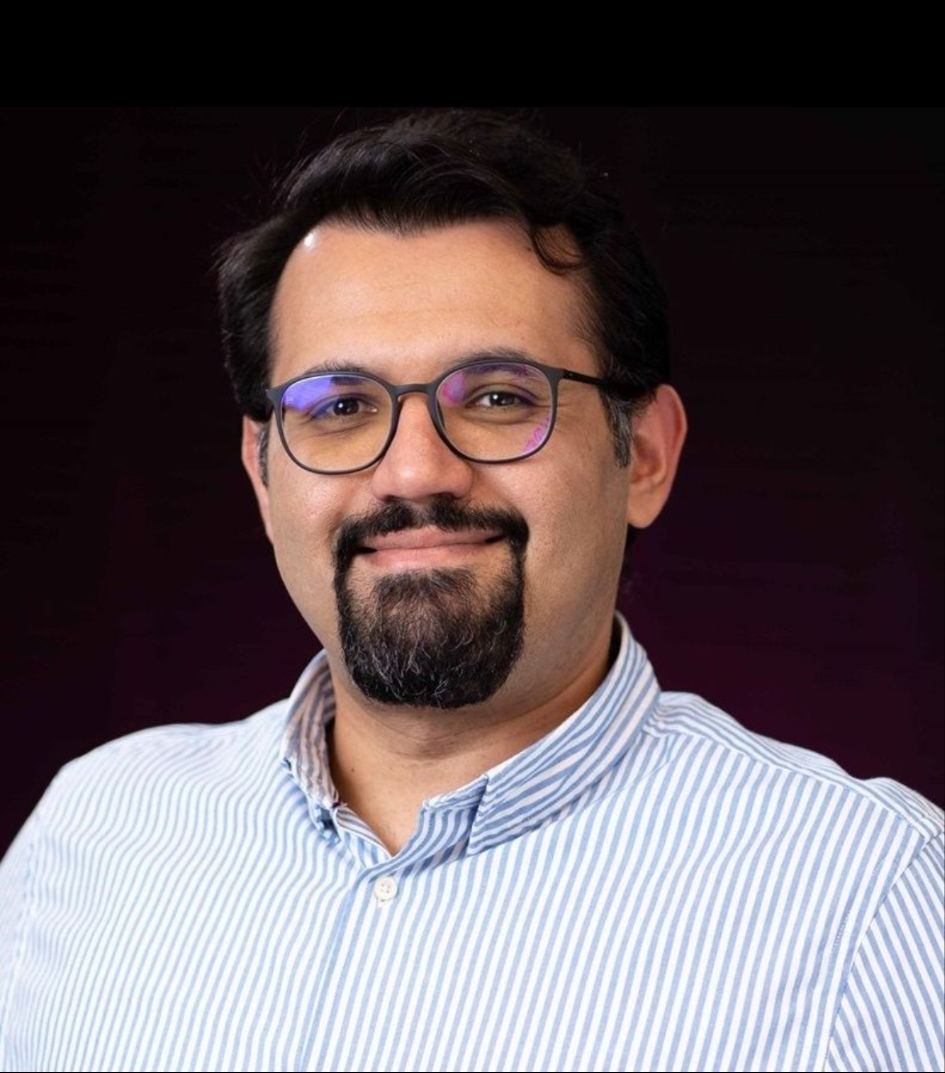
Dr. Ehsan Abbasnejad is an Associate Professor at Monash University's Department of Data Science and Artificial Intelligence, and holds adjunct positions at the Australian Institute for Machine Learning (AIML, University of Adelaide) and the Centre for Augmented Reasoning (CAR). He specializes in foundational AI, focusing on vision-language tasks, adversarial machine learning, and reinforcement learning. His work bridges theory with real-world applications in agriculture, energy, healthcare, and sports. Education: PhD in Computer Science from Australian National University (ANU). Research Interests: Machine Learning Theory and Adversarial Defenses Neural Network Robustness and Generalization Multimodal Learning (Vision-Language) Continual and Transfer Learning Applications in Energy, Healthcare, and Robotics Awards: Finalist for Australian AI Academic/Researcher of the Year (2024) Multidisciplinary competition wins (e.g., OzMineral Explorer Challenge) Advising & Grants: Australian Research Council (ARC) Discovery Project on Reinforcement Learning CSIRO's Next Generation Graduate Fund Accepting PhD students in foundational AI and applications Labs & Teams: Director of Foundational Machine Learning & Reasoning at Monash, leading global teams in AI competitions and industry collaborations (Microsoft Research, NEC Labs America).
Dr. Feras Dayoub is a Senior Lecturer at the School of Computer and Mathematical Sciences (Faculty of Sciences, Engineering and Technology) at the University of Adelaide , specializing in Embodied AI and Robotic Vision within the Australian Institute for Machine Learning (AIML) . He co-directs the CROSSING French-Australian laboratory for human-autonomous agent teaming and holds an Adjunct position at the Queensland University of Technology (QUT) , serving as an Associate Investigator at its Centre for Robotics . Previously, he was a Chief Investigator at the ARC Centre of Excellence for Robotic Vision . His research focuses on advancing reliable deployment of computer vision and machine learning on mobile robots in real-world environments. Applied projects include agricultural automation , environmental conservation , and autonomous infrastructure monitoring . He has published extensively on topics like object detection , domain adaptation , 3D representation learning , and vision-language navigation , with a particular emphasis on robustness in dynamic and partially observed environments. Dr. Dayoub is also an educator specializing in programming , computer vision , and robotic perception . He contributes to open-source robotics research through tools like AARK (Autonomous Racing Toolkit) and has led teams developing solutions for precision agriculture (e.g., Deepfruits fruit detection system) and environmental monitoring (e.g., Crown-Of-Thorns starfish detection ). Key Collaborations : CROSSING Lab, QUT Centre for Robotics Research Themes : Embodied AI, Robust Perception, Domain Adaptation
Julia Powles is an Associate Professor at the UWA Law School and Director of the UWA Tech & Policy Lab. Her research focuses on privacy, intellectual property, internet governance, and the legal and political dimensions of data, automation, and AI. She has led investigations into high-profile cases like the NHS/Google DeepMind data breach and Sidewalk Labs’ smart city project. Currently, she advises on national robotics strategy, responsible AI, and privacy policies in Australia. With a background spanning academia, policy, and law, she holds roles in global committees and contributes to media outlets like the New Yorker and Financial Times. Her work bridges legal frameworks and technological innovation, emphasizing ethical governance and societal impact. Education: BSc (Hons) ANU, LLB (Hons) UWA, BCL Oxford, PhD Cantab. Expertise includes AI ethics, data privacy, and regulatory policy. Recent projects address drone delivery systems, corporate accountability of Big Tech, and governance in health monitoring. Awards include the 40 Under 40 Award for WA (2022) and Poynter Fellowship (2018). Grants include the Children’s Online Safety Program (2024–2027) and Minderoo Foundation initiatives. She chairs the PRIS Universities Network and co-chairs international tech policy summits. Roles: Director, UWA Tech & Policy Lab; Expert on National AI Centre, WA Privacy Committee. Research: Over 100 outputs, focusing on AI governance, corporate liability, and tech ethics.
Dr. Michael Stevens is a Senior Lecturer at University of New South Wales (UNSW) Canberra , where he focuses on advanced manufacturing and biomedical device control systems . His work bridges digital manufacturing for SMEs with smart artificial heart technologies , emphasizing industry collaboration and translational research. Specializes in physiological control systems for rotary blood pumps Develops unobtrusive fall detection systems for dementia patients Leads international projects on total artificial heart development Education : B.Eng (Medical - First Class Honours), Queensland University of Technology (2010) PhD in Physiological Control for Biventricular Assist Devices, University of Queensland (2014) Research Trends show consistent focus on: Machine learning for biomedical diagnostics (2018–2025) mmWave radar and thermal sensors in patient monitoring (2021–2024) Computational fluid dynamics in artificial heart modeling (2016–2024) Physiological control algorithms for rotary blood pumps (2011–2025) Scientific Awards : UNSW Scientia Education Award (2021) for contextual teaching Heart Foundation Runner-up for "Smart Artificial Hearts" pitch (2021) ARC PGC Supervisor Award (2017) for mentoring Grants & Supervision : Holds over $6 million in competitive funding including MRFF and ARC grants. Currently supervises 4 PhD students while maintaining industry partnerships with VitalCare and BiVACOR. Labs & Facilities : Works across UNSW Engineering labs and Graduate School of Biomedical Engineering platforms, including mock circulation loops and high-performance computing clusters for CFD simulations.
Chun Ouyang is a Professor at Queensland University of Technology (QUT) in the School of Computer Science within the Faculty of Science. With an extensive publication record spanning over two decades from 2002 to 2025, Professor Ouyang has established themselves as a leading researcher in Business Process Management, Process Mining, and Explainable AI. Their work bridges theoretical foundations with practical applications across healthcare, finance, and industrial sectors. Professor Ouyang's research interests primarily focus on Business Process Management systems, Process Mining techniques, Explainable Artificial Intelligence, and Healthcare Process Analysis. Their work has evolved from foundational BPMN/BPEL translation research in the early 2000s to sophisticated process mining approaches in the 2010s, and most recently to cutting-edge Explainable AI applications in clinical and business contexts. They have developed novel methodologies for process querying, predictive process analytics, and XAI evaluation frameworks that have significantly advanced the field. Their research consistently emphasizes practical applicability while maintaining strong theoretical foundations, with publications in top-tier journals and conferences including IEEE Transactions, Springer journals, and major BPM conferences. Analysis of Professor Ouyang's recent publications (2023-2025) reveals a strategic research trajectory that integrates traditional process mining with modern AI techniques, particularly focusing on explainability and trustworthiness. Their work demonstrates a consistent pattern of addressing real-world challenges through rigorous methodological development, with increasing emphasis on healthcare applications, clinical decision support systems, and the ethical implications of AI deployment. The publications show strong interdisciplinary collaboration patterns, particularly with medical researchers and industry partners. Professor Ouyang has mentored numerous PhD students and early-career researchers who have gone on to establish themselves in the BPM and AI communities. Their research group at QUT has secured multiple competitive grants supporting innovative work in process analytics and AI. They maintain active collaborations with leading researchers globally, including Catarina Pinto Moreira, Arthur ter Hofstede, and Moe Wynn. Professor Ouyang leads the Process Analytics Research Group at QUT, which focuses on developing advanced techniques for business process analysis, prediction, and optimization. The group maintains strong industry connections with healthcare providers, financial institutions, and government agencies, ensuring their research has practical impact. Current projects include developing trustworthy AI systems for clinical decision support, cross-organizational process analysis frameworks, and next-generation process mining techniques for complex, distributed systems.
Dr. Sasha Rubin is a Senior Lecturer and leader of the Computational Logic for AI (LOGIC-AI) group at the School of Computer Science, The University of Sydney. He holds a PhD in Mathematics and Computer Science from the University of Auckland and previously worked at the University of Naples Federico II. His research focuses on logic foundations of AI, including synthesis, planning, formal methods, and multi-agent systems. He teaches courses like Models of Computation and supervises students in topics like probabilistic systems and reinforcement learning. Research Interests: Mathematical Logic, Formal Verification, Temporal Logic Synthesis, Automated Reasoning, and Multi-Agent Systems. He has published extensively in top venues like IJCAI, AAAI, and ACM Transactions. His work includes verification of agent navigation, strategy logic, and planning under uncertain environments. Awards: Recognized as an Australian Research Field Leader in Theoretical Computer Science (2020). He serves on editorial boards for JAIR and conferences like KR, and organizes events such as the Australasian Association for Logic Conference (2024). Supervision and Grants: Current students include Ethan HIRSCHOWITZ and Kunal OSTWAL. Past supervision spans MPhil/PhD projects on probabilistic systems, ML classifier fairness, and symbolic automata. His grants include studies on logic and robots in anonymous graphs. Professional Activities: Member of EATCS, ACM, and mentor for the Sydney Summer Innovation Programme. He leads the LOGIC-AI lab and collaborates internationally, notably with Giuseppe De Giacomo at Sapienza University of Rome.
Prof. Penny Kyburz is a Professor and Associate Director (Engagement & Impact) at the School of Computing, Australian National University. She leads the GameFlow Lab and teaches Game Development, focusing on AI, human-AI interaction, and game design. Her work bridges academia and industry, with 20+ award-winning games including four BAFTA nominations. She holds a PhD, B.InfoTech(Hons), G.C.Ed.(Higher Ed.), and G.C.Acad.Prac. Education: Ph.D. B.InfoTech(Hons) Graduate Certificate in Education (Higher Education) Graduate Certificate in Academic Practice Research Interests: Video games, game design, and player experience AI and human-AI collaboration Virtual Reality and Mixed Reality applications Technology policy and digital rights Educational games and accessibility Awards: 4 BAFTA nominations for game contributions High critic scores for usability-tested AAA games Grants/Projects: IDEATE (2024–2028) MEC23: Advanced Biometrics (2023) C2 Sociotechnical Collaboration (2022–2024) Role-Based Deception in Games (2020–2021) Her GameFlow model and book on emergence in games are foundational in player experience research. She advocates for diversity in tech and has advised on digital rights in the Senate.
Professor JC Ji is a distinguished academic at the School of Mechanical and Mechatronic Engineering at the University of Technology Sydney (UTS), where he was promoted to Professor on January 3, 2025, after serving as an Associate Professor since January 1, 2016. He serves as the Theme Research Director at the Centre for Audio, Acoustics and Vibration (CAAV) at UTS and is an active member of the Faculty of Engineering and Information Technology. Professor Ji holds a PhD in Mechanical Engineering from Australia and a Graduate Certificate from UTS, along with CPEng NER certification from Engineers Australia since 2018. Professor Ji's research spans multiple interdisciplinary areas with significant practical applications. His primary research interests include Dynamics, Vibration and Vibration Control (focusing on wind turbine dynamics, rotor-bearing systems, and vibration isolation); Machine Condition Monitoring and Asset Management (specializing in fault diagnostics, prognostics, and digital twin-based modeling); Renewable Energy and Sustainability (particularly in vibration-based energy harvesting and battery circular economy); Mechanical and Vehicle Systems; Robotic and Multi-Agent Systems; and Ecological Systems. His work demonstrates a strong integration of theoretical foundations with practical engineering solutions for real-world problems. Analysis of Professor Ji's recent publications reveals a clear research trajectory focused on advanced vibration control systems, condition monitoring techniques, and digital twin applications. His work increasingly integrates machine learning with traditional mechanical engineering approaches, particularly in bearing and gear health management. A significant portion of his recent research focuses on quasi-zero stiffness vibration isolators using innovative structural designs including origami-inspired mechanisms. His publications show strong international impact with numerous high-citation articles in top mechanical engineering journals. Stanford University's World's Top 2% Scientists List for both career-long impact and single-calendar year impact in 2023 and 2024 CPEng NER Chartered Engineers certification from Engineers Australia (2018-present) Professor Ji actively supervises research students and has secured substantial funding for his work, including multiple ARC Discovery and Linkage Projects. He serves as an Associate Editor for Mechanical Systems and Signal Processing (Q1 journal), Journal of Vibration and Control (Q2 journal), and International Journal of Bifurcation and Chaos (Q2 journal). He is also an active assessor for ARC grant applications since 2007 and for international funding bodies including Hong Kong RGC, Belgium FNRS, and New Zealand MBIE. His industry collaborations include projects with Zip Heaters, Alstom Transport, and Coal Services Health and Safety Trust. As Theme Research Director at the Centre for Audio, Acoustics and Vibration (CAAV) at UTS, Professor Ji leads a research team focused on advancing vibration control technologies and their applications. His laboratory work includes developing innovative vibration isolators, condition monitoring systems for industrial machinery, and energy harvesting technologies. The research group maintains strong connections with industry partners to ensure practical implementation of their theoretical advancements.
Professor Farookh Hussain is a distinguished academic at the School of Computer Science , University of Technology Sydney , specializing in Artificial Intelligence , Cloud Computing , and Software Engineering . His research spans diverse sectors including agriculture, manufacturing, healthcare, and transportation. Affiliated with the Australian Artificial Intelligence Institute (AAII) , he leads impactful work in business intelligence and carbon credit systems. Key research areas: AI applications, blockchain for provenance, carbon credit analytics Active in Masters/PhD supervision and cloud computing education Research Highlights : Developed KACINO framework for carbon dynamics modeling Created hybrid cybersecurity frameworks for supply chain risk management Advanced chatbot dialogue breakdown solutions through systematic reviews Proposed hypercomplex knowledge graph recommenders Published extensively on carbon credit price prediction and blockchain storage methods Contributions to water demand forecasting and collaborative robotics adoption Grant Activities : Secured funding from Hampton Capital Asset Management , Innovation Connections , and Science and Industry Endowment Fund Projects include LLM-driven text-to-SQL conversion , blockchain for melanoma data , and AI for storm water management
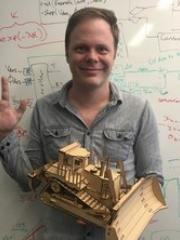
Dr. Tyson Phillips serves as Senior Lecturer and Director of Teaching and Learning at The University of Queensland's School of Mechanical and Mining Engineering within the Faculty of Engineering, Architecture and Information Technology. He is an active Affiliate of the Future Autonomous Systems and Technologies research group, focusing on translating robotics innovations into practical mining applications. His academic leadership includes curriculum development for engineering programs and direct industry engagement with major mining equipment manufacturers. He earned his Doctor of Philosophy (PhD) from The University of Queensland in 2016, with thesis research centered on LiDAR-based perception systems for autonomous excavators. His doctoral work established foundational methods for object pose verification in mining contexts. Phillips' research specializes in robotics perception for extreme mining environments, developing LiDAR-centric solutions for autonomous equipment operation amid dust, fog, and unstructured terrain. Key contributions include evidential reasoning frameworks for uncertainty management, real-time pose estimation algorithms, and sensor fusion techniques for excavators and bulldozers. His work bridges theoretical computer vision with industrial deployment, targeting operational safety and efficiency in mineral extraction. Publication analysis reveals consistent focus on mining robotics since 2012, with recent works (2021-2024) emphasizing minimal-sensor configurations, probabilistic terrain mapping, and vibration-assisted gripper technology. His 14 scholarly outputs demonstrate evolution from sensor evaluation (2012-2015) toward integrated autonomy systems (2018-2024), predominantly in Journal of Field Robotics and Sensors . He actively supervises graduate researchers as Principal Advisor for a PhD on multimodal perception mapping and Associate Advisor for two PhD projects involving spreader systems and physics-informed neural networks. Completed supervision includes a 2024 PhD on bulldozer terrain mapping and a 2021 Master's on shovel/hopper interaction strategies. Research funding spans 14 projects from 2012-2026, including current Australian Coal Association Research Program support (2025-2026) and major Caterpillar Inc. collaborations for ERS self-protection and articulated truck automation. Phillips operates within The University of Queensland's Future Autonomous Systems and Technologies group, which develops field-deployable autonomy solutions for mining partners. This team conducts real-world testing of perception systems using Caterpillar and FMG operational sites as validation environments.
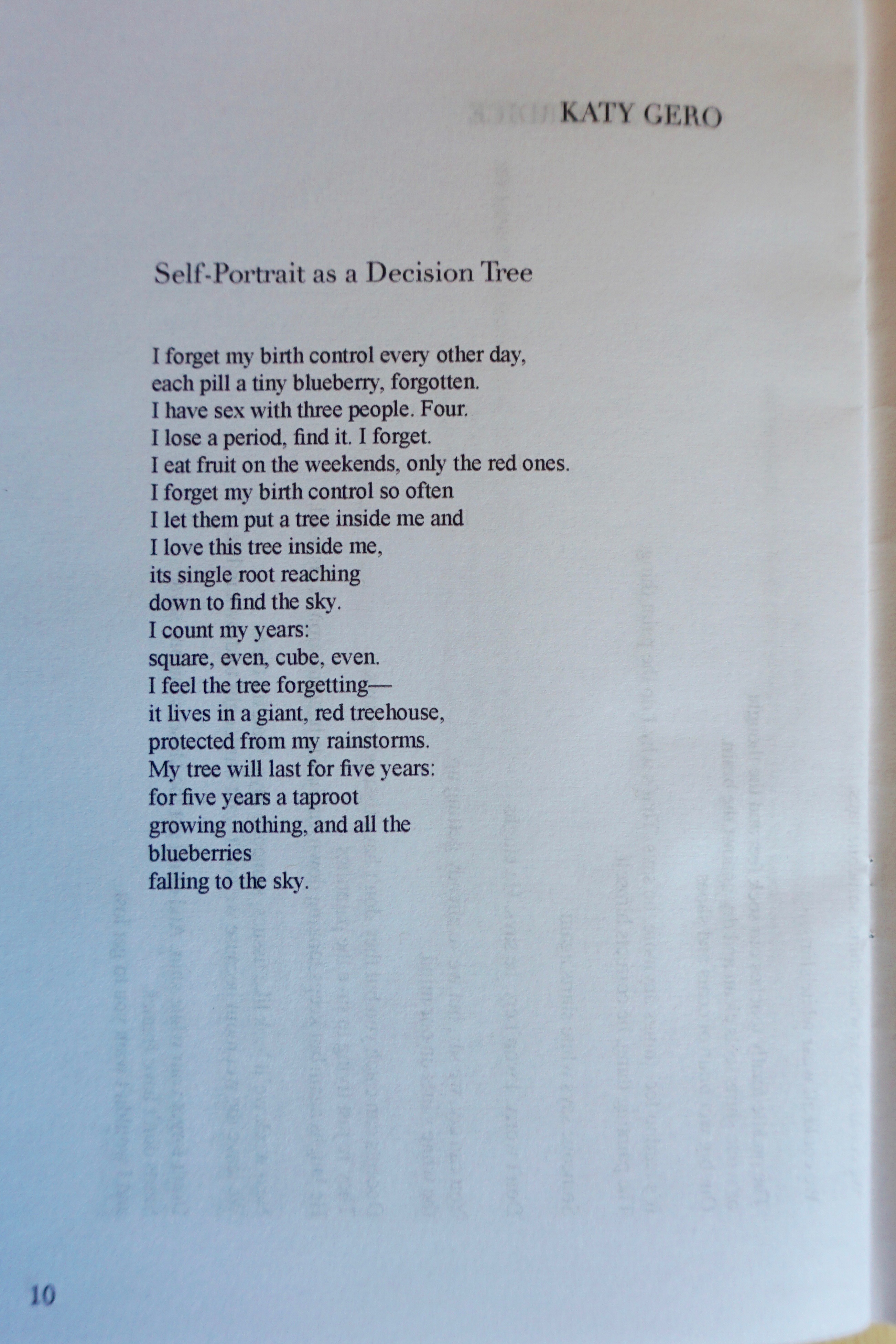
Katy Ilonka Gero is a Lecturer at the School of Computer Science, University of Sydney , with prior postdoctoral roles at Harvard University and the Library Innovation Lab. She holds a PhD in Computer Science from Columbia University (2022) and a BS in Mechanical Engineering from MIT (2017). Education : PhD in Computer Science (Columbia University, 2022); BS in Mechanical Engineering (MIT, 2017) Her research focuses on Human-Computer Interaction in creative domains, particularly how language models impact creative practice, ownership, and learning . She develops community-driven AI models through co-design with creative communities and investigates ethical data governance practices. Recent work includes designing interactive writing tools for metaphor creation and exploring the social dynamics of AI support in writing . The 15 most recent articles reflect trends in AI-augmented creativity (Metaphoria, CHI 2019), AI ethics (Nature Machine Intelligence 2023), and human-AI collaboration (CHI 2020 Best Paper). These works span language model evaluation , creative ownership , and technical innovations in soft robotics (2012) and science communication (2021). Scientific Awards : NSF Graduate Research Fellowship Brown Institute for Media Innovation Grant Amazon Research Award Best Paper - CHI 2025 Honorable Mention - CHI 2024 Best Paper - CHI 2020 As a poet and essayist , she co-edits Ensemble Park , a human-computer co-writing magazine, and authored the dynamic poetry book The Anxiety of Conception (2025). Her grants include support from the National Science Foundation , Brown Institute , and Amazon . For technical details, visit her personal website or GitHub.
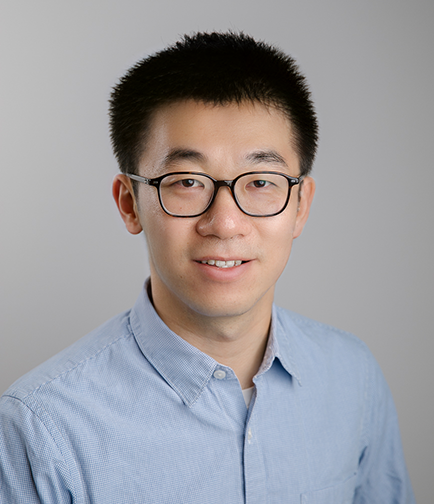
Dr. Dong Gong is a Senior Lecturer and ARC DECRA Fellow (2023-2026) at the School of Computer Science and Engineering (CSE), UNSW. He holds an adjunct position at the Australian Institute for Machine Learning (AIML), University of Adelaide. His research focuses on machine learning challenges in dynamic environments, including continual learning, foundation models, generative models, and applications in interdisciplinary areas like mining and agriculture. Research interests include learning with non-ideal supervision, foundation model adaptation, generative models, and interdisciplinary problems combining CV/ML with domain-specific applications. His work often addresses real-world scenarios such as mineral exploration and soil trait analysis using CV/ML technologies. Outstanding Reviewer: NeurIPS 2018 Outstanding Area Chair: ACM MM 2024 ARC DECRA Fellowship (2023-2026) Advising and grants: Actively supervises PhD/MPhil students in computer vision and ML. Collaborates with industry and government on research projects. Utilizes advanced infrastructure like UNSW's Katana supercomputing cluster and Gadi (NCI). Labs/Teams: Involved in interdisciplinary research groups at UNSW CSE and AIML, focusing on dynamic learning paradigms and real-world applications of AI.
Professor Moe Thandar Wynn is a Co-Director of QUT's Centre for Data Science and holds a Professorship in the School of Information Systems at Queensland University of Technology (QUT). She leads the Process Science Academic Program and serves as the Academic Lead of Research for the School of Information Systems. Her expertise spans Process Mining, Data Quality, and Robotic Process Automation (RPA). Prof Wynn has attracted over AUD 6 million in research funding and holds an h-index of 41 with 8700+ citations. She is a member of the Australian Research Council College of Experts (2023–2025) and has received prestigious awards including the QLD Women in Technology Excellence Award (2024). Her research focuses on formal foundations of process modeling, verification, and automation. She has contributed to international conferences as a co-chair and program committee member, and co-edited special issues on RPA and process dynamics. Prof Wynn collaborates with industries like healthcare, insurance, and agriculture to optimize business processes through data-driven insights. Current research includes privacy-preserving process mining and quality-driven event log enhancement. Education: PhD (QUT, 2006), M. Information Technology (Research, QUT) Key Projects: Hospital Capacity Optimization, Liquid Process Model Collections, Risk-Aware BPM Supervision: Over 10 completed PhD/MSc students in process mining and analytics Awards: Multiple QUT Excellence Awards, ARC College Membership Her lab focuses on advancing process intelligence and RPA, with ongoing efforts in data quality frameworks and process mining standards (e.g., IEEE XES). She actively participates in industry partnerships, such as the CRC Food Agility project, to bridge research and real-world applications.
Professor Jennifer Howell is Pro Vice-Chancellor (Global Engagement) at the University of Western Australia (UWA), overseeing internationalisation strategy and global partnerships. She holds a PhD from Queensland University of Technology and is a Harvard Graduate School of Education alumna. Her research focuses on digital pedagogy, online learning technologies, and the operationalisation of international collaborations. Key interests include digital badging for learning pathways and immersive virtual/augmented learning tools. With 21+ years in higher education leadership, her career spans roles as Associate Deputy Vice-Chancellor (Learning & Teaching) at Curtin University and Dean of Learning & Teaching in the Faculty of Humanities. She has pioneered strategic initiatives like micro-credentials, learning platforms, and offshore campus redevelopments. Howell actively contributes to education policy through roles on national committees including the Australian Council of Deans in Education and the Council for the Humanities, Arts and Social Sciences. Her $1.6M externally funded research explores STEM education through robotics, digital pedagogy frameworks, and accessibility in e-learning. Notable projects include usability studies for adaptive exercise apps and collaborative learning tools for students with disabilities. Howell advocates for embedding technology innovations into operational educational practices to ensure effective transformation. Education: PhD (Queensland University of Technology), Harvard Graduate School of Education Key Roles: Pro Vice-Chancellor (Global Engagement), UWA; Formerly Deputy VC (Learning & Teaching), Curtin Committees: Australian Technology Network (ATN) Universities Australia DVCA Group TEQSA (Tertiary Education Quality and Standards Agency) Grants: $1.6M in external research funding across international collaborations Her advisory work includes school boards (e.g., Lesmurdie Senior High School) and curriculum bodies like the School Curriculum and Standards Authority (SCASA). Howell’s publications emphasize bridging theory-practice gaps in digital learning and leveraging technology for inclusive education.
Dr. Eduardo Benitez Sandoval is a social robotics researcher at UNSW Sydney, affiliated with the School of Arts, Design & Architecture. His work focuses on reciprocity in Human-Robot Interaction (HRI), robots in education and healthcare, and ethical implications of social robotics. He holds a PhD in Human Interface Technology from the University of Canterbury (2016) and a Master's in Industrial Design from UNAM (2012). He has received notable awards including the 1st Place Video HRI Award (2016) and recognition as one of Mexico's 30 Promising Young Mexicans (2015). His research explores decision-making in HRI, robot design principles, and the societal impact of AI. He emphasizes 'robot ergonomics' and 'human-centric design' in creating socially meaningful machines. Current supervision includes two master’s students at UNSW's School of Computer Science and availability to mentor PhD candidates in HRI, social robotics, and interaction design. Teaching includes 'Research Foundations' and 'Human Centred Design' courses. Key research themes include addiction to robots, conflict mediation via robots, and cultural preservation through robotic agents (e.g., Robot Maori Haka project). He advocates for robots 'in the wild' testing, combining quantitative and qualitative HRI evaluation. Collaboration opportunities exist in multidisciplinary projects blending robotics, psychology, and design. His work has led to over 50 publications including designs/architecture works like the 3D-printed social robot prototype (2020). Awards reflect both academic excellence (e.g., Alfonso Caso Medal) and innovation (e.g., Startup Weekend recognition). He actively engages in public discourse via media appearances and maintains professional profiles on LinkedIn, ResearchGate, and Google Scholar.