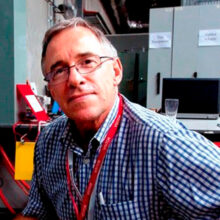
Leon Shpanin is a Senior Lecturer in Electronic and Electrical Engineering at Sheffield Hallam University, where he serves as Course Leader for MSc Automation Control and Robotics. He holds an MSc in Radio Frequency Engineering and a PhD in Electrical Engineering from the University of Liverpool. His research focuses on electrical engineering applications including renewable energy systems, HVDC circuit interruptions, and electromagnetic techniques for current interruption. He received the RAEng Award (2020) for developing next-generation circuit breakers for rail networks. Key projects: Development of Novel Energy Efficient Magnetic Scroll Air Motor (EPSRC) Smart control of multirotor drone propellers for vibration energy harvesting
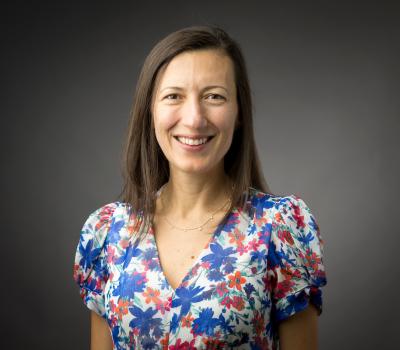
Lama Séoud is an Assistant Professor in the Department of Computer Engineering and Software Engineering at Polytechnique Montréal. She holds a Ph.D. in biomedical engineering from Polytechnique Montréal and has postdoctoral experience in industry and research at the National Research Council of Canada. Her research focuses on computer vision and computational medical imaging, with applications in healthcare, robotics, and industrial settings. She collaborates closely with clinicians, industrial partners, and artists to develop solutions for human motion analysis, medical image processing, and 3D imaging techniques. Educations: Ph.D. in Biomedical Engineering, Polytechnique Montréal (2012) M.Sc.A. in Biomedical Engineering, Polytechnique Montréal Diploma in Biomedical Engineering, École Supérieure d’Ingénieurs de Beyrouth (Lebanon) Research Interests: 3D imaging and analysis, human motion analysis, medical image computing, computer vision, machine learning. Her work integrates deep learning with 3D data acquisition and analysis, addressing challenges in healthcare (e.g., scoliosis, breast asymmetry) and industrial human-robot interaction. Key Collaborations: Centre de recherche du CHU Sainte Justine, Regroupement de recherche en intelligence artificielle appliquée aux enfants gravement malades, Institut Transmedtech, and Institut de génie biomédical. Teaching: INF8725 (Digital Signal and Image Processing), INF8801A (Multimedia Applications), GBM6700E (3D Reconstruction from Medical Images). Grants & Support: Received funding from the Quebec Research Fund for AI and health innovation projects. Labs & Teams: Active in multidisciplinary teams focusing on biomedical imaging, robotics, and AI for clinical applications.
Iro Laina is a Departmental Lecturer in Computer Vision at the University of Oxford's Visual Geometry Group. She holds a PhD (Dr. rer. nat.) from the Technical University of Munich (TUM), where her dissertation earned the ECVA PhD Award. Her research focuses on unsupervised and language-supervised learning for 3D scene understanding, image/video perception systems, and geometric reconstruction. Education: PhD in Computer Science (TUM), MSc in Biomedical Computing (TUM), Diploma in Electrical & Computer Engineering (NTUA). Research Interests: 3D Reconstruction and Generation Unsupervised Learning Multi-View and Video Analysis Generative Diffusion Models Geometry-Aware Networks Her recent work emphasizes scalable 3D scene synthesis, training-free methods, and cross-modal fusion with LLMs. Over 15+ publications since 2021 reflect her leadership in geometric deep learning. Awards: ECVA PhD Award (2020), Recognized in multiple international conferences. Advising: Mentors DPhil students in creative AI applications (e.g., gameplay design). Active in Oxford's Robotics and Biomedical Engineering networks. Labs/Tech: Core member of the Visual Geometry Group, collaborating on projects like IMAD2025 with the ZERO Institute.
Maithilee Kunda is an Associate Professor in the Department of Computer Science and Computer Engineering at Vanderbilt University's School of Engineering. She leads the Laboratory for Artificial Intelligence and Visual Analogical Systems and co-leads the Vanderbilt Initiative for Autism, Innovation, and the Workforce. Her research focuses on AI-driven cognitive systems, particularly visual reasoning and technology applications for neurodiverse populations, including autism spectrum disorder. Dr. Kunda holds a B.S. in Mathematics with Computer Science from MIT (2007) and a Ph.D. in Computer Science from Georgia Tech (2013). She was honored as an MIT Technology Review Innovator Under 35 in 2016 for her groundbreaking work. Her research bridges computational models of visual thinking and real-world impact, emphasizing neurodiverse cognition. Notable projects include developing AI systems for autism-related social skills interventions, designing visual analogy problem-solving frameworks, and advancing nonverbal communication understanding in AI. Her work addresses challenges in abstract reasoning tasks (e.g., Raven's Matrices), visual imagery-based learning, and ethical AI integration. She advocates for inclusive technology design, leveraging both generative AI and cognitive principles to create human-centered solutions. Key awards: MIT Technology Review Innovator Under 35 (2016) Her labs focus on practical AI applications for education, healthcare, and workforce development, emphasizing interdisciplinary collaboration between engineering, psychology, and neuroscience.
Eleonora Vacca is a PhD student and Research Fellow in the Department of Automatic Control and Computer Science (DAUIN) at the Polytechnic University of Turin. She holds a B.S. in Electronic Engineering from the University of Palermo (2018) and an M.S. in Electronic Engineering-Embedded Systems from Politecnico di Torino (2021). Her research focuses on digital hardware design, reliability engineering, reconfigurable devices, and AI applications in aerospace and safety-critical systems. She is a member of the Aerospace and Safety Computing Lab and the CAD - Electronic CAD & Reliability Group (DAUIN). Her work addresses challenges such as radiation effects mitigation in space missions, fault-tolerant AI accelerators, and real-time anomaly detection in satellite telemetry. She has contributed to projects like the RAMSES CubeSat-1 Development (2025-2026), funded by commercial contracts. In 2024, she won the Best Student Paper Award at the NEWCAS Conference for her research on radiation effects in space missions. Vacca collaborates on teaching, including assisting in the course 'Electronic Calculators' for Computer Engineering students. Her recent publications explore AI resilience in RISC-V ecosystems, radiation environment analysis for space missions, and gesture recognition systems for smart cities. She actively contributes to conferences such as the ACM International Conference on Computing Frontiers and the IEEE International Smart Cities Conference.
Prof. Slawomir Stanczak is a Full Professor in Network Information Theory at Technische Universität Berlin and Head of the Wireless Communications and Networks department at Fraunhofer Heinrich-Hertz-Institut (HHI). His expertise spans wireless communications, signal processing, and machine learning, with a focus on 5G/6G networks and reconfigurable intelligent surfaces. He has held visiting roles at RWTH Aachen University and Stanford University, and leads initiatives like the 6G Research & Innovation Cluster and the xG-Incubator project. Education: Dipl.-Ing. in Electrical Engineering, TU Berlin (1998) Dr.-Ing. (summa cum laude), TU Berlin (2003) Habilitation (venia legendi), TU Berlin (2006) Research & Awards: Recipient of the Best Paper Award from the German Communication Engineering Society (2014) Research grants from the German Research Foundation Co-authored over 200 peer-reviewed papers and two books Chair of the ITU-T Focus Group on Machine Learning for Future Networks (2017-2020) Leadership & Projects: Chairman of 5G Berlin association since 2020 Coordinator of 6G Research & Innovation Cluster and CampusOS flagship project Project lead of xG-Incubator (StartUpConnect initiative) Teaching: Offers courses on Machine Learning and Wireless Communication at TU Berlin.
Daniele Loiacono is an Associate Professor at Politecnico di Milano's Department of Electronics, Information, and Bioengineering (DEIB), affiliated with the Artificial Intelligence and Robotics Lab (AIRLab). His research focuses on interdisciplinary applications of Artificial Intelligence, Machine Learning, and Deep Learning in medical imaging, radiation therapy, and procedural content generation for games. He leads projects in synthetic image generation for radiotherapy quality assurance, automated treatment planning, and bias analysis in medical AI systems. Key research areas include medical image synthesis using GANs, radiation therapy optimization, and algorithmic game design. His contributions span clinical applications such as total marrow irradiation (TMI) planning and lymph-node segmentation, alongside innovations in shader generation and interactive evolutionary tools for game development. Loiacono collaborates on multi-center studies to validate AI-driven workflows in healthcare and has pioneered methods combining lean Six Sigma with machine learning for treatment process improvement. His work bridges clinical medicine and computer science, addressing challenges in radiation oncology, anatomical imaging, and procedural content automation. The AIRLab serves as a hub for his research, integrating AI advancements into real-world medical and engineering solutions.
Dr. Lin Wang is a Lecturer in Applied Data Science and Signal Processing at Queen Mary University of London (QMUL), affiliated with the School of Electronic Engineering and Computer Science. He leads the Machine Listening Lab and is a member of the Centre for Multimodal AI, Centre for Intelligent Sensing (CIS), and Institute of Coding (IoC). His research focuses on audio-visual signal processing, robotic perception, and machine learning, with applications in healthcare, drone-based sensing, and human activity recognition. Dr. Wang holds a PhD from Dalian University of Technology and has held postdoctoral positions at QMUL, the University of Sussex, and the Alexander von Humboldt Foundation in Germany. Education and Roles: PhD in Signal Processing, Dalian University of Technology (2010) Postdoc at Queen Mary University of London (2014–2017) Postdoc at University of Sussex (2017–2018) Alexander von Humboldt Fellow at University of Oldenburg (2011–2013) Fellow of the Higher Education Academy (UK) Research Interests: Audio-visual signal processing for drones and wearable devices Machine listening and robotic perception Machine learning for healthcare and environmental monitoring Human activity recognition using multimodal sensors Awards and Grants: Early Career Champion on AI&Data, UK Acoustics Network Outstanding Article Award, Frontiers in Computer Science (2022) EPSRC grant: Bioacoustic Monitoring Using Drones (£46,821, 2022–2023) Innovate UK grant: Music Source Separation (£48,144, 2024–2025) Teaching and Students: Dr. Wang teaches Applied Statistics , Website Design and Authoring , and Machine Learning for Visual Data Analysis . He supervises PhD students including Ashish Alex (speech separation), Michael Clayton (drone audition), and Dmitrii Mukhutdinov (audio-visual processing). Labs and Teams: He co-leads the Machine Listening Lab and is part of the Centre for Multimodal AI, focusing on interdisciplinary projects in robotics, acoustics, and AI.
Isuru Godage is an Assistant Professor in the Department of Engineering Technology & Industrial Distribution at Texas A&M University's College of Engineering. He holds affiliated faculty positions in Mechanical Engineering and Multidisciplinary Engineering. His work focuses on advanced robotics systems, particularly soft robots, continuum arms, and their applications in surgery and blockchain-based collaboration. He earned a B.Sc. (Hons) in Electronic and Telecommunication Engineering from the University of Moratuwa, Sri Lanka (2007), and a Ph.D. in Robotics, Cognition, and Interaction Technologies from the University of Genova – Italian Institute of Technology, Italy (2013). Research Interests: Soft robots and continuum robots Modular robotic systems MRI-compatible surgical robotics for intracerebral hemorrhage evacuation Motion planning and control of underactuated systems Blockchain-enabled trustless collaboration between humans and robots His publications emphasize dynamic control of soft robotic arms, kinematic modeling of continuum systems, and bio-inspired designs for medical and industrial applications. Recent work explores locomotion strategies for soft quadrupeds and snake-like robots, alongside innovations in decentralized robotic data frameworks. Dr. Godage has secured grants such as the NSF CAREER Award (2021) focused on transformable soft robots and collaborative projects with the National Robotics Initiative (NRI). His research bridges robotics mechanics, control theory, and emerging technologies like blockchain for swarm robotics.
Richard Taylor is Associate Professor in QUT's Faculty of Engineering, specializing in applied superconductivity and power engineering. His research focuses on high-temperature superconducting (HTS) materials characterization, MgB2 wire technology, and energy-efficient cryogenic systems. Experimental work includes developing testing facilities for HTS machine performance under dynamic electromagnetic conditions. Publications demonstrate consistent focus on superconducting materials optimization for industrial applications.
Larry Heck is a Professor at the Georgia Institute of Technology with joint appointments in the School of Electrical and Computer Engineering and the School of Interactive Computing. He holds the Rhesa S. Farmer Advanced Computing Concepts Chair and is a Georgia Research Alliance Eminent Scholar. His research focuses on machine learning, deep learning, natural language processing, conversational systems, and speech/speaker recognition. He directs the AI Virtual Assistant (AVA) Lab, advancing next-generation AI assistants. Dr. Heck has held leadership roles in industry, including at Microsoft, Google, Samsung, and Viv Labs, and has over 50 U.S. patents. Education: BSEE from Texas Tech University (1986) MSEE and PhD in Electrical Engineering from Georgia Tech (1991) Research Interests: Dr. Heck’s work bridges machine learning and human-centric AI, with emphasis on conversational systems, multimodal interaction, and real-world applications. His AVA Lab develops AI assistants that integrate visual, auditory, and contextual cues for natural interaction. Recent projects include multimodal sensor integration, dialogue systems for caregiving networks, and embodied AI for avatar animation. Awards: IEEE Fellow (2020) Academy of Distinguished Engineering Alumni, Georgia Tech (2017) Distinguished Engineer Award, Texas Tech University (2017) Advising & Grants: While primarily focused on industry collaboration, Dr. Heck mentors students through Georgia Tech’s interdisciplinary programs. His research is funded by government agencies and corporate partnerships, including the NSA and DARPA. Labs & Teams: The AVA Lab collaborates with academia and industry to create AI systems that understand context, gestures, and environment. Current initiatives include multimodal dialogue datasets (e.g., OKCV, SensorQA) and reinforcement learning frameworks for real-time systems.
Truong Q. Nguyen is a Professor in the Electrical and Computer Engineering (ECE) Department at the University of California San Diego (UCSD), affiliated with the Jacobs School of Engineering. He holds positions at the Center for Wireless Communications and the California Institute for Telecommunications and Information Technology. His research focuses on image/video processing, wavelets, 3D video technology, and applications in healthcare and robotics. He has authored influential textbooks like Wavelets & Filter Banks and pioneered low-power video processing algorithms for mobile devices. Nguyen earned his B.S., M.S., and Ph.D. in Electrical Engineering from the California Institute of Technology (1985–1989). He held roles at MIT Lincoln Laboratory and Boston University before joining UCSD in 1998. His honors include the IEEE Signal Processing Paper Award (1992), NSF Career Award (1995), IEEE Fellow (2005), and UCSD’s Distinguished Teaching Award (2019). His research interests span 3D video processing, machine learning for health monitoring, and biomedical imaging. Notable contributions include wavelet-based compression techniques and AI-driven medical image analysis. He leads the UCSD Video Processing Lab, exploring computer vision, robotics, and generative AI applications. Nguyen is committed to educational innovation, co-creating programs like the Hands-on Curriculum, Summer Research Internship Program (SRIP), and Project-in-a-Box (PIB) for K-12 students. Nguyen’s work bridges academia and industry, with patents in wavelet design and signal analysis. Recent projects include NSF-funded initiatives to develop inclusive engineering curricula and collaborate on graduate pathways programs through the Inclusive Engineering Consortium (IEC).
Dr. Yelda Turkan is an Associate Professor in the School of Civil and Construction Engineering at Oregon State University, where she leads research in automation, computer vision, and machine learning for sustainable infrastructure. She holds a PhD from the University of Waterloo and dual BS degrees in Civil Engineering and Geomatics Engineering from Istanbul Technical University. Her work focuses on leveraging lidar, digital twins, and BIM to improve construction operations and decision-making in the built environment. She has secured over $4M in grants from NSF, FHWA, and other agencies, and currently leads the NSF Convergence Accelerator-funded 'Deep Reality' project for AI-driven infrastructure management. Education: Ph.D., Civil Engineering, University of Waterloo, 2012 M.S., Engineering Informatics & Remote Sensing, Istanbul Technical University, 2006 B.S., Civil Engineering (double major in Geomatics Engineering), Istanbul Technical University, 2005/2003 Professional Roles: Vice President, International Association for Automation and Robotics in Construction (IAARC) Chair, ASCE Computing Division Education Committee Associate Editor, ASCE OPEN Journal Her research emphasizes automation in construction quality control, infrastructure inspection via drones and lidar, and immersive education tools using VR/AR. Recent projects include automated curb ramp compliance analysis, wildfire impact modeling, and digital twin development for timber structures. She has published over 80 peer-reviewed articles and actively promotes computing integration in civil engineering education and professional practice.
Abhinav Shrivastava is an Associate Professor in the Department of Computer Science at University of Maryland, College Park, with a joint appointment in the Institute of Advanced Computer Studies (UMIACS). Previously, he served as an Assistant Professor at the same institution from August 2018 to June 2024, and spent one year as a Visiting Research Scientist at Google Research from September 2017 to August 2018. His educational background includes: PhD in Robotics and Artificial Intelligence from Carnegie Mellon University (2017), advised by Abhinav Gupta, with thesis titled 'Discovering and Leveraging Visual Structure for Large-scale Recognition' MS in Artificial Intelligence from Carnegie Mellon University (2011), supervised by Alyosha Efros and Martial Hebert BTech in Computer Science and Engineering from Jaypee Institute of Information Technology (2010) Professor Shrivastava's research focuses on computer vision and machine learning, with particular expertise in object detection, image recognition, and neural representations. His work bridges theoretical advances with practical applications, exploring how visual systems can discover and leverage structure in large-scale recognition problems. He has made significant contributions to understanding the role of supervision in vision transformers, developing novel approaches for object-state composition recognition, and creating efficient neural representations for videos and 3D scenes. His research often addresses fundamental challenges in visual recognition, including handling novelty in open-world environments and improving the efficiency of visual systems. An analysis of his recent publications reveals a strong emphasis on neural representations, particularly for dynamic content like videos and 3D scenes. His work demonstrates increasing sophistication in handling open-world vision problems, with research spanning object discovery, localization, and representation learning. The publications show a clear progression toward more efficient and scalable models, with recent work focusing on model compression, sparse representations, and addressing the challenges of working with limited annotations. His scientific contributions have been recognized with several prestigious awards: Best Paper Award (Applications) at IEEE Winter Conference on Applications of Computer Vision (2020) Microsoft Research PhD Fellowship (2014-2016) Best Student Paper Award at IEEE Winter Conference on Applications of Computer Vision (2014) Outstanding Reviewer Award at IEEE CVPR (2015) Professor Shrivastava has successfully mentored numerous graduate students, many of whom have become prominent researchers in computer vision. His Amazon Research Awards (2020 and 2023) have supported innovative projects including 'The pursuit of knowledge: discovering and localizing new concepts using dual memory' and 'Audio-conditioned Diffusion Models for Generating Lip-synchronized Videos.' He has served as Area Chair for major conferences including ICCV, CVPR, and AAAI, demonstrating his leadership in the computer vision community. His research has attracted significant funding from both academic and industry sources, supporting his exploration of fundamental questions in visual recognition and representation learning.
Chao Liu is a Research Scientist at CNRS (French National Center for Scientific Research) since 2008, affiliated with the DEXTER team and the Department of Robotics, LIRMM at University of Montpellier, France. He earned his Ph.D. in Electrical & Electronic Engineering from Nanyang Technological University, Singapore (2006). Current research focuses on surgical robotics , haptics , teleoperation , and nonlinear control theory with applications in computer vision. His work addresses challenges in robotic-assisted telesurgery, including: Stable and transparent human-robot interaction through wave variable compensators and passivity filters Physiological motion compensation using spatio-temporal LSTM and dual Kalman filters EMG-based motion recognition for surgical skill assessment 3D soft-tissue reconstruction with stereo-endoscopes and deep learning Dr. Liu leads European and French projects like: TS2RT (CNRS-funded): Safer teleoperation with motion compensation ROBACUS (ANR-funded): Needle positioning with MPC control HaTUMoCo (CNRS-funded): Haptic teleoperation with uncertainty handling ARAKNES (EU-funded): Microrobotic systems for endoluminal surgery Scientific honors include Senior Member of IEEE and Member of Sigma Xi . He supervises Ph.D. and Master's students working on topics such as concentric tube robot optimization, haptic teleoperation, and EMG-based force estimation. Dr. Liu serves on IEEE Technical Committees for Telerobotics and Haptics , and as Technical Editor of IEEE/ASME Transactions on Mechatronics.