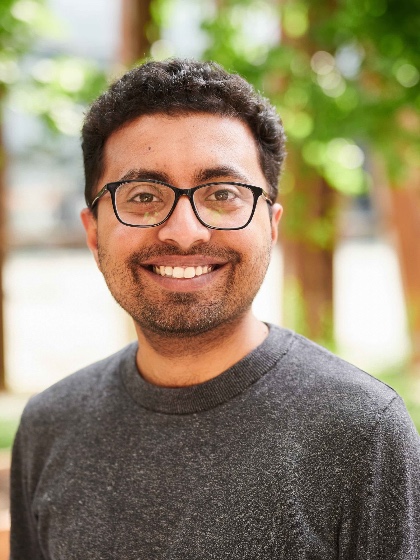
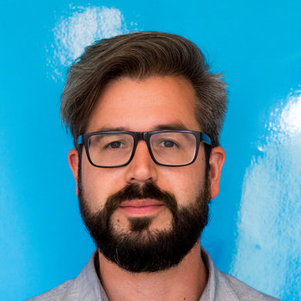
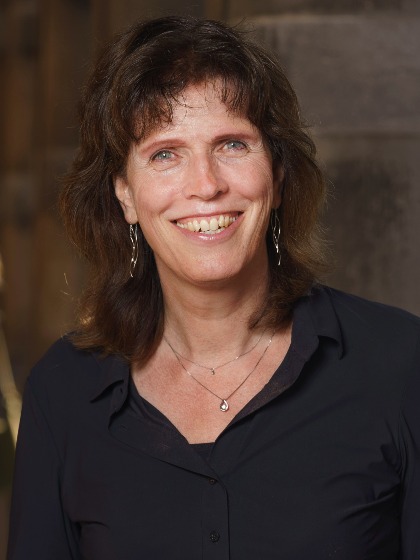
David Lentink is a Full Professor of Biomimetics at the University of Groningen , leading the Biomimetics Group within the Faculty of Science and Engineering. His research bridges biomechanics, aerospace engineering, and robotics, focusing on avian flight mechanics and bio-inspired aerial robotics . Previously at Stanford University, he pioneered the development of the Aerodynamic Force Platform and low-turbulence wind tunnels for animal flight studies. Education : PhD in Aerospace Engineering (Stanford), MSc in Mechanical Engineering (Delft), BSc in Mechanical Engineering (Delft). Research Interests : Understanding bird flight biomechanics to design advanced drones, studying evolutionary adaptations in flight, and developing biohybrid robots with real feathers. Scientific Awards : Dutch Academic Year Prize for the Flight Artists (2013). World Economic Forum Young Scientist under 40 (2013). Alumnus of the Young Academy of The Royal Netherlands Academy of Arts and Sciences. Labs : The Lentink Lab at Groningen’s Linnaeusborg campus integrates bird aviaries, wind tunnels, and maker spaces for bio-inspired robotics development. His team collaborates globally with institutions like Stanford, TU/e, and Sorama.
A.A.J. (Erjen) Lefeber is an Assistant Professor in the Department of Mechanical Engineering at Eindhoven University of Technology (TU/e). His research focuses on control systems, cooperative driving, vehicle dynamics, and autonomous systems. He is affiliated with the EAISI Mobility cluster and the ICMS Core group, emphasizing interdisciplinary collaboration. Dr. Lefeber has contributed to over 150 research outputs, including peer-reviewed articles, conference contributions, and datasets. His work addresses challenges in platooning systems, model predictive control (MPC), cybersecurity in cooperative vehicles, and multi-agent systems. Research interests include cooperative adaptive cruise control (CACC), decentralized control strategies, and robust control against adversarial attacks. His projects integrate theoretical analysis with experimental validation, such as testing heterogeneous platoons with actuation delays. Dr. Lefeber has received the AVEC '24 Best Paper Award for contributions to vehicle platooning control. He teaches courses on nonlinear control, manufacturing networks, and mechanical engineering fundamentals. Collaborations span academia and industry, focusing on sustainable transportation and automation. Current efforts explore online learning for interaction dynamics in multi-agent systems and high-performance MPC for aerial robotics. His research aligns with UN Sustainable Development Goals, particularly addressing safe and efficient mobility solutions.
Ashish Cherukuri is an Associate Professor at the University of Groningen's Faculty of Science and Engineering, affiliated with the Optimization and Decision Systems group. His research focuses on optimization-based control, game theory, and multi-agent systems applied to energy, transportation, and robotics. He holds a Ph.D. from UC San Diego and postdoctoral experience at ETH Zurich. Education: Ph.D., University of California, San Diego (2012–2017) M.Sc., ETH Zurich (2008–2010) B.Tech, Indian Institute of Technology Delhi (2004–2008) Research Interests: Data-driven optimization, distributed algorithms, networked cyber-physical systems, and uncertainty handling in energy and transportation systems. Recent work emphasizes stochastic optimization, game-theoretic routing, and risk-aware control. Awards: Robert E. Skelton Dissertation Award (2017) Outstanding Graduate Student Award (2016) Focht-Powell Fellowship (2012–2015) Grants & Service: Editor for the IEEE Control Systems Society, organizer of Energy-Open 2019, and member of professional societies (IEEE, INFORMS, SIAM). Active in conference organization and academic leadership roles. Labs/Teams: Part of the Jan C. Willems Center for Systems and Control and the Engineering and Technology Institute Groningen (ENTEG). Research integrates theoretical advancements with practical applications in energy networks and smart systems.
Dr. Hamidreza Mohades Kasaei is an Associate Professor in the Department of Artificial Intelligence at the University of Groningen, Netherlands. He holds positions in both the Faculty of Science and Engineering and the Faculty of Medical Sciences/UMCG, focusing on Robotics and image-guided minimally-invasive surgery. His work bridges theoretical advances in machine learning with practical robotic applications. Dr. Kasaei's research focuses on developing algorithms for adaptive perception systems through interactive environment exploration and open-ended learning. His specific interests include 3D object perception, grasp affordance detection, object manipulation, and active perception. He has evaluated his research on various robotic platforms including PR2, UR5e, Kinova, Franka robotic arms, and humanoid robots. His work enables robots to learn from past experiences and intelligently interact with non-expert human users using data-efficient techniques. Analysis of his recent publications reveals strong trends toward increasingly sophisticated manipulation capabilities, particularly in dual-arm coordination and handling dense clutter. There's a clear progression toward integrating language models with robotic control systems, as seen in works like 'Lifelong Robot Library Learning' and 'Towards Open-World Grasping with Large Vision-Language Models.' His research consistently addresses real-world challenges in agricultural robotics, assistive technologies, and service robotics applications. Gratama Science Award (2022) Google Research Scholar Award in Machine Learning (2023) Outstanding Associate Editor for IEEE Robotics and Automation Letters (2023) Dr. Kasaei has successfully supervised multiple PhD students including Zhenxing Zhang (thesis on 'Generative Adversarial Networks for Diverse and Explainable Text-to-Image Generation') and Hamed Ayoobi (thesis on 'Explain What You See: Argumentation-Based Learning and Robotic Vision'). His research is supported by significant grants including the Google Research Scholar Award for 'Continual Robot Learning in Human-centered Environments' and various conference organization roles including workshops at RSS 2023 and NeurIPS 2022. He leads the Lifelong Interactive Robot Learning Lab (IRL-Lab), which focuses on six key research directions: Perception and Perceptual Learning, Object Grasping and Manipulation, Lifelong Interactive Robot Learning, Dual-Arm Manipulation, Dynamic Robot Motion Planning, and Exploiting Multimodality. The lab develops cutting-edge approaches for robots to learn in open-ended fashion through interaction with non-expert human users, with applications in assistive robotics for people with disabilities.
Luciano Cavalcante Siebert is an Assistant Professor at the Interactive Intelligence Group within the Intelligent Systems department of the EEMCS faculty at Delft University of Technology. His research focuses on Responsible Artificial Intelligence, developing hybrid methods that combine machine learning and symbolic approaches to ensure AI systems remain under meaningful human control within sociotechnical contexts. His educational background includes: B.Sc. in Mechatronics from Pontifical Catholic University of Paraná (PUCPR) M.Sc. and Ph.D. in Electrical Engineering from the Federal University of Paraná (UFPR), Brazil During his Ph.D., he was a guest researcher at Eindhoven University of Technology (TU/e), and prior to his current position, he served as a postdoc at TU Delft's AiTech initiative. Professor Siebert's research program is structured around four pillars: (1) eliciting and aligning with human values and norms, (2) incorporating ethical principles into AI, (3) enabling interactive human control and responsibility mechanisms, and (4) adapting to emergent societal norms. His interdisciplinary work bridges computer science, ethics, and social sciences, with applications in robotics, optimization, and automation. With over eight years of research experience, he develops practical frameworks for human-centered AI that prioritize societal benefit and accountability. Based at TU Delft's campus in Delft, Netherlands, Siebert actively contributes to the Interactive Intelligence Group's mission of advancing intelligent systems that empower humans and enhance societal well-being through responsible innovation.
Raymond H. Cuijpers is an Associate Professor at Eindhoven University of Technology in the Human Technology Interaction group. His research focuses on Cognitive Robotics , Human-Robot Interaction , and Artificial Intelligence for cognitive agents, with applications in healthcare robotics and aging population support. PhD in Physics of Man from Utrecht University (2000) Postdoctoral research at Erasmus MC Rotterdam and Radboud University Nijmegen Key research areas include: Developing socially intelligent robots with proper social cue interpretation Hybrid AI approaches for real-world complexity handling Visual-haptic perception integration in human motor control Service robots for COPD patient assistance (KSERA project) Rescue robotics and tele-operation applications Recent research output (2025) includes studies on: Personalization in human-robot communication Optimal lighting for elderly visual perception Human-robot bonding mechanisms Interactive sensorized platforms for homecare (GUARDIAN) Audiovisual temporal integration in virtual environments He coordinates large-scale European projects like GUARDIAN and previously KSERA, contributes to sustainable development goals through healthcare robotics, and serves on editorial boards of leading journals including International Journal of Social Robotics . His work spans both technical robotics development and human-centric interaction studies.
Professor Peter Asaro is an Associate Professor at The New School's School of Media Studies, specializing in the philosophy of science, technology, and media. His work focuses on artificial intelligence, robotics, and the ethical, legal, and social implications of autonomous systems. He serves as Co-Founder and Co-Chair of the International Committee for Robot Arms Control (ICRAC) and has held research positions at Princeton University, Rutgers University, Umeå University, and the Austrian Academy of Sciences. Education: PhD, MCS, MA, BA His research spans military robotics, AI ethics, surveillance, and the societal impacts of automation. He has contributed to influential publications in journals like IEEE Technology & Society and Robot Law , with a focus on lethal robotics, legal liability, and privacy. Recent work includes critiques of predictive policing algorithms and autonomous weapons systems. Notable awards include the 2010 SXSW Web Interactive Awards for Technical Achievement and Best of Show for his contributions to Apple’s Siri and Microsoft’s Bing math query interfaces. He is currently writing a book on robotics and ethical intersections. Scientific Awards: 2010 SXSW Web Interactive Award for Technical Achievement 2010 SXSW Web Interactive Award for Best of Show Asaro leads funded projects like the Oral History of Robotics (IEEE & NEH) and Regulating Autonomous Artificial Agents (Future of Life Institute). He also contributes to public discourse on technology through his blog and affiliation with 4TU.Ethics and ICRAC.
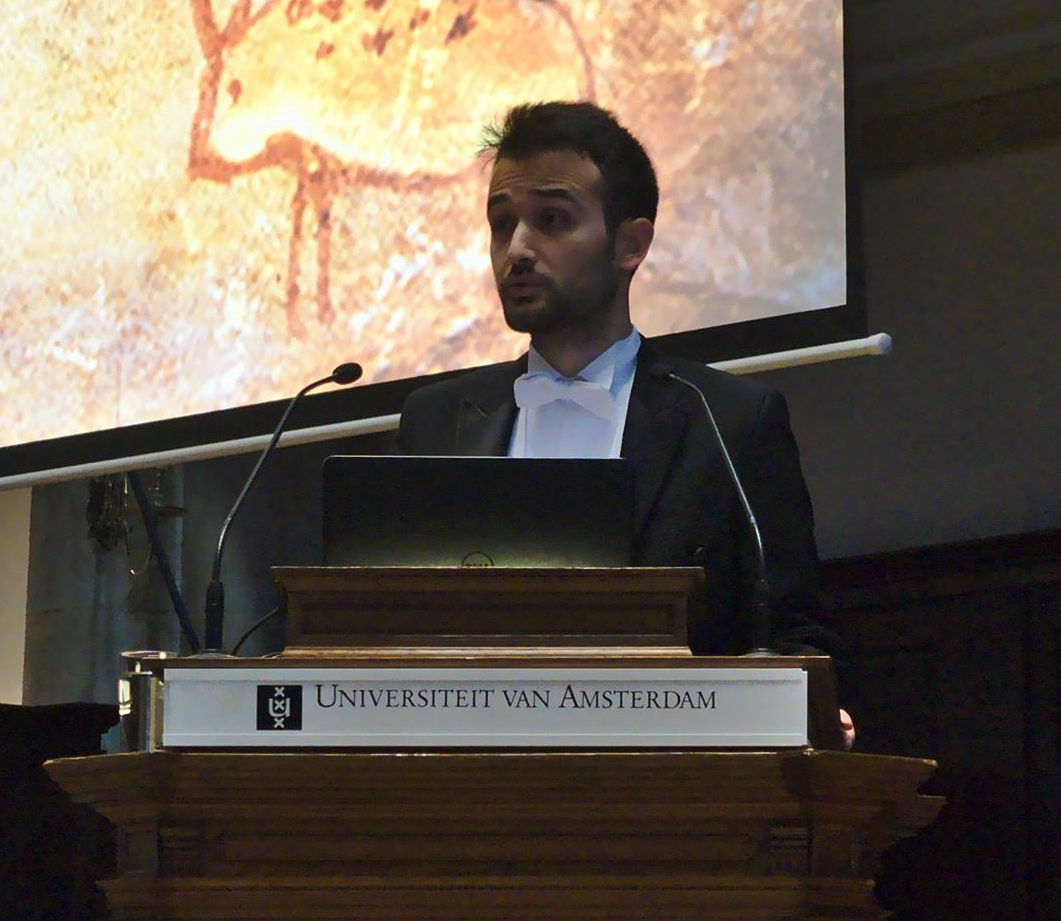
Sezer Karaoglu is a Lecturer and part-time postdoctoral researcher at the Computer Vision Group, Informatics Institute, University of Amsterdam. He is also the CTO and Co-Founder of 3DUniversum, a technology spin-off of the University of Amsterdam that provides state-of-the-art 2D/3D computer vision solutions. Additionally, he has co-founded other startups including Scanm and 3DHealthScan. Dr. Karaoglu received his PhD from the Computer Vision Group, Informatics Institute, University of Amsterdam, with research funded by the COMMIT project. His educational background includes a double master's degree: an optics, image and vision master's degree from University Jean Monnet in France and a media technology master's degree from Gjovik University College in Norway. He completed his undergraduate studies with honors at Istanbul Technical University in Telecommunication Engineering. His research focuses on Artificial Intelligence and 3D Computer Vision, with specific interests in SLAM, re-localization, 3D reconstruction, 3D object detection and segmentation, synthetic media, generative AI, deep fake creation and detection, and VR/AR technologies. His work has significant applications in healthcare, particularly in using deepfake technology for therapy for victims of sexual violence-related PTSD and moral injury, as documented in a Frontiers in Psychiatry article. Analyzing his recent publications reveals a strong trend toward neural scene reconstruction, intrinsic image decomposition, and the application of diffusion models to computer vision problems. His research increasingly integrates 3D scene understanding with language models, as evidenced by his work on language-to-3D scene generation. The applications span from healthcare (deeptherapy.ai) to media authenticity (deepfake detection) and industrial applications. ICT.OPEN Poster Award (3rd Position), Oct'13 Pascal VOC'12 Classification challenge, 2nd Position, Sep'12 Pascal VOC'12 Detection challenge, 3rd Position, Sep'12 Best project award at Nokia and CIMET project competition Outstanding reviewer at CVPR'21 PROVADA Future Startup Battle winner Best Dutch AI startup by Valuer Dr. Karaoglu has supervised numerous PhD, Master's, and Bachelor's students, demonstrating his commitment to academic mentorship. His research has attracted significant media attention, with features on Dutch national TV programs including NPO, VPRO, RTL, and international outlets like BBC News. He has received research funding through the COMMIT project during his PhD studies and has successfully translated his research into commercial applications through his startups. His work on deepfake technology has been applied in innovative therapeutic contexts through DeepTherapy.ai, showing the real-world impact of his research. Dr. Karaoglu leads research efforts at the Computer Vision Group Amsterdam and through his company 3DUniversum, which has developed applications like weScan, DeepTherapy, and FairFake.ai. His team collaborates with various institutions including the Netherlands Film Academy for grief therapy applications using deepfake technology. The DeepTherapy project represents a particularly impactful application of his work, using deepfake technology to help victims of sexual violence confront perpetrators in therapeutic settings.
Jacquelien Scherpen is a Professor at the University of Groningen, currently serving as Rector Magnificus. She holds a position in the Engineering and Technology institute Groningen (ENTEG) within the Faculty of Science and Engineering. Her academic journey includes a PhD in Applied Mathematics from the University of Twente (1994) and post-doctoral roles at Delft University of Technology before joining Groningen in 2006. She has been a leader in systems and control research, with roles as Scientific Director of ENTEG (2013–2019) and Director of the Groningen Engineering Center (2016–2023). Her research focuses on model reduction, nonlinear control, smart energy systems, and distributed control applications in smart grids. Key achievements include the Automatica Best Paper Prize (2020), Knight of the Order of the Netherlands Lion (2019), and the Prince Friso Engineer of the Year Award (2023). She has held leadership roles in organizations like the European Control Association (EUCA) and is a Fellow of IEEE. Her professional activities include editorial roles in journals like the IEEE Transactions on Automatic Control and the International Journal of Robust and Nonlinear Control. She has organized major conferences, including the European Control Conference (ECC) 2021 and 2023. Her work bridges theoretical advancements with practical applications, emphasizing sustainability and engineering innovation.
Jaap M.J. den Toonder is a Professor in the Department of Microsystems at Eindhoven University of Technology (TU/e), where he chairs the Microsystems research section. His work bridges technology and biology through biologically inspired innovations. Current research focus: Microfluidics, Soft Microrobotics Notable funding: ERC Advanced Grant (2019) Affiliations: hDMT Institute, ICMS Core Member Academic Background: MSc in Applied Mathematics (cum laude), Delft University of Technology PhD in Mechanical Engineering (cum laude), Delft University of Technology Research Trends: Recent articles emphasize magnetic microactuation, particle manipulation, and organ-on-chip cancer models. Collaborative work spans biomedical devices, energy applications, and sustainable technology. Scientific Awards: ERC Advanced Grant recipient (2019) Netherlands Academy of Engineering Fellow (2023) Education & Outreach: Authored over 140 papers, 45 patents, and 60+ invited lectures. Founded and directs TU/e's Microfab/lab facility for advanced microsystem development.
Prof. Tanya Bondarouk is a distinguished academic affiliated with the Digital Society Institute and Faculty of Behavioural, Management and Social Sciences at the University of Twente. Her research focuses on Human Resource Management (HRM), electronic HRM systems, and the impact of disruptive technologies on work environments. She holds leadership roles including Board Member of the National Network of Female Professors (Landelijk Netwerk Vrouwelijke Hoogleraren). Her academic contributions span over 250 publications, including influential works on AI in HRM, open innovation, and gig economy challenges. Notable awards include the Best HRM Scientist in The Netherlands (2018) and the Inspiration Award (2019). Research interests: Technology-human interaction in workplaces, HRM strategies for innovation, and digital transformation in organizations. Recent articles analyze AI-driven recruitment, generational differences in tech engagement, and algorithmic management dilemmas. Prof. Bondarouk actively engages in academic networks, organizing conferences like the 38th EGOS Colloquium (2022), and provides expert commentary on digital labor platforms and employer branding strategies. Her work bridges theoretical HRM frameworks with real-world organizational challenges.
Dr. Utku Yavuz is an Assistant Professor in the Biomedical Signals and Systems Department at the TechMed Centre. His expertise spans neuromuscular physiology, wearable sensor technologies, and clinical monitoring systems. He holds a PhD in Biomedical Engineering from Ege University, complemented by earlier degrees in Physics Engineering (Hacettepe University) and Biophysics (Hacettepe University). Research Focus: Motor unit physiology, neuromuscular modeling, and clinical applications of wearable sensors. Key Areas: Spinal motor neuron behavior, electromyography (EMG), and translational technologies for diabetes and musculoskeletal health. Dr. Yavuz’s work bridges neuroscience and engineering, addressing challenges in prosthetic design, real-time neuromuscular signal decoding, and improving clinical decision-making through sensor data analysis. Recent studies include optimizing wearable glucose monitors and analyzing muscle-tendon dynamics in amputees. His research outputs span 43 publications, with contributions to high-impact journals like BMC Digital Health and IEEE Sensors Journal . Collaborations include institutions focused on biomechanics, robotics, and clinical informatics. Advising: Supervised 1 graduate project, though specific advisee names are not listed. Active in academic activities such as thesis examinations and conference presentations.
Wijnand A. IJsselsteijn is a Full Professor of Cognition and Affect in Human-Technology Interaction at TU/e. He serves as Scientific Director of the Center for Humans and Technology and is a Scientific Board Member of the Eindhoven AI Systems Institute (EAISI). He holds a part-time professorship at the Jheronimus Academy of Data Science (JADS). His academic background includes a PhD (2004) on telepresence from Utrecht University. Research focuses on media technology’s psychological impact and improving tech design for health/wellbeing. Key areas include immersive media, affective computing, and sensor-enabled behavior tracking. Notable projects include the NWO Gravitation grant on 'Ethics of Socially Disruptive Technologies' and AI-driven dementia care (QoLEAD). Publications exceed 250 peer-reviewed papers and 10 edited volumes, including 'Immersed in Media: Telepresence Theory, Measurement, and Technology' (2015). He actively contributes to interdisciplinary collaborations, ethics in AI, and societal impact of technology.
Jordan Boyle is an Assistant Professor in the Department of Sustainable Design Engineering at the Faculty of Industrial Design Engineering, Delft University of Technology (TU Delft). He is affiliated with the Materializing Futures Section, where he conducts research in robotics, bio-inspired systems, swarm intelligence, and human-robot interaction. Academic Background: PhD in Computer Science, University of Leeds – focused on neuro-mechanical control of locomotion in C. elegans . MSc and BSc (Hons) in Electrical Engineering, University of Cape Town. Prior academic experience at the University of Leeds as Research Fellow, Lecturer, and Associate Professor over 12 years. Research Interests: Dr. Boyle’s research centers on robotics with a strong emphasis on bio-inspired design. His work spans swarm intelligence , multi-robot systems , human-robot interaction , and robotic fabrication . He also specializes in designing experimental apparatus for pre-clinical and engineering applications. His interdisciplinary approach integrates mechanical design, control systems, and AI for real-world deployment in construction, medicine, and infrastructure. Publication Trends: His recent publications (2022–2024) demonstrate a clear trajectory toward bio-inspired autonomous systems applied in construction and medical imaging. Key themes include swarm robotics for construction, MRI trajectory correction with robotic components, and locomotion mechanisms inspired by biological systems. These works reflect strong interdisciplinary collaboration, particularly with biomedical and mechanical engineering teams. Teaching: Product Engineering (2024, 2025) Advanced Product Engineering (2024, 2025) Scientific Affiliations and Activities: Visiting Researcher, School of Mechanical Engineering, University of Leeds (2022–2026) Advising and Grants: While no formal students or specific grants are listed in the provided text, Dr. Boyle has supervised research projects and collaborated across disciplines, particularly in medical and civil engineering applications. His role in designing experimental apparatus indicates active involvement in grant-funded interdisciplinary research. Labs and Research Groups: He is part of the Materializing Futures Section within Sustainable Design Engineering, which likely operates in conjunction with TU Delft’s broader design and robotics labs, though specific lab names are not mentioned.
Wessel Reijers is a Postdoctoral Researcher at the Department of Media Studies, Paderborn University, Germany, with visiting scholarships at the Technion and the Robert Schuman Centre, European University Institute. Previously, he was a Max Weber Fellow at the European University Institute, a Research Associate in the ERC project "BlockchainGov" led by Dr. Primavera de Filippi, and a postdoctoral researcher at the University of Vienna. Reijers received his PhD in technology ethics from Dublin City University. His academic journey has spanned multiple European institutions, focusing consistently on the ethical implications of emerging technologies for society and citizenship. His research primarily explores how emerging technologies impact citizenship, with particular attention to social credit systems and their effects on civic virtue. He also investigates distributed governance models, analyzing both their potential to enhance democratic processes and their inherent risks. His work bridges philosophy, political theory, and technology studies, offering critical perspectives on how technological developments reshape societal structures. Recent publications demonstrate a growing focus on AI ethics, interpretability, and what he terms "Positive Luddism"—a critical yet constructive approach to technological development that emphasizes human flourishing while acknowledging technology's dangers. Reijers is the author of "Narrative and Technology Ethics" and co-editor of "Interpreting Technology." His upcoming book "Introduction to the Ethics of Emerging Technologies" (2025) further establishes him as a leading voice in technology ethics. His work has gained recognition in both academic and public spheres, with media appearances including a Deutschlandfunk interview on "Positive Luddism" (2024). Beyond academia, Reijers is a creative individual who writes fiction, composes and produces music (available on Soundcloud), and creates paintings. He is part of an international music collaboration called "Conditio Humana," demonstrating his commitment to interdisciplinary engagement between technology, ethics, and the arts.