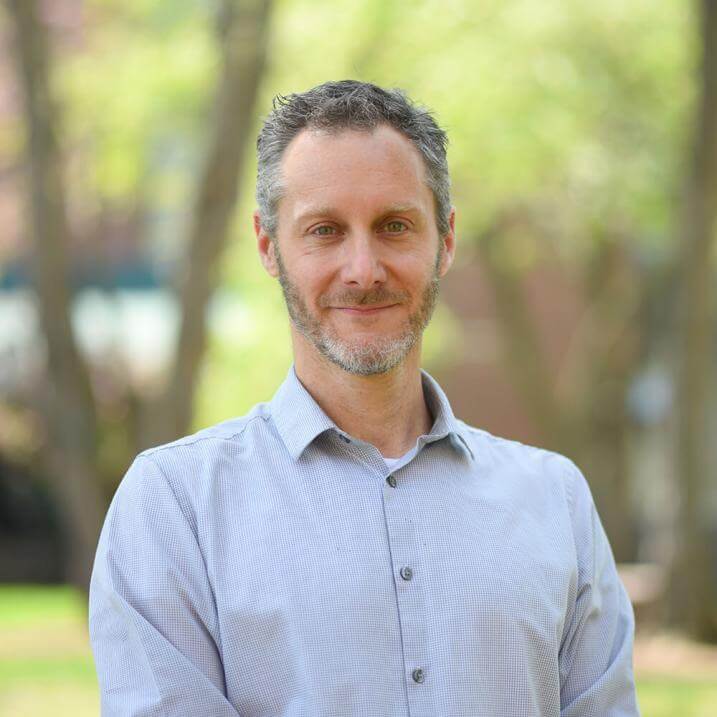
Professor Nicholas Warren is a Chair in Sustainable Materials at the School of Chemical, Materials and Biological Engineering at the University of Sheffield. With a PhD from Sheffield and academic experience at Leeds University (2016-2024), his research integrates polymer chemistry with automation technologies. Education: University of Bristol (2005), University of Sheffield (PhD) Academic Positions: Postdoc at Sheffield (2005-2016), University Academic Fellow at Leeds (2016-2024), Associate Professor (2021-2024) Current Role: Chair in Sustainable Materials (2024-present) Research focuses on polymer science with flow chemistry , online monitoring , and artificial intelligence to advance sustainable materials. Key article trends include self-driving laboratories , multi-objective optimization , and nanostructured polymer systems . Scientific recognitions include: 2022 Macro Group UK Young Researchers Medal 2023 RSC Reaction Chemistry & Engineering Outstanding Early Career Paper Award Advisees span current and alumni PhD students like Dr Stephen Knox , Anna Morrell , and Dr Charlotte Pugsley . His team employs self-driving lab platforms that combine robotics, AI, and online analytics for accelerated materials discovery.
Dr Smitha Gopinath is a Lecturer in the School of Chemical, Materials and Biological Engineering at the University of Sheffield , where she leads research in sustainable engineering systems within the Sustainable Design Laboratory (SDL) . Education & Career Path PhD in Chemical Engineering, Imperial College London Post-doctoral researcher, Applied Mathematics and Plasma Physics Group, Los Alamos National Laboratory Research Focus Dr Gopinath’s interdisciplinary work centres on the design, calibration and operation of sustainable engineering systems . She develops high-fidelity models and large-scale optimisation algorithms tailored to energy and materials challenges. Core interests include: Thermo-mechanical energy conversion devices (heat pumps, organic Rankine cycles) Carbon-capture utilisation and storage (CCUS) via novel solvents and separation systems Power-grid expansion and operation for renewable integration and decarbonisation Methodologically, she integrates Integrated Molecular and Process Synthesis (IMPS) with Optimisation Accelerated by domain Knowledge (OAK) to co-design molecules, materials and flowsheets that meet stringent energy and environmental targets. Publication Landscape Across 2015–2025 her publications reveal a clear trajectory from fundamental thermodynamic measurements and molecular design toward rigorous optimisation of large-scale energy systems. Early work concentrated on CO₂ solubility and carbonation kinetics of steel slag, providing essential data for carbon-sequestration schemes. Subsequent papers introduced advanced optimisation frameworks—outer-approximation algorithms, exact reformulations and feasibility-based methods—applied to solvent-based CO₂ capture, organic Rankine cycle working-fluid selection and AC optimal power flow (ACOPF). Recent contributions benchmark global optimality certificates for ACOPF problems, underscoring her drive to bridge chemical process systems engineering with electrical power systems optimisation. Teaching & Mentoring Dr Gopinath teaches undergraduate modules: CPE440 (Particle Technology) CPE170 (Particle Technology) She actively invites prospective PhD students to join the Sustainable Design Laboratory, offering supervision on projects spanning sustainable process design, renewable energy systems and algorithmic optimisation. Laboratory & Collaborative Networks She directs the Sustainable Design Laboratory (SDL), a multidisciplinary team leveraging systems engineering, multi-scale modelling, process simulation and optimisation to re-imagine a sustainable chemical and energy industry. The SDL collaborates with international partners, including Los Alamos National Laboratory and leading researchers in applied mathematics and power systems engineering.
Mats Leijon is Professor of Electrical Engineering at Uppsala University, Sweden. His work centers on renewable energy systems, particularly wave and marine current energy conversion, with a focus on direct-driven linear generators, power electronics, and grid integration. He has led projects at the Lysekil Research Site, Sweden, and contributed to experimental hydrokinetic power stations like the Söderfors Project. Key Affiliations: Department of Electrical Engineering, Uppsala University; Ångström Laboratory; Lysekil Research Site. Research Interests span wave energy converter design, electromagnetic systems, control strategies for renewable energy, and marine substation technology. He explores: Hydrodynamic and electromagnetic modeling of point-absorbing wave energy devices Power optimization via resonance circuits and predictive control Robotized manufacturing for electric machines Publication Trends highlight collaborations on Wave Energy Converters , Marine Current Turbines , and Three-Level Inverter Systems , with applications in the Baltic Sea and Norwegian fjords. His work addresses extreme wave survivability, power fluctuation reduction, and environmental impact assessments. Grants and Projects include offshore wave energy deployments, thermal rating of submerged substations, and experimental validation of marine power systems. He has advised on robotics for cable winding and stator slot geometry optimization. Labs and Teams operate at the Ångström Laboratory and Lysekil Research Site, focusing on full-scale offshore experiments, CFD simulations, and grid-connected marine substations.
Dipak Kumar Giri is an Assistant Professor in the Department of Aerospace Engineering at the Indian Institute of Technology Kanpur (IIT Kanpur). He received his PhD from IIT Kharagpur and has established himself as a specialist in aerospace control systems with a focus on satellite attitude dynamics and control. Dr. Giri's educational background includes a doctoral degree from IIT Kharagpur, one of India's premier technical institutions. His academic journey reflects a strong foundation in aerospace engineering principles and control theory, which has enabled his transition from research engineer to faculty position at IIT Kanpur. His research program centers on linear and nonlinear control systems for aerospace applications, with particular expertise in satellite attitude control using innovative actuation methods. Dr. Giri has pioneered work in magneto-Coulombic satellite attitude control systems, developing fault-tolerant control strategies and advanced sliding mode techniques. His research bridges theoretical control methodologies with practical aerospace applications, addressing critical challenges in spacecraft orientation and stabilization. The consistent publication of his work in top-tier journals demonstrates his scholarly contributions to the field of aerospace control systems. Analysis of Dr. Giri's publications reveals a sustained research focus on satellite attitude control through magneto-Coulombic systems, Lorentz forces, and magnetic actuation. His work spans theoretical developments in control theory to practical implementations for Earth-pointing satellites. The progression of his research from basic magneto-Coulombic control (2014) to fault-tolerant systems (2015-2019) and applications to aircraft control (2020) shows an expanding research scope while maintaining core expertise in control systems. Dr. Giri has held prestigious positions including DST INSPIRE Faculty at IIT Kanpur (2018-2020), Postdoctoral Research Associate at Singapore-MIT Alliance for Research and Technology (2017-2018), and Postdoctoral Fellow at Ulsan National Institute of Science and Technology in South Korea (2016-2017). These international research experiences have enriched his academic perspective and contributed to collaborative research efforts across borders. His laboratory work focuses on spacecraft dynamics and control systems, with particular attention to innovative actuation methods for satellite orientation. The research environment likely supports both theoretical modeling and simulation studies of spacecraft control systems, with potential applications to real-world satellite missions and aerospace technology development.
Prof. Dr. Haris Gačanin is a faculty member at RWTH Aachen University, affiliated with the Institute for Distributed Signal Processing under the College of Electrical Engineering. His research focuses on integrating machine learning with wireless communication systems, particularly in industrial IoT, edge computing, and network optimization. Current academic rank: Professor Contact: harisg@dsp.rwth-aachen.de Research Interests: Wireless systems, machine learning, signal processing, and network optimization. Key contributions include: Adaptive resource allocation in IIoT and vehicular networks AI-driven channel estimation and feedback mechanisms Security-oriented emitter identification via metric learning Federated/transfer learning for edge environments Hardware-efficient deep learning models for mmWave and THz communications Methodological Focus: Combines reinforcement learning, attention mechanisms, and robust neural architectures with practical implementations on FPGA and vehicular systems.
Abolfazl Simorgh is a researcher at Charles III University of Madrid's Department of Aerospace Engineering, specializing in climate-optimized aviation systems. His work bridges mathematical control theory with practical climate impact mitigation, focusing on robust trajectory optimization under environmental and operational uncertainties. He leads development of open-source tools for sustainable flight planning while contributing to major European aviation initiatives. Education: B.Sc. in Control Engineering (2017) M.Sc. in Control Engineering (2020) Ph.D. in Aerospace Engineering from Charles III University of Madrid Dr. Simorgh's research centers on developing mathematical frameworks that reconcile aircraft trajectory optimization with climate impact reduction. His expertise spans robust control systems, optimization under uncertainty, and climate modeling integration, with particular emphasis on non-CO₂ emissions. His methodology addresses both CO₂ and non-CO₂ climate forcing mechanisms through computationally efficient algorithms that account for weather variability and climate metric uncertainties. This work directly supports aviation's decarbonization by providing operational strategies that reduce environmental footprint without prohibitive cost increases. Analysis of his 15 most recent publications reveals a cohesive research trajectory focused on operationalizing climate-optimal flight planning. His work consistently integrates climate science with aerospace engineering through robust optimization frameworks, demonstrating particular innovation in handling multiple uncertainty sources (weather, climate models, emissions). The publications cluster around three interconnected themes: 1) Development of open-source computational tools (ROOST, CLIMaCCF), 2) Network-scale implementation of climate-aware air traffic management, and 3) Risk analysis of climate mitigation strategies. This body of work establishes new methodological standards for quantifying and minimizing aviation's total climate impact. Scientific Awards: Luis Azcárraga Aeronautical Innovation Award for collaborative research impact Best Paper Award (2022) from a high-impact aerospace journal Dr. Simorgh secures significant research funding through European Commission projects including FlyATM4E (climate-optimized flight planning), ALARM (aviation emissions reduction), and RefMAP (sustainable aviation pathways). His grant portfolio emphasizes practical implementation of climate mitigation strategies, with strong industry-academia collaboration. He mentors junior researchers through project teams and has developed three major open-source Python libraries (CLIMaCCF, ROOST, ROC) that have become community standards for climate impact assessment in aviation research. His current work focuses on scaling climate-optimized trajectories to continental airspace while addressing operational constraints and economic viability. He leads a research group focused on climate-aware air traffic management, developing the ROOST simulation framework for GPU-accelerated trajectory optimization and the CLIMaCCF library for standardized climate metric calculations. His team collaborates with European air navigation service providers and aircraft manufacturers to transition research into operational practice, with current projects emphasizing real-time implementation and regulatory compliance frameworks.
Arthur Trembanis is a Professor at the School of Marine Science & Policy at the University of Delaware , where he conducts interdisciplinary research in coastal and marine geoscience. His work bridges oceanography, sediment dynamics, and autonomous systems, with a focus on understanding coastal morphodynamics, hydrodynamics, and seafloor mapping. Coastal & Estuarine Morphodynamics Sediment Transport Modeling Autonomous Underwater Vehicles (AUVs) Seafloor Mapping & Geoacoustics Trembanis leads the Coastal Sediments, Hydrodynamics, and Engineering Lab (CSHEL) , which explores the intersection of marine technology and environmental science. His recent publications highlight advancements in AI-driven seafloor mapping, autonomous survey platforms, and coastal response to extreme weather. He is also active in open-source tools for geological feature detection and educational outreach. The 15 most recent papers reflect trends in machine learning for coastal geology (e.g., AI for Carolina Bay detection), autonomous robotics in marine surveys, and storm impact analysis on coastal systems. Key subfields include LiDAR processing, bedform dynamics, and multi-platform data integration for environmental monitoring. Fulbright Fellowship (University of Sydney) SERDP Project MR20-1480 (Munition mobility in estuarine environments) Follow his work via the CSHEL website , Instagram , or YouTube for fieldwork and lab updates.
Yuta Sugiura is an Associate Professor in the Department of Information and Computer Science at Keio University's Faculty of Science and Technology. His research focuses on innovative human-computer interaction techniques, particularly in wearable computing, tangible interfaces, and novel input methods. Previously, he worked as a postdoctoral researcher at the National Institute of Advanced Industrial Science. Dr. Sugiura's research interests span Human-Computer Interaction, Wearable Computing, Augmented Reality, Tangible User Interfaces, Gesture Recognition, Ubiquitous Computing, Haptics, and Virtual Reality. His work often explores how everyday objects and environments can become interactive surfaces, with notable projects including the iRing (intelligent ring), SenSkin (skin as interface), and EarHover (mid-air gesture recognition for hearables). He has developed numerous novel interaction techniques that leverage physical properties of materials and human physiology for input and output. His recent publications indicate a strong focus on hearable computing, medical applications of HCI, edible interfaces, and novel authentication methods. The research shows a consistent pattern of exploring unconventional interaction surfaces and leveraging subtle physical phenomena for input sensing. His work has significant implications for healthcare applications, particularly in neurological disorder screening and rehabilitation. Best Paper Award Dr. Sugiura has advised numerous students who have gone on to publish significant work in top-tier HCI venues. His research has been supported by various grants enabling the development of novel interaction techniques and systems. He maintains strong collaborations with researchers across Japan and internationally, particularly in the fields of wearable computing and medical applications of HCI. His laboratory appears to focus on lifestyle computing, developing interfaces that integrate seamlessly into daily activities. Current projects include exploring edible displays, adaptive ear interfaces, and novel authentication methods using wearable devices. Future work seems to be heading toward more medical applications of HCI, particularly in neurological assessment and rehabilitation.
Yuxiang Chen is an Associate Professor in the Department of Civil and Environmental Engineering at the University of Alberta. His research focuses on high-performance buildings, net-zero energy systems, and sustainable construction practices. He integrates advanced modeling techniques, renewable energy solutions, and intelligent design strategies to optimize building performance in cold climates. PhD, Building Engineering (2013), Concordia University MASc, Building Engineering (2008), Concordia University BEng, Building Engineering (2006), Concordia University Dr. Chen’s work emphasizes modular construction, thermal energy storage, and data-driven modeling for building systems. He explores the use of robotics in construction, thermal resistance of masonry walls, and energy-efficient community greenhouses tailored for cold regions. His recent publications highlight trends in building thermal dynamics, with a focus on resistor-capacitor (RC) models, hybrid heating systems, and snow accumulation impacts on solar panels. He also contributes to cold-climate energy management and smart home integration.
Gaang Lee is an Assistant Professor in the Department of Civil and Environmental Engineering at the University of Alberta's Faculty of Engineering, where he joined in 2022 after earning his Ph.D. from the University of Michigan. His research pioneers 'sympathetic' built environments that enhance safety, health, productivity, and comfort for workers and users through integration of wearable biosensors, AI, extended reality, and robotics with psychophysiological theories. Education: Ph.D in Civil and Environmental Engineering, University of Michigan, Ann Arbor (2022) - Emphasis: Construction Engineering and Management; Graduate Certificate in Computational Discovery and Engineering Graduate Certificate in Computational Discovery and Engineering, University of Michigan, Ann Arbor (2022) M.S. in Architectural Engineering, Yonsei University, South Korea (2012) - Emphasis: Construction Engineering and Management B.S. in Architectural Engineering, Yonsei University, South Korea (2010) Dr. Lee combats technological exclusion for marginalized groups (construction workers, older adults) by developing empathetic technologies for workplaces, buildings, and urban spaces. His work applies human sensing, AI, and digital twins to create environments that adapt to diverse human needs, with key projects spanning psychophysiological safety monitoring, human-robot collaboration, and inclusive urban design. He integrates psychophysiological and socio-cognitive theories to address real-world gaps in construction engineering and computer science. His recent publications (2023-2025) reveal strong trends in AI-driven safety hazard identification, biosensor-based stress/fatigue monitoring, and virtual reality for construction team dynamics. A critical emerging focus is equity-centered technology design, with increasing publications addressing inclusive built environments and technological access for vulnerable populations through graph-based algorithms, domain adaptation, and interpretable AI models. Scientific Awards: No awards mentioned in the provided text. Dr. Lee actively recruits students for his 'Empathetics' research group starting in 2026, prioritizing candidates with empathy, research motivation, and commitment to diversity and inclusion. While specific grants are not detailed, his research program receives institutional support from the University of Alberta and likely external funding given its interdisciplinary scope and industry relevance. He leads the 'Empathetics' research group (part of Attentive Hub) which emphasizes diversity as fundamental to innovation. Current projects include psychophysiological monitoring for occupational safety, trustable human-robot collaboration systems, and extended reality frameworks for empathetic built environments. The group collaborates with IHT LAB (https://www.iht-lab.com/) and focuses on deploying technologies that make daily surroundings safe, healthy, and truly inclusive for all individuals.
Jonas Rubenson is a Professor of Kinesiology in the Department of Kinesiology, College of Health and Human Development, at The Pennsylvania State University. His research focuses on the mechanics and energetics of locomotion, in vivo skeletal muscle function, and musculoskeletal structure-function relationships. Ph.D., 2005, Biomechanics, The University of Western Australia B.Sc. (Hon), 1998, Exercise Physiology, The University of Western Australia B.Sc., 1996, Biology and Human Kinetics, University of British Columbia His research integrates experimental and modeling approaches to study gait and skeletal muscle function during locomotion in both health and disease/impairment. Key areas include the relationship between joint and muscle mechanics and metabolic energetics, as well as mechanisms underlying locomotor adaptation and optimization. Recent publications emphasize locomotor plasticity, tendon stress in hopping kangaroos, and musculoskeletal modeling in birds and bipedal models. Rubenson collaborates with research centers such as the Integrative and Biomedical Physiology and the Center for Movement Science and Technology . His work often involves interdisciplinary approaches, combining biomechanics, physiology, and robotics. Current research projects investigate principles of muscle function during movement, with applications in understanding locomotion in extinct theropod dinosaurs and developing legged robots. His team also explores developmental plasticity of locomotor economy and swing-phase mechanics in avian models.
Prof. Venkat N. Krovi serves as the Michelin Endowed Chair Professor of Vehicle Automation in the Departments of Automotive Engineering and Mechanical Engineering at Clemson University's College of Engineering, Computing and Applied Sciences (CECAS). He directs the Automation, Robotics and Mechatronics Laboratory (ARMLab) at the International Center for Automotive Research (CU-ICAR), focusing on smart embedded systems for autonomy in challenging environments. He earned his Ph.D. in Mechanical Engineering and Applied Mechanics from the University of Pennsylvania in 1998. His research leverages distributed autonomy and human-robot synergy to extend human capabilities, with applications spanning plant automation, consumer electronics, automobile, defense, and healthcare. The work emphasizes lifecycle treatment (design through verification) of robotic systems under uncertainty. Recent publications (2024-2025) demonstrate strong trends in digital twin frameworks for autonomous vehicle validation, sim2real transfer via reinforcement learning, and integration of large language models for editable simulations. Key themes include scalable cloud-based architectures, Koopman operator theory for robustness, and containerization for reproducible robotics development. His accolades include: National Science Foundation (NSF) CAREER Award Petro-Canada Young Innovator Award Multiple best paper awards at conferences and journals ASME Dedicated Service Award (2024) Prof. Krovi has advised doctoral students including Dr. Srivatsan Srinivasan (2024). His research receives substantial funding from NSF, DARPA, ARO, and industrial partners like Michelin. He leads the NSF I/UCRC RoSeHuB center and the AutoDRIVE ecosystem for autonomous driving education. As ARMLab director, he oversees projects including OpenCAV, the Robotics for AV Systems Bootcamp, and containerized terramechanics simulations. The lab specializes in mechatronic design, verification/validation frameworks, and human-autonomy coexistence studies for next-generation mobility solutions.
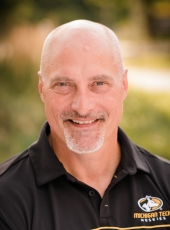
David M. Labyak is an Assistant Professor at Michigan Technological University's College of Engineering, affiliated with both the Manufacturing and Mechanical Engineering Technology and Mechanical and Aerospace Engineering departments. He teaches courses in computer-aided engineering, finite element methods, dynamic systems control, machine design, robotics dynamics, and Industry 4.0 concepts. PhD in Mechanical Engineering-Engineering Mechanics (2003) and MS in Mechanical Engineering (2000) from Michigan Tech Over 24 years of industrial experience in automotive, aerospace, mining, and consulting sectors His research interests span solid mechanics, finite element analysis, vibration analysis, machinability of metals, biomechanics, and helmet design optimization. Collaborative work includes dynamic testing, acoustic modeling, and workforce development initiatives. Recent publications highlight interdisciplinary work in vibration testing, metalcasting, and educational frameworks. Key areas include defect detection in additive manufacturing, dynamic fixture design, and experiential learning for mechatronics.
Josh Bongard is a Professor in the Department of Computer Science at the University of Vermont, within the College of Engineering and Mathematical Sciences. He holds the Cyril G. Veinott Green and Gold Professorship and directs the Morphology, Evolution & Cognition Laboratory. He earned his Ph.D. from the University of Zurich. Affiliations: University of Vermont, Department of Computer Science, College of Engineering and Mathematical Sciences. Education: Ph.D. in Computer Science from the University of Zurich. His research focuses on evolutionary robotics, embodied intelligence, and synthetic biology. Key projects include developing soft robots, Xenobots (biological machines), and exploring how morphology influences cognition. His work bridges robotics, biology, and artificial intelligence, emphasizing adaptability and resilience. Recent articles highlight advancements in shape-changing robots, self-replicating organisms, and the ethical implications of machine behavior. He has pioneered methods for co-optimizing robot morphology and control systems, enabling more efficient and adaptive designs. Awards: Presidential Early Career Award for Scientists and Engineers (PECASE, 2010) Microsoft Research New Faculty Fellowship (2007) MIT Technology Review's Top 35 Innovators Under 35 (2007) Cozzarelli Prize He advises graduate students in robotics and teaches courses like Evolutionary Robotics and Human-Computer Interaction. His lab collaborates with NASA, NSF, and DARPA, advancing robotics through biologically inspired approaches. Future work includes developing systems that integrate biological and computational principles for novel applications. His book How the Body Shapes the Way We Think explores embodied cognition, and he directs outreach programs like Twitch Plays Robotics to engage the public in robotics innovation.
Thomas Gries is a Professor at RWTH Aachen University 's Department of Textile Technology . He serves as the Director of the university's textile machinery department, leading research in composite materials, sustainable textiles, and advanced manufacturing technologies. Current Role: University Professor & Director, Chair of Textile Machinery Research Focus: Textile engineering, carbon fiber composites, sustainable manufacturing, digital twins His work spans experimental studies on fiber-reinforced composites, AI-driven process optimization, and lunar regolith-based fiber production for space applications. Collaborations include public research projects with industrial partners and events like the WIRKTag 2025 on AI in work design. Recent publications analyze: Mechanical behavior of natural/synthetic fiber composites Recycled thermoplastic composite thermoforming 3D-woven CFRP structural optimization Moon-based fiber production from lunar materials Environmental impact assessment tools for textiles