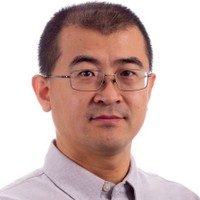
Zhibo Pang is an Adjunct Professor at KTH Royal Institute of Technology's Department of Intelligent Systems (EECS) and Senior Principal Scientist at ABB Corporate Research Sweden. His work focuses on digital transformation in industry and healthcare, spanning robotics, AI, control systems, and wireless communication. He leads projects in embodied intelligence, Industry 4.0, and Healthcare 4.0, with 23 granted patents and over 120 journal papers. Education: PhD in Electronic and Computer Systems (KTH, 2013), MBA in Innovation & Growth (University of Turku, 2012). Key Roles: IEEE Technical Committee Chair, Editor of 6 IEEE journals, ABB Inventor of the Year (2016, 2018, 2021). Research Interests: Robotics safety, wireless automation, federated learning, digital twins, and IoT security. Recent Projects: Cloud-fog automation frameworks, robot skin systems for healthcare, and latency-aware industrial control. His work bridges academia and industry through cross-functional collaborations.
Michael Felsberg is a Professor and Head of Division at the Department of Electrical Engineering (ISY) at Linköping University, leading the Computer Vision Laboratory (CVL). His research focuses on artificial visual systems (AVS), including 3D computer vision, computational imaging, object tracking, and autonomous systems. He emphasizes HVS-inspired approaches to bridge the gap between human and machine vision capabilities. Notable achievements include over 20,000 citations (h-index 47), leadership roles in the Wallenberg AI, Autonomous Systems and Software Program (WASP), and recognition as Sweden’s top AI researcher by Vinnova. His work spans academic contributions, industry collaborations, and interdisciplinary projects like climate science applications of machine learning. Positions : WASP Executive Committee Member, WASP Area Cluster Leader for Machine Learning, and Vice-Head of Department (Electrical Engineering). Education : Extensive academic background in electrical engineering and computer vision (details not explicitly stated). Research trends in his articles reflect advancements in autonomous systems, multimodal AI, and robust vision models. His teams address challenges like object tracking, generative models for 3D simulation, and culturally diverse AI systems. Awards : Tracking Challenge Winner (OpenCV, 2015) Best Paper Awards (ICPR 2016, VISAPP 2021) Vinnova’s Highest-Ranked Swedish AI Researcher (2018) He advises numerous PhD students and oversees grants in WASP-funded initiatives. CVL collaborates on projects like disaster-response robotics and Berzelius supercomputer utilization for AI.
John Folkesson is an Associate Professor at the Department of Robotics, Perception and Learning at KTH Royal Institute of Technology. His research focuses on mobile robotics, underwater autonomous vehicles (AUVs), and Simultaneous Localization and Mapping (SLAM), particularly addressing challenges in dynamic underwater environments. He leads the AUV group within the Swedish Maritime Robotics Centre (SMaRC2.0) and supervises multiple PhD projects, including those funded by Ocean Infinity and Vinnova. Folkesson has pioneered work on sonar-based SLAM, bathymetric mapping, and autonomous underwater navigation without human intervention. He teaches courses such as Probabilistic Graphical Models (DD2420) and Applied Estimation (EL2320). Recent projects include developing neural rendering techniques for sidescan SLAM and automatic launch systems for AUVs in collaboration with Purdue University and SAAB. His research emphasizes long-term autonomy, environmental ambiguity, and sensor data interpretation in unstructured underwater scenarios. Education: PhD in Robotics (2005, KTH Royal Institute of Technology) Recent Funding: 2024 projects include ALARS (Vinnova), WASP WARA-PS, and industrial collaborations. Research Interests Folkesson's work spans underwater robotics, SLAM algorithms, and sensor fusion. Key areas include: Underwater SLAM and sonar modeling Bathymetric reconstruction using neural networks Autonomous decision-making in AUV missions Real-time terrain modeling and localization Articles Trends Recent publications emphasize neural networks for SLAM optimization, sonar data processing, and autonomous underwater systems. Themes include real-time bathymetric mapping, sensor fusion in dynamic environments, and neural rendering techniques for improving navigation accuracy. Folkesson's work bridges theory and practice, with applications in marine robotics and industrial surveys. Advising & Grants PhD supervision: AUV perception (2024), SLAM with Ocean Infinity, event-response AUV systems. Collaborations: Purdue University, SAAB, Ocean Infinity. Course responsibilities: Over 10 advanced robotics and engineering courses at KTH. Labs & Teams Lead of SMaRC2.0, KTH's official research center for maritime robotics. Active in developing AUV systems for long-duration missions, including ice-covered and deep-sea exploration.
Özer Özkahraman is a postdoctoral researcher at the Division of Robotics, Perception and Learning (RPL) at KTH Royal Institute of Technology. He works under Ivan Stenius and John Folkesson, focusing on underwater mission planning, simulation, and integration of autonomous systems. His email is ozero@kth.se . He completed his PhD at KTH under Petter Ögren, researching large-scale multi-agent coverage planning for autonomous underwater vehicles (AUVs). Current projects include the SMaRCSim multi-domain simulation platform and development of underwater vehicles like LoLo, SAM, and Evolo. Research interests span autonomous underwater systems, multi-agent coordination, control systems, and simulation infrastructure. He emphasizes modular, accessible frameworks for vehicle testing and real-world deployment. His work bridges theoretical methods (e.g., control barrier functions) with practical applications in marine robotics. Publications focus on AUV navigation, environmental sensing, and adaptive control. Projects like Real2Sim aim to align simulation with real-world vehicle dynamics using motion capture data. He collaborates internationally on topics like data-driven damage detection and model compression for resource-constrained robots. No academic awards are explicitly mentioned. He actively seeks collaborators for projects in sonar simulation, flow field modeling, and cyber-physical system integration.
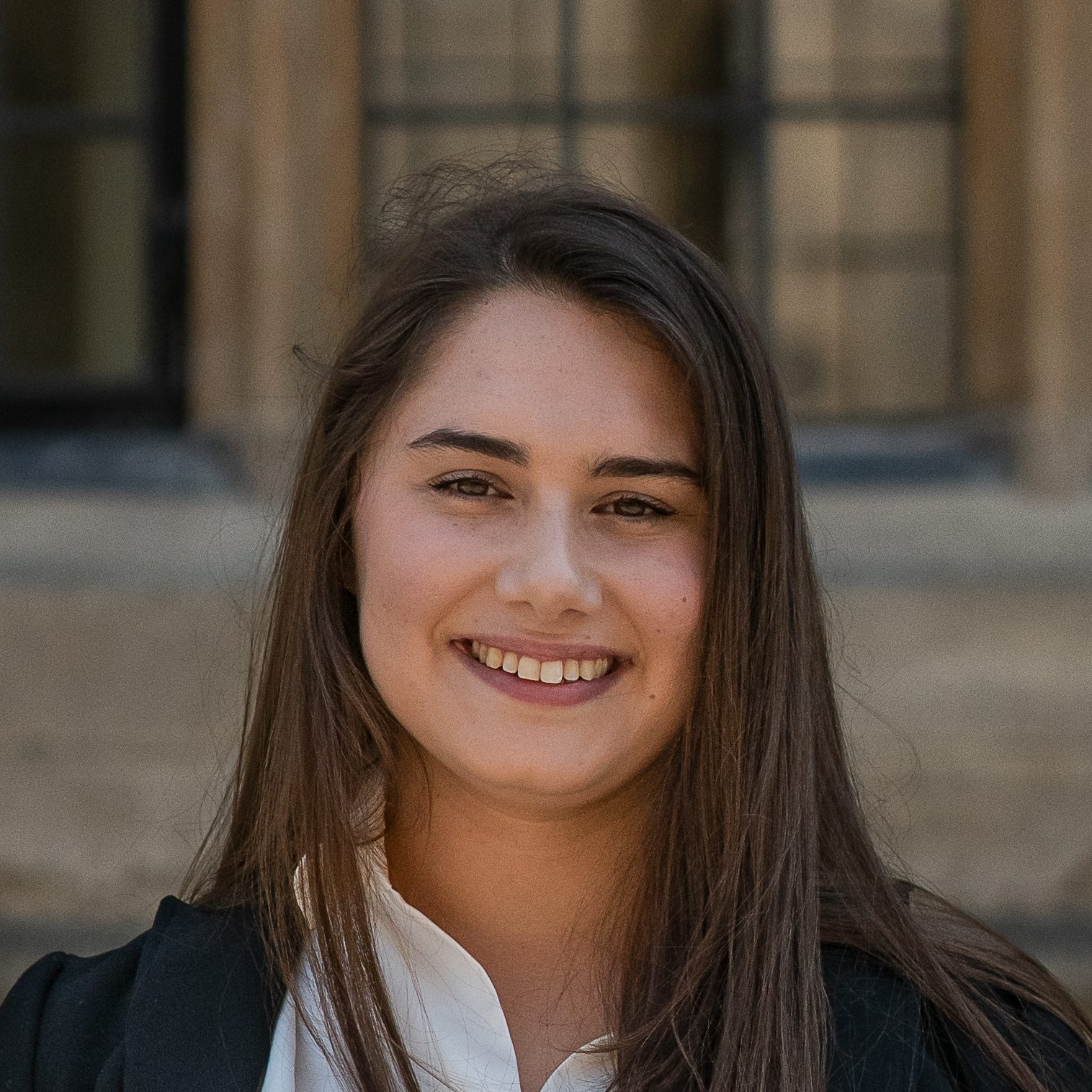
Anna Gautier is an Assistant Professor in the Department of Computer Science at Chalmers University of Technology, affiliated with the Division of Data Science and AI. Previously, she was a Digital Futures Postdoctoral Fellow at KTH Royal Institute of Technology (2023–2025), focusing on mechanism design for multi-robot systems. Her research emphasizes planning under uncertainty, multi-agent systems, and human-robot interaction. She holds a PhD from the University of Oxford (2023), an MSc from the London School of Economics, and dual undergraduate degrees from Washington University in St. Louis. Education Background: PhD in Computer Science, University of Oxford (2023) MSc in Applied Mathematics, London School of Economics BA in Mathematics and BS in Computer Science, Washington University in St. Louis Research Interests: Dr. Gautier explores planning algorithms for multi-agent systems, particularly in uncertain environments. She designs mechanisms to coordinate robots and humans, leveraging game theory and formal methods. Her work addresses challenges like resource allocation, risk-aware decision-making, and trust in autonomous systems. Recent projects include contingency planning for autonomous vehicles and auction-based resource distribution. Professional Activities: She co-chairs the ECAI 2025 Demonstration Track and teaches the course Safe Robot Planning and Control at KTH. Her projects include collaborations with WASP-Nest (PerCorSo) and TECoSA on trustworthy autonomy. She actively publishes in top venues like AAMAS and AAAI. Labs and Teams: Affiliated with Chalmers' Data Science and AI division, she leads research in multi-agent systems and human-AI collaboration.
Nikolce Murgovski is an Assistant Professor at Chalmers University of Technology, specializing in Mechatronics . He focuses on electric and hybrid vehicle energy management , autonomous driving systems , and optimization algorithms for powertrain design. His work bridges control theory , battery technology , and transport electrification . Current projects include CHARGE (2023–2026) for charging and trip planning , and EcoPilot (2022–2026) for energy-efficient autopilot development. Collaborates with institutions like Volvo Cars , Swedish Electromobility Centre , and VINNOVA on autonomous vehicle control and thermal energy systems . His recent publications emphasize convex optimization , eco-driving strategies , and collision avoidance in complex environments. He has contributed to tools like CONES for electromobility studies and has led research on hybrid powertrains and predictive energy management .
Jana Tumova is an Associate Professor at the Division of Robotics, Perception and Learning, KTH Royal Institute of Technology. Her research focuses on designing algorithms for safe, purposeful autonomous systems using formal methods to ensure rigorous specifications and guarantees. Applications span autonomous driving, UAV exploration, and network control. She teaches courses like Artificial Intelligence (DD2380) and leads the Robotics, Reading Group (FDD3316) . Her work emphasizes formal methods integration with AI, safety-critical control, and human-robot interaction. Notable research directions include risk-aware planning, belief space control, and contingency planning under uncertainty. She has published extensively on motion planning, robust control synthesis, and multi-agent systems. Key technical contributions include techniques like Belief Control Barrier Functions , Backward Underapproximate Reachability (BURNS) , and Transitional Grid Maps . She actively participates in interdisciplinary initiatives like the Control for Societal-Scale Challenges: Roadmap 2030 .
Georgios Andrikopoulos is an Assistant Professor at KTH Royal Institute of Technology's Department of Industrial and Environmental Management (ITM), affiliated with the Digital Futures Faculty. He serves as Co-Principal Investigator (Co-PI) on the 'Real-time exoskeleton control for human-in-the-loop optimization' project, focusing on advanced robotics and human-technology interaction. His research spans soft robotics, exoskeleton systems, and adaptive climbing robots, with applications in healthcare, aerospace, and education. Key projects include: "Connecting Bodies – Designing Shape-changing Wearables" (Postdoc Fellowship, 2023–2025) "Advancing real-time exoskeleton control for human-in-the-loop optimization" (Demonstrator Project) SEC scholar collaboration with Mohamed Elbadawi (May–June 2024) Research interests emphasize: Soft robotic actuators for safe human interaction Optimization of compliant mechanisms in robotics Vortex adhesion systems for autonomous inspection Design of child-friendly interactive robots His work integrates robotics with control systems, biomechanics, and human-centered design. Over 50 peer-reviewed articles demonstrate contributions to exoskeleton technology, climbing robot algorithms, and soft actuator modeling. He advises students like Laia Turmo Vidal (Postdoc) and Mohamed Elbadawi (SEC scholar). Affiliated with the cross-disciplinary Digital Futures initiative, he collaborates with Stockholm University and RISE Research Institutes to address societal challenges through digital innovation.
Pedro Roque is a Postdoctoral Researcher at KTH Royal Institute of Technology in Stockholm, affiliated with the Wallenberg AI, Autonomous Systems and Software Program (WASP) and associated with the Division of Decision and Control Systems (DCS). He obtained his Ph.D. in 2024 from the same division under the supervision of Prof. Dimos Dimarogonas, Prof. Mikael Johansson, and Prof. Jana Tumova. His research focuses on practically applicable theoretical results in robotics and control, with emphasis on space and aerial systems. Dr. Roque is particularly interested in developing algorithms that directly contribute to system performance and enhanced capabilities. He currently leads the setup of a Space Robotics Laboratory at KTH, associated with the Space Center and the WASP NEST DISCOWER project. He is an advocate for open-source software and hardware, contributing to NASA Astrobee and PX4 projects, with his research tested on the International Space Station and indoor flight arenas. Dr. Roque's work demonstrates a clear progression from theoretical foundations to practical implementation in space environments. His recent publications show an increasing focus on multi-agent coordination in microgravity, with significant contributions to model predictive control for space robotics applications. The research spans from fundamental control theory to complete system implementation, reflecting his commitment to bridging theory and practice. ICRA 2022 Outstanding Coordination Award for work on decentralized model predictive control for collaborative UAV bar transportation Dr. Roque actively mentors Master's students in Space Robotics, Control, and Vision, with supervision details available on his personal website. He has collaborated extensively with NASA Astrobee and PX4 projects, and his DISCOWER project involves collaboration with 3 Ph.D. students, 2 Master's students, 6 Professors, and one Post-doc. He also completed a 4-month internship at JPL within the Maritime and Multi-Agent Systems group. He leads the Space Robotics Laboratory at KTH, associated with the Space Center and the WASP NEST DISCOWER project, which has already demonstrated capabilities to Digital Futures, SAAB AB, SAAB Inc., and Purdue scholars. The laboratory focuses on weightless robotics, collaborative robotics (Space Cobot), and exploration robotics (MoonHopper), with practical testing on the International Space Station.
Krister Wolff is an Associate Professor of Adaptive Systems at the Department of Mechanics and Maritime Sciences (M2) at Chalmers University of Technology. He also serves part-time as Vice Head of Department for Education. His research focuses on applying artificial intelligence, machine learning, and bio-inspired methods to robotics, autonomous systems, and self-driving vehicles. He teaches in the international Master's program in Complex Adaptive Systems. His work includes projects such as AI-supported vehicle suspension design, propeller optimization using genetic algorithms, and developing interactive robots for social distancing in healthcare settings. He has contributed to over 39 publications and 9 research projects, collaborating with organizations like VINNOVA and the Swedish Transport Administration. Notable projects include ISOLDE for hospital robots and Tactical Decision-Making in Autonomous Driving funded by the Wallenberg Foundation. Key areas of expertise include reinforcement learning for autonomous vehicles, evolutionary algorithms in design optimization, and driver behavior modeling in critical scenarios. His research bridges theory and practical applications, emphasizing collaboration between academia and industry.
Dr. Tafsir Matin Johansson is an Assistant Professor (Research/Ocean Sustainability, Governance & Management) at the WMU-Sasakawa Global Ocean Institute. He holds a PhD in Maritime Affairs from WMU, an MSc in International Maritime Law from Lund University, and an LL.B. (Honours) from the University of Chittagong. His interdisciplinary research focuses on ocean governance, techno-regulatory frameworks for robotics, Arctic policy, IUU fishing, marine debris, and gender equality in ocean science. Recent work examines climate adaptation in shipping, remote inspection technologies, and sustainable port management. Dr. Johansson has led projects funded by Transport Canada, the European Union, and Swedish/Danish agencies, addressing oil spill response, underwater noise, and autonomous systems. His publications frequently analyze regulatory innovation for emerging technologies and crisis management strategies in maritime operations.
Lennart Svensson is a Professor at Chalmers University of Technology in the Signal Processing research group. His work focuses on nonlinear filtering, multi-object tracking, Bayesian statistics, and deep machine learning with applications in autonomous systems and sensor fusion. Research Interests Nonlinear Filtering and Bayesian Inference Multi-Object Tracking and Sensor Fusion Deep Learning for Autonomous Systems Performance Metrics (GOSPA, T-GOSPA) Lidar-Camera Fusion and Radiance Fields 5G SLAM and mmWave Sensing Publications Trends Recent work emphasizes uncertainty-aware multi-object tracking metrics, trajectory estimation using Poisson Multi-Bernoulli Mixtures, and sensor fusion techniques for autonomous driving. His research integrates Bayesian methods with deep learning for applications in automotive radar, lidar, and 5G positioning systems. Contact Email: lennart.svensson@chalmers.se
Elena Troubitsyna is a Professor of Computer Science with specialization in Software Engineering at KTH Royal Institute of Technology. Her research focuses on developing dependable, autonomous systems that ensure safety and reliability, particularly in complex environments like self-driving cars and drones. She employs rigorous mathematical modeling and verification techniques to address system complexity and real-time adaptability challenges. Her work emphasizes the co-engineering of safety and security in cyber-physical systems, integrating formal methods such as Event-B modeling with AI-driven solutions. Key research areas include cybersecurity for embedded systems, formal analysis of safety-security interactions, and resilient multi-agent systems. Elena has contributed to advancing methods for autonomous system navigation, fault tolerance, and privacy-preserving microservices architectures. Elena has organized international workshops like SENSEI (Safety-Security Interaction) and published extensively on topics such as model-driven engineering, formal verification of critical systems, and optimizing scheduling for distributed computing. Her research bridges theoretical foundations with practical applications, aiming to enhance societal trust in autonomous technologies.
Martin Servin is an Associate Professor at the Department of Physics, Umeå University, and leads the Digital Physics research group within the UMIT Research Lab. His work focuses on computational modeling and simulation of granular materials, robots, and vehicles, with applications in AI-based control and perception. He holds a doctoral degree from Umeå University (2003) and has pioneered research in real-time physics simulation, particularly in the context of autonomous machinery and off-road robotics. Research Interests : Digital physics, granular materials simulation, autonomous systems, reinforcement learning, and simulation-to-reality transfer. His group develops advanced simulation tools for industries like forestry, mining, and construction. Key Projects : Mistra Digital Forest (2019–2026) AILUR (Digital Twin for AI-controlled Lunar Robotics) XSCAVE (Explainable, Safe Control for Heavy Machinery) Publications emphasize simulation methodologies, AI integration, and real-world validation across robotics, vehicle dynamics, and granular mechanics. Notable contributions include work on wheel loader dynamics, deep reinforcement learning for control systems, and terrain modeling. Awards include the Spin-off award for industry-grade physics in Unreal Engine (2018) , recognizing his role in Algoryx Simulations, a spin-off company commercializing his research. Labs/Teams : UMIT Research Lab, Digital Physics Group, and collaborations with Algoryx Simulations.
Jonas Sjöberg is a Full Professor of Mechatronics at Chalmers University of Technology, where he leads the Mechatronic research group in the College of Engineering. His research spans multiple aspects of mechatronic systems with a strong focus on automotive applications. Sjöberg holds leadership roles in numerous research projects related to autonomous vehicles, vehicle control systems, and transportation safety. His research interests encompass a broad spectrum of mechatronics applications, with particular emphasis on model-based methods, signal processing, control systems, system identification, and optimization for design and product development of mechatronic systems. Sjöberg's work bridges theoretical control engineering with practical automotive applications, especially in the domains of Automotive Active Safety and Hybrid Electric Vehicles. Analysis of Sjöberg's recent publications reveals a strong research trajectory focused on autonomous vehicle technologies, with particular attention to vehicle dynamics control, intersection safety, road surface condition estimation, and optimization of vehicle maneuvers. His work demonstrates a consistent approach of applying advanced control theory to solve real-world transportation challenges, with increasing emphasis on machine learning techniques integrated with traditional control systems. Sjöberg actively supervises research and education at both undergraduate and graduate levels while leading multiple research projects funded by VINNOVA, the European Commission, and other organizations. His research group collaborates extensively with both academic institutions and industry partners in the automotive sector. His laboratory work focuses on mechatronic systems development, particularly for automotive applications including autonomous bicycles, bus docking systems, and vehicle control algorithms. The research group maintains strong connections with the automotive industry, particularly in Sweden's robust vehicle technology ecosystem.