Weichao Wang is a Professor and Chair of the Department of Software and Information Systems at the University of North Carolina at Charlotte (UNC Charlotte). He holds a Ph.D. in Computer Science from Purdue University (2005), with earlier degrees from Tsinghua University. His research focuses on securing pervasive systems, wireless networks, cloud computing, and critical infrastructures, integrating multi-disciplinary approaches like information theory and visualization. He leads efforts in cybersecurity education for K-12 and higher education. Key roles include organizing IEEE conferences (e.g., IPCCC) and editorial roles in journals like ITU Intelligent and Converged Networks. His awards include the 2024 AECT Crystal Award and multiple Distinguished TPC recognitions. Students under his advisement have contributed to areas like mobile cloud computing and network security. Professional contributions include service on over 50 conference committees and journal reviewing. Current research emphasizes cybersecurity in education, IoT defense, and AI-driven security systems. His lab explores immersive visualization for cybersecurity training and augmented reality applications.
Dr. Mohammad Iftekhar Husain is a Professor and Graduate Coordinator in the Department of Computer Science at California State Polytechnic University, Pomona (Cal Poly Pomona). He serves as the Inaugural Director of the PolySec Cyber Lab, a federally funded center for cyber security and forensics education, research, and outreach (~$2.5M in grants), and directs the university's Virtual Reality Lab. His career spans over a decade of leadership in cyber security program development, extramural funding, and academic governance. Education: B.S., Computer Science, Yamagata University (Japan) M.S. & Ph.D., Computer Science and Engineering, SUNY-Buffalo Dr. Husain's research focuses on data privacy in social networks, neurophysiological cyber security solutions, and blockchain applications. He has secured $18.4M in principal investigator grants, including NSF SFS, EAGER, and REU Site projects, and trained students placed in top institutions like UC campuses, MIT Lincoln Lab, and government agencies such as NSA and DHS. His work on brainwave authentication earned a US patent (USPTO 10,198,566) and media coverage in Time Magazine and PC Magazine . Scientific Awards: 2016 College of Science Distinguished Teaching Award Early Promotion and Tenure (2016) 2020 Faculty Learning Community for Leadership Pipeline Development Cohort As academic leader, he founded the Cal-Bridge CS Ph.D. pathway program for underrepresented students, chairs the CPP Academic Senate Academic Programs committee, and led university IT initiatives including Cyber Security Cluster Hiring and High-Performance Computing Lab development.
Sherif Khattab is a Teaching Assistant Professor in the Department of Computer Science at the University of Pittsburgh's School of Computing and Information. With a Ph.D. in Computer Science from the University of Pittsburgh (2008), he brings extensive expertise in cybersecurity systems with applications across cloud computing, Internet of Things, electronic voting, and Big Data security. His research focuses on the systems aspects of cybersecurity, maintaining an h-index of 16 (Google Scholar) and 10 (Scopus) with over 60 publications. Khattab has successfully supervised more than 15 graduate students throughout his academic career. Prior to his position at Pitt, he served as an Associate Professor at Cairo University's Department of Computer Science, Faculty of Computers and Information. Professor Khattab teaches numerous undergraduate and graduate courses, with particular emphasis on hands-on ethical hacking and security education. His current teaching portfolio includes Algorithms and Data Structures (CS 0445) and Network Security (CS 1653), with extensive experience teaching operating systems, formal methods, and computer networks across multiple semesters. His research publications reveal consistent focus on practical security solutions for emerging technologies, with recent work addressing IoT security frameworks, blockchain-based voting systems, and cloud security challenges. The publication trend shows increasing emphasis on practical implementation aspects alongside theoretical security models. With industry experience from internships at Google Inc., Ericsson Data Networks, and Bosch Research, Khattab bridges academic research with real-world security challenges. His educational background includes a Bachelor's in Computer Engineering from Cairo University (1998) and both M.Sc. and Ph.D. in Computer Science from the University of Pittsburgh (2004 and 2008).
Vincent Roca is a permanent researcher at Inria , a French national research institute for digital science and technology. Since 2019, he leads the Privatics research team focusing on privacy, previously part of the Planete team (2000-2012) for Internet protocols and applications. His work spans Privacy in smartphones, IoT, and web browsers Design of the ROBERT and CLEA protocols for the French TousAntiCovid app Standardization in IETF working groups, notably on FEC and network coding Co-author of Inria's cybersecurity white book (2019) Instructor of the popular Privacy in the digital world MOOC (14,006 participants) Research Interests include privacy risks in digital technologies, robust content distribution via FLUTE/ALC transport protocols and LDPC-Staircase FEC codes, and network coding for scalable services. His articles focus on privacy in LoRaWAN, contact tracing protocols, GDPR compliance, and FEC optimization. Scientific Awards include the Third Applied Research Price from FIEEC (2014) Knight Medal of the French Order of Merit (2020) Students supervised include PhD candidates in privacy-preserving IoT, secure authentication, and alumni like Samuel Pelissier (LoRaWAN privacy) and Michael Toth (GDPR compliance). Software Contributions include openfec.org (AL-FEC codes) and FLUTE/ALC implementations .
Jessica J. Fridrich is a Distinguished Professor in the Department of Electrical and Computer Engineering at Binghamton University, part of the State University of New York (SUNY) system. She is affiliated with the T. J. Watson School of Applied Science and Engineering. Her research focuses on steganography, steganalysis, digital forensics, and machine learning, with notable contributions to secure data hiding and patented camera fingerprinting techniques approved for legal evidence. Education: PhD in Electrical and Computer Engineering from Binghamton University Her research interests include steganography and steganalysis of digital images, digital forensics for linking photos to cameras via sensor fingerprints, signal estimation and detection, and applications of machine learning. Earlier work explored chaotic nonlinear dynamical systems and encryption. Her methods have led to over 150 refereed publications and seven successfully commercialized patents. Her articles emphasize advancements in batch steganography, JPEG compatibility, and adaptive embedding strategies. Recent work leverages machine learning for steganalysis and explores security trade-offs in high-dimensional feature spaces. 2006-2007 Chancellor's Award for Excellence in Scholarship and Creative Activities 2002 Chancellor's Award for Outstanding Inventor Narrative on advising and grants: She mentors graduate students and leads projects funded by AFOSR, NSF, and AFRL. Her research addresses challenges in data hiding security, forensic analysis, and optimizing steganographic algorithms. The Digital Data Embedding Lab, which she directs, focuses on algorithmic innovation and empirical validation in steganography and forensics. Labs/Teams: Digital Data Embedding Lab
Prof. Dr. Jochen Menges is a Professor at the University of Zurich , holding the Chair of Human Resource Management and Leadership within the Department of Business Administration under the Faculty of Business, Economics and Informatics . He serves as Director of the Center for Leadership in the Future of Work and contributes to the DSI Community Work. Research Interests: His work bridges leadership studies , emotional intelligence , mindfulness practices , and digital transformation in work environments. Key areas include charismatic leadership attribution , AI-human collaboration , emotion regulation , and future of work dynamics . Recent Publications: Menges explores how anthropomorphic AI affects workplace emotions, develops VR-based organizational simulations , and investigates the role of awe in leadership perception . His 2024 guest editorial on human-centered future of work emphasizes balancing technological and human needs. Emerging Insights: Studies on emotional responses to AI , mindfulness interventions , and gender dynamics in emotional intelligence demonstrate his focus on emotional and psychological dimensions of modern work. His populist support research connects negative affect with global political trends.
Paul Van Oorschot is a Professor at the School of Computer Science, Carleton University. He has held the Canada Research Chair in Authentication and Computer Security from 2002 to 2023. His expertise spans authentication, applied cryptography, and network security. He co-authored the seminal Handbook of Applied Cryptography and led the NSERC Internetworked Systems Security Network (2008–2013). His research focuses on enhancing security in systems, software, and web authentication, including methods to augment passwords with geolocation and device recognition. He holds a Ph.D. from the University of Waterloo and was awarded the J.W. Graham Medal (2000) and Fellowship in the Royal Society of Canada (2011). Education: Ph.D. in Computer Science from the University of Waterloo (1988) His research interests include authentication systems, public-key infrastructure, smartphone security, and usability challenges in security design. He has contributed to frameworks like OWL for password-based key exchange and SLV for server location verification. His work addresses both technical and human factors in securing modern computing environments. Key contributions include analysis of TLS interception, memory safety in programming languages, and evaluating IoT security best practices. He has published extensively on topics ranging from side-channel attacks to cryptographic protocol vulnerabilities. Awards: J.W. Graham Medal in Computing and Innovation (2000), Fellow of the Royal Society of Canada (2011) His academic leadership includes roles in shaping cybersecurity education and policy, emphasizing the need for rigorous scientific approaches in security research. His research group, the Carleton Computer Security Lab (CCSL), drives interdisciplinary projects in software security and system administration tools.
Overview Amir Rahmati is an Assistant Professor in the Department of Computer Science at Stony Brook University , where he directs the Ethos Security & Privacy Lab and is a member of the National Security Institute. His work focuses on securing emerging technologies like IoT, AR, and ML systems. Education PhD in Computer Science & Engineering, University of Michigan (2017) Research Focus His research addresses security threats in emerging systems, including: Cyber-Physical System vulnerabilities Adversarial ML attacks Hardware security Privacy-preserving frameworks Notable contributions include work on cryptocurrency scam detection, neural network robustness, and AR system security. Grants & Awards Supported by the Air Force Office of Scientific Research (AFOSR), Office of Naval Research (ONR), Meta, NVIDIA, and IBM. His research has been featured in MIT Technology Review , Washington Post , and Bloomberg . Advising Seeking students with expertise in hardware, software, ML, UX, or network protocols passionate about security/privacy. Apply via the graduate program and fill out his interest form. Labs & Collaborations Leads the Ethos Lab focusing on securing IoT, AR, and ML systems. Collaborates on projects like Erebus (AR access control) and Valve (serverless computing security).
Dr. Andres Guadamuz is a Reader in Intellectual Property Law at the University of Sussex, affiliated with the School of Law, Politics and Sociology. He serves as Editor in Chief of the Journal of World Intellectual Property . His research focuses on intersections of law and technology, including artificial intelligence and copyright, open licensing, cryptocurrencies, smart contracts, and blockchain. He has authored over 40 articles, book chapters, and two books, alongside regular blog posts on technology regulation. Research Interests: Artificial Intelligence and Copyright Blockchain Technology and IP Cryptocurrency Regulation Open Source Licensing Internet Governance Data Mining Legal Frameworks Publication Trends: His recent work addresses AI's impact on copyright law, NFTs, and legal challenges in smart contracts. He critically explores EU AI legislation, liability frameworks for AI inputs/outputs, and NFT authenticity issues. Teaching: Teaches courses on Digital Intellectual Property Law, Internet Law, and Information Technology IP Law, including developing the specialized LLM in IT and Intellectual Property Law. Grants/Advising: Supervises PhD/postgraduate students in his research areas. His work is widely cited in legal, academic, and policy circles, with over 100 Mendeley readers for key papers.
Dr hab. Krzysztof Węcel serves as Professor and current Head of the Department of Economic Informatics at Poznan University of Economics and Business (UEP), appointed on October 4, 2024. His primary affiliation spans over 25 years with UEP's Department of Economic Informatics, which maintains one of Poland's longest-running academic websites since 1998. He holds dual recognition through habilitation from University of Potsdam (2020) and professorship conferred by UEP (June 24, 2020). His academic milestones: Habilitation degree in Economic Informatics, University of Potsdam (2020) Professor title, Poznan University of Economics and Business (2020) Węcel's research centers on Semantic Technologies and data quality assessment across multilingual Wikipedia, with emphasis on company information verification, citation analysis, and open data applications. His work bridges Big Data analytics with practical business solutions, particularly in maritime logistics where he pioneered evolutionary algorithm-based AIS data processing. Current investigations focus on generative AI's dual role in creating and combating disinformation, including ChatGPT's impact on academic writing and fake news propagation. Recent publications (2022-2025) reveal three dominant trends: First, systematic analysis of Wikipedia's reliability across languages during crises like the pandemic and Ukraine war. Second, development of AI-driven fact-checking frameworks (e.g., OpenFact project's CLEF 2023 victory). Third, exploration of generative AI's societal impact ranging from student creativity to disinformation campaigns. Scientific awards received: Best Paper Award at ICIST 2017 Conference Award for most innovative article at NATCON 2018 conference Microsoft Azure for Research Award (2016) As academic advisor, he leads the 'Semantic Technologies' diploma seminar attracting high-achieving students, with participants winning the 29th UEP Foundation Competition (2025) and Eurostat's Web Intelligence Challenge (2024). His grant portfolio includes the 'Maritime Big Brother' project (2017) for ship voyage prediction using AIS data and Microsoft Azure funding for Wikipedia quality enhancement. Ongoing initiatives include OpenFact (fake news detection) and GOBLIN projects. He actively collaborates with SKN Data Science student circle (evidenced by 2024/2025 inaugural meeting) and international consortia like CLEF and QOD workshops. Departmental leadership involves managing the OpenFact research team that achieved top results in CheckThat! Lab competitions, alongside maritime data analytics groups applying evolutionary algorithms to shipping networks.
Dr. Alexa Fox is an Associate Professor in the Department of Marketing at the College of Business, The University of Akron, where she teaches undergraduate and graduate courses in Social Media Marketing, Digital Marketing, and Consumer Behavior. She earned her Ph.D. in Business Administration (Marketing) from The University of Memphis, and holds an MBA and BBA from The University of Akron. Ph.D., Business Administration (Marketing), The University of Memphis M.B.A., The University of Akron B.S.B.A., The University of Akron Her research centers on digital marketing, online privacy, and sharenting, with a focus on how consumers, particularly parents, share children's information online. She investigates the psychological and emotional dimensions of consumer behavior through physiological measurement and explores the ethical implications of digital marketing practices. Her work bridges marketing, public policy, and consumer well-being, with a strong emphasis on responsible research. The recent publications of Dr. Fox reflect a cohesive and impactful research agenda centered on digital consumer behavior, privacy, and emotional responses. Her work spans topics such as sharenting, AI in consumer products, ad blockers, social media fatigue (e.g., Fexit), and bereavement marketing. These studies employ diverse methodologies including physiological measurement, surveys, and content analysis, and are published in high-impact journals across marketing, psychology, and policy. Dr. Fox has received numerous scientific honors, including: The University of Akron’s 2024–2025 Outstanding Researcher—Early Achievement in Research Award College of Business Dean's Service Excellence Award (2025) Best Reviewer Award, International Journal of Advertising (2023) AMA-EBSCO-RRBM Award for Responsible Research in Marketing (2022) Dean’s Research Excellence Award (2020) Outstanding Paper, Journal of Consumer Marketing (2019) She has secured multiple research grants, including principal investigator roles on projects related to sharenting and children's digital well-being, funded by The University of Akron and the Association for Consumer Research. She mentors students and serves as Faculty Advisor for honors programs and student organizations. Her service includes leadership in curriculum development, faculty mentoring, and university committees. Dr. Fox is actively involved in academic and public discourse. She serves on the editorial review boards of five top marketing journals, including the Journal of Public Policy & Marketing and Journal of Marketing Education . She also contributes to public understanding through media engagements with Forbes, PBS, and The Washington Post on topics like sharenting and digital privacy.
Gabriella Casalino is an Assistant Professor at the University of Bari Aldo Moro, Department of Computer Science, and a key researcher at CILAB - Computational Intelligence Lab. Her work focuses on Computational Intelligence methods for interpretable data analysis, particularly in eHealth, Data Stream Mining, and eXplainable Artificial Intelligence (XAI) within medical and educational domains. She has contributed to innovative approaches in smartphone-based health monitoring, fuzzy logic applications, and remote vital sign detection via photoplethysmography. Education : Ph.D. in Computer Science, with advanced training at institutions like Universitat de Girona and Université de Mons. Research Trends : Recent publications highlight applications of evolving granular computing, neuro-fuzzy systems, and explainable AI in hypertension prediction, bipolar disorder monitoring, and educational data analysis. Key subfields include remote health monitoring, medical data streams, and hybrid AI models. Grants : Research funded by AIRC (Italian Cancer Research Foundation), focusing on computational methods for healthcare challenges. Labs & Collaborations : Active in CILAB, collaborating on projects involving mHealth solutions, cardiovascular risk assessment, and intelligent educational systems.
Yang Liu is an incoming Assistant Professor at Florida State University (Fall 2025) and currently a Senior Research Associate and Affiliated Lecturer in the Department of Computer Science and Technology at the University of Cambridge. She holds a B.E. in Software Engineering from Xi’an Jiaotong University (2016) and a Ph.D. in Computer Science from City University of Hong Kong (2020), advised by Prof. Zhenjiang Li. Her research focuses on intelligent mobile/wearable sensing technologies, combining AI and signal processing to advance applications in human-computer interaction (HCI), smart health, and IoT. She has received notable awards such as the 2024 N2Women Rising Star Award and the 2021 ACM SIGBED Doctoral Thesis Award. Research interests span mobile systems, AI-driven wearable sensing, privacy in human interactions, and healthcare monitoring. Key projects include RespEar (earable-based respiratory monitoring), SmarTeeth (toothbrushing tracking), and WearIoT (privacy-aware wearable systems). She mentors students in areas like biomedical signal processing and secure wearable systems. Teaching includes Mobile/Wearable Systems courses at Cambridge and previously at City University of Hong Kong. Education: B.E. Software Engineering, Xi’an Jiaotong University (2016) Ph.D. Computer Science, City University of Hong Kong (2020) Grants & Services: Organizing roles in ACM SIGCOMM, IEEE ICPADS, and multiple conference TPCs. Invited talks at Columbia University, Purdue University, and others. Her work bridges mobile computing with health applications, addressing both technological innovation and societal impacts through over 30 peer-reviewed publications and industry collaborations.
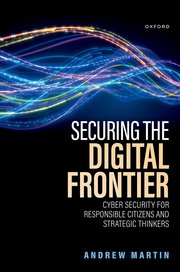
Professor Andrew Martin is a leading academic in Systems Security at the Department of Computer Science, University of Oxford, and a Governing Body Fellow at Kellogg College. His research focuses on trusted computing, cybersecurity, and secure distributed systems, with applications in cloud computing, IoT, and smart grids. He has been instrumental in advancing secure architectures using hardware-based trust mechanisms such as Intel SGX and Trusted Platform Modules. Research Interests: His work spans Systems Security , Trusted Computing , Confidential Computing , Secure Multi-Party Computation , and Privacy in Distributed Systems . He investigates how hardware-enforced security can mitigate risks in large-scale environments, particularly where privacy and trust are paramount. Publication Trends: His recent publications reveal a strong focus on Trusted Execution Environments (TEEs), remote attestation, and secure cloud architectures. He critically examines the feasibility of using hardware enclaves for both defensive and offensive security, emphasizing architectural soundness and real-world applicability. Scientific Awards: No specific awards mentioned in the provided text. Advising and Grants: Professor Martin has supervised numerous PhD and Master’s students in cybersecurity and systems research. His projects include CRANE , Trustworthy Logging , webinos , TCLOUDS , and Secure Networking by Design (SNbD) . He has secured funding for research in trusted computing and secure distributed systems, contributing to both theoretical foundations and practical implementations. Labs and Teams: He leads a research group focused on systems security and trusted computing, collaborating with industry and academic partners on large-scale security challenges. His team works on developing secure middleware, analyzing vulnerabilities in consumer devices, and designing privacy-preserving protocols for smart infrastructure.
Karine Charry is a Professor at the Louvain School of Management (LSM) within the University of Louvain (UCLouvain), affiliated with the Louvain Research Institute in Management and Organizations (LouRIM) . Her work focuses on behavioral responses to marketing strategies in health and sustainability contexts. Email: karine.charry@uclouvain.be Office: Building B, Floor 02, Office B207, Chaussée de Binche 151, 7000 Mons Research Interests: Behavioral impact of sustainability labels and nudges Effectiveness of environmental NGO campaigns Role of social media influencers in dietary and ecological behaviors Prosocial communication via platforms like Twitter Co-branding and packaging strategies for child-targeted products Key Article Trends (2006-2025): Her publications span food marketing ethics, social media dynamics, threat appeals in youth campaigns, gamification for health apps, and sustainability labeling. Notably, she investigates how social norms and digital engagement shape pro-environmental and healthy eating behaviors in children and adolescents.