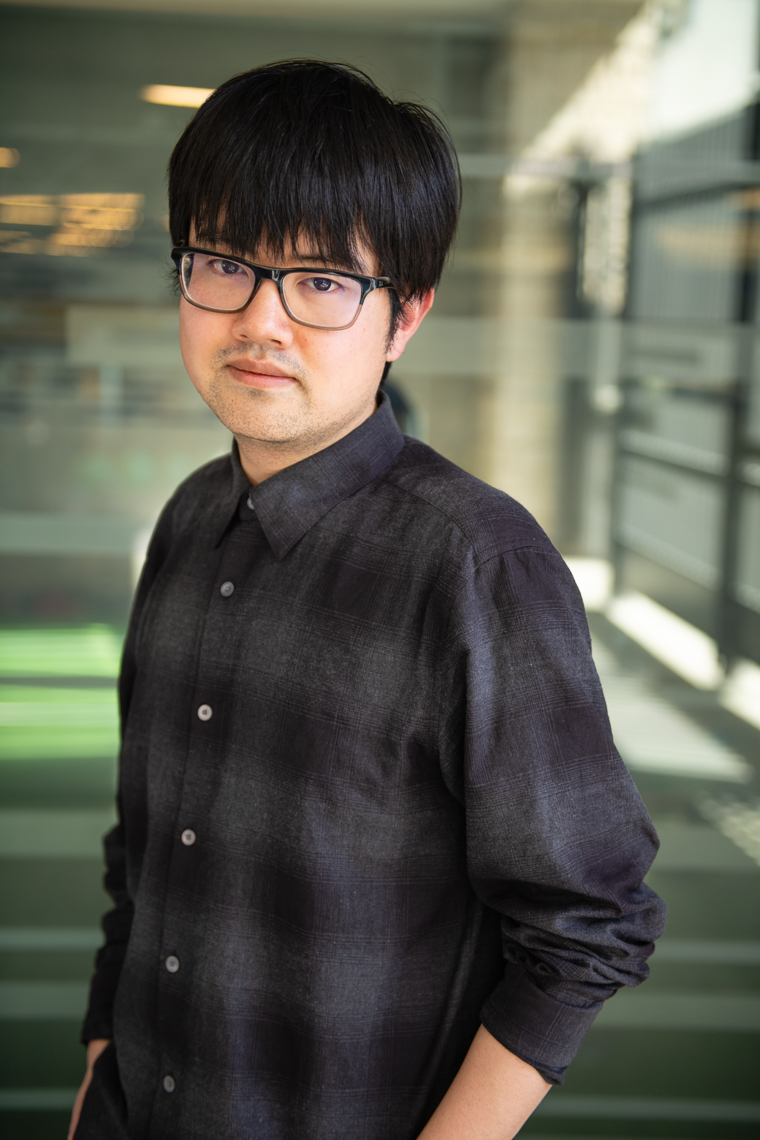
Chen Lian is an Assistant Professor in the Department of Economics at UC Berkeley. Holding a PhD from MIT, their research bridges macroeconomics, behavioral economics, and finance, with a focus on bounded rationality, monetary theory, and macro-finance interactions. Education: PhD in Economics, MIT Chen’s work explores how incomplete information and behavioral biases shape macroeconomic outcomes. Key themes include inflation effects on households, fiscal-monetary policy interactions, and financial stress dynamics. They employ heterogeneous-agent models and analyze how micro-level shocks propagate through the economy. Their publications and working papers address topics like credit cycles, demand shock propagation, and the psychological underpinnings of economic decisions. Papers such as Low Interest Rates and Risk Taking (2019) and Confidence and the Propagation of Demand Shocks (2022) highlight their interdisciplinary approach.
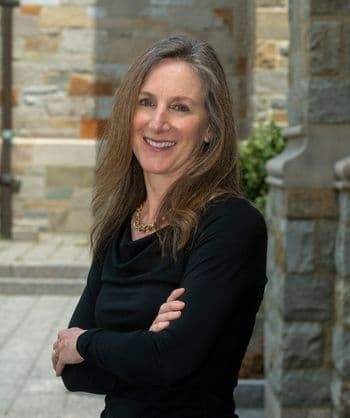
Abigail Scholer is a Professor specializing in self-regulation and motivation. Her research explores how motivational orientations influence decision-making, self-control conflicts, and adaptive change. She holds a BA from Gettysburg College and a PhD from Columbia University. Her work bridges educational, social, and cognitive psychology, with a focus on understanding the mechanisms behind human triumphs and failures in facing life's demands. Key research themes include metamotivational processes, goal pursuit dynamics, and the interplay between motivation and emotional regulation. Her lab, the Self-Regulation and Motivation Lab , investigates practical applications of these theories in academic and organizational settings. Publications span topics like motivational affordance, risk preferences, and the impact of threat on stereotyping. While no awards are listed, her contributions to motivational science are reflected in high-impact journals such as Journal of Personality and Social Psychology and Psychological Science . No advising or grant details are provided, though her lab's activities suggest active research participation.
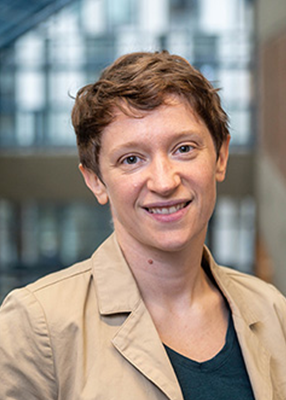
William S. Horton (Sid) is an Associate Professor in the Department of Psychology at Northwestern University , where he has taught since 2005 and directed the Cognition and Communication Lab (Cresap 108). Starting in September 2025, he will serve as Chair of the Department of Linguistics . His research focuses on socio-cognitive mechanisms in language use, particularly discourse pragmatics , perspective-taking , and non-literal language processing . Education: B.S. in Psychology/German from Duke University (1991), M.A. and Ph.D. in Cognitive Psychology from University of Chicago (1994/1999) Previous roles: Postdoctoral research at SUNY-Stony Brook, Cognitive Aging at Georgia Tech Research trends from his 20+ years of publications include common ground , memory processes , figurative language , and age-related communication changes . His work increasingly incorporates computational text analysis and real-time digital communication studies. Awards : Fellow, Society for Text and Discourse Students : Supervised Ph.D. theses on conversational alignment, common ground activation, and digital communication. Undergraduate honors projects explore inhibitory deficits, speech internalization, and perspective-taking in bilingualism. Cognition and Communication Lab investigates language processing in spoken/written contexts using experimental methods and computational models.
Rick Hoyle is a Professor of Psychology and Neuroscience at Duke University, where he serves as Associate Chair of the Department of Psychology and Neuroscience. He is also a Faculty Network Member of the Duke Institute for Brain Sciences. His academic career spans decades, with significant contributions to understanding self-regulation and adolescent development. Dr. Hoyle earned his B.A. from Appalachian State University (1983), followed by an M.A. (1986) and Ph.D. (1988) from the University of North Carolina, Chapel Hill. He progressed from Assistant to Associate to Full Professor at the University of Kentucky from 1989 to 2003 before joining Duke University. His research focuses on how adolescents and emerging adults manage goal pursuit through self-regulation, taking a broad view that accounts for personality, environment, cognition, emotion, and social influences. He employs longitudinal methods with repeated assessments, sometimes spanning years with data collection multiple times per year, or intensive studies with assessments several times daily. His lab develops innovative measurement tools including self-report measures of self-control and grit, as well as unobtrusive approaches using mobile phones and wearable devices to track goal pursuit in natural settings. His recent publications reveal a strong focus on self-regulation in digital contexts, adolescent substance use, socioeconomic influences on development, and innovative measurement approaches. His work increasingly integrates technology (social media analysis, wearable devices) with traditional psychological research methods to understand real-world behavior. Fellow, Association for Psychological Science (2013) Dr. Hoyle has secured numerous research grants totaling millions of dollars, including the current Real-Time and Randomized Tests of Social Media and Mental Health Links in Early Adolescence (2024-2029), NCCU Duke - Substance Use Research & Education (2024-2029), and Mid-Life Health Inequalities in the Rural South: Risk and Resilience (2023-2028). His grant portfolio demonstrates sustained funding for research on adolescent development, substance use, self-regulation, and health disparities. He teaches advanced courses including Applied Structural Equation Modeling and Psychology and Neuroscience Grant Writing, mentoring the next generation of researchers in quantitative methods and research design. His work through the Center for the Study of Adolescent Risk and Resilience (2008-2025) has established a significant research infrastructure for longitudinal studies of adolescent development. Current projects examine social media effects on mental health, substance use patterns, and the impact of environmental factors on adolescent well-being using innovative digital tracking methods.
Arman Eshraghi is a Professor of Finance and Investment at Cardiff Business School , with 15 years of academic and industry experience. He founded the Cardiff Fintech Research Group , leads the Digital Transformation Innovation Institute 's fintech theme, and co-directs the Behavioral Finance Working Group . He serves as Editor-in-Chief of International Review of Economics and Finance and Senior Editor in multiple journals. Key academic appointments: Cardiff University (2018–present), University of Edinburgh (2013–18) International fellowships: Development Bank of Japan, University of Canterbury (New Zealand), UCL Industry engagement: Federal Reserve Bank (NY), Alan Turing Institute, CFA Society UK, CityUK Research Focus: Behavioral finance, corporate finance, financial technology, and interdisciplinary accounting. His work examines retail investor psychology, fund manager behavior, CEO decision-making, and fintech impacts on financial markets. He has published in Review of Financial Studies , Harvard Business Review , and Financial Times . Scientific Contributions: EFMD Global, Emerald Literati, and European Financial Group awards Keynote speaker at global conferences (New York, London, Mumbai, Frankfurt) Media citations in Financial Times , BBC , Forbes , and Bloomberg Teaching & Leadership: Delivers award-winning MSc/MBA/PhD courses in UK, Europe, and Asia. Holds a Postgraduate Certificate in Academic Practice and Fellow of AdvanceHE. Designed executive programs for firms including Aetna CVS Health and Scottish Widows. Research Leadership: Co-organizes international conferences like the Cardiff Financial Technology Conference and European Financial Management Association Meeting . Supervises PhD students on topics spanning fintech, behavioral finance, and CEO lifestyle impacts.
Professor Mary Ellen Carter is the Joseph L. Sweeney Chair in Accounting at Boston College's Carroll School of Management. She holds a BS from Babson College, an MBA from Boston College, and a PhD from MIT's Sloan School of Management. A CPA with prior audit experience at Coopers & Lybrand, she focuses on financial reporting, executive compensation, and corporate governance. Her research explores gender pay gaps, labor market pressures on compensation, and the role of compensation consultants. Her work has been published in top journals like Journal of Accounting and Economics and Journal of Financial Economics , and featured in Forbes , Financial Times , and New York Times . She currently serves as Editor of The Accounting Review and Associate Editor of Management Science . Notable awards include the Coughlin Distinguished Teaching Award (2019) and Ernst & Young Faculty Fellowship (2021-2022). Professor Carter teaches intermediate accounting and has held faculty positions at Columbia Business School and Wharton School. Her research trends emphasize real-world impacts of accounting policies, regulatory changes, and labor market dynamics. Recent studies address pandemic-driven compensation shifts and ESG-related governance mechanisms.
Aybars Tuncdogan is a Reader in Digital Innovation and Information Security at King’s Business School, King’s College London. He holds affiliations with the King’s AI Institute, King’s Cybersecurity Centre (Informatics), and King’s Cybersecurity Group (War Studies). A Fellow of the Higher Education Academy, he also serves on the editorial review board of Industrial Marketing Management . Education : PhD in Management, Rotterdam School of Management, Erasmus University MPhil in Business Research (Distinction), Erasmus University Bachelor’s in Business Management & Computer Science (Honors), Earlham College Research Interests : His work focuses on three pillars of digital innovation: generation (crowdsourcing, AI), marketing (digital brand personality, sales ambidexterity), and protection (information security, corporate espionage). He integrates psychology (individual differences, social identity) and computer science (machine learning/AI) frameworks. Publications Trends : Recent work addresses cybersecurity challenges in retail, AI ethics in healthcare, and interdisciplinary innovation. He frequently publishes in top-tier journals like Journal of Management and Scientific American , blending academic rigor with practitioner impact. Awards & Contributions : 2015 Best Paper Award (shared) Edited books including Oxford Handbook of Individual Differences and Strategic Renewal Teaching & Pedagogy : Develops innovative teaching methods like inquiry-based learning to foster student creativity. Taught modules on digital marketing, consumer behavior, and research methods. Labs/Teams : Contributes to cybersecurity initiatives at King’s, focusing on AI-driven defense mechanisms and organizational cyber resilience strategies.
Prof. Tibor Neugebauer is a Full Professor of Finance at the University of Luxembourg’s Faculty of Law, Economics and Finance (FDEF), Department of Finance. He holds a Doctorate in Economics from the University of Valencia (2000) and professional qualifications from Hannover, with prior academic positions at institutions including York, Kiel, Hannover, and research stays at Lisbon, Bari, Valencia, and Rome. His research focuses on Experimental Finance and Economics, particularly behavioral finance, asset markets, auctions, and decision-making under uncertainty. He designs laboratory experiments to analyze markets, strategic interactions, and algorithm-human dynamics, with recent emphasis on algorithmic trading and market regulations. Education: Doctor of Economics, University of Valencia (2000) Master of Science in Economics, University of Alicante (1997) Bachelor’s in Economics, University of Bonn (1994) Professional Qualification in Economics, University of Hannover (2006) Research Interests: Prof. Neugebauer’s work examines institutional and informational structures’ impact on market outcomes, including fairness in co-determination, communication effects in asset markets, and algorithmic arbitrage. His experiments explore human behavior in complex environments, such as speculative asset trading and regulatory interventions. He has pioneered studies on algorithmic trading’s role in experimental markets, combining theoretical models with empirical behavioral insights. Key Contributions: His research addresses topics like margin trading regulations, Modigliani-Miller theorem validity in experimental settings, and the ‘greater fool’ phenomenon. Recent studies emphasize algorithmic-human interaction dynamics, market efficiency under varying mechanisms, and the implications of wash trading. Awards & Grants: No specific awards listed, but his extensive publication record reflects sustained recognition in experimental finance. Grants and collaborations likely relate to his research on market design and behavioral finance. Labs/Teams: Active in the FDEF’s finance research group, contributing to Luxembourg’s international reputation in experimental economics and finance. Collaborates with global institutions on algorithmic trading and market dynamics.
Professor Ute Stephan is a Professor of Entrepreneurship at King's Business School, King’s College London, where she is affiliated with the Strategy, International Management & Entrepreneurship department. She is a globally recognized scholar in the psychology of entrepreneurship, with a focus on entrepreneurial well-being, mental health, social entrepreneurship, and the role of culture and institutions. Research Interests: Entrepreneurial well-being, stress, and mental health Social and inclusive entrepreneurship Cross-cultural innovation and national culture Family business and women entrepreneurs Entrepreneurial resilience during crises (e.g., Covid-19) Feedback-seeking and social networks Her recent publications reveal a strong trend toward understanding the psychological and social dimensions of entrepreneurship, particularly how entrepreneurs navigate uncertainty, maintain well-being, and create inclusive impact. Her work integrates insights from organizational behavior, psychology, and management, often using cross-national data and meta-analytic methods. Scientific Awards and Recognition: 2025 JIBS Decade Award Fellow, International Association of Applied Psychology (IAAP) 21st Century Entrepreneurship Fellow Winner, 2016 GLOBE Robert J. House Best Research Paper Award Highly Commended, 2015 GLOBE Robert J. House Best Research Paper Award Nominee, 2021 Journal of Management Scholarly Impact Award She has secured over £3 million in research funding from the European Commission, UK Government, UK research councils, and German institutions. She serves as Associate Editor at Journal of Management and Entrepreneurship Theory & Practice , and previously held editorial leadership roles at Applied Psychology and Journal of International Business Studies . She is an elected board member of the IAAP and chairs its publication committee. She also advises the Founder Mental Health Pledge and is an IfM Research Fellow at IfM Bonn. Labs and Research Teams: Lead investigator of the 25-country study on Entrepreneurship & COVID-19 Principal investigator of the WEWell project on women entrepreneurs’ well-being Lead investigator of the SEFORIS and SELUSI projects on social enterprises Team member in large-scale international collaborations across Europe, Asia, and the Americas
Vasily Klucharev is a Tenured Professor at the Higher School of Economics University (HSE University) since 2013, where he serves as Laboratory Head of the Institute for Cognitive Neuroscience and the International Laboratory of Social Neurobiology. He is also a Professor at the Graduate School of Business in the Department of Strategic and International Management, and Programme Scientific Supervisor of the Cognitive Sciences and Technologies: From Neuron to Cognition program. His educational background includes: 2003: Candidate of Sciences (PhD) in Neurobiology from St Petersburg State University with thesis titled 'Neurobiological mechanisms of emotions' 1994: Degree in Physiology from St Petersburg State University, Faculty of Biology Klucharev's research focuses on neuroeconomics, social and emotional neuroscience, and cognitive neuroscience, with particular emphasis on understanding decision-making processes, social influence, and conformity. His work integrates psychological theories with advanced neuroimaging techniques including fMRI, EEG, depth and scalp ERP, TMS, and MEG. His research has significant implications for understanding consumer behavior, persuasion, and the neural mechanisms underlying social conformity. His recent publications demonstrate a clear trend toward investigating the neural correlates of price perception, social influence on decision-making, and the processing of disinformation and deepfakes. His work bridges multiple disciplines, combining methods from neuroscience, psychology, and economics to address fundamental questions about human behavior in social contexts. Scientific awards: Best Teacher 2023-2024 Best Teacher 2018-2020 Best Teacher 2015 Klucharev has supervised numerous doctoral students including I. Ntoumanis, M. Martinez-Saito, O. Zinchenko, and Z. Yaple. His research has been supported by significant grants from Saint Petersburg State University, the Swiss National Science Foundation, and the European Commission. He has also served as an invited reviewer for prestigious journals including Psychological Science, Neuron, and Social Cognitive & Affective Neuroscience. As Director of the Institute of Cognitive Neuroscience at HSE University, Klucharev leads a multidisciplinary team exploring the neural mechanisms of social behavior, decision-making, and cognitive processes. His laboratory has gained international recognition, with research featured in major media outlets including BBC TV, Financial Times, The Telegraph, and CNN.
Kristin Laurin is a Professor of Psychology at the University of British Columbia (UBC), holding a PhD from the University of Waterloo (2012). Previously, she was a faculty member at Stanford Graduate School of Business and studied at McGill University. She is affiliated with the Department of Psychology within UBC’s Faculty of Arts, specializing in Social & Personality research streams. Her research explores how people’s goals and motivations interact with their beliefs and ideologies, addressing questions such as democratic support despite conflicting interests, moral rationalization after wrongdoing, and systemic social stratification. She has taught courses like PSYC 101/102 (Introduction to Psychology) and contributed to experimental studies on topics like system justification, religion’s role in societal structures, and corporate personhood perceptions. Key research areas include social inequality dynamics, moral psychology, and the psychological underpinnings of belief systems. Her work bridges experimental and theoretical frameworks to analyze how motivations drive ideological adherence and societal structures. Notable findings include the role of structure in promoting motivated action and the cultural evolutionary functions of religious beliefs. Dr. Laurin has received prestigious awards, including the Killam Faculty Research Fellowship (2019), SAGE Young Scholars Award (2018), and APS Rising Star Award (2017). She leads a lab focusing on social cognition, inequality, and moral psychology, with publications in top journals like Psychological Science and Journal of Personality and Social Psychology . Her research emphasizes the interplay between individual goals and societal systems, contributing to debates on social change and justice.
David Wooten is the Alfred L. Edwards Collegiate Professor of Marketing and a University Diversity and Social Transformation Professor at the University of Michigan’s Stephen M. Ross School of Business. He holds a PhD (1992), MBA (1987), and BBA (1985) from the University of Michigan and Georgia State University, respectively. His research explores consumer behavior through social psychology and micro-sociological theories, focusing on gift-giving, word-of-mouth, and the impact of racial/stigmatized identities on marketplace dynamics. He has published extensively in journals like Journal of Consumer Research and served as Editor-in-Chief of the Journal of Consumer Psychology . Notable awards include the 2022 Taylor & Francis Distinguished Scholar Award and the 2015 AMA Multicultural Mentoring Award. Wooten’s work bridges theory and practice, addressing topics such as racial identity in consumer research, the presenter’s paradox in service interactions, and the role of ambient lighting in prosocial behaviors. He has led editorial roles and mentored doctoral students through forums like the AMA-Sheth Doctoral Consortium (2013) and SCP Doctoral Symposium (2023). His research also emphasizes equity and social transformation, advocating for inclusive consumer research frameworks.
Max H. Bazerman is the Jesse Isidor Straus Professor of Business Administration at Harvard Business School, specializing in negotiation, decision making, and behavioral ethics. His academic career spans several decades during which he has become a leading authority on how cognitive biases and ethical considerations influence organizational decision processes. Professor Bazerman's primary research interests include negotiation strategies, ethical decision making, judgment heuristics, and bounded awareness. His work explores how individuals and organizations can recognize and overcome cognitive limitations to make more ethical and effective decisions. He has pioneered research on blind spots in ethical judgment, the psychology of complicity, and decision architectures that promote better choices. His publications reveal a consistent focus on practical applications of behavioral science to real-world business challenges. Recent work examines resource allocation during crises, ethical leadership frameworks, and the role of experimentation in improving organizational decision making. The research shows increasing emphasis on systemic ethical failures and how individuals contribute to complicity in unethical behavior. Honorary doctorate from the University of London Life Achievement Award from the Aspen Institute's Business and Society Program Distinguished Educator Award from the Academy of Management Academy of Management Career Award for Scholarly Contributions to Management Lifetime Achievement Award from the Organizational Behavior Division of the Academy of Management Ethisphere's 100 Most Influential in Business Ethics Daily Kos' Heroes recognition for whistleblowing on the Bush Administration's corruption of the RICO Tobacco trial Bazerman has advised numerous organizations including Abbott, Aetna, AIG, Alcoa, Allstate, Amgen, and many others across 30 countries. His work bridges academic research and practical application, with significant influence on how businesses approach ethical decision making and negotiation strategy. He has trained doctoral students who now hold positions at leading business schools worldwide, including Harvard, Wharton, Kellogg, and Stanford.
Christopher Williams is the Arthur Andersen Professor of Accounting and Area Chair of Accounting at the Ross School of Business, University of Michigan. His research focuses on debt contracting, banking risk, and financial reporting quality. He holds a PhD from the University of North Carolina and degrees from Brigham Young University. Academic Roles: Professor (2021–present), Associate Professor (2016–2021), Assistant Professor (2009–2016) Awards: Michael and Joan Sakkinen Faculty Fellow, Arnold M. Jacob Faculty Development Award Research emphasizes regulatory impacts on capital structures, loan syndication dynamics, and systemic risk. Key areas include banking transparency, covenant design, and media influence in private lending. Over 20 peer-reviewed articles appear in top journals like Journal of Financial Economics and Review of Accounting Studies . Articles (2023–2012) analyze topics such as Basel III anticipatory effects, CDS trading dynamics, and media's role in private lending. Recent work explores optimal capital structure under reporting quality constraints and strategic syndication behavior. Awards: Arthur Andersen Chair, Sakkinen Fellowship, Jacob Award Grants/Advising: Extensive grant history in accounting research; no listed advisees. Labs/Teams: Active in Ross School's accounting research initiatives focusing on financial reporting and banking analytics.
Dr. Kristen Lindquist is an incoming Professor and Robert K. and Dale J. Weary Chair in Social Psychology at The Ohio State University. She holds a A.B. in Psychology and English from Boston College (2004) and a Ph.D. in Psychology from Boston College (2010). Her research focuses on the psychological and neural basis of emotions, integrating tools from social cognition, neuroscience, and big data. She previously served as an Assistant Professor (2012–2018) and Associate Professor (2018–2022) at the University of North Carolina at Chapel Hill before being promoted to Professor in 2022. Her work emphasizes how emotions emerge from interactions between bodily states, cultural learning, and neural processes across the lifespan. She leads the Affective Science Lab, exploring cultural influences on emotion perception and the role of language in shaping emotional experiences. Lindquist’s research has been featured in Science , NeuroImage , and Trends in Cognitive Sciences , among others. Education: A.B. in Psychology and English, Boston College, 2004 Ph.D. in Psychology, Boston College, 2010 Research Interests: Lindquist investigates emotion construction theory, the neurobiological underpinnings of affect, interoception, and cultural influences on emotion semantics. Her work bridges cognitive, social, and developmental psychology with neuroscience, emphasizing interdisciplinary methods. Recent studies explore how language shapes emotional understanding and the impact of aging on physiological-emotional linkages. Key Contributions: Developed the theory of constructed emotion, challenging traditional discrete emotion models. Conducted large-scale meta-analyses mapping brain networks underlying emotion. Explored cultural variation in emotion semantics using linguistic and neuroimaging data. Labs/Teams: Her Affective Science Lab at OSU will continue investigating emotion’s neural and cultural foundations, with a focus on translational applications in mental health and education.