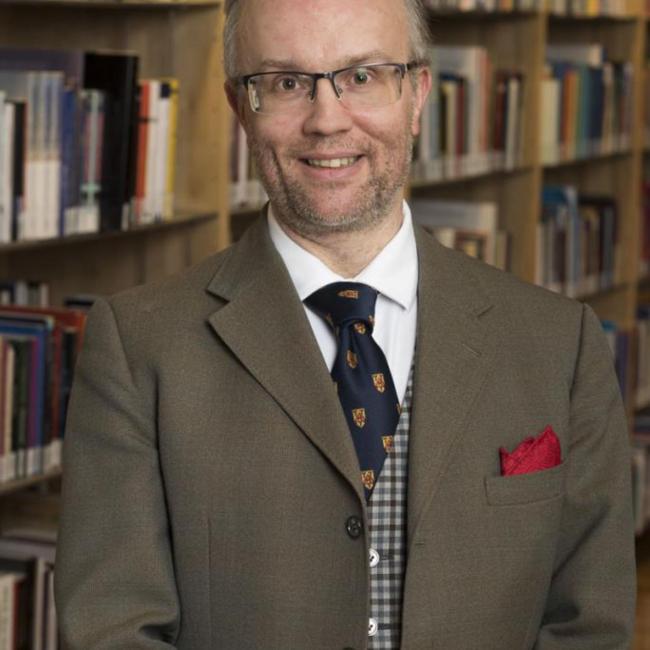
Vincent Kaufmann is an Associate Professor at the Swiss Federal Institute of Technology in Lausanne (EPFL) , leading the Urban Sociology Laboratory (LaSUR) . Since 2010, he serves as Scientific Director of the Mobile Lives Forum in Paris. His career spans teaching at institutions like Lancaster University , Ecole des Ponts ParisTech , and Tongji University , with research focusing on mobility sociology , urban dynamics , and public policy evaluation . Master's in Sociology from University of Geneva PhD at EPFL on transport modal practices His work explores mobility-capital interactions , motility , and rhythmanalysis in contemporary societies. Key themes include urban lifestyle transformations , cross-border regions , and mobility-sustainability nexus , with recent emphasis on new proximities and slow cities . Teaching roles span EPFL departments like Teaching (EDAR) , Architecture and Urban Sciences (SGC) , and Human and Social Sciences (CDH) . He has directed numerous PhD and master's theses on urban mobility topics.
Patrick Rérat is a Professor at the University of Lausanne, affiliated with the Institute of Geography and Sustainability within the Faculty of Geosciences and Environment. He is a prominent researcher at LIVES (Interdisciplinary Centre of Excellence for Research on Life Course Changes), where he focuses on urban mobility, transportation patterns, and sustainable mobility transitions. His research interests span transportation studies, urban mobility, sustainable transportation systems, cycling research, residential mobility, and the geography of daily mobility practices. Rérat employs interdisciplinary approaches to examine how individuals navigate urban spaces across different life stages, with particular attention to cycling infrastructure, e-mobility adoption, and the relationship between transportation modes and broader social patterns. Rérat's recent work demonstrates a strong focus on cycling practices, with numerous publications examining cargo bike adoption, e-bike usage patterns, and the effects of cycling infrastructure. His research employs various methodological approaches including user segmentation, longitudinal mobility studies, and spatial analysis of urban transportation patterns. He has made significant contributions to understanding how transportation choices evolve across the life course, particularly during youth transitions. His scholarly output includes numerous publications in leading transportation and geography journals, with recent work focusing on contemporary mobility challenges including pandemic-era transportation changes, telework impacts on mobility patterns, and the political dimensions of cycling infrastructure. As a professor at the University of Lausanne, Rérat contributes to advancing research on sustainable urban mobility while training the next generation of geographers and transportation specialists. His work bridges theoretical geographic concepts with practical urban planning applications, making significant contributions to both academic scholarship and urban policy development.
Prof. Dr. Ute Fendler holds the Chair of Romance Literature and Comparative Studies with Special Emphasis on Africa at the University of Bayreuth. Her academic journey includes a 2006 Habilitation and 1992 PhD from Saarland University, with research spanning Francophone African literatures , intermedial phenomena , and postcolonial cinematic analysis . She coordinates the Bayreuth Academy of Advanced African Studies as Vice-Director and serves on multiple editorial boards. 2006-Present: Professor at University of Bayreuth 2011-2015: Director of Institute for African Studies 2015-Present: Vice-Director of Bayreuth Academy of Advanced African Studies Her research interrogates urban ecotonal spaces through African music videos, transnational cinematic flows in African and Afro-Asian contexts, and mediated memory practices . Recent publications explore post-apocalyptic storytelling and decolonial aesthetics in music videos and films. Scientific contributions include: 2025: Staging Atmosphere: Urban Ecotonal Spaces in African Music Videos (Brill) 2024: Co-edited Asia-Africa: Multifaceted Engagement (Palgrave Macmillan) 2022: Animating the Future: Superheroes in Africa (Brill) 2020: Ghosts as Mediators: Memory and Hauntology (iwalewabooks) 2019: K-Pop Fandom in Germany (Korea University Press) She received the Faculty Enrichment Award from the Canadian Embassy in 2005 and serves on multiple academic committees including the University Library Commission (2007-2016).
Filipa Matos Wunderlich is an Associate Professor in Urban Design at University College London's Bartlett School of Planning, where she serves as Director of the cross-faculty MRes Interdisciplinary Urban Design (MRes IdUD) program and Urban Design Strategic Coordinator. She previously co-designed and directed the MSc Urban Design and City Planning program and has held academic positions at UCL since 2008, initially as a Research Associate before becoming a Lecturer in 2010. Her educational background includes a PhD from University College London (2010), a Diploma of Architecture from Universidade do Porto (2000), and a Bachelor of Music from ArtEZ Institute of the Arts (2001). This interdisciplinary foundation informs her unique approach that bridges architecture, urban design, and musical performance. Wunderlich's research centers on temporality in urban places, urban rhythms, and place-rhythmanalysis, with significant contributions to temporal urban design theory and practice. Her work explores sensory and performative urbanisms, affect in the city, and the interface between urban and musical aesthetics. She also investigates gender-neutral urban design and alternative hybrid typologies in contemporary cities, emphasizing the synergy between theoretical innovation and practical application in urban design. Her publication record reveals a clear evolution from foundational theoretical work on urban rhythms and place-temporality toward increasingly sophisticated applications of temporal design principles. The most recent publications demonstrate a maturation of her temporal urban design framework, moving from conceptual explorations to practical implementations across diverse urban contexts, with growing emphasis on wellbeing, health, and sustainability implications. As a respected academic, Wunderlich regularly serves as keynote speaker at international conferences, including recent invitations to Oxford University, AESOP conferences, and the Conscious Cities Festival. She is a guest editor for Planning Theory and Practice and Architecture Open-Access journals, and frequently reviews for leading urban studies publications. In her teaching and advising roles, Wunderlich directs the MRes IdUD program and coordinates the Major Research Projects module across multiple postgraduate programs. Her grant activities include Innovate UK's Smart Walkability Platform project, UCL ChangeMakers initiatives, and the European COST Action Go2CHANGE research project on cultural heritage conservation under climate change. Wunderlich leads several research initiatives including the Post Growth Planning Research Cluster, Temporal Urban Design Research Podcast and Journal, and Collective Zebra - an online journal focused on walking. These platforms foster interdisciplinary dialogue on temporal approaches to urban design and facilitate knowledge exchange between academic research and professional practice.
Laurent Matthey is an Associate Professor at the University of Geneva's Department of Geography and Environment since 2014. He directs the Urban Planning orientation of the joint UNIGE-HES-SO Master's in Territorial Development and co-directs the UNIGE-EPFL MAS in Urban Planning. His work bridges ethnography and literary studies, examining political issues in urban narrative production through sensitive registers and attentional regimes. Current affiliations: CRESSON team (UMR AAU) since 2023 Active in EspaceSuisse committee and RAMAU network management Research focuses on epistemology of urban planning knowledge , organized into two streams: Planning discourses and narrative studies Ethnography of urban projects His research-creation explores intersections between: Communication and urban planning Fiction and urban planning Narrative and sensitive methods Urban social quality Current projects include "Participez! Neighborhood makers" (FNS Division 1 funding) and completed works like "The narrative making of the city" (FNS-COST 18126) and "Developing housing cooperatives in Greater Geneva" (Interreg V France-Switzerland). He has supervised doctoral students in Geneva, including Hugo Campi ("Flowers to Convince"), Nicole Peccoud ("Social emergency in Geneva"), and Morgane Rudaz ("Feminist collages"). Key scientific contributions appear in GeoHumanities , Planning Theory , and Social Inclusion , with recent emphasis on: AI's role in urban narrative (2024) Decolonial planning approaches (2023) Affective urbanism (2018) Teaching encompasses: Urban geography and ecology (T206059 BGEO) Research-creation seminar (T416007 MDT) Creative methods in metropolitan foresight Professional engagements include urban quality studies for Geneva's Urban Planning Office and Lausanne's Roads Department. He has co-authored foundational texts on Swiss urbanism with Christophe Mager and David Gaillard, exploring topics like "Urbanism fictionnel" (2011) and "Being an urban planner" (2016).
Caspar Meyer is a Professor at the Bard Graduate Center, Bard College, where he serves as Editor of West 86th: A Journal of Decorative Arts, Design History, and Material Culture . His research bridges archaeology, art history, and material culture studies, with emphases on ancient Greek and Eurasian societies, cross-cultural exchange, and the role of temporality in art. Meyer leads archaeological fieldwork at the sanctuary of Apollo on Despotiko and has excavated in Ukraine, Russia, and the Cyclades. Education includes a PhD and MS from the University of Oxford and a BA from King’s College London. Meyer's work interrogates how people and objects co-create environments through embodied craftsmanship, with current projects examining ancient 'future-making' via technological choices in pottery, metalwork, and stone carvings. His interests span: Intercultural dynamics in first-millennium BCE Eurasia Classical reception in modern scholarship and museums Archaeological method and sensory engagement with artifacts Recent publications (2018–2025) cluster around materiality, temporality, and interdisciplinary critique. Trends include museum display ethics, Scythian art technology, and re-evaluations of classical reception through Foucaultian and possibility-studies frameworks. Articles consistently merge technical analysis (e.g., chaîne opératoire) with cultural theory. He directs a field school for BGC students and co-edits thematic journal issues on topics like metalwork and magic, fostering collaborative research networks.
Ann-Charlotte Palmgren is a University Lecturer in Gender Studies at Åbo Akademi University, affiliated with the Faculty of Arts, Psychology and Theology and the Department of Culture, History and Philosophy. She holds a PhD in Gender Studies (2014) and the title of Docent (2021), equivalent to Associate Professor. Her academic work spans interdisciplinary research at the intersection of feminist urban studies, youth and girlhood studies, internet studies, and methodological innovation. Her research interests include: Feminist urban studies and spatial justice Girlhood and youth temporalities Critical autoethnography and poetic inquiry Qualitative methods and creative academic writing Ethics in ethnographic research Temporalities in literature and environmental crisis Her recent publications (2021–2025) reflect a strong thematic coherence centered on embodiment, temporality, and poetic expression in research. She frequently employs walking interviews, autoethnography, and interdisciplinary methods to explore how young people experience urban and digital spaces. Her work bridges scholarly rigor with poetic and narrative forms, contributing to evolving methodologies in the humanities. Scientific awards received include: Första pristagare i Solveig von Schoultz-tävlingen för dikter (2018) Utmärkt undervisningsförmåga in Gender Studies (2022) Honourable mention for 'Standing still: Walking interviews and poetic spatial inquiry' (2018 Wiley Area Prize) She is actively involved in academic mentoring and supervision, currently serving as main supervisor for three doctoral researchers. She has contributed to university pedagogy through workshops and seminars and plays a leadership role in research, including jury memberships, dissertation evaluations, and hosting academic visitors. Since 2023, she has been editor-in-chief of the journal Finsk Tidskrift , further amplifying her influence in Nordic humanities scholarship. Her research is supported by grants from The Turku Urban Research Programme and Svenska litteratursällskapet i Finland, focusing on girlhood in urban space and temporality in youth culture and environmental questions.
Dr. Julian F. Henriques is a Senior Research Fellow at Goldsmiths, University of London, and a leading scholar in sound studies, cultural studies, and Caribbean research. With a PhD thesis (2008) on Reggae Sound System Crews, his work bridges music, technology, and embodiment through practice-based research. He has authored the book Sonic Bodies (2011) and co-edited Rhythm, Movement, Embodiment (2014). Currently, he explores fetal auditory environments through the Sonic Womb Exhibition (2026) and contributes to obstetric research on noise exposure. Research Interests: His scholarship focuses on the Jamaican sound system as a cultural technology, analyzing rhythm, affect, and sonic embodiment. He investigates intersections between popular culture, Caribbean diasporic practices, and the materiality of sound through theoretical frameworks like Afrofuturism (2015) and cosmopolitan theory (2020). Recent work combines computational acoustic modeling with ethnographic insights into prenatal soundscapes. Key Publications: Includes articles on fetal noise exposure (2025), Jamaican knowledge systems (2023), and rhythm analysis (2014). His edited works span Stuart Hall's legacy (2018) and sound studies companions. Collaborations with acoustic engineers (2025) demonstrate interdisciplinary reach. Collaborations: Works with institutions like University College London (2025), Tate Modern (2011), and the University of Munich (2014). Leads the Sonic Womb project with Pierre Gélat and Atau Tanaka.
Professor Dawn Lyon is a Professor of Sociology at the University of Kent's School of Social Policy, Sociology and Social Research. She joined the university in 2006, previously working at the University of Essex, European University Institute, Paris V, and Vrije Universiteit Brussel. Her PhD in Sociology was completed at the European University Institute in 2003. She has held visiting roles at institutions including the Australian National University and Goldsmiths, University of London. Her research focuses on the sociology of work, time, and everyday life, with a particular emphasis on rhythmanalysis. She has pioneered audio-visual ethnography in studies like Billingsgate Fish Market and led projects on pandemic time during the COVID-19 crisis. Her work explores how work rhythms intersect with temporal and spatial organization, using innovative methods such as 'feel tanks' and creative participatory approaches. Lyon is a Leverhulme Research Fellow and has taught modules on qualitative research, visual sociology, and the sociology of time. She supervises doctoral students in areas ranging from labor markets to digital technologies and voluntary action. Her research has been supported by grants from the British Academy and others. Publications span over 50 entries in journals like Sociological Review and Time & Society , books including What is Rhythmanalysis? (2019), and edited collections. She serves on the editorial boards of Qualitative Research and Time & Society . Lyon’s work bridges theory and practice, emphasizing interdisciplinary approaches to understanding time, space, and social change. Collaborative projects like Imagine Sheppey and A Day at a Time highlight her commitment to community engagement and methodological innovation.
Dr. Olga Fotakopoulou is an Associate Professor in Developmental Psychology at Birmingham City University (BCU), serving as Academic Lead for Equality, Diversity, and Inclusion, and Athena Swan Lead. Her research focuses on human development from infancy to adolescence, with a particular emphasis on socio-cognitive, emotional, and prosocial development. She has over 15 years of experience in developmental psychology research and counseling across clinical and educational settings. Olga teaches modules such as Lifespan Development (online MSc program) and supervises MSc Psychology Dissertations. Her work explores the impact of technology on children, including touchscreen use and digital media's role in education and childhood development. Research interests include technology's influence on early learning, cross-cultural studies in early childhood education, and interdisciplinary approaches to youth mental health. She has contributed to projects analyzing pandemic effects on children’s routines and the digital divide in mathematics education. Olga’s publications span topics like creative arts therapy for adolescent health and rhythmanalysis in cultural contexts. She actively addresses equity in education through her teaching roles and institutional leadership. Advising and grants: While no specific grants are listed, she leads courses and collaborates on projects focusing on inclusive education and technology integration. Her work emphasizes student-centered learning and preparing students for critical thinking and collaboration in diverse settings.
Vincent Barletta is Associate Professor of Comparative Literature and Iberian and Latin American Cultures at Stanford University. He serves as a Research Associate at Stanford's Europe Center and holds affiliations with the Center for African Studies, the Abbasi Program in Islamic Studies, and the Center for Latin American Studies. Professor Barletta's research focuses on medieval and early modern Iberian literatures, particularly texts associated with the Portuguese empire; Iberian Islam; classical reception; literature and linguistic anthropology; and literature and philosophy. His scholarly work spans Catalan, Luso-Brazilian, Portuguese, and Spanish languages, literatures, and cultures across medieval, Renaissance, and early modern periods, examining the intersections between literary form and philosophical inquiry. His publications reveal a consistent exploration of rhythm, poetic form, and the relationship between literature and philosophical traditions from ancient Greece to contemporary thinkers. Barletta's work bridges literary analysis with philosophical investigation, particularly examining how concepts of rhythm connect to broader ethical and anthropological questions, as demonstrated in his acclaimed 2020 book 'Rhythm: Form and Dispossession'. His notable scientific achievements include: John Simon Guggenheim Fellowship (2021) Kay Philips Award for Outstanding Adult Ally (2019-20) At Stanford, Professor Barletta has mentored numerous undergraduate and graduate students while maintaining an active research agenda that includes over 50 peer-reviewed articles. He has received multiple research and teaching collaboration grants to support his scholarly work and has served as Visiting Professor at Sapienza University, Rome (2023). Professor Barletta is currently developing a book project with Prof. Marcelo Rangel (UFOP, Brazil) on rhythmanalysis and history.
Prof. Dr. Turgay Kerem Koramaz is a faculty member at Istanbul Technical University, holding the academic rank of Professor in the Department of Urban and Regional Planning under the School of Architecture. He has served in administrative roles such as Deputy Head of Department (2018-2020) and Chairman of the Urban Planning Working Group (2015-2016), with visiting positions at the University of Sheffield (2015) and Royal Institute of Technology (2008). PhD in Urban and Regional Planning, Istanbul Technical University (2002) MA in Urban Design, Istanbul Technical University (1999) Licence in Urban and Regional Planning, Istanbul Technical University (1995) His research interests span Urban Planning , Information Technologies in Planning , Conservation , and Urban Archaeology , with a focus on heritage data platforms, urban regeneration, and socio-spatial inequalities. Recent work includes digital twin models for heritage sites , residential mobility under large-scale projects , and smart solutions for historical preservation . Key trends in his recent publications include heritage site monitoring (2025, 2023), urban food systems (2025), residential displacement (2023), and transport equity (2020). His work often integrates GIS , digital twins , and spatial analysis to address urban challenges. Scientific Awards TÜBİTAK Support and Award Programs to Encourage Participation in International Collaborations (2024) He has led projects such as the Spatial Segregation Characteristics of Household Housing Preferences (2018-2021) and contributed to international initiatives like Urban-Ist (2006-2012) and Solar Decathlon Europe 2021 . Contact: koramaz@itu.edu.tr
Paolo Novak is a Lecturer in the Department of Development Studies at SOAS University of London, specialising in migration, border studies, and the postcolonial politics of asylum infrastructure. He is actively publishing across books, journal articles, and digital artefacts, with fieldwork spanning Italy, Pakistan, and the EU border regime. Research Interests Novak’s work interrogates how borders, asylum systems, and humanitarian governance reproduce postcolonial power relations. Key themes include: Ethnographic investigations of asylum accommodation in Italy, France, and the UK. Critical analyses of the EU’s humanitarian border and its spatial logics. Postcolonial readings of migration infrastructure and carceral geographies. Publication Trends Since 2015 he has produced a steady stream of high-impact outputs, peaking in 2025 with a monograph, multiple journal articles, and edited-chapter contributions. His scholarship consistently blends critical theory with detailed ethnography, emphasising the everyday violence of border regimes and the neoliberal governance of asylum. Advising & Supervision Novak has supervised at least two PhD theses at SOAS: Sowa, C. (2022) The Camp, Housing, and the City: On Migrant Camp Accommodation in Berlin Mogiani, M. (2018) Borders as Meeting Points: Neoliberalism, Securitisation and Migrants' Autonomy in the Port/Border area of Patras Both projects extend his research agenda into urban geography and migrant autonomy.
Henrik Örnebring is a Professor of Media and Communication Research at Karlstad University, Sweden. His research focuses on journalistic labor conditions, media history, and the gig economy's impact on work. Previously, he held positions at the University of Oxford and other UK institutions before returning to Sweden in 2013. Education: BA in Media and Communication (Karlstad University, 1993), PhD in Media Studies (University of Gothenburg, 2001). Teaching focuses on Media Theory and Organizational Communication, supervising two current PhD students. Research interests include the history of the Black press, threats to journalists, and comparative journalism systems. Major publications include Journalistic Autonomy (2022), which won the AEJMC Tankard Book Award and ICA Journalism Studies Division Book Award. Key collaborations include leadership roles with the Worlds of Journalism Survey and advisory roles in global journalism studies initiatives. Grants include a FORTE-funded study on gig economy mediatization (2019-21). Awards: AEJMC Tankard Book Award (2023), ICA Journalism Studies Division Book Award (2024) Editorial Roles: Oxford Research Encyclopedia of Journalism Studies (2020) Professional Service: Swedish Research Council Review Panel (2015-17), Chair of Swedish Media Research Association (2016-18) Current research explores mediatization of labor through gig economy platforms and historical studies of journalistic norms. His work bridges theoretical rigor with empirical studies, emphasizing interdisciplinary approaches.
Prof. Richard Koeck is a Professor and Chair in Architecture and the Visual Arts at the University of Liverpool’s Liverpool School of Architecture, and Director of the Centre for Architecture and the Visual Arts (CAVA). He holds a professional degree from Germany and postgraduate degrees from the University of Cambridge. His research integrates space, media, and people to explore future spatial design, leveraging digital and cinematic technologies. He leads major initiatives like the £6.75m UKRI MusicFutures project and has secured grants from bodies such as the AHRC and UKRI. Awards include the Allen, Meek and Read Award (2002, 2004) and DAAD Fellowship (1997). Prof. Koeck’s work bridges architecture, digital media, and urban studies through projects like immersive visitor experiences and locative media installations. Education: Professional Degree in Architecture, Germany M.Phil. and Ph.D. in Architecture and the Moving Image, University of Cambridge Research Focus: Architecture and Design Theory Urban Design and Digital Media Spatial Computation and Cinematic Urban Geographies Grants and Leadership: Director of CAVA and co-founder of CineTecture Ltd Lead of £6.75m UKRI Creative Cluster (MusicFutures) AHRC grants for projects like ‘Rhythmanalysis’ and ‘Cinematic Geographies of Battersea’ Professional Activities: Keynote speaker at global conferences (NTU Singapore, ETH Zurich) Member of AHRC Peer Review College Editorial Board Member of Journal of Architecture and Cinema