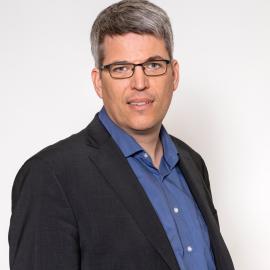
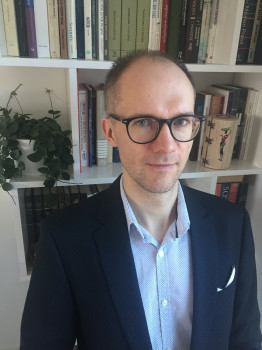
Professor Michael Burke holds a full professorship in Rhetoric at Utrecht University (Faculty of Humanities) and teaches at University College Roosevelt (UCR) in Middelburg. Previously, he served as UU Honours Dean (2016–2021). His research focuses on rhetoric, stylistics, cognitive aspects of language, and education. He earned his Ph.D. in English Language and Literature from the University of Amsterdam, where he also completed his undergraduate studies. Research interests span written, oral, and digital rhetoric, emphasizing pedagogical, cognitive, stylistic, and neuroscientific dimensions. He has held visiting roles at institutions like the University of Cambridge and University of Bologna. Editorial roles include series editor for Routledge’s 'Research Monographs in Linguistics' and board memberships with journals like Language and Literature . Teaching includes undergraduate courses on classical rhetoric, argumentation, and public speaking at UCR, plus leadership and interdisciplinary research modules for Utrecht’s Honours College. He supervises PhD students in the UiL-OTS linguistics research school. Notable publications include The Routledge Handbook of Stylistics (2023) and studies on critical thinking, digital literacy, and cognitive literary science. Professional activities include keynote speaking at conferences like PCST and EARS, and contributions to projects such as ‘Undergraduate Research in the Netherlands’. His work bridges rhetoric, cognitive science, and education, emphasizing practical applications for students and educators.
Patrick Rérat is a Professor at the University of Lausanne, affiliated with the Institute of Geography and Sustainability within the Faculty of Geosciences and Environment. He is a prominent researcher at LIVES (Interdisciplinary Centre of Excellence for Research on Life Course Changes), where he focuses on urban mobility, transportation patterns, and sustainable mobility transitions. His research interests span transportation studies, urban mobility, sustainable transportation systems, cycling research, residential mobility, and the geography of daily mobility practices. Rérat employs interdisciplinary approaches to examine how individuals navigate urban spaces across different life stages, with particular attention to cycling infrastructure, e-mobility adoption, and the relationship between transportation modes and broader social patterns. Rérat's recent work demonstrates a strong focus on cycling practices, with numerous publications examining cargo bike adoption, e-bike usage patterns, and the effects of cycling infrastructure. His research employs various methodological approaches including user segmentation, longitudinal mobility studies, and spatial analysis of urban transportation patterns. He has made significant contributions to understanding how transportation choices evolve across the life course, particularly during youth transitions. His scholarly output includes numerous publications in leading transportation and geography journals, with recent work focusing on contemporary mobility challenges including pandemic-era transportation changes, telework impacts on mobility patterns, and the political dimensions of cycling infrastructure. As a professor at the University of Lausanne, Rérat contributes to advancing research on sustainable urban mobility while training the next generation of geographers and transportation specialists. His work bridges theoretical geographic concepts with practical urban planning applications, making significant contributions to both academic scholarship and urban policy development.
Jens Kreitewolf is a Faculty Lecturer in the Departments of Psychology and Mathematics and Statistics at McGill University. He teaches courses in statistics, research methodology, and psychophysics. His research focuses on auditory cognition, speech comprehension, and the neural mechanisms underlying voice perception. Dr. Kreitewolf holds a Ph.D. (Dr. rer. nat.) from Humboldt University of Berlin and completed postdoctoral fellowships at BRAMS and the University of Lübeck. His work combines experimental psychology, neuroimaging, and psychophysics to explore auditory processing challenges in adverse listening conditions. Key interests include how familiarity with a talker’s voice aids comprehension and the impact of hearing impairment on speech perception. Education: M.Sc. in Psychology (Ruhr University Bochum, 2009); Ph.D. in Psychology (Humboldt University of Berlin, 2014). Research Interests: Auditory scene analysis and speech-in-noise processing Voice recognition and familiarity effects Neural correlates of perceptual decision-making Circadian rhythms and perceptual sensitivity Cognitive neuroscience of auditory attention Publications highlight contributions to understanding: Risk factors for depression symptom progression Self-concept clarity in romantic evaluations Neurobiological mechanisms of working memory vulnerability Vestibular symptoms in migraine patients His interdisciplinary approach bridges psychology, statistics, and neuroscience, with applications to clinical populations and sensory processing disorders.
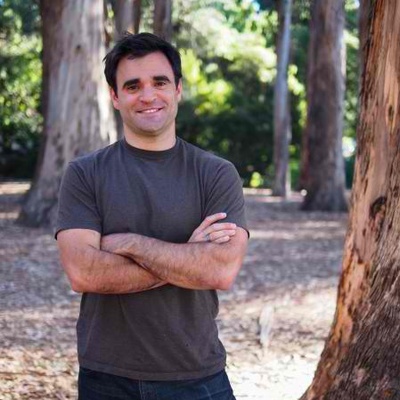
Dr. Hillel Adesnik is a Professor in the Department of Neuroscience at the University of California, Berkeley, and a leading researcher in the neural basis of sensory perception. His lab focuses on cortical microcircuits, optogenetics, and neural coding, with emphasis on visual processing and memory formation. Key Research Areas: Cortical Microcircuits Optogenetic Tools Gamma Band Rhythms Neural Coding Mechanisms Dr. Adesnik has pioneered high-speed optical methods like 3D-MAP and 3D-SHOT to manipulate neural activity. His work spans cortical dynamics, synaptic plasticity, and cortical layer interactions, with applications in understanding learning algorithms and sensory inference. Selected Trends from Publications: Recent preprints and papers highlight advancements in cortical VIP neuron function, channelrhodopsin structures, and inter-areal computations. His team utilizes two-photon holography, cryo-EM, and computational modeling to decode perception-related neural codes. Scientific Awards: NIH Director's New Innovator Award (2013) Dr. Adesnik's lab collaborates with institutions like NIH and develops tools for awake animal studies. Funding includes grants from the Beckman Young Investigator Program and NIH.
Suvi Saarikallio is a Professor of Music Education at the University of Jyväskylä, Finland , affiliated with the Faculty of Humanities and Social Sciences and the Department of Music, Art and Culture Studies . She leads interdisciplinary research bridging music psychology, education, and therapy, with a focus on youth development, emotion regulation, and well-being. Research Groups: Centre of Excellence in Music, Mind, Body and Brain (2022-2029), Musiconnect (2022-2027) Key Projects: Music and You, Stress & music listening, MPACT (Music and Sports), Music and Cross-modal Associations, SOSUS (Social Sustainability for Children) Research Trends: Her recent publications explore music's role in emotional regulation, cross-modal perception, health outcomes, and educational applications. Themes include AI's impact on music evaluation, rhythm's connection to cognitive skills, and music's influence on stress and social-emotional development. Contact: suvi.saarikallio@jyu.fi
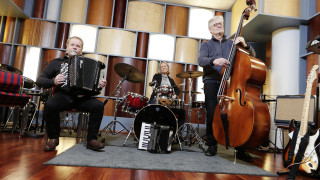
Daniel Shanahan is an Associate Professor at the Bienen School of Music , Northwestern University , where he coordinates the Music Theory and Cognition program and directs the Music Cognition Lab. He holds a PhD from the University of Dublin, Trinity College. His research integrates music-analytic, computational, and experimental methodologies to investigate cognitive and communicative constraints in music. Key themes include corpus studies, music and emotion, oral transmission of musical traditions, computational analysis of jazz and folk music , and the application of machine learning and generative AI to musicology. Shanahan has served as co-editor of Empirical Musicology Review (2016–2022) and sits on editorial boards of multiple journals. His work appears in Music Perception , The Journal of New Music Research , Musicae Scientiae , and Frontiers in Psychology , with chapters in Routledge Companions and the Oxford Handbook of Music and Corpus Studies . Recent projects include an NSF grant studying sound's impact on learning (2023) and co-editing the Oxford Handbook . He currently serves as treasurer for the Society for Music Perception and Cognition . Mentorship Award (Society for Music Perception and Cognition, 2024) Outstanding Multi-Author Collection Award (Society for Music Theory, 2023) Distinguished Scholar Award (Ohio State University) Rising Faculty Research & Undergraduate Teaching Awards (Louisiana State University) His publications demonstrate expertise in music cognition, computational analysis, emotional expression, and oral/embodied transmission , with trends showing interdisciplinary applications of AI and cross-cultural studies. Shanahan's mentorship emphasizes student well-being, empathetic guidance, and fostering academic potential . He has hosted global open lab meetings during the pandemic and cultivated mentees who now contribute to service roles in academic committees.
Dr. Manuel Anglada-Tort is a Lecturer in Psychology at Goldsmiths, University of London, and a visiting researcher at the Max Planck Institute for Empirical Aesthetics. His research focuses on the psychology of cultural systems, including music, creativity, and empirical aesthetics. He combines computational methods with psychological experiments to explore cultural evolution, music perception, and the interplay of cognition and social interaction. Research Interests: Cultural Evolution Music Perception & Cognition Empirical Aesthetics Creativity Big Data Analyses Key Projects: Large-scale iterated singing experiments on music evolution Investigating weather's influence on music success Developing the REPP platform for online sensorimotor synchronization studies Teaching: MSc in Music, Mind, and Brain MSc Psychology of the Arts, Neuroaesthetics, and Creativity Affiliations: Music, Mind and Brain Group at Goldsmiths Computational Auditory Perception Group at Max Planck Institute
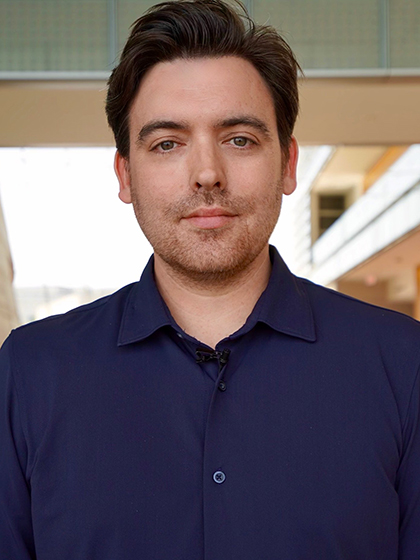
Hamid Mansoor is an Assistant Professor in the Department of Computer Science at the University of Manitoba. He holds a PhD in Computer Science from Worcester Polytechnic Institute under Prof. Emmanuel Agu, and was part of the DARPA-funded WASH project. His research focuses on data visualization, digital health, and smartphone-based behavioral analysis. He previously served as a Postdoctoral Fellow at the VIXI Lab, University of Victoria, Canada, under Prof. Miguel Nacenta. Education: PhD in Computer Science, Worcester Polytechnic Institute Research Interests: Interactive data visualization frameworks for health monitoring Mobile and ubiquitous computing for behavioral analysis Smartphone-sensed human behavior and health informatics Visual representation of text-based and sensor data Publications highlight trends in visual analytics for healthcare, including tools like ARGUS and INPHOVIS for detecting bio-behavioral disruptions and smartphone-based phenotyping. His work integrates machine learning with visualization to address challenges in health data interpretation. Awards: Best short paper honorable mention (EuroVis 2020) His contributions span academic collaborations in health informatics and mobile computing, with a focus on bridging theory and practical applications in healthcare technology.
Dr. Nancy L. Sin is an Associate Professor in the Department of Psychology within the Faculty of Arts at the University of British Columbia. She teaches undergraduate and graduate courses in health psychology and supervises students at multiple levels. She is Co-Chair of the Antiracism Task Force for the Society for Biopsychosocial Science and Medicine and a member of the Steering Committee at the UBC Edwin S.H. Leong Centre for Healthy Aging. Previously, she served on the Executive Committee for the American Psychological Association's Division on Adult Development and Aging and established the Diversity Mentorship Program. PhD, University of California, Riverside, 2012 Dr. Sin's research focuses on biological and behavioural pathways linking daily well-being and stress to health. Her work demonstrates that emotional responses to daily stressors are associated with inflammatory, neuroendocrine, and autonomic mechanisms implicated in aging-related conditions like cardiovascular disease. She investigates daily positive events as protective factors for stress processes and health, with particular interest in emotional well-being and aging, stress-sleep cycles, and health equity. Her research spans multiple disciplines including health psychology, gerontology, and social psychology. Analysis of Dr. Sin's recent publications reveals consistent focus on daily stress processes, positive emotions, and health outcomes across the lifespan. Her work increasingly examines pandemic-related stressors, social determinants of health, and health disparities, with strong emphasis on methodological rigor through daily diary and longitudinal approaches. The publications demonstrate interdisciplinary collaboration across psychology, public health, and medicine, with growing attention to diversity, equity, and inclusion in health research. Distinguished Alumni Award, Department of Psychology, University of California, Riverside (2025) Fellow, Gerontological Society of America (2025) Innovative Research on Aging Award (Bronze Award) from the Mather Institute (2021) Michael Smith Foundation for Health Research Scholar (2020) Springer Early Career Achievement Award in Research on Adult Development and Aging (2019) Gerontological Society of America's Behavioral and Social Sciences Student Research Award Editor's Choice article at Annals of Behavioral Medicine Dr. Sin actively supervises undergraduate, MA, and PhD students, with a current focus on Health Psychology graduate students specializing in adult development and aging, stress, and health equity/disparities. Her research has been supported by significant grants as PI or Co-I from the U.S. National Institute on Aging, Social Sciences and Humanities Research Council of Canada, Canadian Institutes of Health Research, Canada Foundation for Innovation, and the Michael Smith Foundation for Health Research. She has established a strong research program examining daily experiences and their health implications across adulthood. Dr. Sin directs the UPLIFT Health Lab (Understanding Pathways Linking Inter- and Intraindividual Factors To Health), which explores psychosocial well-being and biobehavioural mechanisms underlying healthy aging. The lab investigates how daily positive events promote health through lower inflammation, adaptive cortisol profiles, and better health behaviors, with particular attention to how positive emotions buffer stress processes. The lab actively recruits community participants for studies on daily experiences and health, contributing to intervention development for promoting psychological and physical well-being across adulthood.
Josh McDermott is a Professor in the Department of Brain and Cognitive Sciences at MIT and an Associate Investigator at the McGovern Institute. He holds roles as Associate Department Head and Principal Investigator of the Laboratory for Computational Audition. His work bridges psychology, neuroscience, and engineering to study auditory perception, with a focus on sound interpretation, hearing impairment treatments, and machine hearing systems. Education includes a B.A. from Harvard (summa cum laude), an MPhil from University College London, and a PhD from MIT. Postdoctoral training included NYU and the University of Minnesota. Research interests encompass computational principles of sound perception, natural sound statistics, music cognition, and machine hearing. Key areas include sound localization, auditory scene analysis, and the role of generative models in perception. Recent publications highlight advancements in auditory neural networks, cross-cultural music perception, and noise schema processing. Awards include the Troland Research Award, BCS Excellence in Advising, and NSF CAREER Award. Advising includes over 20 graduate students and postdocs, with notable contributions to auditory neuroscience and machine learning. Major grants support projects on auditory models and sensory systems. The lab develops tools like cochleagram generation and headphone screening software. The Laboratory for Computational Audition operates at MIT, focusing on biological and computational approaches to hearing. Collaborations span engineering, psychology, and neuroscience to advance understanding of auditory processing.
Frank Russo is a Professor in the Department of Psychology at Toronto Metropolitan University, where he holds the NSERC-Sonova Senior Research Chair in Auditory Cognitive Neuroscience. He leads the Science of Music Auditory Research and Technology (SMART) Lab and holds affiliate and adjunct positions at the University Health Network and the University of Toronto, respectively. Research Interests: Dr. Russo's work lies at the intersection of auditory cognitive neuroscience, music psychology, and rehabilitation. His research explores how humans perceive music and speech, particularly under challenging conditions such as hearing loss or non-native accents. He investigates the cognitive and neural mechanisms of listening effort, emotional speech processing, and the social and therapeutic benefits of music, especially through community choirs and digital interventions. Publication Trends: His recent publications emphasize objective measurement of listening effort using functional near-infrared spectroscopy (fNIRS), music-based interventions for Parkinson’s disease and dementia, vocal and emotional responses to singing, and multisensory integration in beat perception. The work is highly translational, bridging basic cognitive neuroscience with clinical and community applications. Scientific Awards and Honors: NSERC-Sonova Senior Research Chair in Auditory Cognitive Neuroscience Fellow of the Canadian Psychological Association Fellow of Massey College Fellow of the Canadian Society for Brain, Behavior and Cognitive Science Past President of the Canadian Acoustical Association Advising and Grants: Dr. Russo actively mentors students and researchers, as evidenced by his co-authorship with numerous junior colleagues. He has secured major funding through NSERC and industry partnerships, enabling the development of impactful technologies such as hearing aid algorithms, sensory substitution systems, and digital therapeutics. His SingWell project fosters collaboration across academic, clinical, and community sectors. Labs and Teams: He directs the SMART Lab at Toronto Metropolitan University, a hub for interdisciplinary research on music, hearing, and cognition. The lab collaborates extensively with KITE Research Institute, Rehabilitation Sciences at the University of Toronto, and various community organizations focused on aging, hearing loss, and neurodegenerative conditions.
Paul D. Miller, known professionally as DJ Spooky, That Subliminal Kid, is a Professor of Music and Mediated Art at The European Graduate School (EGS). Based in New York City, he is an experimental electronic and hip-hop musician, conceptual artist, and writer whose work spans music production, film, multimedia installations, and critical theory. He has released over a dozen albums pioneering 'illbient' and trip hop genres, authored influential books including Rhythm Science and Sound Unbound , and exhibited internationally at venues like the Venice Biennale and Andy Warhol Museum. Education: Bowdoin College: Studied philosophy and French literature; thesis on Richard Wagner's Gesamtkunstwerk as precursor to new media. Research Interests: Miller's work centers on remix culture as a postmodern methodology, exploring intersections of sound, image, and technology. His theoretical framework positions the DJ as a 'post-subjective auteur' who creates meaning through layered connections across time, culture, and media. Key projects include Rebirth of a Nation (reworking D.W. Griffith's film to address racial history) and Terra Nova (Antarctica sound recordings addressing climate change), demonstrating his focus on historical reinterpretation and environmental crisis through digital media. Publications: His 14 scholarly articles (2001-2009) analyze remix as cultural practice across domains from album art history ( The Inner Sleeve ) to Baudrillard's philosophy ( Baudrillard: A Remembrance ). The corpus reveals consistent investigation into how sampling, digital layering, and media archaeology reshape narrative, memory, and cultural identity in the information age. Awards: No scientific awards or fellowships were documented in the source text. Advising and Grants: The source text provides no information regarding students supervised, academic advising, or research grants administered by Miller. Labs and Teams: Miller operates through project-based collaborations rather than fixed labs, forming temporary collectives with institutions like the American Museum of Natural History (for Terra Nova ) and artists including Yoko Ono, Ryuichi Sakamoto, and choreographer Francesca Harper. His 'Unfinished Stories' project with Pulitzer-winning critic Margo Jefferson exemplifies his interdisciplinary approach bridging dance, music, and social commentary.
Dr Valdas Noreika is a Senior Lecturer in Psychology at the School of Biological and Behavioural Sciences, Queen Mary University of London. He serves as Head of The Centre for Brain and Behaviour and leads the Sleep and Cognition Lab. His work bridges cognitive neuroscience, psychology, and clinical applications, with a focus on understanding consciousness and its disorders. Dr Noreika's educational background includes: BA in Philosophy from Vilnius University, Lithuania MSc in Neurobiology from Vilnius University, Lithuania PhD in Psychology from the University of Turku, Finland, focusing on altered states of consciousness and temporal distortions Dr Noreika's research explores the cognitive and neural mechanisms underlying sleep, dreaming, and consciousness. Using techniques including electroencephalography (EEG), transcranial magnetic stimulation (TMS), and psychophysics, his work investigates both basic mechanisms of consciousness and their applications to neurodevelopmental and mental health conditions. His research spans multiple domains including time processing, inter-brain synchronization across species, and environmental decision-making. A key aspect of his work involves translational research focusing on sleep, subjective experiences, and well-being in conditions such as learning disabilities, ADHD, autism, and depression. Analysis of Dr Noreika's recent publications reveals a strong focus on consciousness studies, neural mechanisms of sleep and dreaming, and applications to neurodevelopmental conditions. His work frequently employs EEG and other neuroimaging techniques to study brain activity during various states of consciousness. Recent trends show increasing emphasis on inter-brain synchronization, particularly in infant-parent interactions and cross-species communication, as well as growing interest in environmental psychology and climate change-related decision making. Dr Noreika has secured significant research funding including: The neural basis of inter-species communication - £155,098 from the Biotechnology and Biological Sciences Research Council (2024-2026) Sleep and circadian interactions with sensory sensitivity in adults with intellectual disabilities - £103,229 from the Baily Thomas Charitable Fund (2023-2025) As a supervisor, Dr Noreika advises multiple PhD students working on diverse topics including Alzheimer's disease diagnosis using information theory, emotion recognition, thermal sensation in Parkinson's disease, cultural differences in cognitive processes, and time processing. His Sleep and Cognition Lab serves as a hub for interdisciplinary research bridging neuroscience, psychology, and clinical applications. Dr Noreika leads the Sleep and Cognition Lab at Queen Mary University of London, which focuses on investigating the neural mechanisms of sleep, dreaming, and consciousness. The lab brings together researchers from diverse backgrounds to study both fundamental aspects of consciousness and their applications to clinical populations. Current projects include investigations of sleep and sensory sensitivity in adults with learning disabilities and human-dog interaction studies.
Jordan Etkin is an Associate Professor of Marketing at Duke University’s Fuqua School of Business, specializing in studies of goal pursuit, motivation, and time management. She explores how goal structures, variety in activities, and personal quantification impact behavior and well-being. Her research bridges consumer behavior, psychology, and decision science, with frequent publications in top-tier journals like the Journal of Consumer Research and Journal of Marketing Research. Education: PhD (Year not specified, but teaches since 2013) Her research interests focus on the interplay between goals and personal resources (e.g., time), including unintended consequences of tracking behaviors like step-counting. Key themes include motivation dynamics, goal conflict resolution, and temporal resource allocation. She frequently engages with popular media, appearing in outlets like the New York Times and BBC. Recent work (2020–2024) highlights topics such as time limits paradoxically increasing consumption, variety’s role in goal conflict, and machine learning’s applications in behavioral research. Her 2019 JCR Award underscores scholarly impact. Awards: 2019 JCR Awards Announcements (Recipient) Teaching responsibilities include the Marketing Core class for Fuqua’s MBA program. While no lab teams are explicitly mentioned, her research themes suggest collaborative work in behavioral science and consumer studies.
Eduardo Mercado III is a Professor in the Department of Psychology at the University at Buffalo, College of Arts and Sciences. His research focuses on bioacoustics, cognitive psychology, and marine ecology, particularly the vocal behavior of humpback whales and its implications for understanding human impact on marine ecosystems. He is also known for his work in perceptual learning, autism spectrum disorder, and comparative cognition. Scientific Awards Guggenheim Fellowship Harvard Radcliffe Institute Fellowship Research Trends His recent publications emphasize bioacoustic analysis of humpback whale songs, including their spectral entropy, cyclical variations, and adaptive adjustments to anthropogenic noise. Additional work explores perceptual learning mechanisms in autism, neural network modeling for acoustic classification, and cognitive processes in canines and rodents. Projects Mercado’s “Singers as Sentinels” project combines acoustic analysis of humpback whale songs with public awareness initiatives about ocean noise pollution. The project will produce a book, Why Whales Sing and Dolphins Don’t , and a web-based interface for public engagement.