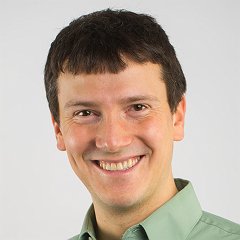
Wolfgang Kelsch is an Associate Professor at the Central Institute of Mental Health, Mannheim, where he leads the Research Group for Developmental Biology of Psychiatric Disorders. His work focuses on the intersection of neuroscience, psychiatric disorders, and sensory processing, particularly in olfactory systems. His research explores how neurobiological mechanisms like synaptogenesis, dopamine signaling, and cortical representations contribute to psychiatric conditions. Recent studies highlight his expertise in striatal circuits, oxytocin effects, and reward prediction coding. The trends in his recent publications (2010–2025) span topics such as olfactory reinforcement learning, dopaminergic reward prediction, and feeding-induced sensory suppression. These works emphasize neural plasticity, computational modeling, and translational approaches to understanding psychiatric disorders.
David M Bannerman is Professor of Behavioural Neuroscience in the Department of Experimental Psychology at the University of Oxford and Head of the Behavioural Neuroscience Unit. His research program centers on the neurobiological mechanisms of learning, memory, and emotion, with a strong translational focus on neuropsychiatric disorders including schizophrenia, anxiety, depression, and Alzheimer's Disease, as well as the critical relationship between sleep and behavior. His academic training includes a BSc (Hons) in Psychology from the University of Bristol and a PhD in Neuroscience from the University of Edinburgh. Professor Bannerman's group employs multidisciplinary approaches to investigate neurotransmitter systems, neural plasticity, and their disruptions in brain disorders. Current work integrates molecular, circuit, and behavioral analyses using rodent models to understand how impairments in these systems lead to cognitive and emotional dysfunction, with particular emphasis on synaptic mechanisms in Alzheimer's Disease and schizophrenia models. Analysis of his 2024-2025 publications reveals dominant themes in sleep neuroscience (spindle oscillations, torpor-sleep interactions), Alzheimer's pathology (tau, amyloid-β), and psychedelic neuropharmacology. The work consistently leverages advanced rodent models and techniques to bridge molecular mechanisms with behavioral outcomes in neuropsychiatric conditions. Scientific recognition includes: William R. Miller Fellowship in Neuroscience and Experimental Psychology Governing Body Fellowship at the University of Oxford As head of the Behavioural Neuroscience Unit, Professor Bannerman directs a research program that combines electrophysiology, molecular neuroscience, and behavioral analysis to uncover fundamental mechanisms of brain function and develop translational insights for treating neurological and psychiatric disorders.
Nitin Gupta is an Associate Professor in the Department of Biological Sciences and Bioengineering at the Indian Institute of Technology Kanpur. His research focuses on understanding the fundamental mechanisms used by neural circuits for processing information, with initial emphasis on circuits in deeper layers of the olfactory system. PhD in Bioinformatics & Systems Biology, University of California San Diego (2009) B.Tech in Computer Science & Engineering, IIT Kanpur (2004) Dr. Gupta's research integrates experimental and computational approaches to study neural circuit function. He uses a variety of insects as model systems, including grasshoppers, flies and mosquitoes, and employs techniques such as in vivo electrophysiology, histology, behavioral observations, genetic manipulations, and computational modeling. His work bridges neuroscience, computational biology, and bioinformatics. His recent publications demonstrate a clear progression from more computational proteomics work during his PhD to increasingly neuroscience-focused research, particularly in olfactory processing. This reflects his transition from computational biology to systems neuroscience while maintaining strong computational approaches. NIH Fellows Award for Research Excellence (2013) Gordon Fellowship Medal and Graduate Engineering Leadership Award (2009) Diane Lin Prize (2009) Ratan Swarup Memorial Award (2004) National Talent Search Scholarship (1998) Dr. Gupta previously served as a Post-doctoral Fellow at the National Institutes of Health, USA (2010-2014) before joining IIT Kanpur as faculty. His interdisciplinary background combining computer science, bioinformatics, and neuroscience has positioned him to make significant contributions to understanding neural circuit mechanisms through both experimental and computational approaches. His laboratory at IIT Kanpur likely maintains insect model systems for neural circuit studies, with particular focus on olfactory processing.
Dr. Austin Coley is a tenure-track Assistant Professor in the Department of Neurobiology at the University of California, Los Angeles (UCLA), David Geffen School of Medicine, and Principal Investigator of the Coley Lab. He is also an active member of the UCLA Brain Research Institute and the Integrative Center for Learning and Memory. Education: Ph.D. in Neuroscience, Drexel University, 2014–2019 M.S. in Cell Physiology, Case Western Reserve University, 2009–2012 B.S. in Biology, North Carolina Central University, 2005–2009 Research Focus: Dr. Coley’s laboratory employs state-of-the-art tools—including in vivo 2-photon calcium imaging, ex vivo electrophysiology, optogenetics, and machine-learning-based behavioral tracking—to dissect neural circuits underlying depressive-like behaviors and anhedonia. By integrating computational modeling with experimental neuroscience, the team investigates how synaptic and circuit-level dysfunctions in the prefrontal cortex contribute to major depressive disorder and schizophrenia. The overarching goal is to identify cellular and molecular biomarkers that enable early, targeted interventions in mental health disorders. Scientific Awards & Honors: SCGB Transition to Independence Award (2022) NIH Research in Emerging Areas Critical to Human Health LRP Award (2022) 40 Under 40, Drexel University (2021) 1,000 Inspiring Black Scientists in America, Cell Mentor (2020) NIH Blueprint Diversity D-SPAN F99/K00 Fellowship (2017–2024) IBRO Fellowship (2019) Research Innovation Award, Drexel University (2019) Multiple travel and trainee leadership awards from Salk Institute and professional societies Funding & Support: Current funding includes the Brain & Behavior Research Foundation NARSAD Award (2025–present), Simons Collaboration on the Global Brain Transition to Independence Award (2022–present), and past NIH LRP and D-SPAN awards, alongside private philanthropic donations. Teaching & Mentorship: Dr. Coley has taught Cellular Neurobiology at UC San Diego and Anatomy & Physiology at Brookdale Community College, and delivered guest lectures on synaptic plasticity at Drexel. He actively mentors students and trainees through formal and informal programs, with a demonstrated commitment to increasing diversity in neuroscience. Labs & Teams: The Coley Lab at UCLA is an interdisciplinary team focused on neural circuits of mood disorders. Dr. Coley also maintains collaborative ties with the Brain Research Institute and Integrative Center for Learning and Memory at UCLA, as well as ongoing interactions with colleagues at the Salk Institute, UC San Diego, and other national centers.
Tarik Kelestemur is a roboticist specializing in autonomous systems, with affiliations including Boston Dynamics AI Institute and Northeastern University. His work bridges robotics, artificial intelligence, and computer engineering, focusing on tactile manipulation, 3D semantic understanding, and policy learning frameworks. His research interests include: Robotics Artificial Intelligence Machine Learning Computer Engineering Autonomous Systems Human-Robot Interaction Recent publications highlight advancements in diffusion policies, vision foundation models, and 3D relational object graphs. Tarik received an Outstanding Paper Award Finalist at CoRL 2024 and contributes to open-source robotics projects like point_cloud_proc and icub_arm_imitator .
Alcino Silva is a Professor in the Department of Neurobiology and Department of Psychiatry & Biobehavioral Sciences at the David Geffen School of Medicine, University of California, Los Angeles . His research focuses on molecular and cellular neuroscience, memory allocation, and neurogenetic models of cognitive disorders. Key research areas: Memory linking mechanisms across time Neural circuitry for stress-related habit formation Therapeutic targets in vascular dementia Sex differences in neurodevelopmental models Development of advanced neuroimaging technologies Recent publications highlight his work on dual-pathway architectures , dendritic plasticity , and intercellular signaling in disease models. Collaborative studies span neurofibromatosis, tuberous sclerosis, and postnatal immune activation effects.
Fabian H. Sinz is a Professor at the University of Tuebingen, leading the Neuronal Intelligence Group . His research focuses on understanding how biological neuronal networks leverage model biases through architecture, nonlinearities, and dynamics to enhance robust inference and accelerate learning. He employs deep learning and system identification techniques on large-scale neurophysiological and anatomical data. His work spans theoretical and applied domains, including system identification , neuroscience , reinforcement learning , and medical AI . Recent studies explore bidirectional coding in visual cortical neurons, contrastive learning for neuroscience time-series, and foundational models predicting neural responses to novel stimuli. Key publications highlight advancements in functional connectomics , invariance manifold learning , and neural likelihood estimation . Collaborations with institutions like the University of Texas and Max Planck Institute underscore his interdisciplinary impact. Tools like LAMINR (Learning and Aligning Manifolds of Single-Neuron Invariances) demonstrate his contributions to open-source neuroscience research.
Professor Robert J. Kittel is a leading neuroscientist at the University of Leipzig, holding the Chair of Animal and Behavioral Physiology within the Institute of Biology, Faculty of Life Sciences. His research program investigates molecular mechanisms of neuronal communication with a particular focus on the presynaptic active zone. He leads an active research group employing neuro- and optogenetic approaches, electrophysiology, behavioral analyses, and high-resolution light microscopy in Drosophila melanogaster models. Dr. Kittel's research interests center on synaptic plasticity, sensory physiology, and neuronal circuits in the context of adaptive behavior. His work spans three main areas: Plasticity (how active zone physiology is modified by activity-induced plasticity in behaving animals), Pathology (investigating nociception and therapeutic potential of receptors like Latrophilin/CIRL), and Evolution (exploring active zone properties across species to identify conserved features versus specializations). His team has made significant contributions to understanding molecular dynamics at single synapse resolution and neurotransmission in intact organisms. Analysis of his recent publications reveals a strong focus on connectomics, synaptic plasticity mechanisms, and molecular neuroscience. His work frequently appears in high-impact journals including Nature , with notable contributions to the fruit fly connectome project. The research demonstrates consistent integration of advanced imaging techniques with behavioral analysis to understand neural circuit function. Emmy Noether Fellowship Principal Investigator for DFG-funded Research Training Group NeuroTune Member of Clinical Research Unit KFO 5001 Co-leader of second funding phase for orthodontic research project 'ResolvePain' Professor Kittel actively mentors PhD and Master's students, with numerous alumni including Daniel Bidell, Kim Borstel, and Sven Dannhäuser. His research is supported by multiple DFG grants, including the NeuroTune Graduate School and the Priority Program SPP 2205 'Evolutionary Optimization of Neural Processing'. His laboratory collaborates extensively with clinical colleagues like Heike Rittner and Tobias Langenhan, bridging basic neuroscience with translational applications. The Kittel Lab maintains strong connections with the Pauls Lab and Selcho Lab, forming an integrated neuroscience research community at the University of Leipzig. The team has recently contributed to the publication of the fruit fly connectome in Nature and continues to investigate molecular mechanisms of active zone plasticity in the context of neuronal information coding and memory formation.
Dennis Pauls is a Research Professor in the Department of Animal and Behavioral Physiology at the Institute of Biology, University of Leipzig. He leads his own research group (PAULS LAB) focusing on neurobiological mechanisms underlying behavior, memory formation, and decision-making processes, primarily using Drosophila as a model organism. His work bridges molecular neuroscience, behavioral physiology, and systems neuroscience to understand fundamental neural processes. Dr. Pauls completed his biology studies (Diplom) at the University of Gießen and University of Würzburg (2001-2006), followed by a PhD (Dr. rer. nat.) at the University of Fribourg, Switzerland (2006-2010). He conducted postdoctoral research at the University of Marburg (2010-2011) before becoming a scientific staff member and later group leader at the Theodor-Boveri Institute, University of Würzburg (2011-2019). Since July 2019, he has been a group leader at the University of Leipzig, and completed his Habilitation (Dr. rer. nat. habil, PD) in December 2020. His research focuses on two primary areas: (1) the integration of time in memories, investigating how essential information is encoded as lasting physical changes through synaptic plasticity, and (2) the neurometabolic mechanisms underlying poor food decisions, exploring how animals overcome innate aversions to potentially harmful foods under hunger conditions. His laboratory employs neuro- and optogenetic approaches, electrophysiology, behavioral analyses, and high-resolution light microscopy to address these questions. Analysis of Dr. Pauls' recent publications reveals a strong emphasis on octopamine signaling in learning and memory circuits, time integration mechanisms in neural systems, and the metabolic regulation of feeding behavior. His work demonstrates how neuromodulators influence memory formation, how temporal information is incorporated into neural representations, and how metabolic states affect decision-making processes in Drosophila models. Dr. Pauls currently leads three major DFG-funded research projects: (1) The function of octopamine in reward processing in Drosophila larvae (2019-2023), (2) Neurobiological foundations of integrating time into memories (2023-2026), and (3) Metabolic signatures and neurophysiological mechanisms of poor food intake decisions (2024-2027). He collaborates extensively with the Kittel Lab and other neuroscience groups at the University of Leipzig, contributing to the NeuroTune Graduate School and other interdisciplinary initiatives focused on brain dynamics and neurological disorders. His laboratory is part of the Integrated Research and Treatment Center (IFB) for Adiposity-Related Disorders for his research on food decision-making, demonstrating the translational potential of his basic neuroscience research. Dr. Pauls' work provides fundamental insights into neural circuit function with implications for understanding memory disorders and eating behaviors in humans.
Weina Wang is an Assistant Professor in the Computer Science Department at Carnegie Mellon University, joining in Fall 2018. Her research lies at the intersection of applied probability , stochastic systems , and reinforcement learning , focusing on decision-making in large-scale systems with applications to computing resource orchestration, data privacy, and graph statistics. She has received prestigious awards including the NSF CAREER Award (2022) , ACM MobiHoc Best Paper (2022) , and ACM SIGMETRICS Rising Star Research Award (2023) . PhD in Electrical Engineering, Arizona State University (2016) Bachelor’s in Electronic Engineering, Tsinghua University (2009) Her recent publications span restless bandits , queueing theory , and attributed graph alignment , reflecting her dual focus on fundamental limits and algorithmic solutions. Notable collaborations include work on privacy-preserving data routing , phase-aware scheduling , and erasure-coded servers for heterogeneous traffic. She has advised PhD students Jalani Williams , Tuhinangshu Choudhury , and Yige Hong . Her research has been recognized with best paper awards and grants like the NSF CAREER . She also contributes to professional societies, recently joining the INFORMS Applied Probability Society council . Her teaching includes courses like Probability and Computing and Fundamentals of MDPs and Reinforcement Learning .
Yuriy Brun is a Professor at the Manning College of Information & Computer Sciences at the University of Massachusetts Amherst. He leads research in software engineering with a focus on improving the construction of intelligent, self-adapting systems while ensuring fairness and correctness. His research spans several key areas: software fairness, self-adaptive systems, automated program repair, and formal verification. Brun's work has pioneered the field of software fairness, establishing it as a fundamental software engineering concern. His lab, LASER, conducts high-risk, high-impact research aimed at fundamentally improving how engineers build systems. Brun's publications demonstrate a strong focus on automating formal verification and ensuring fairness in machine learning systems. His recent work leverages large language models for proof synthesis and develops techniques for guaranteeing fairness constraints in software systems. His research has shown significant evolution from distributed systems and collaborative development toward formal verification and AI safety. NSF CAREER Award recipient IEEE Fellow Multiple ACM SIGSOFT Distinguished Paper Awards Google Inclusion Research Award recipient Amazon Research Award recipient Microsoft Research Software Engineering Innovation Foundation Award Brun actively mentors students, with current PhD advisees including Zhanna Kaufman, Hadeel Eladawy, and Abhishek Varghese. His former students have gone on to positions at institutions including Oregon State University, University of California San Diego, and Microsoft. He teaches courses including Introduction to Software Engineering and Software Engineering Project Management.
Istvan David is an Assistant Professor of Software Engineering at McMaster University's Faculty of Engineering, Department of Computing and Software, where he leads the Sustainable Systems and Methods Lab (SSM) and works as a researcher in the McMaster Centre for Software Certification (McSCert). His work bridges the gap between model-driven engineering, digital twins, and sustainability in systems engineering. Dr. David's research interests focus on digital twins , model-driven engineering , sustainability in computing, cyber-physical systems , and collaborative modeling . His lab develops novel reinforcement learning techniques , digital twin architectures , and modeling and simulation methods with a strong emphasis on sustainability as both a system characteristic and an engineering principle. His recent publications reveal a strong trend toward integrating digital twin technology with sustainability concerns, particularly in automotive systems, smart farming, and resource-efficient software engineering. The research spans from foundational modeling techniques to applied solutions addressing the four essential sustainability dimensions of technical systems: technical (long-term usage), economic (financial viability), environmental (reduced impact), and social (elevated utility). Scientific Awards: Best Practice Paper Award at MODELS Best Paper 2024 Runner-up in the Journal of Computer Languages Dr. David actively mentors students including PhD candidate Xiaoran (Sharon) Liu, and has supervised undergraduate researchers like Adwita Kashyap and Kyanna Dagenais. He has secured multiple research grants supporting work on sustainable systems and digital twin technologies, with applications in automotive engineering, smart farming, and resource-efficient computing. His lab collaborates with industry partners and academic institutions worldwide, including VU Amsterdam and University of Montréal. The Sustainable Systems and Methods Lab focuses on the vision of 'sustainable systems by sustainable methods,' addressing the growing problem of unsustainable systems engineering practices. The lab's work on bipartite sustainability aims to both build sustainable systems and develop systems using sustainable methods.
Professor Caspar M. Schwiedrzik is a Research Professor in the Department of Cognitive Neurobiology at the Faculty of Biology and Biotechnology, Ruhr University Bochum. He serves as a Principal Investigator at the Research Department of Neuroscience, where he leads a research group investigating the neural basis of learning and cognitive flexibility. His research focuses on understanding how organisms adapt to changing environments through perceptual learning mechanisms, with particular emphasis on the visual system. Professor Schwiedrzik employs a comparative approach across species using multimodal techniques including electrophysiology, neuroimaging, and computational modeling to identify fundamental principles of neural adaptation. His work bridges cognitive neuroscience, vision science, and computational approaches to unravel how the brain detects environmental changes and adjusts behavior accordingly. Analysis of recent publications (2015-2024) reveals a consistent research trajectory focused on visual perception, face processing, and learning mechanisms. The work demonstrates increasing methodological sophistication with a shift toward more complex questions about predictive coding, neural plasticity, and cross-species comparisons. Key trends include growing emphasis on top-down processing mechanisms, the role of statistical learning in visual adaptation, and the neural basis of perceptual generalization. Professor Schwiedrzik has established productive collaborations with leading neuroscience institutions, as evidenced by co-authorships with researchers from institutions including New York University. His research program appears well-funded, supporting multiple high-impact publications annually in top neuroscience journals. The lab maintains strong international connections while being firmly rooted in the neuroscience research ecosystem at Ruhr University Bochum. The lab focuses on understanding the brain's capacity for adaptation to environmental changes, particularly through visual learning mechanisms. Current projects investigate how predictions shape visual processing, how perceptual learning generalizes across different effectors, and how neural representations support flexible decision-making. This research provides fundamental insights into both normal cognitive function and potential pathways to maladaptive states when learning mechanisms fail.
Matthew Gardner is an Assistant Professor in the Department of Psychology at Concordia University, conducting cutting-edge research on neural prediction mechanisms. His work bridges cognitive neuroscience and behavioral neuroscience through experimental and computational approaches to understand how the brain generates predictions that guide decision-making and behavior. His primary research investigates how sensory and cognitive systems interact to create specific predictions of future events, employing electrophysiology and optogenetic manipulations in rats performing behavioral tasks alongside computational modeling. A critical focus is examining how these predictive mechanisms become disrupted in eating disorders and addiction, with implications for understanding the neural basis of psychiatric conditions. His work reveals fundamental principles of how predictive information guides behavior under both healthy and pathological conditions. Professor Gardner maintains a robust publication record in premier neuroscience journals including Nature, Nature Neuroscience, and Journal of Neuroscience. Analysis of his 15 most recent publications shows consistent emphasis on orbitofrontal cortex function, value-based decision-making, and prediction error signaling. His research demonstrates evolutionary progression from basic neural representation studies to disease mechanism investigations, with increasing focus on computational modeling approaches to integrate findings. While specific grant details aren't provided, his extensive publication output in high-impact journals indicates successful funding and active research programs. His frequent collaborations, particularly with Dr. Geoffrey Schoenbaum, suggest strong laboratory operations and likely supervision of graduate students in experimental neuroscience techniques. The lab appears focused on training researchers in both wet-lab neuroscience methods and computational analysis skills.
Maria Soledad Gil Nobajas is an Assistant Professor in the Public Law Department at the Faculty of Law, University of Deusto, Spain. She specializes in Criminal Law with particular expertise in corporate criminal liability, sports corruption, drug-related crimes, and labor exploitation. Her academic career spans over 15 years with continuous research output and active participation in national and international scholarly activities. Her educational background includes a doctoral degree with an extraordinary award ("Premio extraordinario Ignacio Ellacuría") for her thesis. She is accredited as Assistant Professor by ANECA (National Agency for Quality Assessment and Accreditation) and holds accreditation as a Private University Professor. Professor Gil Nobajas's research focuses on the intersection of Spanish Criminal Law with European legal frameworks and transnational crime issues. Her work critically examines corporate criminal liability mechanisms, particularly analyzing the implementation of Article 31 bis of the Spanish Criminal Code. She has made significant contributions to understanding sports corruption, drug trafficking legal frameworks, and labor exploitation cases, often highlighting gaps between legislative intent and judicial application. Her recent publications demonstrate a strong trajectory in criminal law scholarship, with numerous articles in reputable journals and book chapters addressing contemporary challenges in criminal justice. Her work shows increasing engagement with international perspectives, as evidenced by her participation in conferences across Latin America and Asia. Premio extraordinario "Ignacio Ellacuría" for best doctoral thesis (2010-2011) Multiple Label 1 certifications for teaching guides from University of Deusto Professor Gil Nobajas actively supervises doctoral and master's students, with several theses directed in areas of corporate criminal liability, sports corruption, and drug trafficking. She serves on various academic committees including the Faculty Council and as Secretary of the Law Faculty. Her current research projects include "Derecho penal de clase" funded by the Spanish Ministry of Science and Innovation (2023-2027) and "Constitución económica y justicia social" funded by the Basque Government (2022-2025).