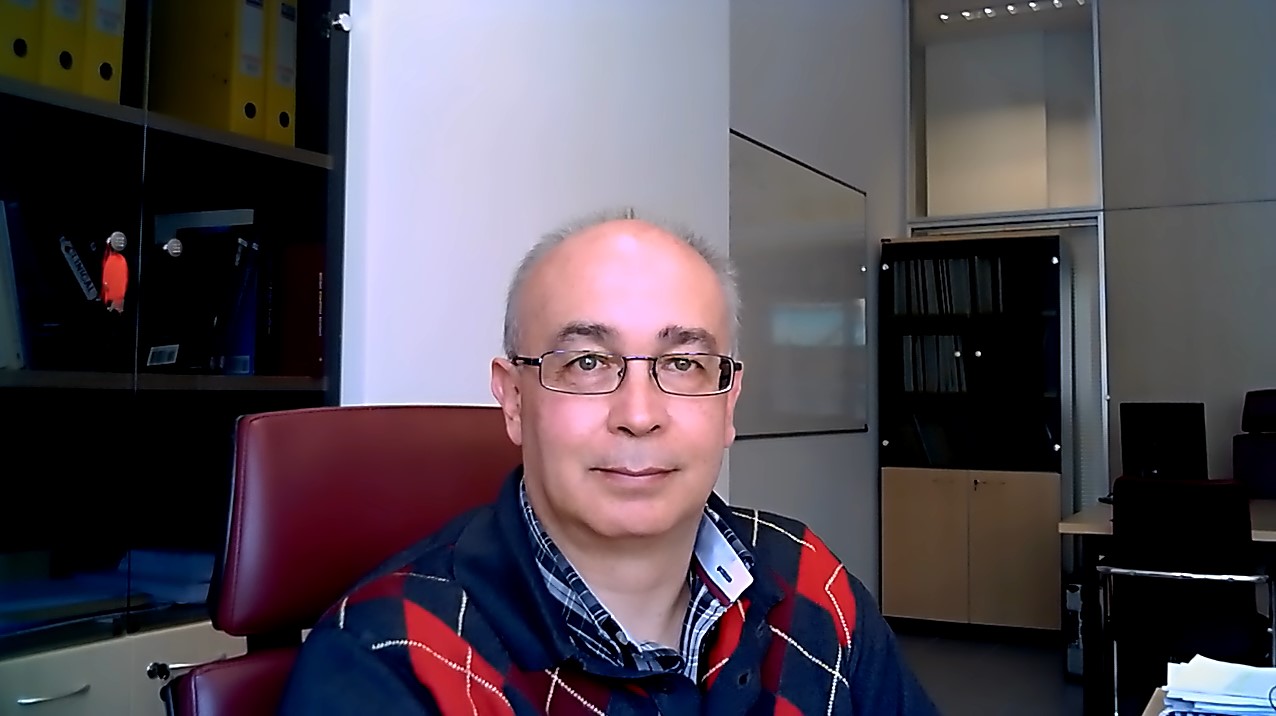
Sylvain Faisan is a permanent Assistant Professor at ICube - MIV (University of Strasbourg, France). His research focuses on image processing, statistical modeling, and geometry, with applications in medical imaging and neuroscience. He works on advanced methodologies integrating machine learning and mathematical frameworks. Key Research Areas: Polarimetric image processing, retinal image registration, 3D statistical model comparison, topology-preserving image deformation, and fMRI brain mapping Technical Expertise: Bayesian inference, non-local means filtering, reversible jump MCMC algorithms, causal modeling, and constrained optimization His publications demonstrate interdisciplinary applications in optics, biomedical imaging, and computational anatomy. He contributes to developing algorithms that maintain physical admissibility and topological integrity in complex imaging problems.
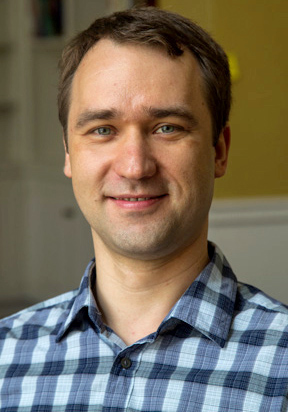
Dr. Yanan Fan is a Senior Principal Research Scientist at CSIRO's Data61 and an Adjunct Professor of Statistics at the University of New South Wales (UNSW). His research focuses on Bayesian models, computational methods for real-world problems, and interdisciplinary applications in fields like medical imaging, cosmology, and climate science. He holds a PhD in Statistics from the University of Bristol and has over 20 years of academic experience at UNSW's School of Mathematics and Statistics. Education: PhD in Statistics, University of Bristol, UK Undergraduate Degree in Mathematics, University of Melbourne Research Interests: Fan develops Bayesian semiparametric models, approximate Bayesian computation (ABC), and scalable computational methods for medical imaging (e.g., PET), cosmology, and climate modeling. He also investigates gender bias in educational evaluations and leads initiatives like the Data4Good stream of UDASH. His work emphasizes practical problem-solving through advanced statistical techniques. Leadership & Contributions: As Team Leader of Bayesian Computational Methods and Applications at Data61, he drives innovation in statistical methodologies. He has served on the Scientific Committee of MATRIX research institute and as an Associate Editor for major statistical journals. His projects include probabilistic climate projections and bias analysis in student evaluations. Labs & Groups: Active member of the StatML Group and leader of the Bayesian Computational Methods team, focusing on integrating machine learning and statistical computing.
Dr. Hannah Mitchell is a Lecturer at Queen's University Belfast's School of Mathematics and Physics, affiliated with the Intelligent Autonomous Manufacturing Systems and Mathematical Sciences Research Centre. She specializes in spatial data analysis, Hidden Markov models, and survival analysis, with research focusing on single-molecule imaging and statistical modeling. Key Research Areas: Spatial data analysis, Hidden Markov models, reversible jump MCMC for changepoint detection in imaging Recent Publications: Advanced statistical methods for FLImP super-resolution imaging and photobleaching correction Awards: 1st Prize for oral presentation at international conference (2024) Her work bridges computational statistics and biomedical imaging, developing techniques to improve imaging accuracy and efficiency. She actively supervises PhD students and contributes to peer review activities for journals.
Dr. Minh-Ngoc Tran is an Associate Professor in Business Analytics at the University of Sydney Business School and an Associate Investigator in the ARC Centre of Excellence for Mathematical and Statistical Frontiers. His research develops Bayesian and machine learning methods for complex models with big data. His methodological innovations include quantum-enhanced variational Bayes, manifold optimization techniques, and subsampling MCMC algorithms. Current research focuses on time series modeling for financial markets, quantum computing applications in statistics, and variational inference for models with intractable likelihoods. Dr. Tran teaches quantitative methods, data mining, and predictive analytics. He currently supervises PhD students in deep learning for financial time series, explainable AI, and quantum machine learning. Recent research grants support quantum computation in business analytics and deep learning-based financial forecasting. His work has been recognized through awards including the University of Sydney Business School Emerging Scholar Research Fellowship and designation as Australia's top researcher in Probability and Statistics with Applications in 2021.
Alessandro Fasso is a full professor of Statistics at the School of Engineering, University of Bergamo, Italy, where he has been teaching since 2000. He serves as Editor in Chief of Environmetrics (2019-) and has held various editorial positions for prestigious journals including Stochastic Environmental Research and Risk Analysis and Advances in Statistical Analysis. His international recognition includes serving as President of The International Environmetrics Society (TIES) from 2017-2019 and as a member of the Council of the International Statistical Institute (ISI) from 2013-2017. Professor Fasso's research focuses on statistical methods and applications to environmetrics, air quality, climate variables, and spatio-temporal data analysis. His work spans functional data analysis for atmospheric profiles, multivariate spatio-temporal modeling of air pollution, and statistical approaches for environmental monitoring networks. He has made significant contributions to understanding collocation uncertainty using heteroskedastic functional regression models and studying vertical smoothing mismatch uncertainty when comparing satellite and radiosonde data. His recent publications (2023-2025) demonstrate a strong focus on PM2.5 pollution modeling, particularly examining livestock-related emissions in the Lombardy region using advanced spatio-temporal techniques. His work increasingly integrates functional data analysis, regularization methods, and uncertainty quantification in environmental applications. The articles show a progression from theoretical statistical developments to practical environmental problem-solving with policy implications. President of The International Environmetrics Society (TIES) (2017-2019) Member of the Council of the International Statistical Institute (ISI) (2013-2017) Elected member of the International Statistical Institute (ISI) Founder and previous Coordinator of GRASPA (2013-2015) Member of WG-GRUAN, Working Group on Atmospheric Reference Observations (2013-) Professor Fasso has successfully supervised numerous PhD students including Emilio Porcu, Michela Cameletti, and Francesco Finazzi. His research has been supported by significant grants including EU Horizon 2020: GAIA-CLIM (budget €500,000), Project AQ2009-EN17 (budget €850,000), and PRIN-2006 (budget €260,000). He has served on evaluation committees for the Italian Research Quality Exercise (VQR 2015-2019) and as a referee for international research councils. His international lecturing activities include PhD courses at Peking University and the University of Bolzano-Bozen.
VASDEKIS VASILEIOS is a Professor of Statistics at the Department of Statistics, School of Information Sciences and Technology, Athens University of Economics and Business (AUEB), where he has been a faculty member since 1999. He previously served as Assistant Professor (2003–2009), Associate Professor (2009–2016), and Lecturer (1999–2003). He held administrative roles including Head of Department (2016–2020) and Vice-Chancellor for Academic Affairs and Personnel (2020–2024). Education: D.Phil. in Statistics, University of Oxford, UK (1989–1993) M.Sc. in Applied Statistics, University of Oxford, UK (1988–1989) B.A. in Mathematics, University of Athens, Greece (1983–1988) His research focuses on longitudinal data analysis , latent variable models , and composite likelihood methods , with applications in clinical trials, psychology, and public health. He has developed statistical methodologies for correlated binary data, multivariate ordinal responses, and random effects models. His work bridges theoretical statistics with practical applications in medicine and social sciences. The recent publications show a strong trend in psychometrics , model diagnostics , and longitudinal modeling , particularly using composite likelihood and goodness-of-fit techniques. His interdisciplinary collaborations extend to developmental psychology and nutrition studies. Scientific Awards: Fellow of the Royal Statistical Society (UK) IKY Scholarship for Doctoral Research (1989–1993) He has supervised multiple doctoral students, including Evgenia Tzompanaki, Antonia Korre, and Ioanna Athanassopoulou, and postgraduate researcher Kostas Florios. He has secured research funding through projects such as PYTHAGORAS, ARISTEIA II, and internal AUEB grants. His professional service includes teaching workshops on SPSS and statistical methods for health professionals, often in collaboration with pharmaceutical companies like JANSSEN-CILAG. He is an active member of professional societies, including the Royal Statistical Society, the American Mathematical Society, and the Bernoulli Society. He has contributed to European research networks such as DAFNE, focusing on food consumption data analysis.
Dr. Matt Sutton is a Lecturer in Statistical Inference for Complex Models at the School of Mathematical Sciences. He earned his PhD in 2019, focusing on developing statistical methods for high-dimensional data in clinical health and biological contexts. Previously, he worked as a postdoc at Lancaster University under the Bayes4Health grant. His research emphasizes Monte Carlo methods, Bayesian methodology, and high-dimensional statistics, with a current focus on continuous-time Monte Carlo techniques to accelerate Bayesian inference. Sutton actively contributes to the Models and Algorithms research program at the Centre for Data Science. His research interests include computational statistics, specifically advancements in PDMP samplers, control variates, and scalable Bayesian methods. Notable work spans applications in genomics, geophysics, and healthcare data analysis. Sutton’s methodologies aim to enhance computational efficiency in complex statistical inference tasks. His articles reflect a trend toward optimizing sampling algorithms and addressing challenges in high-dimensional Bayesian problems. Key areas include PDMP-based sampling, debiasing techniques, and federated learning applications. Sutton has not yet reported formal scientific awards or listed advisees in the provided text. His involvement in collaborative initiatives like the Centre for Data Science underscores his commitment to interdisciplinary research.
Nora Ripperda is a researcher at the Institute of Cartography and Geoinformatics, part of the Faculty of Civil Engineering and Geodetic Science at Leibniz University Hannover. Her work focuses on automated facade reconstruction using statistical approaches, formal grammars, and Markov Chain Monte Carlo (MCMC) methods. She contributed to Prof. Brenner's Volkswagen Foundation-funded junior research group, advancing techniques for urban 3D modeling and laser scanning analysis. Key research areas include terrestrial laser scanning orientation, facade attribute determination, and algorithm development for semi-automatic modeling. She has collaborated on projects like the GeoScope mixed-reality system for urban planning and public participation. Her publications span peer-reviewed journals (e.g., ISPRS Journal, PFG) and conferences (AGILE, DAGM). Ripperda's contributions emphasize interdisciplinary methods bridging geoinformatics, computer vision, and statistical modeling. Her 2012 monograph details formal grammar-based approaches to facade reconstruction, reflecting her long-term engagement with 3D urban data analysis.
Philippe GAGNON is an Associate Professor in the Department of Mathematics and Statistics at Université de Montréal, affiliated with the Centre de recherches mathématiques (CRM). He specializes in robust statistical methods, Bayesian inference, and actuarial science applications. His research focuses on developing robust models and efficient algorithms for data analysis, particularly in high-dimensional and outlier-prone contexts. He teaches courses such as ACT-2284 (Mathematics of Property and Casualty Insurance) and ACT-3261 (Predictive Modeling). Education: PhD in Statistics Master’s in Statistics Bachelor’s in Actuarial Science (fulfilled requirements for Society of Actuaries’ Associate designation) Postdoctoral Research, University of Oxford (with Arnaud Doucet) Research Interests: GAGNON’s work integrates robust Bayesian methods with advanced computational techniques like Markov Chain Monte Carlo (MCMC). Key themes include: Robust generalized linear models for actuarial applications Non-reversible jump algorithms for efficient model selection Automated statistical learning procedures Outlier-resistant parameter estimation Funding and Grants: NSERC Discovery Grant (2020–2027) FRQNT Emerging Researcher Grant (2020–2026) MITACS Accelerate Projects (Synthetic Data in Insurance, Spatial Regression Models) Advising: Current/previous advisees include Yuxi Wang (MSc 2022) and Arghya Datta (PhD in progress). He actively recruits students with backgrounds in theoretical statistics, actuarial science, or computer science. Labs/Teams: Collaborates within Université de Montréal’s research groups on computational statistics and actuarial science applications.
Andriy Norets is a Professor in the Economics Department at Brown University. His research focuses on Bayesian econometrics, dynamic discrete choice models, and nonparametric estimation methods. He has contributed to advancements in econometric theory, particularly in areas such as posterior consistency, adaptive estimation, and computational methods for complex models. Key research themes include Bayesian nonparametric models, instrumental variable regression, and the development of efficient computational algorithms for variable dimension models. Norets has published extensively in top journals like Econometrica , Journal of Econometrics , and Annals of Statistics . His work emphasizes methodological rigor and practical applications, such as analyzing stock market trading activity and improving inference in nonstandard econometric problems. He also collaborates with co-authors like Ulrich Müller, Justinas Pelenis, and Debdeep Pati on projects spanning from theoretical foundations to applied econometric problems. Norets teaches courses including Undergraduate Econometrics and Graduate Econometric Theory II, demonstrating his commitment to both research and education in economic methodology.
Anthony Christopher Davison is a Professor at the Institute of Mathematics within the School of Basic Sciences at École polytechnique fédérale de Lausanne (EPFL). He maintains an active research program in statistical methodology with a particular focus on extreme value theory and its applications across various domains including climate science, environmental statistics, and insurance. His work bridges theoretical developments with practical applications, addressing challenging problems in multivariate and spatial extremes. His research interests span Extreme Value Theory , Statistical Modeling , Multivariate Statistics , Spatial Statistics , and Bayesian Inference . Professor Davison has made significant contributions to the understanding of extremal dependence structures, developing novel methodologies for modeling multivariate extremes using structural equation models, graphical representations, and flexible nonparametric approaches. His work often addresses the challenges of non-stationarity in extreme events, particularly relevant in climate change contexts. Analysis of his recent publications reveals a consistent focus on advancing methodological frameworks for extreme value analysis while maintaining strong connections to real-world applications. His work demonstrates increasing sophistication in handling high-dimensional extremal dependence structures and addressing challenges in causal inference for extreme events. The publications span theoretical developments in statistical methodology alongside applications in climate science, environmental risk assessment, and insurance modeling. Professor Davison has supervised numerous doctoral students including Mario Krali, Timmy Rong Tian Tse, and Sonia Alouini, whose theses address cutting-edge problems in extreme value theory. His research has been supported by various funding bodies including the Swiss National Science Foundation and other Swiss foundations.
Professor Chris Sherlock is a Professor of Statistics at Lancaster University , affiliated with the School of Mathematical Sciences and the Department of Mathematics and Statistics . His research spans MCMC theory , methodology , and applications in epidemiology, ecology, and environmental science, with a focus on stochastic processes (SDEs, hidden Markov models) and spatial statistics . Key research areas : Non-reversible MCMC algorithms (e.g., Bouncy Particle Sampler), pseudo-marginal methods, and inference for reaction networks. Recent publications address flood risk estimation, scalable Bayesian learning, and clinical trial recruitment prediction using novel MCMC frameworks. He leads the Computational Statistics group (2019-present) and the MARS UG program (2024-present). Supervised PhD students have explored topics like extreme value theory, particle filters, and disease modeling. Collaborations include researchers such as Paul Fearnhead , Chris Nemeth , and Andrew Golightly , with EPSRC funding (EP/P033075/1) supporting non-reversible MCMC innovations.
DZOUFRAS IOANNIS is a Professor in the Department of Statistics at the Athens University of Economics and Business (AUEB), affiliated with the School of Information Sciences and Technology. He has held this position since December 2015 and has previously served as Assistant Professor (2004-2011) and Lecturer at multiple institutions. Education: PhD in Statistics (AUEB, 1999) Master's in Statistics (University of Southampton, 1995) BSc in Statistics & Actuarial Science (University of Piraeus, 1994) His research focuses on Bayesian and computational statistics, emphasizing categorical data analysis, model building, variable selection methodology, and applications to medical research, psychometrics, and sports data. His work has appeared in top journals like Bayesian Analysis , Statistics and Computing , and Psychometrika . Scientific Awards & Recognition: Lefkopoulio Prize for Best Doctoral Thesis in Statistics (1999-2000) Honorable Mention at AAP's PROSE Awards (2010) He has contributed to international collaborations through conferences with Italian universities and co-organized academic workshops in Greece.
Julien Bect is an Associate Professor at CentraleSupélec, affiliated with the Laboratoire des Signaux et Systèmes (L2S). His primary research focuses on Bayesian optimization, Gaussian processes, uncertainty quantification, and sequential design of experiments. He has collaborated extensively with researchers such as Emmanuel Vazquez and Paul Feliot, contributing to advancements in statistical modeling and computational methods for engineering and scientific applications. His work emphasizes the development of efficient algorithms for estimating probabilities of failure, excursion sets, and quantile-based inversion in complex systems. Notable contributions include methodologies for multi-fidelity computer experiments, Bayesian subset simulation, and adaptive experimental design. His research bridges theoretical foundations in statistics with practical applications in fields like reliability engineering, food safety, and electrical systems. Bect has published numerous articles in prestigious journals such as Technometrics , SIAM/ASA Journal on Uncertainty Quantification , and Bernoulli , showcasing his expertise in statistical inference and optimization. His recent work explores novel approaches in quantile set inversion and complex-valued frequency response modeling, reflecting his commitment to advancing methodologies for real-world stochastic systems.
Dr. Rob Salomone is a Senior Research Fellow in Data Science at the Queensland University of Technology's (QUT) Centre for Data Science. He earned his Ph.D. in Statistics from the University of Queensland in 2018, focusing on advanced Monte Carlo methodology. Before joining QUT, he held research fellowships at the University of Queensland and UNSW Sydney. His research bridges statistics and machine learning, with an emphasis on developing robust computational techniques for large datasets and complex models. He specializes in creating scientific models that integrate advanced machine learning, domain expertise, and tailored computational methods to address intricate mathematical challenges. Salomone’s work spans Bayesian computation, Monte Carlo methods, and applications in computational biology and environmental systems. His contributions include advancements in nested sampling, CRISPR guide RNA optimization, and graph neural networks for anomaly detection. He also explores federated learning and uncertainty quantification in high-dimensional settings. Notable collaborations include work on agent-based tumor growth models and spectral subsampling for time series analysis. Though no formal students are listed, his research impact is evident through interdisciplinary projects and methodological innovations.