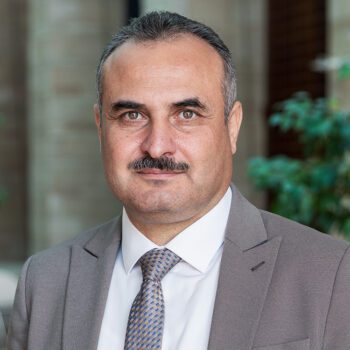
João Carlos Lopes de Carvalho is a Full Professor at the Faculty of Science and Technology of the University of Coimbra, Portugal, where he has held academic positions since 1987. He was promoted to Associate Professor in 2003 and attained Full Professor status in 2022. His research spans computational biology, biophysical modeling of cancer, and experimental particle physics, with extensive participation in international collaborations including CERN (CPLEAR, ATLAS) and DESY (HERA-B). PhD in Experimental Particle Physics, University of Liverpool (1994) Aggregate Title (Habilitation), University of Coimbra (2003) Bachelor’s Degree in Physics, University of Coimbra (1987) His research focuses on the computational modeling of biological systems, particularly the bioelectric mechanisms underlying cancer initiation and progression. He develops discrete models such as cellular automata and cellular Potts models to simulate tissue dynamics in 2D and 3D, with applications in bladder and prostate cancer. Earlier in his career, he contributed to particle detector development, data acquisition, and physics analysis in high-energy experiments. The recent trends in his publication record show a strong emphasis on multiscale modeling of tumor growth, angiogenesis, and the role of bioelectricity in carcinogenesis. His work integrates computational simulations with biological insights, targeting early cancer detection and therapeutic strategies. Articles are published in high-impact journals such as Scientific Reports , PLOS Computational Biology , and Bulletin of Mathematical Biology . Supervised or co-supervised 4 PhD theses and 19 master’s dissertations Participated in over 50 research projects, coordinating 9 Principal investigator on grants including FCT projects PTDC/EMD-TLM/7289/2020 and PTDC/BIA-CEL/31743/2017 Involved in major collaborations: CERN (ATLAS, CPLEAR), DESY (HERA-B), SNO+ João Carlos Lopes de Carvalho has been a key figure in advancing computational approaches in oncology and biophysics. His work bridges physics, engineering, and life sciences, contributing to both fundamental understanding and potential clinical applications in cancer research.