معرفی
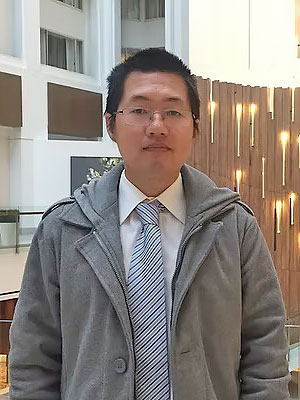
Gangadhar Andaluri is an Assistant Professor (tenure track) in the Department of Civil and Environmental Engineering at Temple University's College of Engineering. He earned his PhD in Engineering from Temple University in 2011, an MS in Chemical Engineering from Villanova University (2006), and a BS in Chemical Engineering from Osmania University (2003). Prior to his current role, he served as an NTT faculty member, Senior Lab Manager, and post-doctoral fellow within the same department.
His research is centered on emerging contaminants, including PFAS, microplastics, and antibiotic resistance genes, with a strong emphasis on advanced oxidation technologies, thermal treatment, and advanced analytical methods such as LC/MS/MS and GC/MS/MS. He also investigates reverse and forward osmosis, chemical sensors, and applies artificial neural networks and computational quantum chemistry to environmental problems. He leads the Thermal Technologies and Analytical Methods Laboratory and serves as the faculty advisor for the Society of Environmental Engineers and Scientists (SEES) at Temple.
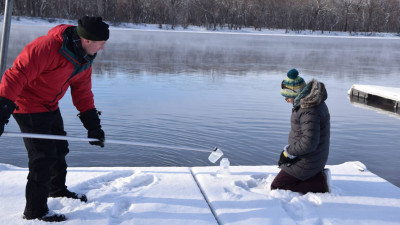
The recent publications (2023–2025) reflect a consistent focus on environmental contaminants in urban watersheds, particularly in the Delaware and Schuylkill Rivers. Key themes include the detection and degradation of PFAS using sonochemical methods, monitoring of microplastics and 6PPDQ, fate of antibiotic resistance genes in biofilm reactors, and development of rapid extraction techniques (FaEx) for contaminants in food and environmental matrices. These works span disciplines of environmental engineering, analytical chemistry, and materials science, with methodologies emphasizing innovation in detection, modeling, and remediation.
Scientific Awards:
- No formal scientific awards listed in the provided text.
Advising and Grants: Dr. Andaluri advises the Society of Environmental Engineers and Scientists (SEES) student chapter. While no specific grant funding is detailed in the text, his active research program and publication record suggest ongoing project support. There is no explicit mention of graduate student advising or formal mentorship roles beyond the SEES chapter.
Labs and Teams: He leads the Thermal Technologies and Analytical Methods Laboratory, which focuses on experimental and computational approaches to environmental contamination. His collaborative work, evident in co-authorship with researchers like R. Suri, Y. Lin, and V.K. Ponnusamy, indicates strong interdisciplinary team engagement across environmental engineering, chemistry, and biomedical applications.
حوزههای پژوهشی