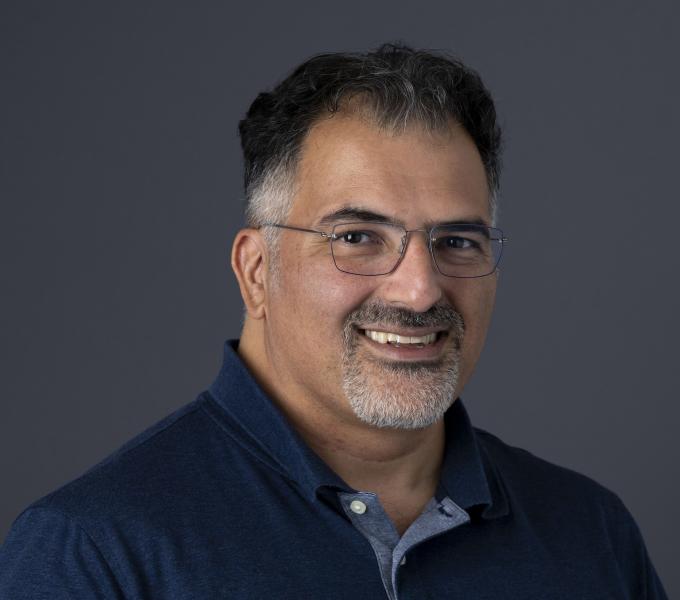
Vahid Zolfaghari is a Ph.D. candidate and researcher at the Chair of Robotics, Artificial Intelligence, and Real-Time Systems at the Technical University of Munich (TUM) , Germany. His work focuses on advancing technologies in robotics, AI, and autonomous systems. Education: Master of Science in Information Technology Engineering - Communication Networks, Amirkabir University of Technology, Tehran, Iran (09/2011 - 02/2014) Bachelor of Science in Information Technology Engineering, Birjand University, Iran (09/2005 - 02/2010) Research Interests: Retrieval-Augmented Generation Large Language Models (LLM) Autonomous Driving Safety Analysis for Autonomous Vehicles Career History: Ph.D. candidate and researcher at TUM (02/2022 - NOW) Devops engineer/researcher at the Human Brain Project, Institute of BioRobotics, Scuola Superiore Sant'Anna, Pisa, Italy (12/2019 - 01/2022) Researcher at the REPLICATE Project, Institute for Informatics and Telematics, CNR, Pisa, Italy (12/2017 - 10/2019) Senior Test Engineer at Sharif University of Technology, Tehran, Iran (08/2014 - 12/2017)
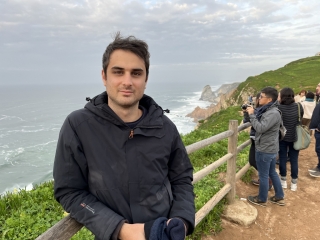
Trond Linjordet is a Postdoctoral Fellow at the Hylleraas Center for Quantum Molecular Sciences, University of Oslo, affiliated with the Department of Chemistry. His academic background includes a Bachelor's in Nanotechnology, Master's in Quantum Information and Optics, and a PhD focused on machine learning applications in linguistic domains using knowledge graphs. He possesses commercial experience as a data scientist and scientific advisor, along with research experience in smart cities projects. Linjordet's research centers on machine learning theory and applications across multiple domains. Primary interests include: Machine learning for catalyst discovery in chemistry Knowledge graph construction and applications Natural language processing and question answering systems Synthetic data generation and optimization Quantum molecular sciences applications His publications demonstrate consistent focus on knowledge graph technologies, question answering systems, and urban informatics. He maintains active research collaborations as evidenced by co-authorship networks. No awards, student advisements, or grant information are documented in the provided materials.
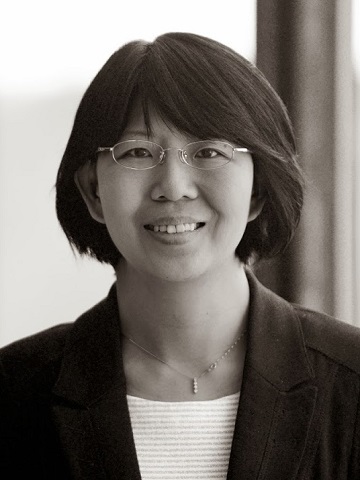
Dr. Yada Zhu is a Researcher at IBM T. J. Watson Research Center , affiliated with the Future of Computing – Finance Research team. She leads initiatives in foundational AI/ML capabilities for financial decision-making and risk management. Research Focus: High-dimensional time series analysis, heterogeneous data modeling, graph learning, and statistical applications in finance, e-commerce, and smart energy. Grants: Principal Investigator for MIT-IBM AI Lab projects funded by Refinitiv and a major financial institution. Leadership: Technical lead in analytics projects contributing to commercialized IBM products. Scientific Achievements: IBM Research Division Outstanding Technology Achievement Award High Valuable Innovation Award Her publications span AI/ML, statistical modeling, and financial applications, with recent work on graph transformers, time-series unification, and zero-shot tool optimization for LLM agents. She serves on editorial boards for statistics journals and as Senior Program Committee member for AAAI.
Anaïs LEFEUVRE-HALFTERMEYER is a Senior Lecturer at the University of Orleans, where she is affiliated with the LIFO (Laboratoire d'Informatique Fondamentale d'Orléans) research laboratory. She serves as a member of the DIAMS steering committee and is an associate member of both LIFAT and LLL research groups. Her academic profile reflects strong engagement with both teaching responsibilities and research activities in computer science with a human-centered focus. Dr. LEFEUVRE-HALFTERMEYER's research spans multiple interconnected domains within computational linguistics and human-computer interaction. Her primary interests include Natural Language Processing , Corpus Linguistics , and Augmentative and Alternative Communication systems. She has developed significant expertise in Explainable Artificial Intelligence approaches, particularly for image captioning systems, and has conducted substantial work on social media analysis, temporal annotation, and accessibility technologies. Her research consistently demonstrates a commitment to practical applications that address real-world communication challenges, especially in rehabilitation contexts. Analysis of her publication record reveals a clear trajectory from foundational corpus linguistics work toward increasingly applied research with strong human impact. Early publications focused on French spoken language treebanks and syntactic annotation tools, while more recent work addresses accessibility technologies, ethical considerations in AI, and explainability in vision-language models. There's a notable emphasis on bridging theoretical linguistic concepts with practical implementation, particularly for assistive technologies that serve people with communication disabilities. Dr. LEFEUVRE-HALFTERMEYER actively contributes to the academic community through mentorship and organizational roles. She has served as a mentor for student projects, including work on French language model comparison, and previously organized the JOLICO (JOurnées jeunes chercheurs de la LInguistique de COrpus) conference in 2015 as part of the scientific committee. Her institutional involvement includes membership on the DIAMS steering committee, demonstrating leadership within her research community.
Yufei Ding is an Associate Professor in the Computer Science & Engineering Department at the University of California, San Diego (UCSD), and founder of the PICASSO Lab. She earned a Ph.D. in Computer Science from North Carolina State University and a B.S. in Physics from the University of Science and Technology of China. Research Interests: Quantum Computing Machine Learning Domain-Specific Languages Compiler Optimization Hardware Acceleration High-Performance Computing Her recent publications focus on quantum compilation, error correction, and machine learning systems, with a particular emphasis on hardware-aware optimizations. She has received multiple prestigious awards, including the NSF CAREER Award (2020) and the IEEE TCHPC Early Career Researchers Award (2019). Scientific Awards: NSF CAREER Award (2020) IEEE Computer Society TCHPC Early Career Researchers Award (2019) Yufei actively advises Ph.D. students and postdoctoral researchers in quantum computing and machine learning systems. Her lab offers openings for both quantum computing and machine learning research.
Afshin Beheshti, PhD , is Professor of Surgery and Computational & Systems Biology at the University of Pittsburgh School of Medicine , Director of the Space Biomedicine Program , and Associate Director of the McGowan Institute for Regenerative Medicine . He additionally serves as Visiting Researcher at the Broad Institute of MIT and Harvard and remains an active investigator at NASA Ames Research Center through the Blue Marble Space Institute of Science. Education & Training: PhD in Physics, Florida State University (2002) Postdoctoral training in cancer research, systems biology, space biology, and radiation biology Research Focus: Dr. Beheshti’s work sits at the intersection of space biomedicine, regenerative medicine, and systems biology . He investigates how the space environment—microgravity, radiation, and altered circadian cycles—affects human physiology at molecular, cellular, and systemic levels. Core themes include microRNA-mediated gene regulation, mitochondrial dysfunction, radiation countermeasures, and precision diagnostics using label-free optical imaging combined with multi-omics. Recent Scientific Impact: In 2024, Dr. Beheshti co-led the Space Omics and Medical Atlas (SOMA) , the largest international compendium of space biology data to date, published across Nature and companion journals. His portfolio also spans COVID-19 and Long COVID investigations through the non-profit COVID-19 International Research Team (COV-IRT) and democratized AI development via the Kwaai Personal AI initiative. Honors & Awards: NASA Exceptional Scientific Achievement Medal ISS Research & Development Award – Compelling Results in Biology KBR Award for Excellence NASA Outstanding Service Award – Ames Safety Award Program II Funding & Collaborations: Dr. Beheshti has secured continuous funding from NASA, Department of Defense, and other federal agencies to advance countermeasure development against space radiation and microgravity-induced pathologies. His teams integrate wet-lab experiments, animal models, clinical data from astronauts, and advanced computational pipelines to deliver translational insights for both space exploration and terrestrial medicine. Laboratory & Outreach: At Pittsburgh he is establishing a next-generation Space Biomedicine Laboratory outfitted with multi-modal imaging, single-cell multi-omics, and AI-driven analytics. Parallel outreach programs target K-12, undergraduate, and graduate trainees to cultivate the next generation of space life scientists.
Majjed Al-Qatf is a Researcher at the University of Galway , collaborating with Prof. Edward Curry. His work focuses on data spaces, knowledge graphs for data sharing, large language models, and retrieval augmented generation for question answering. Education: B.S. in Network Technology and Computer Security (Sana’a University, 2013), M.S. in Computer Science and Technology (Central South University, 2019), Ph.D. in Computer Science and Technology (University of Science and Technology of China, 2023) His research spans artificial intelligence, particularly deep learning , machine learning , NLP , and computer vision , with applications in network intrusion detection , image captioning , activity recognition , and explainability . Prior work includes image enhancement , knowledge graphs , and federated learning . Publications appear in journals such as IEEE Transactions on Multimedia , ACM Transactions on Multimedia Computing, Communications and Applications , and conferences like the IEEE International Conference on Big Data and International Conference on Software and Computer Applications .
Paul Buitelaar is a Professor in Data Analytics and Deputy Director of the Data Science Institute at the University of Galway. He leads the Multimodal Data Analysis research program through the Insight SFI Research Centre for Data Analytics, focusing on Natural Language Processing (NLP) for knowledge extraction and semantic information access. Co-Director of SFI Centre for Research Training in AI Co-PI of Insight SFI Research Centre for Data Analytics Collaborates with industry partners like Fidelity Investments, Huawei, and Irish Times His research spans ontology learning, linguistic linked data, and social media analysis, particularly in legal and healthcare domains. He developed the Saffron framework for knowledge extraction and contributed to EU-funded projects such as Monnet and MixedEmotions. His publications emphasize NLP applications in legal text analysis, taxonomy generation, and health content categorization. Projects like Pret-a-LLod and MixedEmotions highlight his interdisciplinary approach combining NLP with computer vision and sensor analysis. Paul's work integrates knowledge graphs and back-translation techniques to enhance machine translation, alongside unsupervised methods for analyzing social media health data.
Dr. Hossain Shahriar serves as Professor and Associate Director for the Center for Cybersecurity at the University of West Florida. His academic career bridges cybersecurity research with practical healthcare applications, focusing on critical protection of sensitive medical information systems. His research spans several vital cybersecurity domains: Mobile and web security mHealth applications security EHR systems and healthcare security HIPAA compliance checking mechanisms Malware analysis and vulnerability detection Quantum computing applications in security Blockchain security frameworks Dr. Shahriar's work demonstrates strong interdisciplinary focus, particularly at the intersection of healthcare and cybersecurity. His research portfolio shows increasing emphasis on quantum security applications, AI-powered defense mechanisms, and healthcare information protection systems. Recent publications reveal expertise in large language models for security applications, blockchain vulnerabilities analysis, and HIPAA compliance systems for mHealth applications. His scholarly output indicates strategic focus on both theoretical advancements and practical implementations addressing evolving cybersecurity threats across multiple domains. The research shows particular strength in developing automated systems for regulatory compliance checking and vulnerability detection. Dr. Shahriar has secured significant research funding from major federal agencies including National Science Foundation, National Security Agency, Department of Defense, and National Institutes of Health, demonstrating the practical relevance and impact of his work. His educational contributions include developing hands-on learning modules for cybersecurity education with emphasis on authentic learning experiences for students. He has held leadership roles as Program Chair (IEEE ICDH), Publication Chair (ACM SAC), and Proceedings Chair (IEEE COMPSAC), indicating his standing within the broader cybersecurity research community. His teaching portfolio includes Ethical Hacking, AI in Cybersecurity, Health Information Security and Privacy, and other critical cybersecurity courses developed with open-source materials.
Aniello De Santo is an Assistant Professor in the Department of Linguistics at the University of Utah, where he has been serving since July 2020. He earned his PhD in Linguistics from Stony Brook University in 2020 and is fluent in Italian, which informs his research on Italian syntax and processing. His research spans multiple disciplines with key interests in: Computational Linguistics and Syntax Cognitive Science and Theoretical Frameworks Artificial Intelligence and Machine Learning Applications Formal Language Theory and Complexity Psycholinguistic Processing Models De Santo's scholarly work demonstrates remarkable interdisciplinary integration, with publications in top journals across linguistics, cognitive science, and computer science. His recent work focuses on theoretical foundations in cognitive science (2024 publications on plausibility criteria and theoretical virtues), empirical investigations of Italian relative clause processing (2024), and innovative applications of machine learning techniques to linguistic problems. His research often bridges formal theoretical analysis with computational modeling and empirical validation. He has developed innovative educational approaches including an asynchronous general-education course "Language in the United States" (2023) and teaches a diverse range of courses in computational linguistics, syntax, and language studies. His extensive teaching portfolio includes Computers & Language, Introduction to Syntax, Computational Linguistics, and various research/thesis courses at both undergraduate and graduate levels. De Santo is actively engaged in community outreach as an organizer of the North American Computational Linguistics Open Competition (NACLO) for high school students, conducting practice sessions and hosting competition rounds since 2022. This work connects academic linguistics with pre-college education and demonstrates his commitment to promoting computational thinking in language studies.
Biagio Lenzitti is a Researcher at the Department of Mathematics and Computer Science , University of Palermo, School of Basic and Applied Sciences. He has taught courses like Programming and Laboratory , Computer Networks , and Educational Planning of Information Systems since at least 2015. Current Office Hours: Monday 9:00-11:00, Studio 201 Contact: biagio.lenzitti@unipa.it | +3909123891101 His research focuses on medical text simplification , patient empowerment , and interactive educational tools , including the development of systems like: MED-VTD: Multilingual Medical Dictionary SimpleHealth Platform: Medical Text Simplification Tools U-MedSearch: Meta Search Engine for Medical Content ETN-FETCH Project: Future Education in Computing Recent publications address AI-driven health information systems , IoT data sharing , and conversational agents for medical education. Key collaborations include the Anghelos Communication Studies Center and European networks like ETN-FETCH . He has supervised theses on topics spanning semantic web applications , open data , and network security since at least 2005.
Leonidas Akritidis serves as a Lecturer at the Department of Science and Technology within the School of Science and Technology at International Hellenic University. He holds a PhD and Diploma in Electrical and Computer Engineering from University of Thessaly and Aristotle University of Thessaloniki respectively. His educational background includes: PhD in Electrical and Computer Engineering, University of Thessaly (2007-2013) Diploma in Electrical and Computer Engineering, Aristotle University of Thessaloniki (1997-2003) Akritidis specializes in Natural Language Processing, Deep Machine Learning, and Data Mining with particular expertise in short text clustering, dimensionality reduction, and rank aggregation techniques. His research addresses challenges in sparse data environments and high-dimensional feature spaces, developing novel algorithms for text representation and processing. He has contributed significantly to parallel and distributed computing approaches for big data analytics. His publication trends reveal a consistent focus on NLP and machine learning applications, with recent work expanding into generative models for tabular data, medical image analysis, and advanced fault detection systems. The research demonstrates progression from foundational text processing techniques to more complex applications in healthcare, e-commerce, and software engineering. Akritidis has taught multiple courses including Big Data and Cloud Computing, Machine Learning Principles and Concepts, Mobile Application Development, and Web Programming. His research projects include CyberPi (intelligent cyber threat detection), NANOTRIM (transistor sizing optimization), and iMuSe (virtual museum platform). He collaborates extensively with researchers like Panayiotis Bozanis, Miltiadis Alamaniotis, and Athanasios Fevgas, primarily within the Greek academic community.
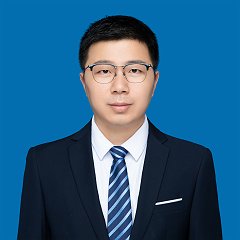
Yan Lei is a Professor at the School of Big Data & Software Engineering, Chongqing University, China, specializing in software quality improvement through advanced fault localization, program repair, and testing methodologies. His research bridges software engineering with data science to address challenges in deep learning systems and hardware description language (HDL) programs, evidenced by extensive publications in CCF-A venues including ASE, FSE, and TSE. Dr. Lei obtained his Ph.D. under Prof. Xiaoguang Mao at Chongqing University and conducted research at UC Davis with Prof. Zhendong Su. His educational background informs his interdisciplinary approach to software engineering challenges. His research focuses on three interconnected pillars: Fault Localization and Program Repair: Developing deep learning and metamorphic techniques for precise bug identification and automated repair Data Science for SE: Applying representation learning and contrastive methods to software testing challenges Testing Deep Learning Systems: Addressing API misuses and error-handling bugs in neural network applications Analysis of his 2023-2024 publications reveals a strategic shift toward multi-fault scenarios and cross-framework solutions, with increasing emphasis on hardware-aware testing and compilation error repair. His work consistently integrates generative models and semantic learning to overcome data imbalance issues. His scientific recognition includes: ACM SIGSOFT Distinguished Paper Award for coincidental correctness detection research at ASE 2024 IEEE TCSE Distinguished Paper Award for flaky test prediction at SANER 2024 Dr. Lei directs significant research initiatives including a National Natural Science Foundation project (2023-2026) on multi-fault program repair and previously led a foundational fault localization study (2017-2019). His teaching portfolio spans undergraduate software testing and graduate courses for international students, reflecting commitment to pedagogy. Current projects like Data Fusion for Smart Megalopolis demonstrate applied research impact in Chongqing's technological development.
Ana Valeria Gonzalez is a researcher in the Department of Computer Science at the University of Copenhagen's Faculty of Science, specializing in Machine Learning with a focus on human-centered natural language processing. Her work bridges computational linguistics and cognitive science within the department's Machine Learning research section. Her research investigates bias mitigation in multilingual systems, interpretable AI evaluation frameworks, and affect-aware dialogue generation. Key contributions include developing testbeds for gender bias analysis in coreference resolution, novel methodologies for evaluating model interpretability through reverse Turing tests, and retrieval-based approaches for goal-oriented conversational agents. She employs techniques spanning attention mechanisms, BiLSTMs, and domain adaptation to address challenges in low-resource NLP settings. Analysis of her 2019-2021 publications reveals a cohesive research trajectory toward building transparent, equitable NLP systems that account for human cognitive factors. Her work consistently addresses real-world deployment challenges, particularly in dialogue systems requiring emotional intelligence and cross-lingual fairness. Collaborations with Anders Søgaard, Isabelle Augenstein, and other Copenhagen researchers demonstrate strong integration within the university's AI ecosystem. Gonzalez completed her Ph.D. in 2021 with the dissertation "Towards Human-Centered Natural Language Processing". She maintains active research in the Machine Learning group, though specific advising roles and grant details aren't documented in the available materials. Her publication record shows significant impact with multiple Scopus-cited works and substantial reader engagement across platforms.
Giovanni Trappolini is an Assistant Professor in the Department of Computer, Control, and Management Engineering at Sapienza University of Rome, where he conducts research in the RSTLess Lab under the supervision of Prof. Fabrizio Silvestri. He earned his PhD in Machine Learning from Sapienza in 2022, focusing on Geometric Deep Learning under Prof. Emanuele Rodolà. Trappolini has collaborated with leading institutions such as Stanford, Technion, Meta, Amazon, TII, and the University of Pisa, contributing to cutting-edge research in AI and information retrieval. His research interests include machine learning, deep learning, geometric deep learning, multimodal AI, information retrieval, and large language models. He has pioneered work on Retrieval-Augmented Generation (RAG), Neural Databases, and the development of Fauno, the leading Italian LLM. His teaching experience includes courses on Python for Data Science, Advanced Data Mining, and Statistical Learning at both Sapienza and Luiss Guido Carli. Trappolini's recent publications span top-tier venues like SIGIR, NeurIPS, ECCV, and IEEE Transactions, with a focus on graph neural networks, federated learning, anomaly detection in 5G networks, and multimodal systems. His work shows a strong trend toward robust, privacy-preserving, and multimodal AI systems with real-world applications in language, vision, and network security. Sapienza honor graduate IELTS 8.0 He has advised several teaching roles and delivered courses on Python, data science, and statistical learning. His research is supported through collaborations with industry leaders like Meta and Amazon, and he leads innovative projects such as Fauno and Neural Databases. Trappolini is actively involved in the AI research community and continues to push the boundaries of language and retrieval systems. He is a core member of the RSTLess Lab and has been instrumental in advancing geometric and multimodal deep learning at Sapienza University. His work bridges theoretical innovation with practical implementation, particularly in the domains of Italian language modeling and secure, efficient information retrieval systems.