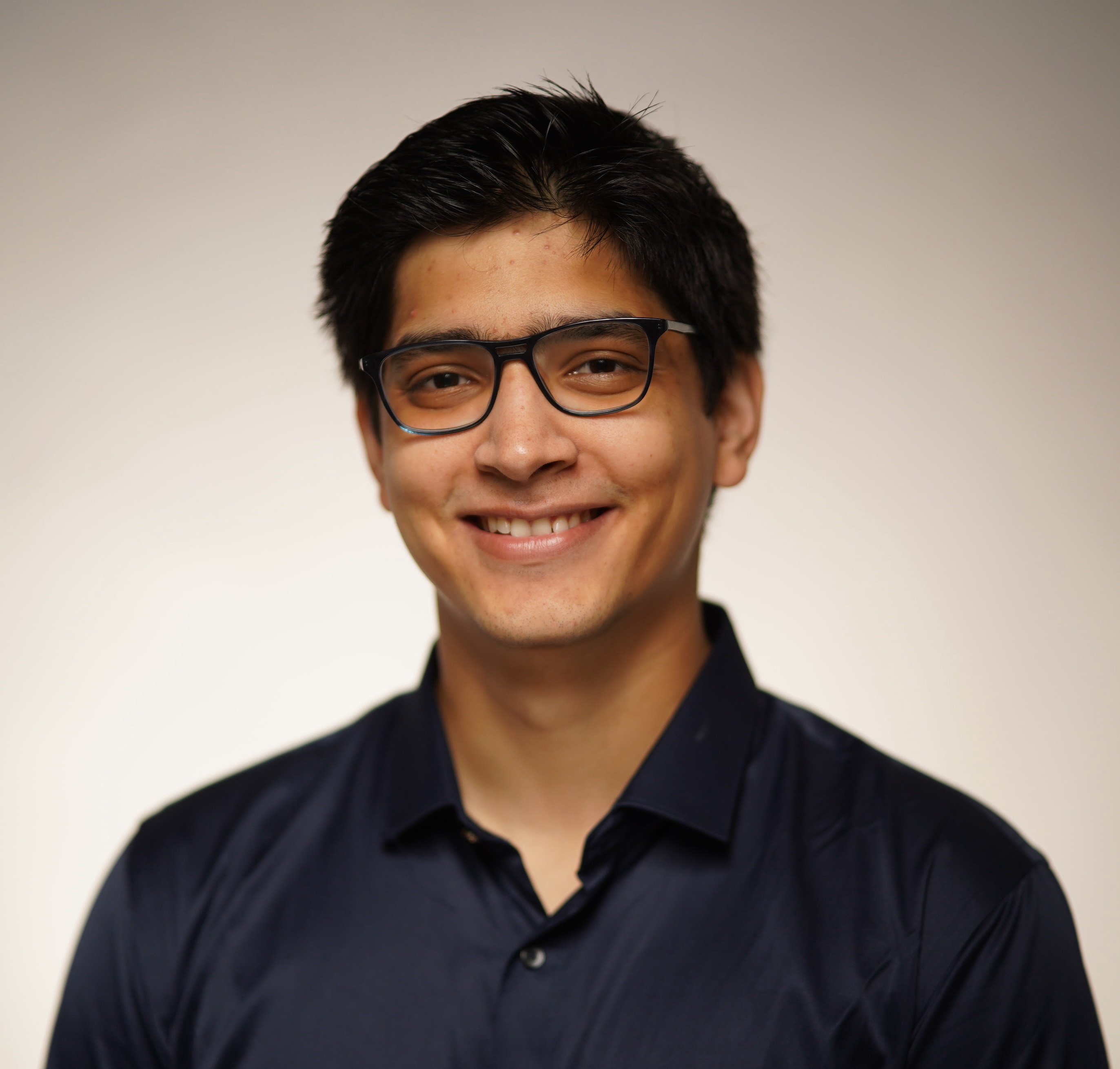
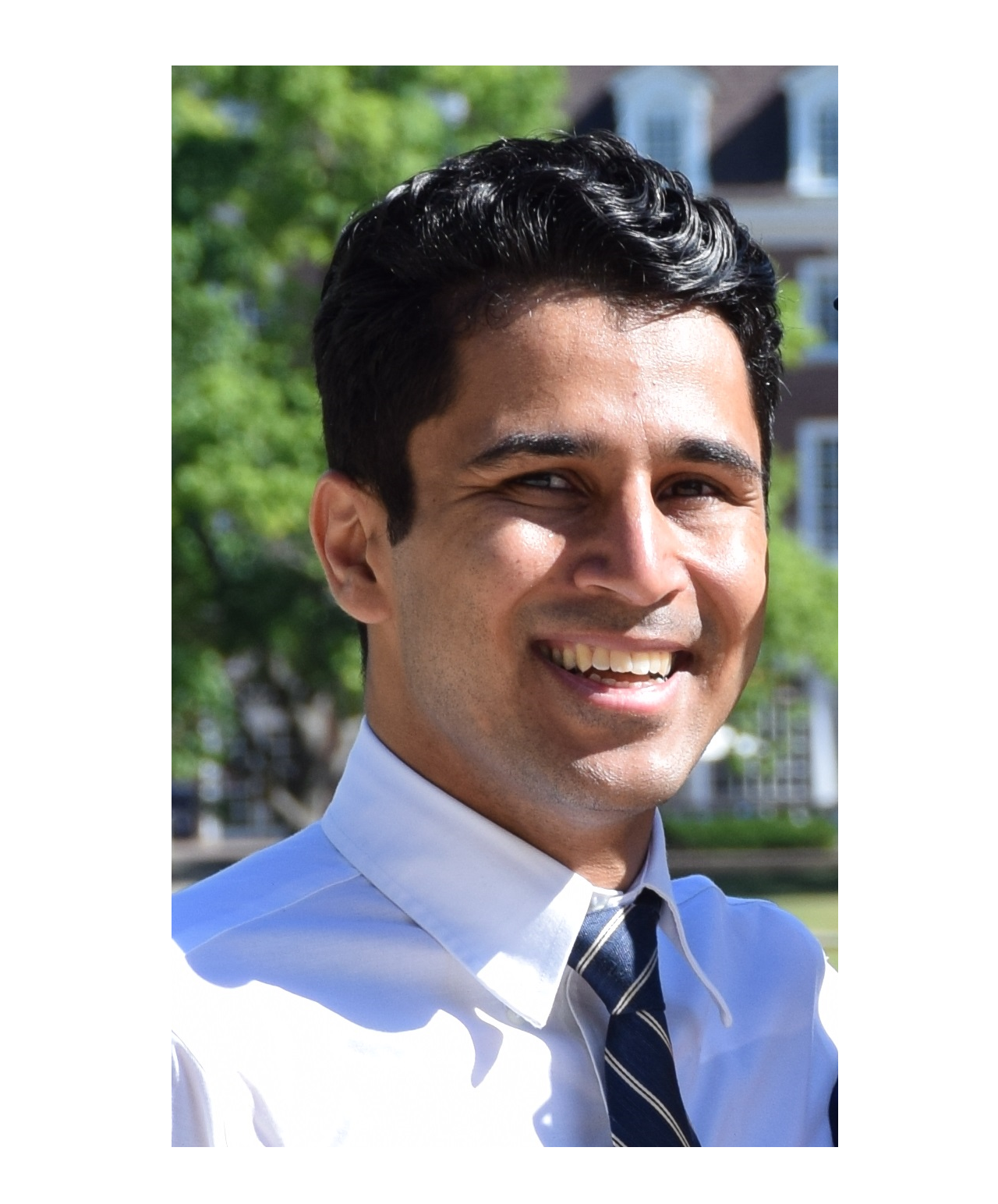
Yuyan Wang is an Assistant Professor of Marketing at Stanford Graduate School of Business and the Kevin J. O’Donohue Family Faculty Scholar (2024-2025). She holds a PhD in Statistics from Princeton University (2016) and a BSc from the Special Class for the Gifted Young at USTC (2012). Before academia, she spent 7 years as a machine learning scientist/engineer at Uber and Google DeepMind. Her research focuses on the intersection of marketing, machine learning, and statistics, with a emphasis on improving AI systems' long-term values and fairness. Key contributions include optimizing multi-sided marketplaces, developing intent-based recommendation frameworks, and deploying solutions with global business impact. Awards include the Steven Shugan Best Junior Faculty Paper Award (2025) and CIST Best Paper Award (2022). She teaches Stanford's first AI-focused MBA course, MKTG321, which received exceptional student feedback (mean instruction rating: 4.9/5). Education Highlights: PhD in Statistics, Princeton University (2016) BSc in Statistics, USTC Special Class for Gifted Youth (2012) Research Themes: Recommender Systems & Personalization Algorithmic Fairness & Long-Term Optimization User Intent Modeling & Explainer Systems Multi-Sided Marketplace Algorithms Awards & Recognitions: Steven Shugan Best Junior Faculty Paper (AIM 2025) CIST Best Paper (2022) Top 10 ML Article (0.7% selection) for Uber's Food Discovery work Teaching & Mentorship: Course creator of 'Understanding AI Technologies for Business Problems' (GSB's first AI MBA course) Mentor for 3+ students in CS research programs targeting marginalized groups Industry mentor at Google Brain and Uber Key Collaborations: Google DeepMind Uber Industry partnerships with Netflix, Clari, OpenAI, etc.
Mario Luca Bernardi is an Associate Professor at the Department of Engineering (DING) of the University of Sannio . His research spans Machine Learning , Deep Learning , and Malware Analysis , with a focus on Process Mining , IoT Security , and Healthcare Diagnostics . Key research areas include: Transfer Learning for Industrial Anomaly Detection Business Process-aware Large Language Models Explainable AI for Next Activity Prediction Fuzzy Logic Applications in Cloud Systems and Malware Phylogeny Behavioral Feature Analysis for Game Bots AI in Thyroid and Parkinson’s Disease Detection Recent publications highlight trends in Declarative Process Mining , Retrieval-Augmented Generation , and Multi-Source Machine Learning across domains like healthcare, cybersecurity, and software engineering. His work often involves collaboration with researchers such as Lerina Aversano , Francesco Martinelli , and Felice Mercaldo .
Ashish Chouhan is a Full-time Doctoral Researcher at the Data Science Research Group , Institute of Computer Science , Heidelberg University , Germany. He previously worked as an Academic Researcher at SRH Hochschule Heidelberg (2020-2023) and has been an Extern Doctoral Researcher at Heidelberg University since 2021. B.Sc. (2014) from Rashtrasant Tukadoji Maharaj Nagpur University , India M.Sc. (2020) in Applied Computer Science from SRH Hochschule Heidelberg His research focuses on Natural Language Processing with special emphasis on Retrieval Augmented Generation frameworks, Question-Answering Systems , and Corpus Management and Exploration . He has made significant contributions through his publications at major conferences including: SIGIR'25 - ClusterChat for corpus exploration LREC-COLING 2024 - LexDrafter for legislative documents EMNLP'22 - EUR-Lex-Sum dataset for legal summarization Chouhan actively contributes to academic governance through: Program Committee membership at RegNLP@COLING 2025 and NLLP@EMNLP series Reviewing for Artificial Intelligence and Law Journal (2022-2025) As Lecture Assistant and Co-supervisor , he has guided numerous students on projects involving: Answer Generation QA Systems Conversational Dataset Generation Corpus Exploration Medical Record Analysis
Professor Gianluca Demartini is a Professor in Data Science and an ARC Future Fellow at the School of Electrical Engineering and Computer Science, Faculty of Engineering, Architecture and Information Technology at the University of Queensland, Australia. He also serves as an affiliate of the Centre for Enterprise AI. His research focuses on human-in-the-loop artificial intelligence systems with applications for public good, bridging structured knowledge graphs and unstructured text analytics to address societal challenges. Dr. Demartini earned his Ph.D. in Computer Science from Leibniz University of Hannover in Germany in 2011, with a focus on Semantic Search. His academic journey includes positions as a Lecturer at the University of Sheffield (UK), post-doctoral researcher at the eXascale Infolab at the University of Fribourg (Switzerland), visiting researcher at UC Berkeley, junior researcher at the L3S Research Center (Germany), and intern at Yahoo! Research (Spain). His research interests span four major interconnected domains: Misinformation (studying human interaction with misinformation and AI-based mitigation strategies), Crowdsourcing and Human Computation (improving efficiency of human-in-the-loop systems), Big Data Analytics (designing scalable algorithms for large datasets), and AI for Public Good (applying AI for societal and environmental benefits). His work consistently addresses real-world challenges in information quality, human-AI collaboration, and ethical technology deployment. Analysis of Professor Demartini's recent publications reveals a clear trajectory toward addressing misinformation through sophisticated human-AI collaboration frameworks, with increasing emphasis on cognitive aspects of fact-checking, data bias management, and strategic application of large language models. His research bridges theoretical advances in information retrieval with practical applications for societal challenges, particularly in media literacy, online safety, democratic discourse, and environmental conservation. Professor Demartini has received numerous prestigious awards recognizing the quality and impact of his work: Best Paper Award at ACM SIGIR International Conference on the Theory of Information Retrieval (ICTIR) in 2023 Best Paper Award at AAAI Conference on Human Computation and Crowdsourcing (HCOMP) in 2018 Best Paper Awards at European Conference on Information Retrieval (ECIR) in 2016 and 2020 Best Demo award at International Semantic Web Conference (ISWC) in 2011 Honorable Mention Award at CSCW 2020 (Top 2% of submissions) As an active supervisor, Professor Demartini currently guides PhD students working on cutting-edge topics including Retrieval Augmented Generation, Human-in-the-Loop Decision Systems for Online Safety, Human-Centred Artificial Intelligence for Democracy, and Bias in Data Pipelines. His research program is generously funded through multiple major grants: ARC Future Fellowships (2025-2028): PBIAS - A Principled Approach to Data Bias Management Swiss National Science Foundation (2022-2025): Large-Scale Political Participation: Issue Identification, Deliberation, and Co-creation ARC Training Centre for Information Resilience (2021-2026) Previous funding from Wikimedia Foundation, Meta, Google, and Facebook for projects on misinformation detection and human-AI collaboration Professor Demartini's work sits at the critical intersection of human computation, information retrieval, and AI ethics. Through extensive collaborations with industry partners including Facebook, Google, Microsoft, Yahoo!, IBM, SAP, and The National Archives (UK), he has developed practical systems that address real-world challenges in misinformation detection, data quality, and human-AI collaboration. His research group actively explores how to make AI systems more transparent, accountable, and beneficial for society through principled human-in-the-loop approaches that leverage both machine intelligence and human expertise.
Mohammad Alian is an Assistant Professor at the School of Electrical and Computer Engineering, Cornell University. He earned his Ph.D. (2020) and MS (2015) from UIUC and UW-Madison, respectively. His research focuses on redefining data-delivery hierarchies in data centers through computer architecture and systems research. Current Projects: Near-Memory Acceleration, Accelerator Fusion, Micro-Service Co-Design, Compound AI Systems, Memory Specialization, Gem5 Simulation Tools. Recent Awards: MICRO Hall of Fame (2025), NSF CAREER (2022), Miller Faculty Scholar (2023), Open Innovation Contest placements. His research spans Computer Architecture , Memory Systems , and Networked Computation , emphasizing algorithm-hardware co-design for distributed and heterogeneous computing. Recent work includes accelerating large-context LLMs (LongSight), optimizing gem5 simulation (Userspace Networking), and designing cross-accelerator chains (Data Motion Acceleration). ARG (Alian Research Group) collaborates with industry leaders like NVIDIA, Samsung, and SRC/DARPA JUMP 2.0 ACE Center. He serves on PC/Organizing Committees for top conferences (MICRO, ISCA, HPCA) and teaches Data Center Architecture (ECE 6960) and Digital Logic (ECE 2300) . Scientific Awards Inducted into MICRO Hall of Fame (2025) NSF CAREER Award (2022) IEEE Micro Top Picks Honorable Mention (2017) Best Paper Nominee - HPCA 2017, MICRO 2018 Open Innovation Contest: 2nd Place (2022), Finalist (2021) As Principal Investigator, he leads NSF-funded projects (CCRI, AI-Assisted Scaffolding) and co-leads the $31.5M SRC/DARPA JUMP 2.0 ACE Center . His lab develops open-source tools like dist-gem5 and DPDK on gem5, with industry support from NVIDIA (equipment donation) and Samsung.
Jenny Alexandra Cifuentes Quintero is an Assistant Professor at the Department of Quantitative Methods, School of Engineering (ICAI), Universidad Pontificia Comillas, Madrid. She holds a PhD in Automation and Mechanical and Mechatronic Engineering from a double degree program between National University of Colombia and INSA Lyon, France. Her research focuses on pattern recognition, deep learning, and machine learning applications in energy systems, biomedical engineering, and data science. Education: PhD in Automation and Mechanical/Mechatronic Engineering (double degree: National University of Colombia & INSA Lyon, France) Research: Energy Systems Modeling, Pattern Recognition, Medical Gesture Analysis, Data Science, Urban Mobility Her recent publications span deep learning , energy systems , biomedical signal processing , and interpretable AI . Key trends include surgical gesture classification , renewable energy forecasting , and neural network interpretability . She has received recognition for her work on wind power forecasting (Best Paper, IREC 2022) and contributes as a reviewer for journals like IEEE Access and IEEE Transactions on Biomedical and Health Informatics . Scientific Awards: Best paper on wind energy forecasting (IREC 2022) Mentorship: Directed Master thesis by Mora, E. (2021) Research Grants: Participated in projects for Endesa Medios y Sistemas S.L. (2022) and Enel Iberoamérica S.R.L. (2021)
Debin GAO is a Full-time Professor of Computer Science at the Singapore Management University , affiliated with the School of Computing and Information Systems (SCIS) . He serves as Co-Director of the Centre on Security, Mobile Applications & Cryptography and Faculty Manager for the SMU BSc (IS)-CMU Fast-Track Programme . His research focuses on Android security , trusted execution environments , and malware detection . PhD from Carnegie Mellon University (2006) Supervisor to SCIS undergraduate instructors Research Advisor to EE Fook Ming GAO's research explores security vulnerabilities in mobile platforms , with emphasis on cache side-channel attacks and Android app debloating . His recent work investigates LLM-driven malware classification and secure code partitioning for smart contracts . His publications demonstrate a focus on mobile security (15/15), including malware analysis (9/15), trusted execution environments (5/15), and side-channel attack mitigation (4/15). Notable contributions include DynDebloater (2025), AutoTEE (2025), and CacheAlarm (2025). As Co-Director of the Centre on Security, Mobile Applications & Cryptography , GAO leads initiatives in trustworthy app delegation (AGChain, 2024) and user-centric security (OTO, 2012). His teaching covers Information Security & Trust , Networking , and Software Engineering .
Ahmet Cüneyd Tantuğ is an Associate Professor in the Department of Artificial Intelligence and Data Engineering at the Faculty of Computer and Informatics, Istanbul Technical University (ITU). He has been a core faculty member since 2007 and is among the founders of the ITU Natural Language Processing Group. He has held key administrative roles, including Vice Dean (2011–2015) and Head of IT Department at ITU (2012–2020). BSc, MSc, PhD: Istanbul Technical University, Computer Engineering Guest Researcher: University of Copenhagen, Centre for Language Technology (2006–2007) Dr. Tantuğ’s research spans artificial intelligence, natural language processing, machine learning, and deep learning, with a focus on Turkish and other agglutinative languages. His work includes named entity recognition, dependency parsing, machine translation, word sense disambiguation, and text normalization. He has developed linguistic resources for Turkish and low-resource languages such as Amharic, and has contributed to financial AI and temporal expression extraction. His recent publications highlight advancements in Turkish NLP, including optimal vocabulary sizing, tokenization granularity for LLMs, and transformer-based models for named entity recognition. He has led multiple research projects funded by TÜBİTAK, the European Union, and the Ministry of Development. Scientific awards include: Bedri Karafakioğlu Special Award (2000) Siemens Excellence Award (2007) TeknoGirişim Sermaye Desteği Ödülü (2010) He has supervised numerous master’s and PhD students, with theses on topics such as dependency parsing, named entity recognition, and text normalization. He has also served as a consultant for private sector projects in banking, software, and telecommunications, and as a referee for TÜBİTAK, TEYDEB, and the Ministry of Industry and Technology. Dr. Tantuğ leads and participates in active research projects including Turkish text normalization from user-generated content and improving dependency parsing with augmented features. He is a founding member of the ITU Natural Language Processing Group, which continues to be a central hub for NLP research in Turkey.
Byron C. Wallace is a prominent researcher in Natural Language Processing with a focus on biomedical and clinical applications . His work spans model distillation, factuality evaluation, and medical text simplification. Key contributions include developing methods for tracing teacher models in distillation and creating benchmarks like FactPICO and RedHOT. Research interests include LLM interpretability , medical evidence synthesis , and cross-modal alignment in clinical NLP His recent publications analyze syntactic template repetition in LLMs, token erasure effects , and definition-augmented biomedical NER Wallace's work has advanced zero-shot summarization techniques, pharmacovigilance automation , and patient data privacy analysis in clinical models. Current projects explore chain-of-thought distillation , multilingual medical simplification , and interpretable feature extraction from EHR data. Key collaborators include researchers from institutions like Allen Institute for AI, MIT, and various biomedical NLP teams. His methodological innovations in instance attribution , data augmentation , and counterfactual reasoning have influenced modern NLP research paradigms.
Yulan He is an active researcher in Natural Language Processing and Computational Linguistics with numerous publications in top-tier conferences including ACL, EMNLP, and COLING from 2023-2025. Their work spans both theoretical advancements in Large Language Model architectures and practical applications in healthcare, social media analysis, and information retrieval. Research interests focus on Large Language Model optimization , including improving faithfulness in rationale generation, enhancing reasoning capabilities, personalizing outputs to user preferences, and optimizing computational efficiency. Significant contributions include frameworks for debiasing opinion summarization, improving depression detection in clinical interviews, and developing methods for Theory-of-Mind reasoning in LLMs. Their work addresses critical challenges in LLM reliability, interpretability, and efficiency. Analysis of recent publications reveals consistent focus on bridging the gap between theoretical LLM capabilities and practical applications , with particular attention to healthcare contexts, social media analysis, and complex reasoning tasks. Their research demonstrates how to make LLMs more reliable, efficient, and aligned with human needs across diverse domains. Scientific contributions include: Novel frameworks for LLM faithfulness and reasoning (Drift, EnigmaToM) Efficient inference methods (SCOPE, PECAN) Bias mitigation techniques (LASS, Rehearse With User) Personalization approaches (PROPER) Healthcare applications (Explainable Depression Detection) As evidenced by senior authorship positions across numerous publications, Yulan He leads research projects and likely supervises graduate students in NLP research. Their work demonstrates strong technical expertise combined with practical problem-solving approaches to real-world NLP challenges.
Sujian Li is an active researcher in computational linguistics and natural language processing, with recent contributions to advanced large language model applications. Their work spans multiple critical areas including hierarchical memory frameworks for Wikipedia generation, self-refining entity grounding systems, and long-context embedding model extensions. Key Research Areas: Continual learning in NLP, multimodal reasoning, cross-lingual knowledge transfer, and factual consistency evaluation. Notable Methods: MOG framework for structured generation, ISR self-refinement scheme, LongAttn token-level analysis, and IPR step-level process refinement. Article Trends show a focus on improving LLM robustness through adversarial training, enhancing coherence via discourse-level graph modeling, and developing benchmarks like WIKIGENBENCH for real-world evaluation. Their research also addresses knowledge integration in biomedical multilingual models (KBioXLM) and mathematical parsing via tree-structured decoding. Collaborations include leading researchers like Yifan Song, Dawei Zhu, and Wenhao Wu across institutions and projects.
Dr. Besim Bilalli is a researcher at the Universitat Politècnica de Catalunya (Technical University of Catalonia) within the Barcelona School of Informatics (FIB) and the Department of Service and Information Systems Engineering . He contributes to the inSSIDE and DTIM research groups, focusing on data governance, machine learning, and software engineering for data-intensive systems. His research interests include: Fair and interpretable machine learning Knowledge graph integration with language models Automated data lifecycle management Pre-processing pipeline automation AI ethics in healthcare applications Key projects include: EXPeriment driven analytics Automated data governance frameworks Erasmus Mundus doctoral program AutoETL pipeline generation Contact: besim.bilalli@upc.edu | ORCID: 0000-0002-0575-2389
Dr. Siwei Liu is an Assistant Professor at the School of Natural and Computing Sciences, University of Aberdeen, UK. He previously held a postdoctoral position at MBZUAI and completed his PhD with the Terrier team under the supervision of Prof. Iadh Ounis and Prof. Craig Macdonald. He is actively involved in research, teaching, and PhD supervision. His research focuses on advancing artificial intelligence methods, particularly in graph neural networks, large language models, and recommender systems, with applications in bioinformatics, biomedical image analysis, and multi-modal single-cell data. He is a co-founder and main contributor to the open-source Beta-Recsys project, promoting reproducibility and evaluation in recommendation systems. Dr. Liu's recent publications (2020–2025) reflect a strong trajectory in deep learning for biomedical applications and intelligent systems. Key themes include GNNs for gene-disease and RNA-disease association prediction, cold-start recommendation using heterogeneous graphs, pre-training strategies, and hybrid Transformer-Mamba architectures for radiology report generation. His work appears in top-tier venues such as IEEE TPAMI, ACM Transactions, and Briefings in Bioinformatics. He teaches courses in Data Mining and Visualisation and Natural Language Processing, contributing to the education of future AI practitioners. While no specific awards or student names are listed, his active research and leadership in open-source initiatives highlight his growing impact in the AI and biomedical informatics communities.
Xiaocheng Feng is a prominent researcher in computational linguistics and large language models (LLMs), with extensive contributions to multilingual systems, vision-language integration, and knowledge alignment. His work spans from 2016 to 2025, focusing on advanced topics like Mitigating hallucinations in multimodal models Efficient knowledge editing across multiple models Length-controlled text generation for black-box LLMs Improving contextual faithfulness via retrieval heads Cross-lingual connection mechanisms for fine-tuning His recent publications address critical challenges in LLMs, including knowledge misalignment, entity-level unlearning, and Pareto optimization in multilingual translation. He has explored probability density estimation for text control, adaptive context modeling in visual storytelling, and cross-lingual annotation projection for low-resource languages. Collaborations with researchers like Bing Qin, Lei Huang, and Weitao Ma highlight his central role in advancing NLP methodologies.
Dr. Tan Gürpinar is an Assistant Professor of Business Analytics & Information Systems at Quinnipiac University's School of Business. He also serves as a Faculty Fellow in Residence and Advisor to the Living Learning Experience Leadership Council, mentoring students in leadership development. Additionally, he holds an affiliation with the Fraunhofer Institute for Material Flow and Logistics (Dortmund, Germany), focusing on translating blockchain research into industrial applications. Dr. Gürpinar is an Editorial Board Member for the Blockchain & Cryptocurrency Journal and sits on the Academic Advisory Board of the International Association of Trusted Blockchain Applications. Education Dr. Gürpinar earned his PhD from Technische Universität Dortmund. Research Interests His research explores the organizational, societal, and economic impacts of emerging technologies, with a specialized focus on blockchain and distributed ledger technologies (DLT). Key areas include: Blockchain & DLT : Governance, enterprise integration, and supply chain applications. Technology & Innovation : Management strategies for adopting AI, IoT, and Industry 4.0 solutions. Supply Chain Optimization : Enhancing transparency and efficiency through decentralized systems. Organizational Leadership : Fostering innovation in technology-driven environments. Publications Overview Dr. Gürpinar's recent work (2023–2025) emphasizes blockchain-DLT convergence with AI, supply chain digitization, and educational frameworks. Themes include enterprise blockchain cost modeling, industrial metaverse applications, and decentralized learning systems. His research consistently addresses real-world implementation challenges across automotive, logistics, and higher education sectors. Scientific Awards No awards are mentioned in the provided materials. Advising and Grants As Faculty Fellow, he mentors students through Quinnipiac's Living Learning Experience Leadership Council. No specific grants are detailed. Labs and Teams He collaborates with the Fraunhofer Institute (Germany) to industrialize blockchain research and previously led the Blockchain Team at Dortmund University of Technology, co-founding a research group and industry consortium on DLT.