Aidin Delgoshaei is Professor of the Practice in Project Management at the University of Kansas. His research integrates digital project management, optimization algorithms, and machine learning to address complex scheduling and supply chain challenges. Dr. Delgoshaei applies innovative methodologies including nature-inspired metaheuristics and fuzzy logic to industrial systems. Research Focus: Current work develops advanced algorithms for robotic trajectory planning, supply chain optimization, and construction management. His frameworks address dual-resource constraints, sustainable supply chains, and market uncertainties through computational intelligence approaches.
Ying Song is an Associate Professor in the Department of Geography, Environment & Society at the University of Minnesota. Her research focuses on Geographical Information Science (GIScience), spatio-temporal modeling, and transportation geography. She explores human mobility patterns in urban environments, emphasizing accessibility, equity, and sustainability. Her work addresses multi-modal transportation planning, public health, and ecological impacts. Dr. Song holds a BS from Wuhan University (2007), an MS from the University of Utah (2009), and a PhD from The Ohio State University (2015). Her expertise includes GIS-based analysis of transportation networks, activity-travel behavior, and spatial equity. Recent research highlights include optimizing electric bus systems, gender differences in mobility, and accessibility for underserved communities. Her articles emphasize interdisciplinary applications of GIS, such as modeling sustainable transport, evaluating mental health through neighborhood resources, and improving data quality in smartphone surveys. While no specific awards are listed, her work reflects a commitment to advancing equitable urban systems. She teaches courses in transportation geography and spatial sciences, contributing to both academic and practical applications in the field.
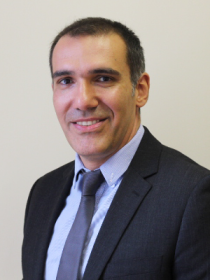
Anthony Papavasiliou is an Assistant Professor at the School of Electrical and Computer Engineering, National Technical University of Athens (NTUA). Previously, he held the ENGIE Chair as an Associate Professor at Université catholique de Louvain (UCLouvain) and received the 2018-2021 Franqui Foundation Research Professorship. His research focuses on operations research, electricity market design, power system operations, and renewable energy integration. He holds a BSc from NTUA and MSc/PhD from UC Berkeley, where he collaborated with Professor Shmuel Oren. Education: BSc: Electrical and Computer Engineering, NTUA MSc/PhD: Industrial Engineering & Operations Research, UC Berkeley Research Interests: His work addresses challenges in energy systems optimization, market design for decarbonized grids, stochastic programming, and the integration of distributed energy resources. Key areas include: Electricity market mechanisms Uncertainty management in power systems Flexibility valuation Grid reliability under renewables Awards & Grants: ERC Starting Grant (2019) Bodossaki Foundation Award (2021) INFORMS Best Publication Awards (2015, 2021) Advising & Grants: He leads the ICEBERG research group and has advised on projects for TSOs, regulators, and utilities. His work includes: EU-funded projects on market design Consulting for energy policy development Lab & Teams: Active in the ICCS laboratory and collaborates with international teams on smart grid innovation, particularly in cross-border balancing and zonal pricing frameworks.
Dr. Deanna Tran is an Associate Professor at the University of Maryland School of Pharmacy, specializing in pharmacy education, community-based services, and immunizations. She holds a PharmD from the University of Maryland and completed a PGY-1 community pharmacy residency at Virginia Commonwealth University. Her roles include ambulatory care specialist at the University of Maryland Family and Community Medicine practice and former clinical pharmacist roles at Capital Region Health and Anticoagulation Clinic. Dr. Tran's research focuses on teaching methodologies, particularly in pharmacists' skills-based education, and community pharmacy innovations like vaccine services and chronic disease management. She has led curriculum development projects and contributed to standardized patient simulations for interprofessional training. Her work emphasizes improving patient care through pharmacist-led interventions and addressing vaccine hesitancy. Professionally, she has held leadership roles in APhA, Maryland Pharmacists Association (including President 2022-2023), and American Association of Colleges of Pharmacy. She has authored over 10 peer-reviewed articles and presented at national conferences on topics ranging from prescription verification to HIV prevention strategies. Her 2023 Baltimore Business Journal 40 Under 40 award recognizes her early-career impact, and her 2023 APhA Fellowship marks her as a distinguished pharmacy leader.
Jacques Roy is a full Professor in the Department of Logistics and Operations Management at HEC Montréal. He serves as Director of the CHAÎNE Research Group and Supervisor of the Supply Chain Forum (Carrefour Logistique). His expertise spans Transportation Management, Supply Chain Management, and Operations Research. He holds an MBA (Operational Research) and a Ph.D. (Operations Management – Economics minor) from HEC Montréal. Education: MBA in Operational Research, HEC Montréal Ph.D. in Operations Management (Economics minor), HEC Montréal Research Interests: His research focuses on enhancing supply chain resilience, healthcare logistics optimization, and sustainable packaging strategies. Notable projects include pandemic-related supply chain management, transportation network design, and business process improvement. Recent studies emphasize collaboration barriers in healthcare supply chains and pandemic-driven operational challenges. Publications & Awards: Recent works include a 2023 book on Quebec’s airports and a 2024 study on supplier contributions to PPE logistics resilience. He received the 2023 Impact Research Award for pandemic-related research and the 2020 Jean-Guertin Teaching Excellence Prize. Supervision & Grants: Advises over 40 graduate students on topics like decarbonization in road transport, hydrogen truck economics, and air freight pricing. Leads projects for organizations such as Keurig Dr Pepper, Pratt & Whitney Canada, and Shanghai ITPC. Labs & Teams: Leads the CHAÎNE Research Group and the Logistics Hub, fostering collaboration between academia and industry stakeholders.
Ravi Anupindi is the Colonel William G. and Ann C. Svetlich Professor of Operations Research and Management at the Stephen M. Ross School of Business, University of Michigan. He holds a PhD from Carnegie Mellon University and has served as Chair of the UM President’s Advisory Committee on Labor Standards and Human Rights since 2013. His academic journey includes roles at New York University’s Stern School of Business and Northwestern University’s Kellogg School of Management. His research focuses on global supply chain management, healthcare delivery in low-income nations, technological innovation, and sustainability. He co-led National Academies studies on vaccine distribution and infant formula supply chain challenges. His teaching includes Operations Management (core) and electives on supply chain strategy, global healthcare, and sustainable operations. Notable awards include the Ross School’s Neary Teaching Excellence Award (2019, 2024) and Victor L. Bernard Teaching Leadership Award. He advises organizations like the Supply Chain Risk Leadership Council and boards of the William Davidson Institute and Fair Labor Association. His work integrates operational strategies with societal impact, addressing issues like ethical sourcing and pandemic preparedness. Dr. Anupindi’s affiliations include the Institute of Health Policy and Innovation, Michigan GlobalREACH, and the Center for South Asian Studies. He has authored influential textbooks and over 60 research articles, emphasizing practical solutions for complex global challenges.
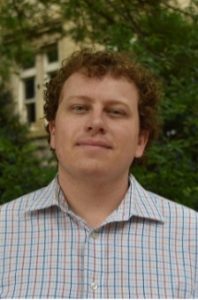
Samuel Stolper is an Assistant Professor at the School for Environment and Sustainability and the Program in the Environment (PitE) at the University of Michigan. His work focuses on environmental economics, energy policy, and sustainable transportation, with an emphasis on leveraging machine learning for policy analysis and addressing systemic environmental inequities. His research explores topics such as energy tax pass-through mechanisms, vehicle decarbonization strategies, and the socio-economic impacts of environmental policies. He holds a joint appointment in the Program in the Environment, emphasizing interdisciplinary approaches to complex environmental challenges. Key research trends include analyzing how policies affect household and industry energy use, evaluating the equity implications of environmental regulations, and developing data-driven frameworks for climate mitigation. His work often bridges theoretical economic models with real-world policy applications, particularly in urban and transportation systems. Stolper’s articles span over a decade, from early nanotechnology-focused biosensor studies to recent high-impact work on machine learning-driven policy targeting and electric vehicle adoption. His office is located in Dana Building Room 3006, and he can be reached at sstolper@umich.edu.
Adrian Hickford serves as a Senior Research Assistant within the Faculty of Engineering and Physical Sciences at the University of Southampton, specializing in transportation systems research through the Transportation Research Group. His work focuses on infrastructure resilience, sustainable mobility solutions, and freight logistics optimization across diverse geographical contexts including the UK, East Africa, and Palestine. Hickford's research centers on developing methods for assessing national and regional infrastructure changes, promoting active travel adoption, enhancing road safety, and improving sustainable freight distribution. Recent projects include the Solent Future Transport Zone initiative analyzing micromobility impacts through the 'Breeze' app and freight consolidation strategies at Southampton's Sustainable Distribution Centre, alongside FCDO-funded work on decision support systems for transport resilience in low-income East African nations. His publication record reveals consistent emphasis on infrastructure systems analysis, with growing focus on climate resilience and decarbonization since 2016. Key trends include developing sustainability indicators for strategic transport networks, addressing road safety challenges in data-scarce environments, and modeling infrastructure interdependencies across energy, water, and transport systems. Active in major research initiatives including the Solent Future Transport Zone, Decision Support Systems for Resilient Strategic Transport Networks, Pathways to Decarbonise Transport, and NISMOD-TRD modeling applications, Hickford collaborates with leading academics like Professors Simon Blainey and John Preston. His work bridges academic research with practical policy applications through partnerships with Solent Transport, Transport for South Hampshire, and international development agencies. As a core member of the Transportation Research Group, Hickford contributes to Southampton's established reputation in transport systems analysis, participating in multidisciplinary projects that integrate infrastructure modeling, behavioral studies, and sustainability assessments to address contemporary mobility challenges.
Joakim Kembro is an Associate Professor and Senior Lecturer at Lund University, Sweden, within the Department of Engineering Logistics. He is affiliated with the Centre for Retail Research at Lund University, contributing to interdisciplinary research in logistics and retail sectors. Prior to his academic career, he held various logistical roles with the United Nations, bringing practical experience to his academic work. Kembro is actively involved in editorial roles, serving as Senior Associate Editor at the International Journal of Physical Distribution and Logistics Management and Senior Editor at the Journal of Business Logistics . His research interests focus on key areas such as humanitarian logistics , omnichannel retailing and logistics , warehouse operations , and information sharing and technology integration within supply chains. He emphasizes strategic perspectives on automation in retail warehouses, challenges in extended supply chain collaboration, and improving order fulfillment processes. His work also addresses the broader implications of logistics on sustainability and the UN Sustainable Development Goals, particularly through projects exploring circular economy applications in retail. His recent publications analyze strategic investments in automated warehouse systems, redefine approaches to humanitarian logistics, and investigate barriers to information sharing in supply chains. Using case studies, he explores root causes of operational errors and strategic decision-making in high-automation environments. These articles highlight his focus on bridging theory and practice in logistics, emphasizing innovation, sustainability, and systems optimization across diverse contexts. Helsingborgs Handelsföreningen Excellens-stipendium 2025 Emerald Awards Bernard J. LaLonde best paper runner-up award In terms of grants and advising, Kembro leads or co-leads research projects funded by the Swedish Retail and Wholesale Council (Handelsrådet), Hakon Swenson Stiftelsen, and the Crafoord Foundation. These projects include exploring circular economy strategies in retail logistics networks and strengthening humanitarian aid through supply chain innovations. As an assistant supervisor, he has guided Eriksson Ahre, E. in their research on omnichannel warehousing challenges in grocery retail. He is affiliated with the Centre for Retail Research at Lund University , a hub for collaborative studies on retail logistics and sustainability. His work often involves interdisciplinary teams and industry partnerships to address real-world supply chain and warehouse operational issues.
Dr. Konstantinos Tolikas is a Senior Lecturer in Finance at the Sheffield University Management School (SUMS), part of the University of Sheffield. His research focuses on empirical finance, particularly financial risk measurement, market efficiency, asset pricing, and the risk-taking behavior of investment funds. He holds a BSc, MSc, and PhD in relevant fields. His work has been published in top journals such as Journal of Financial Research and Journal of Banking & Finance . Research interests include analyzing mutual fund performance, tail risk, and cross-sectional dynamics in financial markets. He has supervised PhD students, including Chuting Feng, whose work examined stock liquidity and managerial overconfidence in China. Tolikas teaches courses in asset pricing, risk management, and fund performance analysis. Publications span topics like hedge fund performance persistence, stock-bond market relations, and default risk pricing. His research emphasizes methodological rigor and practical insights for financial markets. No specific lab affiliations or awards are noted in the provided texts, though his work aligns with SUMS' Triple Crown accreditation excellence.
Roberto Fontana is a Full Professor at the Department of Mathematical Sciences (DISMA) of the Polytechnic University of Turin. He is a member of the Interdepartmental Centre R3C (Responsible Risk Resilience Centre) and actively involved in the College of Management and Production Engineering and the Planning and Design Board. His research focuses on algebraic statistics, experimental design, industrial statistics, and multivariate statistics, with an emphasis on statistical analysis of physical and computer experiments. Fontana holds leadership roles in academic societies, including being an Effective Member of ERCIM (European Research Consortium for Informatics and Mathematics), ENBIS (European Network for Business and Industrial Statistics), and SIS (Italian Statistical Society). He serves as an Associate Editor for the Journal of Applied Statistics since 2017. His teaching spans multiple levels, including PhD courses on statistical modeling and machine learning, as well as undergraduate and graduate courses in statistics across disciplines like Management Engineering and Territorial Planning. He leads the ELBA project (2019–2022), establishing training centers for Intelligent Big Data analysis. Fontana’s recent publications emphasize advancements in contingency tables, Bernoulli distributions, and the integration of design of experiments with machine learning. He currently supervises PhD student Davide Ronco in the Mathematical Sciences program. His work bridges theoretical statistics with industrial applications, emphasizing robust experimental design and computational methods. Fontana actively collaborates on interdisciplinary projects, including environmental and material science applications.
Aku Valtakoski is a Senior Associate Professor at Linköping University's Department of Management and Engineering (FEK), specializing in Business Administration. His research focuses on service management, business models, innovation, qualitative research methods, healthcare services, interfirm networks, and software industry dynamics. He holds a prominent role in advancing methodologies for qualitative service research and exploring strategic service innovations across diverse sectors. His work emphasizes cross-country comparisons in service development, modularization strategies, and external growth mechanisms for industrial firms. Key contributions include analyzing employee diversity's impact on innovation and investigating challenges in organizational servitization processes. Valtakoski's publications span high-impact journals like the Journal of Service Management and Journal of Retailing and Consumer Services . His research often bridges theoretical frameworks with practical applications, particularly in healthcare service design and retail innovation during crises such as the pandemic. Despite prolific output, no specific awards or grants are highlighted in the provided texts. He is affiliated with the Department of Management and Engineering at Linköping University, actively contributing to academic discourse through peer-reviewed articles and conference presentations. His contact information includes aku.valtakoski@liu.se and an office at Campus Valla's A-huset.
Dario Bauso is a Full Professor and Chair of Operations Research for Engineering Systems at the University of Groningen's Faculty of Science and Engineering. He concurrently holds a Professorship at the Dipartimento di Ingegneria, University of Palermo, Italy, since 2005. His research focuses on Optimization, Optimal and Distributed Control, and Game Theory. He has held visiting roles at institutions including Keio University (Japan), MIT, and Imperial College London. Education: Laurea (Aeronautical Engineering, University of Palermo, 2000) and PhD (Automatic Control and System Theory, University of Palermo, 2004). Past positions include Reader at the University of Sheffield (2015–2018) and Research Fellow at the University of Trento (2012–2014). Research interests emphasize applications to energy systems, financial networks, and multi-agent systems. His work has been published in top journals like Dynamic Games and Applications and Automatica . Awards include multiple Italian National Qualifications to Full and Associate Professor roles. Teaching includes courses on Game Theory, Control Systems, and Operations Research at both undergraduate and graduate levels. Current PhD student: W. Baar ('Diffusion models on networks'). Grants include leadership in projects like the ADEPT initiative (2017–2018) and the Italian-funded 'Smart PORt Terminals' (2016–2019).
Matthew Bhagat-Conway is an Assistant Professor in the Department of City and Regional Planning at the University of North Carolina. He holds a joint appointment at the Odum Institute for Research in the Social Sciences, where he supports statistical and data analysis efforts. His research focuses on travel behavior, urban transportation systems, and advanced statistical methods applied to transportation data. Dr. Bhagat-Conway earned a PhD and MA in Geography from Arizona State University, and a BA in Geography from the University of California, Santa Barbara. Prior to academia, he worked as a software developer at Conveyal, a transit planning firm, and participated in the University of Chicago’s Data Science for Social Good fellowship. His research explores pandemic impacts on transportation patterns, including studies showing post-COVID traffic distribution changes in California and telecommuting persistence. He also investigates transit accessibility metrics, fare structures, and the integration of new technologies in transportation planning. Key contributions include developing pedagogical tools like the 'My First Four-Step Model' for teaching travel demand modeling, and creating the Standardized Transport Attitude Measurement Protocol (STAMP) to enhance behavioral model accuracy. His work bridges data science with urban planning, emphasizing practical applications for policy makers. Currently accepting PhD advisees, Bhagat-Conway collaborates with agencies to improve transit accessibility and advocates for evidence-based urban revitalization strategies through data-driven approaches.
Daniel Tesfamariam Semere is an Associate Professor at KTH Royal Institute of Technology, affiliated with the School of Industrial Engineering and Management (ITM) and the Department of Production Engineering under the Digital Futures Faculty. His role includes teaching and coordinating courses in industrial production systems, such as Digital Factories and Modeling and Simulation of Industrial Processes. He is actively involved in academic administration as an examiner and course manager for several advanced-level programs. His research focuses on manufacturing systems, machining processes, and quality prediction, with notable contributions to tool wear analysis, residual stress prediction, and variation propagation modeling. His work integrates advanced methodologies like dual quaternions, machine learning, and optimization algorithms to address challenges in precision manufacturing and supply chain logistics. Dr. Semere’s recent publications emphasize data-driven approaches to improve manufacturing accuracy, reduce distortions, and optimize warehouse systems. His expertise bridges theoretical models with practical applications, contributing to sustainable and efficient industrial solutions.