

Prof. Dr. Michael Gröschel is a Professor of Business Informatics at the Faculty of Computer Science, Mannheim University of Technology. His expertise spans Business Process Management (BPMN, Process Mining), Digital Transformation, and innovative Business Models. He teaches courses on BPM, project management, and e-business, often collaborating with industry clients through student projects. As a consultant, he specializes in BPMN training and IT-driven business strategy. His work emphasizes practical applications of IT tools like RPA and low-code platforms. Recent publications focus on RPA bot performance evaluation, AI in automotive trade, and business model-IT alignment. Prof. Gröschel’s research bridges academic insights with real-world challenges, particularly in leveraging technology for business innovation. He has authored books and articles on business intelligence tools, mobile business strategies, and digital customer care. His consulting services include executive coaching for academic career advancement and enterprise IT management best practices. Office: Building A, Room 007c | Phone: +49 621 292-6764 | Professional website available for further engagement opportunities.
جستجوی استاد راهنمای دانشگاهی
برای مسیر پژوهشیتان، استاد راهنما، استاد دانشگاه و پژوهشگر مناسب را پیدا کنید و با آنها ارتباط بگیرید.
نمایش ۱-۱۵ از ۱۹۸ استاد راهنما
اطلاعات پروفایلها از صفحات عمومی دانشگاهها گرفته شده و ممکن است بهروز نباشد.

Prof. Dr. Rudi Zagst is a Professor of Mathematical Finance at the Technical University of Munich (TUM), where he serves as Head of the Department of Mathematical Finance within the TUM School of Computation, Information and Technology. He has held this position since 2001 and is actively involved in teaching, research, and academic leadership. In 2003, he was appointed as a second member of the Faculty of Economics, and since 2004, he has served as Deputy Chairman of the joint elite degree program 'Finance & Information Management' of the University of Augsburg and TUM. Prof. Zagst earned his doctorate in business mathematics from the University of Ulm, where he later completed his habilitation in 2000. His academic journey began with a professional career at HypoVereinsbank AG, where he served as Head of Product Development in Institutional Investment Management before becoming Managing Director of RiskLab GmbH in 1997. His research focuses primarily on financial engineering, risk management, and asset management, with particular emphasis on portfolio optimization, mathematical finance, and quantitative risk management. His work bridges theoretical finance with practical applications, often incorporating advanced mathematical techniques to solve complex financial problems. Recent publications demonstrate his continued interest in GARCH models, portfolio optimization under various constraints, and the application of machine learning techniques to financial problems. Analysis of his recent publications (2024-2025) reveals a strong focus on portfolio optimization under complex market conditions, particularly using GARCH models to capture volatility dynamics. His work increasingly incorporates machine learning techniques (as seen in the credit spread analysis paper) while maintaining rigorous mathematical foundations. Many papers explore the intersection of theoretical finance with practical investment strategies, reflecting his commitment to bridging academic research with real-world financial applications. Professor of the Year 2007 (awarded by Unicum Profession magazine) Prof. Zagst has supervised numerous bachelor's, master's, and doctoral theses through TUM's Finance and Actuarial Science research group. His collaborative work with industry partners through the TUM CAIR Labs and RiskFactory demonstrates strong connections between academic research and practical financial applications. He has received research funding through various industry partnerships with major financial institutions including Allianz, Munich Re, and ERGO Group AG. Prof. Zagst leads the Research Group Finance and Actuarial Science at TUM, which includes Professors Matthias Scherer, Aleksey Min, and Christoph Knochenhauer. The group maintains strong industry connections through the TUM CAIR Labs initiative, collaborating with over 25 financial institutions including Allianz, Munich Re, Deloitte, PwC, and KPMG. Their RiskFactory laboratory serves as a bridge between academic research and practical financial risk management applications in the industry.
Prof. Dr. Bernd Skiera holds the first chair for electronic commerce in Germany at Goethe University Frankfurt am Main since 1999. He serves on the board of efl - The Data Science Institute and the Schmalenbach Society, while representing Germany at the European Marketing Community (EMAC). Chair of Marketing, Goethe University Frankfurt am Main Board member, efl - The Data Science Institute National representative, European Marketing Community (EMAC) His research focuses on MarTech/SalesTech integration, customer value management, online advertising analytics, data-driven pricing models, and the economic implications of internet privacy regulations. He leads the ERC Advanced Grant project on cookie usage restrictions' economic consequences. Recent publications examine dynamic pricing in digital markets, competition visualization using big data, and AI applications in marketing analytics. The ERC Advanced Grant research has produced empirical analyses of GDPR impacts on advertising ecosystems. 2015 Journal of Marketing Best Paper Award 2013 International Journal of Research in Marketing Best Paper Award Multiple MSI/H. Paul Root Award recognitions He has mentored 17 doctoral students who became professors globally, including at London Business School and LMU Munich. His work bridges marketing analytics with financial valuation through customer equity modeling.
Prof. Dr. Bernd Skiera is a leading Marketing Professor at Goethe University Frankfurt since 1999 and a member of the managing board of the efl - The Data Science Institute. His work bridges information systems and marketing, with a focus on data-driven decision making and digital transformation.
Niels Agatz is a Full Professor of Last-mile Supply Chain Analytics at the Rotterdam School of Management (RSM), Erasmus University, and Scientific Director of TKI Dinalog, a national research funding institute. His work bridges academia and industry, focusing on sustainable urban logistics, shared mobility, and online retailing analytics. He holds a PhD in Logistics from RSM and an MSc in Industrial Engineering from Eindhoven University of Technology. Research interests include optimizing last-mile supply chains through technology-driven solutions, with emphasis on sustainability and operational efficiency. Notable contributions include frameworks for demand management and transportation-enabled services. His work aligns with UN Sustainable Development Goals related to responsible consumption and climate action. Editorial roles include Area Editor for Transportation Science . Awards include the INFORMS TSL Stella Dafermos Achievement Award (2022) and NWO Rubicon Grant. Collaborations span institutions like Georgia Tech and the Pontifical Catholic University of Chile. Recent publications address home delivery systems, sustainable supply chains, and pickup/delivery optimization. Labs/Teams: Directs TKI Dinalog, collaborates with industry partners to translate research into practical logistics solutions.

Prof. Dr. Gudrun P. Kiesmüller is a full professor of Operations Management at TUM Campus Heilbronn since 2019. Previously, she held full professorships at Kiel University (Supply Chain Management) and Otto von Guericke University Magdeburg (Operations Management). She studied mathematics at Julius-Maximilians-University of Würzburg and later worked as a postdoc and assistant professor at Eindhoven University of Technology. Her research focuses on supply chain management, inventory management (particularly spare parts), maintenance process planning, and manufacturing system design. She develops optimization approaches for decision support, with publications in journals like IISE Transactions and Production and Operations Management . Key awards include an Honorary Doctorate (2023), ISIR Service Award (2022), and multiple teaching and reviewer awards. She has contributed to advancing stochastic inventory models and operational efficiency in complex systems. Her work integrates theoretical rigor with practical applications, addressing challenges in inventory routing, buffer allocation, and component reliability optimization. Current research emphasizes dynamic maintenance planning and capital goods design.

- Augmented Reality
- Virtual Reality
- Metaverse
- +۵ مورد دیگر
Prof. Dr. Philipp A. Rauschnabel serves as Professor of Digital Marketing and Media Innovation at the University of the Bundeswehr Munich's Faculty of Business Administration. Recognized as one of the world's leading scientists in augmented reality, virtual reality, and metaverse research, he bridges academic theory with practical business applications across multiple industries. His educational background includes: Habilitation, Dr. habil; PD, Otto-Friedrich University of Bamberg Dr. rer. pol. (psychological brand management, 2014, summa cum laude), Otto-Friedrich University of Bamberg M.Sc. in Marketing and Distribution Management, Georg-August University of Göttingen (best of class) BA in Business (Marketing and Business Information Systems), Merseburg University of Applied Sciences (Top 10% graduate) Rauschnabel's research centers on the practical implementation of spatial computing technologies in marketing contexts. He has developed influential frameworks including the XR framework that redefines the relationship between augmented reality, virtual reality, and mixed reality. His work examines how these technologies transform consumer-brand relationships, workplace operations, and marketing strategies across retail, manufacturing, and service industries. He particularly investigates the psychological mechanisms through which AR/VR experiences influence consumer behavior, brand love, and purchasing decisions. Analysis of his recent publications reveals a clear progression from basic AR applications toward more sophisticated spatial computing environments and persistent metaverse experiences. His research demonstrates increasing sophistication in understanding contextual factors, emotional responses, and long-term consumer engagement with these technologies. The work consistently bridges theoretical marketing concepts with practical implementation challenges faced by businesses. His significant scientific recognition includes: Top 1% Scientist (Clarivate Highly Cited Researcher, 2023) Top 2% Scientist (Stanford List 2023) Microsoft Academics listed as one of the top 5 AR researchers worldwide based on citation output (2021) Named one of the top 15 AR marketing researchers worldwide (Kumar, 2021) Prof. Rauschnabel serves as Associate Editor for the Journal of Business Research and chairs the bdvb research institute. He has provided expert consultation to the German Federal Government on XR/Web3/Metaverse (2022) and regularly advises major corporations across multiple sectors including food, home appliances, insurance, automotive, and telecommunications across Germany, USA, Switzerland, China, and Austria. His practical consulting work complements his academic research, creating a valuable feedback loop between theory and practice. He leads multiple research initiatives on augmented reality marketing and spatial computing, collaborating with industry partners to develop practical applications of these emerging technologies. His work emphasizes the importance of understanding both the technological capabilities and human factors that determine successful implementation of AR/VR in business contexts.

Prof. Dr. Sandra Transchel is a Full Professor of Supply Chain and Operations Management at Kühne Logistics University (KLU) in Hamburg, Germany. She has held this position since 2019, previously serving as Associate Professor (2011-2019) and Dean of Programs (2014-2015). Her academic journey includes appointments as Assistant Professor at Pennsylvania State University (2008-2011) and Visiting Assistant Professor at Tuck School of Business at Dartmouth (2011). Education includes: PhD in Business Administration, University of Mannheim (2008) Diploma in Business Mathematics, Otto-von-Guericke University Magdeburg (2004) Her research integrates supply chain management, inventory control, and revenue management with a strong focus on retail operations optimization and food supply chain sustainability . Key investigations examine perishable inventory systems, demand-supply synchronization, and substitution behavior. Current projects address food waste reduction through contract-based coordination in fresh food supply chains and development of urban food production networks (FabCity). Publications demonstrate consistent focus on inventory optimization under uncertainty, with recent work extending into pandemic impacts on humanitarian logistics and perishable inventory systems with lead-time variability. Research consistently bridges theoretical models with retail/manufacturing applications. Teaching includes Decision Analysis, Inventory and Warehouse Management, and Warehousing and Intralogistics across BSc, MBA, and MSc programs at KLU.

Prof. Dr. Kai Hoberg is a Professor of Supply Chain and Operations Strategy at Kühne Logistics University (KLU) since 2017, where he also served as Department Head of the Operations and Technology Department from 2017 to 2023. Prior to joining KLU as an Associate Professor in 2012, he was an Assistant Professor at the University of Cologne (2010–2012) and a strategy consultant at Booz & Company (2006–2010). His research interests span supply chain analytics and technology integration inventory modeling for intermittent demand digital transformation in operations management additive manufacturing in after-sales services human-machine interaction in forecasting pharmaceutical supply chain challenges IoT-enabled vendor-managed inventory behavioral aspects of operations . Recent publications highlight empirical studies leveraging machine learning for semiconductor order fulfillment, typologies for additive manufacturing adoption, and process mining applications in SCM. His work frequently combines theoretical modeling with real-world validation, including partnerships with firms in food manufacturing, postal services, and medical devices. He earned a PhD in Supply Chain Management from Münster University (2006) and a Diplom in Industrial Engineering from Paderborn University and Monash University. He has held visiting scholar roles at institutions like Cornell, NUS, Oxford, and Stellenbosch.
Prof. Dr. Julia Rieck is a Full Professor of Business Administration at the University of Hildesheim , leading the Department of Business Administration and Operations Research within the Faculty of Mathematics, Natural Sciences, Economics and Computer Science. As Dean of the Faculty , she oversees academic programs, quality management, and research initiatives. Her roles include academic advising for the Business Information Systems (B.Sc./M.Sc.) programs and active participation in examination boards and quality committees. Education: PhD in Political Science (Dr. rer. pol.) with summa cum laude (2008), Habilitation at Clausthal University of Technology (2014), and studies in Business Mathematics (Diploma, University of Hamburg, 2003) and Mathematics (Georg-August-University Göttingen, 2000). Research: Focuses on Operations Research , Supply Chain Management , Project Planning , and Logistics . Her work integrates mathematical modeling , machine learning , and real-world applications , particularly in disaster response , dynamic transportation , and sustainable e-commerce . Projects: Leads third-party funded initiatives like "IT für die sorgende Gesellschaft" (AI in healthcare/social sectors) and contributes to the HULLS real-lab (AI in aging societies). Collaborates with regional companies (e.g., Youco, ADITUS) and institutions (HAWK, University of Hannover). Teaching: Emphasizes practical application through case studies, industry partnerships, and the IT-Speed Dating event for student-company connections. Her courses cover project resource planning , logistics , and digital transformation . Labs & Teams: Active in the Institute of Business Administration & Business Information Systems , contributing to the KET Kompetenzwerkstatt (entrepreneurship support) and interdisciplinary teams in AI and sustainability research.
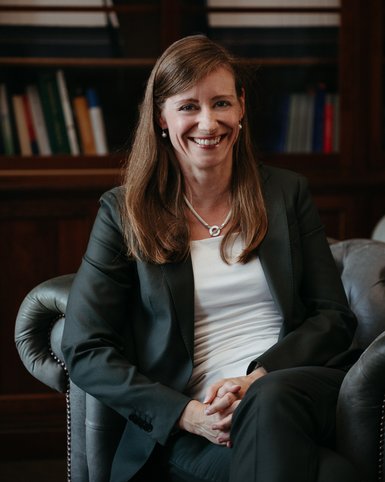
Professor Julia Hartmann serves as the Chair of Sustainability Management at EBS Business School, part of EBS Universität für Wirtschaft und Recht in Oestrich-Winkel, Germany. Her research focuses on climate change mitigation, energy transition strategies, sustainable supply chain resilience, and ESG compliance. She leads a team supported by industry partners like Procter & Gamble and Tetra Pak, emphasizing practical applications of sustainability theory. Her work bridges data analytics (machine learning, natural language processing) with business strategies, published in top journals such as Journal of International Business Studies and Journal of Business Ethics . Hartmann teaches courses on strategic CSR, environmental management, and empirical data techniques, advising companies on ESG leadership and future readiness. Her recent work examines oil and gas industry transitions, supply chain liability, and pandemic resilience. She actively engages with media (TV, podcasts) to discuss sustainability challenges, contributing to public discourse on energy policy and corporate responsibility. Education & Career: While formal academic qualifications are not explicitly listed, her extensive publication record and professorial role indicate advanced doctoral training in business administration or related fields. She has held leadership roles at EBS since assuming the chair position. Research Interests: Her work spans three core areas: 1) Sustainable supply chain design and resilience, 2) Energy transition pathways for industries, and 3) Quantitative methods for measuring ESG impacts. She explores how media attention, legal frameworks, and consumer behavior shape corporate sustainability outcomes. Awards & Recognition: While no specific awards are cited, her peer-reviewed publications and industry partnerships reflect scholarly and practical impact. She was an invited speaker at major conferences like EurOMA 2024 and Arthur D Little CEO Insights Conference. Grants & Collaboration: Partnerships with Procter & Gamble and Tetra Pak support applied research initiatives. Her lab focuses on bridging academic insights with industry implementation through joint projects and executive education programs. Labs/Teams: The Chair of Sustainability Management serves as her primary research hub, hosting interdisciplinary projects on supply chain governance, climate policy, and digital sustainability tools.

Prof. Jörn Meissner, PhD, is a Full Professor of Supply Chain Management & Pricing Strategy at Kühne Logistics University (KLU) since 2011. He holds a PhD and Master’s in Management Science from Columbia Business School and a Diploma in Business from University of Hamburg . As an academic and entrepreneur, he founded Manhattan Review and Lancaster Executive . Education: PhD in Management Science, Columbia University (2005) Master of Philosophy, Columbia University (2005) Diplom-Kaufmann, University of Hamburg (1997) Research Expertise: Focus on stochastic and dynamic decision-making using mathematical optimization and machine learning Key projects: Global supply chain optimization , Inventory control , Revenue management , and Operations & service management Industry collaborations with British Telecom , British Airways , Apple Europe , and SAP Germany Publication Trends: Recent work addresses intermittent demand forecasting for spare parts, lateral transshipment optimization , and risk-sensitive capacity control Historical contributions include progressive interval heuristics for multi-item lot sizing and dynamic pricing with customer choice models Teaching Experience: Previously held academic positions at Lancaster University Management School , University of Hamburg , and University of Mannheim Developed MBA electives in Advanced Decision Models , Supply Chain Management, and Revenue Management

Stefan Schmid is a Professor of International Management and Strategic Management at ESCP Business School's Berlin Campus. His research focuses on multinational corporation structures, subsidiary roles, corporate governance, and internationalization strategies. University: ESCP Business School, Berlin Campus Department: International Management and Strategic Management Academic Rank: Professor Professor Schmid's work examines foreign subsidiaries as centers of competence, international corporate governance, and strategic standardization versus adaptation. His case studies span industries like automotive, retail, and consumer goods, analyzing companies such as Audi, Adidas, and Lidl. He has co-edited the "mir-Edition" series since 2008. Recent article trends highlight his expertise in cross-border acquisitions, subsidiary performance evaluation, and global retail expansion strategies. His research often integrates network theory and stakeholder management perspectives. Key students include Katharina Kretschmer (subsidiary performance), Tobias Dauth (top management internationalization), and Philipp Grosche (value chain coordination). He has supervised dissertations on service offshoring, subsidiary relationships, and international market strategies.
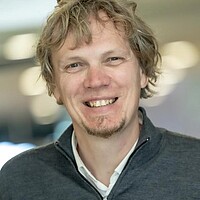
Niels Agatz is a Full Professor of last-mile supply chain analytics at Rotterdam School of Management (RSM), Erasmus University Rotterdam, within the Department of Technology and Operations Management. He serves as the scientific director of TKI Dinalog, the Dutch national institute for collaborative logistics research, and as an area editor for Transportation Science . His academic career includes a Ph.D. from RSM and an M.Sc. in industrial engineering from Eindhoven University of Technology, with visiting positions at Georgia Tech and the Pontifical Catholic University of Chile. Professor Agatz's research focuses on developing innovative and sustainable last-mile supply chains through advanced analytics, with particular expertise in transportation-enabled services, urban delivery systems, and demand management. His work bridges theoretical operations research with practical applications in logistics and transportation. The breadth of his research is evident in his publications spanning topics from drone delivery optimization to sustainable time slot management and truck platooning. His publications demonstrate significant impact in the field of transportation and logistics, with several highly cited papers on ride-sharing systems, drone delivery optimization, and sustainable logistics practices. The research consistently addresses practical industry challenges while advancing methodological approaches in operations research. NWO Rubicon Grant INFORMS TSL Stella Dafermos Achievement Award Professor Agatz teaches courses on distribution networks and management science at RSM. His research has been widely featured in leading academic journals and international media outlets, reflecting the practical relevance of his work to industry challenges in last-mile delivery and sustainable logistics. He collaborates extensively with industry partners to translate academic insights into practical solutions for complex logistics problems.
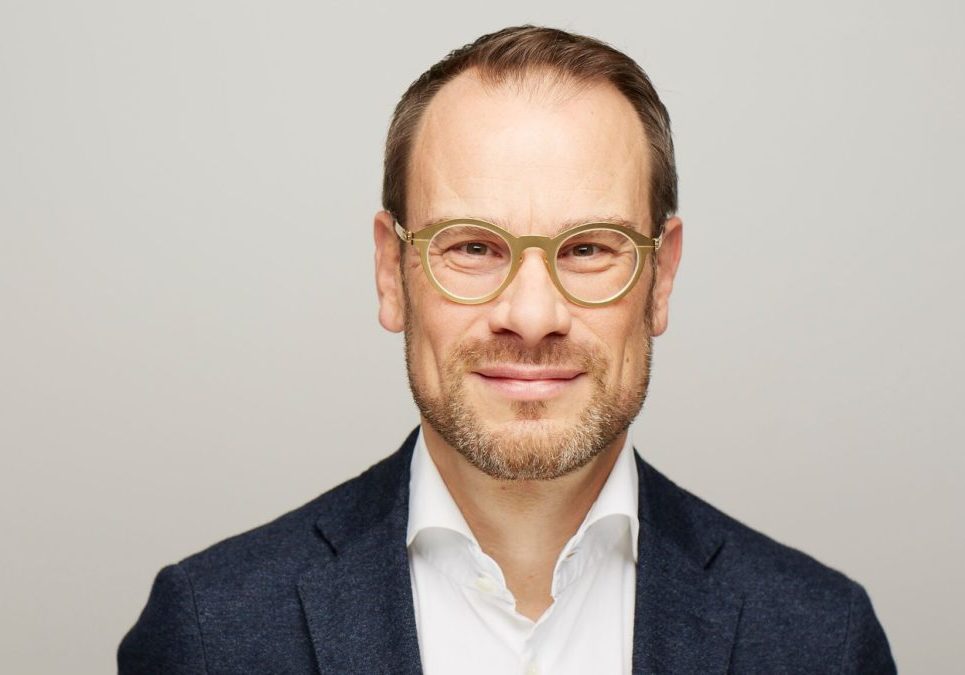
Stephan A. Jansen serves as Professor of Management, Innovation & Finance and Director of the Center for Philanthropy & Civil Society (PhiCS) at Karlshochschule in Karlsruhe, alongside holding a professorship in Urban Innovation – Health, Mobility, Digitization at the College of Fine Arts Berlin. He concurrently acts as founding coordinator of the Digital Urban Center for Aging & Health (DUCAH) and associated researcher at the Alexander von Humboldt Institute for Internet & Society (HIIG). His academic foundation was established at the University of Witten/Herdecke where he completed studies in 1997 and earned his doctorate in 2003 under Prof. Dr. Dirk Baecker, Prof. Dr. Birger Priddat, and Prof. Dr. Rudolf Wimmer. This institution also hosted his founding of the Institute for Mergers & Acquisitions (IMA), recognized as University Innovation of the Year. Operating through sociological systems theory and behavioral organization theory frameworks, Jansen's research critically examines organizational networks, digital transformation, and urban innovation systems. His current work pioneers intersections between health infrastructure, sustainable mobility solutions, and digital citizenship in aging societies, emphasizing practical applications for resilient city design and post-digital humanism. This manifests in initiatives like DUCAH's technology-integrated aging environments and analyses of mobility-as-a-service ecosystems. His recent publications reveal a concentrated exploration of post-pandemic urban restructuring, particularly examining how digital tools reshape aging experiences and mobility patterns. Key thematic clusters include human-centered digital evolution (Humanism 5.0), health-oriented urban mobility systems, and resilient supply chain reconfiguration - all demonstrating his commitment to translating theoretical frameworks into tangible urban solutions. Notable recognitions include: University Innovation of the Year award from Federal Minister Edelgard Buhlmann German Bicycle Award 2020 for corporate mobility innovation Inclusion in Thinkers 50 global ranking since 2016 His advisory ecosystem spans federal policy (Federal Chancellor's Innovationsdialog, Federal Ministry of Education and Research's Forschungsunion), corporate strategy (AUDI, BASF, Bayer), and nonprofit leadership (Caritas, GIZ). Supported by two decades of scholarship funding from Herbert Quandt-Foundation, Fullbright, and German Academic Exchange Service, he mentors emerging scholars through institutional frameworks while directing PhiCS's philanthropic research agenda. Jansen anchors his operational infrastructure through DUCAH's interdisciplinary aging-tech research hub and co-founded "Das 18te Kamel & Komplizen GmbH" (The 18th Camel & Accomplices), which implements digital-social transformation projects across Berlin, Hamburg, and Vienna for major clients including Lufthansa and Otto Group. His BICICLI Holding GmbH venture operationalizes urban mobility concepts through award-winning corporate bike-sharing systems.