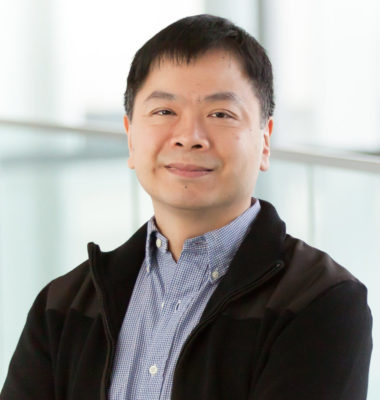
Dr. Gary Glover is a Professor of Radiology (Radiological Sciences Lab) at Stanford University , with courtesy appointments in Psychology and Electrical Engineering. His work focuses on the physics and mathematics of MRI, particularly rapid scanning methods using spiral k-space trajectories for functional brain imaging and multimodal neuroimaging (fMRI/EEG/fPET/fNIRS) combined with neuromodulation techniques like TMS and transcranial ultrasound. Academic Appointments: Radiology, Psychology, Electrical Engineering Professional Affiliations: Bio-X, Stanford Cancer Institute, Wu Tsai Neurosciences Institute Research Interests include: Development of blood oxygen level-dependent (BOLD) and viscoelastic contrast in MRI Functional MR Elastography for brain activation mapping Optimization of MR-ARFI for transcranial ultrasound guidance Automated spinal cord segmentation (EPISeg) using machine learning Scientific Awards : National Academy of Engineering (2013) Gold Medal, ISMRM (2000) Steinmetz Award, General Electric (1985) Lauterbur Lecture, ISMRM (2018) Recent Publications analyze: Fast fMRI sampling and spurious signal correction Dissociated patterns in default mode network anti-correlations Neural correlates of collaborative behavior in triadic fMRI Salience network contributions to depression pathophysiology
Dr. Daniel Keeser is a Research Fellow and Research Group Leader at the Department of Psychiatry and Psychotherapy of the University of Munich (LMU) and affiliated with the NeuroImaging Core Unit Munich (NICUM). His work focuses on clinical deep phenotyping and multimodal neuroimaging, integrating advanced MRI, EEG, and non-invasive brain stimulation methods to study severe mental and neurological disorders. Research Interests: Elucidating neurobiological mechanisms of schizophrenia, major depressive disorder, and Alzheimer's disease through multimodal neuroimaging and neuromodulation. His recent publications highlight methodologies like resting-state fMRI, diffusion tensor imaging, and transcranial magnetic stimulation combined with MRI, emphasizing personalized treatment strategies. Collaborative affiliations include the University Hospital of LMU Munich and the Clinical Deep Phenotyping (CDP) Working Group. Affiliations: NeuroImaging Core Unit Munich (NICUM) Department of Psychiatry and Psychotherapy, University of Munich (LMU)
Gagan Wig is an Associate Professor at the University of Texas at Dallas, School of Behavioral and Brain Sciences, with adjunct appointments in Psychiatry at UT Southwestern Medical Center. He directs the Wig Neuroimaging Lab, focusing on brain network connectivity across lifespan, healthy/pathological aging, and brain health disparities. His research employs structural/functional MRI, DTI, and TMS to study large-scale brain networks and their relationship to memory and attention. Professional preparation includes: Post-doctoral Associate in Neurology, Washington University School of Medicine (2012) Post-doctoral Associate in Psychology, Harvard University (2009) Ph.D. in Cognitive Neuroscience, Dartmouth College (2006) B.S. in Behavioral Neuroscience, University of British Columbia (2001) Research explores how brain networks change during aging and how socioeconomic status moderates these changes. His work reveals that education protects against brain network decline and that participant diversity is crucial for advancing brain aging research. Publications focus on neuroimaging of lifespan changes, Alzheimer's biomarkers, socioeconomic impacts on brain health, and methodological innovations in network analysis. Recent work demonstrates how functional network organization supports cognition despite Alzheimer's pathology and how data quantity affects network segregation measures. Awards include the Understanding Human Cognition Scholar Award from James S. McDonnell Foundation (2006). He has received significant funding including a $2.9M NIH grant studying socioeconomic links to Alzheimer's susceptibility and DARPA support for novel data sonification approaches.
Katarzyna Chawarska is the Emily Fraser Beede Professor of Child Psychiatry at Yale School of Medicine, with primary affiliation in the Child Study Center and secondary appointments in Pediatrics and Statistics. She is a leading expert in autism spectrum disorders (ASD), directing the NIH Autism Center of Excellence, the Social and Affective Neuroscience of Autism Program, and the Yale Toddler Developmental Disabilities Clinic. Education: PhD in Psychology, Yale University (2000) Post-Doctoral Fellowship, Yale University School of Medicine (2000) MS in Psychology, Yale University MPhil in Psychology, Yale University MA, Jagiellonian University (1986) Her research focuses on identifying early diagnostic markers and novel treatment targets in ASD, particularly in infants at risk due to familial, genetic, or perinatal factors. Her work integrates clinical assessment, neuroimaging, eye-tracking, and longitudinal design to understand the neurodevelopmental trajectories of autism. Her recent publications explore disrupted functional connectivity, atypical visual attention, social anhedonia, and familial recurrence in autism. She employs advanced methodologies including fMRI, eye movement dynamics, and machine learning to identify biomarkers. Her research spans developmental neuroscience, clinical psychology, genetics, and pediatric psychiatry, with strong emphasis on early detection and intervention. Scientific Awards: No specific awards mentioned in the provided text. Dr. Chawarska is the Principal Investigator on active clinical trials, including studies on emotional development in infants at risk for ASD and regulation of visual attention and emotion in autism. She mentors research through her lab and collaborates extensively with experts such as Fred Volkmar, James McPartland, and Frederick Shic. She leads the Chawarska Lab, which is part of the Center for Brain & Mind Health and the Wu Tsai Institute at Yale.
Jung Soo Lim is an Assistant Professor in the Department of Computer Science at California State University, Los Angeles, within the College of Engineering, Computer Science, and Technology. He earned his B.S. from Cal State LA and M.S. and Ph.D. from UCLA, returning to his alma mater as a part-time lecturer in 2014 before transitioning to a full-time assistant professor role in 2019. Education: B.S. (Cal State LA), M.S. (UCLA), Ph.D. (UCLA) His research focuses on Internet of Things (IoT) , Cyber-Physical Systems , Wireless Networking , Software Engineering , and Medical Computing . He has active projects in IoT applications for healthcare, urban safety, and wastewater monitoring, including the Center for Inclusive Computing (CIC) Transfer Pathways Project. Recent publications highlight interdisciplinary work bridging IoT, healthcare diagnostics, and smart city infrastructure. Notable topics include stroke detection algorithms , IoT communication protocols , and sensor-based environmental monitoring . Scientific Awards: Outstanding Senior at Cal State LA (1997) He teaches core computer science courses such as Computer Programming Fundamentals and Analysis of Algorithms, and actively mentors graduate students. His lab focuses on developing embedded systems and IoT solutions for real-world challenges.
Dr. Annemieke Apergis-Schoute is a Lecturer in Psychology (Teaching and Research) at Queen Mary University of London, affiliated with the School of Biological and Behavioural Sciences and the Centre for Brain and Behaviour. Her research focuses on obsessive-compulsive disorder (OCD), cognitive flexibility, prefrontal mechanisms, and student mental health. She holds a PhD from New York University, where her early work explored threat learning in rats and humans using fMRI. Subsequent roles at the University of Cambridge and UCL expanded her expertise into clinical OCD studies, including deep brain stimulation trials. Her research investigates how prefrontal control deficits and inflexible learning contribute to OCD and related disorders, with a focus on adolescents and young adults. Collaborations include pioneering DBS studies targeting basal ganglia regions to reduce compulsive behaviors. She also explores connections between brain function, interoception, and mental health in daily decision-making contexts. Key publications analyze reversal learning deficits in OCD under serotonergic modulation, neuroimaging markers of cognitive rigidity, and developmental trajectories of compulsivity. Her work bridges basic neuroscience with translational clinical interventions, emphasizing early intervention strategies and cognitive-behavioral approaches.
Aurélie Labbe is a Full Professor in the Department of Decision Sciences at HEC Montréal, holding the prestigious FRQ-IVADO Chair in Data Science. Appointed as Co-Scientific Director – Academic Partnerships at IVADO in October 2023, she plays a key leadership role in establishing connections between IVADO and partner universities. Her academic journey includes a PhD in Statistics from the University of Waterloo, a Master's degree in Statistics from the University of Montreal, and dual Bachelor's degrees in Applied Mathematics and Social Sciences from Paris-Dauphine University and Pure Mathematics from Versailles-St Quentin University. Her research spans multiple interdisciplinary domains with a focus on developing advanced statistical and machine learning methodologies for big data analysis. Labbe's work bridges theoretical statistics with practical applications across diverse fields including genomics, neuroscience, transportation systems, and health informatics. She has made significant contributions to kernel methods, matrix factorization techniques, random forest applications, and spatiotemporal data analysis, with publications appearing in top journals across multiple disciplines. Analyzing her recent publications reveals a clear trend toward methodological innovation applied to complex real-world problems. Her work demonstrates expertise in handling high-dimensional data from diverse sources including neuroimaging, transportation networks, and genomic studies. The interdisciplinary nature of her research connects statistical theory with applications in healthcare, transportation safety, and biological sciences, reflecting her ability to develop methods that address domain-specific challenges while advancing statistical methodology. Holder of the FRQ-IVADO Chair in Data Science Member of the Center for Mathematical Research Training Professor Labbe actively mentors the next generation of data scientists, supervising numerous doctoral and master's students. Her supervision portfolio includes 1 doctoral thesis (2023), 4 master's theses (2022-2024), and 32 supervised projects spanning 2019-2025. Her students' work covers diverse applications including transportation safety, healthcare analytics, financial modeling, and environmental analysis. Through her leadership of the FRQ-IVADO Chair in Data Science, she coordinates research activities that integrate mathematical, statistical, and computer science expertise with domain knowledge from various data-generating fields. As Co-Scientific Director at IVADO, Professor Labbe leads efforts to establish connections with faculties and departments across five partner universities, integrating them into IVADO's research and knowledge transfer activities. Her leadership role positions her at the forefront of advancing data science research and applications in Quebec's academic ecosystem.
Kelly Bennion serves as an Associate Professor in the Psychology and Child Development Department at California Polytechnic State University. Her research examines how real-life variables—such as emotion, stress, physiological arousal, and sleep—affect memory encoding and consolidation using behavioral experiments, eye tracking, polysomnography, and neuroimaging. She investigates how sleep selectively enhances memories for emotionally salient or future-relevant information in ecologically valid contexts. (78 words) Her educational background includes: Ph.D. and M.A. in Psychology (Cognitive Neuroscience concentration) from Boston College Ed.M. in Mind, Brain, and Education from Harvard Graduate School of Education B.A. in Psychology and Spanish (summa cum laude, Phi Beta Kappa) from Middlebury College Dr. Bennion's work focuses on memory prioritization mechanisms during sleep-wake cycles, particularly how emotional arousal and physiological stress modulate consolidation. She explores real-world applications including educational strategies and mental health interventions, emphasizing the interaction between cortisol levels and sleep-dependent memory processing. Her multi-method approach bridges laboratory findings with naturalistic memory phenomena. (92 words) Analysis of her 2020-2025 publications reveals three dominant research streams: (1) sleep's role in enhancing emotional and future-relevant memories through selective consolidation, (2) cross-episode memory integration via semantic relatedness and surprise mechanisms, and (3) interdisciplinary extensions into public health (postpartum interventions) and environmental toxicology (bisphenol A effects). Her methodology increasingly combines behavioral metrics with physiological monitoring to capture memory dynamics in complex scenarios. (68 words) Dr. Bennion actively mentors undergraduate researchers, evidenced by student co-authorships on publications including Jackson (2019) on school shooter perceptions. While specific grant details aren't provided, her sophisticated research infrastructure implies substantial external funding. She teaches core psychology courses including Research Methods, Biopsychology, and Memory, emphasizing hands-on methodology training. Her laboratory maintains advanced capabilities for sleep monitoring, eye tracking, and neuroimaging to investigate memory consolidation across physiological states. (76 words)
Dr. Elisenda Bueichekú serves as a Research Scientist at the Yale School of Medicine within the Radiology & Biomedical Imaging Department . Her work focuses on neuroimaging applications in neurodegenerative disorders, particularly Alzheimer’s disease progression and memory systems analysis. She collaborates with leading researchers in the Mental Health PET Radioligand Development (MHPRD) Program and the PET Core facility. Primary Affiliation: Yale School of Medicine Department: Radiology & Biomedical Imaging Research Programs: MHPRD Program, PET Core Her research integrates multimodal neuroimaging techniques to investigate: Tau pathology propagation patterns Connectome-based disease modeling Cortical hub analysis in memory systems Cognitive resilience mechanisms Neuroimaging of anosognosia Functional network contributions to creativity Dr. Bueichekú contributes to translational research through: Advanced PET/MRI methodologies Spatiotemporal disease progression mapping Development of imaging-based biomarkers Recent publications demonstrate expertise in: Alzheimer’s disease neuroimaging Tau and amyloid co-accumulation Functional connectivity analysis Memory system characterization Scientific contributions include: 2025 Center for Brain & Mind Health Pilot Grant Key publications in top-tier journals (Nature Aging, Alzheimer's & Dementia, etc.)
Dr. Yu Huang is an Assistant Professor in the Department of Computer Science at Vanderbilt University's School of Engineering, with a secondary appointment in the Department of Teaching and Learning at the Peabody School of Education. She is affiliated with the Institute for Software Integrated Systems, the Frist Center for Autism and Innovation, the Vanderbilt Lab for Immersive AI Translation (VALIANT), and the Vanderbilt LIVE Learning Innovation Incubator. Her academic journey began with a BS in Aerospace Engineering from Harbin Institute of Technology in China (2011), followed by an MS in Computer Engineering from the University of Virginia (2015), and culminated with a PhD in Computer Science and Engineering from the University of Michigan in 2021 under Professor Westley Weimer. Dr. Huang's research bridges human cognition and machine intelligence to enhance software development. Her work spans software, hardware, AI, medical imaging (fMRI/fNIRS), eye tracking, and mobile sensing through collaborations with Security, Education, Psychology, and Neuroscience researchers. She leads the MIND Lab (Mixed INtelligence Development for programming lab), investigating programming expertise formation, code comprehension processes, cognitive error patterns, and diversity in programming communities. Her innovative approach combines empirical human studies with AI model development to create more effective programming tools. Her recent publications reveal a growing emphasis on leveraging human attention data to improve code language models, analyzing cognitive biases in security contexts, and examining social factors in technical communication. The research shows strong interdisciplinary connections between neuroscience, psychology, and software engineering, with increasing applications of LLMs in developer tooling. Dr. Huang's work consistently demonstrates how understanding human cognition can inform better AI systems for programming tasks. Dr. Huang has received numerous prestigious recognitions including the 2025 ICPC Vaclav Rajlich Early Career Achievement Award and three ACM SIGSOFT Distinguished Paper Awards (ICSE 2019, FSE 2023, ICSE 2024). Her lab has earned the Best Presentation Award at GI2024, while her students have received the Richard Bennett/Dorothy Danforth Compton Prize scholarship and the C. F. Chen Best Paper award. She actively mentors a diverse team of graduate students (Yifan Zhang, Zach Karas, Zihan Fang, Yueke Zhang, Jiahao Zhang) and undergraduate researchers, with many former students advancing to top institutions (Stanford, Harvard, Duke, UC Berkeley) and organizations (NASA JPL). Her research is supported by a 4-year NSF grant, GitHub Tech for Social Good funding, and the Provost's Faculty Immersion Vanderbilt Grant, enabling comprehensive studies of human-AI collaboration in software engineering. The MIND Lab maintains a strong collaborative culture, frequently working with Professor Kevin Leach's research group and organizing retreats to locations like Radnor State Park and the Great Smoky Mountains. This environment fosters innovation at the intersection of human cognition and software engineering while supporting the professional development of emerging researchers in the field.
Roger Tam is an Associate Professor in the School of Biomedical Engineering (SBME) at the University of British Columbia (UBC), with a joint appointment in the Department of Radiology. He is also the Associate Director of Graduate Studies. His research focuses on machine learning and computer vision applied to medical imaging, particularly in personalized medicine and quantitative image analysis. Tam earned his PhD in computer science from UBC in 2004, specializing in computational geometry and visualization. Education: PhD in Computer Science, UBC (2004) MSc in Computer Science BSc (Honors) Research Interests: Medical imaging biomarkers Machine learning applications in healthcare Quantitative image analysis Personalized medicine His work bridges computer science and clinical medicine, emphasizing translational approaches to improve diagnostic accuracy and patient outcomes. Recent Research Trends: Focus on myelin content analysis in neurological disorders (e.g., multiple sclerosis) Development of efficient machine learning models for medical image classification Impact of physical activity on white matter health Labs & Programs: Directs the Engineers in Scrubs program, which integrates engineering principles into biomedical education. Active in collaborative research initiatives like the Centre for Brain Health and the Canadian Prospective Cohort Study (CanProCo).
Dr. Koen Haak is an Associate Professor at Tilburg University's Department of Cognitive Science and Artificial Intelligence within the Tilburg School of Humanities and Digital Sciences. His research focuses on vision science, neuroimaging, and AI applications in healthcare. He leads projects like 'Bridging the gap between visual function and functional vision' (NWO Vidi) and 'Neuroimaging biomarkers for predicting vision training success after stroke' (NWO KIC). He collaborates with institutions such as the Donders Institute and the Lifelong Vision Consortium. His work contributes to UN SDGs related to health and innovation. Research interests include analyzing brain imaging data to predict functional vision outcomes, developing machine learning tools for clinical trials, and studying visual cortex plasticity. He has authored 51+ publications, including papers in Nature Neuroscience and Translational Psychiatry . Awards include NWO Veni (2016) and Vidi (2020) fellowships. He teaches courses on computer vision and AI at Tilburg University. Current projects explore predictive analytics for eye treatments, thalamocortical connectivity, and sleep disruption effects in maritime pilots. His lab develops methods like connectopic mapping and deep learning for MRI analysis, with applications in Alzheimer's, autism, and psychiatric disorders.
Mikail Rubinov serves as Assistant Professor of Biomedical Engineering (primary appointment), Computer Science, Psychiatry, and Psychology at Vanderbilt University's School of Engineering. His interdisciplinary work bridges computational neuroscience, network science, and clinical applications. His research focuses on integrative statistical models of large-scale neural data , exploring brain network organization across species and scales. Key interests include evolutionary principles of brain networks, transcriptomic basis of neural individuality, information transfer in neural systems, and neuropsychiatric connectivity phenotypes. The Rubinov Lab develops computational frameworks for analyzing complex neural systems and integrates neuroscientific knowledge with multi-omics data. Recent publications reveal strong trends in network neuroscience methodology development (circular analysis frameworks, unbiased sampling techniques) and translational applications (epilepsy networks, autism spectrum connectomics, gut-brain axis interrogation). His work increasingly incorporates transcriptomic data with neuroimaging at biobank scale. NIH Grant Writing Workshop (June 2022) NIH Workshop Short Talks (April 2023) Rubinov actively mentors graduate and undergraduate students across Biomedical Engineering and Computer Science. His lab maintains collaborations with UCSF, HHMI Janelia Research Campus, Weizmann Institute, and international neuroscience consortia. Current projects include integrative models of large-scale neural data and transcriptomic basis of neural individuality. The Rubinov Lab operates within Vanderbilt's Department of Biomedical Engineering with extensive cross-school collaborations. Technical resources include GitHub repositories for constraint network models (cnm-code), volumetric segmentation (voluseg), and brain connectivity toolboxes.
Mengsen Zhang is an Assistant Professor at Michigan State University (MSU) in the Department of Computational Mathematics, Science and Engineering and the Neuroscience Program. She bridges complex systems science, neuroscience, computational mathematics, and topological data analysis (TDA) to study brain dynamics and coordination mechanisms across scales. Education: B.S. in Psychology and Pharmaceutical Sciences (Peking University); M.S. in Criminology (University of Pennsylvania); Ph.D. in Complex Systems and Brain Sciences (Florida Atlantic University, with Drs. Emmanuelle Tognoli and J. A. Scott Kelso). Postdoctoral Training: Stanford University (with Dr. Manish Saggar) and University of North Carolina at Chapel Hill (with Dr. Flavio Frohlich). Her research focuses on the intersection of topological data analysis and dynamical systems, particularly in understanding brain oscillations, neural networks, and social coordination dynamics. She explores how third-party interventions can stabilize or disrupt coordination in biological and social systems, using both empirical and theoretical approaches. Her recent publications (2022–2025) highlight applications of transcranial alternating current stimulation (tACS) in psychiatric disorders, metastability in brain dynamics, and novel computational methods for analyzing neural and behavioral data. These works span neuroscience, psychiatry, and computational modeling. She teaches courses such as CMSE 381: Fundamentals of Data Science Methods (MSU) and STT 381: Fundamentals of Data Science Methods, integrating computational tools into academic training.
Professor Davinia Fernandez-Espejo holds the Chair of Neuropsychology and Clinical Neuroscience at the University of Birmingham's School of Psychology through The Centre for Human Brain Health (CHBH). Previously, she served as a Professor at Western University from 2015-2018.