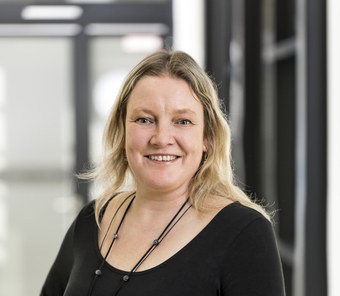
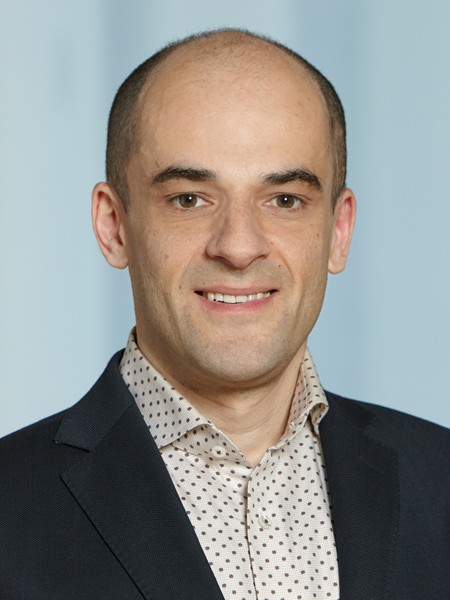
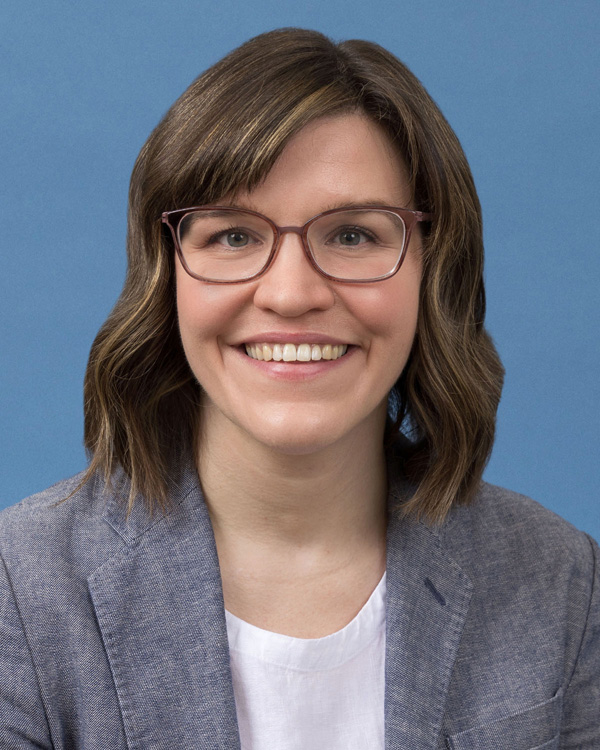
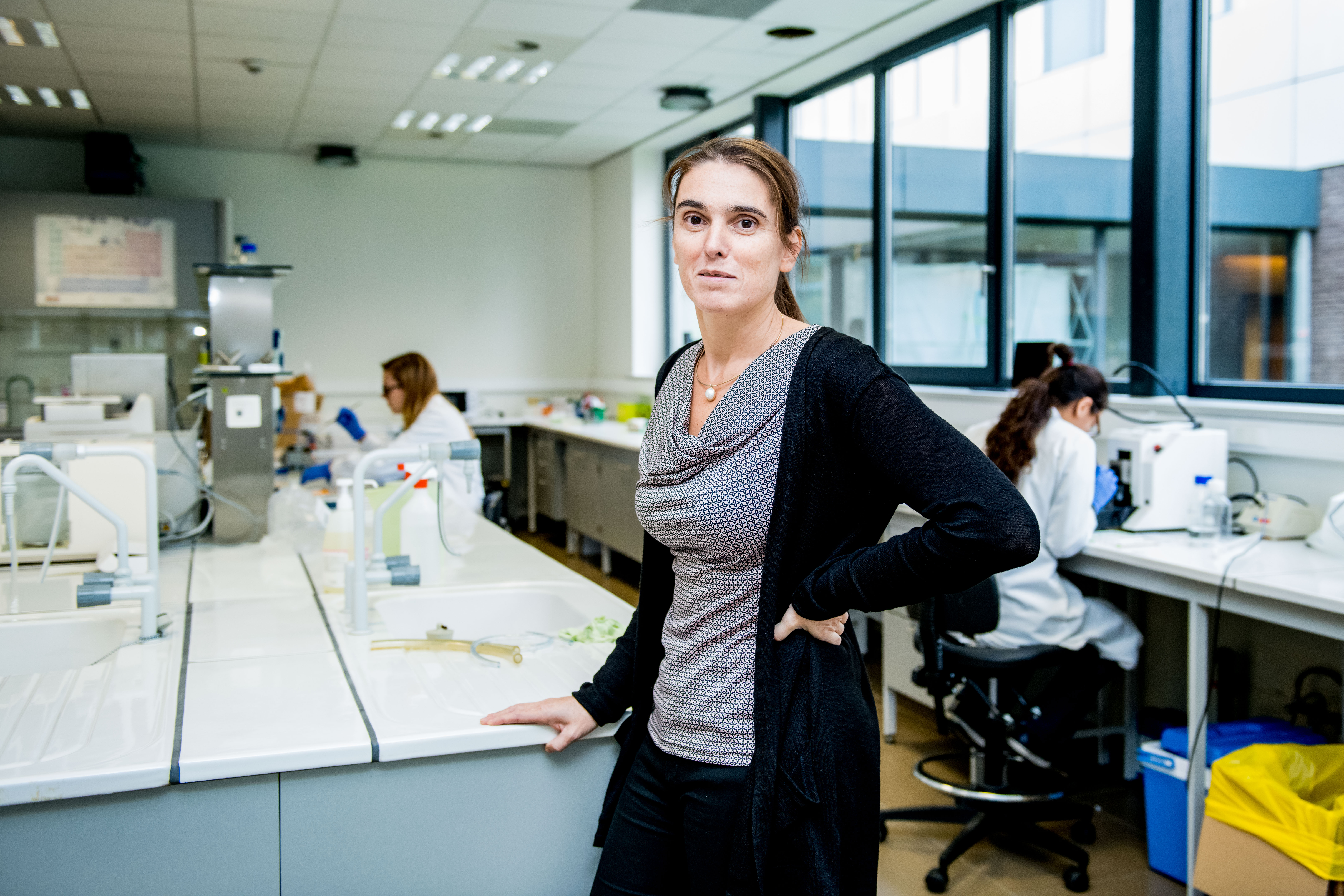
Susanne Weis is a Research Professor and Group Leader of the 'Variability of the Brain' group at the Department of Brain and Behavior (INM-7), part of the Institute of Neuroscience and Medicine (INM) at Research Center Jülich GmbH. Her work focuses on understanding brain variability through advanced neuroimaging techniques and machine learning, with particular emphasis on sex differences, hormonal influences, and clinical applications in mental health. Her research interests include neuroimaging methodologies, machine learning applications in cognitive neuroscience, and the structural-functional relationships underlying brain variability. She investigates how factors like sex hormones and naturalistic stimuli (e.g., movies) affect brain connectivity and cognitive performance, aiming to improve diagnostic and predictive tools for disorders such as schizophrenia and Alzheimer’s disease. Publications highlight her contributions to developing datasets (e.g., SpEx), analyzing confound leakage in ML models, and exploring meta-analytic networks during naturalistic viewing. Her work bridges basic science and clinical impact, addressing challenges in interpreting neuroimaging data and advancing personalized medicine approaches. In her role as a group leader, Weis oversees research projects and collaborates with interdisciplinary teams. She is affiliated with the Helmholtz Association and contributes to the broader scientific community through her research in neuroimaging and computational neuroscience.
Professor Guy Williams is a leading academic at the University of Cambridge with a focus on imaging science and clinical neurosciences, affiliated with Downing College and the Wolfson Brain Imaging Centre . Holding a PhD in Physics from his initial Natural Sciences degree, he specializes in nuclear magnetic resonance (NMR) and MRI techniques for brain imaging. Education: BA, PhD in Physics His research centers on non-invasive imaging of brain structure and function, particularly in traumatic brain injury (TBI) and dementia. His work involves developing novel MRI pulse sequences and advanced data analysis algorithms, including AI-based diagnostic tools. He leads studies on white matter integrity post-trauma, longitudinal dementia assessment, and applications of MRI in disorders of consciousness and addiction. Recent publications highlight collaborations in traumatic brain injury outcomes, AI-guided dementia prediction, and neuroimaging of post-COVID cognitive deficits. His team's work on ultra-high field laminar fMRI and distortion correction methods has advanced clinical neuroscience applications. Key techniques include diffusion tensor imaging (DTI), 7 Tesla MRI, and positron emission tomography (PET/MR). His research spans from basic NMR physics to clinical translation, with a strong emphasis on multi-site studies and real-world diagnostic implementation.
Eyal Aharoni is a Professor in the Department of Philosophy at Georgia State University's College of Arts & Sciences. He holds a Ph.D. in Psychology from the University of California, Santa Barbara (2009) and bachelor's degrees in psychology and religious studies from the same institution. Dr. Aharoni's research program bridges psychology, neuroscience, and legal studies with particular focus on: Risk models for antisocial behavior Application of neuroscience to legal contexts (neurolaw) Impact of emotion and cognitive bias on criminal, moral, legal, and political decision making Psychopathy and criminal justice outcomes His scholarly work demonstrates a consistent interdisciplinary approach to understanding the psychological and neurobiological underpinnings of criminal behavior and legal decision-making. Through experimental, longitudinal, and neuroimaging methodologies, Aharoni investigates how cognitive, behavioral, evolutionary, and neurobiological factors influence criminal justice outcomes and potential reforms. Dr. Aharoni maintains an active research laboratory and welcomes PhD students in psychology, with potential funding opportunities in neuroethics. His current research interests include ethical implications of neuroscience technologies and associated issues in cognitive neuroscience, moral psychology, legal psychology, and forensic psychology. His professional experience includes: Research Associate at the RAND Corporation Postdoctoral fellowship at The MIND Research Network for Neurodiagnostic Discovery and the University of New Mexico Psychology Research positions at the Research Center for Virtual Environments and Behavior Research positions at the Institute for Social, Behavioral, and Economic Research
Daniel Razansky is a Full Professor at the Department of Information Technology and Electrical Engineering, ETH Zurich, leading the Professorship for Biomedical Imaging. His research spans engineering, physics, biology, and medicine, focusing on developing advanced in vivo imaging tools like optoacoustic tomography and ultrasound neuromodulation. His recent work emphasizes multi-scale functional and molecular imaging , with applications in neuroscience , Alzheimer’s disease , and stroke diagnostics . Collaborations include National Tsing Hua University and the EU Horizon consortium SWEEPICS. Current projects target hybrid imaging systems (e.g., MRI-MSOT) and image-guided neuromodulation. Scientific awards include the IPPA James Smith Prize for his contributions. His lab has secured significant grants, including a $2.5M NIH award and SNSF funding. He mentors PhD students like Quanyu Zhou and Eva Remlova, who have received accolades for their research. The Razansky Lab at ETH Zurich’s Preclinical Imaging Center explores medical microrobotics , dynamic fluid flow imaging , and neuroimaging techniques , aiming to bridge engineering with clinical applications.
Carolyn Parkinson is an Associate Professor at the University of California, Los Angeles (UCLA), holding the Bernice Wenzel and Wendell Jeffrey Term Endowed Chair in Cognitive Neuroscience. Her research integrates social psychology with computational neuroscience to explore how the human brain represents, navigates, and shapes social environments. University: University of California, Los Angeles (UCLA) Academic Rank: Associate Professor Research Focus: Social and Affective Neuroscience, Social Network Analysis, Neural Mechanisms of Psychological Distance At the Computational Social Neuroscience Lab , Parkinson investigates: Neural encoding of social network structures Shared mechanisms for spatial, temporal, and social distance perception Computational modeling of social cognition Functional MRI analysis of social relationships Her work reveals that: Resting-state brain connectivity predicts social proximity Multivoxel patterns decode social knowledge representations Old cortical structures repurpose spatial processing for social cognition Neural population coding transcends historical phrenology-based approaches Notable awards include the Bernice Wenzel and Wendell Jeffrey Term Endowed Chair. She employs machine learning and social network theory to analyze distributed brain activity patterns, advancing understanding of human social behavior and cognition.
Prof. Ilse Dewachter is the head of the Biomed Neuroscience research group at Hasselt University (UHasselt), specializing in Alzheimer’s therapy and prevention for over 25 years. Her work focuses on multi-targeted therapies targeting tau, inflammation, and ApoE, alongside pioneering research into disease prevention via blood-based biomarkers. Recent studies explore a protective APOE3ch mutation that halted Alzheimer’s progression in a patient, offering hope for new treatments. Research Interests: - Alzheimer’s disease mechanisms (Abeta, tau, inflammation) - Multi-target therapies and biomarker development - Neurodegenerative disease prevention strategies - Genetic mutations impacting disease progression Articles Overview: Her most recent work (2025-2022) addresses neuroinflammation, tau propagation models, and AI-driven neuroimaging. Key themes include APOE genetics, blood-brain barrier dynamics, and exercise impacts on cognition. Funding & Grants: Current projects require significant investment for advanced biomarker equipment and clinical trials. A notable €300,000 grant funded research on brain lipid metabolism’s role in Alzheimer’s. Labs & Teams: Leads the BIOMED Neuroscience group at UHasselt, collaborating internationally on preclinical models and drug development.
Yize Zhao is an Associate Professor in the Department of Biostatistics at Yale School of Public Health and an Associate Professor in the Department of Biomedical Informatics & Data Science at Yale University. She holds affiliations with multiple Yale research centers including the Yale Center for Analytical Sciences, Yale Alzheimer's Disease Research Center, Yale Wu Tsai Institute, Yale Center for Brain and Mind Health, and Yale Computational Biology and Bioinformatics. Dr. Zhao's research focuses on developing statistical and AI methods to analyze large-scale complex biomedical data including medical imaging, genomics, and electronic health records. Her methodological expertise spans Bayesian statistics, feature selection, predictive modeling, data integration, missing data analysis, and network analysis. Her research interests span multiple biomedical domains with a strong focus on mental health, psychiatry, neurodegenerative diseases, and aging. Her recent work includes brain-to-behavior modeling, multi-layer biomedical networks, imaging genetics and genomics, and the integration of multi-modal biomedical data with real-world data. Dr. Zhao's work has resulted in numerous high-impact publications, with recent research focusing on Alzheimer's disease, brain network analysis, and advanced statistical methods for neuroimaging. Her publications show a strong trend toward integrating multi-modal data sources and developing sophisticated statistical approaches to address complex biomedical questions. Thelma and Marvin Zelen Emerging Women Leaders in Data Science Award from the Institute of Mathematical Statistics (IMS) COPSS Emerging Leader Award from the Committee of Presidents of Statistical Societies (COPSS) YSPH Investigator Research Award Yale Alzheimer's Disease Research Center Research Scholar Award Elected member of the International Statistical Institute Dr. Zhao serves as an Associate Editor for Biometrics and is a standing member of the NIH Biodata Management and Analysis (BDMA) study section. Her research is supported by multiple NIH grants, highlighting the significance and impact of her work in biostatistics and biomedical data science.
Prof. Dr. Silvia Schneider is a distinguished Professor of Clinical Child and Adolescent Psychology at Ruhr University Bochum, where she serves as Director of the Research and Treatment Center for Mental Health (FBZ). She also coordinates the Bochum-Marburg site of the German Center for Mental Health (DZPG). Previously, she held professorial positions at the University of Basel, where she served as Dean of the Psychology Faculty. Her academic career spans over three decades with significant contributions to child and adolescent mental health research. Dr. Schneider earned her doctorate from Philipps-University Marburg in 1992 with highest honors (summa cum laude) for her dissertation on "Psychological Transmission of Panic Syndrome." She completed her habilitation at Technical University Braunschweig in 2002. Her academic qualifications include board certification as a Psychological Psychotherapist (1999) and specialized credentials in behavioral therapy for children and adolescents (1998). Dr. Schneider's research primarily focuses on the etiology, prevention, and treatment of emotional disorders in childhood and adolescence. Her work examines familial transmission of emotional disorders, clinical baby and infant research, and diagnosis of mental disorders across the lifespan. She has pioneered research on anxiety disorders, particularly separation anxiety, and has developed innovative treatment approaches including exposure-based therapies. Her current work increasingly integrates neurobiological perspectives with clinical interventions, examining brain-behavior relationships in anxiety disorders through neuroimaging studies. Her extensive publication record demonstrates a consistent focus on child and adolescent mental health, with recent work expanding into digital interventions, virtual reality therapies, and large-scale multicenter studies examining anxiety disorders from both clinical and neurobiological perspectives. Her research bridges basic science with clinical application, maintaining a strong focus on evidence-based interventions for children and families. Visiting Professor at Anxiety and Depression Research Center, UCLA (2015-2016) Visiting Scholar at Center for the Treatment and Study of Anxiety, University of Pennsylvania (2009-2010) Honorary Professorship at University of Surrey Roehampton (2003-2010) Swiss National Science Foundation Professorship (2003-2006) DFG Habilitation Scholarship (1998-2001) Cassianeum Educational Foundation Dissertation Prize (1994) Dr. Schneider has successfully secured substantial research funding from major German and international funding bodies including the German Research Foundation (DFG), German Federal Ministry of Education and Research (BMBF), and Swiss National Science Foundation. Her current projects include "The Role of Parents in Child Development in the Context of Immigration" (DFG), "Mobile Research Laboratory" (DFG), and "Improving Mental Health in Refugee Families" (BMBF). As Director of the FBZ, she leads a large interdisciplinary team conducting cutting-edge research while providing evidence-based clinical services. As Director of the Research and Treatment Center for Mental Health (FBZ) at Ruhr University Bochum, Dr. Schneider oversees a comprehensive research infrastructure supporting studies from basic developmental science to clinical interventions. The FBZ serves as a hub for interdisciplinary collaboration across psychology, psychiatry, and neuroscience, with particular strengths in anxiety disorders research, early intervention, and innovative treatment approaches including digital health solutions.
Kep Kee Loh is a Senior Tutor in the Department of Psychology at the National University of Singapore (NUS). Currently, he also holds an NUS Overseas Postdoctoral Fellowship position at both the Montreal Neurological Institute (McGill University) and the University of Oxford. His research focuses on comparative primate neuroanatomy, examining what makes the human brain special compared to other primates through multimodal MRI techniques. Ph.D. in Neuroscience from Université Claude Bernard Lyon I (2014-2018) M.Sc. in Cognitive Neuroscience from University College London (2011-2012) B.Soc.Sci. (Hons.) in Psychology from National University of Singapore (2007-2011) Dr. Loh's research primarily investigates the anatomical organization of brains across humans and various primate species including chimpanzees, baboons, and macaques. He employs different magnetic resonance imaging techniques (anatomical, resting-state, diffusion-weighted MRI) to compare brain organization across species, with particular focus on the medial frontal cortex, sulcal anatomy, and the evolution of speech and language in the human brain. His work adopts a multimodal approach to provide an integrative view of what sets human brains apart from other primates. His recent publications demonstrate a strong focus on comparative neuroanatomy across species, with particular emphasis on primate brain evolution, frontal cortex organization, and language-related neural pathways. The research spans multiple disciplines including neuroscience, cognitive science, and evolutionary biology, with increasing attention to methodological advancements in neuroimaging techniques for cross-species comparisons. NUS Overseas Postdoctoral Fellowship (2021) Institute of Language, Communications and the Brain (ILCB) Postdoctoral Fellowship (2019) Fondation Recherche Médicale (FRM) Fin de Thèse (PhD funding) (2017) BRAIN Student Travel Award, 6th Motivation and Cognitive Control Symposium (2016) Dr. Loh has been involved in numerous collaborative research projects across international institutions, including the French Institute of Health and Medical Research (Stem Cell and Brain Research Institute), Aix-Marseille Université, and currently McGill University and the University of Oxford. His work has received significant recognition with over 1,000 citations for his 33 publications. While specific grant information isn't detailed in the provided text, his postdoctoral fellowships indicate successful competitive funding. Dr. Loh collaborates with several research groups including the Montreal Neurological Institute at McGill University and research teams at the University of Oxford. His work connects with broader initiatives like the collaborative resource platform for non-human primate neuroimaging, indicating participation in larger research networks focused on advancing primate neuroscience through shared resources and methodologies.
Prof. Stephen Mayhew is a Professor at Aston University's School of Life & Health Sciences, affiliated with the College of Health and Life Sciences. He leads the Cognition & Neuroscience Research Group (CNRG) and contributes to the Aston Research Centre for Health in Ageing. His research focuses on multimodal neuroimaging (EEG/fMRI/MRI/MEG) to study brain activity in health and cognition, particularly negative BOLD responses and their role in neural inhibition and behavior. Recent work includes investigating task-demand effects on BOLD responses, brain state dynamics during rest, and neurovascular coupling methods. Education & Affiliations: Affiliated with Aston University's School of Life & Health Sciences Member of CNRG and Health in Ageing Centre Research Interests: His work explores collaborative/antagonistic brain networks, lifespan changes in brain function, and the functional significance of negative BOLD responses. Techniques include fMRI, EEG, and advanced neuroimaging analysis methods like fractal dimension and laminar 7T MRI. Key Contributions: Published over 30 peer-reviewed articles on neuroimaging and brain networks Systematic reviews on neurovascular coupling and transcranial Doppler methods Labs & Teams: Active in CNRG and collaborates across disciplines in health sciences and bioengineering.
Zsofia Zavecz is a Research Associate at the University of Cambridge Department of Psychology. Her work focuses on the neurophysiological mechanisms underlying sleep and memory consolidation, with particular emphasis on electrophysiological correlates of lucid dreaming and sleep-dependent learning. Research highlights include: Investigation of EEG functional connectivity during statistical learning Study of transcranial stimulation effects on probabilistic learning Analysis of sleep restriction impacts on hormonal regulation Exploration of cognitive reserve mechanisms in sleep disorders Her neuroscientific investigations span procedural memory systems, neural oscillations, and cross-population studies in both healthy individuals and pediatric sleep-disordered breathing patients.
Martin M. Monti is a Professor of Psychology, Neurosurgery, and Psychiatry and Biobehavioral Sciences at the University of California Los Angeles (UCLA), affiliated with the College of Letters and Science. His research focuses on disorders of consciousness, traumatic brain injury (TBI), neuroimaging, and cognitive neuroscience. He holds an MA and PhD in Psychology & Neuroscience from Princeton University (2006–2007) and a BA in Economics from Università Commerciale L. Bocconi (2002). Key research interests include understanding consciousness recovery mechanisms, neuroimaging techniques for TBI assessment, and neuromodulation therapies. Recent work explores subcortical correlates of sleep quality, AI-driven models of consciousness, and transcranial focused ultrasound applications. Monti has received prestigious awards, including the UCLA Life Science Faculty Award (2020, 2014) and the International Prize Giuseppe Sciacca for Medical Research (2018). He leads interdisciplinary projects through collaborations like the ENIGMA working group and the Curing Coma Campaign, advancing global neuroimaging standards and translational research.
Professor Moritz Rossner serves as Head of the Department of Molecular and Behavioral Neurobiology at the Department of Psychiatry and Psychotherapy, Faculty of Medicine, Ludwig-Maximilians-Universität München (LMU). His research integrates molecular and behavioral approaches to understand the neurobiological underpinnings of psychiatric disorders, particularly schizophrenia and bipolar disorder. Rossner's research interests focus on molecular neurobiology and behavioral analysis using mouse models. His laboratory employs advanced techniques including mouse genetics , behavioral phenotyping , biosensors , next-generation sequencing , and transcriptomics to investigate psychiatric risk genes and pathways. His work bridges cellular and molecular mechanisms with behavioral outcomes, particularly in schizophrenia and bipolar disorder research. Analysis of Rossner's 15 most recent publications (2025) reveals a strong focus on precision psychiatry , neuroimaging biomarkers , and genetic mechanisms underlying psychiatric disorders. His research increasingly incorporates multimodal approaches combining neuroimaging, genomics, and clinical phenotyping to develop biologically informed diagnostic and treatment frameworks. Key themes include blood-brain barrier dysfunction in schizophrenia, inflammatory contributions to symptom severity, and pathway-specific polygenic scores for treatment prediction. Rossner leads the Molecular & Behavioural Neurobiology working group at LMU's Department of Psychiatry and Psychotherapy, which includes specialized units like the Mouse Behavioral Unit. His research program appears well-funded through multiple collaborative projects focused on understanding the molecular basis of psychiatric disorders and developing novel therapeutic approaches.
Inna Fishman, Ph.D., is a Research Associate Professor at San Diego State University's Department of Psychology within the College of Sciences. Her research investigates brain network organization in autism spectrum disorder (ASD) using multimodal MRI techniques, focusing on developmental trajectories from toddlerhood to adulthood. She directs studies on sensory processing, socioeconomic influences, and neural connectivity patterns in ASD. Research Focus: Dr. Fishman's work bridges social neuroscience and clinical neuropsychology, examining: Early biomarkers of ASD via functional/diffusion MRI Impact of bilingualism and socioeconomic factors on neurodevelopment Sleep disorders and sensory sensitivities in autistic children Aging-related neural changes in adults with ASD Publication Trends: Her recent articles (2021-2025) emphasize: 1) Advanced neuroimaging of ASD across lifespan stages, 2) Machine learning applications for diagnostics, 3) Socioeconomic and environmental modulators of brain development, and 4) Sleep/auditory processing comorbidities. Student Advising & Grants: She mentors doctoral candidates (Lindsay Olson, Jiwandeep Kohli, Bosi Chen) and leads NIH-funded projects including a clinical psychology fellowship for autism evaluation across ages. Laboratory Affiliation: Dr. Fishman co-directs the Brain Development Imaging Laboratories (BDIL), which investigates ASD manifestations through behavioral and neuroimaging approaches.
Gagan Wig is an Associate Professor at the University of Texas at Dallas, School of Behavioral and Brain Sciences, with adjunct appointments in Psychiatry at UT Southwestern Medical Center. He directs the Wig Neuroimaging Lab, focusing on brain network connectivity across lifespan, healthy/pathological aging, and brain health disparities. His research employs structural/functional MRI, DTI, and TMS to study large-scale brain networks and their relationship to memory and attention. Professional preparation includes: Post-doctoral Associate in Neurology, Washington University School of Medicine (2012) Post-doctoral Associate in Psychology, Harvard University (2009) Ph.D. in Cognitive Neuroscience, Dartmouth College (2006) B.S. in Behavioral Neuroscience, University of British Columbia (2001) Research explores how brain networks change during aging and how socioeconomic status moderates these changes. His work reveals that education protects against brain network decline and that participant diversity is crucial for advancing brain aging research. Publications focus on neuroimaging of lifespan changes, Alzheimer's biomarkers, socioeconomic impacts on brain health, and methodological innovations in network analysis. Recent work demonstrates how functional network organization supports cognition despite Alzheimer's pathology and how data quantity affects network segregation measures. Awards include the Understanding Human Cognition Scholar Award from James S. McDonnell Foundation (2006). He has received significant funding including a $2.9M NIH grant studying socioeconomic links to Alzheimer's susceptibility and DARPA support for novel data sonification approaches.