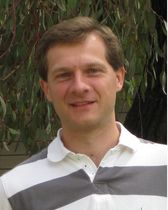
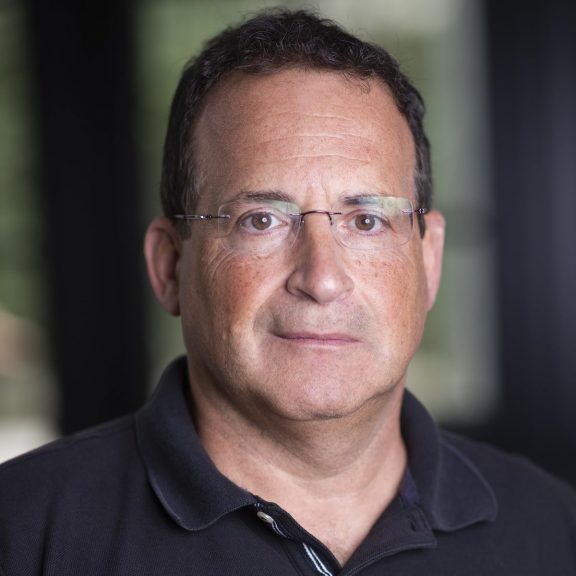
Benoit Decreton is an Assistant Professor in Strategy and Entrepreneurship at Nova School of Business and Economics (Nova SBE) . He previously held visiting scholar positions at INSEAD and Stanford University, and conducted fieldwork in Silicon Valley. His academic journey includes a PhD in Economic and Social Sciences from WU Vienna (2020), dual Master's degrees from Copenhagen Business School (2014) and CEMS (2014), with professional experience across France, Germany, Denmark, Hong Kong, Austria, the USA, and Portugal.
Gavin Schwarz is a Professor and Head of School at the School of Management and Governance within the UNSW Business School . He specializes in organizational change , organizational failure and inertia , and the dynamics of virtual teams , with a focus on how organizations fail during change processes and how to develop applied strategies for change management . His work spans diverse sectors including healthcare, technology, and education, with publications in leading journals such as Academy of Management Learning and Education and Administrative Science Quarterly . Education : PhD in Management (University of Queensland), MPhil (Hons) in Management (University of Auckland), BA in Management and English (University of Auckland). Grants : 2020 Brock University grant for "University communication in times of COVID-19" , 2020 UNSW Medicine grant for "Translation and change: Embedding effective change management in health" , and earlier Australian Research Council and Gordon J. Samuels Fellowship awards. His research explores the development of knowledge in organizational theories , with an emphasis on collective responses to change , HR management during crises , and technology strategy . He has contributed to understanding organizational communication , team innovation , and structural inertia . His 15 most recent publications cover topics from AI’s role in organizational change to pandemic-driven research adaptation, with keywords spanning management science , behavioral economics , and digital transformation . Scientific Awards 2021-2023 : Outstanding Reviewer Awards (Academy of Management Review) 2017-2020 : Best Reviewer Awards (Journal of Organizational Behavior) 2019, 2013, 2011 : Best Paper Finalist/Awardee (Academy of Management divisions) 2007, 2006 : Editorial Board Excellence (Academy of Management Journal) and Gordon J. Samuels Fellowship As an active supervisor in organizational change and HR development , his work supports healthcare innovation and digital transformation. He serves as Editor-in-Chief for the Journal of Applied Behavioral Science and is on the editorial boards of Academy of Management Review , Journal of Management , and Journal of Organizational Behavior . Contact: g.schwarz@unsw.edu.au
Thomas Pepinsky holds the prestigious Walter F. LaFeber Professorship of Government and Public Policy at Cornell University, where he is a faculty member in the Department of Government within the College of Arts and Sciences. He additionally serves as a Nonresident Senior Fellow at the Brookings Institution, bridging academic research with policy engagement. His academic career, which began at Cornell in 2008 after earning his Ph.D. from Yale University, has established him as a leading scholar in comparative politics with deep regional expertise in Southeast Asia. Professor Pepinsky's research examines the complex interactions between political and economic systems globally, with particular attention to democratic backsliding in Southeast Asia and Europe, the evolution of social categories like ethnicity in the Malay world, and methodological approaches to social science explanation. His work consistently connects theoretical political science with empirical analysis of real-world political phenomena, often employing innovative methodological frameworks to understand complex political dynamics across different contexts. His scholarly output demonstrates a clear trajectory from foundational work on Southeast Asian politics to increasingly comparative analyses examining democratic erosion, electoral behavior during political transitions, historical persistence of political attitudes, and the intersection of social categories with political economy. Recent publications reveal growing attention to contemporary crises including refugee flows, pandemic politics, and the challenges to democratic institutions worldwide. Among his significant professional activities, Dr. Pepinsky serves as editor of the Journal of East Asian Studies and is a co-founder and Executive Board member of the Southeast Asia Research Group (SEAREG). He also contributes to the Association for Analytical Learning about Islam and Muslim Societies (AALIMS) and the International Political Economy Society (IPES), reflecting his interdisciplinary approach. At Cornell, he actively participates in the Southeast Asia Program (SEAP) and teaches courses including Introduction to Comparative Government and Politics, Southeast Asian Politics at both undergraduate and graduate levels, and independent study opportunities. His international scholarly engagement is evident through visiting appointments at institutions including Amsterdam, the Australian National University, Freiburg, Griffith University, the Hertie School, and the National University of Singapore.
Parfait Martial Eloundou-Enyegue is a Professor in the Department of Global Development at Cornell University and serves as Section Head and President of the Recruitment, Tenure and Promotion Committee at Institut National D'Etudes Démographiques (INED, France). He also holds appointments at Cornell's Brooks School of Public Policy and leads the Cornell Institute of African Studies. His work spans demography, sociology, and development economics with a focus on reconciling micro- and macro-level social change analysis. Education : Doctorate and Master's from Pennsylvania State University; Ingenieur Agroeconomiste from University of Dschang (Cameroon) Research Interests center on demographic transitions, global inequality, education-development linkages, fertility-schooling relationships, and decomposition methods for social change. His work examines how population dynamics affect economic development, poverty, and policy in sub-Saharan Africa. Recent Articles explore demographic dividends, micro-macro integration in sociology, and global child inequality trends. Awards include Pennsylvania State University's Distinguished Alumnus (2020), multiple Comparative International Education Society recognitions, and UN-related policy engagements. Scientific Awards : 2020 Pennsylvania State University Distinguished Alumnus, 2018 Cornell CALS Science & Policy Award, 2008 Marilyn Emmons Williams Undergraduate Research Advising Award Teaching includes courses on social indicators, education inequality, and development empirics. He has consulted for UN, World Bank, and USAID, and led large-scale demographic training initiatives across Francophone Africa.
Sara Green is an Associate Professor at the Department of Science Education, University of Copenhagen, specializing in the Section for History and Philosophy of Science . Her work bridges philosophy, biology, and biomedical ethics, focusing on the epistemic and social implications of datafication in healthcare and the ethical challenges of precision medicine and consumer health technologies. Green holds a PhD in Science Studies from Aarhus University and was a postdoctoral fellow at the University of Pittsburgh’s Center for Philosophy of Science. She leads the PROMISE and COPE projects and contributes to EU-funded initiatives like DataSpace , TRANSCEND , and REDESIGN . Research Themes: Philosophy of precision medicine and data-driven healthcare Ethics of patient-derived organoids and organ-on-chip technologies Epistemic standards in consumer medicine Interdisciplinary integration in systems biology Article Trends: Recent publications explore organoid ethics , datafication in medicine , and philosophical frameworks for emerging health technologies . Key sub-fields include biobanking, cross-border data governance, and temporal dimensions of personalized medicine. Scientific Recognition: DFF Research Project 1 (2020) Semper Ardens Accellerate Grant (2023) Silver Medal, Royal Danish Society of Science and Letters (2024) Werner Callebaut Prize (2015) EU SwafS-Horizon stipend (2020) Teaching & Supervision: She teaches philosophy of science to students in biology, chemistry, and sports science, supervising projects on philosophy of biology and medicine and co-supervising science communication research. Collaborative Networks: Green collaborates across Denmark, the EU, and the U.S., particularly on cross-border health data infrastructure and reduction of animal models through organoid technologies.
Prof. Dr. Rudolf Amann serves as Managing Director at the Max Planck Institute for Marine Microbiology in Bremen, Germany, and leads the Department of Molecular Ecology. His work pioneers molecular methods for studying marine microorganisms, with a focus on fluorescence in situ hybridization (FISH) to identify and quantify microbial cells. Managing Director, Max Planck Institute for Marine Microbiology (since 2018) Department Head, Molecular Ecology Research Center, Bremen, Germany Research Interests: Marine microbial diversity and ecology Carbon cycle dynamics in coastal and deep-sea environments Phytoplankton-bacterioplankton interactions Microbial taxonomy and phylogenetics Single-cell identification techniques (FISH, CARD-FISH) Integration of metagenomics and proteomics Publication Trends: Recent work focuses on microbial interactions in extreme environments (hydrothermal vents, Arctic waters), carbohydrate cycling in oceanic systems, and ecological differentiation of bacterial populations through advanced imaging and omics technologies. Contact: ramann@mpi-bremen.de
R. Anthony Rolle is a Professor at the University of South Florida’s College of Education, specializing in the Department of Leadership, Policy, and Lifelong Learning. He previously served as Dean of the USF College of Education from 2021 to 2024, and earlier as Dean at the Alan Shawn Feinstein College of Education & Professional Studies at the University of Rhode Island, as well as in leadership roles at the University of Houston and Texas A&M University. Dr. Rolle is a nationally recognized scholar in K-12 education finance and economic policy , known for developing models measuring school system effectiveness and efficiency . His work spans special needs education funding , educational productivity , and policy reform , with a focus on international collaboration and community partnerships. Scientific Awards & Affiliations: President, National Education Finance Academy Distinguished Research Fellow, Shanghai Academy of Education Sciences Research Fellow, National Education Policy Center (Education and Public Interest Center & Education Policy Research Unit) Editorial/Advisory Board Member, multiple national education associations
Frank Chan is a Professor of Information Systems at ESSEC Business School in France, where he currently serves as Department Head of Information Systems, Decision Sciences and Statistics (2022-2025). He has been with ESSEC since 2013, progressing from Assistant Professor to Associate Professor and now Professor. His academic career focuses on the intersection of information systems, public administration, and organizational behavior. Dr. Chan earned his Ph.D. in Information Systems from Hong Kong University of Science and Technology (HKUST) in 2010 and completed his BBA in Information Systems and Finance from the same institution in 2003. His educational background provided the foundation for his research in technology implementation and electronic government. His research interests span electronic government, technology implementation, agile methodologies, and internet privacy. Dr. Chan's work examines how digital technologies transform public services, organizational processes, and citizen experiences. He investigates the human aspects of technology adoption, including leadership dynamics in agile teams, citizen satisfaction with e-government services, and privacy concerns in digital environments. His multidisciplinary approach combines insights from information systems, public administration, and organizational behavior. Analysis of Dr. Chan's publication record reveals a consistent focus on e-government systems and technology implementation, with increasing attention to agile development methodologies in recent years. His work demonstrates a progression from foundational technology adoption studies to more nuanced investigations of leadership dynamics, privacy concerns, and the societal impacts of digital initiatives. The interdisciplinary nature of his research bridges business, public administration, and technology domains. Pacific Asia Conference on Information Systems Best Associate Editor Award (2022) International Conference on Information Systems Outstanding Associate Editor Award (2019) MIS Quarterly Reviewer of the Year Award (2019) MIS Quarterly Reviewer of the Year Award (2018) Journal of Operations Management Ambassador Award (2017) Finalist for Journal of Operations Management Jack Meredith Best Paper Award (2012) As a Senior Editor for Information Systems Journal since 2021 (previously Associate Editor 2016-2020), Dr. Chan has significantly contributed to the academic community. He has served as Track Co-Chair for major conferences including International Conference on Information Systems and Pacific Asia Conference on Information Systems. His consulting work with United Nations ESCAP on digitalization of tax administrations in Asia demonstrates the real-world impact of his expertise. Dr. Chan teaches courses in Research Design, Quantitative Research Methods, and Digital Business at ESSEC.
Timothy M. Jones is a Professor of Computer Architecture and Compilation at the University of Cambridge Computer Laboratory, where he leads research in systems-level computing. He is also a Fellow at Gonville and Caius College, contributing to academic leadership and student mentorship within the collegiate system. His primary affiliation with the Computer Laboratory positions him at the forefront of systems research within the university. Dr. Jones's research focuses on extracting various forms of parallelism (thread-level, data-level, memory-level) to enhance computational performance while addressing energy efficiency and reliability challenges. His work spans compiler design, binary translation, and microarchitecture optimization, with specific interest areas including: Compiler technologies for functional and parallel programming Hardware reliability and fault tolerance mechanisms Binary analysis and instrumentation frameworks Memory system optimization and virtual memory management Security enhancements through binary modification Runtime systems for heterogeneous architectures Analysis of his recent publications reveals strong emphasis on systems-level innovation, particularly in fault tolerance techniques, binary analysis tools, memory optimization, and parallel execution frameworks. His work consistently bridges theoretical computer science with practical hardware implementation challenges. Dr. Jones maintains active participation in the academic community through conference leadership roles, including serving as Program Co-Chair for CGO 2026 and committee positions at premier venues including ISMM, CGO, and ECOOP. He contributes to open-source academic resources through GitHub and maintains professional engagement via Twitter.
Ali Ramezani-Kebrya is an Associate Professor with tenure in the Department of Informatics at the University of Oslo (UiO), where he leads research in machine learning theory. He holds dual Principal Investigator roles at the Norwegian Center for Knowledge-driven Machine Learning (Integreat) and SFI Visual Intelligence, and is an active member of the European Laboratory for Learning and Intelligent Systems (ELLIS) Society. His service includes Area Chair positions for NeurIPS and AISTATS, and Action Editor for Transactions on Machine Learning Research. His research focuses on theoretical foundations of deep learning with emphasis on understanding input data distribution encoding in neural network layers. Key themes include minimizing statistical risk under resource constraints, addressing distribution shifts in distributed settings, and developing practical tools for robust federated learning. Current applications span emotion recognition, marine data analysis, and neuroscience, reflecting his commitment to real-world machine learning challenges as evidenced by his FRIPRO-funded Machine Learning in Real World (MLReal) project. Recent publication trends reveal three dominant threads: (1) label/covariate shift mitigation in distributed systems through entropy regularization and density ratio estimation; (2) communication-efficient optimization via layer-wise quantization and adaptive compression techniques achieving 150% speedups; and (3) robustness guarantees against tailored attacks and distribution shifts. These works consistently bridge theoretical bounds with empirical validation across domains from GAN training to federated settings. Scientific recognition includes: FRIPRO Grant for Early Career Scientists (2025) for MLReal project SFI Visual Intelligence Spotlight Publication award (2023) for federated learning work He actively mentors 11 graduate students across Oslo and Tromsø universities, with recent PhD placements at Apple and NVIDIA. Current grant portfolio features the FRIPRO Early Career award and leadership roles in two major Norwegian research centers. His lab maintains strong industry collaborations through Vector Institute and EPFL, with recent hiring for PhD and postdoc positions in physics-informed machine learning.
Inseok Hwang is the Paul Stanley Professor of Aeronautics and Astronautics at Purdue University's School of Aeronautics and Astronautics. He earned his Ph.D. from Stanford University, specializing in multiple-vehicle control systems. His research focuses on hybrid systems, air traffic control, unmanned systems, and cybersecurity of cyber-physical systems. He leads the Flight Dynamics and Control/Hybrid Systems Laboratory and has received numerous awards, including the NSF CAREER Award and AIAA Associate Fellow designation. His work spans theoretical advancements in control theory and practical applications in aerospace systems. He has over 150 peer-reviewed publications and actively collaborates with industry and government agencies like NASA and the FAA. Education: B.S. (Seoul National University, 1992), M.S. (KAIST, 1994), Ph.D. (Stanford, 2004). Professional memberships include AIAA and IEEE. Research Interests: Hybrid systems analysis, air traffic surveillance and control, fault detection and isolation, spacecraft control, and cybersecurity for autonomous systems. His lab develops algorithms for safe and efficient operation of networked systems, including UAS traffic management and resilient control protocols against cyberattacks. Awards: NSF CAREER (2008), AIAA Associate Fellow (2012), University Faculty Scholar (2017), C.T. Sun Award (2019), multiple Seed for Success Awards (2020–2024), and Paul Stanley Professorship (2024). Grants and Collaborations: Active projects funded by NSF, NASA, FAA, and industry partners. Focus areas include resilient navigation, anomaly detection in air traffic systems, and cyberattack mitigation for autonomous vehicles.
Walid G. Aref is a Professor of Computer Science at Purdue University since Fall 1999. His research focuses on database systems, spatial and spatio-temporal data management, query processing, and indexing. He has led projects funded by NSF, NIH, and industry partners. Aref is a Fellow of the IEEE and has received awards including the NSF CAREER Award (2001) and VLDB’s Ten-Year Best Paper Award (2016). He serves as Editor-in-Chief of ACM Transactions on Spatial Algorithms and Systems and has authored numerous influential papers. Education: BSc/MSc from Alexandria University (Egypt), PhD from University of Maryland (1993). Research Interests: Extending database functionality for emerging applications like spatial, graph, and sensor databases. Notable contributions include the Chameleon project, AQWA system for big spatial data, and privacy-preserving Casper framework. Selected Projects: NSF-funded work on multi-predicate spatial queries, in-memory graph relational systems, and adaptive spatio-textual processing. Systems like Tornado (spatio-textual streams) and LocationSpark (distributed spatial data) exemplify his contributions. Awards: Multiple best paper awards, IEEE Fellow, and leadership roles in ACM SIGSPATIAL.
Hua Cai is the Thomas and Jane Schmidt Rising Star Associate Professor at Purdue University's Edwardson School of Industrial Engineering with a joint appointment in Environmental & Ecological Engineering. She holds a PhD in Environmental Engineering & Natural Resources from the University of Michigan, an MS in Environmental Engineering from Penn State, and a BS from Tsinghua University. Her research integrates operations research and production systems to address sustainability challenges, with focus areas including: Environmental implications of emerging technologies Urban sustainability modeling and infrastructure resilience Industrial ecology and complex adaptive systems Sustainable transportation and mobility systems Recent publications demonstrate strong focus on sustainable transportation systems, with extensive analysis of shared mobility patterns (bike/e-scooter systems), autonomous vehicle impacts, and microgrid resilience. Her work consistently applies advanced computational methods including reinforcement learning, agent-based modeling, and spatiotemporal analysis to urban sustainability challenges. Dr. Cai has received recognition including the Thomas and Jane Schmidt Rising Star Professorship for her contributions to sustainable systems engineering. She leads research on renewable energy integration in transportation infrastructure and advises projects on climate-resilient urban systems.
Maxim Sinitsyn is an Associate Professor of Instruction in the Department of Economics at Northwestern University, where he has held his PhD since 2005. His research focuses on product pricing strategies, particularly examining price promotions, coordination of promotions for related products, and the impact of technology licensing mechanisms on market outcomes. He has explored topics such as prescheduled sales, anti-stacking royalty clauses, and the effects of horizontal mergers in promotional contexts. Education: PhD in Economics from Northwestern University (2005). Research Interests: Dr. Sinitsyn's work concentrates on strategic pricing, including how firms optimize promotions for complementary products, the role of advance planning in promotional strategies, and the implications of different licensing payment structures for market dynamics. His studies also extend to broader economic phenomena such as price dispersion in duopolies and governance trade-offs in institutional design. Advising/Grants: No specific advising or grant information is listed in the provided texts. His contributions are primarily through research publications and teaching. Labs/Teams: No affiliated labs or research teams are mentioned.
Eytan H. Modiano is the Richard C. Maclaurin Professor in the Department of Aeronautics and Astronautics at the Massachusetts Institute of Technology (MIT), with affiliations in the Laboratory for Information and Decision Systems (LIDS), MIT Operations Research Center, and MIT Stephen A. Schwarzman College of Computing. He previously served as Interim Director of LIDS (2021) and Associate Director (2017-2020). His academic background includes a B.S. in Electrical Engineering and Computer Science from the University of Connecticut (1986), and M.S. and Ph.D. degrees in Electrical Engineering from the University of Maryland (1989, 1992). Prior to joining MIT, he was a Member of Technical Staff at MIT Lincoln Laboratory (1993-1999) and held research fellowships at the Naval Research Laboratory (1987-1992) and National Research Council (1992-1993). Professor Modiano's research centers on modeling, analysis, and design of communication networks, with significant contributions to satellite, wireless, and optical networks. His work on cross-layer resource allocation algorithms earned the IEEE INFOCOM Achievement Award (2020) and multiple best paper awards at premier conferences. His honors include: IEEE INFOCOM Achievement Award (2020) INFOCOM Best Paper Award (2018) MobiHoc Best Paper Awards (2018, 2016) Wiopt Best Paper Award (2013) Sigmetrics Best Paper Award (2006) IEEE Fellow (2012) AIAA Associate Fellow (2011) MIT Committed to Caring Award (2018) He demonstrates exceptional mentoring commitment through MIT's Committed to Caring Award and has held editorial leadership as Editor-in-Chief of IEEE/ACM Transactions on Networking (2017-2020), along with key roles in conference organization including IEEE INFOCOM and ACM MobiHoc. At MIT, he leads the Communications and Networking Research Group within LIDS, driving advancements in network protocol design and performance analysis across satellite, wireless, and optical systems.