Birgitte Bak-Jensen is a Professor at the Department of Energy, Aalborg University, where she has worked since 1988. She specializes in intelligent control of power distribution systems, with research focusing on grid stability, power quality, and integration of dispersed generation and smart grid technologies. Her work also addresses multi-energy system interactions between electrical grids, heating, and transport sectors. Projects : Led EU H2020 projects (SERENE, SUSTENANCE) and Danish initiatives (EFFORT, SMARTCE2H) Publications : Over 250 papers on distribution grid control and smart energy systems Her research combines renewable energy integration , electric vehicle grid interaction , and energy storage optimization . Recent work includes explainable AI for wind forecasting and voltage control strategies for EV charging. 2025 Awards : Best Student Paper Award (2023), Best Paper Award (2021), CIGRE Technical Council Award (2018) Organizational Roles : Vice Head of AAU Energy Research, leadership positions in IEEE and CIGRE
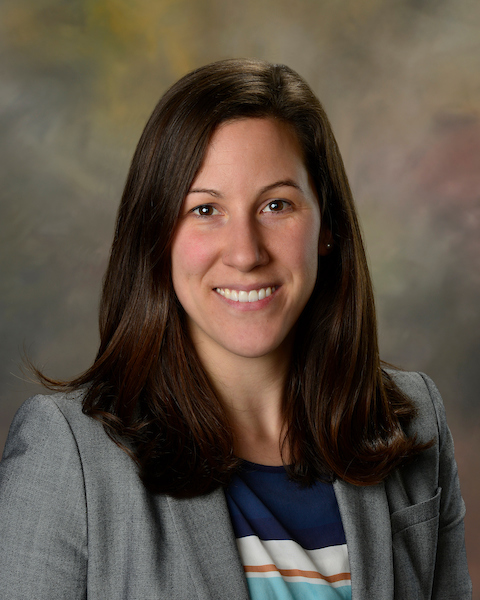
Stephanie Rogers is an Assistant Professor of Geosciences at Auburn University's College of Sciences and Mathematics, specializing in geospatial technologies and environmental applications. She leads the GeoIDEA Lab, focusing on GIScience, water quality modeling, and environmental impacts on honey bee colonies. Her research integrates emerging technologies like drones for ecological monitoring and addresses interdisciplinary challenges such as groundwater management and pollution tracking. Education: PhD in Geosciences from the University of Fribourg, Switzerland. Research Interests: Rogers' work bridges geospatial innovation with real-world problem-solving. Key areas include: GIS-driven environmental monitoring and modeling Drone-based assessment of water quality and algal blooms Groundwater contamination dynamics and public health implications Honey bee colony health through spatial analysis Advising & Grants: Currently mentors two trainees (Bethany Foust and Mallory Jordan) and collaborates on projects funded by environmental agencies. Her grants focus on geospatial data integration for ecological decision-making. Labs/Teams: GeoIDEA Lab coordinates multidisciplinary efforts in environmental geoscience, with active projects in Alabama's Black Belt region and international glacial archaeology initiatives.
Shuxian LUO is an Assistant Professor of Asian Studies at the University of Hawai’i at Mānoa, specializing in Indo-Pacific maritime security, Chinese foreign policy, and U.S.-China relations. Her research focuses on crisis management mechanisms, territorial disputes, and geopolitical dynamics in the South China Sea and Yellow Sea. She holds a Ph.D. in International Relations from Johns Hopkins SAIS (2021), an M.A. in China Studies from Johns Hopkins SAIS (2016), an M.A. in Political Science from Columbia University (2008), and a B.A. in English Literature from Peking University (2007). Her current book project analyzes China's escalation strategies in maritime disputes, while ongoing research includes studies on Sino-Russian relations, Hong Kong’s Baodiao movement, and Arctic geo-economic interests. Her recent publications explore AI risks in U.S.-China crisis management, China’s conciliatory posture toward South Korea, and ASEAN’s role in great power competition. Dr. Luo’s work bridges theoretical frameworks with real-world policy implications, emphasizing the interplay between military tactics, legal frameworks, and diplomatic signaling in conflict prevention. She frequently publishes in journals like China International Strategy Review and the Journal of Contemporary China, and contributes to policy analyses for institutions like Brookings and War on the Rocks.
Robert Winter is a Full Professor of Business IT at the University of St. Gallen (HSG), Switzerland, and Director of the Institute of Information Management (IWI-HSG). He serves as Founding Director of HSG’s Executive MBA in Business Engineering and has led the School of Management’s Doctoral Program. His roles include Vice Editor-in-Chief of Business & Information Systems Engineering and current editorial board membership at MIS Quarterly Executive. Education M.Sc. Business Administration (1984), Goethe University, Frankfurt M.Sc. Business Education (1986), Goethe University, Frankfurt Ph.D. in Social Sciences (1989), Goethe University, Frankfurt Venia legendi (1995), Goethe University, Frankfurt Research Interests Focuses on Design Science Research, Enterprise Architecture Management, and governance of digital platforms. His work explores methodologies for collaborative innovation, data-driven transformation, and complexity management in large-scale systems. Key areas include enterprise transformation steering, data mesh adoption, and agile methodologies in public-sector contexts. Key Contributions Developed frameworks for enterprise architecture governance and digital platform ecosystems Authored influential papers on design science methodology and simulation-based research Recipient of AIS Senior Scholars’ Global Best Paper Award (2017) and Herbert A. Simon Award (2022) Professional Roles President of the School of Management Doctoral Program Member of editorial boards for leading journals (e.g., European Journal of Information Systems) Leadership in professional associations: VHB Board (2011–2014), AIS Swiss Chapter President (2012–2016)
Rajesh Karki is a Professor in the Department of Electrical and Computer Engineering at the University of Saskatchewan’s College of Engineering. He holds a B.E., M.Sc., and Ph.D. in related fields. His research focuses on power system reliability, renewable energy integration, and microgrid resilience, with particular emphasis on addressing challenges posed by extreme weather, cyber threats, and decarbonization targets. Dr. Karki’s work spans theoretical modeling, probabilistic analysis, and practical implementation strategies for smart grids, energy storage systems, and distributed generation. His educational background includes advanced degrees in electrical engineering, complemented by professional engineering licensure (P.Eng.). His research has explored diverse topics such as wind energy curtailment mitigation, energy storage optimization, and demand response mechanisms in developing economies like Nepal. He has authored numerous peer-reviewed publications on grid resilience, reliability economics, and cyber-physical system security. Key themes in his work include: (1) quantifying the reliability value of energy storage in active distribution systems, (2) modeling cyber-physical threats to microgrids, and (3) developing frameworks for extreme weather-resilient infrastructure. Despite the volume of his publications (over 50 articles), no specific awards or grants are explicitly listed in the provided materials. His research often intersects technical, economic, and policy dimensions of sustainable energy systems.
Iris D. Tommelein serves as the Roy W. Carlson Distinguished Professor in the Civil and Environmental Engineering Department at the University of California, Berkeley's College of Engineering, where she directs the Project Production Systems Laboratory (P2SL). A globally recognized pioneer in Lean Construction, she has revolutionized architecture-engineering-construction (AEC) practices through research, industry workshops, and leadership since co-founding the Lean Construction Institute in 1997. Her educational foundation spans multiple disciplines: Ph.D. in Civil Engineering (Construction Engineering and Management), Stanford University, 1989 M.S. in Computer Science (Artificial Intelligence), Stanford University, 1989 M.S. in Civil Engineering (Construction Engineering and Management), Stanford University, 1985 B.S. (5-year degree) in Civil Engineer-Architect, Vrije Universiteit Brussel, Belgium, 1984 Professor Tommelein's research centers on transforming construction processes through Lean principles and digital innovation . Her work pioneers takt planning for workflow reliability, industrialized construction for labor and sustainability challenges, and mistakeproofing to eliminate errors. She integrates digital twins , AI , and optimization to develop practical decision-support systems for supply chains, logistics, and production management. Recent focus includes modular offsite construction and Industry 4.0 applications. Analysis of her 2023-2025 publications reveals intensifying research on takt planning maturity models and industrialized construction feasibility , with growing emphasis on mass timber automation and visual management systems. Her work consistently bridges lean theory with practical implementation across megaprojects, subcontracting networks, and heavy civil engineering. Her exceptional contributions have earned: Lean Pioneer Award (Lean Construction Institute, 2015) National Academy of Construction induction (2019) PPI Technical Achievement Award (2022) Robert B. Harris Award (University of Michigan, 2024) ASCE Construction Management Award (2024) - first woman recipient in 51 years Through the P2SL, she leads industry-collaborative research on production system design, mistakeproofing frameworks, and digital transformation. Her grant-funded projects develop assessment tools for industrialized construction adoption and takt planning methods adaptable to diverse project types. She actively mentors graduate students and drives knowledge transfer via workshops and the annual Construction Innovation Day. The Project Production Systems Laboratory (P2SL) operates as a global hub for construction innovation, partnering with owners, contractors, and suppliers to implement lean production systems. Current initiatives include developing serious games for mistakeproofing training, optimizing work density methods for heavy civil projects, and creating digital twins for real-time construction management.
Dr. Thilina Halloluwa is a Teaching Focused Lecturer in the Department of Human-Centred Computing at The University of Queensland (UQ). He holds a PhD in Human-Computer Interaction from Queensland University of Technology (2019) and a Computer Science undergraduate degree from the Sri Lanka Institute of Information Technology. With over 15 years of academic and industry experience, his research emphasizes real-world impact in education technology, financial inclusion, smart agriculture, and HCI. Educational Background: PhD in Human-Computer Interaction, Queensland University of Technology (2019) Bachelor of Computer Science, Sri Lanka Institute of Information Technology Research Interests: Education for All: Leveraging technology to enhance collaborative learning and social experiences in education. Human Money Interaction: Designing ethical AI solutions for financial services, particularly for underserved communities. Smart Agro: Developing AI-driven tools for crop disease detection, yield optimization, and precision agriculture. Software Project Estimation: Improving effort estimation accuracy through explainable AI (Metrix project). Key Contributions: Developed UrbanAgro (tomato disease detection) and BellCrop (bell pepper disease datasets). Pioneered Dhana Labha , a financial management tool for rural Sri Lankan communities. Advanced online exam proctoring systems for low-resource settings. Previous Roles: Lecturer at University of Sydney (2023) Senior Lecturer at University of Colombo (2013–2023) Lab/Team Affiliations: Smart Agro Project: AI-driven agricultural solutions Metrix Initiative: Software project estimation frameworks
Professor Dieter Hochuli leads the Integrative Ecology research group in the School of Life and Environmental Sciences at the University of Sydney. His research focuses on biodiversity conservation in urban environments, with particular emphasis on arthropod ecology, habitat management, and the ecological dynamics of human-dominated landscapes. His work bridges community ecology and landscape-scale conservation strategies. Research interests center on urban biodiversity conservation, insect-plant interactions, ecosystem function in modified environments, and the ecological impacts of invasive species. Current projects examine how urban planning decisions affect biodiversity, the role of green infrastructure in supporting ecosystem services, and human-wildlife interactions in urban fringes. Analysis of recent publications reveals consistent themes: urban pollinator ecology, wildlife disease ecology at the urban interface, experimental approaches to urban green space management, and biodiversity responses to urbanization. His work integrates ecological theory with practical conservation applications. Professor Hochuli leads field-based ecology projects across Sydney's urban environments and collaborates with local councils on biodiversity mapping initiatives. He currently supervises graduate students researching urban arthropod communities, wildlife conservation, and ecosystem restoration.
Alan Kramer is a Professor of European History at Trinity College Dublin. His research spans post-World War II German economic history, the transnational history of violence in World War I, atrocities, prisoners of war, fascist warfare, and memory studies. He recently expanded his focus to include global histories of concentration camps and blockades, emphasizing 'slow violence' in economic warfare. Kramer retired from teaching and supervision in 2019 but continues scholarly work. He is a Humboldt Foundation Fellow and recipient of its Research Prize (2015–16). Key publications include Dynamic of Destruction (2007) and German Atrocities, 1914 (2001), as well as co-editing 1914–1918-Online . His upcoming book Concentration Camps. A Global History (OUP, 2024) explores penal institutions across global conflicts. His articles analyze naval blockades, fascist warfare transitions, and the cultural history of violence. Kramer’s work bridges regional and global perspectives, integrating economic, social, and cultural dimensions of conflict.
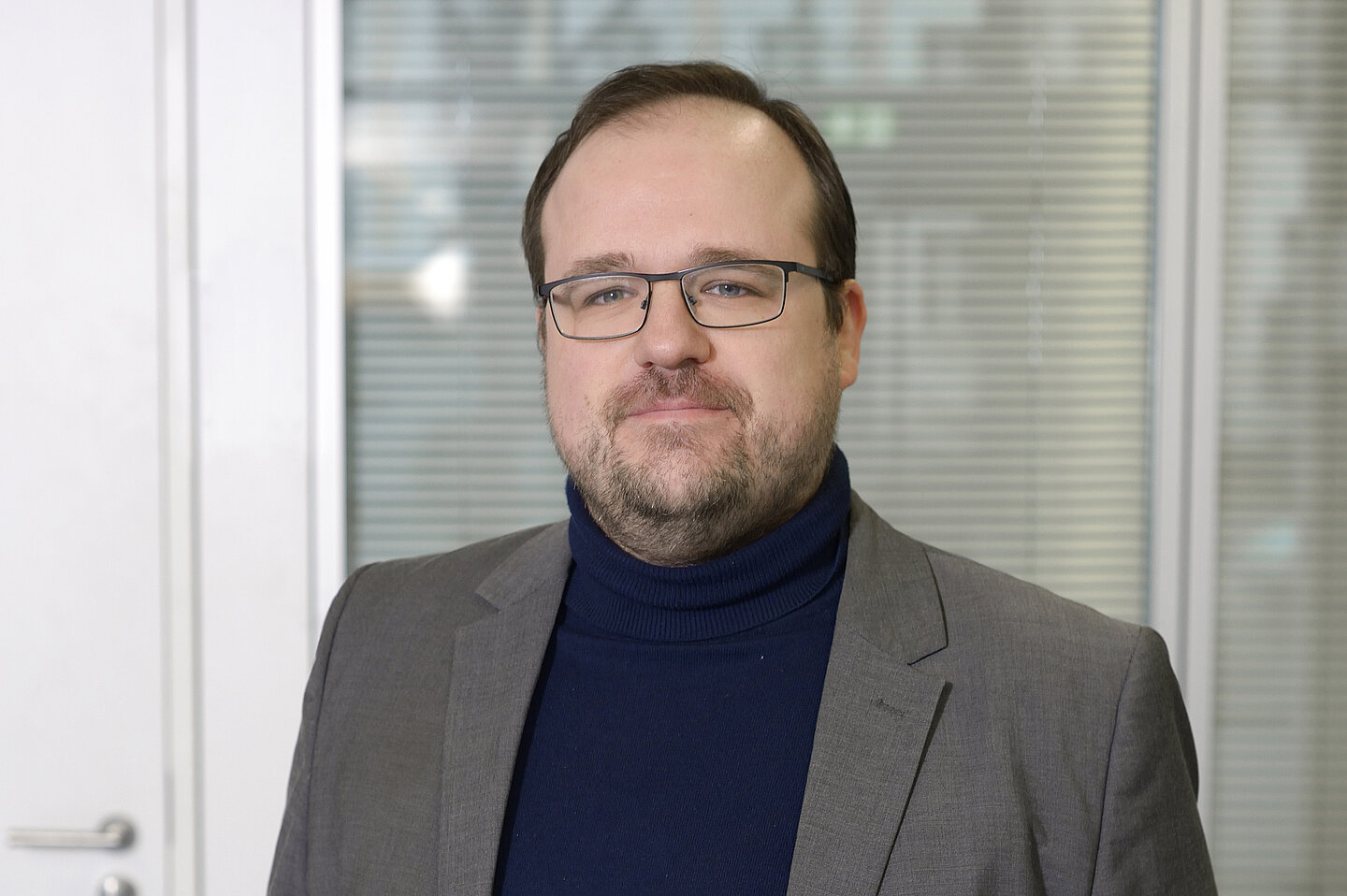
Jiri Srba is a Professor at Aalborg University's Department of Computer Science, part of the Technical Faculty of IT and Design. He leads research in the Distributed, Embedded and Intelligent Systems group and contributes to projects like "ControLing wAter In an uRban Environment" and "Collective Adaptive System SynThesIs using Non-zero-sum Games". His office is located at Selma Lagerløfs Vej 300, 9220 Aalborg Øst, Denmark. Contact him at +4599409851 or srba@cs.aau.dk. His core research focuses on formal methods and applied computer science: Model checking and verification of concurrent systems Petri nets and their applications Network protocol verification and synthesis Distributed system correctness Automated reasoning for industrial systems His publication record shows strong emphasis on network verification, model checking optimization, and applying formal methods to environmental systems. Recent work integrates computer science with sustainable engineering, particularly in water management systems and energy control.
Tamon Stephen is a Professor in the Department of Mathematics at Simon Fraser University (SFU), part of the Faculty of Science. His research focuses on operations research, with an emphasis on combinatorial optimization, algorithms, discrete geometry, and computational biology. He holds a Ph.D. in Mathematics from the University of Michigan (2002). His work often bridges theoretical and computational aspects, addressing interdisciplinary applications. Stephen is affiliated with the Centre for Operations Research and Decision Sciences (CORDS) and has contributed to software tools for hypergraph transversals and colorful linear programming. He has taught courses such as Math 208W (Introduction to Operations Research) and has advised projects in metabolic network analysis and scheduling optimization. His office is located at the Surrey campus (SRYC 2886). Key research collaborations include studies on firefighter scheduling, nurse rostering, and metabolic pathway analysis. His methodologies often leverage algorithm design, polytope theory, and discrete mathematics. Stephen actively participates in academic service, organizing seminars and contributing to conferences such as the West Coast Optimization Meeting. His work emphasizes practical applications of theoretical results, with a focus on solving real-world optimization challenges.
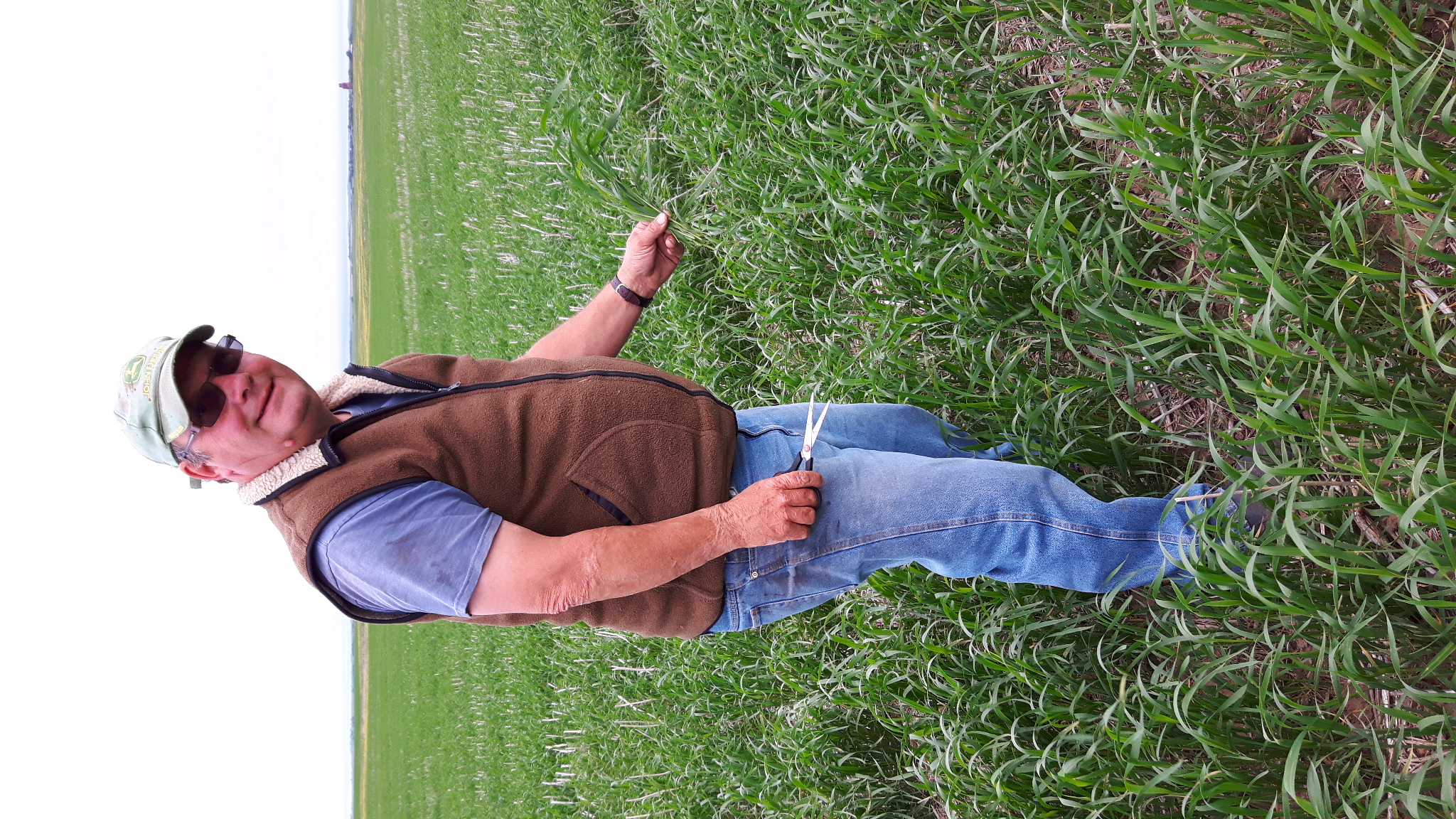
Dr. Jeff Schoenau is a Professor of Soil Fertility and Saskatchewan Ministry of Agriculture Strategic Research Chair in Soil Nutrient Management at the University of Saskatchewan's Department of Soil Science within the College of Agriculture and Bioresources. His research focuses on soil management strategies to enhance fertility, productivity, and health in prairie agricultural soils, including nutrient cycling, organic amendments, and salinity management. Education: Ph.D. (Soil Science, 1988) and B.S.A. (Agronomy, 1984) from the University of Saskatchewan. Affiliations: Fellow of the Agricultural Institute of Canada, member of the Saskatchewan Agriculture Hall of Fame (2022). Research Interests His work emphasizes 4R fertilization practices, cropping systems for soil organic matter improvement, novel nutrient/water management strategies, problem soils (e.g., saline/sodic lands), and greenhouse gas emissions mitigation. Awards Recipient of multiple accolades, including the 2024 Teaching Excellence Award, 2023 Professor of the Year, and the 2004 NSERC Synergy Award for innovation in plant root simulator technology. Teaching & Outreach Teaches courses on soil fertility, field studies, and soil characterization. Actively involved in farming with his wife, balancing academic and agricultural pursuits.
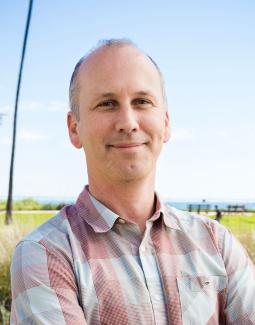
Ben Halpern is a Professor at the Bren School of Environmental Science & Management and Director of the National Center for Ecological Analysis and Synthesis (NCEAS) at UC Santa Barbara. He holds a PhD in Ecology from UCSB and a BA in Biology from Carleton College. His research focuses on marine ecology and conservation planning, with expertise in cumulative impact assessments, marine reserves, and the Ocean Health Index. He has led global projects on ocean health, biodiversity threats, and sustainable aquaculture, collaborating with institutions worldwide. Notable roles include co-founding the Conservation Aquaculture Research Team (CART) and serving as a part-time Chair in Marine Conservation at Imperial College London (2013–2018). Research interests span marine biodiversity conservation, climate change impacts on ecosystems, and the integration of ecological and social data into policy. His work emphasizes interdisciplinary approaches to address environmental challenges, such as mapping wastewater impacts, evaluating aquaculture sustainability, and developing tools for marine spatial planning. Awards include the Smith Fellowship Program (sponsored by The Nature Conservancy) during his postdoctoral work. He teaches Bren School courses, mentors graduate students, and leads collaborative research teams. Current projects include analyzing climate change effects on aquaculture and advancing the Ocean Health Index framework to support global conservation efforts.
Professor Phil Purnell is a Professor of Materials and Structures at the School of Civil Engineering, University of Leeds. His expertise spans materials science, infrastructure systems, circular economy, and interdisciplinary research. He leads projects addressing decarbonization, waste-to-resource systems, and sustainable construction materials. His roles include Deputy Head of School and advisor to UKRI, DEFRA, and the UK Government’s Circular Economy Taskforce. He holds visiting positions at the Royal College of Art and University of Cambridge. Education: PhD, BEng (Civil), and teaching qualifications (PCPCE, ACTLHE). His research focuses on circular economy applications in textiles, offshore wind, and foundational industries. Notable projects include the Textiles Circularity Centre, Yorkshire Circular Economy Living Lab, and Complex Value Optimisation for Resource Recovery (C-VORR). He advocates for systemic approaches to sustainability, integrating economic, technical, and environmental values. Research outputs emphasize decarbonization pathways, material lifecycle assessments, and robotics in infrastructure management. Collaborations with industry and policy bodies drive practical solutions for resource efficiency. His work bridges engineering, economics, and environmental science to address global challenges like waste management and climate change.
Prof. Dr. Oliver Crönertz serves as Dean and Professor of Business Administration and IT-Supported Business Processes at the Faculty of Digital Transformation , HTWK Leipzig. His work bridges digital transformation with business management, focusing on interdisciplinary project management, digital business models, and sustainability. Current roles: Dean, supervising professor for HTWK Robots/nao Team Research areas: Digital Transformation, Business Analytics, Industry 4.0, Stoffstrommanagement Research Trends : Recent publications emphasize digital solutions for environmental management, business process optimization, and smart urban logistics. His work connects Industry 4.0 with financial sustainability and societal impacts of digitalization. Projects : Leads Mittelstand-Digital Zentrum Leipzig-Halle, involved in EXIST-Potentiale, Future Parking, and FAssMII (Feedback-based E-Assessment in STEM).