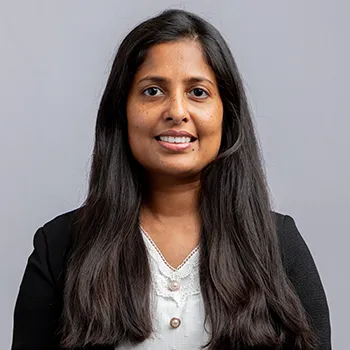
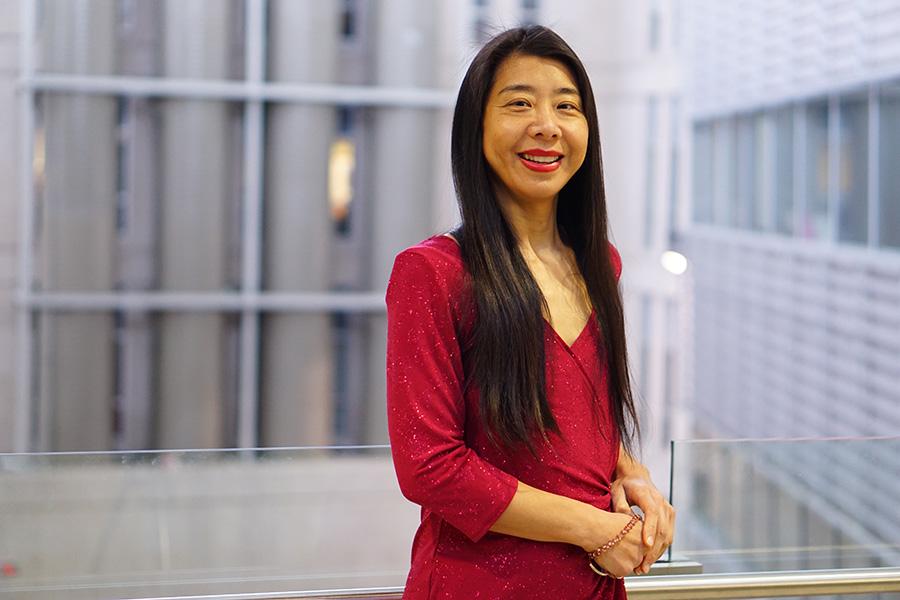
Marika Kokko is a Professor of Bio- and Circular Economy at the University of Tampere, affiliated with the Faculty of Engineering and Natural Sciences and the Department of Materials Science and Environmental Engineering. Her research focuses on sustainable solutions for carbon dioxide utilization, nutrient recovery, and bioelectrochemical systems. She leads projects such as isoSUS (developing short-chain fatty acid conversion) and BioNH4 (recovering ammonium nitrogen from wastewater). Education: Doctor of Science (Technology), Tampere University of Technology (2013) Postdoctoral Researcher, University of Freiburg, Germany (2014–2016) Tenure-track career progression at Tampere University since 2016 Research Interests: CO₂ conversion via microbial electrosynthesis and bioelectrochemical processes Electrochemical nitrogen recovery from wastewater Microplastic analysis in environmental matrices Bioremediation of industrial waste streams Grants & Collaborations: Funded by Business Finland, Ministry of the Environment, and international consortia Active in interdisciplinary projects like CICAT2025 and UPCE Labs/Teams: Her research group investigates bioelectrochemical systems, microbial communities, and circular economy innovations. They collaborate with industry partners to scale sustainable technologies.
Dr. Tien-Vinh Nguyen is a Senior Lecturer at the School of Civil and Environmental Engineering, Faculty of Engineering and IT (FEIT) at the University of Technology Sydney (UTS), Australia. He is a core member of the Center for Technology in Water and Wastewater (CTWW) and the UTS-VNU Joint Technology and Innovation Research Centre. His research interests focus on water and wastewater treatment and reuse technologies, desalination, and sludge dewatering. Dr. Nguyen has published over 90 refereed journal papers in reputable journals including Bioresource Technology, Journal of Membrane Science, Journal of Hazardous Materials, and Chemical Engineering Journal. His work spans theoretical modeling, experimental studies, and practical applications of water treatment technologies with particular emphasis on sustainable and low-cost solutions applicable in developing countries. Dr. Nguyen's recent publications (2022-2025) demonstrate a strong focus on emerging contaminants like microplastics and bisphenols, advanced adsorption techniques for arsenic removal, and innovative approaches for resource recovery from water streams. His research shows a consistent pattern of applying fundamental engineering principles to solve practical water treatment challenges, with particular emphasis on sustainable and low-cost solutions applicable in both developed and developing countries. UTS Vice-Chancellor's Awards for Research Excellence, through Collaboration and Partnership, 2021 IWA Development Congress Best Poster Award 2019 Google Impact Challenge Technology Against Poverty Prize Winner, 2017 Vietnam Golden Book of Creativity 2017 IWA Asia Pacific Regional Project Innovation Award in the Applied Research Category 2008 Dr. Nguyen has extensive experience supervising PhD and master's students as both principal and co-supervisor. He has secured significant research funding from diverse sources including government agencies, industry partners, and international collaborations. His research projects often involve strong partnerships with water authorities, shire councils in Australia, and organizations in developing countries, particularly Vietnam. He has played a key role in establishing collaborative research activities between UTS and the Vietnam Academy of Science and Technology (VAST) and Vietnam National University (VNU). As a core member of the Center for Technology in Water and Wastewater (CTWW), Dr. Nguyen contributes to a multidisciplinary team focused on developing innovative solutions for water treatment challenges. His work often bridges theoretical modeling with practical applications, resulting in technologies that can be implemented in real-world settings, including household filter systems for arsenic removal in Vietnam.
Naim Rashid is an Assistant Professor in the Department of Environmental Engineering at Montana Technological University, with prior roles including Associate Professor at National University of Science and Technology (2023–2024) and Assistant Professor at COMSATS University (2015–2021). His work focuses on the water-energy-environmental nexus, particularly using microalgae and purple bacteria for wastewater treatment and resource recovery. Education: Ph.D. in Civil and Environmental Engineering from KAIST (2013), M.S. in Environmental Engineering and Biotechnology from Myongji University (2009). Research interests include integrated wastewater treatment using phototrophic microalgae and purple bacteria, biofilm technologies for resource recovery, and life cycle assessment of environmental processes. He also specializes in PFAS removal and bioremediation of coal ash ponds. His publications emphasize biofilm reactors , single-cell protein production , and bioenergy systems from waste streams. Recent work explores nutrient dynamics in biofilm growth, sustainable petroleum industry wastewater treatment, and algal co-cultivation for biodiesel. Awards: Green Talent Award (Germany), Global Young Academy Membership (2017–2022), Fulbright Scholar Award (USA). Professional Service: Curriculum Review Committee, Graduate Council, and advisor to Environmental Engineers of Montana Tech (EEMT) club. Projects: Bioremediation of coal combustion residue, PFAS removal, and integration of acid mine drainage treatment with aquaculture feed synthesis.
Liu Ye is a Professor at The University of Queensland (UQ) within the School of Chemical Engineering. She leads the Greenhouse Gas (GHG) research program at UQ Urban Water Engineering and has secured over AU$10M in competitive research funding. Her work focuses on achieving net-zero emissions through innovations in urban wastewater systems, with collaborations spanning 15+ water utilities, governments, and technology firms like Suez and Veolia. Research Areas: Greenhouse gas mitigation, sludge minimization, biogas production, advanced biological nutrient removal, online process control, and resource recovery from wastes. Key Awards: Research Innovation Award (Australia Water Association), UQ Foundation Research Excellence Award, EAIT Faculty Teaching Excellence Award, and Fellow of the Royal Society of Chemistry (RSC). Teaching: Courses include CHEE2020 (Process Equipment and Control), CHEE2501 (Environmental Systems Engineering I), CHEE4012 (Industrial Wastewater Management), and thesis supervision. Leadership: Associate Editor for Environmental Science: Water Research and Technology , member of IWA Strategic Council, and contributor to industry peak bodies like WSAA and WaterRA. Recent Articles: Her 2025 publications highlight strategies for balancing energy recovery with GHG emissions, systematic frameworks for N2O quantification, and advancements in phosphorus removal. Earlier works (2024–2022) explore electrochemical iron applications, ferric salt enhancements, and hybrid modeling techniques combining mechanistic and deep learning approaches. Scientific Impact: Her research has driven a 35% reduction in N2O emissions at an Adelaide treatment plant, saving $50M annually, and pioneered free nitrous acid (FNA) technology for biofilm control and sludge reduction.
Bandaru Ramarao is a Professor and Chair of the Department of Chemical Engineering at the SUNY College of Environmental Science & Forestry (ESF). He holds a Ph.D. in Chemical Engineering from Clarkson University and has over three decades of academic and research experience. His expertise spans separation processes, biorefinery technologies, pulp and paper engineering, and environmental biotechnology. He has authored numerous books and journal papers, including Granular Filtration of Aerosols and Hydrosols and Separation Processes in Biorefineries . Education: Ph.D. (1986), M.S. (1982), and B.S. (1980) in Chemical Engineering from Clarkson University and the University of Madras, respectively. Research Interests: Focus on sustainable biorefineries, PFAS removal using nanomaterials, enzymatic hydrolysis of lignocellulosic biomass, and advanced filtration technologies. His work bridges fundamental engineering principles with industrial applications, particularly in the pulp and paper sector. Publications: Over 100 peer-reviewed articles and patents, including innovations in flocculation, biopolymer production, and geotextile dewatering. Recent work explores PFAS removal via cellulose nanocrystals and bioplastic synthesis from waste streams. Awards: Recipient of the Andrew Chase Award (2014) and the Alkyl Amines Tilak ChemCon Award (2012). Recognized for contributions to forest bioproducts and sustainable engineering. Advising & Grants: Supervises graduate students in MS and PhD programs, focusing on bioprocess engineering and paper physics. Leads research projects funded by NASA, industry partnerships, and academic grants. Labs & Teams: Director of the Empire State Paper Research Institute, advancing innovations in papermaking and biorefinery processes. Collaborates with global institutions on filtration, biorefinery design, and environmental remediation.
Dr. Lisa Bai is a Research Fellow at the Australian Centre for Water and Environmental Biotechnology (ACWEB) within the School of Chemical Engineering at the University of Queensland. She also maintains affiliations with the ARC Training Centre for Bioplastics and Biocomposites. Her research focuses on sustainable waste and wastewater management with expertise in resource recovery technologies and bioenergy production from organic waste streams. Dr. Bai earned her PhD from the University of Queensland and has a background in Bioengineering and Environmental Engineering. Prior to her academic career, she spent four years working at an environmental consultancy in North Queensland, where she specialized in aquaculture water bioremediation using macroalgae technologies and waste stream utilization for biomass production. Her research program spans four interconnected themes: 1) Data-Based Waste Identification and Characterisation for both core and non-core organic wastes; 2) Tailored Organic Waste and Wastewater Treatment Technology focusing on anaerobic digestion and nutrient recovery; 3) Biotechnology Assisted Process Optimisation for co-digestion modeling; and 4) Biotechnology Based Process Enhancement investigating microbial ecology mechanisms. Her work bridges molecular biology with engineering applications for practical waste management solutions. Analysis of her publication record reveals a consistent research trajectory in anaerobic digestion technologies and resource recovery, with recent work (2023-2025) focusing on enhancing digestion of challenging waste streams like paunch waste from meat processing. Her research demonstrates progression from fundamental laboratory studies to pilot-scale implementation with industry partners. Dr. Bai is actively involved in research funding, currently leading the 'Pilot-scale Validation of Anaerobic Co-digestion at Large Municipal STP' project (2024-2025) funded by Urban Utilities. Previously, she contributed to the 'Waste-to-Energy' project (2020-2024) under the Fight Food Waste CRC program. She serves as an Associate Advisor for PhD students working on biotechnologies for PHA production. Her research team collaborates closely with industry partners including Central SEQ Distributor-Retailer Authority and Red-Meat-Processing facilities to translate laboratory findings into commercial applications for sustainable waste management, demonstrating strong industry engagement and practical implementation focus.
Himali Delanka-Pedige is an Assistant Professor in Environmental Engineering at the Department of Civil Engineering, Southern Illinois University (SIU). Her work focuses on sustainable water and wastewater treatment, resource recovery, and environmental sustainability, with a strong emphasis on algal systems and emerging contaminants. Education: Ph.D. in Civil Engineering, New Mexico State University, NM, 2021 M.Sc. in Environmental Engineering, New Mexico State University, NM, 2018 B.Sc. in Civil Engineering, University of Peradeniya, Sri Lanka, 2015 Research Interests: Dr. Delanka-Pedige's research is centered on advancing sustainable water treatment technologies. Her work includes: Water and wastewater treatment using biological and algal systems Characterization of water quality and emerging contaminants Microbial pathogen removal and non-targeted organic analysis Resource recovery from waste streams Process modeling and multi-criteria decision-making for sustainability Scientific Awards: New Mexico State University Graduate Assistant Tuition Fellowship New Mexico State University Engineering Research Award NSF Non-Academic Research Internship for Graduate Students (INTERN) Award NSF Engineering Research Center for Reinventing the Nation's Urban Water Infrastructure (ReNUWIt) International Conference Travel Grant Aggies-go-global International Conference Travel Grant Special Award of Recognition for Research Performance in Sri Lanka Institute of Information Technology for the Year 2021 Research Trends: Her publications reveal a consistent focus on algal-based wastewater treatment, resource recovery (especially phosphorus and nitrogen), and sustainability assessment using UN SDGs. Recent work also includes advanced treatment of produced water from oil and gas operations, indicating a shift towards industrial applications and hypersaline environments. Contact: Engineering B, Room 22, Southern Illinois University Phone: 618-453-5724 Email: himali.delankapedige@siu.edu
Borja Valverde Pérez is an Associate Professor in the Department of Environmental and Resource Engineering at the Technical University of Denmark (DTU). His research advances sustainable water resource recovery through biotechnology innovations. Research focuses on microalgae cultivation, microbial protein production, and bioelectrochemical systems for water treatment. Key projects explore nutrient recovery from waste streams and greenhouse gas mitigation in biological processes. Recent publications demonstrate innovative approaches to wastewater valorization, including microalgae-bacteria consortia for pollutant degradation and inorganic bioelectric systems for low-temperature denitrification. Work integrates experimental validation with life cycle assessment. He coordinates projects on industrial symbiosis and circular economy applications in water systems. Current initiatives investigate decarbonization pathways for water resource recovery facilities through energy-flexible operation.
Julienne Senyard is an Associate Professor at Griffith University's Department of Management, affiliated with the Griffith Business School and the Centre for Work, Organisation and Wellbeing. She holds roles such as Program Outcomes Director for Griffith Business School and has over two decades of academic and entrepreneurial experience. She earned a PhD in Entrepreneurship from Queensland University of Technology (2015), with earlier degrees in Business Communication/Marketing and Arts from QUT and Griffith. Her research focuses on entrepreneurship, innovation, resourcefulness, and social impact, including refugee entrepreneurship and circular economy initiatives. Recent projects include evaluating waste management in First Nations communities and exploring AI's role in entrepreneurship education. Dr. Senyard has secured over $1.5M in research funding, including grants from the Queensland Government and Australian Research Council. Notable awards include the 2024 Vice Chancellor’s Innovation Engagement Award and Senior Fellow status from the Higher Education Academy. Teaching responsibilities include undergraduate courses like Innovation, Creativity, and Entrepreneurship (2043IBA) and postgraduate leadership modules. She supervises doctoral research on topics like social ventures, humanitarian integration, and agri-food systems. Her work emphasizes culturally grounded policy pathways and community-led solutions in circular economy frameworks.
Professor Karl Bernhard Friedrich serves as Universitätsprofessor and Chair of Metallurgical Process Engineering and Metal Recycling at RWTH Aachen University's Faculty of Georesources and Materials Engineering. He leads the Institute for Metallurgical Science and Electrometallurgy (IME), with his office located in Building 1401, Room 108 at Intzestraße 3 in Aachen. His leadership extends to numerous EU-funded research initiatives focused on sustainable metallurgy and circular economy principles. Professor Friedrich's research interests span metallurgical process engineering, metal recycling, extractive metallurgy (pyrometallurgy and hydrometallurgy), battery recycling technologies, lithium recovery processes, and vacuum metallurgy. His work emphasizes resource efficiency and sustainable practices in metal production and recycling, with particular focus on developing environmentally sound processes for electronic waste and battery recycling. The institute under his leadership has pioneered several innovative recycling concepts for lithium-ion batteries and electronic scrap. Analysis of his recent publications reveals a strong focus on battery recycling technologies, particularly lithium recovery from spent batteries through both pyrometallurgical and hydrometallurgical routes. His research group has developed advanced processes for black mass treatment, slag valorization, and metal recovery optimization. The work demonstrates increasing integration of digital technologies and multi-objective modeling in metallurgical process development. Honorary doctorate from Montanuniversität Leoben (2025) recognizing outstanding scientific achievements and commitment to promoting young scientists Long-standing collaboration with Montanuniversität Leoben through the Aachen-Leoben Workshop for non-ferrous metallurgists Professor Friedrich actively supervises numerous doctoral students and has established several collaborative research programs including the DFG priority program 'engineered artificial minerals,' and doctoral programs 'circular electronics' and 'circular e-cars.' His institute maintains strong industry connections, with growing demand for TBRC and VAR trial campaigns. The institute recently commissioned a new large-scale arc furnace and is preparing for leadership transition in early 2027. The IME under Professor Friedrich's leadership operates extensive research facilities focused on vacuum metallurgy, pyrometallurgy, and hydrometallurgy. The institute collaborates with industry partners through the GDMB Zinc & Lead Technical Committee and participates in numerous European research networks. Current research activities focus on developing sustainable processes for battery recycling, electronic waste treatment, and critical metal recovery with emphasis on circular economy principles.
Prof. Ayşegül Aksoy is a faculty member in the Department of Environmental Engineering at Middle East Technical University (METU) since 2002. She holds a Ph.D. in Civil Engineering from the University of Virginia (2000) and has held visiting roles at Stanford University (2015-2016) and the University of California Davis (2001). Her academic leadership includes Vice Chair roles in METU's Environmental Engineering Department (2012-2015 and 2006-2009), and she co-developed UN courses on Black Sea environmental management. Her research focuses on environmental systems engineering, integrated waste management, water quality modeling, and remote sensing applications. Notable projects include developing autonomous systems for lake turnover monitoring, optimizing landfill leachate management, and evaluating solar sludge drying alternatives. She has directed over 20 graduate theses and contributed to research funded by TÜBİTAK, Newton Fund, and EU programs. Key awards include the AQUA 360 Best Paper Award (2021) and TÜBİTAK Fellowships. Her work spans 120+ peer-reviewed publications, with recent focus areas including anaerobic digestion optimization, GIS-based waste routing, and pollutant fate modeling in heterogeneous aquifers. She advises on national environmental policies and manages projects like the 'Turnover Response System Development' (2020-2023) and 'Chlorophyll-a Modeling in Lake Eymir' (2009-2010).
Jules B. van Lier is a Professor in the Department of Sanitary Engineering at the Faculty of Civil Engineering and Geosciences, Delft University of Technology (TU Delft). With over 316 research outputs spanning several decades, he is a leading figure in environmental engineering, particularly in wastewater treatment and resource recovery technologies. His work bridges fundamental research with practical applications aimed at creating circular economy solutions for water management systems. Professor van Lier's research interests focus on advancing sustainable water treatment technologies. His work explores membrane applications, bioreactor design, anaerobic digestion processes, and resource recovery from waste streams. He has made significant contributions to understanding sludge treatment mechanisms, nitrogen removal processes, and emerging contaminant removal techniques. His research portfolio demonstrates a strong commitment to developing innovative solutions for water reclamation and resource recovery that address pressing environmental challenges. His recent publications reveal a clear trend toward circular economy applications in water management, with emphasis on recovering valuable resources like ammonia, energy, and nutrients from wastewater streams. This work spans multiple disciplines including environmental engineering, chemical engineering, and microbiology, demonstrating his interdisciplinary approach to solving complex water challenges. Open Education Ambassador Award 2024 - Recognizing his contributions to open educational resources at TU Delft PhD Energy Event 2016 - Acknowledging his work in energy-related research in wastewater treatment Through his extensive editorial work, including serving on the editorial boards of Water Science and Technology and Water Science and Technology: Water Supply, Professor van Lier has significantly influenced the field. His 49 documented activities, including conference presentations and committee memberships, demonstrate active engagement with both academic and industry partners. His media appearances, particularly the 2024 BNR Nieuws feature on ammonia recovery from waste streams, highlight his commitment to translating research into practical solutions for real-world environmental challenges. His work with industry partners like Lenntech demonstrates the practical applications of his research in commercial settings.
Qiuyan Yuan is Professor in the Department of Civil Engineering at the University of Manitoba's Price Faculty of Engineering. She holds a PhD in Civil Engineering from University of Manitoba and BSc in Food Science Engineering from Beijing Agricultural University. Her research develops sustainable technologies for wastewater treatment and solid waste management, focusing on nutrient removal/recovery, landfill leachate treatment, anaerobic digestion, and value-added product development with emphasis on reducing environmental burden and carbon footprint. Her recent publications demonstrate strong focus on resource recovery from waste streams, novel treatment processes for landfill leachate, and sustainable material development. She received the University of Manitoba Merit Award (2018) and Terry G. Falconer Emerging Researcher Award (2019). She leads research on anaerobic digestion optimization, landfill biocover systems, and circular economy approaches to waste management.
Andrew J Whelton is a Professor of Civil and Construction Engineering at Purdue University's College of Engineering, with concurrent appointments in Sustainability Engineering and Environmental Engineering. He serves as Director of the Healthy Plumbing Consortium and Lead for the Center for Plumbing Safety, focusing on water quality, chemical contamination, and public health in building plumbing systems. Professor, Civil and Construction Engineering Professor, Sustainability Engineering Professor, Environmental Engineering Director, Healthy Plumbing Consortium Lead, Center for Plumbing Safety His research spans environmental engineering and public health, with key themes including chemical contamination from plastic pipe degradation, post-disaster water system recovery, wildfire-related water quality impacts, and microbial risks in premise plumbing. Recent work addresses crises like the East Palestine chemical spill and Maui wildfires, while also developing predictive models for water quality and evaluating sustainable infrastructure materials. Scientific awards and recognitions include: Rapid Response Research (RAPID) Grants from NSF for disaster-related studies Environmental Protection Agency (EPA) support for building water quality programs Leadership in interdisciplinary consortia focused on plumbing safety Development of novel tools for water quality monitoring and remediation His publications reveal trends in: Chemical leaching from plastic piping materials Environmental justice in water contamination crises Integration of machine learning for water quality prediction Microbial ecology in stagnant plumbing systems Policy recommendations for disaster response Sustainable material innovation for infrastructure
Hanna Breunig is a Research Scientist at Lawrence Berkeley National Laboratory and Deputy of the Sustainable Energy & Environmental Systems Department. She holds a secondary appointment in the Earth Systems and Society Domain within the Climate and Ecosystem Science Division. Her work focuses on validating emerging energy technologies through process design, techno-economic modeling, and market analysis. Education: PhD in Civil and Environmental Engineering from UC Berkeley (2015), MSc (2011), and BSc from Cornell University (2010). Her research spans hydrogen storage , CO2 capture/utilization , brine management , and technoeconomic modeling for systems in data centers, hospitals, mines, aviation, and ports. She co-leads the DOE HyMARC consortium and the systems analysis team for the ARCHES California Hydrogen Hub. Recent publications highlight advancements in metal-organic frameworks (MOFs) for hydrogen storage, solar hydrogen production , and high-temperature thermal energy storage . She has received accolades like the 2023 Energy & Environmental Science Lectureship and 2014 Schmidt MacArthur Fellowship. Scientific Awards: 2023 Energy & Environmental Science Lectureship 2021 Early Scientific Career Award 2019 CEC Bioenergy Project Leadership 2017 LDRD Early Career Award 2014 Schmidt MacArthur Fellowship Hanna mentors graduate and undergraduate students and contributes to tools like the BioSiting v2 software for U.S. bioeconomy resource analysis.