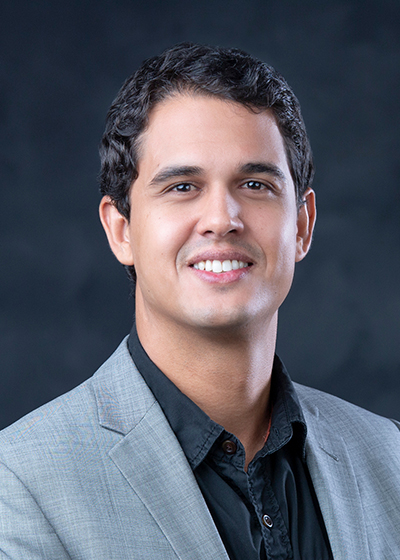
Prof. Alexander Mathys is an Associate Professor at the Department of Health Sciences and Technology, ETH Zurich, and Deputy Head of the Institute of Food, Nutrition, and Health. His research focuses on sustainable food processing, with a systems-oriented approach to optimize food value chains and address environmental, economic, and social impacts. Key areas include microalgae and insect-based protein sources, bioconversion of food waste, and novel preservation technologies. Education: PhD in Food Processing (2008), Tenured Professor (2022). Affiliations: Singapore-ETH Centre, Bezos Centre for Sustainable Protein (NUS). Research Interests: Sustainable food systems, bioeconomy principles, multi-indicator sustainability assessments. Innovations include urban farming concepts, microalgae cultivation for nutrition, and mechanical/biotechnological food processing techniques. Awards: IAFoST Fellow (2024), ETH Zurich Dandelion Award (2022), IFT International Food Security Award (2020), Young Researcher (Nobel Laureates Meeting, 2010). Grants & Advising: Over 200 publications (140 peer-reviewed articles), 13 patents, and extensive international collaborations. Leads the Sustainable Food Processing group at ETH Zurich. Labs/Teams: Directs interdisciplinary research teams exploring novel protein sources, food waste valorization, and scalable bioprocessing technologies.
Leonardo Marchese is a Full Professor at the Department of Science and Technological Innovation, Università degli Studi del Piemonte Orientale 'Amedeo Avogadro'. His research focuses on advanced materials for environmental and energy applications, particularly porous materials for gas storage, pollutant removal, and sensor development. He leads projects like ECOSTORE-H2 (2023-2025) targeting eco-friendly hydrogen storage and ECOH2STORE for sustainable porous materials. Key research interests include: Functionalized silica and mesoporous materials Nuclear Magnetic Resonance (NMR) characterization Environmental monitoring sensors Waste-derived materials (e.g., rice husk, insect chitin) Adsorption mechanisms for pollutants/metals Recent projects involve collaborations in: Hydrogen storage solutions Biodegradable polymers from insect larvae Efficient water purification systems 3D-printed porous structures Prominent contributions include over 370 publications (2025: 2 articles; 2024: 23; 2023: 14), with emphasis on material synthesis and applications in sustainability. No awards are explicitly listed, but his work aligns with UN SDGs for clean energy and responsible consumption.
Adlen KSENTINI is a Professor at EURECOM's Communication Systems department, specializing in advanced networking technologies. His research focuses on Mobile and Wireless Networks, Software Defined Networking (SDN), Mobile Edge Computing (MEC), Network Function Virtualization (NFV), and Content Delivery Networks (CDN), with an emphasis on performance evaluation and network virtualization. He has contributed to projects like AC3 and 6G-BRICKS, exploring cloud-edge continuum integration and 6G infrastructure. Key research interests include virtualized mobile core networks, carrier cloud systems, and AI-driven network management. He has received Best Paper Awards at IEEE WCNC 2018 and IWCMC 2016 for works on network slicing and LTE modeling accuracy. His work often integrates machine learning for optimization, sustainability, and security in 5G/6G networks. Distinctions: Two Best Paper Awards Labs/Teams: Involved in EU-funded projects like AC3 and 6G-BRICKS Grants: Not explicitly listed, but active in collaborative research initiatives
Francesco Ricci is a Professor of Economics at the University of Montpellier, France, and a member of the Center for Environmental Economics - Montpellier (CEE-M). He holds a PhD awarded in 2000 and combines teaching with research activities focused on environmental and natural resource economics. His work spans energy economics, applied theory, dynamic systems modeling, and general equilibrium analysis. Ricci's research addresses critical issues such as climate policy frameworks, sustainable resource management, and the economics of energy transitions. He has published in top-tier journals including the Journal of Environmental Economics and Management and European Economic Review . His recent studies explore the intersection of development rights, critical mineral dependencies, and optimal resource utilization strategies. Ricci's interdisciplinary approach integrates theoretical modeling with real-world policy challenges. Current Affiliations: Faculty of Economics, University of Montpellier Key Research Themes: Environmental policy design, energy transition economics, natural resource valuation, and sustainability governance His publications reflect a strong emphasis on systemic analyses of environmental and energy systems, with a focus on dynamic modeling frameworks. Ricci collaborates internationally on projects addressing climate change mitigation strategies and resource scarcity challenges in renewable energy systems.
Damon L. Woodard is a Professor in the Department of Electrical and Computer Engineering at the University of Florida (UF) and serves as Director of the Florida Institute for National Security (FINS) and the Applied Artificial Intelligence (AAI) Group. His research focuses on applied artificial intelligence, hardware security, and biometrics, with particular emphasis on adversarial AI, AI-enabled hardware assurance, and explainable AI (XAI). He holds IEEE and ACM Senior Member status and is a Kavli Frontiers Fellow. Education: Ph.D. in Computer Science and Engineering, University of Notre Dame M.E. in Computer Science and Engineering, Penn State University B.S. in Computer Science and Computer Information Systems, Tulane University Research Interests: Dr. Woodard explores cutting-edge areas such as AI hardware acceleration, multi-modal AI systems, and counter-AI strategies. His work bridges cognitive science and technology through projects like text stylometry and psychological analysis frameworks. Key focus areas include semiconductor reverse engineering, hardware trojan detection via SEM imaging and machine learning, and secure IoT biometric systems. Highlighted Awards: National Academy of Science Kavli Frontiers Fellow IEEE Senior Member ACM Senior Member AAAI Membership Leadership & Contributions: As FINS Director, he oversees national security initiatives integrating AI and hardware assurance. His AAI Group develops resource-efficient AI solutions for constrained environments. Notable projects include the SECURE segmentation metric for IC reverse engineering and the MaGNIFIES GAN framework for electronic system inspection. Labs & Teams: Leads the Applied Artificial Intelligence Group and collaborates across disciplines through FINS, fostering innovation in AI-driven security and semiconductor integrity.
Peter B. Lillehoj is an Associate Professor in the Department of Mechanical Engineering at Rice University, holding the Shankle Chair. He is affiliated with the School of Engineering and the Institute for Biosciences and Bioengineering. His research focuses on developing microfluidic and BioMEMS technologies for medical diagnostics, environmental monitoring, and global health, with a particular emphasis on wearable biosensors and point-of-care devices. Dr. Lillehoj earned a B.S. in Mechanical Engineering from Johns Hopkins University (2006) and M.S./Ph.D. in Mechanical Engineering from UCLA (2008/2011). Before joining Rice in 2020, he was a faculty member at Michigan State University (2012–2019). His honors include the NSF CAREER Award (2014), IEEE New Innovator in NANOMED Award (2019), and Wellcome Trust Innovator Award (2019). He has secured grants from the Bill & Melinda Gates Foundation and the National Science Foundation. His research spans interdisciplinary areas such as microfluidic cytometry , wearable diagnostics , and CRISPR-based sensing . Recent advancements include AI-enabled microfluidic devices, microneedle-based sampling systems, and magneto-immunoassays for Chagas disease. His lab’s innovations aim to create low-cost, user-friendly diagnostic tools for global health challenges. Awards: NSF CAREER, IEEE New Innovator, Wellcome Trust Innovator Grants: Bill & Melinda Gates Foundation, NSF Labs/Teams: Lillehoj Research Group (Rice) and collaborations with bioengineering teams Dr. Lillehoj’s work bridges mechanical engineering with biomedical applications, emphasizing practical solutions for healthcare accessibility and environmental monitoring. His publications focus on translating lab-based technologies into scalable point-of-care systems.
Carol Hunsberger is an Associate Professor in the Department of Geography and Environment at Western University. Her research focuses on political ecology, energy justice, biofuels, pipeline politics, and environmental governance. She examines how energy projects impact livelihoods and ecologies, and how discourses around climate change, economic priorities, and development influence governance and decision-making processes. Her work emphasizes justice and fairness in energy systems, particularly in Canada, though she has prior research experience in Kenya and Puerto Rico. Teaching interests include courses on energy and power dynamics, environmental justice, and climate change. She supervises graduate students in interdisciplinary studies, including topics like urban cycling behavior, Indigenous resistance to pipelines, and corporate social responsibility in Africa’s mining sector. Her research has been published in journals like Energy Research & Social Science, GCB Bioenergy, and The Canadian Geographer. Hunsberger’s recent publications analyze Canadian pipeline reviews, energy transition discourses, and biofuel policies. She critiques regulatory processes and advocates for inclusive decision-making frameworks. Her work bridges academic research with policy implications, addressing global environmental challenges through a justice-oriented lens.
Dr. Vitor S. Martins is an Assistant Professor in the Department of Agricultural and Biological Engineering at Mississippi State University (MSU). He leads the Geospatial Computing for Environmental Research (GCER) Lab , focusing on satellite remote sensing, deep learning, and environmental monitoring. His research integrates Earth observation data with AI to advance digital agriculture, water resource management, and climate resilience. Education: Ph.D., Agricultural and Biosystems Engineering, Iowa State University M.Sc., Remote Sensing, Brazilian Institute for Space Research (INPE) B.Sc., Agriculture and Environmental Engineering, Federal University of Viçosa Research Interests: Remote sensing of water quality and pollution Land cover/land use change mapping Satellite and aerial image processing Soil & water conservation engineering Deep learning for geospatial data analysis Climate change impacts on environmental systems Recent Research Trends (Articles): His work emphasizes algal bloom monitoring , crop type mapping , and global water transparency using advanced satellite platforms like Sentinel-2/3 and Landsat. He also develops frameworks for burned area mapping and soil spectral analysis , leveraging cloud computing and AI-driven models. Awards & Honors: 2019 Reverent P.T. Taiganides Award (Outstanding Ph.D. Student) 2019 Harold & Katherine Guy Fellowship (Soil & Water Conservation Research) 2012 CAPES-FIPSE International Exchange Award Lab & Collaborations: The GCER Lab collaborates with multiple institutions to promote AI solutions for agriculture and water management. Projects include developing AlgaeMap for Latin American water quality monitoring and creating scalable frameworks like FieldSeg for agricultural field extraction.
Vincenzo Della Mea is an Associate Professor of Information Processing Systems at the University of Udine's Department of Mathematical, Computer and Physical Sciences. His research focuses on medical informatics, digital pathology, biomedical ontologies, and AI applications in healthcare. He holds abilitation to full professorship and is a member of the WHO Italian Collaborating Centre for International Classifications (WHO-FIC), ICHI Task Force, and ESDIP's Executive Board. He leads the EU MSCA Doctoral Network BosomShield (2022-2026) and previously managed the AIDPATH Marie Curie project. As an editor for journals like Digital Health and Journal of Pathology Informatics , he bridges academia and practice. Beyond academia, he is a poet with awards, including the Nelle terre dei Pallavicino Prize for his 2004 collection Algoritmi , and organizes interdisciplinary events merging science and literature. Education & Roles : Holds a professorship in Computer Science and teaches courses on web technologies, medical informatics, and AI across multiple degree programs. Previously served as Vice-President of SIBIM (Italian Biomedical Informatics Society). Research Interests : Specializes in digital pathology, medical AI, telemedicine, and standardization of health classifications like ICD-11 and ICF. His work emphasizes ontology harmonization and machine learning for clinical decision support. Recent Contributions : Published on WHO classification harmonization, AI-driven pathology tools, and energy-sector LLM applications. Active in editorial roles and international collaborations, including the HEROHE Challenge for breast cancer analysis. Awards & Recognition : 2023 – Poetry collection Clone 2.0 (neurally generated) 2005 – Nelle terre dei Pallavicino Award Grants & Projects : Led EU-funded projects (AIDPATH, BosomShield) and contributed to initiatives like the ICD-11 Mortality Coding System. Collaborates with institutions like AcegasApsAmga on AI for utilities. Labs & Initiatives : Involved in digital pathology workflow optimization and educational platforms for medical coding and AI ethics.
SmartState Endowed Chair Professor at University of South Carolina directing Solid Oxide Fuel Cell Center. Associate Editor for Journal of Electrochemical Energy Conversion and Storage. Education: PhD Physical Chemistry (1992), University of Science and Technology Beijing; MS Physical Chemistry (1989), Northeastern University. Research focuses on solid oxide electrochemical systems including fuel cells, batteries, and gas separation membranes. Current projects include DOE-funded development of dynamic solid oxide fuel cells, stable critical materials for hydrogen production, and zinc-ion battery fundamentals. Author of foundational textbook on solid oxide fuel cell technology. Awards include Breakthrough Leadership in Research (2018) and multiple Siemens awards for industrial contributions. Supervised 30+ PhD students. Secured $15M+ research funding from NSF, DOE, DoD. Holds affiliate appointment in Chemical Engineering. Teaches mechanical engineering laboratories and advanced energy storage courses.
Teresa Córdova is the Director of the Great Cities Institute (GCI) and a Professor of Urban Planning and Policy at the University of Illinois at Chicago (UIC), housed in the College of Urban Planning and Public Affairs (CUPPA). She holds a Ph.D. in Sociology from the University of California, Berkeley (1986). Her work integrates research, pedagogy, and service, focusing on community-university partnerships, global/local economic dynamics, and urban policy. She has held leadership roles in local and national boards, including the Cook County Economic Development Advisory Committee and the Chicago Plan Commission. Education includes a Ph.D. (1986), M.A. (1979), and B.A. (1974) in Sociology from UC Berkeley, University of California, and University of Denver, respectively. Her research spans youth joblessness, manufacturing revitalization, environmental justice, and inclusive urban development. She has authored over 50 publications, including seminal works on Chicana feminism and community development. Research interests include global economic restructuring, urban inequality, and policy solutions for disinvested neighborhoods. Recent work highlights pathways for employment in manufacturing and small businesses, addressing systemic joblessness in Chicago. She chairs the C.Wright Mills Book Award Committee for the Society for the Study of Social Problems and serves on editorial boards of journals like Economic Development Quarterly . Awards include the Sor Juana Legacy Award (2015) and recognition for her role in developing a small business incubator. She actively advises on city planning, economic equity, and racial justice through GCI’s indices like the Hardship Index and Opportunity Index. Her career spans public service, academia, and activism, emphasizing interdisciplinary approaches to urban challenges.
Chenjuan Guo is an Associate Professor at the Department of Computer Science, Aalborg University, within The Technical Faculty of IT and Design. She is affiliated with the Data Engineering, Science and Systems group and the AI for the People initiative, and is part of the Daisy - Center for Data-intensive Systems. Her research focuses on machine learning, data engineering, spatio-temporal data analysis, and time series forecasting. Key projects include the Villum Foundation-funded 'Explainable AI for Complex Microbial Community Interactions and Predictions' (2021-2024) and the Astra project on time series analytics in spatial networks (2018-2021). Her research interests span representation learning, autoencoders, path representation, outlier detection, trajectory data analysis, and time series modeling. She has supervised 3 PhD students and contributed to over 60 publications, with a recent emphasis on transformer-based forecasting, neural architecture search, and continuous learning frameworks for spatio-temporal data. Her work bridges theoretical advancements with practical applications in environmental science, cloud computing, and urban mobility systems. Key achievements include developing frameworks like AutoCTS++ for automated time series forecasting and LightGTS for lightweight models. She actively collaborates internationally, contributing to conferences like ECML PKDD and CVPR. Her research is supported by grants from the Villum Foundation and other institutions.
Dr. Aydin K. Sunol is a Professor of Chemical, Biological and Materials Engineering at the University of South Florida's College of Engineering. With a distinguished career spanning several decades, he leads the Environmentally Friendly Engineered Systems (EFES) Lab and serves as principal investigator for numerous research projects funded by NASA, DOD, NSF, and industry partners. Education: PhD in Chemical Engineering, VPI & SU, Blacksburg, Virginia MEng in Industrial Engineering and Operational Research, VPI & SU, Blacksburg, Virginia Diploma in Chemical Engineering, University of Aston, Birmingham, England BS in Chemical Engineering, Bogazici University, Istanbul, Turkey Dr. Sunol's research focuses on green engineering and chemistry, sustainability in the chemical industry, systems engineering, and cleaner energy conversion processes. His work integrates global computational methods, machine learning, product prototyping, and experimentation across multiple temporal and spatial scales. Recent projects include developing nano-structured photo-catalysts, therapeutic particles, and energetic materials using environmentally friendly pathways, as well as creating efficient fuel conversion processes utilizing supercritical fluids. His research demonstrates a consistent trend toward sustainable solutions that address fundamental challenges in materials science, energy conversion, and environmental protection through innovative application of supercritical fluid technology and computational methods. Scientific Awards: USF Chemical and Biomedical Engineering Department Outstanding Teaching Award, 2018 University of South Florida Outstanding Undergraduate Teaching Award, 2002-2003 Engineering Professor of the Year, 1984 Outstanding Professor of Chemical Engineering, VPI & SU, 1981 Outstanding Technology Innovation Award, Aerospace Space System Conference, 2010 As an educator, Dr. Sunol has advised 18 PhD and 29 Master's students, developing innovative teaching methods and curricula including NSF-funded Web-based Teaching Modules and Design Course Series. His research has been supported by diverse funding sources including DOE, NSF, NATO, UNESCO, NAVY, NASA, and numerous industry partners. Dr. Sunol also serves as principal partner and CTO of Temptroll LLC and Accent Creations LLC, which develop self-heating and cooling products, demonstrating the practical application of his research. The EFES Lab, which Dr. Sunol directs, brings together interdisciplinary researchers including chemical engineers, mechanical engineers, and computer scientists to tackle complex challenges in sustainable engineering. Current team members include PhD candidates working on nano-structured materials, wastewater management systems, and temperature modulation products, continuing the lab's tradition of innovation in environmentally friendly engineered systems.
Dr. Jamie Sommer is an Associate Professor in the Department of Sociology & Interdisciplinary Social Sciences at the University of South Florida's College of Arts and Sciences. Her research focuses on how institutional structures, governance, and external factors like multinational corporations and NGOs influence environmental and development outcomes. She holds a Ph.D. from SUNY Stony Brook (2018) and has conducted extensive cross-national studies on forest loss, corruption, and climate policy. Education: Ph.D., State University of New York at Stony Brook, 2018 Her work examines state capacity's role in environmental health, with recent projects analyzing how global trade, governance quality, and gendered resource rights affect forest ecosystems. She collaborates with UN agencies to evaluate climate adaptation programs in developing nations. Key themes in her research include: Environmental governance and policy effectiveness Ecologically unequal exchange Corruption's environmental impacts Gender and environmental citizenship Her 15 most recent articles (2023–2025) reveal a focus on cross-national analyses of forest loss drivers, including tax policies, NGO interventions, and transnational corporate practices. She critiques how global systems perpetuate environmental inequities while advocating for governance reforms to protect ecosystems and marginalized communities. Collaborations include the UNFCCC Gender Division and transnational advocacy networks in Asia. No advising or grant details are explicitly stated in the provided materials.
Erika Wolters is an Assistant Professor in Political Science at Oregon State University's School of Public Policy. She also serves as Associate Director for the Public Policy Undergraduate Program and Water Resources Policy and Management Graduate Program. Her roles include leadership in OSU's Policy Analysis Laboratory (OPAL). Affiliated with the College of Liberal Arts, her work integrates environmental policy, science communication, and community resilience. Education: PhD in Environmental Science (OSU, 2012), MA in Environmental Studies (CSU Sacramento, 2000), BA in Political Science (UC Davis, 1995). Professional experience includes EPA National Advisory Committee membership and OPAL directorship. Research focuses on environmental politics with emphasis on climate change, water policy, wildfire mitigation, and the Food-Water-Energy Nexus. Key themes include public policy preferences, socio-cultural factors in environmental decision-making, and science-policy interactions. Recent work examines rural policy dynamics and coastal adaptation strategies. Publications span over 25 peer-reviewed articles and book chapters, including edited volumes on Western public lands and climate change framing. Her work bridges empirical research with actionable policy insights.