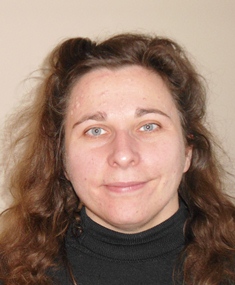
Prof. Maria Tims is a Full Professor at the Department of Management and Organization, Vrije Universiteit Amsterdam, holding a Chair in the Future of Work. She previously served as an Assistant Professor at Erasmus University Rotterdam, where she earned her cum laude PhD in Work and Organizational Psychology (2013). Her research focuses on employee proactivity (e.g., job crafting in teams) and workforce analytics, particularly unobtrusive measurement of well-being. She leads a team with over 30+ peer-reviewed articles in top journals and holds an NWO VENI Grant for studying individual job crafting in teams. Her work emphasizes proactive behaviors' impact on team and organizational outcomes, with grants and awards recognizing her contributions. She has supervised five PhD theses and is an editorial board member for journals like the Journal of Vocational Behavior . Key areas include self-organizing teams, work design, and cross-cultural validity of job crafting scales.
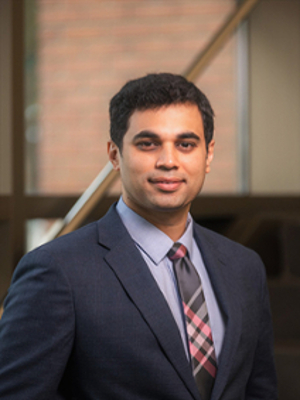
Jeffrey K. Mullins is an Assistant Professor in the Department of Information Systems at the Sam M. Walton College of Business, University of Arkansas. His research explores the intersection of emotion, cognition, and ethics in information systems, with a focus on how digital technologies blur boundaries between work and play through gamification and metaverse development. Ph.D. in Information Systems, University of Arkansas Director of Ph.D. Program, Walton College Research interests span: Emotion and cognition in digital environments Ethics of biometric and gamification technologies Metaverse development and Web3 transitions Work-life convergence in IS-enabled contexts His publications in MIS Quarterly , Journal of Business Ethics , and Journal of the Association for Information Systems reflect these themes. Recent work examines AI biometrics policy and immersive learning applications. 2024 Walton College Executive MBA Teacher of the Year 2020 ACM SIGMIS Doctoral Dissertation Award 2016 Outstanding Lecturer Award With over a decade of IT experience at a Fortune 100 firm, he teaches graduate courses in IT management and multivariate analysis while maintaining certifications like ERPsim Level 2 Training.
Darrell Ross is a Professor in Entomology at the School of Natural Resource Sciences , North Dakota State University . Previously, he held professorial roles at Oregon State University in the Department of Forest Ecosystems and Society and served as Director of the Richardson Hall Quarantine Facility from 2006–2019. His academic journey began with a PhD in Entomology from the University of Georgia (1990), an MS in Forest Ecology from Oregon State University (1985), and a BS in Forest Science from Pennsylvania State University (1981). PhD , Entomology, University of Georgia, 1990 MS , Forest Ecology, Oregon State University, 1985 BS , Forest Science, Pennsylvania State University, 1981 Dr. Ross specializes in forest entomology, focusing on bark beetle ecology, pheromone-based management strategies, and biological control of invasive species like the hemlock woolly adelgid. His work integrates chemical ecology with forest health assessment and ecological restoration. His research emphasizes pheromone applications (e.g., MCH) for bark beetle control, predator-prey dynamics in biological control of adelgids, and habitat manipulation for pest management. Recent studies address biodegradable pheromone formulations, predator phenology for invasive species control, and post-outbreak ecological impacts on pollinators. At Oregon State University, he directed the Richardson Hall Quarantine Facility, contributing to large-scale forest protection strategies. Current work at NDSU continues his legacy in integrating chemical signaling with forest ecosystem management.
Prof. Tina Wakolbinger is a Professor at Vienna University of Economics and Business (WU) , where she serves as Deputy Head of the Institute for Transport Economics and Logistics and Head of the Supply Chain Management Research Institute. She also chairs the Senate and has led numerous research projects in supply chain management, humanitarian logistics, and the circular economy. PhD in Business Administration, Isenberg School of Management, UMASS Amherst (2007) Mag. in International Economics, University of Innsbruck (2002) Her research focuses on Supply Chain Management , with an emphasis on Humanitarian Logistics and the Circular Economy . She investigates how operational settings and disaster characteristics affect supply chain resilience, explores sustainable urban mobility solutions like electric scooters, and develops frameworks for resource allocation in disaster relief. She has published extensively on topics including disaster preparedness, outsourcing in humanitarian logistics, and the impact of digitalization on sustainable supply chains. Recent publications highlight trends in 2025 with strategic dependencies in supply chains, 2023 contributions to circular economy models and humanitarian logistics assessments, and 2022 analyses of pandemic-era supply chain disruptions. Earlier work includes studies on sustainable freight transport, e-waste management, and risk-sharing contracts. Scientific Awards Literati Award 2020 (Journal of Humanitarian Logistics) WU Cooperation Officer of the Year 2018 Talent promotion bonus of Upper Austria 2011 Best Paper Award 2008 (Fogelman College of Business) Graduate School Fellowship 2006 (UMASS Amherst) She has been involved in external positions such as Member of the Post Control Commission (2022–2027) and advisory roles for Caritas Österreich and Finland’s Strategic Research Council. Current projects include developing circular business models for timber supply chains and optimizing e-scooter fleet management in Vienna.
Dr. Emily Black is a Professor of terrestrial processes and climate at the University of Reading's Department of Meteorology, where she serves as research division lead for Earth Observation and Space and is a senior scientist at the National Centre for Atmospheric Science (NCAS). She leads the TAMSAT programme (Tropical Applications of Meteorology using SATellite data and ground-based observations), which provides real-time rainfall products and soil moisture forecasts to stakeholders across Africa through the TAMSAT-ALERT system. Her work bridges fundamental climate science with practical applications for climate risk management, particularly in vulnerable African communities. Dr. Black's research focuses on the hydrological cycle and its associated hazards, land-atmosphere interactions and their impact on climate, African climate and rainfall monitoring, and soil moisture monitoring and forecasting. She has established herself as a leading expert in African climate systems, with particular expertise in understanding rainfall patterns, drought mechanisms, and the development of forecasting tools that translate scientific knowledge into actionable information for decision-makers. Her work combines observational analysis, modeling approaches, and direct engagement with stakeholders to ensure scientific outputs address real-world needs. Analysis of Dr. Black's recent publications reveals a strong focus on the practical application of climate science for risk management, particularly through the TAMSAT-ALERT system. Her work spans multiple disciplines including climatology, hydrology, meteorology, and agricultural science, with consistent emphasis on African contexts. The research shows evolving sophistication in forecasting techniques, moving from basic rainfall monitoring to integrated systems that predict soil moisture, agricultural impacts, and drought risks. A notable trend is the increasing integration of user needs into scientific development, reflecting her commitment to user-driven science and knowledge exchange. Dr. Black has built an extensive collaborative network across institutions globally, with frequent co-authors including Richard P. Allan, Tristan Quaife, Brian J. Hoskins, Pier Luigi Vidale, and Julia Slingo, all from the University of Reading. Her work has been cited by numerous leading climate scientists worldwide, demonstrating her significant impact on the field. She has secured funding for multiple projects focused on climate monitoring, forecasting, and risk management in Africa, with particular emphasis on agricultural applications and drought resilience. As leader of the TAMSAT programme, Dr. Black oversees a team that combines satellite data analysis, ground-based observations, and modeling expertise to develop climate services specifically tailored for African contexts. The TAMSAT-ALERT system represents a major advancement in seasonal forecasting capabilities for the continent, providing critical information for agricultural planning and disaster risk management. Her team's work has evolved from basic rainfall monitoring to integrated systems that predict soil moisture, crop conditions, and drought risks, demonstrating continuous innovation in climate service development.
Dr. Grigorios L. Kyriakopoulos (National Technical University of Athens, School of Electrical and Computer Engineering) is a multidisciplinary academic with 25+ years of teaching experience at NTUA and 10+ years across institutions like the Naval Academy and Athens School of Pedagogical and Technological Education. Holding dual PhDs in Low Carbon Economy and Chemical Engineering, he has 22 academic qualifications spanning Environmental Design, Energy, Theology, and Mental Health Counselling. PhD: Low Carbon Economy (Democritus University of Thrace, 2022) PhD: Chemical Engineering (NTUA, 2005) MSc: Environmental Design of Cities & Buildings (Hellenic Open University, 2018) MSc: Energy (Heriot-Watt University, 2017) MA: Orthodox Theology (Hellenic Open University, 2016) As a Researcher at NTUA, his work bridges Engineering, Energy, and Environmental Economics , with 134 publications, 2160 peer-reviewed papers reviewed, and 6700+ manuscript evaluations. He ranks in the World's Top 2% of Highly Cited Scientists (Stanford University, 2020-2023) and received the Sentinels of Science Award (2016) . His editorial roles include Frontiers in Environmental Science and PLOS ONE , while leading special issues on Microplastics Pollution and Digital Transformation Sustainability . Key research themes include Circular Economy , Renewable Energy Systems , and Behavioral Ecology , with empirical work on Wastewater Reuse and Climate Neutrality implementation. His 17833 citations (Scopus top-250 papers) reflect global impact, particularly in Energy Policy and Environmental Systems . Conference participation spans 500+ reviews at events like NEFES and DTI , with leadership in SMART-ICAE 2018 and NEFES 2022 .
Liu Ye is a Professor at The University of Queensland (UQ) within the School of Chemical Engineering. She leads the Greenhouse Gas (GHG) research program at UQ Urban Water Engineering and has secured over AU$10M in competitive research funding. Her work focuses on achieving net-zero emissions through innovations in urban wastewater systems, with collaborations spanning 15+ water utilities, governments, and technology firms like Suez and Veolia. Research Areas: Greenhouse gas mitigation, sludge minimization, biogas production, advanced biological nutrient removal, online process control, and resource recovery from wastes. Key Awards: Research Innovation Award (Australia Water Association), UQ Foundation Research Excellence Award, EAIT Faculty Teaching Excellence Award, and Fellow of the Royal Society of Chemistry (RSC). Teaching: Courses include CHEE2020 (Process Equipment and Control), CHEE2501 (Environmental Systems Engineering I), CHEE4012 (Industrial Wastewater Management), and thesis supervision. Leadership: Associate Editor for Environmental Science: Water Research and Technology , member of IWA Strategic Council, and contributor to industry peak bodies like WSAA and WaterRA. Recent Articles: Her 2025 publications highlight strategies for balancing energy recovery with GHG emissions, systematic frameworks for N2O quantification, and advancements in phosphorus removal. Earlier works (2024–2022) explore electrochemical iron applications, ferric salt enhancements, and hybrid modeling techniques combining mechanistic and deep learning approaches. Scientific Impact: Her research has driven a 35% reduction in N2O emissions at an Adelaide treatment plant, saving $50M annually, and pioneered free nitrous acid (FNA) technology for biofilm control and sludge reduction.
Chaopeng Shen is a Professor in the Department of Civil and Environmental Engineering at Pennsylvania State University. His research bridges hydrology with state-of-the-art deep learning and differentiable modeling techniques, focusing on advancing our understanding of hydrologic cycles and their interactions with ecosystems, energy, and carbon cycles. He leads the Multi-scale Hydrology, Processes and Intelligence group (MHPI) and has developed the Process-based Adaptive Watershed Simulator (PAWS) for large-scale hydrologic modeling. Shen's work emphasizes physics-informed machine learning , where deep learning components are integrated with process-based equations through differentiable modeling. This approach enables training neural networks using big data while respecting physical laws, leading to improved generalizability and robustness. His group has demonstrated advantages of differentiable models in rainfall-runoff prediction, routing, ecosystem modeling, and water quality studies. Notably, his team's deepLDB project addresses landslide prediction using AI and big datasets. Recent publications highlight his contributions to global water modeling (grid-LSTM, differentiable Muskingum-Cunge routing), extreme flood forecasting (probabilistic diffusion models), and hydrologic uncertainty quantification . Shen actively engages in interdisciplinary collaborations through the PRISM Cooperative Institute, which aims to integrate multi-domain data for systemic risk assessment. His group has advised students including Dapeng Feng, Wen-Ping Tsai, Kuai Fang, Xinye Ji, and Tasnuva Mahjabin. Shen's research is supported by the National Science Foundation (NSF), Department of Energy (DoE), USGS, Google.org, and the Gates Foundation. He serves as Editor for the Journal of Geophysical Research - Machine Learning & Computation and Chief Editor for Frontiers in Water: Water & AI. His open-source software tools like PAWS and deepLDB are available through dedicated project websites.
John Rand is a Professor in Development Economics at the Department of Economics, University of Copenhagen, where he has been employed since 2021. He previously served as Professor (mso) at the Faculty of Social Sciences (2015-2020) and Faculty of Science (2011-2014), Associate Professor (2008-2011), and Assistant Research Professor (2005-2008) at the same institution. He is currently Vice-chair of The Consultative Research Committee for Development Research (FFU) and co-director of the Development Economics Research Group (DERG). Professor Rand's research focuses primarily on development economics, with specific expertise in applied econometrics, impact measurement, industrial economics, and interdisciplinary methods. His work spans topics including climate-smart agriculture, economic policy in developing countries, trade and productivity, and governance issues. He leads multiple externally funded research projects including 'Energy transition and climate-smart agriculture in Vietnam', 'Economic Research and Policy Making in Kenya', and 'Sedentarization and climate change resilience in Nigeria'. His extensive publication record shows a strong focus on empirical research in developing countries, particularly in Africa and Southeast Asia. His recent work demonstrates consistent attention to practical policy implications, with a growing emphasis on climate change adaptation, resource allocation efficiency, and the intersection of economic development with environmental sustainability. His research often employs rigorous quantitative methods to address real-world development challenges. Professor Rand is actively involved in several research networks including the Copenhagen Center for Disaster Research (COPE) as part of the steering group and the UCPH Migration Research Platform. He serves as Head of Studies for Global Development and teaches Development Economics (BA) and Theories, Facts and Current Issues (MSc Global Development). He has presented his research at numerous international conferences including UNU WIDER conferences, Nordic Conference in Development Economics, and various country-specific development forums. His work has been referenced in policy sources and picked up by news outlets, indicating its relevance to current development debates.
Dr. Barbara Spector is a Professor of Science Education at the University of South Florida (USF) College of Education, where she has served since 1985. Her work focuses on educational change, qualitative research methods, and science education reform through innovative course development and community engagement. Research Interests: Science Education Reform Inquiry-Based Teaching and Learning Integration of Science, Technology, and Society (STS) Marine Science Education Qualitative Research Methodologies Professional Development for Educators Scientific Awards & Leadership: National Institute for Science Education Fellow NSTA Research Director NASTS Research Director AETS Director-At-Large Consultant to Federal, State, and Local Education Agencies Contributor to National and State Science Standards Dr. Spector has developed 25 graduate-level science education courses and co-created nationally recognized preservice teacher education courses. Her career spans NSF-funded initiatives like the Center for Ocean Sciences Education Excellence Florida and leadership in multiple university research centers.
Dr. Travis Dorsch serves as Associate Professor and Graduate Program Director in the Department of Human Development and Family Studies at Utah State University's Emma Eccles Jones College of Education and Human Services, where he founded and directs the Families in Sport Lab. His academic career bridges human development theory with practical applications in youth sport contexts, examining how family systems and social environments shape athletic experiences. His educational foundation includes a PhD in Kinesiology (Psychology of Sport and Exercise) from Purdue University (2013), preceded by an MS (2007) and BA in Psychology (2003). This interdisciplinary training informs his unique perspective on sport socialization processes. Dr. Dorsch's research program centers on the interplay between family dynamics and youth sport participation , employing mixed-methods approaches to investigate: Parental socialization mechanisms in athletic contexts Sibling influences on sport engagement Socioeconomic barriers to sport access Emotional abuse dynamics in competitive environments Systemic optimization of youth sport structures His work demonstrates how contextual factors from household to national policy levels affect athlete development. Analysis of his 50+ publications reveals three dominant research trajectories : pandemic-era sport disruptions (2020-2023), emotional abuse frameworks in collegiate athletics (2021-2024), and family systems theory applications in youth sport (2013-present). These intersect at the critical nexus of developmental appropriateness in sport programming. His distinguished recognition includes: Multiple Graduate Mentor of the Year awards (2021, 2022) Early Career Distinguished Scholar honor (2020) Research Fellow designation (2021) Consistent departmental and college teaching awards Dr. Dorsch has secured funding from major organizations including the NCAA, Aspen Institute, and TeamSnap to support his Families in Sport Lab. His mentorship extends to 11 graduate students, with research translating into practical tools for coaches, parents, and sport administrators featured in major media outlets like The New York Times and TIME Magazine .
Prof. Ping Yu is a Professor at the University of Wollongong's School of Computing and Information Technology, where she has held leadership roles such as Director of the Centre for Digital Transformation (2013–2020). Her work focuses on digital health, health informatics, and data-driven solutions for aged care, with collaborations involving the World Health Organization (WHO), NSW Health, and over 11 aged care providers. She has pioneered projects like the WHO’s eSTEPS platform and AI-driven analytics to optimize healthcare resources. Her research integrates socio-technical perspectives to address challenges in technology adoption and healthcare system improvements. Her research interests span data engineering, data quality, ontology development, and generative AI applications in healthcare. Key areas include extracting insights from unstructured health records, improving clinical decision-making, and enhancing patient outcomes through mHealth and telemedicine innovations. She also explores the impact of green spaces on healthy aging and disparities in healthcare access across regions. Prof. Yu has secured over $4.5 million in research funding, including significant grants from the Australian Research Council. She has mentored 29 postgraduate students to completion, emphasizing interdisciplinary research and practical implementation. Her awards include the prestigious 2022 Telstra Brilliant Women in Digital Health Award and the 2008 Don Walker Award for contributions to health informatics. Her advising and grants narrative highlights her role as a mentor and her success in securing competitive funding. Her work bridges academia and industry, with projects like improving pressure injury risk management in aged care using EHRs and analyzing agitation in dementia through AI. She contributes to education policy, including co-designing academic leadership programs and enhancing clinical informatics curricula in the AI era. Prof. Yu leads multi-disciplinary teams at UOW and collaborates with global institutions, focusing on labs and initiatives like the Appendicectomy Surgical Pathway Ontology (ASPO) and the 6A framework for hypertension management via mHealth. Her research emphasizes real-world impact, from reducing hospital readmissions to optimizing surgical workflows and improving public health communication strategies during crises.
Dr. Sudeep Hegde is an Assistant Professor in the Department of Industrial Engineering at Clemson University, where he also serves as a Faculty Scholar in the Clemson University School of Health Sciences Research (CUSHR). His research focuses on proactive organizational learning, human-AI collaboration, and remote physiological monitoring, with applications in healthcare, education, and transportation. He holds a Ph.D. in Industrial and Systems Engineering from the University of Buffalo (2015), an M.S. from the University at Buffalo (2010), and a B.S./M.S. from Ramaiah Institute of Technology in India (2007). His professional experience includes roles at Texas A&M University, the State University of New York at Buffalo, and Harvard Medical School. Hegde’s work emphasizes resilience engineering, cognitive systems, and applied ergonomics. Notable research contributions include studies on organizational adaptive capacity during crises, healthcare workflow optimization, and leveraging AI for healthcare decision-making. He teaches courses such as Human Factors Engineering and Cognitive Systems and Resilience Engineering. Key research thrusts include: Proactive organizational learning frameworks Human-AI teaming for large-scale learning Remote physiological monitoring in high-stress environments Resilience in healthcare systems and emergency response Past grants and collaborations include studies on pandemic response strategies, ED physician workloads, and biofeedback applications for mental health. His interdisciplinary approach bridges systems engineering, human factors, and healthcare innovation.
Vahe Permzadian is an Assistant Professor in the Department of Psychological Science at Missouri University of Science and Technology, where he has been employed since 2020. Prior to this position, he served as a Lecturer of Management in the School of Business and Economics at the State University of New York at Plattsburgh for one year. His academic background includes a Ph.D. in Industrial-Organizational Psychology from the University at Albany, State University of New York. Education Ph.D. in Industrial-Organizational Psychology from University at Albany, State University of New York M.A. in Experimental Psychology from Brooklyn College, City University of New York B.A. in Psychology from Queens College, City University of New York Research Interests Dr. Permzadian's research focuses on three key domains: adjustment and socialization of organizational newcomers, goal setting and motivation in work and achievement settings, and scholarship of teaching and learning. His work bridges industrial-organizational psychology with educational psychology, examining how psychological principles apply to both workplace and academic settings. He has conducted extensive research on assessment formats, open educational resources, and the relationship between personality traits and performance outcomes, with particular attention to motivational processes and their impact on individual achievement. Publication Trends Dr. Permzadian's recent publications show a strong methodological emphasis on meta-analyses and systematic reviews examining educational interventions and psychological processes. His work spans both organizational psychology (focusing on workplace motivation, social efficacy, and personality) and educational psychology (focusing on student learning, assessment formats, and educational resources). A notable trend is his investigation of how test formats (closed-book vs. open-book) affect learning outcomes, as well as the impact of open educational resources on student achievement, reflecting his commitment to evidence-based educational practices. Teaching Dr. Permzadian has taught a comprehensive range of courses at both undergraduate and graduate levels since 2013, including Industrial-Organizational Psychology, Organizational Psychology, Principles of Statistics, Psychology of Personality, Introduction to Psychology, Principles of Management and Organizational Behavior, Human Resource Management, and Training and Development. His teaching portfolio demonstrates expertise across core psychology domains and business applications, with many courses taught repeatedly over multiple years, indicating established curriculum development and instructional expertise.
Gregory J. Carbone is a Professor in the Department of Geography at the University of South Carolina. His research investigates climate variability and change impacts on water resources and agriculture, with emphasis on drought monitoring systems and climate scenario development. He earned his Ph.D. from the University of Wisconsin-Madison (1990), M.A. from University of Kansas (1984), and B.A. from Clark University (1982). His research develops tools for drought assessment in data-scarce regions and examines how spatial scale affects climate impact assessments. Research focuses on drought monitoring techniques, climate extremes, and the application of climate information in water resource management. Recent work explores uncertainty in precipitation indices, agricultural sensitivity to drought, and regional climate projections. He co-developed the Carolinas Dynamic Drought Index tool used by water managers. His publications demonstrate consistent innovation in drought monitoring methodologies, with recent advancements in spatial visualization of climate impacts and statistical downscaling techniques. Research integrates geospatial analysis, remote sensing, and statistical modeling. Teaching excellence recognized through multiple awards: Michael J. Mungo Distinguished Professor of the Year (2025) Mortar Board Excellence in Teaching Award (2012) Mungo Undergraduate Teaching Award (2005) He has supervised 6 MS students and served on 50+ thesis committees. Major grants include $3.75 million from NOAA for the Carolinas Integrated Sciences & Assessments program. Professional service includes editorial roles for Physical Geography and leadership in the American Association of Geographers.