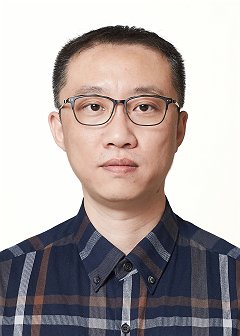
Floriano Scioscia is a researcher at the Polytechnic University of Bari, Department of Electrical Engineering and Information Technology, with extensive contributions to the Semantic Web, Internet of Things, and knowledge-based systems. His work focuses on developing frameworks for semantic reasoning, resource discovery, and intelligent systems in ubiquitous computing environments. His research interests span multiple domains within computer science: Semantic Web technologies and ontology reasoning Internet of Things and Cyber-Physical Systems Cloud-Edge computing architectures Knowledge representation and semantic matchmaker systems Mobile and ubiquitous computing applications Analysis of his recent publications (2023-2025) reveals a strong focus on edge-based semantic reasoning, with significant work on the Tiny-ME and Cowl frameworks for lightweight OWL reasoning on resource-constrained devices. His research has increasingly incorporated blockchain technologies into IoT systems and explored the concept of "Internet of Conscious Things" with social capabilities for smart objects. The interdisciplinary nature of his work bridges computer science with healthcare applications, particularly in clinical decision support systems. Dr. Scioscia has collaborated extensively with researchers including Michele Ruta, Eugenio Di Sciascio, Giuseppe Loseto, and Filippo Gramegna across numerous projects spanning more than 15 years of research output.
Zavud Baghirov is a Doctoral Researcher at the Max Planck Institute for Biogeochemistry, where he is a PhD candidate in the Global Diagnostic Modelling research group under the International Max Planck Research School for Global Biogeochemical Cycles (IMPRS-gBGC). His work focuses on hybrid modeling approaches that integrate deep learning with physical models to understand global water and carbon cycles. His educational background includes: MSc in Environmental Sciences (specializing in Environmental Remote Sensing and Modelling) from the University of Trier (2017-2021) BSc in Ecology from Baku State University (2013-2017) Baghirov's research interests center on hybrid modeling, which combines deep learning with physical models using Earth observation data. His current work aims to develop global models of coupled terrestrial water and carbon cycles while quantifying uncertainties. This approach bridges the gap between data-driven machine learning and physics-based modeling, offering more interpretable and robust predictions for Earth system science. His recent publications demonstrate a strong trend in applying hybrid deep learning techniques to model global biogeochemical cycles, particularly focusing on water and carbon dynamics. The research integrates atmospheric and land observations to constrain models, enhancing their physical consistency and predictive capability. As a doctoral researcher, Baghirov is actively involved in the Global Diagnostic Modelling research group. He collaborates within the International Max Planck Research School for Global Biogeochemical Cycles, contributing to a vibrant community of early-career scientists focused on understanding Earth's biogeochemical processes.
Sergio Lucia is a Full Professor (W3) for Process Automation Systems at Technische Universität Dortmund within the Department of Biochemical and Chemical Engineering since 2023. He previously served as a W2/W3 Professor (2020-2023) and W1 Assistant Professor at TU Berlin (2017-2020). His research focuses on the intersection of control engineering, numerical optimization, and machine learning, with applications in chemical processes, biotechnology, and energy systems. He leads the Laboratory of Process Automation Systems (Building G2, North Campus) and has held prestigious roles including Vice Chair of IFAC Technical Committee on Optimal Control since 2020. Education: Dr.-Ing. (summa cum laude) in "Robust multi-stage nonlinear model predictive control" (2014) Postdoctoral: Massachusetts Institute of Technology (2016), Otto-von-Guericke University Magdeburg (2015-2017) Alumni: Research Assistant at TU Dortmund (2010-2014), Diploma in Electrical Engineering (2010) His research explores novel methods to bridge theory and applications in control engineering, particularly through model predictive control (MPC) innovations. Recent work emphasizes robustness under uncertainty , Bayesian optimization , deep learning integration , and privacy-preserving federated learning for industrial applications. His 2025 publications address challenges in chemical recycling networks, crystallization processes, and serverless computing triggers. Scientific recognition includes: Teaching award (2023) Best student paper awards (2022, 2021) VAA Dissertation Award (2015) Erasmus Scholarship (2010) M.Sc. Extraordinary Career Award (2011) As a dedicated educator, he refines courses to enhance learning outcomes and mentors PhD students Sarah Braun and Benjamin Karg. His laboratory at TU Dortmund's North Campus is strategically located near the H-Bahn monorail system for accessibility.
Prof. Dr. Andreas Johannsen is a Professor of System Development and Integration at the Brandenburg University of Technology (FH Brandenburg) in Germany. He serves as the Managing Director of the Institute for Business Application Systems (IBAW) and has been actively involved in teaching, research, and industry collaboration since joining the university in 2006. His academic journey includes an MBA from the University of Edinburgh (1993-1994) and Business Administration studies at Eberhard Karls University Tübingen (1991-1993). Prior to his academic career, he accumulated substantial industry experience at SAP Deutschland, Mummert Consulting, and KPMG Consulting/BearingPoint, bringing practical insights to his academic work. Member of the IPv6 Council at the Hasso-Plattner-Institute since 2014 Board member of the Computer Science Department Conference (2014-2016) Managing Director of the Institute for Business Application Systems since 2011 Practical Affairs Representative for Business Informatics since 2009 Professor Johannsen's research spans system development and integration, business application systems, and value-oriented corporate management with particular focus on telecommunications and energy supply industries. His recent work emphasizes IT-Governance, Risk and Compliance Management (IT-GRC) for small and medium enterprises, sustainable logistics solutions using machine learning, and security challenges in digital cooperation. His publication pattern reveals consistent contributions across multiple domains with recent emphasis on: ERP system implementation methodologies and evaluation IT security frameworks for resource-constrained organizations Machine learning applications for sustainable logistics optimization Cloud computing and cooperative business models for SMEs API security and IoT security vulnerabilities Digital sovereignty concerns in business contexts Professional Contributions Professor Johannsen has led numerous research projects including the development of the reference model 'Service- and Cloud-Oriented Architectures for Storage Management' (DICAS) with Berliner Verkehrsbetriebe (BVG) in 2017, Business Process Management implementation with Brandenburg's Central IT Service Provider (2013-2014), and multiple studies on ERP system performance in various business contexts. Teaching and Academic Leadership He has taught a wide range of courses including Information Management, ERP Reporting, Project and Risk Management, and Value-Oriented IT Management. His teaching approach integrates theoretical foundations with practical applications, drawing from his extensive industry experience. He has served in various academic leadership roles including program director for Business Informatics master's and bachelor's programs and as a member of the department council. Research Infrastructure Professor Johannsen leads the 'Process Integration and ERP Systems' competence field which maintains ERP laboratories at FH Brandenburg featuring various ERP installations, particularly SAP and Microsoft systems. This infrastructure supports hands-on teaching and applied research on enterprise systems implementation and integration.
Prof. Dr.-Ing. Kay Weidenmann serves as Chair holder of Hybrid Composite Materials at the Institute of Materials Resource Management within the Faculty of Mathematics, Natural Sciences, and Materials Engineering at Augsburg University. His research focuses on developing innovative composite material systems with particular emphasis on hybrid metal-ceramic structures and lightweight construction solutions. Previously, he held positions at the Karlsruhe Institute of Technology (KIT) where he was nominated as associate professor in 2015 and completed his habilitation in Materials Science in 2012. Doctorate (Dr.-Ing.) in Mechanical Engineering, Universität Karlsruhe (TH), 2006 Habilitation in Materials Science, Faculty of Mechanical Engineering, 2012 Study of materials science at University of Stuttgart, 1998-2003 Weidenmann's research spans the development of process routes for hybrid materials (particularly fiber-reinforced polymer-metal hybrids), materials science evaluation of lightweight construction concepts, microstructure-mechanical property relationships in composites, and novel in-situ test methods for damage characterization. His work bridges fundamental materials science with practical engineering applications, particularly in automotive and aerospace sectors where weight reduction is critical. Analysis of his recent publications reveals strong focus on interpenetrating metal-ceramic composites, advanced characterization techniques using X-ray CT, and innovative manufacturing approaches including additive manufacturing of metallic glass structures. His work increasingly incorporates computational methods, machine learning for microstructure analysis, and sustainability considerations through composite recycling research. KIT Certificate "Academic Leadership" (2014) Baden-Wuerttemberg certificate in university didactics (2009) Prof. Weidenmann leads an active research group comprising postdoctoral researchers and graduate students working across multiple research areas including processes, materials and mechanics, condition monitoring, and robotics. His group maintains strong industry collaborations and pursues both fundamental research and applied projects addressing real-world engineering challenges in composite materials. Current work focuses on self-healing composites, sustainable recycling methods, and advanced characterization of hybrid material systems.
Sergio Lucia is a Full Professor (W3) for Process Automation Systems at the Department of Biochemical and Chemical Engineering, TU Dortmund University. His research integrates control engineering, numerical optimization, and machine learning to address challenges in chemical processes, biotechnology, and energy systems. Education: Dr.-Ing. (summa cum laude) from TU Dortmund University (2014); Diploma in Electrical Engineering from University of Zaragoza (2010) Professional Journey: Full Professor (2023–present), Professor (W2) at TU Dortmund University (2020–2023), Assistant Professor at TU Berlin (2017–2020), Postdoctoral Fellow at MIT (2016) His recent work focuses on combining machine learning with model predictive control (MPC) for robust applications in chemical recycling, bioreactors, and energy networks. Key trends include AI-driven optimization, uncertainty quantification, and real-time control for complex systems. Scientific Awards Teaching award, TU Dortmund (2023) Best student paper award (PhD student Sarah Braun) (2022) Best paper by young author award (PhD student Benjamin Karg) (2021) VAA Dissertation Award for outstanding work in process engineering (2015) Erasmus Scholarship (2010) He has advised PhD students in chemical and biotechnological process optimization and led the Laboratory of Process Automation Systems at TU Dortmund's North Campus. His service includes Vice Chair of IFAC Technical Committee on Optimal Control (2020–present) and editorial roles in leading journals.
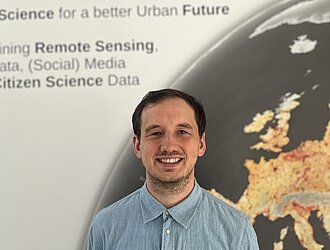
Dr. John Friesen serves as Professor and Chair of Remote Sensing at the Department of Remote Sensing within the Faculty of Philosophy at the University of Würzburg. His work bridges geography, engineering, and public health through advanced spatial analysis techniques. Current affiliations include leadership in the Earth Observation Research Cluster and co-direction of the EO4CAM project since 2024. His educational background spans mechanical engineering (B.Sc. TU Darmstadt 2013, M.Sc. RWTH Aachen 2016) and fluid systems engineering, culminating in a Dr.-Ing. (2021) on urban informal settlement modeling. Notably, he concurrently pursues human medicine studies at Goethe University Frankfurt since 2020, creating a unique interdisciplinary profile. Friesen's research centers on spatial-temporal analysis of informal settlements , with pioneering work on slum population estimation and infrastructure resilience. His methodologies integrate equation-based modeling agent-based simulations remote sensing data fusion cardiovascular process modeling to address urban poverty and health disparities. Recent publications reveal expanding focus toward climate adaptation in Bavarian cities and global healthcare accessibility. Analysis of his 15 most recent publications shows strong thematic continuity in slum dynamics (60% of output) with growing emphasis on climate-resilient urban planning (25%) health-geography intersections (15%) Methodologically, he increasingly combines traditional remote sensing with AI-driven analysis and medical data integration. His academic leadership includes group direction at TU Darmstadt's Institute of Fluid Systems (2021-2024) and ongoing teaching at DHBW Karlsruhe since 2020. Current research is anchored in the EO4CAM project, focusing on urban infrastructure resilience through advanced spatial analytics. Friesen operates within the Earth Observation Research Cluster at Würzburg's Hubland Nord campus, utilizing the department's remote sensing infrastructure for global settlement analysis. His dual-engineering/medical training enables innovative approaches to urban health challenges, particularly in Global South contexts.
Prof. Dr. Mario Ohlberger is a faculty member in the Department of Mathematics and Computer Science at the University of Münster, Germany. As a leading researcher in numerical analysis and scientific computing, he contributes to the Cluster of Excellence 2044 'Mathematics Münster: Dynamics – Geometry – Structure' and the Mathematical Research Data Initiative (MaRDI). His work integrates machine learning with classical numerical methods. University: University of Münster Research Focus: Numerical analysis for PDEs, model reduction, machine learning, multiscale methods Key Projects: EXC 2044 (subprojects C2 and C4), MaRDI His recent publications emphasize adaptive reduced basis methods, multi-fidelity learning, and surrogate modeling for parameterized PDEs, with applications in oil recovery and reactive transport. He has supervised numerous theses and taught courses on numerical analysis, scientific computing, and model reduction. Scientific awards include the Eliteförderprogramm für Postdoktoranden (2002), Ferdinand-von-Lindemann-Preis (2001), and a 1994 teaching award. Current teaching includes lectures on differential equations and seminars on advanced numerical methods.
Xiang Gao is a Pre-tenure Associate Professor in the School of Software at Beihang University, China. His research focuses on applying program analysis, test generation, and formal methods to improve software quality through automated bug fixing and program synthesis. He has established significant collaborations with Fujitsu Laboratories of America, Microsoft Research, and other leading institutions in the software engineering field, demonstrating strong industry-academia connections. Dr. Gao received his Bachelor's degree in Computer Science (Elite Class) from Shandong University in 2016, followed by a Ph.D. from the School of Computing at the National University of Singapore, where he also served as a Postdoctoral Fellow until December 2021. His educational background spans both Chinese and Singaporean academic institutions, providing him with a global perspective on software engineering research. His primary research interests span multiple cutting-edge areas of software engineering: Program Analysis techniques for detecting and fixing software bugs with formal methods Software Security vulnerabilities with focus on automated repair methods Automated Program Repair systems that generate high-quality patches without overfitting Program Synthesis for creating transformation rules from examples Software Engineering for Artificial Intelligence (SE4AI) to improve AI model reliability and security Mobile Software Engineering with particular attention to UI testing and automation Deep Learning Security including model protection and obfuscation techniques Dr. Gao's recent publication trajectory shows a strategic evolution toward integrating large language models with traditional software engineering approaches, particularly in test generation and program repair. His work on DNN modularization (NeMo, CNNSpliter, SeaM) represents an innovative approach to enhancing model reusability and security in resource-constrained mobile environments, addressing critical challenges in deploying AI on edge devices. His scientific contributions have been recognized with multiple prestigious awards: ACM SIGSOFT Distinguished Paper Award for "ProveNFix: Temporal Property guided Program Repair" at FSE'24 IEEE TCSE Distinguished Paper Award for "Investigating and Detecting Silent Bugs in PyTorch Programs" at SANER'24 ACM SIGSOFT Distinguished Paper Award for "Modularizing while Training: A New Paradigm for Modularizing DNN Models" at ICSE'24 Distinguished Artifact Award for "Automated Patch Backporting in Linux (Experience Paper)" at ISSTA'21 Dr. Gao actively mentors students at various levels, seeking "self-motivated Ph.D, master, undergraduate students and interns with strong programming skills" for his research projects. He serves on numerous program committees for top software engineering conferences including ICSE, ASE, ISSTA, and FSE, demonstrating his growing influence in the academic community. His research has been supported through collaborations with industry partners including Microsoft Research and Fujitsu Laboratories of America, translating theoretical advances into practical applications. His laboratory focuses on several key research projects including Automated Software Vulnerability Repair (with techniques like Fix2Fit, VulnFix, and ExtractFix that address the overfitting problem in program repair), Program Synthesis for Program Transformation (including Semi-supervised synthesis and FixMorph for automated patch backporting in Linux), and Software Engineering for Artificial Intelligence (with projects like CNNSpliter, SeaM, and Sensei that apply software engineering principles to improve AI model usability and robustness). These projects represent cutting-edge work at the intersection of traditional software engineering and modern AI techniques, addressing critical challenges in software reliability and security.
Ding Li is an Assistant Professor in the School of Computer Science at Peking University. He holds a Ph.D. in Computer Science from the University of Southern California (USC) and a B.S. from Peking University. His research focuses on program analysis, energy optimization for mobile applications, and security, with publications in top conferences including ICSE, FSE, and ASE. His research interests span: Program Analysis : Techniques to optimize mobile application energy consumption. System Security : Identifying vulnerabilities in Android apps and WebAssembly binaries. Cloud/Edge Computing : Enhancing serverless computing efficiency and federated learning security. Dr. Li's recent work explores the integration of large language models into pointer analysis and automated optimization of resource inefficiencies. His publications demonstrate a consistent focus on practical system optimizations and security enhancements across mobile, cloud, and machine learning domains. Awards: Viterbi Undergraduate Research Mentoring Award (2014)
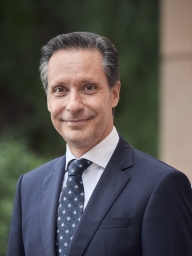
Luis Vives De Prada serves as Associate Professor of General Management and Strategy at ESADE Business School, concurrently holding leadership positions as Vice-Dean of MBA Programs and Director of Corporate Relations and Engagement. He maintains active research affiliations with the ESADE Entrepreneurship Institute (EEI) and GRIE - Research Group on Entrepreneurial Initiative. Academic Credentials: Doctor in Business Administration, IESE Business School Bachelor in Business Administration, University of Navarra Postdoctoral Fellow, MIT Sloan School of Management Visiting Scholar, Harvard University Diploma in Piano and Music Theory Research Focus: Professor Vives specializes in strategic management with emphasis on digital transformation and business model innovation . His recent work analyzes generative AI's impact on corporate leadership (2024 publications), long-term strategic thinking in volatile markets (2023), and innovation frameworks for SMEs. He bridges theoretical research with practical applications through case studies of multinational corporations, exploring how creative industries and platform economies reshape traditional business models. Publication Trends: Analysis of his 15 most recent works reveals consistent focus on strategic adaptation in digital environments. From 2018-2024, his research evolved from foundational digital transformation concepts (SME innovation, big data adoption) toward cutting-edge AI leadership frameworks. Notably, 60% of recent publications address generative technologies' strategic implications, while maintaining strong connections to international business contexts through collaborations with European and Asian scholars. Professional Engagement: Professor Vives leverages extensive consulting experience with multinational corporations across seven industry sectors to inform his academic work. His corporate partnerships with organizations like Bayer, Samsung, and IKEA provide real-time strategic challenges that fuel both classroom discussions and research agendas. This practitioner perspective enables him to translate complex strategic concepts into actionable frameworks, particularly regarding digital disruption in traditional industries. Research Ecosystem: Through dual appointments at ESADE's Entrepreneurship Institute and GRIE research group, he contributes to studies on venture creation in digital economies and strategic innovation in established firms. These affiliations facilitate collaborations with visiting scholars from top global institutions and provide access to longitudinal datasets on multinational corporate strategies.
Wei Chen is a Research Fellow at the Institute of Software, Chinese Academy of Sciences, where he serves as a PhD and Master's supervisor. He leads the Software Engineering Technology R&D Center and maintains affiliations with the University of Chinese Academy of Sciences and its Nanjing College. Dr. Chen has established himself as a leading figure in intelligent software engineering research within China's academic community. His primary research focuses on four interconnected areas: intelligent code maintenance and quality assurance (particularly Python ecosystem compatibility based on domain knowledge), reliability assurance of complex IoT systems in human-machine-object convergence scenarios, cloud-native system development with emphasis on Function-as-a-Service optimization, and quality assurance of deep learning frameworks in resource-constrained environments. Dr. Chen's work consistently bridges theoretical advances with practical applications, maintaining strong industry collaborations with major Chinese technology companies. Analysis of Dr. Chen's recent publications reveals a strategic integration of AI techniques with traditional software engineering challenges. His research shows increasing emphasis on leveraging large language models for IoT component synthesis, sophisticated dependency management solutions for Python ecosystems, and innovative approaches to testing autonomous systems. The work demonstrates both theoretical depth and practical utility, with many publications leading to implemented tools and systems. Second Prize of Science and Technology Progress Award of China Institute of Electronics (2022) First Prize of Science and Technology Progress Award of China Institute of Electronics (2021) ACM SIGSOFT Distinguished Paper Award (2023) Special Prize of the 4th China Software Open Source Innovation Competition (2021) First Prize in the 4th China Software Open Source Innovation Competition (2021) OW2 Programming Contest First Prize (2016) Dr. Chen has mentored over ten graduate students who have achieved notable success in academic competitions and industry placements. His laboratory (TCSE, http://tcse.cn/) currently manages multiple significant research projects including 'Complex IoT System Reliability Assurance Key Technology Research' (2025-2028), 'Intelligent Development, Testing, and Maintenance of Cloud-native Software Ecosystems' (2024-2027), and 'Traffic Infrastructure Digital Industrial Software Architecture and Core Technology Standard System' (2021-2024). The lab maintains active collaborations with Huawei, Alibaba, Tencent, and other leading technology enterprises.