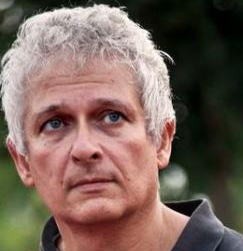
Vincenzo Caglioti is a Professor at the Department of Electronics, Information and Bioengineering (DEIB) of Politecnico di Milano. His research focuses on computer vision, robotics, and image processing, with emphasis on motion analysis, sensor fusion, and multi-robot systems. He has contributed extensively to fields such as augmented reality, motion blur recovery, and uncalibrated camera systems. Key research areas include: Development of algorithms for 3D reconstruction from motion-blurred images Design of efficient exploration strategies for mobile robots Integration of sensor data for environmental monitoring and autonomous navigation Analysis of geometric properties in catadioptric systems His work spans theoretical advancements in computer vision alongside practical applications in robotics and surveillance. Over 30 years of publications demonstrate a sustained contribution to advancing perception systems for autonomous systems. No scientific awards explicitly listed in provided texts Labs/Teams: Likely affiliated with DEIB's Robotics and Computer Vision research groups, though specific lab names not explicitly stated in text.
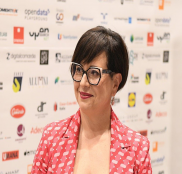
Sandra Notaro is a Full Professor in the Department of Economics and Management at the University of Trento. She holds a PhD in Environmental and Mountain Economics (1998) and a BSc in Economics (1993). Her academic career includes roles as Associate Professor (2014–2023), Researcher (2002–2014), and visiting positions at Colorado State University and the University of Wisconsin-Madison. Her research focuses on Agricultural Economics, Environmental Valuation, and Sustainable Development, with expertise in non-market valuation methods like Choice Experiments and Contingent Valuation. Notaro has supervised over 100 theses and contributes to international conferences, such as the European Association of Environmental and Resource Economists (EAERE) and the AIEAA. She is a member of editorial boards for journals like Sustainability and active in professional associations like IAERE and EAERE. Her awards include the Manlio Rossi-Doria National Prize (1999) and national scientific qualifications (2014, 2020). Her teaching spans undergraduate, postgraduate, and PhD levels in Environmental Economics, Natural Resource Management, and Policy Analysis. Research interests include wildlife conservation, climate change, and sustainable tourism, with recent work examining contextual priming effects and waste sorting systems.
Prof. Francesca DI VIRGILIO is a Full Professor at the Department of Economics, University of Molise. Her research focuses on organizational behavior, knowledge management, and digitalization in public administration. She explores topics like workplace spirituality, talent management, and the impact of social media on organizational performance. Her work often addresses challenges in healthcare management, higher education innovation, and SME competitiveness in Southern Italy. Her recent studies investigate knowledge donation/hoarding dynamics among high performers, digital transformation in public sectors, and the role of exponential technologies in ethical frameworks. She has contributed to understanding employee engagement in public organizations through bibliometric analyses and examined innovative work behaviors influenced by technological competencies in SMEs. Prof. DI VIRGILIO’s research bridges theoretical frameworks with practical applications, addressing post-pandemic challenges in talent management and learning organizations. Her work emphasizes the interplay between organizational culture, employee motivation, and policy implementation strategies in public and private sectors. Her publications span over two decades, with notable contributions to healthcare professional behavior, conflict management in workgroups, and the role of eWOM (electronic word-of-mouth) in tourism and consumer decision-making.
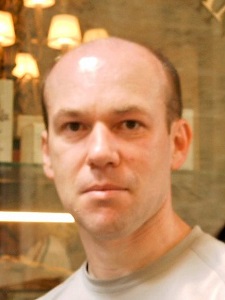
Michele Melchiori is an associate professor at the Università degli Studi di Brescia (Italy) since 1998, specializing in systems for information processing. He holds a PhD in Information Engineering from the University of Brescia and a Master's in Computer Science from the University of Milan. His research focuses on information systems design, semantic-based services, blockchain integration, and smart city technologies. Notable contributions include frameworks for smart contract design, blockchain applications in agri-food supply chains, and IoT-driven solutions for construction quality assurance. His work bridges theoretical advancements with practical implementations, spanning projects funded by collaborative initiatives. Key areas include personalized data exploration using semantic web technologies, trust management in decentralized systems, and healthcare applications like food recommendation systems. He has authored over 80 publications, emphasizing interdisciplinary approaches to data management challenges. Melchiori frequently contributes to academic events such as the Italian Symposium on Advanced Database Systems. His research bridges technical innovations (e.g., blockchain) with societal needs (e.g., smart city infrastructure and post-pandemic healthcare models).
Alessandro Mantelli serves as an Adjunct Professor at the Department of Asian and North African Studies, Ca' Foscari University of Venice. He specializes in Japanese language education with a focus on integrating technology into pedagogical practices. His research emphasizes sustainable e-learning systems, virtual reality applications, and digital tools for language acquisition. Mantelli teaches Japanese language courses at both undergraduate and postgraduate levels, including 'Lingua Giapponese' modules and 'Informatica (Giappone)' for specialized programs. Key contributions include the development of the JALEA e-learning platform, the Kanji Game application, and VR-based language learning tools. His work on the Bunparser system and the ITADICT dictionary project highlights expertise in computational linguistics and educational software. Recent publications address translation pedagogy, sustainable curriculum design, and advanced kanji learning strategies. Teaching responsibilities span multiple academic years across language proficiency courses, with a focus on structuring authentic learning experiences through technology. His research bridges language education theory with practical software development, aiming to enhance accessibility and engagement in Japanese language studies.
David Mark Katan is a Full Professor of English and Translation Studies at the University of Salento (Lecce), Italy, affiliated with the Department of Humanities. He teaches across undergraduate and graduate programs in Applied Languages, Translation, and Interpreting, specializing in translation theory, tourism translation, and intercultural mediation. His career includes previous roles as Associate Professor at Trieste University's Interpreters School (1998–2006). Research focuses on cultural aspects of translation, intercultural competence, and professional translation practices. Key areas include the dangers of translation, tourism communication, and the role of translators as cultural mediators. He has published extensively since the 1980s, with over 80 peer-reviewed articles and book chapters. Editor-in-Chief of Cultus, The Journal of Intercultural Mediation and Communication since 2008. Professional activities include PhD examining at international institutions, invited keynote speaking at conferences worldwide, and corporate training for companies like FIAT and Generali. He also provides translation consultancy services in intercultural communication and neurolinguistics programming. Teaching responsibilities include courses such as Translation Theories , Cross-cultural and Tourism Translation , and Tourism English . Office hours are primarily online, with occasional in-person availability at the Parangeli Building. His research emphasizes bridging gaps between translation theory and professional practice, addressing current challenges in globalized communication.
Isabella Morlini is an Associate Professor at the Department of Communication and Economics, University of Modena and Reggio Emilia. Her academic roles include teaching courses such as Multidimensional Data Analysis, Statistical Inference, and Statistics for Law students. She specializes in statistical methodologies applied to environmental science, education, and public health. Research Interests: Climate modeling, pandemic impact analysis, educational data challenges, dyslexia measurement, and fuzzy composite indicators. Teaching: Focuses on data analysis techniques for business, statistical inference, and environmental data interpretation. Her research highlights include analyzing urban climate changes in Modena, assessing risk factors for COVID-19 outcomes, and developing online health promotion programs. Collaborations span environmental scientists, public health experts, and educational technologists. Key methodologies involve nonlinear regression, cluster analysis, and fuzzy set theory. Publications emphasize statistical applications in diverse fields, with recent work addressing pandemic impacts and climate change mitigation strategies.
Gabriella Esposito is a Senior Researcher at the National Research Council of Italy (CNR) and a member of the Scientific Council of the Institute for Research on Innovation and Services for Development (IRISS) since 2015. An architect with a PhD in Urban Planning, she has led research since 1994 and coordinated projects since 2000, focusing on heritage-driven urban regeneration, multicultural cities, urban security, cohesion policies, and territorial balance. Senior Researcher, CNR-IRISS (2010–present) Member, Scientific Council of IRISS (2015–present) Member, AESOP Thematic Group on Public Space and Urban Culture (2010–present, Coordinator 2015–2019) Member, Council of Representatives of the Italian Scientific Society of Urban Planners (SIU) Her research intersects urban planning , cultural heritage , and sustainable development . She specializes in urban regeneration through participatory approaches, territorial equity in marginalized areas, and resilient resource management , particularly in coastal zones and multicultural cities. In 2023, her work included projects on sustainable fishing models, systematic literature reviews addressing territorial inequalities, and the 3R4UB initiative for circular resource use in Ulaanbaatar. Her recent publications emphasize collaborative governance , environmental awareness , and place-based regeneration . Esposito contributes to academic education via international programs, including IRSES Marie Curie projects and the International Doctorate in Urban Regeneration and Economic Development. She holds national scientific qualifications in urban planning (Second Band 2013, First Band 2023) and actively participates in conference committees, keynote speaking, and editorial activities.
Marco De Angelis is a Senior Assistant Professor (fixed-term) at the Department of Psychology 'Renzo Canestrari', University of Bologna. His research focuses on digital transition, human factors, occupational safety, and mental health at work. He leads the H-WORK project, a EU-funded initiative promoting mental health in SMEs and public workplaces through multilevel interventions. He is also involved in projects like Digi-B-Well, addressing digital wellbeing and SME digitalization. Education: PhD in Psychology (2019, University of Bologna), Master's in Work and Organizational Psychology (2013), and Bachelor's in Psychology (2011, Sapienza University of Rome). Professional experience includes roles in the Modena Local Health Authority (2013–2014) and the CE.TRANS research group (2014–2015). Research interests emphasize digital interventions for mental health, AI integration in workplaces, safety systems design, and compassionate healthcare organizations. He coordinates the LAV.OR.I.O. Research Lab, exploring work-related stress, organizational innovation, and human factors. Teaching activities span international programs in Work-Organizational Psychology, Chemical Innovation, and International Development. He supervises student theses on digital mental health, AI at work, and Industry 5.0 cognitive workload. Membership includes editorial boards for the International Journal of Environmental Research and Public Health , Human Factors and Ergonomics Society - Europe, and associations like EAWOP, SIOP, and EAOHP. He contributes to over 100 peer-reviewed articles and conference proceedings, focusing on workplace safety, technology acceptance, and mental health policies.
Luca Pareschi is an Associate Professor at the University of Rome Tor Vergata, specializing in Organization Studies. He teaches courses on HR Analytics, Digital Transformation, and Cultural Management in both undergraduate and graduate programs. His research focuses on organizational dynamics in cultural industries, public policy analysis, and innovative applications of topic modeling in humanities research. Key research interests include accessibility regulations in public spaces, heritage craft preservation, EU regional policy communication, and the impact of robotics on workplace organization. He actively contributes to interdisciplinary projects like PERCEIVE (analyzing EU cohesion policies) and MITAO (software for humanities text analysis). Recent publications explore tensions between tradition and innovation in cultural festivals, resistance to accessibility reforms, and the role of discourse in shaping organizational identities. His work bridges sociological theory with practical policy implications, particularly in areas of disability rights and small business compliance. He has served as a researcher on multiple EU-funded initiatives and maintains an active teaching portfolio across multiple academic programs.
Luigi Glielmo is a Professor of Automatic Control at the University of Sannio in Benevento, Italy. He holds a Master's and PhD in Electronic Engineering and Automatic Control from the University of Naples Federico II. Previously, he taught at the University of Palermo before returning to Naples. His academic leadership roles include Head of the Department of Engineering at University of Sannio (2001–2007), Rector’s Delegate for Technology Transfer (2009–2019), and Coordinator of PhD programs in Information Engineering and Information Technologies for Engineering. Research interests focus on automatic control engineering, including model predictive control, renewable energy systems, smart grids, robotics, biomedical applications (e.g., deep brain stimulation modeling), satellite autonomy, and Boolean control networks. He founded the GRACE research group and has authored over 190 papers, two books, and holds two patents. He is a Senior Member of IEEE, serves on the editorial board of IEEE Control Systems Letters, and chairs the IEEE Control Systems Society Technical Committee on Automotive Controls. Leadership roles include General Co-Chair of the 2019 European Control Conference and ordinary member of IFAC’s Conference Board. His work bridges theoretical advancements with practical applications in energy systems, robotics, and industrial automation.
Stefania Tamea is an Associate Professor at the Department of Environmental, Land and Infrastructure Engineering (DIATI) at the Polytechnic University of Turin. She is also a member of the Interdepartmental Center PIC4SeR - PoliTO Interdepartmental Center for Service Robotics. Her academic work centers on hydrological modeling, water resources, irrigation, and water footprint assessment, with a focus on climate change impacts. PhD in Water Engineering from Polytechnic University of Turin (2007) Scientific disciplinary sector: CEAR-01/B - Hydraulic and Maritime Construction and Hydrology (Area 0008 - Civil Engineering and Architecture) Her research interests include hydrological modeling, irrigation systems, water footprint, virtual water, remote sensing of water availability (especially in mountain and glacial regions), and climate change adaptation. She leads and participates in multiple research projects related to sustainable water management, drought risk modeling, and satellite-based monitoring of irrigation. Her work aligns with key Sustainable Development Goals, including SDG 6 (Clean Water), SDG 11 (Sustainable Cities), SDG 12 (Responsible Consumption), and SDG 13 (Climate Action). Her recent publications reflect a strong trend in integrating satellite data and statistical models to assess water availability, crop needs, and climate risks, particularly in agricultural and alpine environments. She focuses on both local and national scales, with significant contributions to understanding Italy’s water-food nexus and virtual water trade. Enrico Marchi lecture award (2015) WRR Editor's Choice Award (2015) She supervises several PhD students, including Martina Viscido, Emanuele Mombrini, Amirarsalan Shahmohammadi, and Elisabetta Corte, on topics ranging from drought risk modeling to proglacial hydrology. She is the scientific responsible for multiple funded research projects such as CliRA, MountResilience, and CONCERTO. She also contributes to departmental agreements and commercial research, including water and carbon footprint assessments for ski resorts and irrigation governance frameworks. Stefania Tamea is actively involved in the Glacier Lab (DIATI), a multidisciplinary research group focusing on mountain hydrology and environmental change. Her work combines field monitoring, remote sensing, and modeling to assess water resources under changing climatic conditions.
Giancarlo Fedeli is an Associate Professor at the University of Bergamo's Department of Business Management Sciences, combining expertise in business management, marketing, and tourism. His research explores technology's role in service industries, focusing on user experience, digital marketing, and social interactions, with notable publications in Annals of Tourism Research and Journal of Travel Research . PhD in Marketing (Glasgow Caledonian University) MSc in Tourism Destination Management (NHTV Breda University) Bachelor in Business Economics (University of Bologna) His work addresses misinformation in tourism, climate change impacts on attractions, and game theory applications for public sector promotion during crises. Research spans Europe, Asia, and Africa, emphasizing practical outcomes for stakeholders like the EU, UNESCO, and Mercedes-Benz through €2.5M+ in funded projects. Current teachings include CSR strategies, international marketing, and logistics. He facilitates workshops globally and has reviewed for top journals.
Fabio Tatano is an Associate Professor in Sanitary-Environmental Engineering at the University of Urbino Carlo Bo, where he conducts research on waste management, bioenergy production, and contaminated site remediation. His work focuses on sustainable approaches to environmental challenges, with particular emphasis on waste-to-resource conversion and risk assessment methodologies. Dr. Tatano earned his engineering degree with maximum honors (110/110) from the University of Palermo and completed his PhD in Sanitary-Environmental Engineering at the Technical University of Milan. During his doctoral studies, he conducted research on wastewater treatment and sludge management at Ruhrverband in Essen, Germany, a prestigious organization responsible for integrated water management in the Ruhr river basin since 1913. His research interests span landfill gas emission monitoring, integrated municipal and industrial waste management systems, bioenergy production through anaerobic digestion of organic waste, and advanced risk analysis for contaminated sites. Since May 2012, he has served as chairman of the European Technical & Scientific Committee at the European Water Association, demonstrating his leadership in the field. Analysis of his publication record reveals a consistent focus on practical waste management solutions with strong emphasis on characterization methodologies, resource recovery, and sustainability assessment. His work spans industrial, municipal, and agricultural waste streams, with increasing attention to circular economy principles and regional implementation strategies over time. Dr. Tatano teaches courses on Characterization and Recovery of Contaminated Sites and Resource Recovery from Waste for the Environmental Geology and Land Management degree program. His ongoing involvement in both teaching and research demonstrates his commitment to advancing sustainable environmental engineering practices through education and innovation.
Patrizia Accordino serves as an Associate Professor in Tax Law at the University of Messina's Department of Political and Legal Sciences. With extensive expertise in tax legislation and policy, she teaches TAX LAW and ELEMENTS OF TRANSNATIONAL TAXATION courses within the Political Science and International Relations program. Her academic journey includes a PhD in business income taxation within community tax systems, a Master in Tax Law, and legal practice certification. Professor Accordino's research focuses on contemporary tax challenges including tax self-regulation, procedural rights in tax proceedings, innovative entrepreneurship taxation, and the critical intersection of taxation with sustainability. Her recent publications (2023-2025) demonstrate growing specialization in environmental taxation, administrative transparency in tax systems, and digital economy tax implications, reflecting current global fiscal policy trends. She has received notable recognition including two BEST PAPER AWARDS from Cracow University of Economics (2017, 2019) and serves as a reviewer for international journals including SUSTAINABILITY. Her active engagement extends beyond academia through 45 documented public engagement activities including MEDNIGHT participation, school outreach programs, and organizing research valorization initiatives like 'Io e il Fisco'. BEST PAPER AWARD, Cracow University of Economics - Faculty of Management (2019) BEST PAPER AWARD, Cracow University of Economics (2017) Certificate in Advanced English C1, Cambridge University (2021) Reviewer for international journal SUSTAINABILITY (2020-present) Reviewer for World of Real estate Journal (2020-present) Professor Accordino has supervised numerous academic initiatives, serving as delegate for orientation and tutoring at her department from 2018-2024. Her extensive publication record of 84 works demonstrates consistent scholarly contribution to tax law, with recent emphasis on how fiscal policy can support sustainable development and address contemporary economic challenges. She actively bridges academic research with practical application through public engagement and educational outreach.