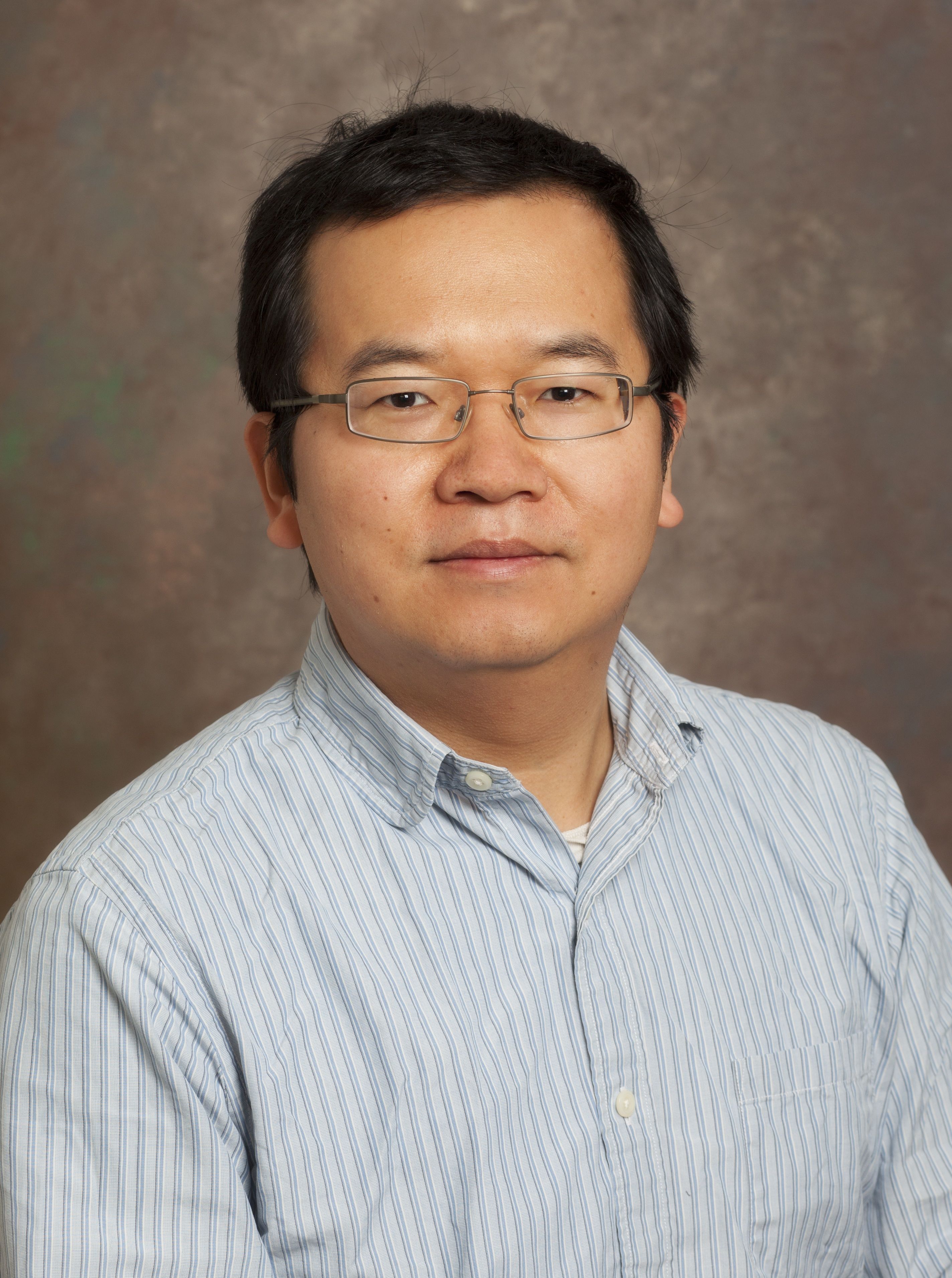
Yashar Ganjali is Professor in the Department of Computer Science at the University of Toronto, where he leads research on computer networks and distributed systems. His work focuses on improving efficiency in data center operations through innovative algorithmic approaches. Research areas include: Machine learning applications for network optimization SDN controller architectures and load migration Congestion control mechanisms for high-speed networks Data center traffic engineering and resource allocation Recent projects explore joint time-space scheduling for distributed ML training, network-aware transport protocols, and reinforcement learning for congestion management. His team collaborates with industry partners including Google to develop practical solutions for cloud infrastructure challenges.
Xiaoming Li is an Associate Professor in the Department of Electrical and Computer Engineering at the University of Delaware , focusing on compiler optimization, GPU computing, and hardware-software interaction. His work bridges machine learning with code generation to enhance program efficiency. B.S. and M.E. from Nanjing University (1998, 2001) Ph.D. in Computer Science from University of Illinois at Urbana-Champaign (2006) Research interests include: Compiler optimizations for static and dynamic code transformation Machine learning-driven code generation techniques FFT algorithms for sparse and hybrid systems Non-traditional compilers for SAT solvers and virtual machines GPU acceleration for large-scale computational problems His publications span 15 years , emphasizing: FFT optimization across GPU/CPU architectures Compiler techniques for heterogeneous systems Adaptive scheduling and error resilience Integration of empirical and model-driven approaches Notable awards: NSF CAREER Award (2008) Best Paper Award at ADAPT Workshop (2013) Advising highlights: Current students: Ryan Taylor, Sha Li, Shuo Chen, Yuanfang Chen, Chao Yang, Chaoyu Chen Graduates: Liang Gu (FFT Libraries), Jakob Siegel (GPGPU Frameworks), Murat Bolat (Context-Aware Compilation)
Nonhlanhla Dube is a Lecturer in Operations Management at Lancaster University's Management School. She holds a PhD from the University of Groningen and has extensive experience in humanitarian logistics and supply chain management, particularly in resource-poor settings and conflict zones. BSc (Hons) Applied Mathematics, National University of Science and Technology (2002–2006) BSc (Hons) International Business Administration, Vrije Universiteit Amsterdam (2008–2011) MSc Economics and Business, University of Groningen (2011–2013) PhD in Management Science, University of Groningen (2013–2022) Her research focuses on operations management in humanitarian and public sectors, including supply chain resilience, medicine shortages, and interdisciplinary approaches. She has contributed to projects such as the Gavi-funded Afghanistan vaccine initiative (2016–2021) and the MIA project on UK medicines supply (2020–2024). Her articles explore topics like supply chain resilience in healthcare, strategic agility in medicine systems, and paradox management in humanitarian logistics. She actively collaborates on Global South perspectives addressing supply chain challenges like child labor and sustainability. No scientific awards are explicitly mentioned, but her work emphasizes impactful research in humanitarian and public sector operations. She supervises PhD student Henry Kasadha and is involved in research groups like the Chartered Institute of Logistics and Transport in the UK.
Niels Agatz is a Full Professor of Last-mile Supply Chain Analytics at the Rotterdam School of Management (RSM), Erasmus University, and Scientific Director of TKI Dinalog, a national research funding institute. His work bridges academia and industry, focusing on sustainable urban logistics, shared mobility, and online retailing analytics. He holds a PhD in Logistics from RSM and an MSc in Industrial Engineering from Eindhoven University of Technology. Research interests include optimizing last-mile supply chains through technology-driven solutions, with emphasis on sustainability and operational efficiency. Notable contributions include frameworks for demand management and transportation-enabled services. His work aligns with UN Sustainable Development Goals related to responsible consumption and climate action. Editorial roles include Area Editor for Transportation Science . Awards include the INFORMS TSL Stella Dafermos Achievement Award (2022) and NWO Rubicon Grant. Collaborations span institutions like Georgia Tech and the Pontifical Catholic University of Chile. Recent publications address home delivery systems, sustainable supply chains, and pickup/delivery optimization. Labs/Teams: Directs TKI Dinalog, collaborates with industry partners to translate research into practical logistics solutions.
Jonas Eliasson is a Visiting Professor at Linköping University's Department of Science and Technology (ITN), focusing on Communications and Transport Systems. He concurrently serves as Director of Transport Access at the Swedish National Transport Administration and chairs the Planning & Construction committee of the Royal Academy of Engineering Sciences. Previously, he was Director of the Stockholm City Transportation Administration (2016–2019) and a professor at the Royal Institute of Technology (KTH) from 2007 to 2016. His research emphasizes transport policy design and evaluation, including cost-benefit analysis, transport pricing, railway capacity allocation, and public acceptability of policies. He advises governments on sustainable transport planning, congestion pricing, and socio-economic appraisals. His work bridges theoretical frameworks and practical implementation, with a focus on accessibility, equity, and climate targets. Key research themes include infrastructure cost overruns, traffic demand reduction strategies, and the integration of passenger and freight transport systems. Recent publications analyze policy impacts, forecasting methods, and carbon-neutral transportation systems. His interdisciplinary approach addresses both technical and socio-political dimensions of transport challenges. Eliasson collaborates with research groups like Railway and Public Transport and contributes to initiatives like the 'Next Generation Smart Transportation Systems' project. Despite extensive professional roles, no formal student advisees are listed. His work is disseminated through journals like Transportation Research Part A and policy reports for national and regional governments.
Stefan Krastanov is an Assistant Professor at the University of Massachusetts Amherst, focusing on quantum hardware design, control, and optimization across multiple layers of quantum computing and networking technologies. His work bridges physical hardware descriptions with logical circuit compilation, emphasizing resilience in noisy quantum systems. Research Interests include Quantum Hardware Design, Entanglement-Based Networking, Quantum Error Correction, and Modeling Software for Quantum Systems. His primary lab is the Quantum Information Lab , with affiliations to the Advanced Classical and Quantum Information Research Lab. Recent work trends highlight advancements in quantum repeater networks, error-corrected compilation, and photonic neural networks. His publications span topics like non-Markovian dynamics simulation, NP-hard optimization in quantum dot arrays, and scalable spin quantum memory control. Labs and Teams: Quantum Information Lab (leading experimental/theoretical work) and collaborations through the Advanced Classical and Quantum Information Research Lab.
Thom de Vries is an Associate Professor at the University of Groningen's Faculty of Economics and Business, based in the HRM & Organizational Behavior department. He also serves as Program Director for the Master of Science in Human Resource Management and holds a lecturer position in Industrial Engineering Management. His expertise focuses on organizational resilience, team boundary spanning, and infrastructure management. He holds a Ph.D. in Business Administration (cum laude) from the University of Groningen (2015), with prior experience as a Business Researcher at TNO and academic leadership roles in program committees. Education highlights include: Ph.D. in Business Administration (cum laude), University of Groningen (2015) Res. M.A. and M.A. in Business Administration (cum laude), University of Groningen (2011, 2009) B.A. in Public Administration, Thorbecke Academie (2007) Research interests emphasize team dynamics in complex environments, particularly: Resilience and adaptability in critical infrastructure organizations Boundary spanning across teams/organizations Design of multiteam systems for complex tasks Disruption management in supply chains Notable projects include the NGinfra-funded ConCorCom initiative studying coordination during infrastructure challenges, and NWO grants exploring resilience and decision-making under uncertainty. His work has earned awards like the Academy of Management Best Paper Award and multiple teaching recognitions. Grants include: NGINFRA/NWO: ConCorCom (Context, Coordination, Competencies) NWO VENI: Team Boundary Spanning in Disruptions NWO: Resilience-Efficiency Balance in Planning Teaching roles span disciplines including Organizational Behavior, Survey Research, and Experimental Design across faculties. He actively supervises research master students and contributes to executive education programs.
Mehdi Boussebaa is a Professor of International Management at the Adam Smith Business School, University of Glasgow. He leads the International Business and Enterprise Research Cluster and serves on the Management Subject Leadership Team. Prior to Glasgow, he held academic positions at the University of Bath School of Management (2008–2016), where he received multiple research awards. He completed a PhD in Management at the University of Warwick (2008) and a postdoctoral fellowship at Oxford Saïd Business School (2009). Education: PhD Management (Warwick, 2008), Postdoc (Oxford Saïd, 2009) Research Focus: Globalization, postcolonial theory, decolonizing management, professional service firms, and language politics His research bridges international business, organization studies, and critical management studies. Key themes include neo-colonialism in global business practices, Eurocentrism in management knowledge, and the role of English as a 'global' language. His work has been published in top-tier journals like Human Relations , Journal of International Business Studies , and Organization Studies . Recent articles explore topics such as transnational corporate power, West-centrism in professional service firms, and decolonizing international business education. He has received prestigious recognitions including the Carolyn Dexter Award (finalist) and multiple Dean’s Awards for Research Excellence. Editorial Roles: Co-Editor-in-Chief of Critical Perspectives on International Business , Editorial Board member of Human Relations , Journal of Management Studies , and others. Grants: Leverhulme Small Research Grants (2020, 2023), Research Seed Corn Fund Awards (2011, 2013). Visiting Positions: Universities in Canada (Alberta), China (Tongji, UIBE), France (Aix-Marseille), and Sweden (Lund). Brisly Jannatul Ferdous is a current doctoral supervisee exploring identity regulation in multinational enterprises. Mehdi teaches global business and management courses, emphasizing interdisciplinary and critical perspectives.
Michael Ward is a Professor in the Department of Economics at Monash University, with a joint appointment at the Monash Sustainability Institute. His research focuses on applied microeconomics and econometrics, particularly addressing environmental and resource sustainability challenges such as water management, pollution regulation, land use policies, and biodiversity conservation. He joined Monash in 2012 after faculty positions at ANU and UC Berkeley. Ward has led multiple research projects, including the RACE for 2030 CRC (Cooperative Research Centre) and adaptive urban water management initiatives. He has been recognized with the 2008 Best Economics Paper Award from the Agricultural and Applied Economics Association for his work on food safety and nutrition. His research outputs span 23 peer-reviewed articles, including influential studies on regulatory compliance mechanisms, water pricing strategies, and biodiversity conservation. Ward collaborates internationally and contributes to the UN Sustainable Development Goals related to climate action and sustainable cities. Projects : RACE for 2030 CRC (2020–2031), Adaptive Urban Water Management (2012–2017), and household electricity use research (2022). Awards : 2008 Best Economics Paper Award for work on food safety and nutrition. Labs/Teams : Monash Sustainability Institute, interdisciplinary collaborations on energy and environmental policy.
Prof. Jerzy Bański is a retired Professor and former Head of the Department of Rural Geography and Local Development at the University of Warsaw's Faculty of Geography and Regional Studies. His academic career spans over three decades with a PhD (1996) and post-doctoral degree (2000) in Earth Sciences, specializing in economic and rural geography. He has led 48 research projects and supervised 5 PhD and 43 MSc students at Maria Curie-Skłodowska University in Lublin. His research focuses on land use dynamics, rural development, spatial planning, and socioeconomic processes in Central and Eastern Europe. Notable contributions include analyzing post-socialist agricultural transformations, village decline, and pandemic spatial impacts. He authored 421 publications, including 151 in English, and received the Jan Olaf Chmielewski Science Award (2001) and Honorary Membership in the Bulgarian Scientific Society. Key projects include classifying rural areas for territorial policy, assessing pandemic geography, and evaluating agricultural land ownership changes. His work frequently intersects with policy design, institutional analysis, and interdisciplinary collaboration in academia. Awards: Jan Olaf Chmielewski Science Award (2001), Honorary Membership (Bulgarian Scientific Society) Grants: 48 projects led, including EU and national funding Education: MA (University of Warsaw), postgraduate studies in scientific photography
Dr. Liu Yang is an Associate Professor jointly appointed in the Department of Civil and Environmental Engineering and the Department of Industrial Systems Engineering and Management at the National University of Singapore (NUS). She holds a B.S. from Tsinghua University, an MPhil from the Hong Kong University of Science and Technology, and a Ph.D. from Northwestern University. Her research focuses on urban mobility and transport systems, including ridesharing, carsharing, traffic congestion management, and data-driven modeling. She leads the Lab for Urban Mobility Systems (LUMOS), comprising 15 members. Dr. Liu serves on editorial boards of journals like Transportation Science and Transportation Research Part C, and holds leadership roles in professional organizations such as the Chinese Overseas Transportation Association (COTA). Her work has been published in top journals including Transportation Research Part A/B/C/E and Transportation Science. Key awards include the CICTP Best Area Editor Award (2022) and the Faculty Teaching Excellence Award (2022). Her research is funded by agencies like the US Federal Highway Administration and Singapore's Ministry of Education. Education: B.S., Civil Engineering, Tsinghua University (2005) M.Phil., Civil Engineering, Hong Kong University of Science and Technology (2007) Ph.D., Transportation System Analysis and Planning, Northwestern University (2013) Professional Activities: Associate Editor, Transportation Science Co-Chair, WTC Shared Logistics and Transportation Systems Committee Member, Transportation Research Board Committee AP020 and AEP40 Her publications emphasize optimization, dynamic systems, and policy analysis in transportation networks. Recent work explores autonomous vehicles, incident-responsive traffic management, and shared mobility systems. She advises students on topics like ridesharing algorithms and congestion pricing strategies.
Guodong Shi is Associate Professor at the University of Sydney's Australian Centre for Robotics, heading the Centre for Robotics and Intelligent Systems. His research develops theoretical frameworks for multi-agent coordination, distributed optimization, and networked control systems. Current projects investigate collective decision-making under information constraints, privacy-preserving optimization, and game-theoretic formulations for social and robotic networks. His group develops algorithms for distributed solution of linear equations, Boolean networks, and equilibrium seeking. Doctoral supervision includes projects on acrobatic legged robots, reinforcement learning for robotic stability, and safe control under dynamic environments. Laboratory capabilities support theoretical and experimental validation. Research has applications in autonomous swarm robotics, smart grid optimization, and social network analysis. Teaching includes graduate courses on networked systems and optimization.
David Wentzlaff is a Professor of Electrical and Computer Engineering at Princeton University, with associated faculty roles in Computer Science and the High Meadows Environmental Institute (HMEI). He leads research in computing architecture, green computing, and sustainable system design. As Director of Undergraduate Studies, he shapes educational programs in his field. Education: Ph.D., Electrical Engineering, MIT (2012) M.S., Electrical Engineering and Computer Science, MIT (2002) B.S., Electrical Engineering, University of Illinois at Urbana-Champaign (2000) Research Focus: Future Computing Systems: Designing manycore architectures, cloud computing infrastructure, and chiplet-based systems for exascale computing. Sustainability: Developing energy-efficient hardware, recyclable computing systems, and eco-friendly decommissioning strategies. Hardware-Software Co-Design: Exploring FPGA integration, in-memory computing, and parallel processing frameworks. Advising & Grants: Advises 8 current graduate students, focusing on topics like chiplet design, neural acceleration, and sustainable computing. Recipient of NSF grants for projects like OpenPiton (open-source manycore research platform) and CAREER awards for energy-efficient architectures. Labs & Collaborations: Leads the Wentzlaff Research Group at Princeton. Develops open-source frameworks like PRGA (FPGA prototyping) and OpenPiton (manycore processor).
Professor Daniel Oron is affiliated with the University of Sydney, where he joined in 2004 after completing his PhD in Operations Research at the Hebrew University of Jerusalem. His research focuses on Combinatorial Optimization, particularly Scheduling Theory, addressing challenges like batch scheduling with setups, customer delivery models, and scheduling under deteriorating conditions. He teaches courses such as Quantitative Business Analysis, Management Science, and Business Analytics Honours. His editorial role includes serving on the board of the Journal of Industrial & Management Optimization . Recent research contributions span multi-agent scheduling, energy recharging in scheduling, and coupled task optimization. He advises two current PhD students: Johnson (Two-agent scheduling problems) and Renjie Yu (Multi-agent scheduling with parallel batching). Publications highlight advancements in scheduling algorithms, resource allocation, and optimization under constraints. Notable works include minimizing late jobs with step-learning models and analyzing parameterized complexity in single-machine scheduling.
John Finn serves as Associate Professor and Department Chair of the Department of Sociology, Social Work and Anthropology at Christopher Newport University's College of Arts and Sciences. He holds joint appointments with the Honors Program, Center for Crime Equity and Justice Research and Policy, and Center for Sustainability in Education. PhD in Geography, Arizona State University MA in Geography, University of Missouri BA in International Studies, University of Missouri Finn's research examines the socioeconomic, environmental, and health consequences of persistent racial segregation in the United States, with particular focus on Hampton Roads, Virginia and Latin American contexts including Cuba and Brazil. His work integrates urban geography, environmental justice, and human-environment interaction through field research methods. His 2024 solo exhibition 'Living Apart: Geography of Segregation in the 21st Century' at the Virginia Museum of Contemporary Art demonstrates his innovative approach to translating academic research into public engagement. Finn's recent publications reveal strong thematic focus on urban renewal impacts, environmental justice mapping, and Latin American geographies, with increasing emphasis on climate gentrification and spatial epidemiology. 2024 SCHEV Outstanding Faculty Award (Virginia's highest faculty honor) 2021 Alumni Society Award for Teaching and Mentoring 2020 Faculty Excellence Award in Scholarship Class of 2013 Faculty Development Award (2019) Finn has secured over $200,000 in research funding and delivered more than 100 invited lectures across North America, Latin America, and Europe. His work bridges academic research and practical applications through partnerships with medical schools, planning associations, and environmental organizations. He maintains active research teams focused on mapping segregation patterns and analyzing environmental health disparities in coastal Virginia.