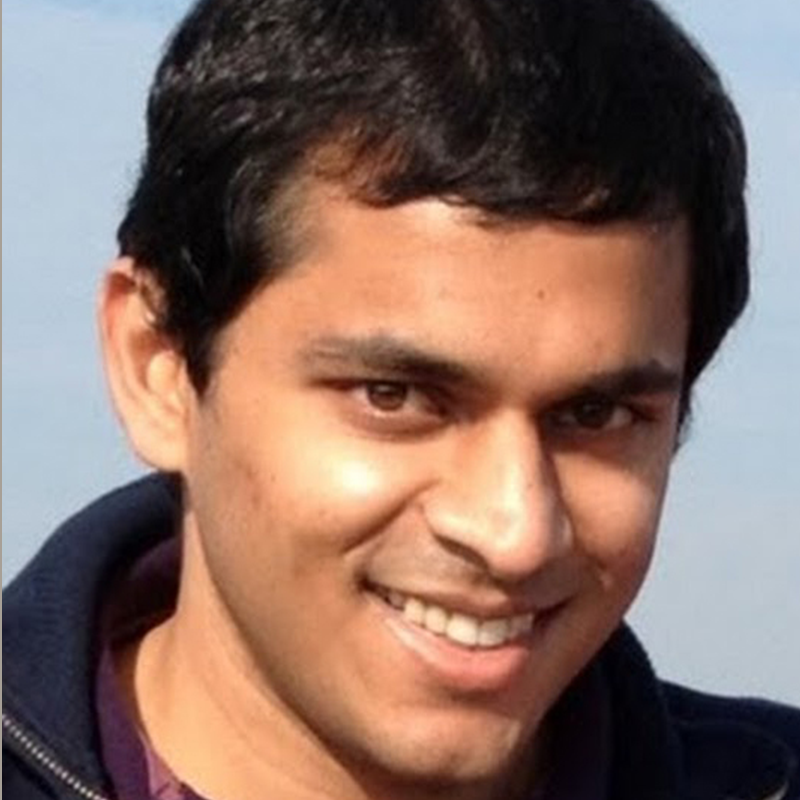
Yogananda Isukapalli is a Teaching Professor and Vice Chair in the Computer Engineering Program at the Electrical and Computer Engineering Department , University of California, Santa Barbara . He joined the faculty in Winter 2017 after a career as a staff scientist at Broadcom (2010–2017), where he designed Wi-Fi chips (11n/11ac/11ax) and worked on underwater wireless communication models during a postdoctoral stint at Scripps Institution of Oceanography (2009–2010). His PhD in Communication Theory and Systems from UC San Diego (2009) forms the basis of his expertise in wireless systems and digital design .
Adam Marcus is an Associate Professor of Architecture at Tulane University School of Architecture and serves as Research Director of the Center on Climate Change and Urbanism. He directs Variable Projects, an award-winning design and research studio operating at the intersection of architecture, computation, and fabrication, and is a partner in Futures North, a public art collaborative dedicated to exploring data aesthetics. His educational background includes: Master of Architecture from Columbia University Bachelor of Arts from Brown University Adam's research focuses on critical approaches to design computation, digital fabrication, and robotics, exploring how these technologies enable new modes of ecological, material, and public engagement. His work particularly emphasizes climate adaptation, buoyant ecologies for sea level rise, computational representation, and multispecies architecture. He integrates these interests through practical design-build projects that address ecological challenges while advancing architectural representation and fabrication techniques. His recent publications demonstrate a strong emphasis on computational approaches to architectural representation and ecological design. The works consistently explore the intersection of digital technologies with ecological imperatives, particularly focusing on climate adaptation strategies, multispecies collaborations, and innovative drawing protocols that bridge analog and computational paradigms. His book 'Drawing Codes' represents a significant contribution to rethinking architectural drawing in the computational age. Notable awards include: Selected as one of the '30 Most Admired Educators' by Design Intelligence (2013) Recipient of the New Faculty Teaching Award from the Association of Collegiate Schools of Architecture (2016) Adam has served on ACADIA's Board of Directors from 2015 to 2021 and currently serves on the editorial board of the International Journal of Architectural Computing. His teaching at Tulane includes design studios and courses in computational design and digital fabrication with ecological applications, building on his decade of experience at California College of the Arts where he co-founded the Architectural Ecologies Lab. He leads research initiatives through Tulane's Center on Climate Change and Urbanism, developing practical design solutions for ecological challenges, particularly those related to climate change and sea level rise. His Buoyant Ecologies Float Lab project exemplifies this approach, creating 'optimized upside-down benthos for sea level rise adaptation' that has received attention from major media outlets including Smithsonian Magazine and Architectural Record.
Adriana I. Kovashka is an Associate Professor in the Department of Computer Science at the University of Pittsburgh's School of Computing and Information. She serves as Chair of the Department of Computer Science. Her research focuses on computer vision, machine learning, and their intersections with human-machine communication and visual rhetoric analysis. Kovashka earned her BA in Computer Science and Media Studies from Pomona College (2008) and her PhD in Computer Science from the University of Texas at Austin (2014). She joined Pitt in 2015. Her work emphasizes improving image retrieval systems through semantic attributes, human-in-the-loop feedback, and crowd-sourced data. Notable projects include analyzing advertisements' persuasive strategies, developing object detection models resilient to domain shifts, and exploring multimodal learning with linguistic and visual inputs. She has secured significant grants, including NSF awards for geographic diversity in object detection (2023), CAREER funding for weak supervision methods (2021), and multiple Google Faculty Research Awards. Kovashka advises PhD students on topics ranging from multimodal intent modeling to domain generalization. She has organized workshops on advertising understanding and subjective attributes in vision conferences. Her lab's datasets, such as the 64,832-image ad repository and video ad collections, are widely used in vision research. Recent efforts include quantifying perceptual diversity in multilingual systems and mitigating bias in CNNs through shape regularization. Awards and recognitions include the NSF CAREER Award, Pitt's CRDF grants, and leadership roles in CVPR and WACV conferences. Her research bridges technical innovation with societal impact, addressing challenges in visual communication, ethical AI, and educational robotics.
Edwin Olson is an Associate Professor of Computer Science and Engineering at the University of Michigan, where he directs the APRIL Robotics Lab. He also serves as CEO of May Mobility Inc., a company focused on developing driverless shuttles. His research spans autonomy, perception, robotics, and learning, with notable contributions to technologies like AprilTags and the LCM middleware. Olson has led groundbreaking projects, including the 2010 MAGIC competition-winning robot team and the DARPA Urban Challenge. He has been recognized with awards such as Popular Science's 'Brilliant Ten' (2012), the DARPA Young Faculty Award (2013), and the College of Engineering Education Excellence Award (2015). His work emphasizes real-world applications of autonomous systems, including risk assessment, multi-policy decision making, and sensor fusion. Recent articles focus on autonomous agent behavior prediction, remote assistance systems, and infrastructure calibration. Olson's academic contributions are complemented by industry roles, including his tenure at Toyota Research Institute as Co-Director for Autonomous Driving Development. Education: PhD in Computer Science from MIT (2008) Key Projects: MAGIC 2010, DARPA Urban Challenge, Toyota Research Institute Labs: APRIL Robotics Lab Awards: DARPA Young Faculty Award, Brilliant Ten, Education Excellence Award
Zhong-Ping Jiang is an Institute Professor at New York University Tandon School of Engineering, affiliated with the Department of Electrical and Computer Engineering, and holds cross appointments in Civil and Urban Engineering. He leads the Control and Network (CAN) Lab and contributes to research centers like the Center for Advanced Technology in Telecommunications (CATT) and C2SMARTER. His work focuses on nonlinear control, adaptive dynamic programming, and learning-based control with applications to autonomous systems, urban mobility, and computational neuroscience. He serves as Deputy Editor-in-Chief of the IEEE/CAA Journal of Automatica Sinica and has held editorial roles in multiple journals. Research interests include model-based and learning-based control for network systems, with emphasis on robotics, connected vehicles, and urban infrastructure. His contributions to nonlinear small-gain theory and robust reinforcement learning have advanced control methodologies for complex systems. Recent publications highlight trends in resilient control under cyberattacks, data-driven optimal control, and reinforcement learning applications in traffic signal optimization and autonomous driving. His work bridges theoretical advancements with real-world challenges in transportation and cyber-physical systems. Awards: Elected to the European Academy of Sciences and Arts (2024). Grants/Projects: Includes RAPID-funded studies on high-resolution agent-based modeling of epidemic spread and NSF-supported research on urban traffic networks. Labs/Teams: CAN Lab (focusing on control theory and networked systems), CATT (telecommunications innovations), and C2SMARTER (urban mobility solutions).
Sohmyung Ha is an Associate Professor of Electrical Engineering and Bioengineering at NYU Abu Dhabi and holds a Global Network position at NYU Tandon School of Engineering. He leads the Integrated BioElectronics Laboratory, focusing on advancing silicon integrated technologies for biomedical applications such as implantable devices and wearable sensors. His expertise spans biomedical circuits, neural interfaces, and wireless power systems. Education: MS (2004, KAIST), PhD (2016, UC San Diego) with a Best Thesis Award. Prior industry experience includes analog circuit design at Samsung Electronics (2006-2010). Academic affiliations include NYU Abu Dhabi, NYU Tandon, and global collaborations. Research interests include high-performance biomedical sensors, neural prosthetics, and energy-efficient bioelectronic systems. Notable achievements include a Best Paper Award (ISCAS 2024) and innovations in impedance spectroscopy and neural interface ICs. Current projects emphasize closed-loop neural interfaces, subcutaneous glucose monitoring, and retinal prostheses. His lab develops miniaturized, power-autonomous systems for healthcare applications.
Cathryn Mitchell is a Professor of Radio Science and Royal Society Industry Fellow at the University of Bath, specializing in ionospheric physics, position, navigation, and timing (PNT). She leads research in the Space & Telecoms Research Group (STAR), focusing on radio propagation, data assimilation, and space weather impacts on communication systems. Her work bridges theoretical, computational, and experimental approaches, with applications in satellite navigation, climate monitoring, and defense sectors. Her research interests include ionospheric tomography, HF communications, and the development of robust PNT systems. Mitchell collaborates extensively with industry partners like Spirent Communications on future navigation technologies and space weather resilience. She has held roles such as Academic Director of the Doctoral College and contributes to interdisciplinary projects like the DRIIVE initiative exploring ionospheric variability with EISCAT-3D radar. Recent work emphasizes ionospheric effects during geomagnetic storms (e.g., the 2024 Gannon Storm) and cooperative autonomous systems under communication constraints. Her projects are funded by the Royal Society, Natural Environment Research Council (NERC), and ESA, addressing challenges in space weather forecasting and PNT system reliability. Awards: Royal Society Industry Fellow (2022–present) Key Projects: Royal Society Industry Fellowship on Future PNT Technologies DRIVERS (DRIIVE): Ionospheric Variability Studies EISCAT-3D FINESSE: Ionospheric Structuring Analysis Mitchell’s lab, STAR, integrates academic and industrial partnerships to advance space weather applications and sustainable navigation systems, contributing to UN Sustainable Development Goals related to climate action and innovation.
Serkut Ayvasik is a Researcher at the Chair of Communication Networks at Technical University Munich (TUM). He joined TUM in March 2019 as a research and teaching associate, following his M.Sc. in Communications Engineering (2019) and B.Sc. in Electrical and Electronics Engineering (2016) from Middle East Technical University. His research focuses on: Wireless Network Resource Management for heterogeneous latency-critical 5G applications Channel State Information Prediction using depth images Network Slicing and Quality of Service optimization Machine Learning for proactive network configuration Telemedicine Applications in cross-border communication Key article trends include 5G/6G technology , IoT sustainability , digital twins , and haptic feedback systems . He contributes to IEEE and ACM journals, with recent work on Digiot (2025) and OCTOPUS (2024). Collaborations include researchers like Wolfgang Kellerer (Chair), Edwin Babaians , Alba Jano , and Fidan Mehmeti . His work spans projects such as 6G Future Lab Bavaria , DFG GGI QCDE , and ERC FlexNets .
James Anderson is an Assistant Professor in the Department of Electrical Engineering at Columbia University, with affiliations to the Data Science Institute (DSI) and multiple research centers including the Computing Systems for Data-Driven Science and Foundations of Data Science. Prior to Columbia, he was a Senior Research Scientist at Caltech’s Computing + Mathematical Sciences division (2016–2019) and held a Junior Research Fellowship at the University of Oxford’s Department of Engineering Science (pre-2012). He earned his DPhil (PhD) in Engineering Science from Oxford in 2012. His research focuses on optimal/robust control theory, mathematical programming, data privacy, and cyber-physical systems, with applications in smart grids, systems biology, and power systems. Recent work emphasizes energy storage strategies, distributed control algorithms, and cybersecurity in critical infrastructure. His publications span advanced control methodologies (e.g., reinforcement learning for LQR problems), energy market dynamics, and resilient system designs. Notable contributions include frameworks for decision-focused energy storage arbitrage and defenses against false data attacks in power grids. He actively collaborates on federated learning approaches for distributed systems and has pioneered techniques for system-level synthesis in cyber-physical architectures. Anderson’s affiliations include the Data Science Institute (DSI) and specialized centers focused on data-driven science and energy systems. His work bridges theoretical control advancements with real-world applications in energy and healthcare.
Ted Brekken is Professor of Energy Systems at Oregon State University, where he co-directs the Wallace Energy Systems and Renewables Facility (WESRF). His research advances renewable energy technologies with focus on wave energy conversion and grid integration. Current projects include control optimization for wave energy converters using machine learning, reinforcement learning for marine turbine durability, and hybrid simulations for floating offshore wind turbines. His work addresses critical challenges in power quality, fault resilience, and energy storage for marine renewable systems. Recent publications demonstrate innovation in real-time wave prediction, power electronics durability, and earthquake resilience for power grids. Brekken has received the NSF CAREER award and IEEE PES Outstanding Young Engineer honor for sustainable energy contributions. He teaches power electronics and energy conversion while leading DOE-funded marine energy initiatives.
Petteri Nurmi is a Professor of Computer Science at the University of Helsinki, affiliated with the Department of Computer Science and the Helsinki Institute of Sustainability Science (HELSUS). His research focuses on IoT systems, environmental monitoring, AI-driven solutions, and sustainable computing. He leads projects such as the NordForsk-funded initiative (2024-2028) and the Team Finland Knowledge programme (2024-2026), emphasizing large-scale IoT deployments and quantum computing integration. Key research interests include drone-based air quality monitoring, low-cost sensor networks, and AI applications in environmental science. Nurmi has published extensively in top venues like IEEE IoT Journal and ACM workshops. His work bridges technical innovation with societal challenges, such as urban pollution reduction and sustainable resource management. He supervises doctoral students in the Computer Science program and collaborates internationally on projects like underwater plastic detection (SEAGULL) and smart city infrastructure. Nurmi’s contributions to edge computing and pervasive sensing have been recognized through grants totaling over €2M. His lab develops tools for data-intensive systems, including thermal imaging for energy efficiency analysis and AI-driven sensor fusion frameworks.
Marios Polycarpou is a Professor of Electrical and Computer Engineering and Director of the KIOS Research and Innovation Center of Excellence at the University of Cyprus. He holds honorary positions at Imperial College London and is a member of Academia Europaea. His expertise spans intelligent systems, adaptive control, machine learning, and critical infrastructure. Education: B.A. Computer Science (Rice University, 1987) B.Sc. Electrical Engineering (Rice University, 1987) M.S. Electrical Engineering (University of Southern California, 1989) Ph.D. Electrical Engineering (University of Southern California, 1992) Research Focus: Polycarpou’s work emphasizes fault diagnosis in cyber-physical systems, water distribution networks, and adaptive control. He pioneers digital twin technologies for infrastructure resilience and develops algorithms for real-time anomaly detection and system optimization. Article Trends: His recent publications address adaptive control strategies, cybersecurity in networked systems, and AI-driven solutions for water management. Key themes include distributed control, event-triggered mechanisms, and transformer-based anomaly localization. Awards: 2023 IEEE Frank Rosenblatt Technical Field Award 2016 IEEE Neural Networks Pioneer Award Fellow of IEEE and IFAC Grants & Leadership: He secured prestigious grants including ERC Advanced and Synergy Grants. He led KIOS CoE’s Horizon 2020 projects and served as IEEE Computational Intelligence Society President (2012–2013). Labs & Teams: Directs the KIOS CoE, a hub for AI in critical infrastructure. Collaborates on projects like ERC Water-Futures, focusing on long-term water system transitions and contamination mitigation.
Andrea Goldsmith is the Dean of the School of Engineering and Applied Science and the Arthur LeGrand Doty Professor of Electrical and Computer Engineering at Princeton University. Previously, she held the Stephen Harris Professorship at Stanford University and remains Harris Professor Emerita there. Her research focuses on information theory, communication theory, signal processing, and their applications to wireless communications, interconnected systems, and neuroscience. She founded Plume WiFi and Quantenna, Inc., and serves on the boards of Medtronic and Crown Castle Inc. Education: B.S., M.S., and Ph.D. in Electrical Engineering, University of California, Berkeley (1986–1994) Research Interests: Her work bridges theoretical foundations with practical applications in wireless systems, including MIMO communications, cognitive radio, and the integration of machine learning in communication protocols. She also explores the intersection of wireless technology with biomedical systems and neuroscience, emphasizing innovations like smart buildings and in-body networks. Key Contributions: Authored seminal textbooks, including Wireless Communications and MIMO Wireless Communications . Inventor on 29 patents, with significant industry impact through startups. Recipient of prestigious awards such as the IEEE Sumner Award, ACM Athena Lecturer Award, and Marconi Prize. Labs & Leadership: Leads the Wireless Systems Lab at Princeton, advancing cutting-edge wireless technologies. Chair of the IEEE Board of Directors Committee on Diversity, Inclusion, and Ethics.
Vyas Sekar is the Tan Family Professor of Electrical and Computer Engineering at Carnegie Mellon University (CMU), with a courtesy appointment in the Computer Science Department. He is affiliated with CyLab and co-directs the Future of Enterprise Security initiative. His research focuses on networking, cybersecurity, distributed systems, and IoT security, with an emphasis on data-driven approaches and network verification. Education: Ph.D. in Computer Science (2010) from CMU; B.Tech. from IIT Madras (President of India Gold Medal recipient). Professional roles include Chief Scientist at Conviva and co-founder of Rockfish Data. Research Interests: Cybersecurity, network security, software-defined networking (SDN), IoT security, DDoS defense, privacy-preserving data sharing, and network performance optimization. Recent work includes developing tools like Pigasus (FPGA-accelerated intrusion detection), Nomad (cloud side-channel mitigation), and frameworks for anomaly detection in IoT networks. Articles Trends: Recent publications address advanced threats like LLM-driven network attacks, stealthy automotive network exploits (CANDid), and optical-layer DDoS defenses. Emphasis on practical solutions (e.g., SketchPlan for telemetry, Pryde for firewall evasion detection). Awards: ACM SIGCOMM Test of Time Award (2022), IIT Madras Young Alumni Achiever Award (2022), Intel Outstanding Researcher Award (2021), and NSF CAREER Award (2016). Recognized for contributions to intrusion prevention, network security, and IoT resilience. Grants & Projects: Led NSF-funded ONSET project (optical-layer DDoS defense), CyLab's Secure IoT Initiative, and collaborations with industry partners like Intel, Facebook, and Nokia Bell Labs. Advises graduate students in cybersecurity and networking. Labs & Teams: Active contributor to CyLab, co-developer of frameworks like Lumos (hidden IoT device detection) and KalKi (IoT security platform). Engages in interdisciplinary research across CMU’s Robotics Institute and Software Engineering Institute.
Dr. Mahendra Bhandari is an Assistant Professor at Texas A&M AgriLife Research and Extension Center in Corpus Christi, affiliated with the Texas A&M College of Agriculture and Life Sciences. He holds a B.S. in Agriculture from Tribhuvan University (2011), an M.S. in Plant, Soil and Environmental Science from West Texas A&M University (2016), and a Ph.D. in Agronomy from Texas A&M University (2020). Affiliations: Texas A&M AgriLife Research, Texas A&M College of Agriculture and Life Sciences Roles: Lead researcher in Digital Agriculture, UAS-based phenotyping, and precision agriculture His research focuses on integrating remote sensing (UAS, satellite, ground sensors), big data analytics, and machine learning to improve crop management and breeding. Key areas include high-throughput phenotyping for cotton, corn, and sorghum; UAS data integration for crop yield prediction; and digital twin frameworks for in-season management. Collaborators include Dr. Juan Landivar-Bowles and Dr. Jinha Jung. Publications emphasize UAS applications in crop monitoring, yield estimation, and disease detection. His work bridges agronomic principles with emerging technologies to enhance agricultural resilience. Key Projects: UAS-based HTP system development Satellite-UAV data fusion for precision irrigation Mechanistic models for cotton yield forecasting Labs/Teams: Leads the Digital Agriculture research team at Texas A&M AgriLife, focusing on UAS innovation and AI-driven agricultural solutions.