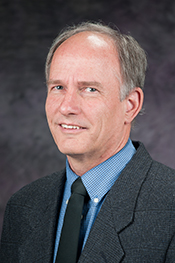
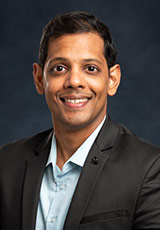
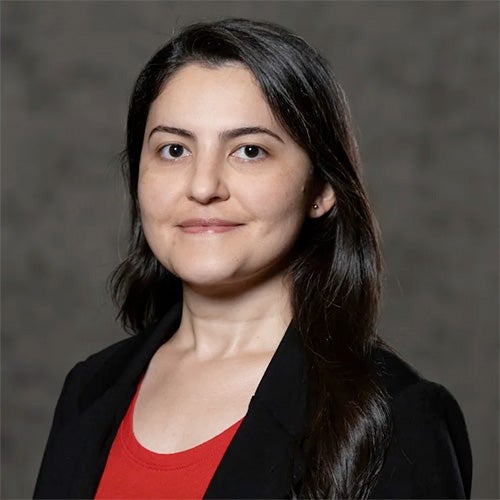
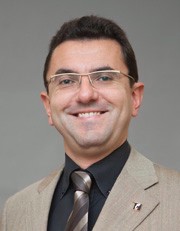
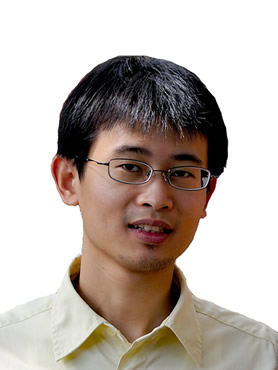
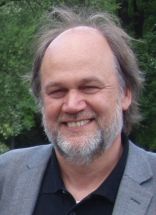
Rosental Alves is a Professor at the University of Texas at Austin's School of Journalism and Media, holding the Knight Chair in International Journalism. A former managing editor of Brazil's Jornal do Brasil , he founded the Knight Center for Journalism in the Americas. He earned a BA from Rio de Janeiro Federal University and was a Nieman Fellow at Harvard. His research explores international reporting, Latin American press freedom, digital journalism innovation, and media democratization. He created UT Austin's first online journalism course and advises global media organizations. Recent publications focus on journalist safety in Brazil, media innovation in Latin America, and digital transitions in news. Awards include the Nieman Fellowship and Knight Chair endowment. He leads training initiatives through the Knight Center, impacting thousands of journalists globally. No specific students or labs are detailed.
Dr. Emily Burchfield is an Assistant Professor in the Department of Environmental Sciences at Emory University, where she leads the FACES (Food, Agriculture, Climate, Environment, and Sustainability) Lab. Her research integrates social and environmental data to study agricultural sustainability, with projects focused on land use change, climate adaptation, and rural livelihoods. She holds a PhD in Environmental Engineering from Vanderbilt University and MA in Economics from the University of Louvain. Her work examines how agricultural systems adapt to climate change, the characteristics of productive and resilient farming, and drivers of cultivation and conservation behavior. Dr. Burchfield's research combines geospatial analysis with qualitative methods to understand agricultural transitions at multiple scales. Recent publications explore crop diversification, agricultural data practices, and rural livelihoods. Her group develops computational tools for agricultural analysis and collaborates with farming communities to support sustainable transitions.
Jun Shen is a Professor at the School of Computing and Information Technology, University of Wollongong. He specializes in computational intelligence, cloud computing, and big data applications, with a focus on AI-driven solutions for real-world challenges in transport systems, healthcare, education, and environmental management. He has secured over 40 research grants totaling AU$4.5 million and supervised 26 completed PhD projects. His work spans interdisciplinary areas including bioinformatics, smart manufacturing, and digital health. Research interests include bio-inspired algorithmic optimization, AI in arts/media, and edge computing for IoT systems. He has pioneered research centers in applied computing since 2014 and holds editorial roles in top journals like IEEE Transactions. As an IEEE Distinguished Lecturer, he actively promotes AI ethics and interdisciplinary collaboration. Recent publications emphasize adversarial machine learning defenses, UAV systems, and multimodal data fusion. His supervision includes projects in intelligent transport systems, cloud computing, and e-learning. Grants include projects on resilient energy systems and UAV geolocation verification. Leadership roles include leading over 20 researchers and chairing conferences. He advocates for digital transformation in public services and has conducted fieldwork at MIT, UCI, and Georgia Tech.
Mitchell L. Neilsen is a Professor in the Department of Computer Science at Kansas State University's College of Engineering, where he also serves as the graduate program director. He holds the Warren and Gisela Kennedy - Carl and Mary Ice Keystone Research Scholar position and maintains an active research program with multiple ongoing projects. His educational background includes a Ph.D. in Computer Science (1992), M.S. in Computer Science (1989), and M.S. in Mathematics (1987), all from Kansas State University, plus a B.S. in Mathematics Education from the University of Nebraska-Kearney (1982). After beginning his career as an assistant professor at Oklahoma State University, he returned to K-State in 1996. Research Interests: Cyber-Physical Systems: Design, Analysis, Verification of systems integrating computing, networking, and physical processes Distributed Systems: Algorithms, design, and analysis of distributed computing systems Scientific Computing: Computational Fluid Dynamics, Finite Element Analysis, High Performance Computing, and Simulation Application Areas: Agriculture technology, Dam safety analysis, Mobile applications, Natural resources management, and Real-time Embedded Systems His research program shows clear evolution toward agricultural technology applications, particularly high-throughput phenotyping, while maintaining strong foundations in cyber-physical systems and scientific computing. Recent publications indicate increasing integration of machine learning and computer vision techniques into traditional research areas. Research Funding: National Science Foundation U.S. Department of Agriculture Sandia National Laboratories Department of Homeland Security Private industry partners Dr. Neilsen has mentored numerous graduate students through their M.S. and Ph.D. programs, with recent advisees focusing on applications in agricultural technology, dam safety, and embedded systems. His advising approach emphasizes practical applications of theoretical computer science concepts. Current Teaching (Fall 2024): CIS 450 - Computer Architecture and Operations CIS 625 - Concurrent Software Systems CIS 720 - Advanced Operating Systems
Shivam Saxena is an Assistant Professor in the Department of Electrical and Computer Engineering at the University of New Brunswick, located in Head Hall D65, Fredericton. His research focuses on smart grid technologies, including distributed energy resource integration, blockchain applications for energy trading, electric vehicle-grid interactions, and resilient microgrid design. This work addresses decarbonization challenges through technological and market innovations. Publications demonstrate a strong emphasis on real-world implementation, with field-tested solutions for V2X integration, blockchain-based transactive energy, and distributed control systems. Recent work explores novel applications in agricultural energy management and trust mechanisms for decentralized systems.
Duncan Koerber is an Associate Professor at Brock University’s Department of Communication, Popular Culture and Film. He holds a PhD from York University and Ryerson University, an MA in Journalism from the University of Western Ontario, and a BA in English, Professional Writing, and Political Science from the University of Toronto. His research focuses on crisis communication theory, writing pedagogy, and media/journalism history. He teaches courses on business communication, public relations, and crisis communication. Education: PhD, Communication & Culture, York University and Ryerson University MA, Journalism, University of Western Ontario BA, English, Professional Writing & Political Science, University of Toronto Research Interests: His work examines how media shape political identities (e.g., early Canadian newspapers’ role in party formation), modern crisis communication in social media, and writing pedagogy. He investigates why social media crises are so damaging to organizations and explores historical media’s role in political discourse. Recent projects include analyzing municipal pandemic communication and sports crisis management. Publications: Koerber authored Crisis Communication in Canada (2017, UTP) and co-edited a 2020 Canadian Journal of Communication special issue on crisis theory. His research appears in top journals like Public Relations Review and Journal of Canadian Studies . Teaching & Advocacy: He emphasizes practical writing skills for professional contexts. Courses include business communication strategies and crisis management frameworks for organizations facing reputational threats. Labs/Teams: No dedicated lab, but collaborates with Brock’s Communication Research Group on interdisciplinary projects.
Esra Agca Aktunc serves as a Senior Lecturer in the Department of Industrial and Systems Engineering at Rensselaer Polytechnic Institute (RPI), teaching core courses including Introduction to ISE, Production and Operations Management, Facilities Design, Operations Research Methods, and Engineering Data Analytics across undergraduate and graduate programs. Her educational qualifications include: Ph.D. in Industrial and Systems Engineering from Virginia Polytechnic Institute and State University (2013) M.Sc. in Industrial and Systems Engineering from Virginia Polytechnic Institute and State University (2011) B.Sc. in Industrial Engineering from Bilkent University (2008) Dr. Agca Aktunc's research integrates optimization, simulation, and data analytics across disaster management, healthcare systems, and energy systems . Her work addresses critical challenges including hospital evacuation logistics, pandemic impacts on energy infrastructure, and natural gas management under uncertainty, employing advanced analytical methods to solve resource-constrained real-world problems in dynamic environments. Publication analysis reveals a strategic research evolution: early work (2013-2019) focused on disaster response logistics and healthcare operations, while recent publications (2020-2025) demonstrate increased specialization in energy systems, particularly electricity and natural gas demand forecasting during crises like the COVID-19 pandemic. This progression highlights her adaptive application of operations research to emerging societal challenges. No scientific awards were mentioned in the provided text. Information regarding student advising and research grants was not included in the available materials, though her extensive teaching portfolio indicates significant educational contributions.
Dr. Lalita Sah is an Assistant Professor in Public Health at the University of Bradford's Faculty of Health Studies, affiliated with the Area School of Nursing & Healthcare Leadership. She holds a medical degree, PhD, and MSc in Public Health, and is a Fellow of the Higher Education Academy (FHEA). Her career includes roles at Global Banking School (Leeds), Calderdale College, and Canterbury Christ Church University, focusing on health and social care education. Her research emphasizes maternal health, mental health, global health disparities, and migrant health, driven by her doctoral work on mental health factors among pregnant women in Nepal. She currently leads two major research projects: exploring male partner involvement in maternal healthcare for Asian populations in West Yorkshire and coping strategies among older Asian migrants managing social isolation. Teaching focuses include modules on mental health wellbeing (HWS5010-B), global public health, and health equity (HWS4502-B). She has published 10 peer-reviewed articles and one book chapter, with notable work on refugee healthcare access and the impact of the pandemic on Nepalese health systems. Awards include the FHEA recognition for teaching excellence. She actively supervises PhD candidates in maternal health, mental health, and global health equity.
Gian Andrea Rassati is an Associate Professor in the Department of Civil Engineering at the University of Cincinnati, affiliated with the College of Engineering, Architecture and Art (CEAS). He holds a PhD in Structural Engineering from the University of Trieste (2001) and is licensed as a professional engineer in Italy. His research focuses on steel and composite structures, seismic design, bolted connections, and dynamic behavior of structures. He is an active member of organizations such as the American Society of Civil Engineers (ASCE) and the Research Council on Structural Connections (RCSC). Dr. Rassati has led or collaborated in over a dozen research grants since 2005, including projects funded by the National Science Foundation, Federal Highway Administration, and industry partners like the American Institute of Steel Construction. His work addresses critical issues in structural engineering, such as bolted connection reliability, seismic characterization of structures, and innovative coupling beam systems for damage mitigation. His publications span topics like seismic performance of moment-resisting frames, prying models for T-stub connections, and composite slab behavior under seismic loading. He has advised numerous collaborative research efforts and contributed to advancements in structural design codes and standards.
Ji Liu is an Associate Professor in the Department of Electrical and Computer Engineering at Stony Brook University. He is affiliated with the Department of Applied Mathematics and Statistics, the Institute for AI-Driven Discovery and Innovation, and the Institute for Engineering-Driven Medicine. He holds a Ph.D. from Yale University and completed postdoctoral research at the University of Illinois at Urbana-Champaign and Arizona State University. His research focuses on distributed control, multi-agent systems, distributed optimization, and cyber-physical systems, with applications to social networks, epidemic models, and quantum networks. Key areas of investigation include consensus algorithms, network topology design, and resilient reinforcement learning. Recent work explores topics like entanglement routing in quantum networks, decentralized multi-armed bandits, and bi-virus disease dynamics. His contributions span theoretical frameworks and practical implementations in domains such as smart grids, medical prosthetics, and secure microgrid control. Education: Ph.D. in Electrical Engineering, Yale University (201X) Postdoctoral Research: UIUC (Coordinated Science Lab), ASU (School of ECEE) Labs: Active in distributed systems, quantum control, and networked epidemic modeling
Jun Yan is an Associate Professor and Concordia University Research Chair in Artificial Intelligence in Cyber Security and Resilience at the Concordia Institute for Information Systems Engineering (Concordia University). His research focuses on cybersecurity, smart grid systems, and AI-driven solutions for energy and communication networks. He supervises graduate students in programs such as Information Systems Security (MASc), Computer Science (MCompSc), and Information and Systems Engineering (PhD). Research Highlights : Cybersecurity of distributed energy systems, AI penetration testing frameworks, and resilient transactive energy markets. Awards : Holds a prestigious university research chair in AI-driven cybersecurity. His work integrates machine learning with domain-specific challenges in smart grids, IoT security, and multi-agent systems. Notable contributions include frameworks for detecting adversarial attacks on power systems, optimizing renewable energy integration, and developing AI tools for penetration testing. His articles reflect a strong emphasis on interdisciplinary solutions blending cybersecurity, energy systems, and advanced computing. Yan’s research also addresses policy and infrastructure challenges in sustainable energy systems, including waste management policy analysis and optimal configuration of hybrid renewable systems. He has pioneered open-source co-simulation platforms like PEMT-CoSim and Quantum-Sim for secure energy trading and quantum communication in grids. He actively engages in grant-funded projects and advises on both academic and applied aspects of cybersecurity and intelligent systems.
Rebecca Dziedzic is an Assistant Professor in the Department of Building, Civil, and Environmental Engineering at Concordia University. Her research focuses on asset management, water system sustainability, and infrastructure resilience. She holds a PhD in Civil and Environmental Engineering from the University of Toronto. Dr. Dziedzic's work integrates machine learning, data science, and policy analysis to address challenges in urban infrastructure systems. Her research explores topics such as water distribution network optimization, climate change adaptation in infrastructure, and circular economy strategies for construction. Recent projects include predicting water main breaks using multivariate models, developing frameworks for energy-efficient pump operation, and assessing carbon footprints in industrial facilities. Dr. Dziedzic supervises graduate students in Civil Engineering (MASc/PhD) and maintains an active research group through the UrbanLinks initiative. Her work has been published in over 30 peer-reviewed articles, with a strong focus on smart city technologies, disaster risk reduction, and sustainable infrastructure design.
Prof. Volker Grimm is a Professor in the Department Ecological Modelling at the Helmholtz Centre for Environmental Research (UFZ) in Leipzig, Germany. His research focuses on developing and applying ecological models to understand complex environmental systems, with a strong emphasis on individual-based and agent-based modelling approaches. Key areas include pattern-oriented modelling for predictive environmental decision-making, ecological theory exploration (e.g., resilience and stability), and model standardization through protocols like ODD. He leads projects such as VIBee (honeybee vitality monitoring) and BioDT (Biodiversity Digital Twin), leveraging AI and simulation models like BEEHAVE and FORMIND. Active in interdisciplinary initiatives like CauSES (causality in sustainability science), Grimm bridges ecological and social sciences. His work addresses global challenges like pesticide risk assessment, invasive species management, and climate change impacts on ecosystems. Notable achievements include the ODD protocol for model documentation, advancing ecological informatics, and contributions to EU projects such as CREAM (pesticide risk assessment) and BioDT (supercomputing for biodiversity). Collaborations span institutions like FORMIND and EcoEpi, with a focus on open-access publishing and model reusability.
Lesia Mitridati is an Assistant Professor at the Department of Wind and Energy Systems, Technical University of Denmark (DTU). Her research focuses on optimizing energy systems, particularly in renewable energy integration, energy market design, and prosumer behavior modeling. She leads and collaborates on projects involving smart grids, distributed energy resources, and privacy-preserving market mechanisms. Her work contributes to UN Sustainable Development Goals related to affordable and clean energy. Key projects include AI-driven electricity market optimization, hydrogen-wind trading strategies, and risk-aware energy communities. She supervises multiple PhD students in areas like VPP bidding strategies and market-based heat-electricity coordination. Dr. Mitridati has published widely on energy communities, grid services, and reinforcement learning applications. Notable contributions include dynamic pricing frameworks for grid services and privacy-preserving market mechanisms. She co-organizes annual DTU summer schools on future energy systems and AI-driven optimization. Her research integrates machine learning with operational research techniques to address challenges in renewable energy integration, market design, and system resilience. Current initiatives focus on electrolyzer plant bidding strategies and feature-driven trading of renewable resources.
Mike Barnes is Professor in the Power Conversion group at the University of Manchester's School of Electrical and Electronic Engineering. He holds a BEng and PhD from the University of Warwick and is a Fellow of IET, IEEE, and HEA. His research focuses on power electronics applications in HVDC transmission, offshore wind energy integration, smart grids, and energy storage optimization. He has supervised over 24 doctoral students and serves as Associate Editor for IEEE Transactions on Energy Conversion. Barnes investigates high-voltage power conversion technologies to enhance renewable energy utilization and grid stability. His work spans semiconductor-based systems, advanced control strategies, and multi-scale modeling to reduce costs and improve efficiency in energy infrastructure. Current projects include grid-scale storage interfacing and power electronic transformers. Recent publications demonstrate his focus on real-time simulation of energy storage, stability analysis of HVDC systems, and thermal management of power modules. This research addresses critical challenges in renewable integration and grid resilience. IEEE Transactions Prize Paper (2012-13) IEEE Transactions Energy Conversion Best Paper (2018-19)