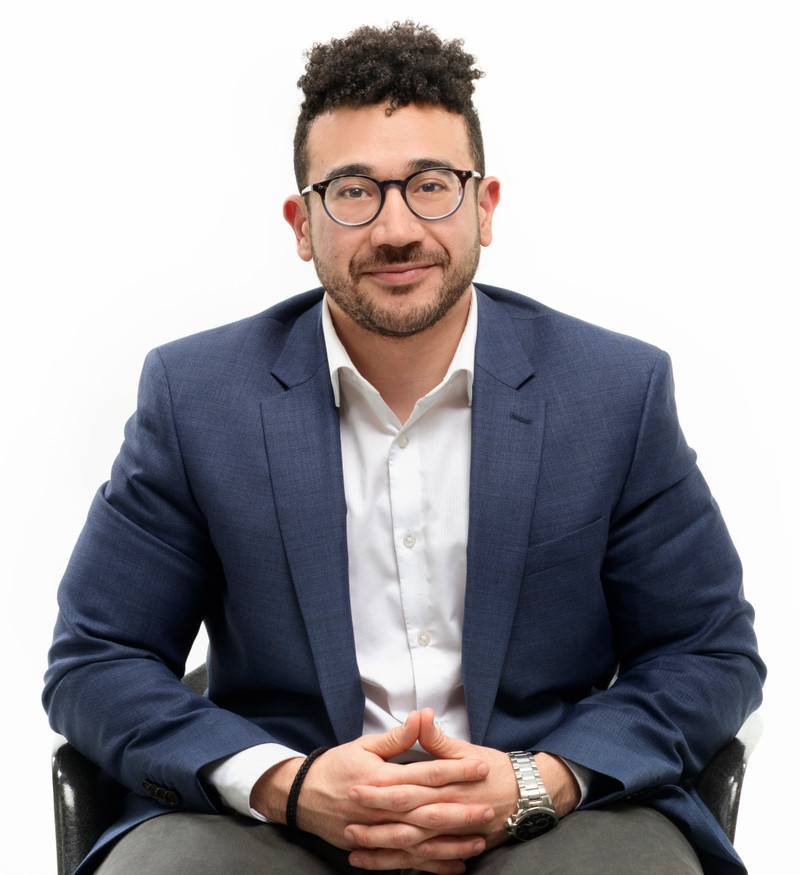
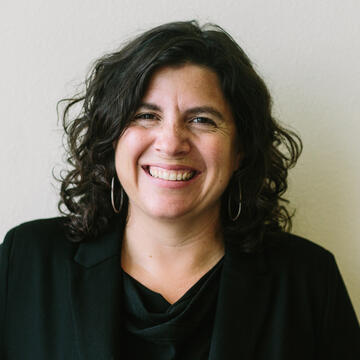
Hector Rivera is an Associate Professor in the Department of Educational Psychology at Texas A&M University’s College of Education and Human Development. His research focuses on bilingual education, educational resilience, classroom learning environments, and community development, particularly for English Language Learners (ELLs). He has advised doctoral students such as Bizhu He and Lileana Rios-Ledezma. His work bridges sociocultural perspectives with practical interventions to support underrepresented groups, including refugees and minority students. Awards include the 2015 Outstanding New Faculty Award from CEHD. Key research initiatives include the Eco-Resilience NPD program (2016-2021), funded by the US Department of Education, aimed at connecting multiple environments to support ELL success. Other projects address teacher performance evaluation and STEM pathways for Hispanics. Rivera has held leadership roles like Chair of the Climate Committee in EPSY (2016) and Co-Chair of the NABE Special Interest Group (2015). Publications span topics like parental involvement in bilingual education, teacher empowerment, and the impact of learning environments on student resilience. His work often emphasizes culturally responsive practices and systemic equity in education.
Dr. Shadi Beshai is an Associate Professor in the Department of Psychological Science at Kennesaw State University and director of the Mindfulness Engagement and Cultural Adaptation (MECA) Lab. His research focuses on culturally adapting evidence-based psychological treatments for depression and anxiety, particularly for underserved populations such as Indigenous communities, educators, and law enforcement. He has led large-scale trials assessing mindfulness-based interventions (MBIs) in diverse international settings, including Canada, the UK, and Iran, funded by organizations like the Canadian Institute of Health Research (CIHR) and Saskatchewan Health Research Foundation (SHRF). Education: Dr. Beshai holds a Ph.D. in Clinical Psychology (2015) from the University of Calgary, an M.Sc. in Clinical Psychology (2010), and a B.A. (Honors) in Psychology (2008) from York University. He is a registered doctoral clinical psychologist in Saskatchewan (since 2018). Research Interests: Dr. Beshai prioritizes bridging mental health disparities through scalable interventions. Key areas include treatment adaptation mechanisms (e.g., self-compassion, cultural beliefs), public literacy about interventions, and digital platforms for accessibility. His work emphasizes reducing stigma via psychoeducation framing and improving intervention messaging. Editorial Roles: He serves as Associate Editor for Mindfulness (Springer) and the International Journal of Cognitive Therapy . His lab (MECA) explores cultural adaptation strategies, digital mental health tools, and resilience in high-stress professions like public safety. Grants & Partnerships: His research has been supported by CIHR and SHRF. Collaborations include projects with Canadian public safety personnel and international teams in Iran and the UK.
Professor Sujana Adapa is a Professor and Head of the UNE Business School at the University of New England. She specializes in Management (Strategy & Marketing) and teaches courses such as Strategic Marketing and Consumer Behaviour. Her research focuses on SMEs, corporate social responsibility (CSR), technology adoption, and gender diversity. She holds a BSc (Ag), MSc (Ag), MBA (India), and PhD (UNE). **Education**: BSc (Agriculture) MSc (Agriculture) MBA (India) PhD (University of New England) **Research Interests**: Consumer studies, gender research, technology adoption, regional entrepreneurship, SMEs, sustainability, and CSR. Current projects include studies on women’s career progression in accounting firms and CSR practices in SMEs across Australia, Malaysia, and India. **Awards**: 2016 ANZAM Educator of the Year 2016 Australian Awards for University Teaching Citation 2016 HEA Senior Fellowship (UK) Multiple LearnX Awards (2015–2016) **Grants and Roles**: Grants totaling over $1M in areas like workplace safety, innovation ecosystems, and inclusive workplaces. Deputy Head of School (2019), Course Coordinator (2017–2019), and equity committee roles. Editorial roles for journals like Small Enterprise Research . **Teaching and Leadership**: Awards include the 2017 UNE Teaching Excellence Award for multimedia-enhanced teaching. She supervises HDR students in marketing, consumer behavior, and SME innovation.
Dr. Sara Schmitt is the Bricker-Squires Faculty Chair in Early Intervention and an Associate Professor in the Department of Special Education and Clinical Sciences at the University of Oregon's College of Education. She holds affiliations with the Prevention Science Institute and the Prevention Sciences Graduate Program. Her research focuses on early childhood self-regulation, social-emotional development, and school readiness, particularly for underserved populations. Dr. Schmitt designs evidence-based interventions, such as the Early Learning Matters curriculum implemented in military child development centers. She has received accolades including the 2021 Society for the Study of Human Development Early Career Award and the 2021 Purdue University Trailblazer Award. Education: Ph.D., 2013, Human Development and Family Sciences, Oregon State University M.A., 2009, Developmental Psychology, San Diego State University B.A., 2003, Psychology, University of Wisconsin-Madison Research Interests: Dr. Schmitt investigates contextual and individual predictors of self-regulation, designs interventions to strengthen skills in disadvantaged children, and examines factors impacting school readiness. Her work emphasizes low-cost, scalable strategies and policy implications for educational equity. Publications: Her recent work includes studies on preschool program efficacy, block play’s impact on math skills, and the role of classroom quality in social-emotional development. These contributions underscore her focus on translational research bridging theory and practice. Awards & Grants: Funded by federal agencies and foundations, her research addresses socioeconomic disparities in early learning. She leads training initiatives for educators and has authored over 30 peer-reviewed articles. Labs/Teams: Active in the Prevention Science Institute and the Ballmer Institute Leadership Council, she collaborates on multidisciplinary teams advancing early childhood policy and practice.
Peter Newman, Ph.D., serves as Dean of the Rubenstein School of Environment and Natural Resources at the University of Vermont since July 1, 2024, and holds the Suzie and Allen Martin Professor title. With a career spanning decades, he has conducted extensive research on visitor management in protected areas, soundscape management, and transportation planning, partnering with the National Park Service's Natural Sounds and Night Sky Division since 2012. Education Ph.D. in Natural Resources, University of Vermont M.S. in Forest Resource Management, SUNY College of Environmental Science and Forestry B.A. in Political Science, University of Rochester His research focuses on social carrying capacity decision-making in protected area management, with fieldwork across major U.S. parks including Denali, Grand Canyon, and Great Smokies. He has developed frameworks for acoustic management and Leave No Trace efficacy, contributing to sustainable outdoor recreation practices. Scientific Awards: Cooperative Ecosystem Studies Unit National Award (2012) George Wright Society National Award for Achievement in Social Sciences (2013) Throughout his career, Newman has led high-quality teaching at Penn State's Graduate Degree Program in Acoustics and mentored numerous students through research projects on wildlife approach norms, pandemic recreation shifts, and waste management strategies in national parks. He previously served as a Park Ranger in Yosemite and Backcountry Patrol member in Idaho.
Andres Kwasinski is a Professor in the Department of Computer Engineering at Rochester Institute of Technology (RIT), part of the Kate Gleason College of Engineering. He serves as Graduate Program Director for the Ph.D. in Electrical and Computer Engineering and M.Sc. in Computer Engineering. He co-directs the Networking and Information Processing (NetIP) Lab and holds editorial roles with IEEE publications, including Chief Editor of the IEEE Signal Processing Repository and Associate Editor of IEEE Signal Processing Magazine. Education: Ph.D. and M.Sc. in Electrical and Computer Engineering from the University of Maryland, College Park (2004 and 2000), and B.Sc. in Electrical Engineering from the Buenos Aires Institute of Technology (1992). Prior to RIT, he worked at Texas Instruments, Lucent Technologies, and the University of Maryland. Research Interests: Cognitive radios, machine learning for dynamic spectrum access, 5G/6G networks, VR communications, cross-layer resource allocation, smart infrastructures, and signal processing. His work emphasizes sustainable and resilient communication systems, integrating renewable energy and AI-driven solutions. Notable Contributions: Authored/co-authored books on cooperative communications and 3D visual communications. Over 70 peer-reviewed publications, including works on energy-efficient wireless networks, microgrid integration for base stations, and deep reinforcement learning in cognitive radio. His research is funded by the NSF, Harris Corporation, and the Air Force Research Laboratory. Grants & Awards: Supported by grants from NSF and industry partners. Recognized for contributions to IEEE standards and technical leadership in signal processing and communications. Labs & Teams: Co-director of the NetIP Lab, focusing on networking, signal processing, and smart infrastructure. Collaborates on interdisciplinary projects in robotics, warehouse automation, and 5G/B5G systems.
Bing Yan is an Assistant Professor in the Department of Electrical and Microelectronic Engineering at Rochester Institute of Technology (RIT), affiliated with the Kate Gleason College of Engineering. She holds a B.S. in Information Management from Renmin University of China (2010), and M.S. and Ph.D. degrees in Electrical Engineering and Statistics from the University of Connecticut (2012–2017). Prior to RIT, she was an Assistant Research Professor at the University of Connecticut. Dr. Yan’s research focuses on power system optimization , including grid integration of renewables (wind/solar), microgrid operations, distributed energy systems, and manufacturing scheduling. She has published over 30 peer-reviewed articles and secured grants from the National Science Foundation (including a CAREER Award), Department of Energy, and industry partners like Brookhaven National Laboratory and ABB. Her work emphasizes mixed-integer linear programming and machine learning applications in energy systems. Notable contributions include stochastic unit commitment models for wind farms, voltage control via deep reinforcement learning, and multi-layer weather models for PV prediction. She advises on projects involving grid resilience, smart manufacturing, and data-driven optimization. Awards: National Science Foundation Faculty Early Career Development (CAREER) Award Multiple NSF grants, DOE grants, and industry contracts Teaching: Courses include Circuits I , Electric Power Transmission & Distribution , and Advanced Power Systems . She also mentors students through co-op programs and independent studies. Labs/Teams: Leads the Intelligent Lab of Power and Manufacturing (ILPM), focusing on multidisciplinary solutions for energy and manufacturing systems. The lab emphasizes hands-on training and innovation in smart grid technologies and sustainable energy systems.
Elsa A. Olivetti is the Jerry McAfee (1940) Professor in Engineering and Professor of Materials Science and Engineering at MIT, and a MacVicar Faculty Fellow. She leads the Olivetti Group, focusing on sustainable materials design, recycling strategies, and computational models for environmental and economic impact assessment. Her work bridges materials science with sustainability, emphasizing circular economy principles and decarbonization. Education: B.S. in Engineering Science from University of Virginia (2000); Ph.D. in Materials Science and Engineering from MIT (2007). Her doctoral research centered on lithium-ion battery electrode materials. She joined MIT’s Department of Materials Science and Engineering (DMSE) in 2014 as an Assistant Professor, later advancing to full Professor. She co-directs the MIT Climate & Sustainability Consortium and chairs the MIT Climate Nucleus. Research interests include: sustainable materials systems, recycling-friendly material design, waste mining, and AI-driven materials discovery. She develops models for cost prediction, environmental impact analysis, and policy-relevant supply chain dynamics. Notable contributions include high-throughput zeolite design and battery recycling frameworks. Awards include the Bose Teaching Award (2021), NSF Early Career Award (2018), and Minerals, Metals & Materials Society Early Career Fellowship (2019). Her work emphasizes education and curriculum development, including courses for MIT’s Climate Scholars program. Labs/Teams: Olivetti Group (MIT), MIT Climate & Sustainability Consortium. Active in global sustainability initiatives, focusing on materials for energy transition and climate resilience.
Benjamin Goold is a Professor at the Allard School of Law, University of British Columbia. His research focuses on privacy rights, surveillance technologies, and international border governance, particularly the Canada-US border. He holds degrees including B.Ec./LL.B. from the University of Tasmania, B.C.L. from Oxford, and a D.Phil. from the University of Oxford. His work critiques the balance between security measures and civil liberties, with notable projects funded by SSHRC examining the 2011 Beyond the Border Agreement's impact on cross-border rights. Education: B.Ec./LL.B., University of Tasmania B.C.L., University of Oxford D.Phil., University of Oxford Research Interests: Dr. Goold explores how surveillance technologies, policing practices, and border policies intersect with human rights. Key themes include the ethical implications of public area surveillance, the governance of transnational borders, and the legal frameworks regulating security measures. His work bridges criminology, law, and sociology to address contemporary challenges in security and rights. Grants and Collaborations: He leads a SSHRC-funded project analyzing the Canada-US border's legislative changes post-2011, collaborating with Professors Efrat Arbel and Catherine Dauvergne at Allard School of Law. His research often involves interdisciplinary teams and field studies on covert policing and surveillance practices. Labs/Teams: Active in collaborative networks focused on security governance, privacy rights, and policing ethics, with ongoing projects involving international scholars and policymakers.
Daniel Powell is a Senior Lecturer in Health Psychology and Programme Director of the MSc Health Psychology at the University of Aberdeen, School of Medicine, Medical Sciences and Nutrition. He is a core member of the Aberdeen Health Psychology Group and the interdisciplinary Centre for Labour Market Research. He holds a PhD from the University of Southampton and became a Fellow of the Higher Education Academy in 2019. His educational background includes: BSc (Hons) Psychology – University of the West of England, 2007 MSc Health Psychology – University of Southampton, 2009 PhD Psychology – University of Southampton, 2014 Daniel's research focuses on health psychology, particularly using intensive longitudinal methods such as ecological momentary assessment (EMA) to study stress, fatigue, self-regulation, and decision-making in real-world contexts. His work spans chronic illness (e.g., multiple sclerosis, diabetes), healthcare professionals (e.g., doctors, nurses), and occupational settings (e.g., fly-in fly-out workers). He leads the Stress and Health Research Theme and convenes regular workshops to support health psychology researchers. His methodological expertise includes real-time data collection, psychophysiology (e.g., heart rate variability, cortisol), and interdisciplinary collaboration with health economics, primary care, and bioengineering. His recent publications (2024–2025) reveal a strong trend in investigating decision fatigue in healthcare, stress and recovery patterns in medical professionals using biometric monitoring, and the psychosocial impact of shift and rotation work. He frequently employs EMA and systematic reviews to explore behavioral patterns in context. His work also extends to sustainable clinical research and digital health tools for pandemic response. His scientific recognition includes: Stan Maes Early Career Award, European Health Psychology Society (2019) Rosemary Anne Price Student Award, MS Society (2013) Daniel actively supervises five PhD students on topics including decision fatigue in healthcare, quality of life after limb loss, stress in medical and dental students, and low-carbon clinical trials. He teaches across postgraduate programs, coordinates the PU5053 course on Stress, Personality & Health, and co-founded an annual Summer School in Intensive Longitudinal Methods. He has no indication of part-time status and is actively engaged in research, teaching, and leadership. He is affiliated with several professional organizations, including the British Psychological Society (Chartered Psychologist), Division of Health Psychology, European Health Psychology Society, and UK Society for Behavioural Medicine. His research lab is embedded within the Aberdeen Health Psychology Group, which fosters interdisciplinary collaboration and methodological innovation in health behavior research.
Pradeep Lall is the MacFarlane Endowed Distinguished Professor and Alumni Professor in the Department of Mechanical Engineering at Auburn University’s Samuel Ginn College of Engineering. He serves as Director of the Auburn University Electronics Packaging Research Institute (EPRI) and holds a joint courtesy appointment in the Department of Electrical and Computer Engineering. A leader in flexible hybrid electronics and harsh environment systems, Dr. Lall has built a world-renowned research program focused on additive manufacturing, electronics reliability, and sustainable materials. Ph.D. in Mechanical Engineering, University of Maryland M.B.A. in Finance and Strategy, Northwestern University M.S. in Mechanical Engineering, University of Maryland B.E. in Mechanical Engineering, Delhi College of Engineering Dr. Lall’s research centers on Flexible Hybrid Electronics (FHE) , Harsh Environment Electronics , Semiconductor Packaging , and Prognostics Health Management . His work leverages additive manufacturing techniques such as Aerosol-Jet, InkJet, and screen printing to develop conformal, robust, and sustainable electronic systems. His innovations include the Flexible Biometric Band for monitoring workers in hazardous environments and additively printed antennas for aerospace applications. His recent focus includes eliminating PFAS from electronics and developing water-based inks for eco-friendly manufacturing. The 15 most recent publications reflect a strong trend toward sustainability , additive manufacturing , and real-world applications in defense, aerospace, automotive, and healthcare. His work bridges fundamental research with industrial realization, particularly through partnerships with NextFlex and federal agencies. Themes include reliability under shock and vibration, sensor development for extreme environments, and workforce training in advanced manufacturing. Dr. Lall has received numerous scientific honors, including: SMTA Founder’s Award (2024) SEMI FlexTech R&D Achievements Award (2023) ASME Avram Bar-Cohen Memorial Medal (2022) IEEE Biedenbach Outstanding Engineering Educator Award (2020) IEEE Sustained Technical Contributions Award (2018) NSF Alex Schwarzkopf Prize (2016) Fellow of ASME, IEEE, NextFlex, and Alabama Academy of Science Dr. Lall has secured over $2 million in annual research funding from SRC, NSF, and NextFlex, leading large-scale projects on sustainable electronics and workforce development. He mentors numerous graduate and undergraduate students and leads the NSF-CAVE3 Center. As founding faculty advisor of the SMTA student chapter, he promotes student engagement in electronics manufacturing. His lab, EPRI, features a full prototyping line for additive electronics and collaborates with industry and government to advance domestic manufacturing capabilities. EPRI, under Dr. Lall’s leadership, partners with the Auburn University Research and Technology Park, the Office of Economic Development, and multiple colleges to drive technology commercialization and workforce education in electronic packaging. The institute is at the forefront of the national effort to reestablish U.S. leadership in semiconductor packaging and advanced electronics manufacturing.
Thomas Smucker is a Professor and Graduate Chair in the Department of Geography at Ohio University's College of Arts and Sciences. He is based in Clippinger Hall on the Athens Campus and is affiliated with International Studies, African Studies, and International Development Studies programs. His research centers on human-environment interactions in East Africa, with a focus on climate change adaptation, food security, rural livelihoods, and environmental governance. He integrates local knowledge systems and political economy frameworks to understand vulnerability and resilience in African drylands. His interdisciplinary work is supported by NSF-funded projects including EACLIPSE and LKCCAP. Dr. Smucker teaches courses in human geography, development, food security, and environmental change. His recent publications reflect a strong emphasis on gender, governance, and community-based adaptation. He has contributed to the IPCC's Sixth Assessment Report as a Contributing Author and currently serves as Editor of the Research in International Studies, Africa Series at Ohio University Press. Advising and Mentoring Award, Center for International Studies, 2021 Grasselli Brown Outstanding Teacher Award, College of Arts and Sciences, 2021 He mentors master’s students conducting field research in Ghana, the Gambia, Kenya, Tanzania, India, and Brazil. His advising emphasizes field-based, interdisciplinary inquiry into development and environmental challenges. He has been involved in projects supported by the National Science Foundation and other international research initiatives. Dr. Smucker’s research is deeply collaborative, often involving multi-institutional teams and local stakeholders. His work on the convergence of climate adaptation, disaster risk reduction, and land restoration highlights institutional innovation under devolved governance in Kenya. He is committed to centering non-climatic drivers in vulnerability analysis and advancing social justice in environmental policy.
Onur Mutlu is a Professor of Computer Science at ETH Zurich, affiliated with the Department of Information Technology and Electrical Engineering. He also holds adjunct professorships at Carnegie Mellon University and Bilkent University. His research focuses on computer architecture, systems security, bioinformatics, and energy-efficient computing. He has pioneered work on memory-centric computing paradigms, RowHammer security vulnerabilities, and bio-inspired computing systems. He teaches courses such as Digital Design & Computer Architecture and supervises the SAFARI research group, which explores cutting-edge topics in memory systems, AI accelerators, and genomics. Recent activities include keynote talks at ISCA, HiPEAC, and IEEE conferences, emphasizing emerging hardware-software co-design principles. Key contributions include foundational work on memory reliability, cross-layer system design, and accelerating genomic data analysis. His research has been showcased in over 200 publications and industry collaborations with tech leaders like Intel, Huawei, and Micron.
Rachel Brahinsky is an Associate Professor at the University of San Francisco, affiliated with the Politics Department and the Urban & Public Affairs program. Her work bridges urban geography, race studies, and social justice, focusing on urban inequality and spatial politics in the San Francisco Bay Area. She served as director of the Urban & Public Affairs program from 2013 to 2020. Education: PhD in Geography from UC Berkeley (focusing on human/social geography of cities), BA from Hampshire College Her research examines race, class, and space in rapidly changing cities, with emphasis on gentrification, displacement, and community resistance. Key themes include property theory, urban renewal impacts, and marginalized communities’ resilience in tech-driven urban environments. Recent work includes A People's Guide to the San Francisco Bay Area (2020), critiquing dominant narratives to center grassroots histories. Publications span urban sociology, geography, and policy, analyzing topics like postindustrial Detroit, pandemic-era community organizing, and San Francisco’s redevelopment history. Her writing blends academic rigor with accessible public scholarship, informed by her background in journalism. Grants and awards: None explicitly listed in provided texts. Advising focus includes mentoring students in Urban Studies and Politics programs.
Prof. Dr. Sandra Transchel is a Full Professor of Supply Chain and Operations Management at Kühne Logistics University (KLU) in Hamburg, Germany. She has held this position since 2019, previously serving as Associate Professor (2011-2019) and Dean of Programs (2014-2015). Her academic journey includes appointments as Assistant Professor at Pennsylvania State University (2008-2011) and Visiting Assistant Professor at Tuck School of Business at Dartmouth (2011). Education includes: PhD in Business Administration, University of Mannheim (2008) Diploma in Business Mathematics, Otto-von-Guericke University Magdeburg (2004) Her research integrates supply chain management, inventory control, and revenue management with a strong focus on retail operations optimization and food supply chain sustainability . Key investigations examine perishable inventory systems, demand-supply synchronization, and substitution behavior. Current projects address food waste reduction through contract-based coordination in fresh food supply chains and development of urban food production networks (FabCity). Publications demonstrate consistent focus on inventory optimization under uncertainty, with recent work extending into pandemic impacts on humanitarian logistics and perishable inventory systems with lead-time variability. Research consistently bridges theoretical models with retail/manufacturing applications. Teaching includes Decision Analysis, Inventory and Warehouse Management, and Warehousing and Intralogistics across BSc, MBA, and MSc programs at KLU.