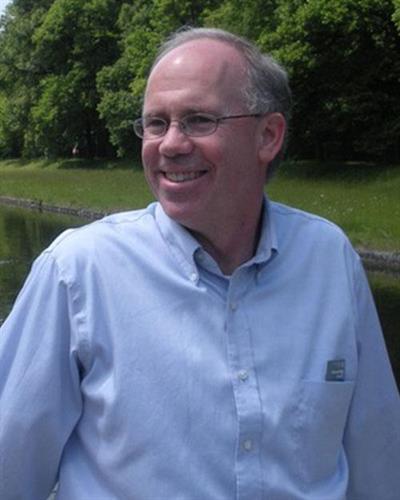
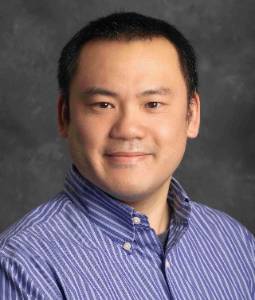
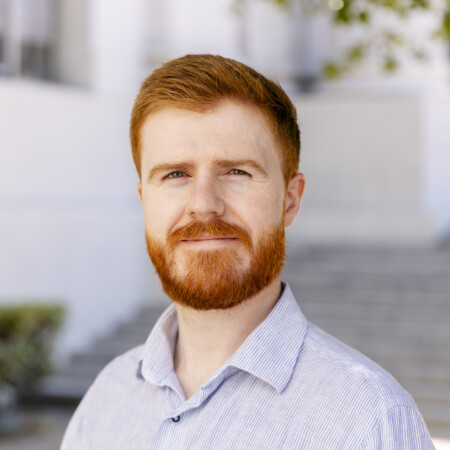
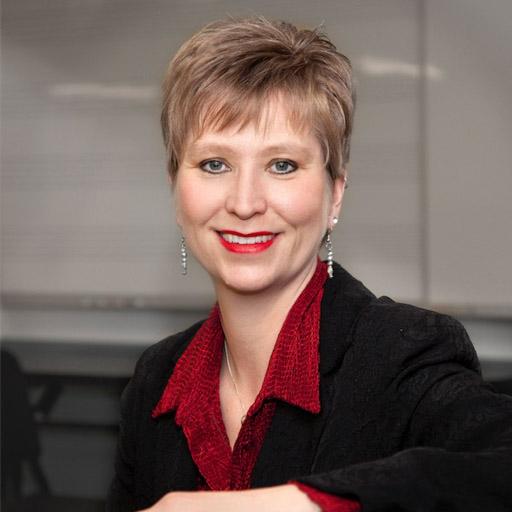
Michael Karas is an Assistant Professor of Applied Linguistics at Brock University's Faculty of Social Sciences. He holds a PhD from the University of Western Ontario (2019). His research focuses on language teacher self-efficacy, reflective practice, and learner silence, with notable contributions to meta-analyses in language education. He teaches courses such as Second Language Acquisition (LING 3Q91) and Pedagogical Grammar (LING 5P02). Karas serves as Book Review Editor for the TESL Canada Journal and TESL Ontario Academic Coordinator, demonstrating active engagement in academic service. Education : PhD in Applied Linguistics, University of Western Ontario (2019) Research Specialization : Explores intersections between teacher proficiency, classroom dynamics, and innovative methodologies like duoethnography. His work bridges theoretical research with practical applications in teacher education and language policy. Service Contributions : Editorial roles at TESL Canada Journal (2017–present) Coordinator for TESOL Doctoral Forum (2017–2018)
James Rice serves as the Walter S. Dickson Professor of English and American History in the Department of History at Tufts University's School of Arts and Sciences. Appointed in 2016 and serving as Department Chair from 2018-2024, he holds a prominent position in early American historical scholarship. His academic credentials include a BA in History from Colorado College (1985), followed by an MA (1989) and PhD (1994) in History from the University of Maryland, College Park. Prior to Tufts, he taught at SUNY Plattsburgh, Washington College, and Tübingen University. Rice's research dismantles traditional boundaries between American history and Native American history, colonial history and prehistory, and national histories across North America. His work bridges historical scholarship with environmental studies and interdisciplinary approaches, currently focusing on two major book projects: a comprehensive synthesis of Native American environmental history spanning from Oaxaca to the Arctic since first human habitation, and a critical reassessment of England's first permanent American colony titled Founding Massacres: Violence, Ambition, and the Birth of Virginia . His publication record reveals a sustained emphasis on Indigenous perspectives in colonial America, with recurring themes of environmental change, intercultural violence, and political diplomacy. Recent works increasingly integrate environmental history frameworks with ethnohistorical methods, particularly examining Powhatan expansionism, Bacon's Rebellion, and captivity narratives within broader Atlantic World contexts. His scholarly recognition includes: OAH Binkley-Stephenson Award for best article in the Journal of American History (2015) State University of New York Chancellor’s Award for Excellence in Scholarship (2016) Professional service demonstrates significant field leadership through editorial board membership for Environmental History journal (2025-2029), prize committee roles for the American Society for Environmental History and American Society for Ethnohistory, and advisory positions including the Commonwealth of Virginia's 2019 Commemoration Historian Council and Historic Jamestowne project. His teaching portfolio at Tufts spans advanced seminars on North American history, colonial America, and environmental humanities.
Ray Bai is an Assistant Professor in the Department of Statistics at the University of South Carolina (USC), part of the McCausland College of Arts and Sciences. Effective August 2025, he will join the George Mason University (GMU) Department of Statistics as a faculty member. His research focuses on Bayesian statistics, deep learning, and causal inference, with applications to biomedical and public health challenges such as genomic studies, drug repositioning, and electronic health records analysis. Bai holds a PhD in Statistics from the University of Florida (2018), an MS in Applied Mathematics from the University of Massachusetts Amherst, and a BA from Cornell University. His work has been supported by the National Science Foundation (NSF). Education: PhD in Statistics, University of Florida (2018) MS in Applied Mathematics, University of Massachusetts Amherst BA, Cornell University Research interests include scalable algorithms for high-dimensional data, nonconvex optimization, and distributed inference methodologies. His work bridges statistical theory with practical applications in healthcare, emphasizing robustness and computational efficiency. Recent contributions address challenges in single-index models for skewed data, generative quantile regression, and Bayesian varying-coefficient models. Advising includes supervising PhD students Zile Zhao and Shijie Wang, who have contributed to survival analysis and deep learning frameworks. Future openings for students at GMU focus on Bayesian methodology and machine learning. Labs/Teams: Collaborates on projects involving interdisciplinary teams in biostatistics and computational biology.
Alistair Sterling is an Assistant Professor in the Department of Chemistry & Biochemistry at the University of Texas at Dallas (UTD), affiliated with the School of Natural Sciences and Mathematics. His research integrates computational modeling, theoretical physical organic chemistry, and electronic structure theory to study chemical reactivity, particularly in catalysis, molecular editing, and polymer upcycling. Sterling leads the Sterling Lab, emphasizing interdisciplinary collaboration with synthetic chemists and fostering skills in reaction mechanism analysis, coding, and scientific communication. He actively engages in outreach to promote public understanding of chemistry. Education includes a DPhil in Organic Chemistry (University of Oxford, 2021), an MChem in Chemistry (University of Oxford, 2017), and postdoctoral fellowships at Lawrence Berkeley National Lab and UC Berkeley. He holds the EPSRC Doctoral Prize Fellowship (2021). Research focuses on understanding chemical bonding and reactivity through computational tools, with applications in drug discovery and sustainable materials. Key themes include delocalization-enabled reactions, node-induced electron confinement, and strain-release mechanisms. The lab develops novel synthetic methods for creating complex molecules with pharmaceutical relevance, such as meta-substituted arene bioisosteres. Notable awards include the Global Young Scientists Summit (2021), Young Modellers' Forum Best Talk Prize (2019), and multiple University of Oxford scholarships. His work bridges theory and experiment, aiming to advance both fundamental understanding and practical innovations in chemistry.
Dr Caroline Ellis-Hill is a Senior Lecturer in Qualitative Research at Bournemouth University, based in the Bournemouth Gateway Building. Her work focuses on lifeworld-led approaches to healthcare and social care, emphasizing humanistic practices that prioritize subjective experience and wellbeing. She specializes in qualitative research methods, including narrative inquiry, phenomenology, and arts-based methodologies. Her current research includes the Stroke Odysseys project (Wellcome Trust-funded SHAPER initiative) exploring performance arts in stroke rehabilitation, and the InnovateDignity EU project training future leaders in dignified elder care. Past studies include the HeART of Stroke feasibility trial of arts interventions post-stroke and the Humanising Services leadership strategy to enhance dignity in care. Key research interests: lifeworld-led healthcare, embodied knowing, narrative approaches, identity transformation in disability, and arts-based interventions. She contributes to UN SDGs 3 (Good Health) and 10 (Reduced Inequalities). Dr Ellis-Hill advises 15 PhD students through the InnovateDignity network. Her research has been published in journals like Scandinavian Journal of Caring Sciences, International Journal of Qualitative Studies on Health and Well-being, and Neuropsychological Rehabilitation.
Dr. Laurel Young is a Professor in the Department of Creative Arts Therapies at Concordia University, specializing in music therapy with a focus on gerontology, palliative care, and neurodiverse populations. She holds certifications in the Bonny Method of Guided Imagery and Music (FAMI) and has over 23 years of clinical experience across geriatrics/dementia, oncology, HIV care, and developmental disabilities. Her roles have included Professional Leader of Creative Arts Therapies at Sunnybrook Health Sciences Centre and teaching positions at Wilfrid Laurier University and Temple University. Dr. Young’s research spans multicultural competence in therapy, ethical frameworks, and the intersection of music with health and well-being. Key themes include end-of-life care for dementia patients, singing groups for autistic adults, and bereavement support through music. She has published extensively in peer-reviewed journals and books, including editorial leadership for Barcelona Publishers’ Qualitative Inquiries in Music Therapy Monograph Series (2012–2013). Her work emphasizes bridging research and clinical practice, with a focus on marginalized groups such as older adults, individuals with disabilities, and those facing chronic illnesses. Awards include the 2014 CAMT Research & Publications Award and teaching accolades from Wilfrid Laurier and Temple Universities. Current projects explore AI-assisted therapeutic technologies and community-based music interventions.
Justin Gottschlich is an Adjunct Lecturer in the Computer Science Department at Stanford University, where he teaches the graduate course Machine Programming (CS 329M) . He also serves as Founder, CEO, and Chief Scientist of Merly Inc., a startup focused on machine programming systems to improve software development efficiency and quality. Previously, he led the Machine Programming Research group at Intel Labs, pioneering advancements in automating software development through a fusion of machine learning, programming languages, and systems research. His academic roles include prior positions as Adjunct Professor at University of Colorado-Boulder and Adjunct Assistant Professor at University of Pennsylvania. He has advised numerous graduate students across institutions, contributing to their research in machine programming and related fields. Gottschlich has authored dozens of research papers and holds multiple patents, with his work highlighted by prominent outlets like the Wall Street Journal and Communications of the ACM. He actively contributes to academic committees, including serving as Steering Committee Chair for the ACM SIGPLAN Machine Programming Symposium (MAPS). His research interests span machine programming, autonomous software development, formal methods, and the integration of AI into software engineering practices. Education: PhD in Computer Science from University of Colorado-Boulder Keynote Engagements: LADSIOS (2021), MIT DSAIL (2021), Penn PRECISE (2019) Labs/Teams: Intel Labs Machine Programming Research Group, Merly's R&D Team Grants & Funding: Extensive industry and academic research funding through Intel Labs and Merly
David Parker is Professor of Computer Science at the University of Oxford and a Tutorial Fellow at Trinity College. His research focuses on formal verification methods for checking system correctness, particularly quantitative verification techniques for probabilistic systems. As leader of the PRISM and PRISM-games projects, he develops tools for analyzing safety, reliability, and performance properties in complex systems. Current research explores verification of AI systems, robust decision-making under uncertainty, and multi-agent systems using stochastic games. His work bridges theoretical foundations with applications in autonomous systems, robotics, and healthcare technology. Recent publications demonstrate advancements in probabilistic temporal logic, robust policy learning, and bisimulation techniques for Markov models. These works consistently emphasize formal guarantees for safety-critical applications and novel approaches to model checking. ETAPS Test-of-Time Tool Award (2024) HVC Award (2016) Professor Parker mentors PhD students in verification, control synthesis, and AI safety, with research funded by ERC, EPSRC, and industrial partners. He serves on editorial boards for Formal Aspects of Computing and ACM Transactions on Autonomous Systems.
Harrison Steel is an Associate Professor of Engineering Science at the University of Oxford and Tutorial Fellow at Harris Manchester College. He holds a BEng in Mechanical Engineering and BSc in Physics and Mathematics from the University of Sydney, followed by a DPhil at Oxford as a Monash Scholar. His research focuses on synthetic biology, control engineering, and bioprocess optimization, with a particular emphasis on microbial systems and genetic circuit design. Dr. Steel’s work integrates computational modeling, experimental biology, and control theory to engineer robust biological systems. His contributions include advancements in genome editing via SIBR-Cas systems, cybernetic control of microbial co-cultures, and the development of open-source platforms like Chi. Bio for automated biological experimentation. His recent publications highlight innovations in directed evolution strategies, modular biomolecular control architectures, and the application of machine learning to fitness landscape analysis. He has pioneered approaches for stabilizing genetically engineered cell populations and enhancing bioprocess efficiency through adaptive control systems. Dr. Steel’s research is supported by collaborations across engineering, biology, and computational disciplines. He actively contributes to academic leadership through his role at Harris Manchester College and maintains an experimental focus on bridging theoretical models with practical biological implementations.
Dr. Martin Fascione is a Reader in Chemistry at the University of York. He leads research at the interface of chemistry and biology, focusing on chemical glycobiology and glycomedicine. His work employs synthetic chemistry, enzymology, and bioconjugation to study carbohydrate roles in disease and develop therapeutic tools. Research interests include the chemical glycobiology of nonulosonic/sialic acids, synthetic and enzymatic carbohydrate chemistry, and protein bioconjugation. His group investigates bacterial pathogen recognition, tumor metastasis, and immunological responses mediated by glycans. Recent publications demonstrate a focus on bacterial glycans, enzyme mechanisms, glycoconjugate therapeutics, and diagnostic tools. Trends include structural enzymology, chemoenzymatic synthesis, glycan-based sensors, and bioorthogonal chemistry applications. Awards: ERC Consolidator Grant (2022) Marie Curie International Outgoing Fellowship (2012-2014) Dr. Fascione directs an interdisciplinary lab collaborating with structural biologists and clinicians. His ERC grant supports research on pseudaminic acid sugars in infectious diseases.
Richard L. Smith is the Mark L. Reed III Distinguished Professor of Statistics and holds a joint appointment in Biostatistics at the University of North Carolina's Gillings School of Global Public Health. He also serves as Director of the Statistical and Applied Mathematical Sciences Institute. With a PhD from Cornell University (1979) and prior roles at Imperial College, University of Surrey, and Cambridge University, his academic career spans over four decades. His research focuses on extreme value theory, spatial statistics, time series analysis, and applications to climate science, environmental pollutants, and air pollution epidemiology. He has authored influential works such as the Handbook of Environmental and Ecological Statistics and contributed to studies linking air quality to health outcomes in California. Dr. Smith has received prestigious awards including the Guy Medal in Silver from the Royal Statistical Society and is a Fellow of both the American Statistical Association and the Institute of Mathematical Statistics. He actively serves on boards like the EPA Science Advisory Board and the Board of Reviewing Editors of Science . He teaches advanced courses such as Time Series and Multivariate Analysis (STOR 754) and Bayesian statistical methods. His work bridges theoretical statistics with real-world challenges in environmental and public health domains.
Wendy Beekes is Senior Lecturer in Accounting and Finance at Lancaster University Management School. She holds a BSc Econ (Hons), MSc Econ in Accounting/Finance, and PhD from University of Wales Aberystwyth, joining Lancaster in 2000. Her research examines corporate governance linkages to disclosure quality and accounting transparency, with cross-country studies funded by the Leverhulme Trust. Publications analyze governance effects on disclosure practices, reporting timeliness, and market impacts, with recent focus on IFRS implementation and Japanese governance systems. A Senior Fellow of the Higher Education Academy, she received teaching awards for innovative pedagogy. Service roles include Director of Teaching/Learning in Accounting and Study Abroad Advisor.
Steven Hijmans is a Professor in the Department of History, Classics, & Religion at the University of Alberta's Faculty of Arts. His research focuses on Roman art and religion, with a particular emphasis on solar symbolism, Mithraic studies, and the intersection of art and religious practices. He holds a PhD and has authored numerous scholarly works analyzing ancient iconography, imperial imagery, and religious syncretism. His work often bridges archaeological evidence with textual analysis to explore cultural, political, and religious dynamics in antiquity. Key research areas include the role of art in religious expression, the evolution of imperial portraiture, and the material culture of Roman cults. His recent publications (2010–2024) address topics ranging from solar deities in Greco-Roman contexts to the reinterpretation of ancient urban spaces. Hijmans is also engaged in interdisciplinary projects examining the reception of classical antiquity in modern scholarship. His academic contributions are marked by meticulous attention to iconographic detail and contextual analysis. He has participated in archaeological fieldwork in Greece and Turkey, contributing to site documentation and interpretation. Hijmans' work is frequently cited in studies of late antique religion, Hellenistic art, and the socio-political dimensions of Roman religious practices.
Dr. Seung Soon Jang is a Professor in the School of Materials Science and Engineering at Georgia Institute of Technology, joining in 2007. His research focuses on computational and theoretical approaches to design nanoscale systems, particularly in molecular electronics, fuel cells, and biotechnology. He holds fellowships from the American Chemical Society (ACS), American Physical Society (APS), American Society for Metals International (ASM Inter.), and Electrochemical Society (ECS). His research spans energy storage, environmental materials, and nanotechnology, with a strong emphasis on molecular simulations and DFT modeling. Education & Awards: Fellowships in ACS, APS, ASM Inter., and ECS. Research Interests: Biomolecular-solids, ceramics, nanomaterials, polymers, and energy/environmental applications. Dr. Jang advises three students and leads the CNBT Lab, exploring advanced materials for energy conversion and wearable technologies. His work integrates computational methods with experimental validation, addressing challenges in fuel cells, solar cells, and CO₂ reduction. Key achievements include developing durable electrocatalysts and novel membrane technologies.
Simon Dixon is a Professor of Computer Science and Director of the UKRI Centre for Doctoral Training in Artificial Intelligence and Music (AIM CDT) at Queen Mary University of London. He also serves as Deputy Director of the Centre for Digital Music (C4DM). His work focuses on music informatics, AI, and computational musicology, with emphasis on music signal analysis, performance modeling, and MIR applications. He leads projects funded by UKRI, Innovate UK, and industry partners like Yamaha and Spotify. Dixon has supervised over 20 PhD students and contributed to major initiatives like the Jazz Digital Archives Project and the Dig that Lick study on jazz melodic patterns. His research has been recognized with awards including the Peter Claricoats Award and Turing Fellowship. Education: PhD in Computer Science, BSc(Hons) in related field, with music qualifications (AMusA LMusA) Roles: AIM CDT Director, C4DM Deputy Director, EU H2020 MIP-Frontiers PI Research: Music transcription, expressive performance analysis, MIR, and AI applications in music education Key projects include industry collaborations (e.g., Yamaha for jazz piano modeling), semantic audio analysis, and large-scale music corpus studies. His team has pioneered methods in chord detection, source separation, and alignment algorithms, with top rankings in MIREX evaluations. Publications span journals like TISMIR and ICASSP, with a focus on foundational MIR techniques and AI-driven music systems. His work bridges technical innovation with cultural heritage through projects like JazzDAP and the Dig that Lick analysis of jazz solos.