Prof. Dr. rer. nat. Anna Mechler is a faculty member at RWTH Aachen University , specifically affiliated with the Aachen Process Engineering school under the Teaching and Research Area Electrochemical Reaction Engineering . Her research focuses on electrochemical reaction engineering, particularly in the development of advanced catalysts for energy conversion systems. Research Interests: Oxygen evolution reaction (OER) optimization, electrochemical catalyst synthesis, plasma-assisted electrode fabrication, and sustainable energy technologies like fuel cells and water electrolysis. Publications: Recent work highlights the development of Ni-Co-O anodes, mechanochemical activation of catalysts, and innovative methods for improving electrolyzer efficiency and reproducibility. Labs/Teams: Active in the NGP² group at Aachen Process Engineering, contributing to industrial-scale electrochemical process development.
Els Henckaerts is a Professor at KU Leuven's Faculty of Medicine, Department of Cellular and Molecular Medicine, where she serves as head of the Trellis Research Group and Virus-Host Interactions and Therapeutic Approaches (VITA) Research Group. She additionally holds leadership roles as division head of the Virology Division Group 4 – Rega and is an active member of the KU Leuven Brain Institute and Leuven Institute for Rare Diseases. Her research integrates virology, molecular biology, and gene therapy with emphasis on adeno-associated virus (AAV) vector development for rare genetic disorders. Current investigations focus on dual AAV intein-based systems for DFNB9 deafness, nanobody-conjugated vectors for enhanced targeting specificity, and preclinical Parkinson's disease therapies. Her work bridges fundamental viral mechanisms with translational applications in inherited sensory and neurodegenerative conditions. Analysis of recent publications reveals dominant themes in AAV vector engineering, analytical characterization methods, and rare disease applications. Key trends include standardization of rAAV production processes, novel conjugation technologies for tissue-specific delivery, and advanced quantification techniques using digital droplet PCR and nanopore sequencing. Henckaerts leads multiple major initiatives including the European Research Alliance for Rare Diseases (2024-2031), an integrated AAV therapy development ecosystem (2025-2030), and the Gene Therapy Innovation Training Network (GET-IN). Her grant portfolio demonstrates significant funding for translational gene therapy projects with clinical endpoints. The Trellis Research Group operates across KU Leuven's Herestraat and Gaston Geenslaan campuses, maintaining specialized facilities for vector production, preclinical testing, and analytical characterization. The team collaborates extensively with clinical partners through the Rega Institute and participates in European consortia focused on rare disease therapeutics.
Honghui Du serves as a Research Fellow at the Insight Centre for Data Analytics, a leading Irish research institution specializing in data science with nodes across multiple universities. The role centers within the Decision Making research group, focusing on algorithmic solutions for dynamic environments. Research spans transfer learning in non-stationary data streams , recommender systems (notably news personalization using LLMs and diffusion models), and medical imaging under label scarcity. Key emphases include handling concept drift, optimizing active learning for medical diagnostics, and developing generative approaches for user-item interaction modeling. Emerging work explores gamification for sustainable behavior change and entity resolution via language models. Recent publications (2023-2025) reveal accelerating integration of diffusion models and transformers into recommendation frameworks, while maintaining core expertise in transfer learning for evolving data streams. Medical imaging research increasingly addresses practical constraints like limited annotations through adaptive curriculum strategies. The work operates within the Decision Making research group at the Insight Centre, which investigates algorithmic decision processes under uncertainty and dynamic conditions.
Keyon Vafa is a Research Fellow at Harvard University's Harvard Data Science Initiative (HDSI) and an affiliate at MIT's LIDS. He completed his PhD in Computer Science at Columbia University (advisor: David Blei), where he held NSF GRFP and Cheung-Kong Fellowships. His work focuses on behavioral machine learning, evaluating AI models' world understanding, and fostering human-AI alignment. He received the 2023 Morton B. Friedman Memorial Prize for engineering excellence. Education PhD in Computer Science, Columbia University, 2023 Bachelor's/Master's degrees (not explicitly stated in text) Research Interests Behavioral machine learning and model interpretability Ethical AI and algorithmic fairness Applications of generative models in social sciences Large language model evaluation and societal impact Publications His recent work includes studies on wage disparity estimation via foundation models, evaluating implicit world models of AI systems, and measuring human-AI expectation alignment. These contributions span top venues like PNAS, NeurIPS, and ICML, addressing critical issues in AI ethics and social science applications. Awards NSF Graduate Research Fellowship Program (GRFP) Cheung-Kong Innovation Doctoral Fellowship Morton B. Friedman Memorial Prize (2023) Grants & Labs Organizes the ICML 2025 Workshop on Assessing World Models of AI systems. His research is supported by grants from the NSF and other institutions. He collaborates with economists and social scientists to bridge AI and societal challenges.
Emily Maemura is an Assistant Professor in the School of Information Sciences at the University of Illinois Urbana-Champaign, with a PhD from the University of Toronto's Faculty of Information. Her research focuses on web archives, digital preservation, and data curation practices, emphasizing infrastructural analysis and ethical engagement with archived web data. Previously, she worked as an academic librarian at Toronto Metropolitan University. Education: PhD in Information Studies from the University of Toronto (2019), with a dissertation on web archives curation practices for social sciences and humanities researchers. Research interests include large-scale web archives analysis, infrastructural inversion of archival processes, and the materialities of digital research data. She explores how web archives are conceptualized as cultural artifacts and developed through sociotechnical systems. Her recent work analyzes infrastructural logics in web archiving, challenges in data reuse, and the material aspects of digital research practices. She has also developed frameworks for describing web archives (e.g., Datasheets for Web Archives Toolkit). Awards : Beta Phi Mu Doctoral Dissertation Fellowship (2019) SSHRC Joseph-Armand Bombardier Scholarship (2015-2018) SSHRC Michael Smith Foreign Study Supplement (2018) Teaching includes courses on information organization, digital preservation, and independent study modules. She actively participates in academic conferences and collaborates internationally on digital preservation initiatives.
Jonathan Gammell is an Assistant Professor at Queen's University's Department of Electrical and Computer Engineering and a member of the Ingenuity Labs Research Institute. He holds an adjunct fellowship at the Oxford Robotics Institute (University of Oxford), where he previously taught. His expertise spans autonomous systems, robotics, and AI, with a focus on motion planning for diverse applications, including medical devices, self-driving cars, and aerial robotics. He leads the Estimation, Search, and Planning (ESP) group, which develops algorithms for autonomous systems. Educations: BASc in Mechanical Engineering and Physics from the University of Waterloo MASc and PhD in Robotics from the University of Toronto Institute for Aerospace Studies Research Interests: Dr. Gammell's work addresses fundamental motion planning challenges in robotics, emphasizing asymptotically optimal algorithms like BIT*, AIT*, and FCIT*. His research integrates robotics with medical applications (e.g., knee replacement implants) and autonomous systems (e.g., aerial mapping for emergency response). His algorithms are widely adopted in industry and academia, including collaborations with NASA JPL and Oxford orthopaedic surgeons. Publications: His recent work explores advanced motion planning frameworks (e.g., AORRTC, Osprey), multimotion visual odometry (MVO), and medical robotics applications. These contributions highlight his dual focus on theoretical algorithm development and practical, high-impact applications. Awards: CIPPRS Award for Best Canadian PhD Thesis (Medical Imaging/Robotics) NASA Group Achievement Award (2021, 2022) IROS Best Paper Shortlist (2020) Advising & Grants: He advises on projects involving autonomous systems, medical robotics, and AI. His grants support collaborations with industry and academic partners, including NASA JPL and Oxford's robotics and medical teams. The ESP group's open-source tools (e.g., Planner Developer Tools) enable reproducible motion-planning research. Labs/Teams: He leads the ESP research group at Queen's University and collaborates with the Oxford Robotics Institute and Ingenuity Labs, focusing on cutting-edge robotics solutions for real-world challenges.
Simona Picardi is an Assistant Professor of Wildlife Ecology & Management at the University of Idaho's College of Natural Resources. She holds a PhD from the University of Florida (2019), an M.S. and B.S. from the University of Rome La Sapienza (2015, 2012). Her research focuses on wildlife responses to environmental change and anthropogenic pressures, integrating movement ecology and quantitative methods. She leads the Picardi Lab, which emphasizes reproducible science and data-driven conservation strategies. Key research interests include animal movement analysis, spatial ecology, and conservation biology. Her work spans topics such as site fidelity null models, human-wildlife interactions, and migratory behavior in wading birds. She teaches data science and programming for ecologists, reflecting her commitment to advancing quantitative methods in the field. Recent publications highlight her contributions to understanding fitness consequences of anthropogenic subsidies, sex-based movement differences in striped hyenas, and partial migration patterns in wood storks. Her research integrates field data with computational modeling to address applied conservation challenges.
George T. Heineman is an Associate Professor of Computer Science at Worcester Polytechnic Institute (WPI). He holds a BS from Dartmouth College (1989), an MS (1990), and a PhD (1996) from Columbia University. His research focuses on software engineering, component-based systems, and modularity, with notable contributions to type-safe modular software evolution through the CoCo design pattern. Heineman emphasizes professional software engineering practices in teaching, challenging students with industry-relevant projects to foster best practices. His work has been published in leading venues like ECOOP, with a 2021 paper on CoCo gaining attention for its impact on Java language design. He received the WPI Trustees' Award for Outstanding Teaching in 2022, reflecting his dedication to education. His research spans algorithm design, system architecture, and cybersecurity, with publications ranging from foundational theory to practical applications in automated assessment and network security. Education: BS in Computer Science, Dartmouth College, 1989 MS in Computer Science, Columbia University, 1990 PhD in Computer Science, Columbia University, 1996 Research interests include software evolution, design patterns, and modular software systems. His recent work addresses challenges in maintaining stable APIs and enabling cohesive extensions in object-oriented systems. Collaborations with institutions like the University of Copenhagen and TU Dortmund highlight his international academic engagement. Beyond research, Heineman contributes to curriculum development, including WPI's new graduate programs in computing and workforce development initiatives.
Dr. Jun Yan is a Professor in the Department of Statistics at the University of Connecticut. His research spans network analytics, spatial extremes, survival analysis, and statistical computing with applications in public health, finance, and environmental science. His core research interests include: network modeling and analysis, spatial statistics for climate extremes, survival analysis methodologies, statistical computing frameworks, and applications in interdisciplinary domains including sports analytics. Dr. Yan has developed significant statistical methodologies for network analysis, climate change detection, financial modeling, and health analytics. His recent publications demonstrate innovation in modeling complex network structures, analyzing climate extremes, developing computational approaches for massive datasets, and creating specialized statistical methods for health and finance applications. He maintains active collaborations across disciplines and contributes to open-source statistical software. Honors include: Guggenheim Fellowship, multiple Fromm Foundation commissions, and Barlow Endowment recognition.
Dr. Martijn Goudbeek is an Associate Professor at Tilburg University's Tilburg School of Humanities and Digital Sciences (TSHD), specifically within the Department of Communication and Cognition. His research focuses on the intersection of emotion, language, and cross-cultural communication, with a strong emphasis on vocal and linguistic expression of affect. He has contributed significantly to understanding how emotional states influence language production and perception, particularly across cultural and linguistic boundaries. His work spans experimental psychology, computational linguistics, and human-robot interaction. He is affiliated with the Communication and Cognition department and teaches courses like 'The Emotional Brain' and 'Statistics and Experimental Methods.' Key research themes include vocal emotion recognition in multilingual contexts, the role of rhythm and acoustic cues in affective communication, and the reproducibility of language evaluation methods. He has led projects such as the Multilingual Emotional Football Corpus (MEmoFC) and explored how cultural factors shape nonverbal expressions like smiles and gestures. His studies often combine empirical experiments with computational modeling, addressing topics ranging from politeness in mood-influenced communication to the design of socially intelligent chatbots and robots. Dr. Goudbeek’s interdisciplinary approach bridges cognitive science, linguistics, and digital technologies. While no specific grants or awards are listed, his extensive publication record reflects sustained contributions to understanding human emotion expression and its technological applications. His work frequently engages with questions of reproducibility in NLP and dialogue systems, emphasizing methodological rigor in computational linguistics.
Vân Anh Huynh-Thu is an Assistant Professor in the Department of Electrical Engineering and Computer Science at the University of Liège (Belgium). Her research focuses on improving machine learning techniques with an emphasis on model interpretability. She is based at B28: Systems and Modeling in Quartier Polytech, Allée de la Découverte 10, 4000 Liège, Belgium. Her primary research interests span Machine Learning , Bioinformatics , and Gene Regulatory Network Inference . Dr. Huynh-Thu has developed several influential methods including GENIE3, dynGENIE3, and Jump3 for inferring gene regulatory networks from expression data. Her work bridges the gap between machine learning theory and biological applications, particularly in understanding complex disease mechanisms through computational approaches. She has made significant contributions to interpretable machine learning models that maintain high predictive accuracy while providing insights into feature importance and model behavior. Her research demonstrates a progression from purely computational methods toward translational applications in medical research. Analysis of her recent publications reveals a clear trajectory from foundational work on gene regulatory network inference toward broader applications in medical research, particularly in Crohn's disease. Her research increasingly integrates machine learning with clinical applications, demonstrating a shift from purely computational methods to translational research with direct medical implications. The consistent emphasis across her work is on interpretability, rigorous validation, and the application of tree-based methods to complex biological systems, with a growing focus on proteomics and biomarker discovery for inflammatory bowel diseases. Dr. Huynh-Thu maintains an active GitHub presence with implementations of her methods, demonstrating her commitment to open science and reproducibility. Her software repositories have garnered significant attention from the research community, with GENIE3 alone having 88 stars and 37 forks on GitHub. She has developed multiple implementations of her algorithms in Python, MATLAB, and R, making them accessible to researchers across different computational environments. Her work has been influential in the DREAM challenges, where GENIE3 was the best performer in two network inference competitions.
Dr. Osama Mahmoud is a Lecturer (Assistant Professor) in Data Science and Statistics at the University of Essex, affiliated with the School of Mathematics, Statistics and Actuarial Science (SMSAS) and the Department of Mathematical Sciences. He holds dual roles as the Director of the BSc Data Science and Analytics programme and Deputy Director of Research at SMSAS. His academic journey includes a PhD in Statistics from the University of Essex and an Honorary Senior Researcher position at the University of Bristol Medical School (2020–2024). Dr. Mahmoud's research focuses on Predictive Modelling, Health Data Science, Machine Learning, Bio and Medical Statistics, and Explainable AI. He pioneered the Slope-Hunter method (Nature Communications, 2022) for bias correction in genome-wide studies and developed tools like the Proportion Overlapping Score (POS) and open-source packages on CRAN/GitHub. His work bridges statistical methodology with applications in healthcare, environmental epidemiology, and industrial collaboration. Key contributions include studies on sleep-breast cancer mortality linkages (2025), lung function-cardiovascular risk relationships (2024), and smoking's role in depression recovery (2022). He has secured grants supporting collaborations with UNDP, Rolls Royce, and Recruitment Smart. Teaching innovations include pioneering programming and text analytics modules. Education: PhD in Statistics, University of Essex Affiliations: UK Reproducibility Network (UKRN) Institutional Lead, British Data Science Society Member Grants: Projects in Data Science, theoretical/applied Statistics, and industrial partnerships Tools: ESKNN, OTE, propOverlap packages on CRAN His work emphasizes reproducibility, with over 50 peer-reviewed publications and international teaching engagements at ICTP (Italy), EuADS (Luxembourg), and UK institutions.
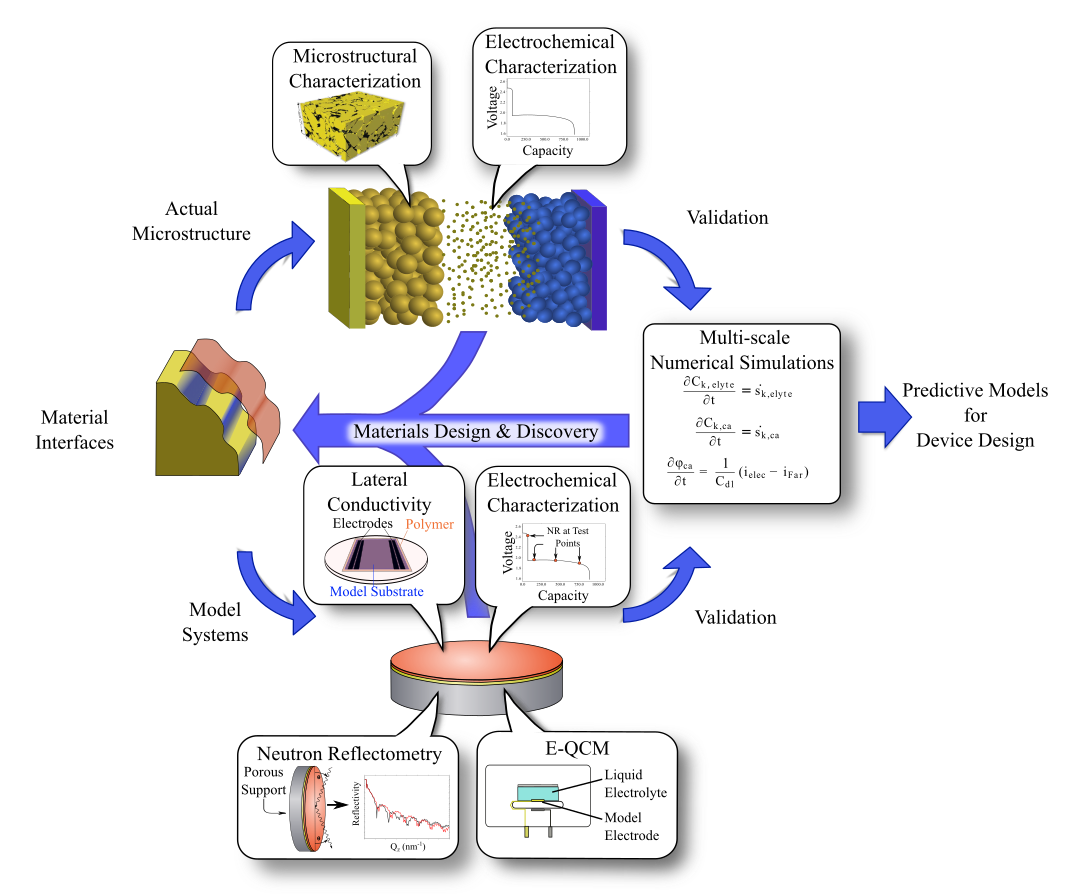
Steven C. DeCaluwe is an Associate Professor in the Department of Mechanical Engineering at Colorado School of Mines, where he combines experimental and computational approaches to study clean energy systems. His research focuses on electrochemistry and interfacial processes in batteries (Li-ion, Li-O 2 , Li-sulfur) and fuel cells. He also serves as Director of Graduate Studies and chairs the university's Diversity, Inclusion, and Access Committee. PhD in Mechanical Engineering (University of Maryland, 2009) NRC Postdoctoral Fellowship at NIST (2009-2012) BS in Elementary Education and Mathematics (Vanderbilt University, 2000) DeCaluwe's work bridges advanced diagnostics (neutron scattering, operando XPS) with multiscale simulations to improve energy storage technologies. His research spans solid-electrolyte interphase formation , electrochemical degradation mechanisms , and materials optimization for sustainable energy . He advocates for open science practices and integrates conservation biology principles into engineering design. His recent publications demonstrate expertise in battery modeling, phase segregation in electrodes, and sustainability-driven materials selection. Key themes include parameter uncertainty quantification , interface stability , and multi-modal characterization of energy storage systems. NRC Postdoctoral Fellowship Associate Editor, ASME Journal of Electrochemical Energy Conversion and Storage Chair, Mechanical Engineering Diversity Committee Director, Rocky Mountain Environmental XPS Facility DeCaluwe actively mentors students through the CORES Research Group , emphasizing inclusive learning environments and growth mindsets. His service extends to organizing neutron scattering conferences and managing shared instrumentation facilities.
Djamel E. Khelladi is a CNRS researcher affiliated with the IRISA research lab and the DIVERSE team at University of Rennes 1 , France. Previously, he held postdoctoral and PhD positions at Johannes Kepler University (JKU) Linz, Austria, and Université Pierre et Marie Curie (UPMC), France. Research interests include: Model-Driven Engineering Software Evolution & Co-evolution AI and Generative AI Applications Polyglot Programming Digital Twins Recent article trends focus on integrating Large Language Models (LLMs) for code-metamodel co-evolution, polyglot programming challenges, incremental build optimization in configurable systems, and empirical studies on software evolution. His work often bridges theoretical modeling with practical implementation in industrial contexts. Academic service roles include: Proceedings Co-Chair @MODELS 2025 Co-Organizer of Models and Evolution (ME) workshops (2023-2025) Co-Editor for special issue on Model Driven Engineering for Digital Twins (SoSym 2024/25) PC member in top venues: ICSE , ASE , MODELS , ECMFA , MSR , FSE
Shrikant Bangdiwala , Professor at McMaster University 's Faculty of Health Sciences in the Department of Health Research Methods, Evidence, and Impact , leads groundbreaking research in disorders of gut-brain interaction, cardiovascular epidemiology, and statistical methodology. 2025 Research Focus: Gut-brain disorder subtyping, dietary pattern analysis, and machine learning applications in clinical trials 2024 Innovations: Development of GROOVE tool for symptom overlap visualization and exposome-DNA damage correlation studies Longitudinal Impact: 20+ years tracking GI comorbidities, cardiovascular outcomes, and educational interventions Research Clusters Gut-Brain Disorders: Prevalence modeling across 26+ countries, symptom stratification, and psychological comorbidities Cardiovascular: Mortality prediction models, antithrombotic risk assessment, and ACE-inhibitor effectiveness Epidemiological Innovation: Hybrid trial adjudication systems, statistical frameworks for complex interventions, and exposome analysis tools Methodological Expertise Specializes in biostatistical frameworks for cardiovascular trials, machine learning detection of trial irregularities, and epidemiological modeling of gut-brain disorders through the Rome Foundation Global Epidemiology Study.